But you must continue in the things which you have learned and been assured of, knowing from whom you have learned them, and that from childhood you have known the Holy Scriptures,
which are able to make you wise for salvation through faith which is in Christ Jesus.
Second Letter of Paul to Timothy 3:14-15 NKJV
The Apostle Paul will now show his successors, including at the time of his impending execution Timothy in Ephesus, how they must refute false teaching by focusing on Scripture.
Today's look at 2 Timothy within our SERIES of Apostolic Faith is primarily TOPICAL with focus on SCRIPTURE and its related terms. - RH
Scripture is…
Many of us tend toward an easy answer of quoting scripture as a single and particular verse within a chapter, within a book, within a category of books, i.e. the Torah. Yet this epistle of Paul and books of the Prophets often point to additional books for origin, application and/or context.
the Scriptures are books
Paul reminds Timothy: “.. you have known the Holy Scriptures..”, translated from the Greek: τὰ [ho] ἱερὰ [hieros] γράμματα [gramma] οἶδας [you have known].
No doubt you recognize the Greek word for Scripture – gramma, as grammar.
- γράμμα grámma, gram’-mah; from G1125; a writing, i.e. a letter, note, epistle, book, etc.; plural; learning:—bill, learning, letter, scripture, writing, written.
Writings
Yet let’s not miss that the Apostle Paul points Timothy to the ‘scriptures‘ [plural] and more importantly with specific reference that those writings that are “holy.”

Biblia
The earliest Christian use of ta biblia (the books) in this sense is said to be 2 Clement 2:14 (c. a.d. 150): “The books and the apostles declare that the church . . . has existed from the beginning.” (Compare Dan. 9:2, “I, Daniel, understood from the Scriptures,” where the reference is to the corpus of Old Testament prophetic writings.) Greek biblion (of which biblia is the plural) is a diminutive of biblos, which in practice denotes any kind of written document, but originally one written on papyrus.
A term synonymous with“the Bible” is“the writings” or “the Scriptures” (Greek hai graphai, ta grammata), frequently used in the New Testament to denote the Old Testament documents in whole or in part. For example, Matthew 21:42 says, “Have you never read in the Scriptures?” (en tais graphais). The parallel passage, Mark 12:10, has the singular, referring to the particular text quoted,“Haven’t you read this Scripture?” (ten graphen tauten).
Old Testament
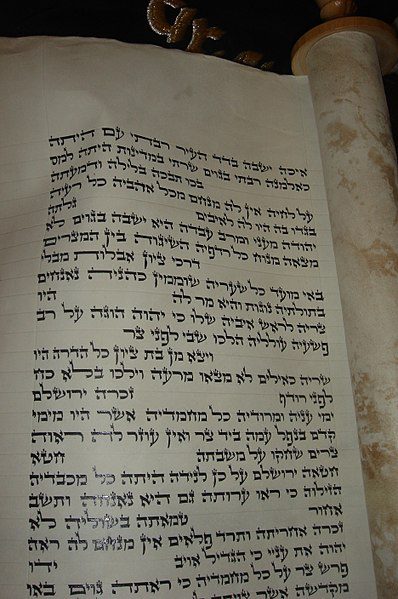
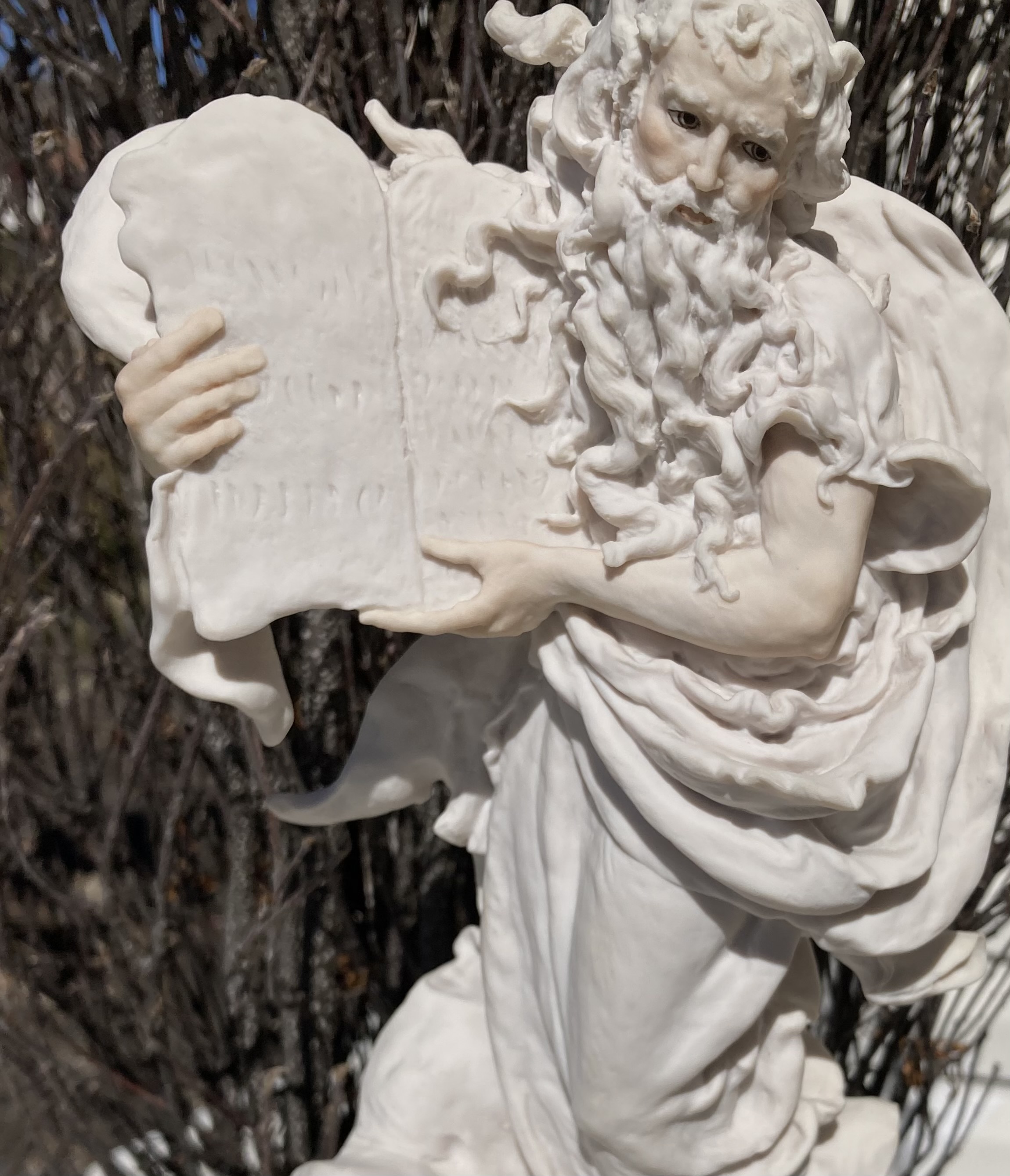
17:14 וַיֹּאמֶר יְהוָה אֶל־מֹשֶׁה כְּתֹב זֹאת זִכָּרוֹן בַּסֵּפֶר וְשִׂים בְּאָזְנֵי יְהוֹשֻׁעַ
And the LORD said to Moses,
“Write this as a memorial in a book and recite it in the ears of Joshua..
Exodus 17:14a – Masoretic Text, Revised Standard Version
Strong’s H3789 – kāṯaḇ (for write) is the same Hebrew word used in the giving of the Commandments.
Exodus 31:18 KJV
And he gave unto Moses, when he had made an end of communing with him upon mount Sinai,
two tables of testimony, tables of stone, written H3789
with the finger of God.
“Write this as a memorial in a book,” the LORD instructs Moses to give to his successor Joshua.
New testament
Some pastors and teachers wander from the Truth of Scripture by dismissing Old Testament Law and especially the Prophets from the hearing and remembrance of their church.
“I have come in My Father’s name, and you do not receive Me; if another comes in his own name, him you will receive.
.. there is one who accuses you—Moses, in whom you trust.
“For if you believed Moses, you would believe Me; for he wrote about Me.
“But if you do not believe his writings, how will you believe My words?”
New Testament Gospel of John 5:43, 45b-47 NKJV
The Lord Jesus Christ, however, connects His own testimony to that of the Hebrew Bible:
“.. he (Moses) wrote [γράφω – graphō] about Me, ” states the Lord Jesus. And the Christ or Messiah of Israel adds:
“But if you do not believe his (Moses’) writings [γράμμα – gramma], how will you believe My words [ῥῆμα – rhēma]?”
This, in addition to being a frequent warning of Christ, became an Apostolic word of warning written in several epistles to A.D. first century pastors.
a word from The Apostle Peter
Simon Peter answered him, “Lord, to whom shall we go? You have the words [rhēma] of eternal life
Gospel of John 6:68 – Jesus’ Apostles remain faithful as the Lord’s crucifixion approaches
BUT THE WORD G4487 OF THE LORD ENDURES FOREVER.”
And this is the word G4487 which was proclaimed to you as good news.
1 Peter 1:25
I am stirring up your sincere mind by way of reminder, that you should remember the words spoken beforehand by the holy prophets and the commandment of the Lord and Savior spoken by your apostles..
2 Peter 3:1a-2 LSB
All Scripture…
Paul in his second pastoral epistle to Timothy also provides a remembrance of Scripture for generations to follow.
Second Timothy 3:15 (RSV)
speaks of “the sacred writings”
(ta hiera grammata), and the next verse says,
“All Scripture is God-breathed”
(pasa graphe theopneustos).
In 2 Peter 3:16 “all” the letters of Paul are included along with “the other Scriptures” (tas loipas graphas),
by which the Old Testament writings and probably also the Gospels are meant.
ibid.
It is written…
Is the phrase familiar?
- as it is written in the book of the law of Moses – Joshua 8:31
- Keep the passover unto the LORD your God, as it is written in the book of this covenant. – 2 Kings 23:21
- Then said I, Lo, I come: in the volume of the book [sēp̄er] it is written [kāṯaḇ] of me.. – Psalm 40:7
Jesus therefore answered and said to them, “Do not murmur among yourselves. No one can come to Me unless the Father who sent Me draws him; and I will raise him up at the last day.
“It is written in the prophets, ‘And they shall all be taught by God.’[Jesus, quoting Isaiah 54:13]
Therefore everyone who has heard and learned from the Father comes to Me.
Gospel of John 6:43-45 NKJV
Then I said, “Behold, I come;
In the scroll of the book it is written H3789 of me.
Psalm:40:7 (WLC 40:8) אָז אָמַרְתִּי הִנֵּה־בָאתִי בִּמְגִלַּת־סֵפֶר כָּתוּב עָלָי׃
כָּתַב kâthab, kaw-thab’; a primitive root; to grave, by implication, to write (describe, inscribe, prescribe, subscribe):—describe, record, prescribe, subscribe, write(-ing, -ten).
Strong’s Number H3789 matches the Hebrew כָּתַב (kāṯaḇ),
which occurs 226 times in 212 verses in the WLC Hebrew.
The Holy Writings of God dominate the remembrance of Old Testament faith and New Testament credibility.
Theopneutos – inspired by God
God CANNOT be wrong!
Yet Satan would ask, “Did God really say…?” (And so do false teachers.)
3:16 πᾶσα γραφὴ θεόπνευστος
- given by inspiration of God –
- KJV & others
- inspired by God –
- CSB, NLT & others
- God-breathed –
- LSB, NIV & others
- [given by divine inspiration] –
- AMP
- breathed out by God –
- ESV
“Every scripture inspired of God,” the ASV translates.
“Every scripture is inspired by God,” reads the New English Translation.
“Every scripture is divinely inspired,” in the Darby translation.
“every Writing is God-breathed,” states Young’s Literal Translation.
Pivotal Proof, IF you believe
How do false teachers oppose God and Christ?
First, in order to turn faithful saints of the church against God false teachers must attack Scripture. They do this with the subtlety of Satan with a simple turn of a word. For when all is said and done, false teachers insist that God is wrong and that they know why.
In a section headed, SCRIPTURE PROVIDES INSTRUCTION FOR SANCTIFICATION (which of course false teachers want no part of), John MacArthur writes:
Some scholars suggest that All Scripture is inspired should be translated,
“All Scripture inspired by God is..,”
which would leave open the possibility that some Scripture is not inspired by Him. But that rendering would make the Bible worthless as a reliable guide to divine truth, because we would then have no way to determine which part of it is inspired by God and which is not.
Men would be left to their own finite and sinful devices and understanding ot discover what part of the Bible may be true and which may not, what part is God’s Word and what part is human conjecture.
THE MACARTHUR NEW TESTAMENT COMMENTARY – 2 TIMOTHY, P.142
MacArthur definitively adds:
Many men who wrote Scripture, such as Moses and Paul, were highly trained in human knowledge and wisdom, but that learning was not the source of divine truth they recorded. David was a highly gifted poet, .. but it was not the source of the divine truths in those psalms.
ibid. p.143
Does 2 Tim 3:16 prove the inspiration of all Scripture or just some?
excerpt from: A POPULAR HANDBOOK ON BIBLE DIFFICULTIES
PROBLEM:
Some think that the word “all” should be replaced by “every.” Plus, one believe that.. “is” should be placed after.. not before.
SOLUTION:
[edited excerpt] .. those that translate this verse with “is” after “God” make it sound like there are some scriptures not inspired of God. “all” should be translated, “every” if the definite article is missing. However, whenever the word “Scripture” (graphē) is used in the NT, it always refers to authoritative and inspired writings— never the opposite…
Paul’s context here refers to “the Holy Scriptures” (1:15) Timothy’s Jewish mother and grandmother had taught him (2 Tim 1:5), and this could be none other than the whole Jewish OT.
WHEN CRITICS ASK, Norman Geisler & Thomas Howe, pp 505-506
πᾶσα γραφὴ θεόπνευστος καὶ — ALL SCRIPTURE given by inspiration of God, and…
4 Profitable Imperatives
The Apostle Paul then continues to instruct Timothy and readers of his pastoral epistle in HOW TO APPLY the TRUTH of GOD-BREATHED SCRIPTURE.
By 'profitable,' Paul means helpful or advantageous
Once again, let’s just list Paul’s MUST DO list from various translations noting also the interralationship of these actions of applying Scripture.
- doctrine, reproof, correction, instruction, teaching, rebuking, reprimand, correcting, training, [in righteousness], conviction [of sin], reproof
- “omnis scriptura divinitus inspirata
- et utilis ad docendum ad arguendum ad corrigendum ad erudiendum in iustitia’
- from the Latin Vulgate
- et utilis ad docendum ad arguendum ad corrigendum ad erudiendum in iustitia’
WE resist many of these Scriptural imperatives; but the Apostle Paul assures Christ-followers that GOD breathed-out the Commandments WRITTEN in the BIBLE.
Let's simplify Paul's four-point list in 2 Timothy 3:16
- DOCTRINE – didaskalia
- REPROOF – elegchos
- CORRECTION – epanorthōsis
- INSTRUCTION IN RIGHTEOUSNESS – paideia en dikaiosynē
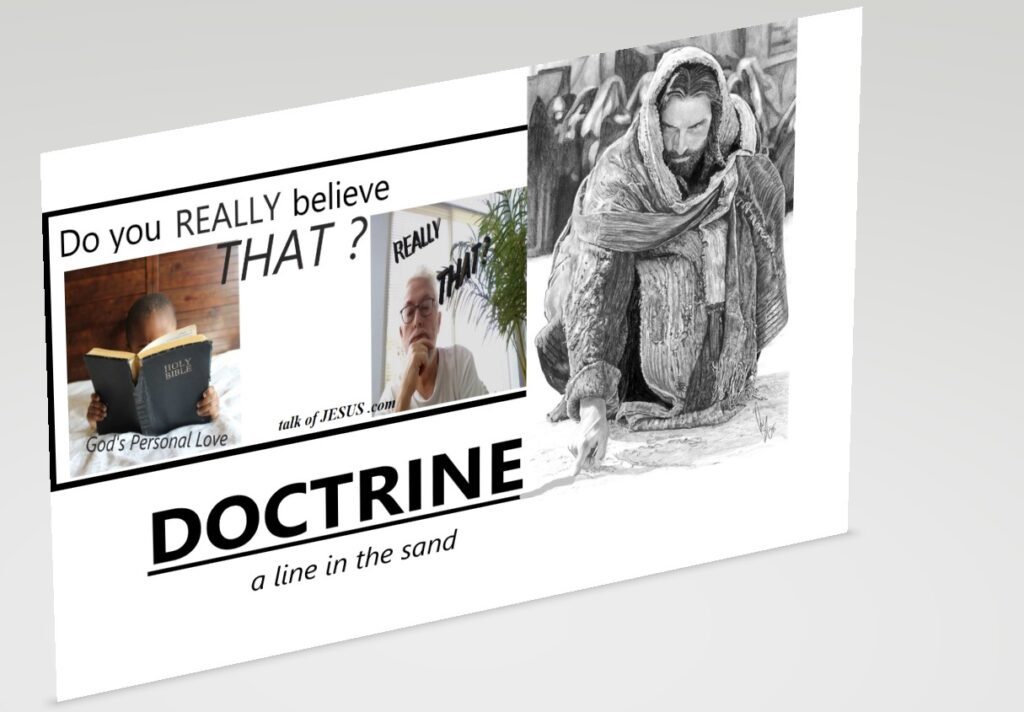
Doctrine, learning, teaching or Instruction
The Scriptures serve as a comprehensive guide for teaching and imparting knowledge about God, His will, and His ways. … The Bible provides moral and spiritual guidance, helping believers understand the nature of God and the principles of His kingdom.
proof, conviction:—evidence, reproof.
- a proof, that by which a thing is proved or tested
- conviction
Now faith is the substance of things hoped for, the evidence G1650 of things not seen.
Hebrews 11:1
correction, improvement of life or character,
restoration to an upright or right state – a derivative of the base of G3717; to straighten up:—lift (set) up, make straight.

And behold, there was a woman who had a spirit of infirmity eighteen years, and was bent over and could in no way raise herself up…
And He [Jesus] laid His hands on her, and immediately she was made straight, and glorified God.
Gospel of Luke 13:11,13 NKJV
ἐπανόρθωσις – a straightening up again, i.e. (figuratively) rectification (reformation):—correction.
Paul assures Timothy that Scripture can rectify that false teaching which has made your spirit and life crooked with sin.

Instruction in righteousness –
- the whole training and education of children
- (which relates to the cultivation of mind and morals, and employs for this purpose now commands and admonitions, now reproof and punishment)
- It also includes the training and care of the body
παιδεία paideía, pahee-di’-ah; from G3811; tutorage, i.e. education or training; by implication, disciplinary correction:—chastening, chastisement, instruction, nurture.
Paul, an apostle of Jesus Christ by the will of God,
to the saints which are at Ephesus, and to the faithful in Christ Jesus:
6:4 And you, fathers, do not provoke your children to wrath,
but bring them up in the
TRAINING [G3809]
and admonition of the Lord.
Paul’s protégé and young pastor to the saints at Ephesus, will not overlook his apostolic example as the type of righteousness required in the instruction of Scripture.
That the man of God may be perfect
thoroughly furnished unto all good works.
2 Timothy 3:17 KJV
One last word here about ALL SCRIPTURE, before the Apostle pushes on to PREACH THE WORD.
ἵνα ἄρτιος ᾖ – that perfect may be
Perfection (used in the King James Version) refers to perfection in Christ.
Be ye therefore perfect, even as your Father which is in heaven is perfect.
Gospel of Matthew 5:48 KJV – Jesus teaching the crowds in the Beautitudes
Other translations use ‘complete.’
Wake up, and strengthen what remains and is about to die, for I have not found your works complete in the sight of my God.
Revelation of Jesus Christ to John: 3:2 ESV – To the Church in Sardis
Still other translations point the preacher of God to Scripture as essential to be: fit, adequate, capable, or proficient.
ὁ τοῦ θεοῦ ἄνθρωπος – of God the man
The Apostle is addressing the man of God, a technical phrases used only of Timothy in the New Testament. In the Old Testament it is frequently used as a title for one who proclaimed the Word of God. In this context, man of God refers most directly to Timothy and, by extension, to all preachers.
John MacArthur New Testament Commentary – 2 Timothy, p.162
πρὸς πᾶν ἔργον ἀγαθὸν – unto all works good
- πρός – pros – unto, to the advantage of
- πᾶς – G3956 – pas, all (17x in 2 Timothy)
- ALL, again same as in ‘all scripture’
- ἔργον ἀγαθὸν, ergon agathos, lit. works good
- (and in the Greek, followed by ‘thoroughly furnished.’
And Paul’s practical preparation for the man of God gives good reason:
The Apostle prescribes SCRIPTURE as a preacher’s tools, useful for building good works among the saints of their church.
ἐξηρτισμένος – thoroughly furnished
- throughly [KJV prior to 16th c. archaic]furnished
- unto all good works.
ἐξαρτίζω exartízō, means: to furnish perfectly; to finish, accomplish, (as it were, to render the days complete).
One instance of this concept takes place when John the Baptist objected to Jesus that Christ should be baptizing him.
And Jesus answering said unto him, Suffer it to be so now: G737 for thus it becometh us to fulfil all righteousness. Then he suffered him.
Matthew 3:15 KJV
Scripture Written – the Word Spoken
In the beginning God created the heaven and the earth. And the earth was without form, and void; and darkness was upon the face of the deep. And the Spirit of God moved upon the face of the waters.
And God said…
Moses and Aaron among his priests, and Samuel among them that call upon his name; they called upon the LORD, and he answered them.
Genesis 1:1-3a, Psalm 99:6 KJV
In the beginning was the Word, and the Word was with God, and the Word was God. The same was in the beginning with God.
Gospel of John 1:1-2 KJV
And the Word was made flesh, and dwelt among us, (and we beheld his glory, the glory as of the only begotten of the Father,) full of grace and truth.
My sheep hear my voice, and I know them, and they follow me: And I give unto them eternal life; and they shall never perish, neither shall any man pluck them out of my hand.
Gospel of John 1:8, 10:27 KJV – Spoken by JESUS Christ
Next: Preach the word! – 2 Timothy 4

Comment on Scripture – Share the Gospel