Apostasy
to fall away – The abandonment of one’s religion.
The word apostasy is rarely found in the Eng. Bible.. But the reality expressed by the word is found frequently. Israel’s history was one of continual apostasy as the people deliberately turned away form the God who had redeemed them out of Egypt, and followed false gods and sinful ways… In the NT apostasy occurs when men turn aside from following Jesus and deny Him after having previously confessed Him as Lord.
The Zondervan Pictorial Encyclopedia of the Bible, p.216
Why is the Apostle Paul so concerned for some small misleading by men within the church?
How do some teachers oppose the true worship of our Lord and Savior Jesus Christ?
Who are they?
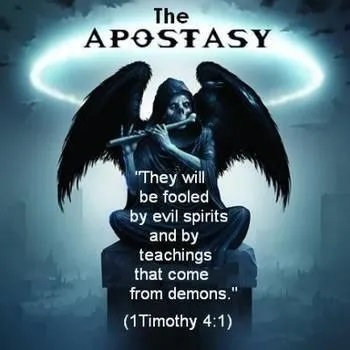
But Mark This:
But mark this: There will be terrible times in the last days.
2 Timothy 3:1 NIV
χαλεπός – chalepos –
- perhaps from G5465 through the idea of reducing the strength; difficult, i.e. dangerous, or (by implication) furious:—fierce, perilous.
The Apostle Paul continues in his second epistle to pastors, beginning a central section we label, 2 TIMOTHY 3, with a reminder of danger announced in the NIV, “But mark this: ..”
Paul’s WARNING from his previous epistle
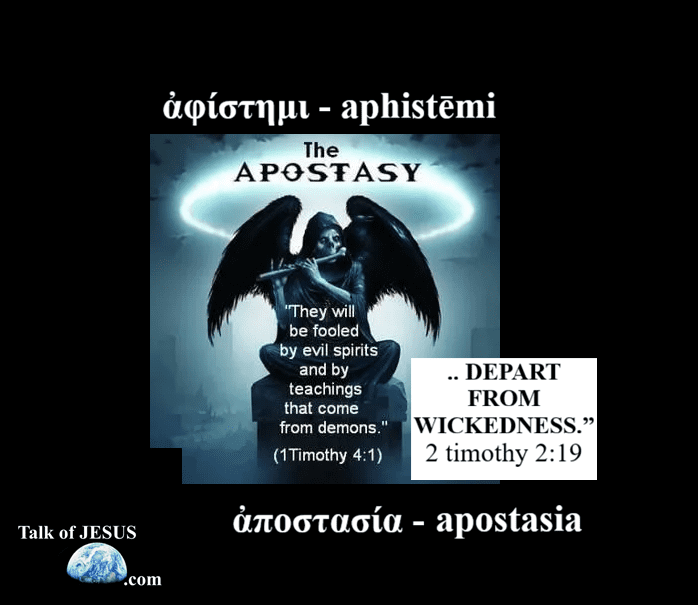
But the Spirit explicitly says that in later times some will [aphistēmi] fall away from the faith, paying attention to deceitful spirits and doctrines of demons, by the hypocrisy of liars, who have been seared in their own conscience, ..
1 Timothy 4:1-2 LSB
The great enemy of God is not Nation or Ruler who turns upon God’s people from without, but the strong-speaking leader weakening the Lord’s elect from within.
2 Timothy 3:
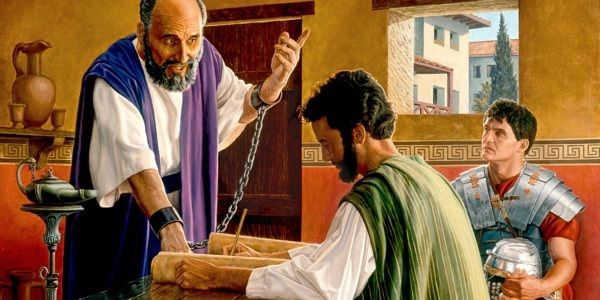
The Apostle has already cautioned in his second epistle to beware of men like Jannes and Jambres who betrayed Moses. Now Paul reminds Timothy and others of his personal example to them from the time he first witnessed to them.
You, however, know all about my teaching,
my way of life,
my purpose, faith, patience, love, endurance, persecutions, sufferings—
Second pastoral Epistle of Paul to Timothy 3:10-11a NIV
And Paul then outlines some life-threatening events many of them witnessed which proved his faith through several persecutions and many injuries suffered:
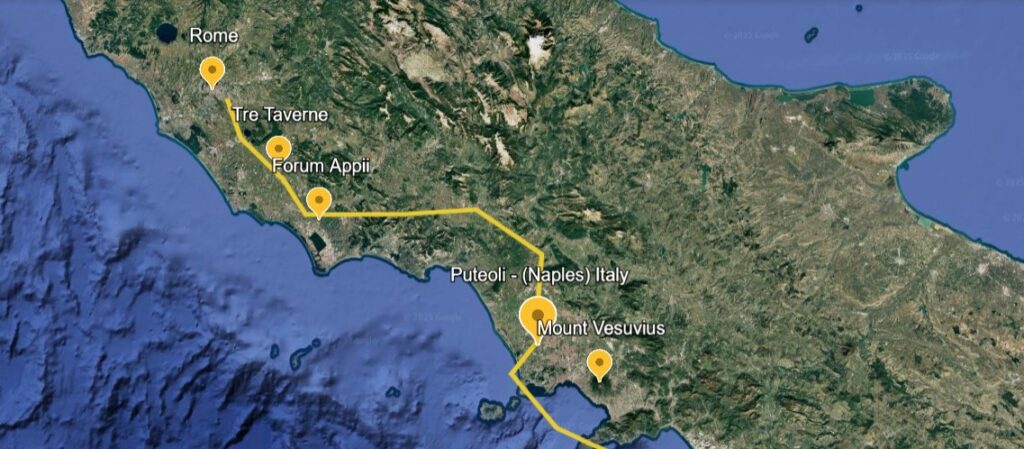
—what kinds of things happened to me in Antioch, Iconium and Lystra, the persecutions I endured.
Yet the Lord rescued me from all of them.
2 Timothy 3:11b NIV
Who would endure such suffering for Jesus Christ if not a witness to Truth?
And it will not ONLY be Apostles, cautions Paul:
Indeed, all who desire to live godly in Christ Jesus will be persecuted.
But evil men and impostors will proceed from bad to worse, deceiving and being deceived.
2 Timothy 3:12-13
HOW do faithful believers discern the difference between true Christ-followers and those misrepresenting JESUS for their own worldly gain?
The DANGER WITHIN threatens the CHURCH often unnoticed during DIFFICULT TIMES, because its leaders overlook Scripture.
Last Days and Difficult Times
The last days — eschatos hēmera, difficult times — chalepos kairos...
kai toutous apotrepō – from such turn away.
Avoid such people!
YES, they may be prominent members, even Elders, leaders, priests or pastors in Christ’s church where you worship.
They will maintain the outward appearance of religion but will have repudiated its power. So avoid people like these.
2 Timothy 3:5 New English Translation
Knowing What You Know
The Apostle compares his own life to a different life promised by false teachers.
(For these are only the beginning of the last days before Christ’s return).
But as for you, continue in what you have learned and have become convinced of, because you know those from whom you learned it, and how from infancy you have known the Holy Scriptures, which are able to make you wise for salvation through faith in Christ Jesus.
2 Timothy 3:14-15 NIV
So how does a pastor like Timothy, or Elder, or simply a humble saint know who to believe?
Questions for a Common Era christian church
Have any priestly men of your parrish repented of the calf replaced by idols of a woman worshiped?

Did episkopois above bishops elevate hagios long passed as ancient intercessors worshiped?

Do spotlights illuminate your idols on stage for a multitude little different than what Moses witnessed on descent from Sinai?

Does your vaulting cathedral show wooden pillars of pastoral vision as the calf gathering those led by Jannes and Jambres into the worship of a new King?

Has worldly refreshment replaced Scripture in the house of the Lord?

Is the Christ of true Scripture rejected in place of some other calf-like JESUS proclaimed king without taking up a Cross?
But they won’t get away with this for long.
Someday everyone will recognize what fools they are, just as with Jannes and Jambres.
2 Timothy 3:9 NLT
Recognizing Apostasy from Scripture
As mentioned earlier we will not find the word “apostasy” frequently in the Bible, but Scripture reveals apostate acts of turning against God and Christ throughout.
Follow the meaning and connection of some of these related root words from both the Greek and Hebrew of the Bible:
Let no one in any way deceive you, for it has not come unless the [apostasia] apostasy comes first, and the man of lawlessness is revealed, the son of destruction, who opposes and exalts himself above every so-called god or object of worship, so that he takes his seat in the sanctuary of God, exhibiting himself as being God.
Second Epistle of Paul to the Thessalonians 2:2-3 LSB – regarding letters from false teachers
ἀποστασία apostasía, ap-os-tas-ee'-ah; feminine of the same as G647; defection from truth
And they said, “Moses permitted a man TO WRITE A CERTIFICATE OF DIVORCE G647 [apostasion] AND [apolyō] SEND her AWAY.”
But Jesus said to them, “Because of your hardness of heart he wrote for you this commandment. But from the beginning of creation, God MADE THEM MALE AND FEMALE…”
Gospel of Mark 10:4-6 LSB
ἀποστάσιον apostásion, ap-os-tas'-ee-on; neuter of a (presumed) adjective from a derivative of G868; properly, something separative, i.e. (specially) divorce:—(writing of) divorcement.
“And those on the rock are those who, when they hear, receive the word with joy,
Gospel of Luke 8:13 LSB — Strong’s G868 – aphistēmi – to remove, i.e. (actively) instigate to revolt; usually (reflexively) to desist, desert, etc.:—depart, draw (fall) away, refrain, withdraw self.
and these have no root;
they believe for a while,
and in time of temptation
fall G868 away G868.
LXX – Septuagint – O.T. translations from the Greek

The Septuagint, often abbreviated as LXX, is the ancient Greek translation of the Hebrew Scriptures, traditionally said to have been translated by seventy or seventy-two Jewish scholars in the 3rd century BC.
The translation of the Hebrew Scriptures into Greek was necessitated by the dispersion of the Jewish people throughout the Hellenistic world, particularly in Egypt, where many Jews had lost their Hebrew language skills.
The Septuagint holds particular significance in early Christianity, as it was the version of the Old Testament most frequently quoted by the New Testament authors.
The use of the Septuagint by the early Church Fathers further solidified its role in Christian theology and exegesis.
source: BibleHub.com
Strong’s G868 – aphistēmi – LXX
- to make stand off, cause to withdraw, to remove
- to excite to revolt
- to stand off, to stand aloof
Strong’s Number G868 matches the Greek ἀφίστημι (aphistēmi),
which occurs 150 times in 138 verses in the LXX Greek.
Keep thee far from a false matter; and the innocent and righteous slay thou not: for I will not justify the wicked.
Exodus 23:7 KJV
For they will turn away thy son from following me, that they may serve other gods: so will the anger of the LORD be kindled against you, and destroy thee suddenly.
Deuteronomy 7:4 KJV
And he did that which was evil in the sight of the LORD: he departed not from the sins of Jeroboam the son of Nebat, who made Israel to sin.
2 Kings 15: (4X)
Depart from me, all ye workers of iniquity; for the LORD hath heard the voice of my weeping.
Psalm 6;8
 Hear, ye that are far off, what I have done;
and, ye that are near, acknowledge my might.
 The sinners in Zion are afraid;
fearfulness hath surprised the hypocrites.
 Who among us shall dwell with the devouring fire?
who among us shall dwell with everlasting burnings?

- Isaiah 33:14-15 KJV
more Apostasy from the Hebrew Bible [O.T.]
Various Hebrew words could be translated into English as ‘apostasy.’
If you read more books of the Prophets, such as Isaiah {above}, you will see their turning against God repeatedly.
Your evil will chastise you,
and your apostasy will reprove you.
Know and see that it is evil and bitter
for you to forsake the LORD your God;
the fear of me is not in you,
declares the Lord GOD of hosts.Jeremiah 2:19 ESV
Strong's H4878 - mᵊšûḇâ
turning away, turning back, apostasy, backsliding
Hosea
The entire book of Hosea essentially outlines the faithlessness of God’s ‘chosen people.’
Historical Context [8th century B.C.]:
Hosea’s prophetic career spanned the reigns of several kings of Israel, including Jeroboam II, and possibly extended into the early years of the Assyrian conquest. This period was marked by political instability, social injustice, and rampant idolatry. The Northern Kingdom was prosperous but spiritually bankrupt, having turned away from Yahweh to worship Baal and other Canaanite deities.
source: BibleHub.com
.. And the LORD said to Hosea, Go, take unto thee a wife of whoredoms and children of whoredoms: for the land hath committed great whoredom, departing from the LORD.
Hosea 1:2a KJV
Though thou, Israel, play the harlot, yet let not Judah offend; and come not ye unto Gilgal, neither go ye up to Bethaven, nor swear, The LORD liveth.
Hosea 4:15
For they have sown the wind, and they shall reap the whirlwind:
it hath no stalk: the bud shall yield no meal: if so be it yield, the strangers shall swallow it up.
Israel is swallowed up: now shall they be among the Gentiles as a vessel wherein is no pleasure.
Hosea 8:7-8
When Israel was a child, then I loved him, and called my son out of Egypt…
And my people are bent to backsliding [mᵊšûḇâ – מְשׁוּבָה ] from me:
though they called them to the most High, none at all would exalt him.
Hosea 11:1,7 KJV
Return, O Israel, to the LORD your God,
for you have stumbled because of your iniquity.I will heal their apostasy [mᵊšûḇâ];
I will love them freely,
for my anger has turned from them.Hosea 14:1,4 KJV
live a godly life in Christ Jesus
But evil people and impostors will flourish. They will deceive others and will themselves be deceived.
But you must remain faithful to the things you have been taught. You know they are true, for you know you can trust those who taught you.
2 Timothy 3:13-14 NLT
NEXT: All Scripture
Talk of JESUS . com
Comment on Scripture – Share the Gospel