Tag: Isaiah

  • John 3:16 – God’s Love

    John 3:16 – God’s Love

    .. so that everyone who believes in him will not perish but have eternal life.

    John 3:16 b

    The Bible’s best known verse

    JOHN 3:16 green man
    John 3:16 KJVFor God so loved the world, that he gave his only begotten Son, that whosoever believeth

    STOP! You lost them on “whosoever and believeth.” (No one talks like that anymore except fanatics and crazy people with signs.)

    Nearly everyone has heard it. God so loved the world. – John 3:16  

    “So what?” think all the worldly viewers of your very public witness.

    And you want everyone to know the same love of our savior you have experienced (and they are so worldly). Yet every time they give you that “so what?” look.

    You may have even memorized John 3:16 as a child, but do you even get it as one mature in Christ? 

    In fact, have you truly read all of this chapter of John recently or have you ever studied John 3?

    As I mentioned in the previous post, Jesus’ dialogue with Nicodemus about Spirit continues past John 3:16.  Nicodemus, a faithful Jew, would have listened and considered every word of the Messiah of Israel.

    Let’s step back from witnessing to the world for just a moment of personal reflection in the Spirit.

    A Contemporary Conversation

    Even Christians fail to consider that Jesus spoke every word of witness fully aware that the end of His earthly mission was death — even death on a Cross.

    And so is your end, son or daughter of dust – your end is death and your destiny an awakening to the Judgment.

    Yet only in God’s Son will you have eternal life, mercy to save your soul from damnation you deserve, penalty for the sins of this mortal life.

    Those you have wronged cry out for justice. Almighty God, ‘el Shadday, from whom you walked away, grieves as a Father over the hardness of your heart.

    Why, just as Satan and your enemies have accused, you deserve no mercy.

    Has your unconverted friend or estranged family member given weight and consideration that we will perish? Do they see in Jesus eternal life in the Light of His love?

    This challenging dialogue from John’s Gospel confronts every mortal with a life or death decision: accountability to facing the LORD, with … or without repentance.

    Jesus’ Dialogue with Nicodemus, Good News for the world witnessed by John

    Now there was a Pharisee, a man named Nicodemus who was a member of the Jewish ruling council.

    John La Farge [Public domain], via Wikimedia Commons
    Visit of Nicodemus to Christ

    The Apostle John certainly records this dialogue with Nicodemus as a witness. John would have been present. His understanding at the time would not have been as complete as after the Resurrection, but John records a remarkable conversation.

    This learned Jewish official refers to Jesus as his teacher – a Master instructing him. 

    And in the room with Jesus sit John, Nicodemus, and perhaps others seeking to learn more from their Messiah.

    You should join them.

    In this dialogue with Jesus, you should listen to Jesus’ answers to informed questions of this learned ruler of Israel, who acknowledges his own place at the foot of the living Son of Man.

    And be certain to set aside what you think you know about Jesus and listen.

    John 3:

    Nicodemus: “Rabbi, we know that you are a teacher who has come from God…

    Jesus: “.. no one can see the kingdom of God unless they are born again.

    Nicodemus: “How can a man be born when he is old? ..

    Jesus: “Truly I tell you, unless someone is born of water and the Spirit, he cannot enter the kingdom of God. Whatever is born of the flesh is flesh, and whatever is born of the Spirit is spirit.

    Do not be amazed that I told you that you must be born again. The wind blows where it pleases, and you hear its sound, but you don’t know where it comes from or where it is going. So it is with everyone born of the Spirit.”

    Nicodemus: “How can these things be?

    Jesus: “Art thou a master of Israel, and knowest not these things?

    “Truly I tell you, we speak what we know and we testify to what we have seen, 

    “and you receive not our witness.

    Jesus confronts us with truth!

    Do you receive it? Or do you need to hear more from the Spirit to be convinced?

    Beloved listener, now witness to this dialogue with Nicodemus, a ruler of the Jews at the feet of Jesus for His teaching, what further proof do you need?

    Jesus: “I have spoken to you of earthly things and you do not believe; how then will you believe if I speak of heavenly things?

    “No one has ascended into heaven…

    except the one who descended from heaven —the Son of Man.

    So Jesus’ truth and question to the listener is:

    Do you believe that Jesus IS the Son of Man, the Messiah of God, descended from heaven – in the flesh?

    What will Jesus say to Nicodemus and the world of why He has descended lower than the angels to be born into the womb of a woman of dust?

    Miracle of the Cross

    14 And as Moses lifted up the bronze serpent on a pole in the wilderness, so the Son of Man must be lifted up, 

    Sign of a Raised Serpent
    Moses lifts up the brazen serpent in the wilderness
    “We sinned when we spoke against the Lord and against you. – Numbers 21:7

    The LORD intercedes for sinners… repentant sinners.

    Christ nailed to the Cross
    “so that everyone who believes in him may have eternal life.

    Nicodemus and every religious ruler of the Jews since Moses understand. Sin must be punished! A remedy for sin requires not only repentance, but sacrifice זֶבַח.

    Silence in the Presence of the Lord

    The leader of the Pharisees also remains silent in the presence of Jesus.

    Perhaps one scripture or another of response to hearing God’s Word comes to mind for Nicodemus, such as these words of the Prophet Isaiah.

    Then I said:
    
    Woe is me for I am ruined
    
    because I am a man of unclean lips
    
    and live among a people of unclean lips,
    
    and because my eyes have seen the King,
    
    the LORD of Armies.

    John 3:16

    We have listened with expectation to Jesus’ dialogue with Nicodemus, wondering along with the Apostle John what the Messiah will reveal next. In these most beloved words Jesus reveals the reason for His own Sacrifice at a time still unknown to them.

    “For God loved the world in this way:

    or “God loves the world this much:

    John’s Gospel would have been completed perhaps three decades after this conversation with Nicodemus. The world would be those to whom it is written at the time, a Greco-Roman world, believers in Greece, Asia-minor or modern-day Turkey. These gentile believers, along with Jews who accept Jesus as the Messiah, know that we are the world κόσμος kosmos to whom Jesus speaks.

    Nicodemus and Jews wondering if John the Baptist or Jesus could be their Messiah would have considered Scripture as Jesus speaks these words.

    וְהוּא יִשְׁפֹּֽט־תֵּבֵל בְּצֶדֶק יָדִין לְאֻמִּים בְּמֵישָׁרִֽים׃

    Psalm 9:8

    And he shall judge the world in righteousness, he shall minister judgment to the people in uprightness.

    Judge of the World

    You want someone to judge righteousness, don’t you?

    Yet who can judge the sins of others? Certainly not christians, as we often do. This is just one of the reasons the world hates Christ, but it is not the only reason.

    Who do you want to judge your own sin? Can you stand before the Judge of the world (whoever He may be)?

    He gave his one and only Son,

    Healing of the Serpent, Healing by the Cross

    John Wesley makes the connection of the Serpent lifted up in the wilderness [v.15] and the healing for believers by gazing upon Christ.

    He must be lifted up, that hereby he may purchase salvation for all believers: all those who look to him by faith recover spiritual health, even as all that looked at that serpent recovered bodily health.

    Yea, and this was the very design of God’s love in sending him into the world.

    God so loved the world – That is, all men under heaven: even those that despise his love, and will for that cause finally perish.

    John Wesley

    Eternal Life or Judgment?

    … so that everyone who believes in him will not perish,but have eternal life.

    Yes, all believers: Jews (Messianic Jews, as we know know them), Gentiles (the rest of the world), Greeks and Romans.

    You do not want to think of eternal life, but only this waning existence we call life. It is in the flesh and all realize it will end. But eternal life? That would be something else to consider, especially if it could contain the just punishment of our considerable sin and unrighteousness.

    17 For God did not send his Son into the world to condemn the world, but to save the world through him.

    So Jesus was not sent to condemn the world. This the Lord confirms to Nicodemus and those of you listening intently to the Messiah. Jesus came to save the world through him. Substitution for a required sacrifice, justification required for acquittal from our deserved sentence for sin.

    18 Anyone who believes in him is not condemned,

    Good News!

    This is Good News to the Pharisee Nicodemus, who by his knowledge of Scripture believes in the resurrection.

    And it is Good News to and who listen to the Messiah, the Son of God our Father in Heaven.

    Yet Jesus adds something here christian-sounding false preachers reject. In fact, as much as we would like for this Good News to apply to all of our loved ones and friends, it does not.

    … but anyone who does not believe is already condemned, because he has not believed in the name of the one and only Son of God. 

    Sorry … your mom or your dad, your brother, sister or friend, your misleading ‘good’ religious teacher – all are condemned, if they do not substitute this God-sent Sacrifice, Christ Jesus, for their own sin.

    19 This is the judgment:

    And why? Why does a loving God accept some for eternal life, yet punish others for not accepting the Messiah Jesus as their Lord?

    Darkness or Light?

    The light has come into the world,

    Jesus IS the Light of Almighty God!

    “In him was life; and the life was the light of men,” John testifies.

    John 1:4

    … and people loved darkness rather than the light because their deeds were evil.

    It’s true. We would hide our sin in the shadows.

    Yet in the Judgment hiding sin is not an option. In the Light of Christ, the Messiah of the Lord God, we have life eternal only because He paid this dear price and severe penalty for our sin.

    Here we sit listening to Jesus, along with Nicodemus. Or here we now sit reading the truth of the Word.

    To which mortal souls of the world will you run?

    20 For everyone who does evil hates the light and avoids it, so that his deeds may not be exposed.

    21 But anyone who lives by the truth comes to the light, so that his works may be shown to be accomplished by God.”

    We must believe in Jesus to have eternal life.

    Nicodemus, now in his later life, will leave the meeting in darkness to come to the light and practice the truth, true religion in his later life. John is the only Disciple who will not lose his life for his witness of Christ Jesus.

    Shortly after this conversation between Jesus and Nicodemus, John the Baptist will be beheaded for his witness that Jesus is the promised Messiah of God.

    The Invitation of John 3:16

    And what of your witness and mine in these last days?

    What has the Spirit put on your heart as you have listened with Nicodemus to the only begotten Son of God?

    Jesus would love you!
    o mortal of dust,
    wonderfully formed
    with water and spirit.

    Yet will you love
    the Son who came down,
    born like you
    to be crucified on a Cross?

    Just to save
    your sinful soul?
    Just to save
    your sinful soul.

    Jesus So Loves the World

    Jesus would love you!      

    Roger@talkofJesus.com

    God's Love Through John
    to be continued...
  • God’s Love Through John: A God-sent Baptist

    God’s Love Through John: A God-sent Baptist

    John the Baptist is a brash Nazarite, an older cousin of Jesus who confronts all with our need for repentance.

    There was a man sent from God whose name was John. He came as a witness to testify about the light, so that all might believe through him.

    John 1:6-7 CSB

    The Gospel prologue of the Apostle John describes John the Baptist as an apostellō ἀποστέλλω, one commissioned or sent.

    See: John 1:6

    The Baptist has gained a notable following, therefore officials of the Temple send men to keep tabs on this brash Prophet.

    John the Baptist is not the kind of parishioner you particularly want to visit your synagogue.  He even challenges the validity of Herod, King of Judea. And even more threatening than that, John now has a growing following among common Jews, even as some advocate violence against their Roman captors.

    Who are you?

    19 This was John’s testimony when the Jews from Jerusalem sent priests and Levites to ask him, “Who are you?”

    John the Baptist’s Testimony

    And he confessed and did not deny; and this is what he confessed:

    “I am not the Christ.”

    21 “What then?” they asked him. “Are you Elijah?”

    “I am not,” he said.

    They asked this because of a prophesy of Malachi. 

    “Look, I am going to send you the prophet Elijah before the great and terrible day of the LORD comes.

    click for Malachi reference

    John is not the Messiah, but a messenger of the incarnation of the Messiah. Yet the Messiah would no more bring a terrible immediate judgment on Israel than John, but a lasting fulfillment of all prophesy.

    “Are you the Prophet?”

    “No,” he answered.

    John humbly answers that he is not a Prophet, but Jesus will later state clearly that John is the greatest Prophet who has ever lived. The purpose for which John is sent is not prophesy, but announcement of the Messiah.

    22 “Who are you, then?” they asked. “We need to give an answer to those who sent us. What can you tell us about yourself?”

    23 He said,

    “I am a voice of one crying out in the wilderness:

    Make straight the way of the Lord—just as Isaiah the prophet said.”

    click for reference to Yeshaiya (Isaiah) 40:3

    What did they expect?

    Let’s take a brief look at this prophesy of Isaiah for a contemporary Jewish understanding of what John the Baptist had told them as an answer to who he was.

    Isaiah 40:

    “Comfort, comfort my people,”
    says your God.
    2 “Speak tenderly to Jerusalem,
    and announce to her
    that her time of forced labor is over,
    her iniquity has been pardoned,
    and she has received from the Lord’s hand
    double for all her sins.”

    Understand that Jerusalem is not only a political capital of Judea, but a religious capital — a place of worship of the LORD for all Israel. 

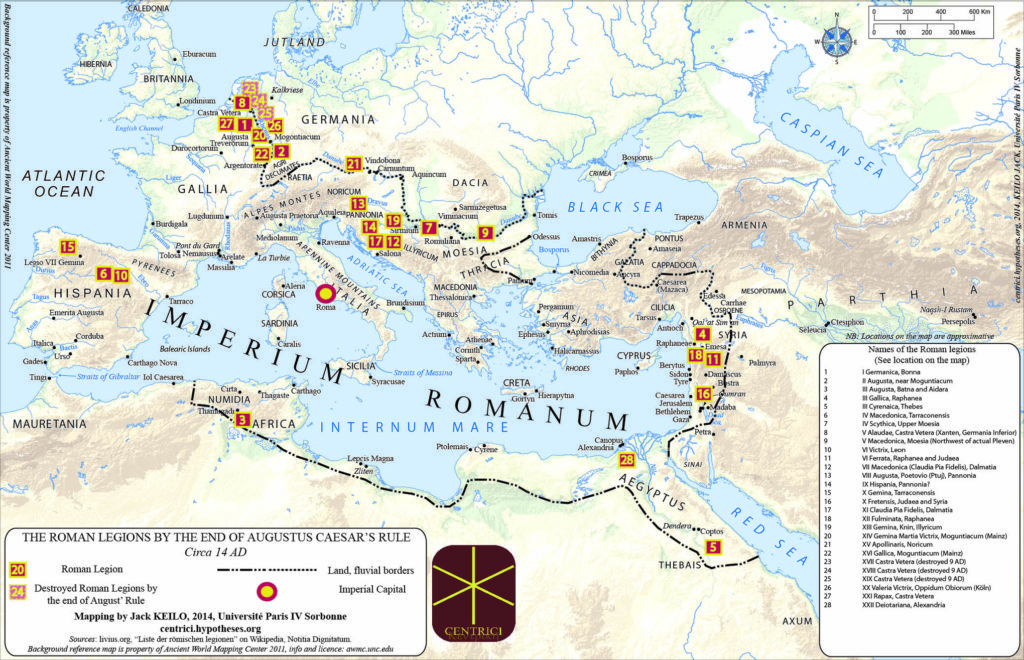
    A once united Kingdom of Israel under David and Solomon is now ruled as several different Roman-governed captive states called principates. [click to see more] Octavian has seized power from the republic of Rome and proclaimed himself as the Emperor Augustus Caesar, a ruler to be worshiped as one of many Roman gods in the world he conquers.

    3 A voice of one crying out:

    Prepare the way of the Lord in the wilderness;
    make a straight highway for our God in the desert.
    4 Every valley will be lifted up,
    and every mountain and hill will be leveled;
    the uneven ground will become smooth
    and the rough places, a plain.
    5 And the glory of the Lord will appear,
    and all humanity together will see it,
    for the mouth of the Lord has spoken.

    Isaiah’s prophecy for the freedom of Jerusalem does not say that all will take place at once; however the Jews, captives of Rome and led by a corrupt, evil and powerless King Herod, certainly must have hoped for the Lord to intervene as in the days of Moses.

    In the time of John the Baptist, the wildness near the Jordan would have been a welcome escape from the delicate politics of the Pharisees, Priests, Scribes, Temple guards and Roman legions, who all maintained strict loyalties and delicate alliances.

    Why do you baptize?

    In fact, John, the messenger of the coming Messiah preached repentance. It is the same message proclaimed by all prophets whose message is from the Lord. ‘Return to Me and I will again be your Lord.’

    John’s call to baptism of repentance is far more than a temporary religious cleansing, but personal commitment to a personal transformed return to the Lord.

    Baptism is a symbolic and public witness of this permanent change.

    click to learn more βάπτισμα

    New traditions of worship established during Israel’s several recent captivities had cultivated a politically-charged conversation about religious observances and traditions. Not least among these religious disputes is the need for cleansing and the role of various religious authorities. Of course, Jerusalem’s religious authorities had been limited not only by Rome, but also by the Herod’s.

    John 1:

    24 Now they had been sent from the Pharisees. 25 So they asked him, “Why then do you baptize if you aren’t the Messiah, or Elijah, or the Prophet?”

    26 “I baptize with water,” John answered them.

    Here is John’s message for the religious officials of captive Jerusalem:

    “Someone stands among you, but you don’t know him.

    27 He is the one coming after me, whose sandal strap I’m not worthy to untie.”

    MORE: He will baptize you with the Holy Spirit and fire.

    What next for John the Baptist?

    What do you suppose the reaction of the Pharisees in Jerusalem, Herod and others might be? 

    Fear, perhaps?

    For if the one coming after John stands among them and they don’t even know Him, the Messiah of God will have great power.

    Would the Messiah oppose the religious leaders of the chosen?

    Further, John the Baptist has a great following of the common people, faithful Jews willing to repent of their sins. A righteous crowd following powerful leaders threaten a religious and political establishment subservient to Rome and disobedient to the LORD.

    The Pharisees must be concerned about both the preaching of John and his announcement of the Messiah.

    depiction of John baptizing a man at the Jordan river

    28 All this happened in Bethany across the Jordan, where John was baptizing.


    To be continued...
  • A River of Redemption Flowing from Eden – 7 – Upstream in History

    A River of Redemption Flowing from Eden – 7 – Upstream in History

    Philip found Nathanael and said to him, “We have found him of whom Moses in the Law and also the prophets wrote, Jesus of Nazareth, the son of Joseph.” – John 1:45 ESV

    What does it mean to look upstream in history? Those seeking eternal truth look back through the eyes of scripture.

    A Basis of Law and Justice

    Looking back on the source of law somewhat resembles our search for Eden and the basis of life. We move from the still waters of a river with visible bottom to swim upstream against torrents of the unseen. How can we see justice and redemption, so distant to our own existence? 

    The answers of justice rest not in the law, but in the Lawgiver and relationship of the redeemed.


    Before the incarnation of the Messiah, yet long after the fall of Jerusalem  the Prophet Isaiah [יְשַׁעְיָה] had proclaimed: 1:27 צִיֹּון בְּמִשְׁפָּט תִּפָּדֶה וְשָׁבֶיהָ בִּצְדָקָֽה׃

    Zion shall be redeemed by justice, and those in her who repent, by righteousness. But rebels and sinners shall be broken together,
    and those who forsake the LORD shall be consumed. – Isaiah 1:27-28


    Even Isaiah had looked back upstream through the torrent of sin, just as Moses had warned in Genesis.

    9 If the Lord of hosts
    had not left us a few survivors,
    we should have been like Sodom,
    and become like Gomorrah.

    10 Hear the word of the Lord,
    you rulers of Sodom!
    Give ear to the teaching of our God,
    you people of Gomorrah!

    These warnings to obedience refer not to the law, but a broken relationship with the Lord and sinful relationships with other men. Law has basis in the relationships of men and women to each other; but above all, law requires a relationship to the commands of the Living God.

    Do godless men and evil women desire judgment?

    Their contempt for authority reflects the darkness of a mortal life lacking fear of The Almighty God. They neglect, trespass and try to circumvent the law. 

    Evil men and godless women rebel against righteousness, without regard of consequence for others or their own inevitable punishment when convicted. Do you rebel against righteousness?

    Justice fails when licentiousness claims all sin as freedom.    

    Though we tend towards lawlessness, we are free to choose obedience to the Lord. A humble sinner desires mercy and the repentant law-breaker wants restoration of relationship with the Lord. And this in addition to redemption with a community of loved-ones.

    Returning to Joseph, further upstream

    Moses, giver of the Law, was educated in Egypt and instructed by the Lord. In our previous look at these two men we learned  that Joseph was educated by Israel in Canaan, but also apprenticed under Potiphar and Pharaoh in Egypt.

    GENESIS 41:

    28 “It is just as I told Pharaoh: God has shown Pharaoh what he is about to do…

    … all the abundance in the land of Egypt will be forgotten. The famine will devastate the land… the matter has been determined by God, and he will carry it out soon.

    34 Let Pharaoh do this: Let him appoint overseers over the land and take a fifth of the harvest of the land of Egypt during the seven years of abundance.


    Does anyone note the 20% tax here? It allows the administration of government to help its citizens in the seven years of struggle ahead. Of course, the tithe (tenth) to the Lord was long established.

    Even in Egypt the King may have just required a double-portion to balance the years ahead when major markets would fail. No crops, therefore no income for the country. In addition, the people would need help or they would perish.

    We cannot think of law separate of its authority, intent and righteousness.

    Joseph, with God’s help, redeems not only Egypt, but also its struggling neighbors (for a small price). These would include his own brothers and father.

    Where there is no vision, the people perish: but he that keepeth the law, happy is he. – Proverbs 29:18 KJV


    Prince Zaphenath-paneah

    41 Pharaoh also said to Joseph, “See, I am placing you over all the land of Egypt.” 

    … 45 Pharaoh gave Joseph the name Zaphenath-paneah and gave him a wife, Asenath daughter of Potiphera, priest at On. [Heliopolis] And Joseph went throughout [Joseph gained authority over] the land of Egypt…

    50 Two sons were born to Joseph before the years of famine arrived. Asenath daughter of Potiphera, priest at On, bore them to him.

    53 Then the seven years of abundance in the land of Egypt came to an end, 54 and the seven years of famine began, just as Joseph had said. There was famine in every land, but in the whole land of Egypt there was food.

    55 When the whole land of Egypt was stricken with famine, the people cried out to Pharaoh for food. Pharaoh told all Egypt, “Go to Joseph and do whatever he tells you.”


    Moses and Pharaoh would have both spoken Egyptian (the language that became Coptic, not modern Egyptian Arabic). Moses would have almost certainly spoken Hebrew too. – source 

    As Moses looks upstream toward this time he reminds the Hebrew people, who have not yet entered the promised land of Joseph. It would be accurate in Hebrew to say this. 

    41:55 וַתִּרְעַב כָּל־אֶרֶץ מִצְרַיִם וַיִּצְעַק הָעָם אֶל־פַּרְעֹה לַלָּחֶם וַיֹּאמֶר פַּרְעֹה לְכָל־מִצְרַיִם לְכוּ אֶל־יֹוסֵף אֲשֶׁר־יֹאמַר לָכֶם תַּעֲשֽׂוּ׃

    Yet in their native Egyptian language, now the fluent first language of Joseph, these God-spoken words through Pharaoh would have been heard and later told in all the land:

    Pharaoh told all Egypt, “Go to Zaphenath-paneah and do whatever he tells you.”

    A familiar Redeemer we do not understand

    Later, Israel will send his other sons to Pharaoh to buy the grain they must have for survival of their animals and for food.

    The ruler of Egypt they hear (actually, Joseph) speaks a different language. He looks different than these poor men who humbly raise sheep and trade for those things they require. This redeemer they hear speaks through others in a foreign language.

    Genesis 42:

    “Where do you come from?” he asked.

    “From the land of Canaan to buy food,” they replied.

    “You are spies. You have come to see the weakness of the land.”

    “No, my lord. Your servants have come to buy food,” they said.

    17 So Joseph imprisoned them together for three days.

    18 On the third day Joseph said to them, “I fear God—do this and you will live.

    Moses’ hearers knew the outcome of redemption as we do; but Israel’s other sons did not.

    Read this reunion story again, as experienced from the fear of these men now humbled, hungry and imprisoned by a rich foreign ruler. 

    Their Redeemer Revealed

    Time passes as Israel’s sons return to him in Canaan, but the famine continues and they again run out of food. No alternative but to return to Egypt, ruled by Zaphenath-paneah, whose word is law of the land.

    Genesis 43:

    But the men were afraid because they were taken to the house of Zaphenath-paneah. (Of course, Moses tells us his true identity even before this redeemer of Israel reveals the Lord’s purpose.)

    … they brought him the gift they had carried into the house, and they bowed to the ground before him.

    27 He asked if they were well, and he said, “How is your elderly father that you told me about? Is he still alive?”

    28 They answered, “Your servant our father is well. He is still alive.” And they knelt low and paid homage to him.

    32 They served him by himself, his brothers by themselves, and the Egyptians who were eating with him by themselves, because Egyptians could not eat with Hebrews, since that is detestable to them.


    Are you, poor sinner, detestable to the rich? Would they choose to disavow you because they do not know the God we serve?


    Everyone leaves and they depart the next morning. Then yet another deceptive plot to bring them back once more.

    Judah pleads: “My lord, please let your servant speak personally to my lord. Do not be angry with your servant, for you are like Pharaoh. [44:18]

    Genesis 45:

    Joseph could no longer keep his composure in front of all his attendants, so he called out, “Send everyone away from me!”

    No one was with him when he revealed his identity to his brothers. 2 But he wept so loudly that the Egyptians heard it, and also Pharaoh’s household heard it.


    You know the rest, but have you weighed justice by the measure of the Lord’s purposes?

    Do you truly believe that God provides a redeemer not only through your own sufferings, but through suffering and injustice to another?

    ‘Why does God allow evil?’ we ask.

    The Redeemer of Israel gives us the Lord’s answer.

    Moses tells a people who have endured forty years in the wilderness after the passing of a generation who turned against the Law, which they both heard from the Lord and read on tablets of stone from the finger of God:

    Listen to Joseph’s words to his brothers of why this evil has happened.


    4 Then Joseph said to his brothers, “Please, come near me,” and they came near. “I am Joseph, your brother,” he said, “the one you sold into Egypt.

    7 God sent me ahead of you to establish you as a remnant within the land and to keep you alive by a great deliverance. 8 Therefore it was not you who sent me here, but God.


    And consider the weight and Authority in Joseph’s next words about Providence:

    He has made me a father to Pharaoh, lord of his entire household, and ruler over all the land of Egypt.

    A ‘father‘ to Pharaoh; not only as Jacob is their father but also in authority, even loving authority, as God IS our Father.

    Later Joseph will give the reason for their redemption:

    As for you, you meant evil against me, but God meant it for good, to bring it about that many people[fn] should be kept alive, as they are today. – Genesis 50:20 ESV

    22 Joseph and his father’s family remained in Egypt. Joseph lived 110 years.


    To be continued…