Luke chronicles THIS history of the first mission of the Church at Antioch published sometime around A.D. 60-62.
Many Christians may already have read John Mark’s Gospel written during the A.D. 50’s just a few years after this first missionary journey of Paul and Barnabas.
Cyprus was allowed a large amount of autonomy remaining mainly Greek in culture while adopting and adapting Roman customs. No Roman colonies were settled on the island.
The island is prone to earthquakes, several in the centuries prior to this missionary journey
including one as recently as A.D. 16.
Cypress had been an Egyptian (King Ptolemy) part of Roman Cilicia
a gift of Julius Caesar to Cleopatra
After Caesar Augustus defeated Marc Antony and Cleopatra, Rome made it a senatorial province
separate from Cilicia with Nea Paphos as its capitol
5. And when they reached Salamis, they began to proclaim the word of God in the synagogues of the Jews, and they also had John as their helper.
NOTE TWO POINTS HERE:
.. they began to proclaim the word of God in the synagogues of the Jews
Luke introduces John Mark as a helper to Barnabas and Saul.
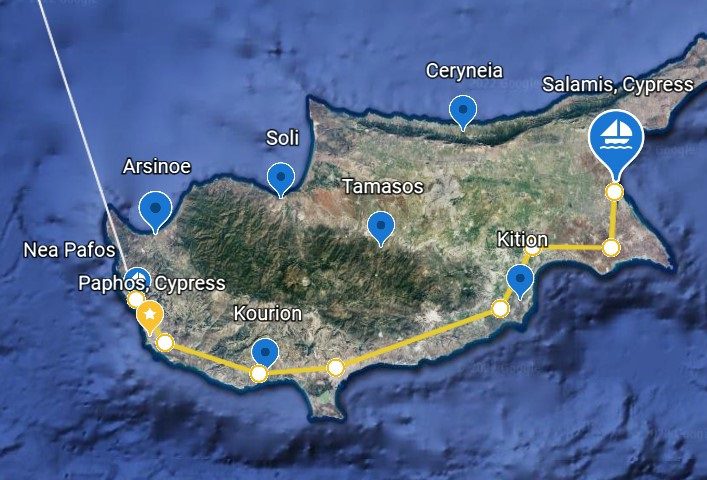
As you can see from the map of cities on Cypress at the time, this mission team would have traveled on land several times to preach the Gospel in synagogues of these Greco-Roman cities on Cypress. Not only was distance a factor in their travel but also mountains which rose to steep heights above the island. This took some time and not just a few days.
In addition to noting last time that Cypress was mostly Greek and Phoenician with a few Jews, previously I pointed out that their ‘additional passenger,’John, is the same John with earlier connections to Peter’s preaching and miracles.
Luke notes that his fellow Gospel writer [John Mark] also begins this mission trip in A.D. 47.
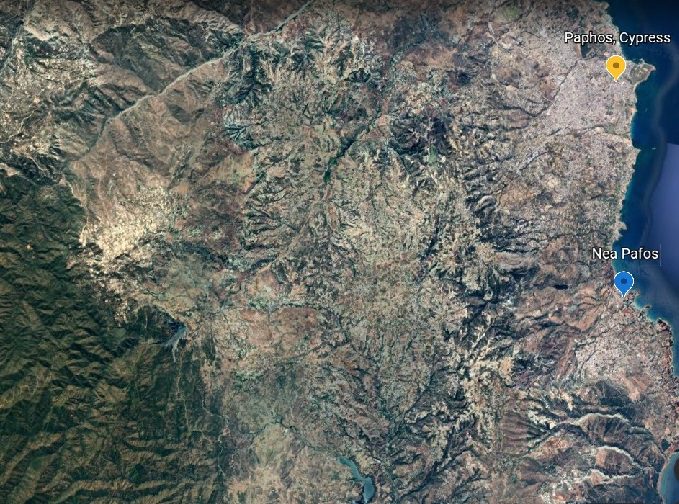
Paphos consisted of the Roman cites of Nea Pafos and Palaipafos on the southwestern coast of the island of Cypress
6 And when they had gone through the whole island as far as Paphos, they found a magician, a Jewish false prophet whose name was Bar-Jesus…
We'll introduce ourselves to this new character Bar-Jesus who they encounter on this mission shortly, but first let's take a quick look at Paphos.
Paphos
Traveling roads across the whole island would have been a journey of 110 miles along the coast OR perhaps further if they traveled additional routes familiar to Joseph [Barnabas] and others through the mountains to other cities.
New Paphos (Nea Paphos), NW of old Paphos by 7.5 miles has a natural harbor and was built by Augustus of Rome for commerce and governing its Provence of Cypress.
Old Paphos was a centre for Aphrodite’s cult. Aphrodite’s mythical birthplace was on the island.
.. the grove and altar of Aphrodite at Paphos are mentioned in the Odyssey (700 BC).
Archaeology established that Cypriots venerated a fertility goddess in a cult that combined Aegean and eastern mainland aspects before the arrival of the mainland Greeks.
Every spring a festival was held here in honor of the goddess Aphrodite – source
Phoenician merchants from Kition [Cyprus] who gained permission to found at Athens [Greece] a shrine of Aphrodite, whom they presumably looked upon as their ancestral deity Astarte – Aphrodite. READ MORE BELOW:
We’ll talk of JESUS’ evangelism model begun in the Apostles and now a command to Philip, one of Jerusalem’s first seven deacons in a moment. But first let’s review the setting of this semi-familiar scene of Philip baptizing an Ethiopian eunuch in (of all places), Gaza.
Acts of Evangelism by Christ’s disciples from Jerusalem’s Church
8: At that time a great persecution arose against the church which was at Jerusalem; and they were all scattered throughout the regions of Judea and Samaria, except the apostles.
This is Philip who served with Stephen in Jerusalem
4 Therefore those who were scattered went everywhere preaching the word.
5 Then Philip went down to the city of Samaria and preached Christ to them. And the multitudes with one accord heeded the things spoken by Philip, hearing and seeing the miracles which he did.
(We will get back to the contrast between Samaria and Gaza in a moment.)
The Apostles in Jerusalem sent Peter and John to those evangelizing the towns of Samaria.
.. they [Peter & John] returned to Jerusalem, preaching the gospel in many villages of the Samaritans.
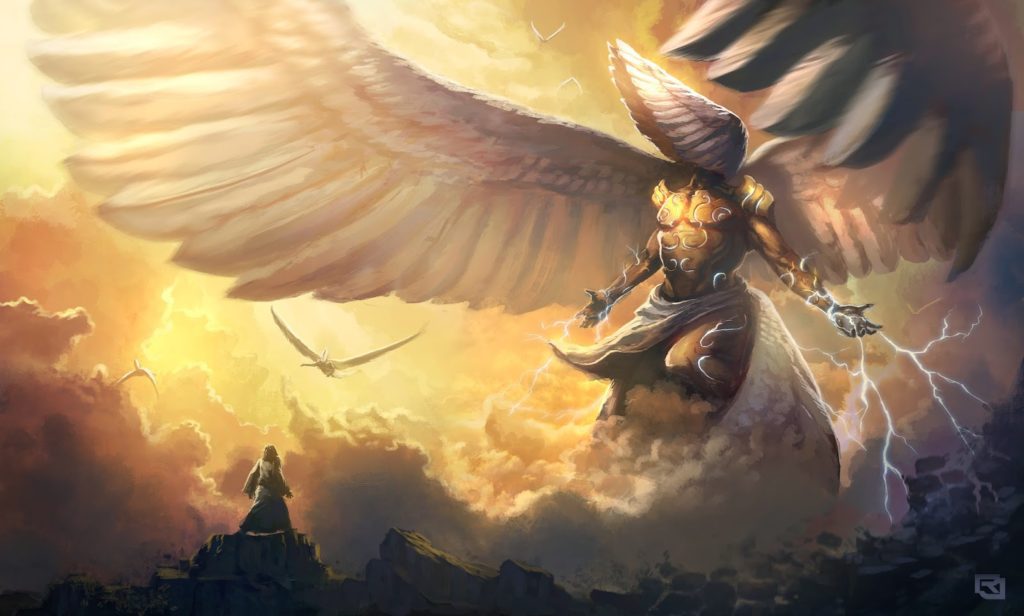
An Angel of the Lord commands Philip: GO to Gaza
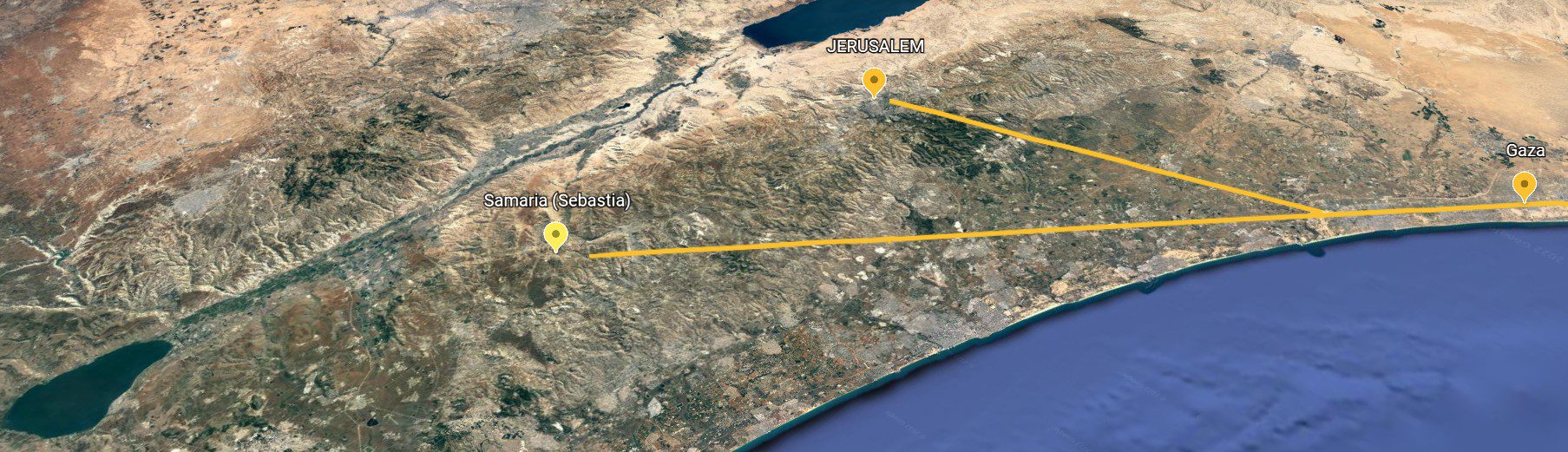
We don’t want to dismiss too quickly who sends Philip on his way from the big city of Samaria (then called, Sebastia (when rebuilt by Herod the Great) with its six thousand souls, to an uninhabited Gaza along the road from Jerusalem.
Two routes to the Gaza road along the Mediterranean shore
Luke does not use this description of just anyone.
Now an angel of the Lord appeared to him, standing to the right of the altar of incense. Zechariah [Priest of the LORD and father of John the Baptist] was troubled when he saw the angel, and fear gripped him. – Gospel of Luke 1:11-12
And an angel of the Lord suddenly stood near them, and the glory of the Lord shone around them; and they were terribly frightened. – Gospel of Luke 2:9 – from the nativity of the shepherds near Bethlehem .. (also not too far from here)
We know these instances well; however in Luke’s second account of the Acts of the Apostles the Angel of the Lord initiates some important ACTS of disciples of the Risen Christ Jesus.
Previously, our history of the Apostles imprisoned in Jerusalem has already witnessed one of these appearances of the Angel of the Lord. A praying church is astounded to see Peter and John released from prison and then returning to the Temple to preach the Gospel.
They laid hands on the apostles and put them in a public prison. But during the night an angel of the Lord opened the gates of the prison, and leading them out, he said, “Go, stand and speak to the people in the temple area the whole message of this Life.”
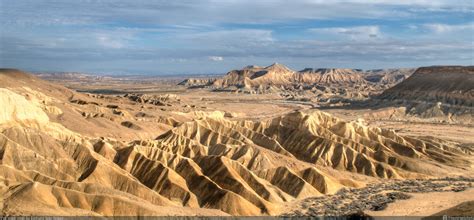
“Get ready and go south to the road that descends from Jerusalem to Gaza.” (This is a desert road.)
Acts of Philip, disciple of the Apostles, 8:26 NASB20
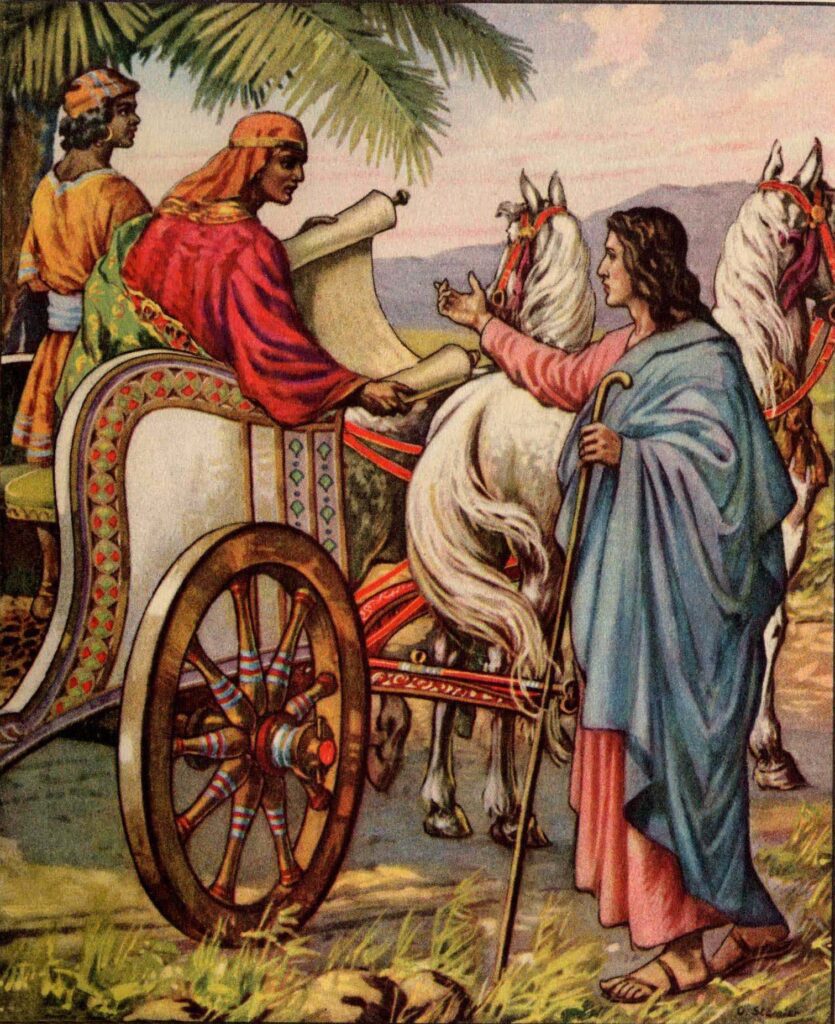
27 So he started out, and he met the treasurer of Ethiopia, a eunuch of great authority under the Kandake, the queen of Ethiopia. The eunuch had gone to Jerusalem to worship, and he was now returning.
Seated in his carriage, he was reading aloud from the book of the prophet Isaiah.
The Kandake, Queen of Ethiopia
Amanitaraqide appears to be the subject of a brief reference in the New Testament (Acts 8:27)
Amanitaraqide held the title of Kandake in the Kingdom of Kush during the years 21-41
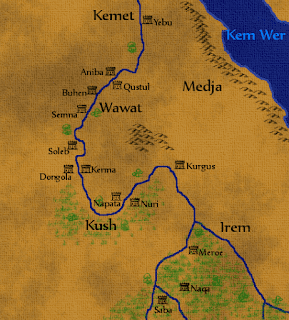
Nubia is a region along the Nile river encompassing the area between Aswan in southern Egypt and Khartoum in central Sudan. It was the seat of one of the earliest civilizations of ancient Africa, with a history that can be traced from at least 2500 BC onward, Kerma culture, and was home to several empires, most prominently the kingdom of Kush, which for a while even ruled over Egypt.

Before the 4th century, and throughout classical antiquity, Nubia was known as Kush, or, in Classical Greek usage, included under the name Ethiopia (Aithiopia).

[MAP above of this region along the Nile & descriptions: Source]
The eunuch, wearing expensive robes of a court official, rides in a royal chariot(reserved for only the highest officials of Rome and independent powerful kingdoms), would seem unapproachable by an ordinary man like Philip. For it seems this royal official would have been in Jerusalem on some important diplomatic mission as the queen’s personal representative.
If you think back to the status of Daniel in Babylon or even further back to this region of the Nile and the earned status of Joseph serving Pharaoh, you will get a good picture of the importance of this man to the highest leaders of his country.
Even in this A.D. 21st century most men like Philip (and you) would know very little about this distant country in Africa far from Jerusalem and further from Rome and the new world beyond the great ocean.
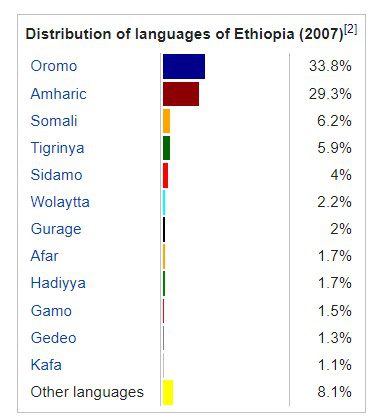
Ethiopia, like many lands, must hear the Gospel in many languages.
Graphic source: Oromo Bible Society O land, land, land, hear the word of the LORD!
No, the Ethiopian court official is not like Philip.
As a diplomat with power to travel the world on behalf of his queen, he will play an important role in the spreading of the Gospel. So after Philip obediently travels to Gaza, he discovers that this man is a brother, a Jew who studies Scripture! And here in Gaza he is returning home to Kush from worship of the LORD in Jerusalem.
(That’s right, the same Jerusalem from which Philip has fled; initially north to the city of Samaria, but now southwest of Jerusalem into the desert lands of Gaza.)
Studying Isaiah with a ‘missionary’ to Gaza
ACTS 8:
29 Then the Spirit said to Philip, “Go near and overtake this chariot.”
(Philip is on foot and has walked this distance from Samaria, but this is now a second command of the Spirit as he reaches the Gaza road.)
30 So Philip ran to him, and heard him reading the prophet Isaiah
“But be on your guard; for they will hand you over to the [Sanhedrin; or Council] courts, and you will be flogged in the synagogues, and you will stand before governors and kings for My sake, as a testimony to them.
Gospel of Mark 13:9 – Reply of Jesus to Peter, James, John and Andrew about signs of the beginning of the last days.
martyrion – From a presumed derivative of μάρτυς (G3144)
WE know it by sometimes sworn oath:
Sworn testimony is evidence given by a witness who has made a commitment to tell the truth. If the witness is later found to have lied whilst bound by the commitment, they can often be charged with the crime of perjury. The types of commitment can include oaths, affirmations and promises.. – Source: Wikipedia
Note: Talk of JESUS .com will occasionally include a testimony of Christ in other languages for our readers in other countries. Above: from Chinese law
Now Moses was faithful in all God’s house as a servant, for a testimony of those things which were to be spoken later
Our fathers had the tabernacle of the Testimony with them in the wilderness. It was constructed exactly as God had directed Moses, according to the pattern he had seen. – Acts 7:44
We have reached the point in his trial where Stephen’s testimony will quickly move on from Moses to David.
7:45 Years later, when Joshua led our ancestors in battle against the nations that God drove out of this land, the Tabernacle was taken with them into their new territory. And it stayed there until the time of King David.
Timeline: Moses *uncertain *(~15th or 13th c. B.C.); (Precise timeline of Joshua & the Judges of Israel uncertain.):
David *~1000 B.C. (dates differ between various sources); Solomon ~900's B.C. - First Temple of the United Kingdom of Israel (Judah in the south & Israel in the north) ended in 931 B.C. at Solomon's death.

Stephen's testimony before Jerusalem's leaders takes place about ten centuries (1000 years) after David,
but just two years after these judges of Herod's temple reject their Messiah Jesus.
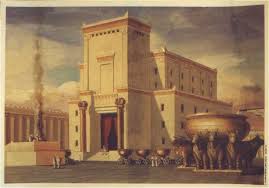
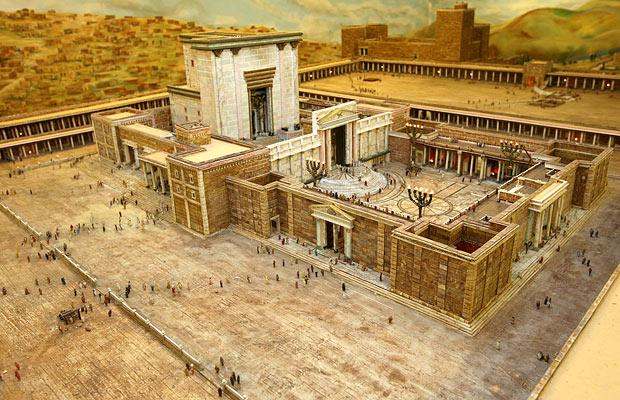
First TempleHerod’s temple
46 David found favor in God’s sight, and asked that he might find a dwelling place for the house of Jacob. But it was Solomon who built a house for Him..
Herod’s temple
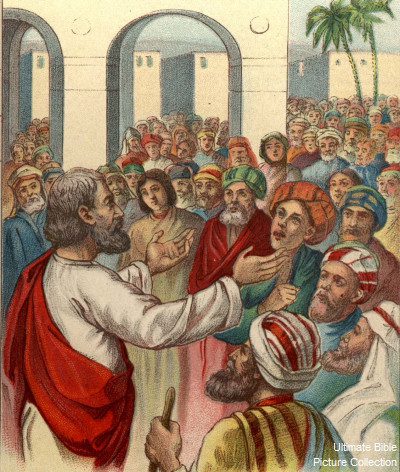
Stephen then Testifies for the LORD from Scripture:
Proverbs 29:18 WLC, ESV Where there is no prophetic vision [חָזוֹן]. the people cast off restraint,but blessed is he who keeps the law.
The Lord God has kept silent for centuries between the Prophets and John the Baptist.
These Judges of Jerusalem’s Sanhedrin have witnessed rare wonders and signswhich have prompted the faithful to ask if certain men have been sent to them from the Lord God.
Peter, John and the Apostles have healed many in Jerusalem for two years now.
And with great power the apostles were giving testimony to the resurrection of the Lord Jesus, and abundant grace was upon them all.
Before that, for three years Jesus, whom they called Son of David, performed many signs and proofs throughout Judah, Samaria and Galilee. Some had speculated that their Messiah from Nazareth could have been John the Baptist resurrected from the dead.
(Others even claim to have seen Jesus after His crucifixion on a Cross and burial in a nearby tomb!)
And many Jews, leaders of the Sanhedrin and even Herod had marveled at the preaching of John the Baptist.
John the Baptist
from the Good News of Matthew, Mark, Luke and John (who had stood with Peter during his sign at the temple):
This was John’s testimony when the Jews from Jerusalem sent priests and Levites to ask him, “Who are you? ”
He didn’t deny it but confessed: “I am not the Messiah.”
“What then? ” they asked him. “Are you Elijah? ”
“I am not,” he said.
“Are you the Prophet? ”
“No,” he answered.
“Who are you, then? ” they asked. “We need to give an answer to those who sent us. What can you tell us about yourself? ”
He said, “I am a voice of one crying out in the wilderness: Make straight the way of the Lord — just as Isaiah the prophet said.”
Jerusalem’s elders held a distant fear of the Lord, as when the Hebrew elders had asked Moses NOT to look upon the Face of the LORD. Isaiah and the Prophets of old had had visions like no earthly corporate vision of a gathering at the temple or in synagogues. So they had to be certain that men like John the baptizer and Jesus and Peter and now, Stephen (addressing them with the face of an angel) would not strike them down for their turning from God.
It is a fearful thing to fall into the hands of the living God.
Israel's ruling council, now judging Stephen, would have been well familiar with these prophesies of Isaiah,
*whose name means “The LORD is salvation,” and is similar to the names Joshua, Elisha, and Jesus; and ministered in and around Jerusalem as a prophet to Judah during the reigns of 4 kings of Judah, c. 739–686 B.C. - *Source
Holy, Holy, Holy, is the Lord of armies…
And the foundations of the thresholds trembled at the voice of him who called out, while the temple was filling with smoke.
Recall now from the testimony of Acts 6: 'All who were sitting in the Sanhedrin looked intently at Stephen, and they saw that his face was like the face of an angel,' also used of Moses after having received the Law from the LORD and Isaiah's own testimony of having seen the Lord and heard Him speak.
Isaiah – חֲזוֹן יְשַֽׁעְיָהוּ
The vision of Isaiah the son of Amoz concerning Judah and Jerusalem, which he saw during the reigns of Uzziah, Jotham, Ahaz, and Hezekiah, kings of Judah.
Listen, heavens, and hear, earth; For the LORD has spoken: “Sons I have raised and brought up, But they have revolted against Me.
“An ox knows its owner, And a donkey its master’s manger, But Israel does not know, My people do not understand.”
Oh, sinful nation, People weighed down with guilt, Offspring of evildoers, Sons who act corruptly! They have abandoned the LORD, They have despised the Holy One of Israel, They have turned away from Him.
2:12 For the Lord of armies will have a day of reckoning
Against everyone who is arrogant and haughty,
And against everyone who is lifted up,
That he may be brought low.

3:14 The Lord enters into judgment with the elders and leaders of His people,
“It is you who have devoured the vineyard;
The goods stolen from the poor are in your houses.
15 What do you mean by crushing My people
And [m]oppressing the face of the poor?”
Declares the Lord God of armies.
6:1 .. I saw the Lord sitting on a throne, lofty and exalted, with the train of His robe filling the temple.
.. And the foundations of the thresholds trembled at the voice of him who called out, while the temple was filling with smoke.
.. Then I heard the voice of the Lord, saying,
“Whom shall I send, and who will go for Us?”
.. “Send me.”
Then I said, “Lord, how long?”
And He answered, “Until cities are devastated and without inhabitant, Houses are without people, And the land is utterly desolate..
7:13 Then he said, “Listen now, house of David! Is it too trivial a thing for you to try the patience of men, that you will try the patience of my God as well?
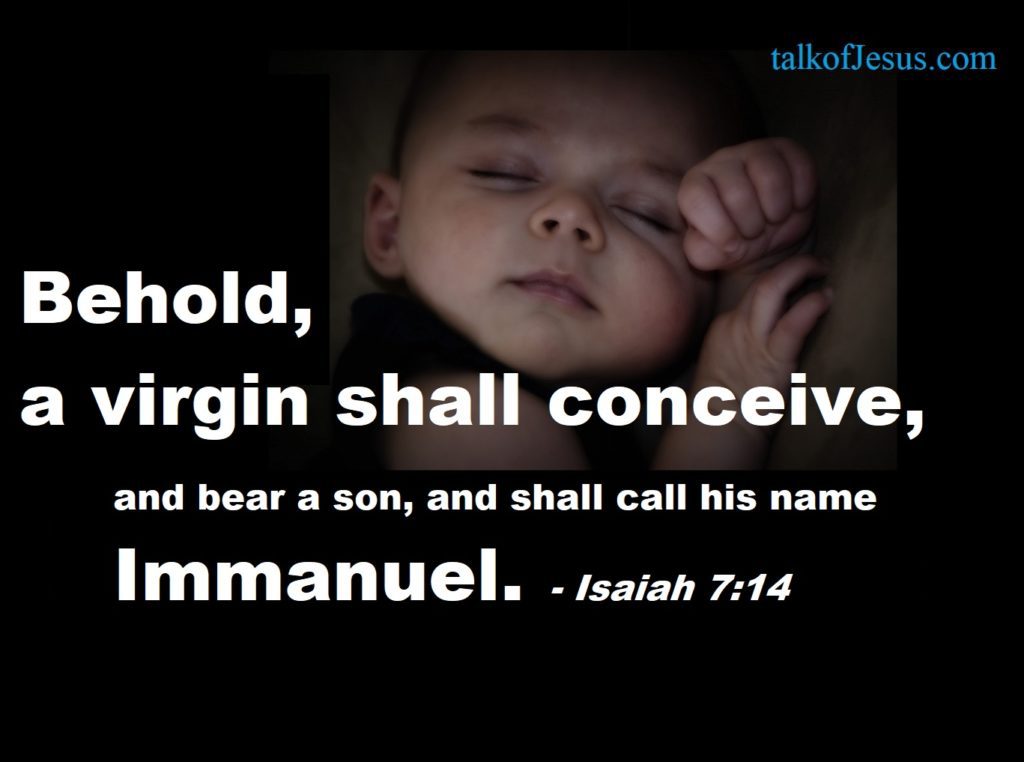
“Therefore the Lord Himself will give you a sign: Behold, the virgin will conceive and give birth to a son, and she will name Him Immanuel…
“The LORD will bring on you, on your people, and on your father’s house such days as have not come since the day that Ephraim separated from Judah—the days of the king of Assyria.”
For My hand made all these things, So all these things came into being,” declares the Lord. “But I will look to this one, At one who is humble and contrite in spirit, and who trembles at My word.
Isaiah 66:2 NASB
NEXT: Stephen’s closing argument and Sentence of the Sanhedrin
Used to monitor number of Google Analytics server requests
10 minutes
__utmb
Used to distinguish new sessions and visits. This cookie is set when the GA.js javascript library is loaded and there is no existing __utmb cookie. The cookie is updated every time data is sent to the Google Analytics server.
30 minutes after last activity
__utmc
Used only with old Urchin versions of Google Analytics and not with GA.js. Was used to distinguish between new sessions and visits at the end of a session.
End of session (browser)
__utmz
Contains information about the traffic source or campaign that directed user to the website. The cookie is set when the GA.js javascript is loaded and updated when data is sent to the Google Anaytics server
6 months after last activity
__utmv
Contains custom information set by the web developer via the _setCustomVar method in Google Analytics. This cookie is updated every time new data is sent to the Google Analytics server.
2 years after last activity
__utmx
Used to determine whether a user is included in an A / B or Multivariate test.
18 months
_ga
ID used to identify users
2 years
_gali
Used by Google Analytics to determine which links on a page are being clicked
30 seconds
_ga_
ID used to identify users
2 years
_gid
ID used to identify users for 24 hours after last activity
24 hours
_gat
Used to monitor number of Google Analytics server requests when using Google Tag Manager
1 minute
_gac_
Contains information related to marketing campaigns of the user. These are shared with Google AdWords / Google Ads when the Google Ads and Google Analytics accounts are linked together.