Where is the promise of his coming? For ever since the fathers fell asleep, all things are continuing as they were from the beginning of creation.”
Previously: Part 1; Part 2; Part 3
The Lord is not slow to fulfill his promise as some count slowness, but is patient toward you, not wishing that any should perish, but that all should reach repentance. 2 Peter 3:9
Think back beyond your years and perhaps you may recall an event just two generations past in the days of your grandfather. But who can understand the times a hundred generations before us, even the lives of those living when Christ was born.
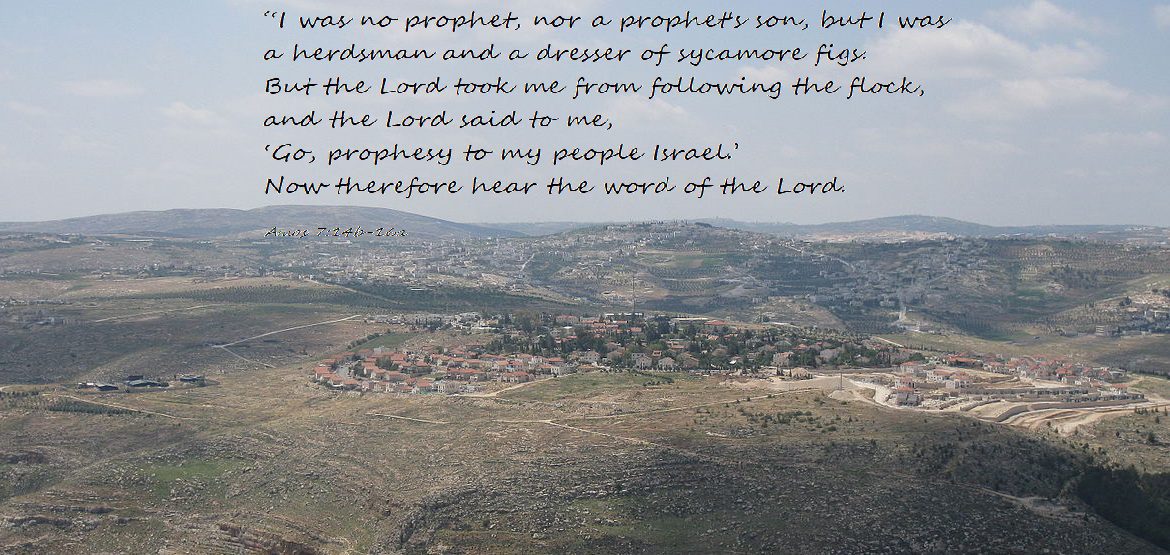
Even before Christ the impatience of man questioned the patience of the Lord. Early Prophets like Amos had been long forgotten by the time some promises had been fulfilled by the birth of a Messiah.
Just as now the unexplored landscape of our new world would have been completely unimaginable to Columbus, men in the days of the first century did not remember Moses or David or the Prophets with any contemporary context of understanding. Yet in each generation before Christ men and women of those days could hardly imagine the promise of the Messiah to come.
Each century between the Prophets and Christ would have seemed unmeasurable with the century’s beginning unfamiliar to the generations of its completion. Think about each hundred years of history as if today you looked back upon the just ending World War I [November 11, 1918], then multiply our forgetfulness of the promise by 21 centuries since the manger of Bethlehem.
Promise of a Messiah a long time away
How far away could you imagine the promise of hope spoken by a Prophet of the LORD in each of these centuries, so many generations ‘Before Christ?’
A thousand years, ten centuries, uncountable generations from the success of Solomon to the hope of a Savior.
Challenge: Scroll slowly through the centuries between David and the Son of David, the promised Messiah.
| |
|
|
|
|
|
|
|
|
|
|
|
|
|
|
|
Source: TOW |
|
|
|
|
|
Period / Century
|
Northern Kings – Israel (Samaria)
|
Northern Prophets Israel Sararia
|
Southern Kings – Judah (Judea)
|
Southern Prophets Judah
|
United kingdom under Saul, David, Solomon, c. 1030 – 931
|
|
|
|
|
|
|
|
|
|
|
|
| Divided kingdom |
Jeroboam (931-910) |
|
Rehoboam (931-913) |
|
|
Nadab (910-909) |
|
Abijah (913) |
|
|
Baasha (909-886) |
|
Asa (911-870) |
|
|
|
|
|
|
|
|
Elah (886) |
|
|
|
|
Zimri (885) |
|
|
|
|
Omri (885-874) |
|
|
|
|
Ahab (874-853) |
Elijah |
|
|
|
Jehoram (852-841) |
|
Jehoram (853-841) |
|
|
Jehu (841-814) |
Elisha |
Queen Athaliah (841-835) |
Obadiah |
|
Jehoahaz (814-798) |
|
Joash (835-796) |
|
|
|
|
|
|
|
|
Jehoash (798-782) |
|
Amaziah (796-767) |
|
|
Jeroboam II (793-753) |
Amos |
|
|
|
Zechariah (753-752) |
Jonah |
|
Isaiah (760-700) |
|
Shallum (752) |
|
|
|
|
Menahem 752-742) |
|
|
|
|
Pekahiah (742-740) |
Hosea (c. 792-740 B.C.) |
Uzziah (790-740) |
Joel |
|
Pekah (752-732) |
|
Jotham (750-731) |
|
| Israel ruled by other nations |
Hoshea (732-722) |
|
Ahaz (735-715) |
Nahum |
|
|
|
Hezekiah (715-686) |
Micah |
|
|
|
|
|
|
|
|
|
Manasseh (695-642) |
|
|
|
|
Amon (642-640) |
|
|
|
|
Josiah (640-609) |
Jeremiah |
|
|
|
|
Zephaniah |
|
|
|
Jehoahaz (609) |
Huldah |
|
|
|
Jehoiakim (609-597) |
Nahum |
|
|
|
|
|
Habakkuk |
| Judah ruled by other nations – Babylonian exile (597 – 538 BC) |
|
|
Jehoiachin (597) |
|
|
|
|
Zedekiah (597-586) |
Ezekiel |
| Persian Period (539-322 BC) |
|
|
Zerubbabel, governor {538-520 BC) |
Daniel |
| Post-exilic prophets |
|
|
|
Haggai |
| 5th c. B.C. |
|
|
Darius I (521-486), king of Persia |
Zechariah (520-???) |
|
|
|
Nehemiah, governor (445-425) |
Malachi |
| 4th c B.C. |
|
|
Artaxerxes II, king of Persia (404-358 BC) |
|
| Hellenistic Period (332-141 BC) |
Alexander the Great Macedonian Greek empire 356 – 323 BC
|
|
|
|
|
Ptolemaic (Egyptian) Seleucid rule in Jerusalem
|
|
|
|
|
Seleucos I (Persian) 321-215
|
|
|
|
| 3rd c. B.C. |
Antiochos III inherited in 223 BCE
|
|
|
|
|
|
|
|
|
|
| 1st c. B.C. |
|
|
Herod the Great, Roman appointed king of Judea 37–4 BC |
John the Baptist
c. 5 BC – AD30 |
| * Period summary source |
|
|
|
|
Prophets Predicted Christ
How long did you consider the generations between the time of David, 3000 years ago and the thousand years until the birth of the Messiah?
The LORD saved and redeemed a people who in every generation believed that God had forgotten them.
“Blessed be the Lord God of Israel, for he has visited and redeemed his people and has raised up a horn of salvation for us in the house of his servant David, as he spoke by the mouth of his holy prophets from of old..
Luke 1:68-70 ESV
A short list of Prophecies: Promises of many generations
15 Alas for the day!
For the day of the Lord is near,
and as destruction from the Almighty it comes.
19 To you, O Lord, I call.
For fire has devoured
the pastures of the wilderness,
and flame has burned
all the trees of the field.
Joel 2:28 “And it shall come to pass afterward,
that I will pour out my Spirit on all flesh;
your sons and your daughters shall prophesy,
your old men shall dream dreams,
and your young men shall see visions.
29 Even on the male and female servants
in those days I will pour out my Spirit.
Joel lived about eight centuries before fulfillment of his prophecies.
2 Hear, you peoples, all of you;
pay attention, O earth, and all that is in it,
and let the Lord God be a witness against you,
the Lord from his holy temple.
Speaking of ‘Peace’
Micah 3:
5 Thus says the Lord concerning the prophets
who lead my people astray,
who cry “Peace”
when they have something to eat,
but declare war against him
who puts nothing into their mouths.
(Some may recognize this scripture forgotten from the charter of the United Nations at a time Israel was reborn as a nation in 1947.)
“Come, let us go up to the mountain of the Lord,
to the house of the God of Jacob,
that he may teach us his ways
and that we may walk in his paths.”
For out of Zion shall go forth the law,
and the word of the Lord from Jerusalem.
3 He shall judge between many peoples,
and shall decide disputes for strong nations far away;
and they shall beat their swords into plowshares,
and their spears into pruning hooks;
nation shall not lift up sword against nation,
neither shall they learn war anymore;
4 but they shall sit every man under his vine and under his fig tree,
and no one shall make them afraid,
for the mouth of the Lord of hosts has spoken.
The Place of Birth of the Messiah
Micah 5:
But you, O Bethlehem Ephrathah,
who are too little to be among the clans of Judah,
from you shall come forth for me
one who is to be ruler in Israel,
whose coming forth is from of old,
from ancient days.
3 Therefore he shall give them up until the time
when she who is in labor has given birth;
then the rest of his brothers shall return
to the people of Israel.
4 And he shall stand and shepherd his flock in the strength of the Lord,
in the majesty of the name of the Lord his God.
And they shall dwell secure, for now he shall be great
to the ends of the earth.
5 And he shall be their peace.
Micah’s promise of the birth of Christ would not be fulfilled for about 700 years.
Zephaniah 3:
16 On that day it shall be said to Jerusalem:
“Fear not, O Zion;
let not your hands grow weak.
17 The Lord your God is in your midst,
a mighty one who will save;
he will rejoice over you with gladness;
he will quiet you by his love;
he will exult over you with loud singing.
Zephaniah is the great-great grandson of Judah’s King Hezekiah from the time Micah prophesied. He prophesied during the time of a successful and good King Josiah ( 640 to 609 BC). Zephaniah saw in the day of the Lord the destruction of his country, his neighbors, and eventually the whole earth. Source.
2 “I have loved you,” says the Lord…
Should this not be sufficient for worship of the Lord our God?
Over the centuries and generations Israel repeatedly has turned from the Lord, rejecting God’s love. Yet the Lord is merciful and promises a Messiah, the Savior of the faithful.
The Messenger of the Lord
Malachi 2:
17 You have wearied the Lord with your words.
But you say, “How have we wearied him?”
By saying, “Everyone who does evil is good in the sight of the Lord, and he delights in them.” Or by asking, “Where is the God of justice?”
Are we so different, even in these last days? Has Christ not promised an eternal redemption for our sin? Yet we remain impatient with mortal life.
Malachi was a late messenger among the Prophets, one after whom a great silence from the Lord would follow until another messenger of the Messiah would appear to announce the onslaught of these last days.
Malachi 3:
“Behold, I send my messenger, and he will prepare the way before me. And the Lord whom you seek will suddenly come to his temple; and the messenger of the covenant in whom you delight, behold, he is coming, says the Lord of hosts.
The Book of Remembrance
16 Then those who feared the Lord spoke with one another. The Lord paid attention and heard them, and a book of remembrance was written before him of those who feared the Lord and esteemed his name.
17 “They shall be mine, says the Lord of hosts, in the day when I make up my treasured possession, and I will spare them as a man spares his son who serves him. 18 Then once more you shall see the distinction between the righteous and the wicked, between one who serves God and one who does not serve him.
Malachi likely delivered his message many years after the Israelites rebuilt the temple in 515 BC. The prophet’s concerns mirror those of Nehemiah’s, suggesting that Malachi prophesied to the people while Nehemiah left the city for several years, beginning in 432 BC. Source.
Generations of silence without prophecy, then the LORD sends a messenger to the wilderness and a Messiah to a manger in Bethlehem.
Judgment and mercy will be in His right hand. He will be a Savior of the Remnant and Hope to the Nations.
A messenger will announce the Son of David, the Promised One…
In the LORD’s time… the Messiah of Israel and Savior of the Nations; predicted by the Prophets, proclaimed by angels, born in a manger, worshiped by shepherds and kings: Jesus, Son of God, Son of man!
+

 The book of Kings records the history of a United Israel and division into the kings of Judah and kings of Israel. Kings reveals which kings ‘did evil in the sight of the Lord’ or what good they accomplished. It continues with defeats, captivity and restoration in an account nearly parallel to Chronicles.