Tag: james

  • Sanctification and your Walk Toward Holiness

    Sanctification and your Walk Toward Holiness

    WHAT IS SANCTIFICATION and WHY DOES IT MATTER?

    Walking instructions to please God more

    Furthermore then we beseech you, brethren, and exhort you by the Lord Jesus, that as ye have received of us how ye ought to walk and to please God, so ye would abound more and more. – 1 Thessalonians 4:1 KJV

    SOUNDS LIKE GOOD FATHERLY ADVICE, doesn’t it?

    Allow me to tell you a story about a letter.

    ONCE UPON A TIME there were some gentile pigs (as Jews supposed them to be) 
    who having fled their straw and stick houses to a brother's brick-built house where these young believers thought they were safe from the enemy.
    
    BUT did some young saint slip out through a wider door of their former sins?
    And won't the unclean pig only to be barbecued by the enemy?
    
    Paul, a father of these tender believers, knows that the enemy may deceive them. 
    

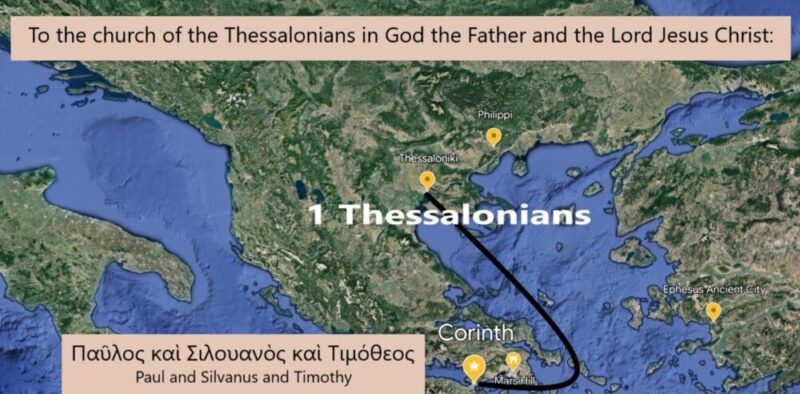
    The apostles Paul and Silas have recently received good news about the Thessalonians from Timothy.


    Jesus Christ sends out apostles who in turn continue the sanctification of the saints won to the church. "and there they continued to preach the gospel. Acts 14:7 talkofJESUS.com

    ἀπόστολος – Apostles of Christ

    and communication with the Church

    1 Thessalonians 3: .. we were willing to be left behind at Athens alone, 2 and we sent Timothy, our brother and God’s coworker in the gospel of Christ, to establish and exhort you in your faith..

    BEFORE Paul’s speech to the idol worshipers of Athens — BETWEEN the two missionary journeys (the first with Barnabas and this with Silvanus) — the risen Jesus sent out JEWS and GENTILES with clarification of the GOOD NEWS (Gospel) of ALL believers becoming sanctified by the blood of the Cross and a call to holiness and righteousness in Christ.

    .. we should not trouble those of the Gentiles who turn to God,
    but should write to them
    to abstain from the things polluted by idols, and from sexual immorality, and from what has been strangled, and from blood.
    Acts 15:19b-20 ESV

    Letters from other Church Fathers about Sanctification

    In the sense that Jesus’ biological half-brother James sends out this apostolic instruction and another letter to the Church, for he too is an apostle (although not by a personal journey into the nations).

    In A.D. 49 James writes:

    And let steadfastness have its full effect, that you may be perfect and complete, lacking in nothing.

    James 1:4

    Therefore put away all filthiness and rampant wickedness and receive with meekness the implanted word, which is able to save your souls.

    from a recent letter from James 1:21 ESV written ~A.D. 49 ~ the same time as the Council at Jerusalem
    the first missionary journey of Paul and Barnabas included a broad area the Romans governed as Galatia, including Cypress at the time

    Galatia was a large Roman province which at that time included the region north to the Black Sea but most populated along the Mediterranean and included Cypress, Pamphylia and other regions.

    Paul has already written a general epistle to the Galatians in A.D. 49 which includes churches founded during his first missionary journey.

    Sanctification of children learning to walk in Christ

    Formerly, when you did not know God, you were enslaved to those that by nature are not gods. But now that you have come to know God, or rather to be known by God,

    how can you turn back again to the weak and worthless elementary principles of the world, whose slaves you want to be once more?

    Paul’s letter (epistle) to the Galatians 4:8-9 ESV

    “Abba! Father!” WE ARE NO LONGER SLAVES of these things!

    Now the works of the flesh are evident:

    • sexual immorality,
    • impurity,
    • sensuality,
    • idolatry,
    • sorcery,
    • enmity,
    • strife,
    • jealousy,
    • fits of anger,
    • rivalries,
    • dissensions,
    • divisions,
    • envy,
    • drunkenness,
    • orgies,
    • and things like these.

    I warn you, as I warned you before, that those who do such things will not inherit the kingdom of God.

    Paul’s letter (epistle) to the Galatians 5:19-21 ESV

    A.D. 50 –

    Paul, so pleased with his Thessalonian children, now warns of dangers before them.

    1 Thessalonians 4:

    2 For you know what instructions we gave you through the Lord Jesus.

    The Apostle sent by Christ our Lord to the Nations commands his beloved young children.

    3 For this is the will of God,

    your sanctification:

    Before we continue with Paul's command through the Lord Jesus and God the Father let's DEFINE a term sometimes omitted from some English translations of the Holy Bible.

    ἁγιασμός – Lexicon :: Strong’s G38 – hagiasmos

    a word used only by Biblical and ecclesiastical writings signifying:

    1. consecration, purification, τὸ ἁγιάζειν.
    2. the effect of consecration: sanctification of heart and life, 1 Corinthians 1:30 (Christ is he to whom we are indebted for sanctification); 1 Thessalonians 4:7; Romans 6:19, 22; 1 Timothy 2:15; Hebrews 12:14; ἁγιασμὸς πνεύματος sanctification wrought by the Holy Spirit, 2 Thessalonians 2:13; 1 Peter 1:2.

    It is opposed to lust in 1 Thessalonians 4:3 f. (It is used in a ritual sense, Judges 17:3 [Alexandrian LXX]; Ezekiel 45:4; [Amos 2:11]; Sir. 7:31, etc.) [On its use in the N. T. cf. Ellicott on 1 Thessalonians 4:3; 1 Thessalonians 3:13.]

    The King James and other versions of the Bible generally translate this as SANCTIFICATION or HOLINESS. Paul will use it 3x in the next few verses of his Epistle and uses its root word in his benediction [5:23], as well as later in a second letter.

    God has chosen you as the first fruits for salvation through sanctification by the Spirit and faith in the truth.

    2 Thessalonians 2:13B

    that you abstain ἀπέχω

    from sexual immorality

    Here’s a HOT TOPIC in Thessaloniki now OR anywhere in every generation.

    πορνεία

    porneia

    fornication” is the old word for this “porneia” behaviour nearly no one remembers.

    Pride in sexual perversion is not only sin, but not the only perversity of rejecting the Gospel of God.
    • illicit sexual intercourse
      • adultery, fornication, homosexuality, lesbianism, intercourse with animals etc.
      • sexual intercourse with close relatives; Lev. 18
      • sexual intercourse with a divorced man or woman; Mk. 10:11-12
    • metaph. the worship of idols

    Each must control our body

    4 that each one of you know how to control his own body in holiness and honor, not in the passion of lust like the Gentiles who do not know God.

    "..possess his own vessel" [acquire his OWN wife, referring to fornication or adultery, states the King James] 
    "..in sanctification and honor,"
    
    THERE IT IS AGAIN - SANCTIFICATION of the flesh (for HOLINESS of the vessel of our spirit).

    WHY CONTROL IT?

    Again, from the KJV, the reason lies at the end of Paul's single long sentence which began back in v.3.

    For this is the will of God, even your sanctification.. That no man go beyond and defraud his brother in any matter:

    because that the Lord is the avenger of all such, as we also have forewarned you and testified.

    Remember v. 2 pointing back to their previous instruction in Christ?

    OR ELSE!

    For God hath not called us unto uncleanness, but unto holiness.

    ἀκαθαρσίαUNCLEANNESS?

     (Isn't there a better way for a 21st century Christian to read this?)

    Of course we could use other words to describe those who refuse to wash their flesh in the sanctifying cleansing water of the Lord Jesus Christ. The Bible almost always points toward an imagery of walking in the way Christ would be recognized by OUR witness.

    Lexicon :: Strong’s G167 – akatharsia

    ἀκαθαρσία, -ας, ἡ, (ἀκάθαρτος) [from Hippocrates down], uncleanness;
    a. physical: Matthew 23:27.
    b. in a moral sense, the impurity of lustful, luxurious, profligate living: Romans 1:24; Romans 6:19; 2 Corinthians 12:21; Galatians 5:19; Ephesians 4:19; Ephesians 5:3; Colossians 3:5; 1 Thessalonians 4:7; used of impure motives in 1 Thessalonians 2:3. (Demosthenes, p. 553, 12.) Cf. Tittmann i., p. 150f.

     Therefore whoever disregards this, disregards not man but God, who gives his Holy Spirit to you.

    1 Thessalonians 4:8 ESV

    Paul, Sylvanus and Timothy then return to their opening praise of the Thessalonian church.

    9 Now concerning brotherly love you have no need for anyone to write to you, for you yourselves have been taught by God to love one another, for that indeed is what you are doing to all the brothers throughout Macedonia.

    But we urge you, brothers, to do this more and more, and to aspire to live quietly, and to mind your own affairs, and to work with your hands, as we instructed you, so that you may walk properly before outsiders and be dependent on no one.

    I charge you by the Lord that this epistle be read unto all the holy brethren.

    1 Thessalonians 5:27 KJV – conclusion of the first Epistle from Paul to the Thessalonians

    Next (or should I say, LAST) – eschatology

    I have already detailed Paul’s praise for this church with the enemy at the door of its brick house, BUT we won’t want to overlook the Apostle’s warning of later times like these…

    song: "Who's afraid of the big bad wolf, the big bad wolf, the big bad wolf? [repeat] from inside our answer: "Not me.'

    Some commentators believe Paul’s principle purpose in writing to the Thessalonians is warning about last times.

    .. the day of the Lord will come like a thief in the night. 

    Stay tuned.

  • Corinth – 1st Church Plant in ACHAIA

    Corinth – 1st Church Plant in ACHAIA

    So why did Paul leave Athens, Greece? These apostles to the Gentiles are sent to Corinth by the Holy Spirit to plant a church in Achaia.

    THIS summary of Paul's first two missions INCLUDES a 20 YEAR TIMELINE OF THE EARLY CHURCH. 
    1. After this Paul left Athens and went to Corinth.
    After Paul's speech at Mars Hill about the unknow god the Apostle departs for Corinth even though a few wanted to know more about the resurrection of of the dead and Jesus a human Son of God

    You’ll recall the Apostle’s great proclamation of the Gospel at the Areopagus of Mars Hill in the shadow of a Roman built-back-better ancient Acropolis. (The same philosophers’ debates continue into this distant millennium.)

    Now when they heard of the resurrection of the dead, some mocked. But others said, “We will hear you again about this.” – ACTS of the Apostles 17:32 ESV

    So Paul went out from their midst.

    We will talk about those new disciples who joined Paul's mission in Athens once we arrive in Corinth.

    The Mission to Corinth

    17:33 So Paul went out from their midst. 34 But some men joined him and believed, among whom also were Dionysius the Areopagite and a woman named Damaris and others with them.

    Prior to leaving Athens Dionysius and Damaris AND others join 'them.' 
    TWO new believers plus unnamed 'others.' 

    Please don’t forget that Jesus, the Twelve Apostles, rabbis, and even those Greek philosophers who invited Paul to address them at the Areopagus in Athens all had followers. Some disciples (or followers) of these men frequently traveled with these teaching mentors to learn more.

    Paul and the missionaries of the early church are no exception. The apostle to the gentiles does not preach the Gospel in Athens or anywhere else without the witness of other disciples of Jesus Christ.

    ἀποστέλλω

    Lexicon :: Strong's G649 - apostellō

    Paul has disciples of the Way of Jesus Christ with him — other apostles SENT by the Holy Spirit – and others followers sent to become ministers of Christ’s church in all the world.

    Gospel of Luke 10:

    Now after this the Lord appointed seventy others, and sent G649 them in G649 pairs ahead of Him to every city and place where He Himself was going to come.

    4 “Go! Behold, I send G649 you out G649 as lambs in the midst of wolves.

    What kind of MAN would send out 70 missionaries with the Gospel into the midst of wolves?

    JESUS!


    “The one who listens to you listens to Me, and the one who rejects you rejects Me. And he who rejects Me rejects the One who sent G649 Me.”

    Gospel of Luke 10:16 LSB – the Word of Jesus by the Authority of God the Father to seventy disciples

    Paul will later write to his disciple Timothy, whom he has already circumcised to keep the young man from the wolves seeking their lives —

    For this I was appointed a preacher and an apostle (I am telling the truth, I am not lying), a teacher of the Gentiles in faith and truth.

    1 Timothy 2:7 ESV

    Jesus had brought Paul to Himself years ago in Syria, then to Cypress and Galatia previously with Barnabas. Now with Silas and several others the Apostle of the Gentiles journeys through Syria, Galatia, Macedonia, briefly to Greece and here to ACHAIA and its important city of Corinth.

    Paul and his company of Christians from Antioch and many other places will build yet another church for the Corinthians and Christ Jesus here in the months to come.

    a 20 YEAR Timeline of 2 missions

    PAUL, as before, has fled Athens with the young lambs of Christ’s fold not only preserving his own life from the pack of Jewish and Hellenist wolves but done so to continue on the Lord Jesus’ mission before harm might be inflicted on any in his care.

    A.D. 30’s –

    Jesus crucified and raised from the dead!

    The risen Christ instructs the Twelve (now including Mathias) until Pentecost and appears to more than 500 witnesses before the Lord ascends into Heaven. Jesus’ brothers James (who will later lead the Jerusalem church) and Jude now believe and proclaim Jesus as Lord.

    The Apostles and others receive the Holy Spirit in Jerusalem and go out to Jews and Samaritans with the Gospel.

    After Saul of Tarsus (Paul) had pursued and killed many disciples of the risen Lord, Jesus confronts him near Damascus, later sending Saul into all the world as His vessel with the Gospel. Paul then goes to Arabia.

    A.D. 40’s –

    Three years after Paul’s conversion and ten years after Jesus’ resurrection Peter, who earlier had miraculously escaped prison in Jerusalem, takes the Gospel to the Gentiles, including Romans.

    Then in ~A.D. 44 the Apostle James is murdered and once again Peter is freed from prison in Jerusalem by angels.

    The Apostles have begun their journey into all the world, occasionally returning to Jerusalem where Jesus’ half-brother James is now leader of the local church.

    ~A.D. 47- 49 + Paul’s 1st Mission with Barnabas

    Now there were in the church at Antioch prophets and teachers, Barnabas, Simeon who was called Niger, Lucius of Cyrene, Manaen a lifelong friend of Herod the tetrarch, and Saul. While they were worshiping the Lord and fasting, the Holy Spirit said, “Set apart for me Barnabas and Saul for the work to which I have called them.” 3 Then after fasting and praying they laid their hands on them and sent them off.

    Acts of the Apostles 13:1-3 ESV – commissioning of Paul and Barnabas for 1st mission

    49 And the word of the Lord was spreading throughout the whole region. 50 But the Jews incited the devout women of high standing and the leading men of the city, stirred up persecution against Paul and Barnabas, and drove them out of their district. 51 But they shook off the dust from their feet against them and went to Iconium. 52 And the disciples were filled with joy and with the Holy Spirit.

    Lystra, Derbe and Iconium in the Taurus mountains.

    When an attempt was made by both Gentiles and Jews, with their rulers, to mistreat them and to stone them, they learned of it and fled to Lystra and Derbe, cities of Lycaonia, and to the surrounding country, and there they continued to preach the gospel.

    Acts of the Apostles 14:5-7 ESV

    I reiterate this from Paul’s first mission to emphasize both the persecution by Jews and Gentiles AND the persistence of the Apostles in uplifting these new churches with letters and returning to them on other missions. Barnabas and Mark returned to Cypress. On this mission Paul began by returning to these same churches of his earlier mission in the same regions of Galacia.

    Major Roman Provinces of the Aegean including: Achaia, Greece, Macedonia, Asia Minor, Galatia, Cypress and Syria including major cities of Paul's first missions.
    Go into all of the world‘ of the Hellenist Roman Aegean with the Gospel

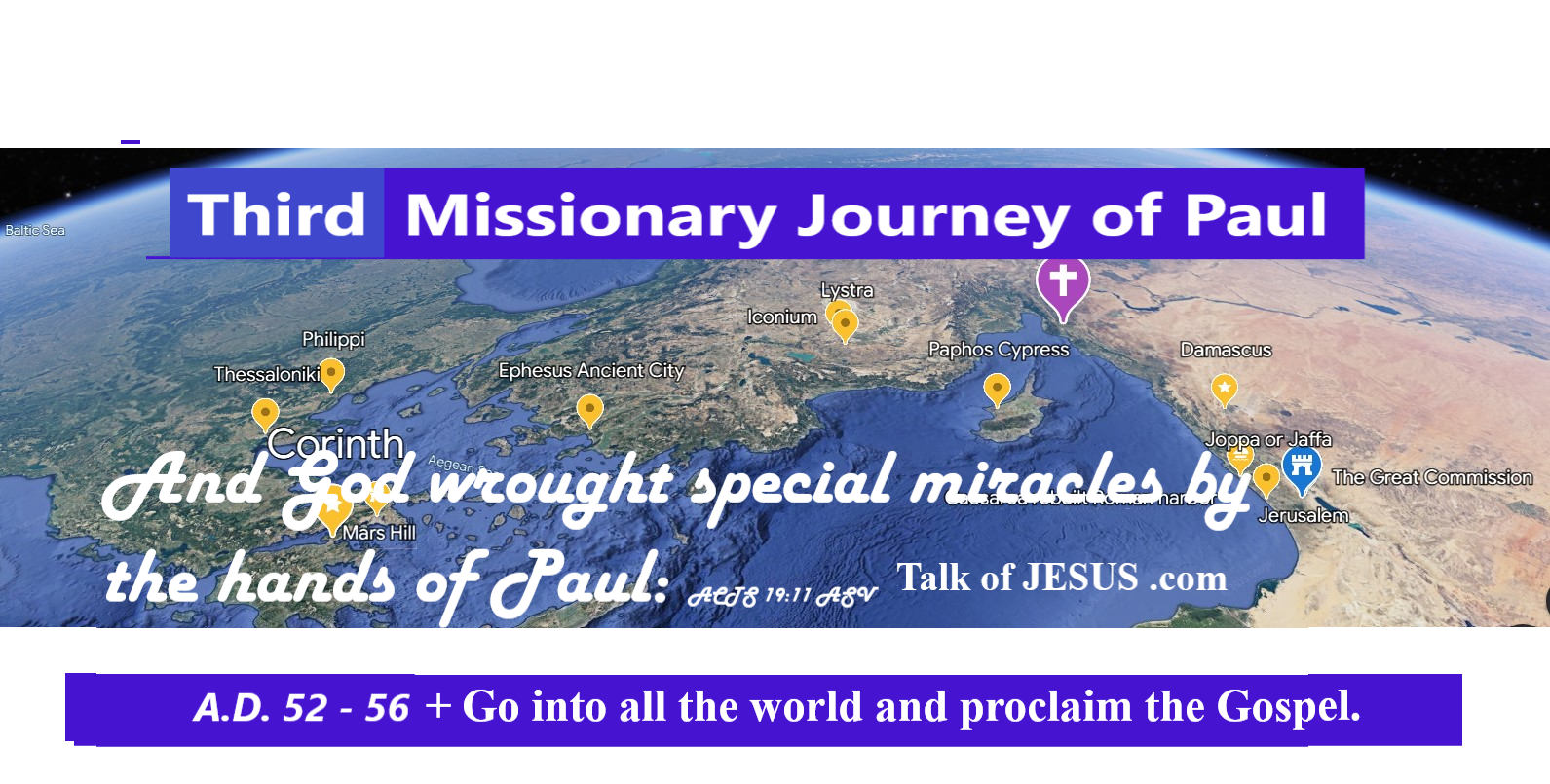
    ~A.D. 49 – 51 + Paul’s Second Mission with Silas & others

    In the year of our Lord 49 the Council at Jerusalem was followed by several notable witnesses of Christ in various ways.
    • James, brother of Jesus & leader of the church in Jerusalem writes a letter primarily to the Jews of the dispersion,

    Count it all joy, my brothers, when you meet trials of various kinds, for you know that the testing of your faith produces steadfastness. And let steadfastness have its full effect, that you may be perfect and complete, lacking in nothing.

    Letter of James 1:2-4 ESV
    • Paul writes a letter to the Galatians, saints of the churches he and Barnabas have just planted in the region of Galatia including Iconium, Lystra and Derbe.

    I am astonished that you are so quickly deserting him who called you in the grace of Christ and are turning to a different gospel— not that there is another one, but there are some who trouble you and want to distort the gospel of Christ.

    from Paul and all the brothers who are with me.. To the churches of Galatia: 1:6-7 ESV
    • The Emperor Claudius expelled most Jews (including the sect of Christians) from Rome
      • Those expelled from Rome included Priscilla and Anguilla, who the Lord will use in an important new missing in ACHAIA.

    Missionaries in Corinth sent out to the STATES of Rome

    Again, in A.D. 50 Paul has been sent out with the Gospel to several states of Roman influence – each with its own culture – each with its unique mixture of Hellenists, Italians more connected to Rome’s politics, Jews (some connected to the politics of Jerusalem), just regular residents, travelers, merchants, foreigners and of course, varying numbers of active and retired Roman soldiers.

    Acts 18 ESV – Paul in Corinth

    NOTE all the other apostles sent to Corinth in ACHAIA with Paul.

    After this Paul left Athens and went to Corinth. 2 And he found a Jew named Aquila, a native of Pontus, recently come from Italy with his wife Priscilla, because Claudius had commanded all the Jews to leave Rome. And he went to see them, 3 and because he was of the same trade he stayed with them and worked, for they were tentmakers by trade. 4 And he reasoned in the synagogue every Sabbath, and tried to persuade Jews and Greeks.

    Part of the kingdom was now annexed to the Roman Empire, being united with Bithynia in a double province called Pontus and Bithynia: this part included only the seaboard between Heraclea (today Ereğli) and Amisus (Samsun), the ora Pontica.[18] The larger part of Pontus, however, was included in the province of Galatia.

    Source: Wikipedia
    google earth of Aegean Sea coast between Troas and Macedonia

    5 When Silas and Timothy arrived from Macedonia, Paul was occupied with the word, testifying to the Jews that the Christ was Jesus. And when they opposed and reviled him, he shook out his garments and said to them,

    “Your blood be on your own heads! I am innocent. From now on I will go to the Gentiles.”

    Once again, the Apostle sent into all the world has taken the Gospel first to his brothers in the faith of God - the Jews. AND once again as in other cities before many BUT NOT ALL Jews reject Paul and the Good News of the Messiah - the Christ, Jesus.
    

    7 And he left there and went to the house of a man named Titius Justus, a worshiper of God. His house was next door to the synagogue.

    (ALSO) 8 Crispus, the ruler of the synagogue, believed in the Lord (Jesus) , together with his entire household.

    These two local men of Corinth are important and influential Jews, but they cannot dissuade the outside influences of Jewish zealots who have rejected their own Messiah.
    

    And many of the Corinthians hearing Paul believed and were baptized. 

    Acts of the Apostles 18:8b ESV

    Acts for a 21st c. Church

    – a history of the 1st century church –

    To Be Continued… in Corinth.


  • Epistle from the Council of Jerusalem – Acts 15:20

    Epistle from the Council of Jerusalem – Acts 15:20

    The Council of Jerusalem has come to a decision. They will write an epistle of instruction to the gentile churches.

    ἐπιστολή – a written message: — epistle, letter

    So when they were dismissed, they came to Antioch: and when they had gathered the multitude together, they delivered the epistle: G1992

    Acts of the Apostles 15:30, King James Version

    WHAT DO WE DO WHEN AS SOON AS WE MAKE AN IMPORTANT DECISION IMPACTING EVERYONE?

    We send out an epistle or letter or message or broadcast.

    AND like any council with authority this council of Church leaders in Jerusalem go back to their followers personally as well. These apostles of the gospel will also send their epistle or letter of instruction with other trusted messengers to churches they cannot encourage personally.


    We're getting a little ahead of today's work of the Jerusalem Council, but I thought it important to DEFINE our term and impact of today's meeting of the Apostles in Jerusalem.

    Lexicon :: Strong’s G1992 – epistolē

    – From ἐπιστέλλω (G1989) epistellō –

    Outline of Biblical Usage

    • to send one a message, command
    • to write a letter
    • to enjoin by letter, to write instructions

    Christians familiar with traditional readings of Scripture from the King James Version recognize an introduction like:

    “A reading from the Epistle of Paul to the Romans.”

    The cover letter pictured is an actual parchment of Romans 1:1-7

    Acts of the Apostles 15:30 [above] reads ‘epistle‘ in the KJV.

    But most Bibles simply translate it ‘letter.’

    You may have seen a similar epistle in Acts 9 where Luke records a previous ‘official letter’ also sent with Paul (aka at that time Saul of Tarsus) from Jerusalem.

    But Saul, still breathing threats and murder against the disciples of the Lord, went to the high priest and asked him for letters to the synagogues at Damascus, so that if he found any belonging to the Way, men or women, he might bring them bound to Jerusalem.
    – Acts of the Apostles 9:1-2 ESV

    Christians familiar with the epistles or letters of the New Testament (after Acts) see epistles addressed to an individual church, i.e. Corinth, Ephesus, where these letters were also circulated to churches throughout and beyond those regions.

    However this important earlier letter from the Council at Jerusalem was sent to as many churches as possible. And the Apostles gathered in Jerusalem specifically address Gentiles as participants and members.

    SO It could have, but was not, named:

    The Epistle of the Council of Jerusalem,

    TO the Church at Antioch Syria (where it is to be sent) OR due to apostles sent out into all the world:

    ‘TO the churches of the Gentile Nations.’


    Leaders of the Christians in Antioch had requested clarification from the Apostles and leaders of the church in Jerusalem. Most Hellenist or Greek church members were Gentiles rather than Jews of the Diaspora.


    Acts 15 – Conclusion of Pastor James

    Previously, from ACTS 15:6-19

    Do not trouble those turning to God

    .. we should not trouble those of the Gentiles who turn to God,
    but should write to them
    to abstain from the things polluted by idols, and from sexual immorality, and from what has been strangled, and from blood.

    Acts 15:19b-20 ESV

    Don’t cause trouble. Do not annoy. Do not harass.

    You get the idea; this is what Saul of Tarsus had planned to do in Damascus with the authority of the Jewish Council to persecute the converted.

    ἐπιστρέφω – Lexicon :: Strong’s G1994 – epistrephō

    transitively, a. to turn to the worship of the true God, 
    b. to cause to return, to bring back; figuratively, to the love and obedience of God ..
    

    Therefore it is my judgment that we do not trouble those who are turning to God [theos] from among the Gentiles ἔθνος [ethnos].

    YES, God chose the Jews

    BUT why would we want to keep those Gentiles whom the Lord our God has drawn through Christ?

    AND WHY add requirements which would hinder Gentiles from turning to God?

    SO James adjudicates the matter also addressing the concerns of the Jews.

    EXCEPT these practices of Jewish Law

    Here, James adds a requirement for the Gentiles but it is NOT circumcision.
    • abstain from 
      • the things polluted by idols
      • sexual immorality
      • what has been strangled
      • [from] blood

    21 For from ancient generations Moses has had in every city those who proclaim him, for he is read every Sabbath in the synagogues.”

    Epistle of James greeting of 1:1 map major Jewish cities of Roman Empire - Rome Antioch Damascas Jerusalem Alexandria
    James .. To the twelve tribes dispersed abroad. Greetings.

    A Map [above] shows first century Jewish cities of the Roman Empire to which James refers in an epistle he authored most likely during Paul’s first missionary journey just prior to the Council at Jerusalem.

    As you can see, much more communication will be required to cover so many Hellenist cities with Jewish and Christian worshipers.


    Acts 15:20 King James Version — But that we write unto them, that they abstain from pollutions of idols, and from fornication, and from things strangled, and from blood.

    Scriptural (Old Testament) Reasons for James’ exceptions

    Pollutions of idols

    – Gen 35:2; Exo 20:3-5,23; Exo 34:15,16; Num 25:2; Psa 106:37-39; Eze 20:30,31;

    “Therefore say to the house of Israel, Thus says the Lord GOD: Will you defile yourselves after the manner of your fathers and go whoring after their detestable things? When you present your gifts and offer up your children in fire, you defile yourselves with all your idols to this day. And shall I *be inquired of by you, O house of Israel? As I live, declares the Lord GOD, I will not *be inquired of by you.

    Ezra 20:30-31 KJV – *note: Lexicon :: Strong’s H1875 – dāraš
    Fornication – πορνεία – Lexicon :: Strong’s G4202 – porneia –
    • illicit sexual intercourse
      • adultery, fornication, homosexuality, lesbianism, intercourse with animals etc.
      • sexual intercourse with close relatives; Lev. 18
      • sexual intercourse with a divorced man or woman; Mk. 10:11-12
    • metaph. the worship of idols
      • of the defilement of idolatry, as incurred by eating the sacrifices offered to idols

    The beginning of the word of the LORD by Hosea. And the LORD said to Hosea, Go, take unto thee a wife of *whoredoms and children of *whoredoms: for the land hath committed great *whoredom, departing from the LORD.

    Hosea 1:2 KJV note: *Lexicon :: Strong’s H2183 – zᵊnûnîm
    from Lexicon :: Strong’s H2181 – zānâ – A primitive root [highly-fed and therefore wanton]
    Things Strangled – πνικτός pniktós, pnik-tos’

    from G4155; throttled, i.e. (neuter concretely) an animal choked to death (not bled):—strangled.

    and Blood – αἵματος – αἷμα Lexicon :: Strong’s G129 – haima of man or animals
     καὶ τοῦ αἵματος - "from what has been strangled, and from blood." - ESV is best understood in the context of Leviticus, Book of the Priests, which provides some detail about Sacrifices to God, which Christ became by His own Blood, the flesh of our Lord Jesus pierced for our transgressions.
    The Sacrifice of Blood
    Leviticus 17: ESV

    וַיִּקְרָא (Leviticus) 17 :: Westminster Leningrad Codex (WLC)

    וַיְדַבֵּר יְהוָה אֶל־מֹשֶׁה לֵּאמֹֽר׃

    1. And the LORD spoke to Moses, saying,

    10 “If any one of the house of Israel or of the strangers who sojourn among them eats any blood, I will set my face against that person who eats blood and will cut him off from among his people.

    For the life of the flesh is in the blood, and I have given it for you on the altar to make atonement for your souls,
    for it is the blood that makes atonement by the life.

    Leviticus 17:11 ESV

    12 Therefore I have said to the people of Israel, No person among you shall eat blood, neither shall any stranger who sojourns among you eat blood.

    13 “Any one also of the people of Israel, or of the strangers who sojourn among them, who takes in hunting any beast or bird that may be eaten shall pour out its blood and cover it with earth.

    For the life of every creature is its blood: its blood is its life. Therefore I have said to the people of Israel, You shall not eat the blood of any creature, for the life of every creature is its blood. Whoever eats it shall be cut off.

    Leviticus 17:14 ESV

    Letter from the Council

    Acts 15:

    22 Then it seemed good to the apostles and the elders, with the whole church, to choose men from among them and send them to Antioch with Paul and Barnabas…


    To Be Continued…

    .. with the text of their Epistle authorizing apostles for another mission to the Gentiles.