Tag: james

  • Corinth – 1st Church Plant in ACHAIA

    Corinth – 1st Church Plant in ACHAIA

    So why did Paul leave Athens, Greece? These apostles to the Gentiles are sent to Corinth by the Holy Spirit to plant a church in Achaia.

    THIS summary of Paul's first two missions INCLUDES a 20 YEAR TIMELINE OF THE EARLY CHURCH. 
    1. After this Paul left Athens and went to Corinth.
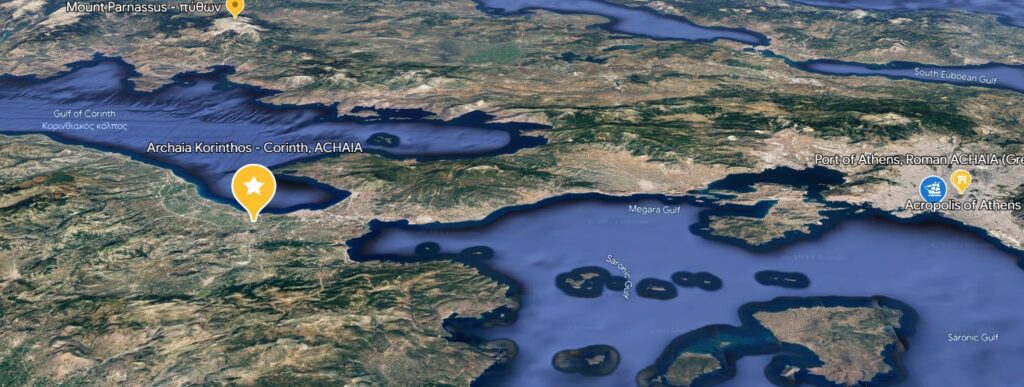
    After Paul's speech at Mars Hill about the unknow god the Apostle departs for Corinth even though a few wanted to know more about the resurrection of of the dead and Jesus a human Son of God

    You’ll recall the Apostle’s great proclamation of the Gospel at the Areopagus of Mars Hill in the shadow of a Roman built-back-better ancient Acropolis. (The same philosophers’ debates continue into this distant millennium.)

    Now when they heard of the resurrection of the dead, some mocked. But others said, “We will hear you again about this.” – ACTS of the Apostles 17:32 ESV

    So Paul went out from their midst.

    We will talk about those new disciples who joined Paul's mission in Athens once we arrive in Corinth.

    The Mission to Corinth

    17:33 So Paul went out from their midst. 34 But some men joined him and believed, among whom also were Dionysius the Areopagite and a woman named Damaris and others with them.

    Prior to leaving Athens Dionysius and Damaris AND others join 'them.' 
    TWO new believers plus unnamed 'others.' 

    Please don’t forget that Jesus, the Twelve Apostles, rabbis, and even those Greek philosophers who invited Paul to address them at the Areopagus in Athens all had followers. Some disciples (or followers) of these men frequently traveled with these teaching mentors to learn more.

    Paul and the missionaries of the early church are no exception. The apostle to the gentiles does not preach the Gospel in Athens or anywhere else without the witness of other disciples of Jesus Christ.

    ἀποστέλλω

    Lexicon :: Strong's G649 - apostellō

    Paul has disciples of the Way of Jesus Christ with him — other apostles SENT by the Holy Spirit – and others followers sent to become ministers of Christ’s church in all the world.

    Gospel of Luke 10:

    Now after this the Lord appointed seventy others, and sent G649 them in G649 pairs ahead of Him to every city and place where He Himself was going to come.

    4 “Go! Behold, I send G649 you out G649 as lambs in the midst of wolves.

    What kind of MAN would send out 70 missionaries with the Gospel into the midst of wolves?

    JESUS!


    “The one who listens to you listens to Me, and the one who rejects you rejects Me. And he who rejects Me rejects the One who sent G649 Me.”

    Gospel of Luke 10:16 LSB – the Word of Jesus by the Authority of God the Father to seventy disciples

    Paul will later write to his disciple Timothy, whom he has already circumcised to keep the young man from the wolves seeking their lives —

    For this I was appointed a preacher and an apostle (I am telling the truth, I am not lying), a teacher of the Gentiles in faith and truth.

    1 Timothy 2:7 ESV

    Jesus had brought Paul to Himself years ago in Syria, then to Cypress and Galatia previously with Barnabas. Now with Silas and several others the Apostle of the Gentiles journeys through Syria, Galatia, Macedonia, briefly to Greece and here to ACHAIA and its important city of Corinth.

    Paul and his company of Christians from Antioch and many other places will build yet another church for the Corinthians and Christ Jesus here in the months to come.

    a 20 YEAR Timeline of 2 missions

    PAUL, as before, has fled Athens with the young lambs of Christ’s fold not only preserving his own life from the pack of Jewish and Hellenist wolves but done so to continue on the Lord Jesus’ mission before harm might be inflicted on any in his care.

    A.D. 30’s –

    Jesus crucified and raised from the dead!

    The risen Christ instructs the Twelve (now including Mathias) until Pentecost and appears to more than 500 witnesses before the Lord ascends into Heaven. Jesus’ brothers James (who will later lead the Jerusalem church) and Jude now believe and proclaim Jesus as Lord.

    The Apostles and others receive the Holy Spirit in Jerusalem and go out to Jews and Samaritans with the Gospel.

    After Saul of Tarsus (Paul) had pursued and killed many disciples of the risen Lord, Jesus confronts him near Damascus, later sending Saul into all the world as His vessel with the Gospel. Paul then goes to Arabia.

    A.D. 40’s –

    Three years after Paul’s conversion and ten years after Jesus’ resurrection Peter, who earlier had miraculously escaped prison in Jerusalem, takes the Gospel to the Gentiles, including Romans.

    Then in ~A.D. 44 the Apostle James is murdered and once again Peter is freed from prison in Jerusalem by angels.

    The Apostles have begun their journey into all the world, occasionally returning to Jerusalem where Jesus’ half-brother James is now leader of the local church.

    ~A.D. 47- 49 + Paul’s 1st Mission with Barnabas

    Now there were in the church at Antioch prophets and teachers, Barnabas, Simeon who was called Niger, Lucius of Cyrene, Manaen a lifelong friend of Herod the tetrarch, and Saul. While they were worshiping the Lord and fasting, the Holy Spirit said, “Set apart for me Barnabas and Saul for the work to which I have called them.” 3 Then after fasting and praying they laid their hands on them and sent them off.

    Acts of the Apostles 13:1-3 ESV – commissioning of Paul and Barnabas for 1st mission

    49 And the word of the Lord was spreading throughout the whole region. 50 But the Jews incited the devout women of high standing and the leading men of the city, stirred up persecution against Paul and Barnabas, and drove them out of their district. 51 But they shook off the dust from their feet against them and went to Iconium. 52 And the disciples were filled with joy and with the Holy Spirit.
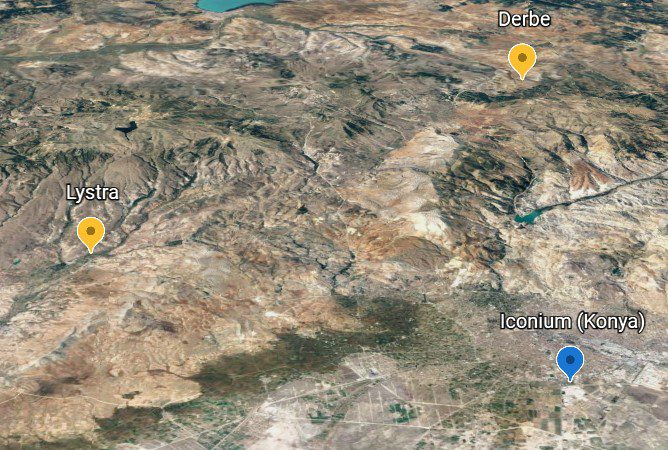
    Lystra, Derbe and Iconium in the Taurus mountains.

    When an attempt was made by both Gentiles and Jews, with their rulers, to mistreat them and to stone them, they learned of it and fled to Lystra and Derbe, cities of Lycaonia, and to the surrounding country, and there they continued to preach the gospel.

    Acts of the Apostles 14:5-7 ESV

    I reiterate this from Paul’s first mission to emphasize both the persecution by Jews and Gentiles AND the persistence of the Apostles in uplifting these new churches with letters and returning to them on other missions. Barnabas and Mark returned to Cypress. On this mission Paul began by returning to these same churches of his earlier mission in the same regions of Galacia.
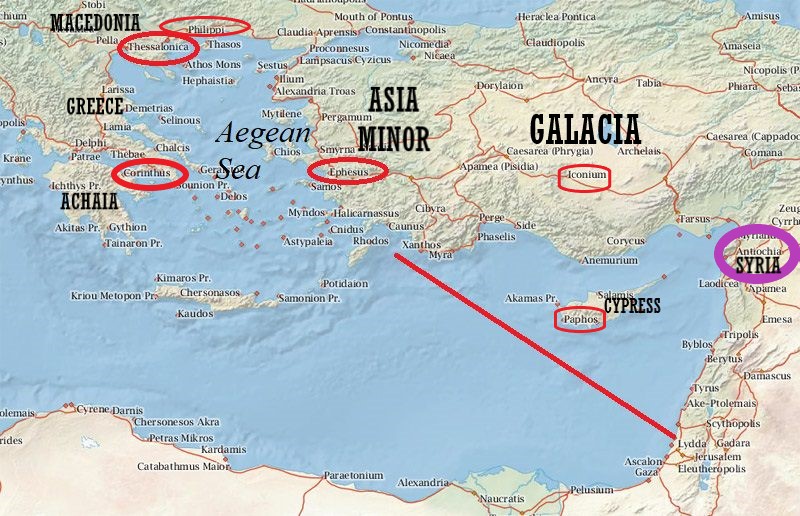
    Major Roman Provinces of the Aegean including: Achaia, Greece, Macedonia, Asia Minor, Galatia, Cypress and Syria including major cities of Paul's first missions.
    Go into all of the world‘ of the Hellenist Roman Aegean with the Gospel

    ~A.D. 49 – 51 + Paul’s Second Mission with Silas & others

    In the year of our Lord 49 the Council at Jerusalem was followed by several notable witnesses of Christ in various ways.
    • James, brother of Jesus & leader of the church in Jerusalem writes a letter primarily to the Jews of the dispersion,

    Count it all joy, my brothers, when you meet trials of various kinds, for you know that the testing of your faith produces steadfastness. And let steadfastness have its full effect, that you may be perfect and complete, lacking in nothing.

    Letter of James 1:2-4 ESV
    • Paul writes a letter to the Galatians, saints of the churches he and Barnabas have just planted in the region of Galatia including Iconium, Lystra and Derbe.

    I am astonished that you are so quickly deserting him who called you in the grace of Christ and are turning to a different gospel— not that there is another one, but there are some who trouble you and want to distort the gospel of Christ.

    from Paul and all the brothers who are with me.. To the churches of Galatia: 1:6-7 ESV
    • The Emperor Claudius expelled most Jews (including the sect of Christians) from Rome
      • Those expelled from Rome included Priscilla and Anguilla, who the Lord will use in an important new missing in ACHAIA.

    Missionaries in Corinth sent out to the STATES of Rome

    Again, in A.D. 50 Paul has been sent out with the Gospel to several states of Roman influence – each with its own culture – each with its unique mixture of Hellenists, Italians more connected to Rome’s politics, Jews (some connected to the politics of Jerusalem), just regular residents, travelers, merchants, foreigners and of course, varying numbers of active and retired Roman soldiers.

    Acts 18 ESV – Paul in Corinth

    NOTE all the other apostles sent to Corinth in ACHAIA with Paul.

    After this Paul left Athens and went to Corinth. 2 And he found a Jew named Aquila, a native of Pontus, recently come from Italy with his wife Priscilla, because Claudius had commanded all the Jews to leave Rome. And he went to see them, 3 and because he was of the same trade he stayed with them and worked, for they were tentmakers by trade. 4 And he reasoned in the synagogue every Sabbath, and tried to persuade Jews and Greeks.
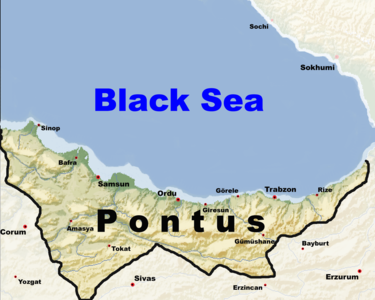
    Part of the kingdom was now annexed to the Roman Empire, being united with Bithynia in a double province called Pontus and Bithynia: this part included only the seaboard between Heraclea (today Ereğli) and Amisus (Samsun), the ora Pontica.[18] The larger part of Pontus, however, was included in the province of Galatia.

    Source: Wikipedia
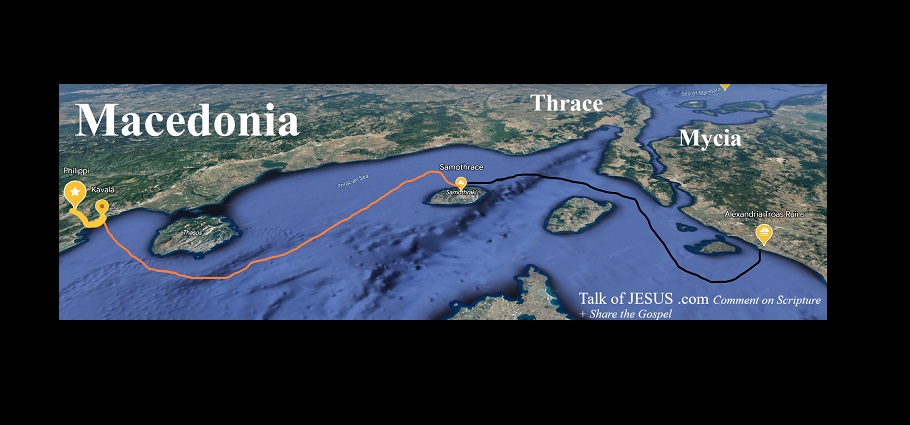
    google earth of Aegean Sea coast between Troas and Macedonia

    5 When Silas and Timothy arrived from Macedonia, Paul was occupied with the word, testifying to the Jews that the Christ was Jesus. And when they opposed and reviled him, he shook out his garments and said to them,

    “Your blood be on your own heads! I am innocent. From now on I will go to the Gentiles.”

    Once again, the Apostle sent into all the world has taken the Gospel first to his brothers in the faith of God - the Jews. AND once again as in other cities before many BUT NOT ALL Jews reject Paul and the Good News of the Messiah - the Christ, Jesus.
    

    7 And he left there and went to the house of a man named Titius Justus, a worshiper of God. His house was next door to the synagogue.

    (ALSO) 8 Crispus, the ruler of the synagogue, believed in the Lord (Jesus) , together with his entire household.

    These two local men of Corinth are important and influential Jews, but they cannot dissuade the outside influences of Jewish zealots who have rejected their own Messiah.
    

    And many of the Corinthians hearing Paul believed and were baptized. 

    Acts of the Apostles 18:8b ESV

    Acts for a 21st c. Church

    – a history of the 1st century church –

    To Be Continued… in Corinth.

  • Epistle from the Council of Jerusalem – Acts 15:20

    Epistle from the Council of Jerusalem – Acts 15:20

    The Council of Jerusalem has come to a decision. They will write an epistle of instruction to the gentile churches.

    ἐπιστολή – a written message: — epistle, letter

    So when they were dismissed, they came to Antioch: and when they had gathered the multitude together, they delivered the epistle: G1992

    Acts of the Apostles 15:30, King James Version

    WHAT DO WE DO WHEN AS SOON AS WE MAKE AN IMPORTANT DECISION IMPACTING EVERYONE?

    We send out an epistle or letter or message or broadcast.

    AND like any council with authority this council of Church leaders in Jerusalem go back to their followers personally as well. These apostles of the gospel will also send their epistle or letter of instruction with other trusted messengers to churches they cannot encourage personally.


    We're getting a little ahead of today's work of the Jerusalem Council, but I thought it important to DEFINE our term and impact of today's meeting of the Apostles in Jerusalem.

    Lexicon :: Strong’s G1992 – epistolē

    – From ἐπιστέλλω (G1989) epistellō –

    Outline of Biblical Usage

    • to send one a message, command
    • to write a letter
    • to enjoin by letter, to write instructions

    Christians familiar with traditional readings of Scripture from the King James Version recognize an introduction like:

    “A reading from the Epistle of Paul to the Romans.”

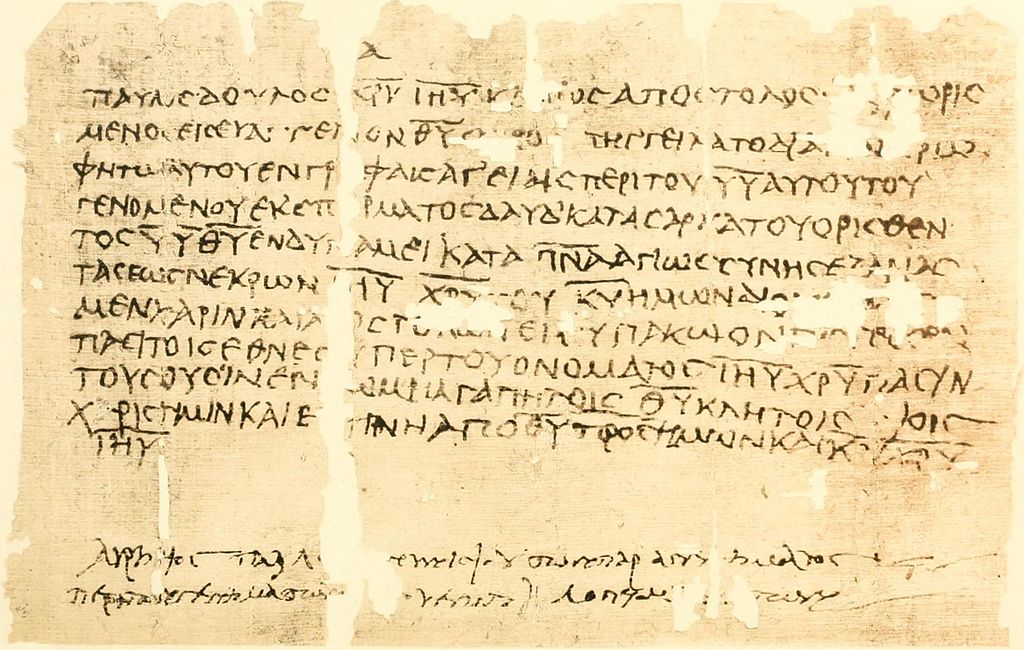
    The cover letter pictured is an actual parchment of Romans 1:1-7

    Acts of the Apostles 15:30 [above] reads ‘epistle‘ in the KJV.

    But most Bibles simply translate it ‘letter.’

    You may have seen a similar epistle in Acts 9 where Luke records a previous ‘official letter’ also sent with Paul (aka at that time Saul of Tarsus) from Jerusalem.

    But Saul, still breathing threats and murder against the disciples of the Lord, went to the high priest and asked him for letters to the synagogues at Damascus, so that if he found any belonging to the Way, men or women, he might bring them bound to Jerusalem.
    – Acts of the Apostles 9:1-2 ESV

    Christians familiar with the epistles or letters of the New Testament (after Acts) see epistles addressed to an individual church, i.e. Corinth, Ephesus, where these letters were also circulated to churches throughout and beyond those regions.

    However this important earlier letter from the Council at Jerusalem was sent to as many churches as possible. And the Apostles gathered in Jerusalem specifically address Gentiles as participants and members.

    SO It could have, but was not, named:

    The Epistle of the Council of Jerusalem,

    TO the Church at Antioch Syria (where it is to be sent) OR due to apostles sent out into all the world:

    ‘TO the churches of the Gentile Nations.’


    Leaders of the Christians in Antioch had requested clarification from the Apostles and leaders of the church in Jerusalem. Most Hellenist or Greek church members were Gentiles rather than Jews of the Diaspora.


    Acts 15 – Conclusion of Pastor James

    Previously, from ACTS 15:6-19

    Do not trouble those turning to God

    .. we should not trouble those of the Gentiles who turn to God,
    but should write to them
    to abstain from the things polluted by idols, and from sexual immorality, and from what has been strangled, and from blood.

    Acts 15:19b-20 ESV

    Don’t cause trouble. Do not annoy. Do not harass.

    You get the idea; this is what Saul of Tarsus had planned to do in Damascus with the authority of the Jewish Council to persecute the converted.

    ἐπιστρέφω – Lexicon :: Strong’s G1994 – epistrephō

    transitively, a. to turn to the worship of the true God, 
    b. to cause to return, to bring back; figuratively, to the love and obedience of God ..
    

    Therefore it is my judgment that we do not trouble those who are turning to God [theos] from among the Gentiles ἔθνος [ethnos].

    YES, God chose the Jews

    BUT why would we want to keep those Gentiles whom the Lord our God has drawn through Christ?

    AND WHY add requirements which would hinder Gentiles from turning to God?

    SO James adjudicates the matter also addressing the concerns of the Jews.

    EXCEPT these practices of Jewish Law

    Here, James adds a requirement for the Gentiles but it is NOT circumcision.
    • abstain from 
      • the things polluted by idols
      • sexual immorality
      • what has been strangled
      • [from] blood

    21 For from ancient generations Moses has had in every city those who proclaim him, for he is read every Sabbath in the synagogues.”

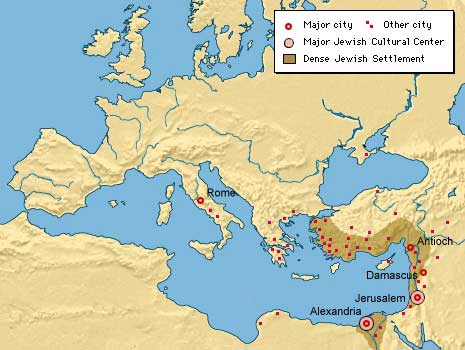
    Epistle of James greeting of 1:1 map major Jewish cities of Roman Empire - Rome Antioch Damascas Jerusalem Alexandria
    James .. To the twelve tribes dispersed abroad. Greetings.

    A Map [above] shows first century Jewish cities of the Roman Empire to which James refers in an epistle he authored most likely during Paul’s first missionary journey just prior to the Council at Jerusalem.

    As you can see, much more communication will be required to cover so many Hellenist cities with Jewish and Christian worshipers.


    Acts 15:20 King James Version — But that we write unto them, that they abstain from pollutions of idols, and from fornication, and from things strangled, and from blood.

    Scriptural (Old Testament) Reasons for James’ exceptions

    Pollutions of idols

    – Gen 35:2; Exo 20:3-5,23; Exo 34:15,16; Num 25:2; Psa 106:37-39; Eze 20:30,31;

    “Therefore say to the house of Israel, Thus says the Lord GOD: Will you defile yourselves after the manner of your fathers and go whoring after their detestable things? When you present your gifts and offer up your children in fire, you defile yourselves with all your idols to this day. And shall I *be inquired of by you, O house of Israel? As I live, declares the Lord GOD, I will not *be inquired of by you.

    Ezra 20:30-31 KJV – *note: Lexicon :: Strong’s H1875 – dāraš
    Fornication – πορνεία – Lexicon :: Strong’s G4202 – porneia –
    • illicit sexual intercourse
      • adultery, fornication, homosexuality, lesbianism, intercourse with animals etc.
      • sexual intercourse with close relatives; Lev. 18
      • sexual intercourse with a divorced man or woman; Mk. 10:11-12
    • metaph. the worship of idols
      • of the defilement of idolatry, as incurred by eating the sacrifices offered to idols

    The beginning of the word of the LORD by Hosea. And the LORD said to Hosea, Go, take unto thee a wife of *whoredoms and children of *whoredoms: for the land hath committed great *whoredom, departing from the LORD.

    Hosea 1:2 KJV note: *Lexicon :: Strong’s H2183 – zᵊnûnîm
    from Lexicon :: Strong’s H2181 – zānâ – A primitive root [highly-fed and therefore wanton]
    Things Strangled – πνικτός pniktós, pnik-tos’

    from G4155; throttled, i.e. (neuter concretely) an animal choked to death (not bled):—strangled.

    and Blood – αἵματος – αἷμα Lexicon :: Strong’s G129 – haima of man or animals
     καὶ τοῦ αἵματος - "from what has been strangled, and from blood." - ESV is best understood in the context of Leviticus, Book of the Priests, which provides some detail about Sacrifices to God, which Christ became by His own Blood, the flesh of our Lord Jesus pierced for our transgressions.
    The Sacrifice of Blood
    Leviticus 17: ESV

    וַיִּקְרָא (Leviticus) 17 :: Westminster Leningrad Codex (WLC)

    וַיְדַבֵּר יְהוָה אֶל־מֹשֶׁה לֵּאמֹֽר׃

    1. And the LORD spoke to Moses, saying,

    10 “If any one of the house of Israel or of the strangers who sojourn among them eats any blood, I will set my face against that person who eats blood and will cut him off from among his people.

    For the life of the flesh is in the blood, and I have given it for you on the altar to make atonement for your souls,
    for it is the blood that makes atonement by the life.

    Leviticus 17:11 ESV

    12 Therefore I have said to the people of Israel, No person among you shall eat blood, neither shall any stranger who sojourns among you eat blood.

    13 “Any one also of the people of Israel, or of the strangers who sojourn among them, who takes in hunting any beast or bird that may be eaten shall pour out its blood and cover it with earth.

    For the life of every creature is its blood: its blood is its life. Therefore I have said to the people of Israel, You shall not eat the blood of any creature, for the life of every creature is its blood. Whoever eats it shall be cut off.

    Leviticus 17:14 ESV

    Letter from the Council

    Acts 15:

    22 Then it seemed good to the apostles and the elders, with the whole church, to choose men from among them and send them to Antioch with Paul and Barnabas…


    To Be Continued…

    .. with the text of their Epistle authorizing apostles for another mission to the Gentiles. 

  • Truth for Gentiles who turn to God

    Truth for Gentiles who turn to God

    How will the Jerusalem Council judge Gentiles according to the Jewish Law of Moses?

    Acts 15

    6 The apostles and the elders were gathered together to consider this matter.

    Simon Peter has testified.

    “Brothers, you know that in the early days God made a choice among you, that by my mouth the Gentiles should hear the word of the gospel and believe.

    Acts of the Apostles 15:7b ESV

    And all the assembly fell silent, and they listened to Barnabas and Paul as they related what signs and wonders God had done through them among the Gentiles.

    Acts of the Apostles 15:12 ESV

    Response of Jerusalem’s Pastor James

    13 After they finished speaking, James replied,

    “Brothers, listen to me. 14 Simeon has related how God first visited the Gentiles, to take from them a people for his name. 

    Leaders and Witnesses of the Jerusalem council

    Let’s be clear who is speaking and which leaders have witnessed the truth of events leading to a church meeting about the gentiles.

    Simon Peter.

    In verse 14 the King James and English Standard versions translate Συμεών from the Greek as Simeon; however the NKJV, NIV and other versions use “Simon” while the NLT uses the most familiar identification of the Apostle, “Peter.”

    Barnabas and Paul

    Their mission journey has brought about this council and clearly both are leaders in their testimony of the Holy Spirit to the Gentiles and leadership of the church at Antioch Syria.

    James

    And let’s not miss who now speaks a the representative pastor and leader of the local church at Jerusalem where the council meets.

    It is none other than James brother of Jesus who was raised with the Lord, yet did not believe that his half-brother was the Christ, the prophesied Son of God until after Jesus’ resurrection at which time James became a faithful disciple called to lead the Jerusalem Church.

    Witness of the Prophets

    James refers to the Prophet Amos from ~760 BC and Samuel Prophet of David three hundred years before that.

    “Brothers, listen to me. 14 Simeon has related how God first visited the Gentiles, to take from them a people for his name. 15 And with this the words of the prophets agree, just as it is written,

    16 “‘After this I will return,
    and I will rebuild the tent of David that has fallen;
    I will rebuild its ruins,
         and I will restore it,
    17 that the remnant[a] of mankind may seek the Lord,
        and all the Gentiles who are called by my name,
         says the Lord, who makes these things 18 known from of old.’

    In A.D. 49, James witnesses the promises of God to David a thousand years before. Now it seems that the kingdom promised to David is all but defeated.

    The Temple of Solomon was destroyed, the Jews were captured and taken to Babylon and Persia. The distant hope witnessed by Amos and the Prophets seems near to slipping away once more at the hand of Rome (which will again destroy Jerusalem and Herod’s temple in A.D. 70).

    Yet Scripture is true and God’s word comforting to those faithful few who wait for the Lord to save — for the Lord to redeem the captives who hold to His Name — saving them from God’s judgment of sin and eternal punishment and granting His true worshipers the glory of the kingdom of the root and the son of David. Yes, even the Nations of the world beyond the hills of Jerusalem.

    Amos 9:

    I saw the Lord standing beside the altar, and he said:
    “Strike the capitals until the thresholds shake,
    and shatter them on the heads of all the people;
    and those who are left of them I will kill with the sword;
    not one of them shall flee away;
    not one of them shall escape.

    8 Behold, the eyes of the Lord GOD are upon the sinful kingdom,
    and I will destroy it from the surface of the ground,
    except that I will not utterly destroy the house of Jacob,”
    declares the LORD.

    “For behold, I will command,
    and shake the house of Israel among all the nations
    as one shakes with a sieve,
    but no pebble shall fall to the earth.

    All the sinners of my people shall die by the sword,
    who say, ‘Disaster shall not overtake or meet us.’


    This was just one judgment of Jerusalem!

    Amos had prophesied it.

    Twenty years earlier, the Sanhedrin of Herod which meets in this same Jerusalem as today’s council had crucified Jesus Christ, brother of James and Son of David. The leaders of a semi-captive Israel disregarded the revealed will and written word of the Lord God.

    The Jewish council of Herod’s Temple had also slain the Apostle James by the sword, another politically expedient death which it thought would prevent the sword of Rome from overtaking their city of sin.

    It didn’t. (For as most of us know Rome would destroy Jerusalem just twenty-one years from this time of the Christian Council in Jerusalem.)


    Amos 9:11-12 (to which James refers)

    “In that day I will raise up
    the booth of David that is fallen
    and repair its breaches,
    and raise up its ruins
    and rebuild it as in the days of old,

    that they may possess the remnant of Edom
    and all the nations who are called by my name,”
    declares the LORD who does this.

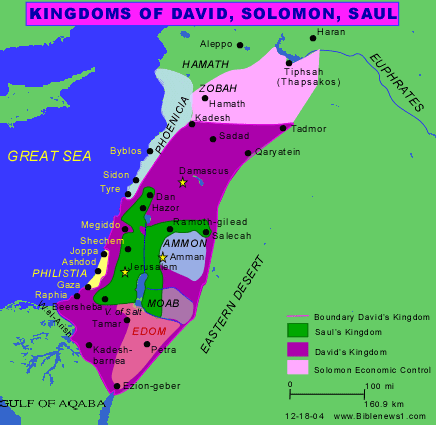
    kingdom Saul David Solomon & surrounding kingdoms of Ammon, Edom and other gentiles

    It is a remnant of Edom. Yes even a remnant of Judah and Israel after these many centuries — only a remnant who remember the Lord their God and look for the redemption paid on the Cross for “all the nations who are called by my name, says the LORD.”


    Judgment for the Gentiles

    You have probably never thought of James, brother of Jesus, pastor of the Jerusalem church and author of a New Testament letter to the church as a Judge.

    But this is his role here with the Council at Jerusalem.

    The accusations (concerning circumcision) have been presented. Several witnesses have presented evidence about the truth of events where gentiles have interacted with Jewish witnesses (including the Apostles).

    A defense of the truth by Barnabas and Paul recounts incidents for which some Jews have accused them of breaking the Law of Moses.

    Pastor James, head of this Christian Sanhedrin gathering of Apostles and other leaders has even preceded his decision as Judge with Scriptural prophesy of their very actions concerning the gentiles. So here is his verdict speaking on behalf of this council at Jerusalem as its leader:

    19 Therefore my judgment is that we should not trouble those of the Gentiles who turn to God

    Acts of the Apostles 15:19 ESV – Verdict of the Council of Jerusalem pronounced by James

    The verdict pronounced by James on behalf of the Council at Jerusalem, however, is conditional. Addressing the concerns of which Gentiles have turned to God by the grace of the Lord Jesus Christ, he continues with clarification of what the Council must do to go into the Gentile world with the Gospel.

    NEXT, God-willing, we will join James and the Council of Jerusalem as they take action by way of a letter and messengers sent on another mission trip to the Gentile Nations.