Tag: james

  • Good Works – a letter from Peter – 3

    Good Works – a letter from Peter – 3

    What do our good works have to do with faith?

    Peter opens his letter to a persecuted church concerning this salvation with blessings.

    Blessed be the God and Father of our Lord Jesus Christ, who according to His great mercy has caused us to be born again to a living hope through the resurrection of Jesus Christ from the dead…

    The Apostle calls us to holy living and then continues by defining it.

    1 Peter 2:

    Therefore, rid yourselves of all malice, all deceit, hypocrisy, envy, and all slander.

    Peter asks new Christians to ‘desire the pure milk of the word, so that you may grow up into your salvation, if you have tasted that the Lord is good.‘ He then continues by contrasting Christ, as the Living Stone of the Temple, to those who reject Jesus as a stone over which they stumble because they disobey God.

    This brings Peter to call upon all Christians to do good works now that we are no longer part of worldly unbelievers destined to destruction.

    Good Works

    1 Peter 2:11-

    11 [YLT] Beloved, I call upon [you], as strangers and sojourners, to keep from the fleshly desires, that war against the soul…

    Where do you stand with Jesus Christ as your Lord and Savior, asks Peter?

    • Are you now a stranger to the worldly and sojourner through this mortal life?
    • Or do you cling to those same fleshly desires which always drag our flesh into sin and our souls into judgement?

    Live honorably among unbelievers

    12 [CEB] Live honorably among the unbelievers. Today, they defame you, as if you were doing evil.

    Young’s Literal Translation speaks of ‘having your behaviour among the nations right’ and the NASB states: ‘Keep your behavior excellent among the Gentiles.’

    Believers know God and true followers of the Way of Christ Jesus have received the Holy Spirit through His grace. We must live differently, Peter urges us. And he also gives a reason for good works through our honorable witness to those who do not yet believe.

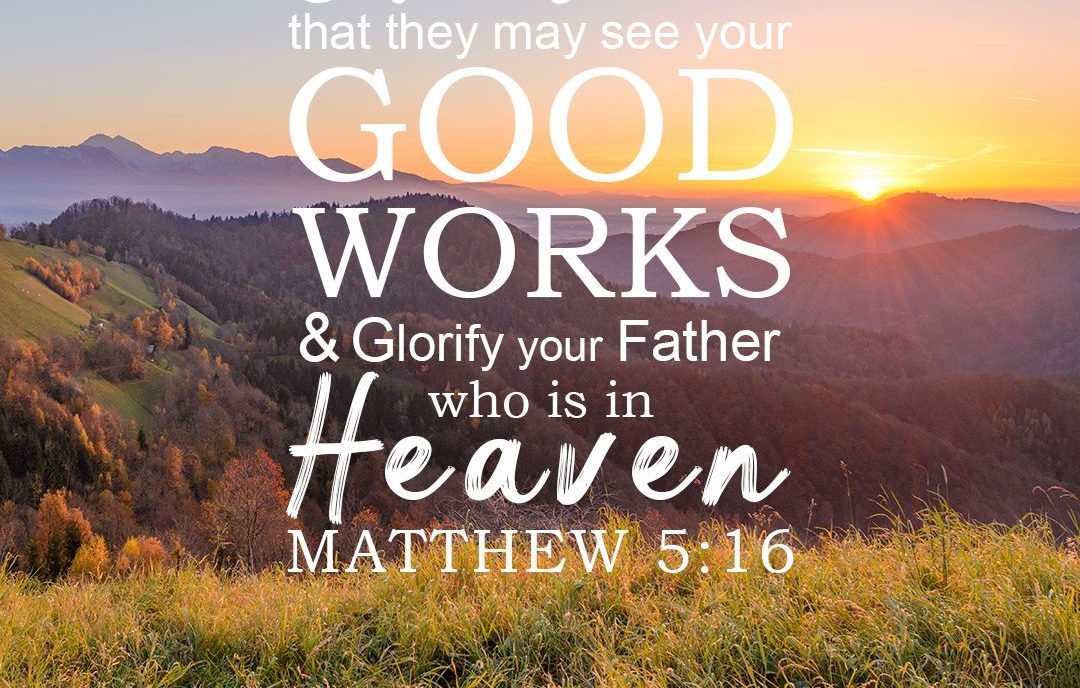
    Though unbelievers accuse us as if we are doing evil (which, of course, they commit as well), they may see your good deeds and glorify God on the day he visits us.’ [NIV]

    How do others recognize Christ through our good works?

    In a word, subjugation; Christians submit to authority for our Lord’s sake.

    Submit yourselves

    I can tell you right now that you are not going to like this next part… because I don’t. I resist it and want to talk about freedom and grace instead.

    Submit to every human authority because of the Lord, whether to the emperor as the supreme authority or to governors as those sent out by him to punish those who do what is evil and to praise those who do what is good.

    1 Peter 2:13 CSB

    You may say, “Emperor? That doesn’t apply to me.” But other versions use the example of ‘every human authority’ as ‘the king.’ And note that governors are sent out to praise those who do good, but to punish those who do evil.

    The sword of scripture gets even sharper by our examination of other versions.

    Submit yourselves to every ordinance of man for the Lord’s sake: whether it be to the king, as supreme1 Peter 2:13 KJV

    “Every ordinance of man?”

    A King, County Commissioner, Mayor… President of either political party? Ordinance, as in every Law passed by Congress or Parliament? I don’t like it one bit.

    The one in authority.

    Do nothing from selfishness or empty conceit, but with humility of mind regard one another as more important than yourselves; do not merely look out for your own personal interests, but also for the interests of others.

    Philippians 2:3-4 NASB

    “Have this attitude in yourselves which was also in Christ Jesus,” Paul writes to the church in Philippians 2:5.

    Submit yourself for the Lord’s sake.

    It’s hard for us to act like Jesus. His humility is not the first thing that comes to mind in our witness of His benefits to us. Paul give us the reason in his letter to the Romans:

    “because the mind set on the flesh is hostile toward God; for it does not subject itself to the law of God, for it is not even able to do so.” – Romans 8:7

    We do not want to submit to anyone, yet because of our faith must do so ‘because of the Lord.’

    1 Peter 2:15 For it is God’s will that you silence the ignorance of foolish people by doing good. 16 Submit as free people, not using your freedom as a cover-up for evil, but as God’s slaves.

    Slaves

    There’s another word we don’t like. (Not very politically correct either.) -Slaves! Submit as God’s slaves.

    Shall we water it down or dilute scripture’s meaning?

    Some English translations call on us to become ‘bondservants’ of God and others simplify it with the word ‘servant.’

    Maybe that’s a little better, like a butler, gardener, waitress or food delivery person at your door. I might occasionally take on the role as a servant of God with minimal complaint. The actual Greek word is δοῦλος doulos.

    • a slave, bondman, man of servile condition
      • (of the Lord, maybe, but not likely to other men)
    • metaph., one who gives himself up to another’s will those whose service is used by Christ in extending and advancing his cause among men
      • How can I do that?
    • devoted to another to the disregard of one’s own interests
      • This is Peter’s meaning for Christ’s servants.

    Honor by Christian Servants

    I could mention names here, causing dissension between the believers, but honor in our public witness by ‘christians’ frequently falls far short. I’ll just ask you (and myself), “Do you honor those Peter lists as a bondservant of God?

    Honor everyone. Love the family of believers. Have respectful fear of God. Honor the emperor.

    1 Peter 2:17 Common English Bible

    Honor everyone? I cannot keep words that do not honor some from my witness to unbelievers.

    Love everyone in our church? Is Peter serious? We are a bunch of sinners! And as Paul once suggested I can claim, ‘of whom I am the worst.’ The good works of Grace between Christians can be our most challenging witness. I have already mentioned that ‘the emperor could be the king, president or other most powerful government leader. Examine your own witness.

    Please note that Peter points to everyone or the world first. Then he narrows into our relational connection to others in the church. Peter reminds us to fear God. (Look it up.) And lastly, in essence, honor civil leaders responsible for the good works of our society at all level.

    Good Works of Christ’s Good Servants

    Next Peter will outline the reasons for us to serve from our various stations of this life in the flesh, a moral life of good works serving others. These include: masters and slaves, husbands and wives.

    Will you witness Christ when persecuted?

    Do your good works glorify God?

    To be continued...

  • Jude -3- Apostates

    Jude -3- Apostates

    Why did Jude write to the churches about apostasy? What is apostasy and how do we recognize apostates?

    As we learned previously in the study of Jude’s reason for exhortation, certain intruders have joined the churches to which he writes. Jude describes them as ungodly people who pervert God’s grace. He accuses these apostates of denying our Master and Lord Jesus Christ.

    Jude

    5 [NASB] Now I desire to remind you, though you know all things once for all, that the Lord, after saving a people out of the land of Egypt, subsequently destroyed those who did not believe.

    Why a reminder from the Old Testament?

    The approach of the church is different in Christ than that of the Jewish culture from which they have been redeemed by the Lord.

    A first century view of the church

    Donald Guthrie in The New Testament Approach to Social Responsibility writes:

    The New Testament assumes the validity of the Old Testament view that man was made in the image of God.1 The whole conception of sin requires that there must have been a state from which man has deviated.

    Guthrie continues with reminders of the social nature of the church of the first century to which Jude writes:

    The New Testament doctrines of redemption and reconciliation are central to the whole Christian message and involve a disarming of man’s natural enmity against God and of his self-centredness.7

    The consequence of this is that redeemed man finds himself with an entirely new set of values and yet remaining in his former alien environment. A tension must at once develop between his former way of looking at social responsibility and his new principles in Christ.

    The New Testament concentrates on the privileges and responsibilities of the Christian life, because this was the aspect which was new. The Christian faith demands new attitudes and actions which are of prior importance for those who have just turned away from a pagan background. This will explain the relative paucity of specific exhortations towards social responsibility.

    Examples from the Old Testament

    Jesus, nevertheless, teaches the validity of the Old Testament from where Jude takes examples of exhortations as contemporary reminders for our faith.

    “For verily I say unto you, Till heaven and earth pass, one jot or one tittle shall in no wise pass from the law, till all be fulfilled.”

    Matthew 5:18 KJV – the words of Jesus about the Old Testament

    Jesus told numerous stories from the Old Testament as well. For an excellent of His view of Scripture you can read this article by Don Stewart.

    Apostasy

    Before we continue with the examples of Hebrew history, let’s define what Jude does not specifically name. (You already know the challenges of Hebrew, Greek and Latin translations into today’s English.)

    Apostasy – definition

    from the OXFORD dictionary

    The abandonment or renunciation of a religious or political belief or principle.

    ‘the execution of their leader for apostasy brought widespread criticism’

    Origin

    Middle English from ecclesiastical Latin apostasia, from a late Greek alteration of Greek apostasis ‘defection’.

    ἀποστασία – apostasia

    Definition from the Greek: defection from truth (properly, the state) (“apostasy”):—falling away, forsake.

    מְשׁוּבָה

    Definition from the Hebrew mĕshuwbah : turning away, turning back, apostasy, backsliding

    The Bible warns of the apostasy of the Lord’s chosen people more times than the New Testament church specifically warns believers against it.

    “Your own wickedness will correct you,
    And your apostasies will reprove you;
    Know therefore and see that it is evil and bitter
    For you to forsake the LORD your God,
    And the dread of Me is not in you,” declares the Lord GOD of hosts.

    Jeremiah 2:19 NASB

    Jude’s Old Testament Exhortations

    Various Biblical headings for the verses to follow from Jude’s letter read:

    • Apostates: Past and Present -CSB
    • False Teachers – NTE
    • Old and New Apostates & Apostates Depraved and Doomed – KJV
    • Judgment on False Teachers – NSRV
    • Past history warns us that the unfaithful have mingled with the faithful & Be on your guard against these wicked men – PHILLIPS

    So as not to extend exposition of this twenty-five verse letter into another post, I will link the important cross-references for these Old Testament verses for your further study. I suspect the the first century readers of Jude’s exhortations warning against apostasy knew these examples much better than I can remember.

    1. Jude 1:5 – Egypt
    2. v. 6 – Angels – a multitude of examples throughout both Testaments
    3. vs. 7-8 – Sodom and Gomorrah
    4. v. 9 – Michael the Archangel, concerning Moses
    5. v. 11 – Cain, Balaam & Korah
    6. vs. 14-15 Enoch

    Egypt

    For I should like to remind you, my brothers, that our ancestors all had the experience of being guided by the cloud in the desert and of crossing the sea dry-shod. … many of them failed to please God, and left their bones in the desert. Now in these events our ancestors stand as examples to us, warning us not to crave after evil things as they did.

    1 Corinthians 10 excerpt – J.B. PHILLIPS

    Angels and Archangels

    For our struggle is not against flesh and blood, but against the rulers, against the powers, against the world forces of this darkness, against the spiritual forces of wickedness in the heavenly places.

    Ephesians 6:12 NASB

    Michael, from the vision of Daniel 10 [audio]

    Sodom and Gomorrah

    “I destroyed some of your cities,
    as I destroyed Sodom and Gomorrah.
    Those of you who survived
    were like charred sticks pulled from a fire.
    But still you would not return to me,”
    says the LORD.

    Amos 4:11 NLT

    Cain, Balaam & Korah

    All apostates! And for the most part we know their sins. Yet do we recall their warnings from the Lord?

    The Lord warns Cain

    Then the Lord said to Cain, “Why are you furious? And why do you look despondent? 7 If you do what is right, won’t you be accepted? But if you do not do what is right, sin is crouching at the door. Its desire is for you, but you must rule over it.”

    Genesis 4:6-7 CSB

    The Lord & an Angel warn Balaam

    And God said to Balaam, “You shall not go with them; you shall not curse the people, for they are blessed.”

    And the Angel of the LORD said to him, “Why have you struck your donkey these three times? Behold, I have come out to stand against you, because your way is perverse before Me.

    Numbers 22:12,32 NKJV

    Moses warns Korah & The Lord warns Moses & Aaron

    Moses also told Korah, “Now listen, Levites! Isn’t it enough for you that the God of Israel has separated you from the Israelite community to bring you near to himself, to perform the work at the Lord’s tabernacle, and to stand before the community to minister to them?

    The Lord spoke to Moses and Aaron, “Separate yourselves from this community so I may consume them instantly.”

    Numbers 16:8-9, 20-21

    Have we recognized the apostates opposed to the Lord and separated them from His church?

    The Lord requires both our faith and our loyalty. He cautions us concerning those who would turn against the faithful, loyal congregation of believers.

    Jude warns:

    These people are dangerous. They share communion of Christ with you, but only care about themselves. These men (and presumably women) are a menace to good fellowship. They are shepherds (pastors and priests) who care not for their sheep. These opinionated apostates are clouds without water, trees without fruit, twice-dead, and uprooted. Do not listen to them.

    Jude makes other comparisons of these apostates to raging waves splashing up their own shame and wandering stars ‘for whom the deepest darkness has been reserved forever,’ a clear reference to the eternal punishment of Satan’s apostate angels.

    Enoch Predicted an Apostasy of Israel

    The study of Jude’s source material [linked above] is complex. See Jude 1:14. Yet to simplify the apostasy of Israel which the Lord spoke to Moses at the time of his death, here is an excerpt from its scriptural background.

    Deuteronomy 31 & Intro from the Song of Moses

    The Lord said to Moses, “Behold, you are about to lie down with your fathers; and this people will arise and play the harlot with the strange gods of the land, into the midst of which they are going, and will forsake Me and break My covenant which I have made with them. Then My anger will be kindled against them in that day, and I will forsake them…

    “They have acted corruptly toward Him,
    They are not His children, because of their defect;
    But are a perverse and crooked generation.
    “Do you thus repay the Lord,
    O foolish and unwise people?

    Deuteronomy 31:16-17a,32:5:6a NASB

    A Reminder of Scoffers

    Jude reminds the church that the Apostles also warn of those who deny the power and judgment of Almighty God and turn from the grace of our Lord Jesus Christ.

    “In the last time there will be scoffers, indulging their own ungodly lusts.” It is these worldly people, devoid of the Spirit, who are causing divisions.

    Jude 1:18b-19 NRSV

    But you, beloved…

    Jude addresses the church agapētos, beloved ones, just as James in his letter had cautioned: “Do not be deceived, my beloved brethren.”

    Jude and also James knew the familial love of Jesus. Both letter writers love those saints of the church faithful to Christ, their brother, the risen Lord.

    But you, dear friends, as you build yourselves up in your most holy faith, praying in the Holy Spirit, keep yourselves in the love of God, waiting expectantly for the mercy of our Lord Jesus Christ for eternal life.

    Jude 1:21-22 CSB

    How shall we view the apostate?

    Have mercy on some who are doubting.

    Is this unexpected as our attitude toward some who temporarily turn against Christ?

    Jude shares the same teaching as Christ.

    “Blessed are the merciful, for they shall receive mercy.

    The words of Christ, Matthew 5:7

    By our mercy and Christ’s grace some may be built up in the true faith.

    Save others

    ‘Snatching them out of the fire,’ Jude pleads, a clear reference to saving their souls from hell.

    σῴζω – sōzō – Saveto rescue from danger or destruction

    It is the same Greek word for save familiar to all from John 3:16. Jude urges the church to save those of the world who come to us.

    Have mercy with fear

    “And on some have mercy with fear, hating even the garment polluted by the flesh,” Jude cautions.

    But what fear?

    φόβος – Most know the word phobos and its meaning: dread or that which strikes terror.

    What strikes terror in your heart?

    Your own death?

    Judgement? Eternal damnation?

    Or do you fear for the souls of others more than you fear them? For these are loved ones, friends and those who you know as a part of the church. Some apostate ‘christians’ have turned against the Lord Jesus Christ!

    Do you fear man or the Lord God?

    Luke tells us in the Acts of the Apostles,

    So the church throughout all Judea and Galilee and Samaria enjoyed peace, being built up; and going on in the fear of the Lord and in the comfort of the Holy Spirit, it continued to increase.

    Acts 9:31 NASB

    Jude’s reference to ‘hating even the garment polluted by the flesh’ clearly calls the church to hating the sin, yet not the sinner. Let us clearly identify the spotted speech of apostates among us, urging those with such worldly coverings to purify their sins in the blood of Christ.

    And the tongue is a fire, the very world of iniquity; the tongue is set among our members as that which defiles the entire body, and sets on fire the course of our life, and is set on fire by hell.

    James 3:6 NASB

    Let us watch that we condemn the sins of the apostates among us, while not judging their souls which the Lord may choose to snatch from the fire.

    Benediction

    Jude wants to encourage the church, giving those saints faithful to the Lord praise. Yet he has chosen to exhort the church against apostates, warn us against the sins which defile us and turn our witness against Christ.

    He briefly makes his strong warning and now closes with praise to the Lord. You may have heard such comforting benedictions from a pastor of your own church congregation.

    Now to him who is able to protect you from stumbling and to make you stand in the presence of his glory, without blemish and with great joy, to the only God our Savior, through Jesus Christ our Lord, be glory, majesty, power, and authority before all time, now and forever. Amen.

    Jude 1:24-25 CSB Benediction

    Christ Jesus can keep you from stumbling so that you may stand in His holy presence. You will know His glory, because of His mercy and grace of covering our sins by His shed blood.

    God IS our Savior, through the sacrificial love of Christ Jesus, our Lord and Savior. Anyone who does not believe in the only One who can save us is an apostate, turned against the Lord our God!

    To Him be all glory, majesty, power and authority. As it was in the beginning, it will be now and forever. AMEN.

  • James – Above all – 9

    James – Above all – 9

    But above all things, my brethren, swear not…

    James 5:12a KJV

    You had begun to count the barrage of important words to the congregation. “FINALLY,” says the preacher after a lengthy sermon, as our dull ears and glassy eyes slowly return, “point number nine.”

    Peter, Paul and others frequently conclude with ‘finally,’ James closes his letter, ‘above all.’

    In conclusion

    Before we examine this specific closing of James and the concluding nine verses, consider a few closing points of other pastoral letters.

    • Finally, brothers and sisters, rejoice. Become mature, be encouraged, be of the same mind, be at peace, and the God of love and peace will be with you. – Paul, in his second and final letter to the church at Corinth.
    • Finally, be strengthened by the Lord and by his vast strength. – Paul’s brief closing to his church at Ephesus
    • Finally, brothers and sisters, whatever is true, whatever is honorable, whatever is just, whatever is pure, whatever is lovely, whatever is commendable ​— ​if there is any moral excellence and if there is anything praiseworthy ​— ​dwell on these things. – Paul’s closing to the church at Philippi

    James closes: Above all, my brothers and sisters, do not swearso that you won’t fall under judgment.

    Other first generation church leaders also include similar phrases as if to say, ‘last, but not least.’ Their letters also emphasize some of same points to remember as does James.

    • Above all, put on love, which is the perfect bond of unity. – Paul’s letter to the church at Colossae
    • Above all, maintain constant love for one another, since love covers a multitude of sins. – First letter of Peter to the church, echoed by James’ concluding sentence.
    • Above all, be aware of this: Scoffers will come in the last days scoffing and following their own evil desires – Second letter of Peter to the church. Early in his letter James makes a similar point:

    James 5:

    Oaths

    12 Above all, my brothers and sisters, do not swear, either by heaven or by earth or with any other oath. But let your “yes” mean “yes,” and your “no” mean “no,” so that you won’t fall under judgment.

    James does not prohibit oaths; rather he calls out those who take oaths, vows or solemn promises lightly.

    If a Christian’s oath is the fruit of God, then our words must convey pure truth. NO guarantees by god, as unbelievers see the Lord, and NO guarantees by earth and NO oaths by any other authority outside your own true word.

    Yes equals yes and your no equals no. Simplicity. And truth by your own personal guarantee of your own words. Does this not go back to the opening point of James’ letter to the church?

    My dear brothers and sisters, understand this: Everyone should be quick to listen, slow to speak, and slow to anger, for human anger does not accomplish God’s righteousness.

    James 1:19-20 CSB

    Don’t get God involved in your words to another. By your words you will be judged.Matthew 12:37

    Prayer

    13 Is anyone among you suffering? He should pray…

    What believer in Christ does not suffer? All sometimes suffer hardship, sickness, troubles and many evils.

    Pray, beloved brother, James urges in his letter. Pray, beloved sister. Yet he also points to the encouragement from others in our church family, because their joy reflects the Lord to us.

    Are you cheerful? Then sing praises to the Lord.

    (Are you? Then do you?) Those brothers and sisters who suffer hardship feel your joy in Christ. At times you also need to hear the joy of beloved brothers and sisters in Christ.

    14 Is anyone among you sick? He should call for the elders of the church, and they are to pray over him, anointing him with oil in the name of the Lord.

    Here James points to leadership roles of encouragement by our local church. His corporate letter tells all who are sick to seek the anointing and prayer of our local leaders, the elders who shepherd us. Though the anointing oil does not heal the unknown mysteriously; the Lord, in answer to prayer, may heal the one who believes, if it is His will.

    Mark relates good news of such results by those sent out into surrounding towns by the Lord Jesus.

    So they went out and preached that people should repent. They drove out many demons, anointed many sick people with oil and healed them.

    Mark 6:12-13 CSB

    Once again, before the Lord’s half-brother repented of his disbelief, James most likely knew some of these who experienced miraculous healings. James continues:

    The prayer of faith will save the sick person, and the Lord will raise him up; if he has committed sins, he will be forgiven.

    James 5:15 CSB

    Jesus forgives a lame man

    Perhaps you recall a healing by Jesus in a public event where James may have been among the crowds outside the house.

    Luke 5:

    17 On one of those days while he was teaching… sitting there … from every village of Galilee and Judea, and also from Jerusalem. 18 Just then some men came, carrying on a stretcher a man who was paralyzed… because of the crowd, they went up on the roof and lowered him on the stretcher through the roof tiles into the middle of the crowd before Jesus.

    20 Seeing their faith he said, “Friend, your sins are forgiven.”

    … Who can forgive sins but God alone?”

    23 Which is easier: to say, ‘Your sins are forgiven,’ or to say, ‘Get up and walk’?

    24 But so that you may know that the Son of Man has authority on earth to forgive sins”—he told the paralyzed man, “I tell you: Get up, take your stretcher, and go home.”

    25 Immediately he got up before them, picked up what he had been lying on, and went home glorifying God.

    James 5: Do you need healing?

    photo of man wearing t-shirt "PRAY" JAMES 5-16
    James 5:16

    Above all, remember that God judges and that the Lord answers prayer.

    16 Therefore, confess your sins to one another and pray for one another, so that you may be healed. The prayer of a righteous person is very powerful in its effect.

    James points to Elijah, whose prayers God heard and answered because of his righteousness.

    Are we not cleansed of our sin in Christ Jesus, dear brother?

    Confess your sins and be cleansed by the righteousness of Christ. Pray for the sick among you.

    Community

    19 My brothers and sisters, if any among you strays from the truth…

    James closes with this: IF any among you.

    He does not begin by asking us to judge others, our neighbors or the world, but simply points this directly to application to the community of our church by saying, ‘if any among you.’

    Christians tend to be quick to speak and slow to listen, as James cautions earlier in his letter.

    strays from the truth

    This closing call to truth is not to the grey-edged truths of the world which are not truth at all. His pastoral call to us is to that higher absolute truth of Christ Jesus.

    Do not stray from truth. But if you do — and some of you will — bring your brother or sister back into the love of our church community.

    and someone turns him back

    We all know the Way, the Truth and the Life. To bring someone back to Jesus will require their repentance.

    But who will go to a brother in the Lord asking for his repentance?

    It is not an easy thing to confront another in truth and love. (All the more reason we should limit this to the community of our church.)

    20 let that person know that whoever turns a sinner from the error of his way will save his soul from death and cover a multitude of sins.

    James’ question to those of the church is really more like:

    Do you care at all if your brother (or sister) in the church will go to hell?

    Go to him seeking his repentance and ask him to return to the Lord.

    We all have many sins in need of covering by our works of grace.

    see James 5:20

    No Post Script

    James writes to the church corporately, perhaps with certain individuals in various churches in mind.

    He could have closed with a few personal greetings or asked for a personal messenger to come to him with help of some sort, but he does not. And James could have appealed to the authority given him as one of the brothers of Jesus, son of Mary the same mother. Again, he does not.

    Rather, he appeals to all as brethren and himself humbly as a fellow servant of the Lord. James and the church at that time identify themselves as Jews.

    Christians are no different than Jews to Rome and the world. Cause any trouble and you are not welcome in this city.

    map major Jewish cities of Roman Empire - Rome Antioch Damascas Jerusalem Alexandria

    James writes to encourage several congregations throughout the region of the eastern empire of Rome.

    Most hearers of his letter are poor, some very poor. Trials of life test your faith in the Lord.

    Persist — show the fruit of your joy in the Lord, the evidence of your faith.

    Count it all JOY, dear brothers and sisters, whenever you face the challenges of your faith in Christ Jesus!

    HOW?

    Any trial is an outward circumstance which could challenge your faith. Temptation always lurks inwardly as an enticement to sin. Here is one good way to resist:

    …let every man be swift to hear, slow to speak, slow to wrath.

    James 1:19b KJV

    Do what the Law of God says and allow the Lord to judge others. Those rich who dispersed you to hard circumstances in difficult places will also be judged. Do not allow them to lead your church or you into sin.

    All must show their works of their faith, bringing each other into repentance before the Lord. God commands peace between believers. Repent and love each other, for the sake of Christ Jesus.

    Do you, beloved believer to whom I write, hear the Lord Christ Jesus in our appeal?

    James writes to many churches, asking us to build community and faith by our works of faith in Jesus.

    Above all, hear the heart of James.

    For he was once the unbelieving brother of our Lord Jesus Christ. Now he asks us to show our faith by our works.