Tag: james

  • James – Come now, brothers – 8

    James – Come now, brothers – 8

    Our church receives a pastoral letter from James by messenger. We know James and trust his wisdom and leadership. He addresses us familially as brothers, opening with encouragement, ‘count it all joy when you experience trials.’ Come now, brothers, James urges, be wise, repent and do what the Lord wills.

    Unlike the church nearer the end of these last days, those who received James’ letter know well their trusted pastor who writes from Jerusalem.

    James knew Jesus as a brother for many years, then finally repented of his sin and disbelief after the resurrection when the Lord appeared to him. Now James and the church must live with the controversies of the day or possibly die for their witness of Jesus.

    He addresses these men as brothers (although some contemporary translations include ‘sisters’). Culture dictates that women are included in the church, yet the Lord authorizes only men to lead its course. Also, men address only men and their family as leaders serving the Lord, while women lead other women and children as the Lord wills. All serve Christ.

    All leaders of the church, James, the Apostles, Elders and other men must look to the Lord, through Christ Jesus and the Holy Spirit for works of the Lord’s will.

    After beginning with his encouragement, ‘count it all joy,’ James calls on the church to seek wisdom from God.

    Men who judge

    James has pointed to God as One. The Lord God is the only lawgiver. Only our Creator, Almighty God has the complete power to destroy. The Lord also has the merciful power of grace — forgiveness of our sins — and also forgiveness of the sins of all those we tend to judge.

    Who are you to judge the Law, James asks? Why would you judge another believer?

    Perhaps some disciples of Jesus had judged the half-brothers of Jesus or thought that Saul of Tarsus could never be saved by the Lord. So James asks us to use the wisdom of God with men and allow God to judge.

    James 4:

    8 Draw near to God, and he will draw near to you. Cleanse your hands, sinners, and purify your hearts, you double-minded. 9 Be miserable and mourn and weep. Let your laughter be turned to mourning and your joy to gloom. 10 Humble yourselves before the Lord, and he will exalt you.

    11 Don’t criticize one another, brothers and sisters.

    Of course James had heard Jesus’ teachings before His crucifixion and resurrection. Surely James knew the comforting beatitudes Jesus taught frequently. Blessed are you when…, but also ‘woe to you’ when… (you turn from the Lord God.) James will address some woes as well.

    Blessed are those who mourn,
    for they will be comforted.
    Blessed are those who hunger and thirst for righteousness,
    for they will be filled.

    Blessed are the pure in heart,
    for they will see God.

    Woe! -אוֹי

    James reminds us of blessing from God, but warns of the coming woes to the worldly. This same pattern of warning from Jesus and the Prophets resonates with more familiarity to the church then than now.

    Woe! alas! oh! passionate cry of grief or despair

    Many first century hearers of the word would have been more familiar with these cautions from Isaiah:

    Woe unto the wicked! it shall be ill with him: for the reward of his hands shall be given him.

    Woe unto them that call evil good, and good evil; that put darkness for light, and light for darkness; that put bitter for sweet, and sweet for bitter!

    Woe unto them that are wise in their own eyes, and prudent in their own sight!

    Isaiah 3:11, 5:20, 5:21, KJV

    Jesus taught this same wisdom of God known through the Prophets.

    James warns the church against the woes of the worldly among us, even in the church. He will add more specific woes of the Lord’s opponents to our letter before its conclusion.

    Brothers and sisters, do not complain about one another, so that you will not be judged. Look, the judge stands at the door!

    James 5:9 CSB

    The Vapor of this Life

    For what is your life? It is even a vapor thar appears for a little time and then vanishes away. photo of man standing in mountains facing a fog
    —what your life will be!

    Thy will be done.

    What would James have learned from Jesus about expectations for this life?

    Our mortal life is a vapor, a passing mist.

    For prior to His crucifixion James and others had expected a Messiah quite different from the brother with whom he grew up.

    Jesus died as a man of only about thirty-three years, not as an aging conquering king (like David or Herod the Great). Joseph had also died when James was quite young.

    James must have recalled, ‘we both had an earthy papa who raised us for a time; but my brother, the Lord taught us to pray only to our Father in heaven, for ‘His Kingdom will come.’

    Now, after the resurrection James must have recalled Jesus’ words about prayer.

    “Our Father…,” Jesus taught.

    Thy will be done in earth, as it is in heaven.
    Give us this day our daily bread.

    So James writes to the church:

    James 4:

    13 Come now, you who say,

    “Today or tomorrow we will travel to such and such a city and spend a year there and do business and make a profit.”

    14 Yet you do not know what tomorrow will bring—what your life will be!

    God knows, James implies, and we all must realize.

    Most of the church commutes to work; we trade with the world as merchants of the Lord’s work. Yet what profit to our heavenly treasure from those of the world with whom we trade?

    So where will we go? Who should we see and how must we make our plans every day?

    Instead, you should say, “If the Lord wills, we will live and do this or that.”

    James 4:15 CSB

    Why does James address the church in this way?

    Because some merchants become rich in commerce and poor in spirit.

    16 But as it is, you boast in your arrogance. All such boasting is evil.

    Woe to those who boast!

    James equates our business braggings as evil. And worse, because you know Christ, you know what is good. Yet for some to whom he writes, James warns, your works are evil.’

    17 So it is sin to know the good and yet not do it.

    Rich Oppressors Will Be Judged

    Do you know sin? And does the fruit of your salvation blossom into right works as the Lord requires?

    Jesus and others warn that the wolves of the world cunningly watch the sheep of the Shepherd. Although it is their place to watch over us, some oppress us.

    The rich (who may even employ or trade with us) sometimes oppress others of the church, he writes. And James’ implied question to the ‘saints’: ‘Are you one of these, brother?’

    Even the world opposed to Christ sees your works and wounds His bride the Church by the false witness of the hypocrite.

    James 5:

    Come now, you rich people, weep and wail over the miseries that are coming on you.

    James 5:1 CSB

    There it is again, ‘come now,’ James implores directly.

    Is he talking to me — a Christian, an upstanding financial supporter of our gathering?

    James is not addressing the world here, only the worldly of the church who would claim Christ Jesus.

    Once again his tone will reflect that of familiar prophets of old.

    2 Your wealth has rotted and your clothes are moth-eaten. 3 Your gold and silver are corroded, and their corrosion will be a witness against you and will eat your flesh like fire. You have stored up treasure in the last days.

    Some indictment!

    A few hearing James’ letter may think:

    Perhaps Pastor James had best back off some, so as not to offend other rich supporters of our church who make our work possible. Did Jesus ever talk to His followers like this?

    Jesus said to his disciples,

    “Truly I tell you, it will be hard for a rich person to enter the kingdom of heaven.

    Matthew 19:23 CSB

    But what of their tithe to the church? (At least I think all of that money more than I can imagine must be a tenth of their income.)

    These are the business owners, the merchants of our church, respected by the businesses and communities we serve.

    “But woe to you who are rich, for you have received your comfort.

    οὐαί – Woe to you, warns Jesus. – Luke 6:24

    ‘What do you who are bosses say to yourself, brothers,’ James would ask the hearers of his letter? Don’t you realize that you cannot treat your brothers or your neighbors of the world in a worldly manner when you continue to claim Christ Jesus?

    4 Indeed the wages of the laborers … which you kept back by fraud, cry out…

    …and the outcry of [your employees] has reached the ears of the Lord of Hosts.

    I take some liberties here contemporizing & combining English translations and authoritative commentary.

    5 You have spent your years on earth in luxury, satisfying your every desire.

    Your glutinous heart feasts, as in the day of slaughter for an ox unaware of its last day, its blood destined for the altar of judgement.

    You have condemned.

    The just man you murder.

    A righteous man from whom you claim compassion does not resist you when you show him no mercy.

    You have heaped up treasure in the last days.

    Your gold and silver … will be a witness against you and will eat your flesh like fire.

    James 5:3c,ab excerpt NKJV

    The Harvest Approaches

    “Now concerning that day and hour no one knows ​— ​

    Matthew 24:36a CSB
    “Then two men will be in the field; 
    one will be taken and one left.
    “Two women will be grinding grain with a hand mill;
    one will be taken and one left.
    “Then two men will be in the field;
    one will be taken and one left.
    “This is why you are also to be ready,
    because the Son of Man is coming at an hour you do not expect.
    --- Matthew 24:40-42,44 CSB

    “Blessed is that servant whom the master finds doing his job when he comes.

    “But if that wicked servant says in his heart, ‘My master is delayed,’…

    Matthew 24:46-48a CSB

    Of course, James preaches the same warnings to the rich as he certainly heard his brother Jesus teach.

    “He will cut him to pieces and assign him a place with the hypocrites, where there will be weeping and gnashing of teeth.Matthew 24:51

    Therefore, be patient

    James preaches to the faithful, ‘Woe to the rich.’ Do not count yourself with them. We will all face the judgement when Jesus returns. Now he encourages the most faithful, most worshipers of Jesus who suffer at the hands of many in this brief life.

    7 Be patient, therefore, brethren, until the coming of the Lord.

    The farmer waits for precious fruit. He waits first for rain and endures to wait for the late rains before the harvest.

    8 You also must be patient. Strengthen your hearts, because the Lord’s coming is near.

    The fruit of patience in the church

    9 Brothers and sisters, do not complain about one another, 
    so that you will not be judged.

    Look, the judge stands at the door.

    10 Brothers and sisters, take the prophets who spoke in the Lord’s name as an example of suffering and patience.

    11 See, we count as blessed those who have endured.

    You have heard of Job’s endurance 
    and have seen the outcome that the Lord brought about
    —the Lord is compassionate and merciful.

    Come now

    James’ letter to the church about our works sounds so much like Jesus.

    For what is your life? It is even a vapor thar appears for a little time and then vanishes away. photo of man standing in mountains facing a fog
    —what your life will be!

    “Come now, you who say, ‘Today or tomorrow we will … do this or that…’”

    How do you know that the Lord will give you more time?

    “Come now, you rich,

    Weep and groan with anguish .. because of all the terrible troubles ahead of you.

    It’s an invitation, a forceful rebuke to some in the church:

    “Come now, repent and receive our Lord’s mercy.”

    Make your covenant with the Lord and He will accept you through the sacrifice of Christ Jesus.

    “Come now, let’s make a covenant, you and I. Let it be a witness between the two of us.”Genesis 31-44

    As Laban, father-in-law to Jacob, reached out in peace, so does your Father in Heaven reach out to the lost sheep of Israel. James, half-brother of the Son of Man, the Messiah Jesus, writes to the church from Jerusalem.

    Come now, —the Lord is compassionate and merciful. Count it all joy when the world tries your patience.

    To be continued...
    
  • James and Jerusalem’s Controversy – 7

    James and Jerusalem’s Controversy – 7

    Jerusalem’s controversy at the time of Jesus and James continues to this day, yet goes back to the centuries before Christ.

    “ירושלים, ירושלים, ההורגת את הנביאים ורוגמת באבנים את שליחי אלוהים, פעמים רבות חפצתי לקבץ את בניך כתרנגולת המקבצת את אפרוחיה תחת כנפיה, אולם לא הנחתם לי.

    הבשורה על-פי לוקס 13:34 Habrit Hakhadasha/Haderekh (HHH)

    I briefly outlined a few controversies from the history of Jerusalem in an earlier post, which also includes a helpful timeline. More recently we have examined the setting of the first century church in Jerusalem during its leadership by James.

    And in the preceding post we discussed the probable relationship between the two brothers James and Jesus, before the Lord’s resurrection.

    Jerusalem’s Controversy

    Most of us know very little of the ancient history which preceded Rome’s dominance of Judea.

    Jesus, the Apostles, James and first century residents of Jerusalem would have looked at Jerusalem’s controversy through contemporary eyes. Their perspective is very distant to our own understanding.

    The glory of Israel under King David and Solomon from their Bible teachings were distant memories ten centuries past. Even the Second Temple dated five hundred years before the Judea of Jesus and James.

    Alexander captured Jerusalem in 332 BC

    Although Jerusalem was finally spared by powerful empires from the east, those same empires would fall to Alexander the Great of Macedon about three centuries before Christ.

    Alexander captured the captors of Jerusalem, Egypt, Babylon and Assyria. Consequently, Hellenism and the Greek language assimilated easily into the surrounding cultures of the whole world known to Jerusalem.

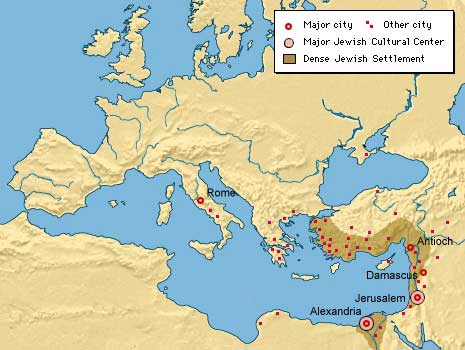
    This universal acceptance continued to impact all of the Mediterranean even after Rome’s dominance. Alexandria, which he founded in Egypt, would later become a strategic political center tied to the fates of Rome.

    Just a few generations Before Christ

    coin head of Antiochus IV Epiphanes

    (a few generations after Alexander)

    175-163 B.C. The reign of Antiochus IV Epiphanes

    The Seleucid king of the Hellenistic Syrian kingdom who called himself, “god manifest,” caused a revolt in Jerusalem. This overt blasphemy by a ruling emperor forced deep divisions between religious rulers and political thought among local leaders.

    Jews would have taken a stance during the sieges of Tyre and Gaza, ports crucial to trade and the well-being of Jerusalem. The complexity of the political intrigue also involves Rome, Egypt and others, but for Jerusalem the rise of Antiochus IV caused the revolt of the Maccabees.

    Pharisees, Sadducees, Essenes & others

    What do we remember of our history?

    • Moses, first. The Lord led Israel from captivity in Egypt, the the LORD give the Law (Torah) to us through Moses. c. 1525 BC
    • David unites the twelve tribes into one, capturing the promised land.
    • Solomon built the richest and most powerful kingdom and also the Temple. c. 966 BC
    • Israel and Judah separate and both eventually fall to others.
    • Judaism continues in Babylon and prophets predict many things.
    • The Torah was lost and forgotten, but then found during the rebuilding of the second Temple c. 570 BC
    • Several ruling empires tolerated Judaism while ruling over Jerusalem.
    • Antiochus does not, declaring himself ‘God in the flesh’ in the Temple.

    Does this controversy resonate in the conversations of first century Jews? Of course it does.

    “Is Jesus the Messiah,” many would ask?

    Is this man Jesus of Nazareth, brother of James and Joses, actually God Incarnate?”

    Therefore, from this more recent background of Jerusalem’s controversy, James, now leader of the church in Jerusalem, must address the Good News that Jesus IS the promised Messiah.

    Although not unlike today’s controversies, first century believers knew that the expected answer of a questioner could depend upon the party of their religious affiliation. Their questions came from diverse political and religious views.

    167 BC – What to do?

    So what must you do, believer in the Lord God?

    At the time of Antiochus several opposing religious and political movements took root.

    During the formation of the Jewish religious parties and political movements prior to the days of Jesus Christ and Herod, all debated what followers of the Lord must do in each circumstance at various times.

    The question to Jesus or to James in the first century AD remains nearly the same as now in the 21st c. A.D.

    Scribes & Zealots

    One group with both political and religious influence chose to separate religion from politics, claiming the higher ground of religion. The Scribes reached back to the authority of the re-established Law under Ezra the founding priest of the second Temple.

    Zealots took a radically different approach to the invaders taking from them the promised land of God. At various times bands of Zealots hid in the mountains, formed powerful armed communities and used terrorism to attack the invaders from their mountain strongholds. (Does this radical religious military tactic sound at all familiar?)

    כִּֽי־קִנְאַ֣ת בֵּיתְךָ֣ אֲכָלָ֑תְנִי וְחֶרְפֹּ֥ות חֹ֝ורְפֶ֗יךָ נָפְל֥וּ עָלָֽי׃
    because zeal for your house has consumed me,
    and the insults of those who insult you have fallen on me.

    Psalm 69:9 WLC;CSB

    Additional research on Jerusalem’s controversy at this time appears below, along with a brief outline of other Jewish political/religious parties of the first century AD.

    Judah Maccabee – Savior of Judaism

    Excerpts Source: ENCYCLOPEDIA BRITANNICA

    On Antiochus’ death in 164 BCE, the Seleucids offered the Jews freedom of worship, but Judas continued the war, hoping to free his nation politically as well as religiously.

    The son of Mattathias, an aged priest who took to the mountains in rebellion when Antiochus attempted to impose the Greek religion on the Jews, Judas took over the rebel leadership on his father’s death and proved to be a military genius, overthrowing four Seleucid armies in quick succession and restoring the Temple of Jerusalem.

    This deed is celebrated in the Jewish festival of lights, Ḥanukka.

    The Hasmonean Kings of Judah

    The Maccabees founded the Hasmonean dynasty, which began their rule in 167 BC. They eventually managed independence for their kingdom of Judah from 110 BC until 63 BC.

    The decline of the Hasmoneans coincided with the rise of Rome, but it wasn’t coincidence, for the once great Jewish family had become a shell of its holy roots.

    End of the Hasmoneans

    In the year 67 BCE, Queen Salome Alexendra (also known as Queen Shelomtzion) died. With her death, the dynasty of the Hasmoneans began a steady decline. Over the next 20-25 years it would fall apart completely. – source

    Jerusalem’s Controversy after the Hasmoneans

    Although divisions in rabbinic thought existed from earlier times, the onslaught of Roman power into the eastern Mediterranean brought about deeper divides in political and religious alliances.

    A timeline of Jerusalem’s conflict after the end of the Hasmoneans details additional events.

    Ideally, he [Pompey the Great, of Rome] did not want to do it through war, because the Jews – the Hasmoneans/Maccabees – had a fearsome reputation. The Romans referred to the Jews as “porcupines.” Just as a porcupine is an animal that even great predators avoid, so too the Jews. Even if you ate it you would be sorry. Therefore, Pompey wanted to control the Jews without somehow going to war. Source.

    Herods – Kings of Compromise

    NOTE: When you see the name Herod in the Bible, always ask yourself, which one?
    image of Herod the Great
    Herod the Great

    An article in Christianity Today sheds light on a view likely held by the rich and powerful Jewish leaders in the first century AD.

    In terms of wealth, power, and influence, Herod the Great rivaled King Solomon as the greatest king in the history of the Jews.

    Christianity Today – Dec 22, 2015 – Alexander Stewart

    Herod was born in the Roman region of Idumea (formerly Edom) around 74 BC, built the Roman port of Caesarea and expanded the second Temple in Jerusalem. Christians know Herod for his attempt to prevent an innocent baby born in Bethlehem from becoming King.

    When Pompey’s ally Herod died, not only did Joseph and Mary return with Jesus to Nazareth in Israel, but politically Rome divided his kingdom between Herod’s three sons and daughter. Again, the politics and various names of the Herod’s is complex, but first century Jews became caught up in it all.

    Competing Religious Parties – Jerusalem’s controversy of the Temple

    Party of the Sadducees – 167 BC

    The Sadducees are a Jewish group mentioned in three different contexts in the Synoptic Gospels ( Mark 12:18 ; [= Matt 22:23-34 ; Luke 20:27] ; Matt 3:7 ; 16:1-12 ) and six in Acts ( 4:1 ; 5:17 ; 23:6-8 ). They always appear as inquisitors or opponents of John the Baptist, Jesus, or the early Christians. – Baker’s Evangelical Dictionary

    Rabbinic writings sometimes interchange the term “Sadducee” with “Samaritans” (here meaning “opponents”) and “Boethuians.” The latter is probably from their connection with the house of Boethus, from which came several high priests during the New Testament period.

    Party of the Essenes – 167 BC

    John the Baptist most likely was of one of the Essenes.

    When Jerusalem’s controversy erupted in the second century BC, the Essenes withdrew into the Judean desert and formed an isolated monistic community dedicated to the word of God and obedience to the Lord.

    Unlike the Zealots, the Essenes had no agenda to retake the land of the promised land ‘for God.’

    History recalled little about the Essenes until shepherds recovered the buried Dead Sea scrolls in Qumran Lebanon in A.D. 1948. The slow and meticulous study of these scroll fragments has revealed more in this past century.

    Qumran, between the Judean hills and the Dead Sea. Qumran,

    Party of the Pharisees – 167 BC

    Jerusalem’s controversy most familiar to Christians is that of the resurrection. Not all Jews believed in the resurrection of the body and soul, but the Pharisees did.

    However the party of the Pharisees had already divided into many opinionated sects over the written Law, the oral law, additional regulations and many other controversies. Discussion of these among rabbis reached far beyond Jerusalem into Galilee and other regions.

    Φαρισαῖος – Pharisaios

    In addition to OT books the Pharisees recognised in oral tradition a standard of belief and life. They sought for distinction and praise by outward observance of external rites and by outward forms of piety, and such as ceremonial washings, fastings, prayers, and alms giving; and, comparatively negligent of genuine piety, they prided themselves on their fancied good works. They held strenuously to a belief in the existence of good and evil angels, and to the expectation of a Messiah; and they cherished the hope that the dead, after a preliminary experience either of reward or of penalty in Hades, would be recalled to life by him, and be requited each according to his individual deeds.

    Strong’s G5330 – blueletterbible.org

    Pharisees were not of the class of the rich, but lived a modest life closer to that of many other Jews. These rabbis were likely affectionate, popular teachers similar to most rabbis today.

    They believed that God would act justly based on their works and attitudes toward others. The Law of Moses and oral law designating how we should obey the Lord provided the basis of their teaching and unity of purpose for a life lived separately from evil.

    First Century Pharisees – in Jerusalem’s controversy of leadership

    John the Baptist called them a brood of vipers (poisonous snakes).

    Matthew tells us that ‘the Pharisees went out and plotted against him [Jesus], how they might kill him.’

    Jesus accepted invitations from Pharisees to publicly join them in their homes. However the Lord also rebuked them, frequently including them with their rival party the scribes.

    “Woe to you Pharisees! You love the front seat in the synagogues and greetings in the marketplaces.

    So the chief priests and the Pharisees convened the Sanhedrin and were saying, “What are we going to do since this man is doing many signs?

    John 11:47

    The Apostle John speaks to the delicacy of their political dilemma within the religious leadership of Jerusalem.

    Nevertheless, many did believe in him even among the rulers, but because of the Pharisees they did not confess him, so that they would not be banned from the synagogue.

    John 12:42

    James, Secretive believer in Jesus?

    I have never heard anyone ask if James believed in Jesus before our Lord’s personal appearance to his half-brother after the resurrection.

    As Peter had denied knowing Jesus at His trial, as the Apostles had gone into hiding and even as many Pharisees and others felt obligated to keep their faith in Jesus secret out of fear for their own lives, James may have come to believe in Jesus.

    James, leader of the church in Jerusalem was about to take on a new role, an important sacrificial leadership of a post-Pentecost church. He would lead and write letters to other fearful new Christians from Jerusalem.

    As Jesus had become Jerusalem’s controversy for the Jews, the Herods and the Romans, so too James was about to become just one more controversial leader in Jerusalem in the first century.

    God-willing, we will return to James’ Letter to the Church next.

    To be continued...

  • James and Jesus: Brothers – 6

    James and Jesus: Brothers – 6

    Although we took an initial look at the identity of the letter writer in Witness of a Converted Brother, before we ask ourselves about the conclusion of James’ letter, I would like to go back to take a look at the relationship between James and Jesus.

    James, Bond-servant of his Brother

    Ἰάκωβος θεοῦ καὶ κυρίου Ἰησοῦ Χριστοῦ

    James, a bond-servant of God and of the Lord Jesus Christ,

    James 1:1a Greek; NASB
    Roman auction of bond-slaves to be sold

    Picture James and Jesus after the resurrection. What a humble relationship the author James states here.

    First and foremost, he is a bond-servant, δοῦλος, doulos or slave.

    Slaves were common in the Roman empire. They served men of importance at many levels: kings, the rich, military leaders, land owners, regular citizens to whom one owed money. Slaves were not uncommon in Judea and servitude required the self-control of humility.

    If the relationship between James and Jesus is one of a bond-servant to his master, James acknowledges that as a servant of God he serves Jesus as his lord. The risen brother (actually, half-brother) of James is God in the flesh!

    James and Jesus of Nazareth

    Surely by now Mary has told Jesus’ brothers and sisters what she had held in her heart: this son is the Son of the Living God by the Holy Spirit!

    Isn’t this the carpenter’s son? Isn’t his mother called Mary, and his brothers James, Joseph, Simon, and Judas? And his sisters, aren’t they all with us? So where does he get all these things?” And they were offended by him.

    Jesus said to them, “A prophet is not without honor except in his hometown and in his household.” And he did not do many miracles there because of their unbelief.

    Matthew 13:55-58 CSB

    James was always the younger brother. Joseph had died, then Jesus assumed his role as head of their household. Later Jesus would leave Nazareth over controversy related to His teaching to live in nearby Capernaum.

    He traveled throughout Israel for three years prior to His crucifixion and resurrection. James, as the elder brother, would have cared for his mother, brother and sisters.

    What was it like to grow up with Jesus?

    Much of the commentary to follow is best read as historical fiction from a probable first-person narrative of James, half-brother of Jesus, based on the scriptures linked.

    Although the risen Christ anoints James as head the church of Jerusalem, he would have traveled there many times.

    James and Jesus would have been known as Galileans, Nazarenes and familial brothers, not Judeans or leaders of Jerusalem. But now he is one of more than five hundred witnesses to Jesus’ resurrection. James accepts the difficult call to lead the church in Jerusalem.

    Though we have no sermon, but only his letter to the churches, his personal witness of Jesus must have been subject of much preaching.

    “What was it like to grow up with the Lord Jesus,” so many believers must have asked?

    Humbly, James would have confessed, “I did not believe.”

    The Child James and Jesus

    {Hear James’ voice in his later good news to the church.}

    The physician Luke interviewed our mother Mary and many others in order to tell us about Jesus, before His recent miraculous and powerful earthly ministry of only three years. Our mom now retells a story I will share with you of when Jesus was a young man and I was just a small child.

    Luke 2:

    [Jesus] grew up and became strong, filled with wisdom, and God’s grace was on him. Every year our parents traveled to Jerusalem for the Passover Festival. When he was twelve years old, they went up according to the custom of the festival. Jesus stayed behind in Jerusalem, and they had to return to Jerusalem to search for him. (They sent us back to Nazareth with relatives.)

    After three days, they found him in the temple sitting among the teachers, listening to them and asking them questions.

    (I remember when they came back to us in Nazareth.)

    And Jesus increased in wisdom and stature, and in favor with God and with people.

    In the Synagogue of Nazareth

    A few years later Dad died, and Jesus watched over all of us. When we grew older I heard my brother teach in our synagogue. but I did not believe in Him. Of course, I too worshiped in the synagogue on the Sabbath Jesus read from the scroll of the Prophet Isaiah.

    Luke 4:

    The Spirit of the Lord is on me,
    because he has anointed me
    to preach good news to the poor.
    He has sent me…

    Luke 4:14 from Isaiah 61:1

    Then my brother Jesus said: “The Scripture you’ve just heard has been fulfilled this very day!”

    My own brother, yet I could not believe the words He proclaimed to all of us, we who witnessed the Lord in the flesh. They all spoke well of my brother. We all wondered what Jesus meant.

    “Isn’t this Joseph’s son?” What does your brother mean by this?

    Then He said: ‘Physician, heal yourself!’ referring to a local rumor of a miracle He was said to have done nearby.

    Jesus said they resented that He did not prove himself in our hometown, using familiar illustrations of the prophets Elijah and Elisha doing miracles outside of Israel.

    Then the crowd turned. I didn’t know what to think, but I still didn’t believe Jesus and I too would have loved to have seen proof.

    Everyone in our synagogue was enraged. They got up, drove Jesus out of town to the edge of the cliff, intending to hurl him over it.

    I thought of the words of Judah after Joseph’s brothers had thrown him into the pit. A few of us helped Jesus to quickly escape the angry Nazarene worshipers.

    Capernaum and Jesus Preaching Nearby

    Google maps route from Nazareth to Capernaum

    Jesus had already become very popular in Galilee before Nazareth rejected Him. Although I had not seen any yet, many attested to miracles my brother worked in nearby towns. That is why some had said, “do a sign for us here in your hometown.”

    People now followed Jesus into towns and everywhere He went.

    view from mountainside near Capernaum
    Hillside near Capernaum where Sermon on the Mount may baye been preached

    Matthew 4:

    13 He left Nazareth and went to live in Capernaum by the sea…

    From then on Jesus began to preach, “Repent, because the kingdom of heaven has come near.”

    Matthew 4:17

    We heard reports of my brother’s teaching many times as people traveled through Nazareth from here or there. Merchants of the fish markets and others also told us that Jesus had preached things like, “blessed are the poor,” and “blessed are the humble.”

    Teaching, Preaching, and Healing

    23 Now Jesus began to go all over Galilee, teaching in their synagogues, preaching the good news of the kingdom, and healing every disease and sickness among the people. 24 Then the news about him spread throughout Syria. (That’s what the Romans now call the region near us.)

    … 25 Large crowds followed him from Galilee, the Decapolis, Jerusalem, Judea, and beyond the Jordan.

    James and Jesus, a family visit

    Jesus lived in Capernaum, but He traveled mostly. When word came to us where to find Him, we often followed the crowds to see my brother. Mom delighted to see and hear Him, when we could. But me… I still didn’t fully believe all the reports we heard.

    We heard that some Scribes and Pharisees had come up from Jerusalem to see Jesus. So we traveled alongside the crowds to see Jesus.

    I sent a messenger to push through the crowds to speak to our brother.

    Luke 8:

    20 He was told, “Your mother and your brothers are standing outside, wanting to see you.”

    21 But he replied to them, “My mother and my brothers are those who hear and do the word of God.”

    We waited for Jesus to finish, listening to Him. Jesus preached many of the sayings we had already heard. And finally, we managed to meet our brother, who kissed and embraced us all. Then we stayed with Him, returning to Nazareth the following day.

    I met with Jesus other times too, but of course I could not follow Him because of my responsibilities to our family.

    Jerusalem

    Jesus had said to give to Caesar what is Caesar’s and to God what is God’s.

    I won’t get into politics since it’s so complicated. But next I would like to tell you where my brother stood on some of the controversies in Jerusalem.

    To be continued... James and Jerusalem