Tag: jeremiah

  • Our Lament and Weeping

    Our Lament and Weeping

    Our Lament and Weeping is a 5-part series taking most text from the Prophet Jeremiah as a lament for Lent in these last days. READERS may continue to the NEXT post at the bottom of each post by clicking NEXT.

    Have you ever considered the connection between Jeremiah’s two books or the cause of our lament and weeping?
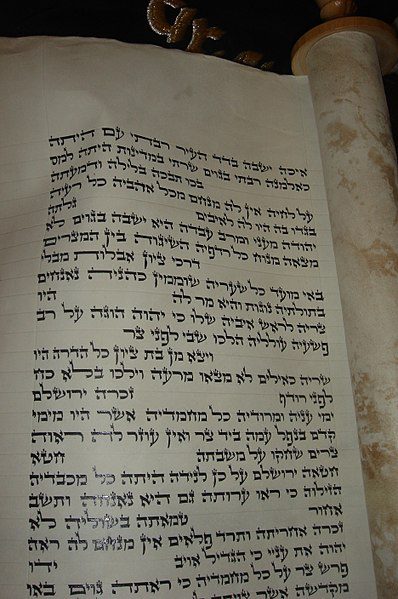
    lamentations scroll page 1 - the lament and weeping of the Prophet Jeremiah after his predicted fall of Jerusalem takes place

    You may know Jeremiah as the weeping prophet. And perhaps you realize that he is also the author of Lamentations. “Why has this happened,” he would seem to ask the Lord? Yet to consider Jeremiah’s calling and the failure of God’s chosen to hear him shows both good reason for his lament and our weeping.

    Jeremiah’s Call as a Prophet

    4 The word of the Lord came to me:

    5 I chose you before I formed you in the womb;
    I set you apart before you were born.
    I appointed you a prophet to the nations.

    Jeremiah 1:5

    6 But I protested, “Oh no, Lord God! Look, I don’t know how to speak since I am only a youth.”

    7 Then the Lord said to me:

    Do not say, “I am only a youth,”
    for you will go to everyone I send you to
    and speak whatever I tell you.
    8 Do not be afraid of anyone,
    for I will be with you to rescue you.
    This is the Lord’s declaration.

    Prophesies Fulfilled

    These are the people Nebuchadnezzar deported: Altogether, 4,600 people were deported.

    Jeremiah 52:28a,30b CSB [WLC hebrew on link]

    Jeremiah’s unheeded warnings from the Lord caused him much lament and weeping. And well he should have wept for those lost souls and the defeated chosen people led from Jerusalem into exile.

    He had first warned them in his early days during Josiah’s reign in about 626 B.C. Jerusalem would finally fall nearly four decades later to Nebuchadnezzar, in 587 B.C. Plenty of time to repent, but they do not.

    Lamentations

    lamentations scroll page 1 in Hebrew
    איכה

    INTRODUCTION

    The commentary by A. R. FAUSSET explains:

    In the Hebrew Bible these Elegies of Jeremiah, five in number, are placed among the Chetuvim, or “Holy Writings” (“the Psalms,” & c., Luke 24:44 ), between Ruth and Ecclesiastes. But though in classification of compositions it belongs to the Chetuvim, it probably followed the prophecies of Jeremiah originally.

    He also helpfully explains the form of this poetic cry of lament and weeping later incorporated into synagogue worship on the ninth month Ab.

    How?

    The title more frequently given by the Jews to these Elegies is, “How” (Hebrew, Eechah), from the first word, as the Pentateuch is similarly called by the first Hebrew word of Gen 1:1. The Septuagint calls it “Lamentations,” from which we derive the name. It refers not merely to the events which occurred at the capture of the city, but to the sufferings of the citizens (the penalty of national sin) from the very beginning of the siege; and perhaps from before it


    The lament and weeping heard in each Hebrew letter:

    Referring to the alphabetical Hebrew letters beginning each stanza of the lament, Faussett continues quotes of an 18th c. scholar most pointedly:

    “Every letter is written with a tear, every word the sound of a broken heart.”

    Robert Lowth, Bishop of London


    Lament over Jerusalem

    א Aleph
    1 How she sits alone,
    the city once crowded with people!
    She who was great among the nations
    has become like a widow.
    The princess among the provinces
    has been put to forced labor.

    ב Beth
    2 She weeps bitterly during the night,
    with tears on her cheeks…

    Jeremiah’s cry for the lost glory of the Lord’s own chosen people and fallen city continues. So we hear the heart of this former priest and persecuted Prophet as he wails out words of lament and weeping.

    ד Daleth
    4 The roads to Zion mourn,
    for no one comes to the appointed festivals.
    All her gates are deserted;
    her priests groan,
    her young women grieve,
    and she herself is bitter.

    ה He
    5 Her adversaries have become her masters;
    her enemies are at ease…

    And how has this happened? Why?

    Because the Lord’s own worshipers failed to listen to the Lord.

    … for the Lord has made her suffer
    because of her many transgressions.

    Lamentations 1:5b

    We understand the relationship between transgressions and our sin, right?

    Our sins are punishable offenses. Consequently our rebellions against God justify our punishment, pain, suffering and even death.


    ח Cheth
    8 Jerusalem has sinned grievously…

    Is there any pain like mine,
    which was dealt out to me,
    which the Lord made me suffer
    on the day of his burning anger?

    Lamentations 1:12B

    Isn’t that how we finally feel once the Lord allows our punishment? Yet in fact, look around you as did Jeremiah. Many suffer. Therefore others weep with you, even for you.

    ע Ayin
    16 I weep because of these things;
    my eyes flow with tears.
    For there is no one nearby to comfort me,
    no one to keep me alive.
    My children are desolate
    because the enemy has prevailed.

    Why

    צ Tsade
    18 The Lord is just,
    for I have rebelled against his command.

    Justice requires fair punishment. But this lament and weeping cries out to the listener pleading for mercy:

    Listen, all you people;
    look at my pain.
    My young women and young men
    have gone into captivity.

    ק Qoph
    19 I called to my lovers,
    but they betrayed me.
    My priests and elders
    perished in the city
    while searching for food
    to keep themselves alive.

    ר Resh
    20 Lord, see how I am in distress.
    I am churning within;
    my heart is broken,
    for I have been very rebellious.
    Outside, the sword takes the children;
    inside, there is death.


    The Holy City cries out to the LORD!

    Their own lament and weeping with sorrow now includes confession.

    We brought on our own demise, therefore our lament and weeping have cause.

    Punishment for sin and death will surely follow as justice.

    For what hope have any who have turned against the Lord?

    To be continued...
  • Hebrews 10- Sacrifice and Offering

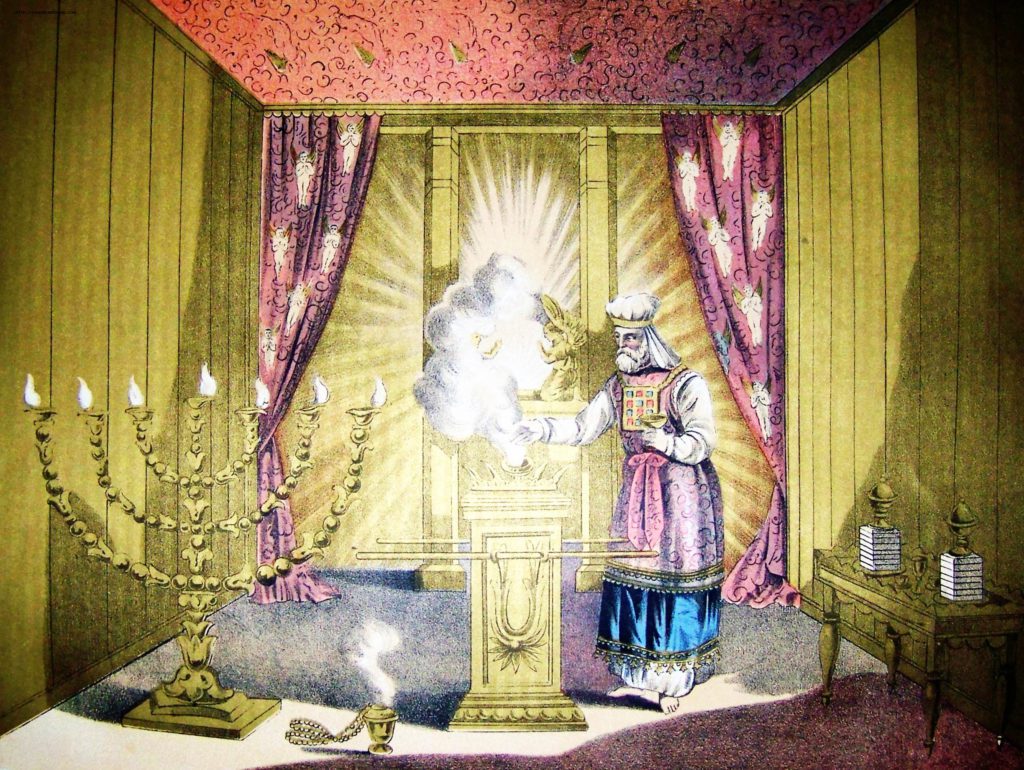
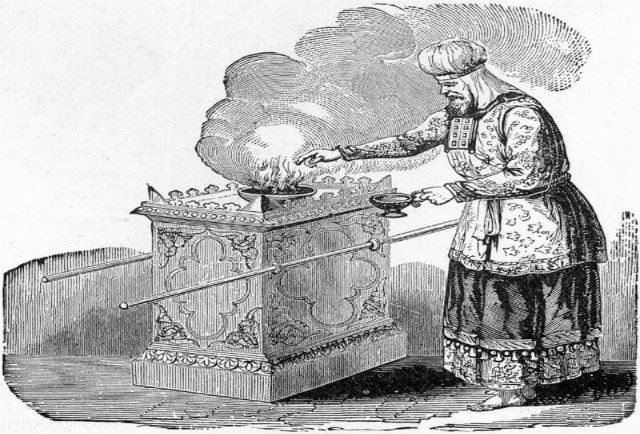
    Offering on the Altar


    I waited patiently for the LORD;
    40:6  זֶ֤בַח וּמִנְחָ֨ה לֹֽא־חָפַ֗צְתָּ אָ֭זְנַיִם כָּרִ֣יתָ לִּ֑י עֹולָ֥ה וַ֝חֲטָאָ֗ה לֹ֣א שָׁאָֽלְתָּ׃

    Sacrifice and offering You did not desire;
    My ears You have opened.
    Burnt offering and sin offering You did not require.

    Psalm 40:6 Masoretic Text; NKJV

    The Perfect Sacrifice

    The author of Hebrews states that in Christ we have a High Priest who does not need to repeatedly make offering and sacrifice. Therefore, the sacrificial blood of the Messiah on the Cross represents a new and better covenant.

    Once again, he logically makes his case supported by the evidence of well-known scripture.

    Hebrews 10:

    Since the law has only a shadow of the good things to come, and not the reality itself of those things, it can never perfect the worshipers by the same sacrifices they continually offer year after year. Otherwise, wouldn’t they have stopped being offered, since the worshipers, purified once and for all, would no longer have any consciousness of sins?

    He refers to the many rules and regulations of sacrifice and offering prescribed in the Mosaic law. Moses gave us a law of better things to come, a mere shadow of true worship. When we finally make the perfect sacrifice, becoming completely purified before the Lord, wouldn’t we then stop making more sacrifices? Wouldn’t our guilt be left covered?

    Sin remains in the shadow sacrifice of the Law, because the blood of bulls and goats cannot cleanse sin perfectly.

    We have awaited a Messiah.. patiently.. a High Priest Perfect for all time. From
    a thousand years before, the writer quotes David’s well known Psalm 40:

    Patience

    I waited patiently for the Lord,
    and he turned to me and heard my cry for help.
    2 He brought me up from a desolate pit,
    out of the muddy clay,
    and set my feet on a rock,
    making my steps secure.
    3 He put a new song in my mouth,
    a hymn of praise to our God.

    Think of this hope in the hearts of faithful Jews when the writer reminds us:

    6 You do not delight in sacrifice and offering;
    you open my ears to listen.
    You do not ask for a whole burnt offering or a sin offering.
    7 Then I said, “See, I have come;
    in the scroll it is written about me.

    Psalm 40:6-7A CSB

    ‘The Lord is trying our patience,’ they must have thought as Rome dominated their land, their city and culture. We wonder why the Lord has not blotted out evil and accepted faithful worshipers only – faithful in these last days.

    Those receiving this letter in the first century would have known the next verses of the Psalm as well. The writer of Hebrews continues:

    Hebrews 10:9 [quote of Psalm 40] he then says, See, I have come to do your will.

    He takes away the first to establish the second.

    The author’s firm reason taken in the second half of verse 9 compare the old and new covenants. He then follows this statement of God’s will with:

    By this will, we have been sanctified through the offering of the body of Jesus Christ once for all time.

    Hebrews 10:10 CSB

    The priest of their shadow sacrifices stands imperfectly at the altar day after day.

    12 But this man, after offering one sacrifice for sins forever, sat down at the right hand of God.

    Testimony of the Holy Spirit

    Then the writer of Hebrews then adds even more support from Scripture.

    15 The Holy Spirit also testifies to us about this. For after he says:

    16 This is the covenant I will make with them
    after those days,

    the Lord says,

    I will put my laws on their hearts
    and write them on their minds

    Hebrews 10:16 quote from Jeremiah 31
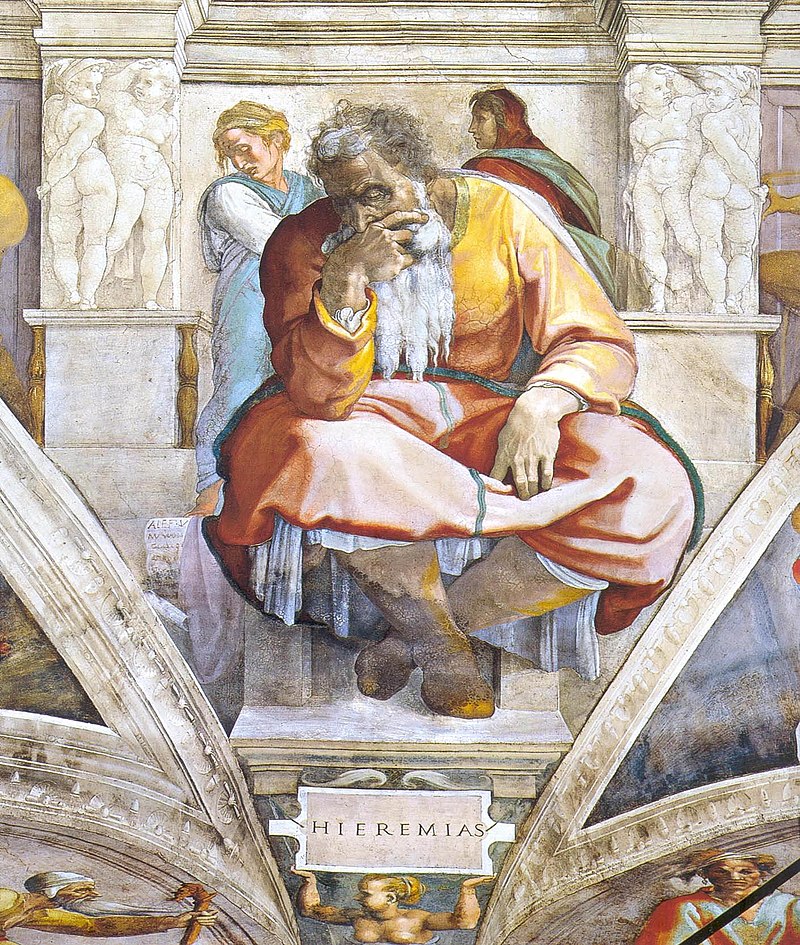
    By Микеланжело Буонаротти - Электронная библиотека.Музеи Ватикана., Public Domain, https://commons.wikimedia.org/w/index.php?curid=2284599
    Jeremiah by Michaelango

    A new covenant – ” Look, the days are coming”—this is the Lord’s declaration—

    The writer of Hebrews appeals to scripture of the prophet Jeremiah, 600 years before Christ, for support of the New Covenant where sacrifice and offering will no longer be required.

    He concludes:

    18 Now where there is forgiveness of these, there is no longer an offering for sin.

    Enter the Sanctuary through the Blood of Jesus

    Several editors of Hebrews take different directions for labeling the next section of chapter 10, which we will examine in my next post. Again the author quotes scripture known to faithful Jews as he pursues the argument for the Messiah Jesus.

    Note just a few headings for the section to come:

    • How We Should Live? – ISV
    • Hold Fast Your Confession – NKJV
    • Exhortations to Godliness – CSB
    • The Full Assurance of Faith – ESV
    • Let Us Come Near to God – GNT

    All, thoughtful considerations of scriptural application to our lives. If you would like to take a preview, take it from the Greek in verse 19.

    10:19 ἔχοντες οὖν ἀδελφοί παρρησίαν εἰς τὴν εἴσοδον τῶν ἁγίων ἐν τῷ αἵματι Ἰησοῦ

    To be continued...
  • Hebrews 8- Minister of the Holy & true Tabernacle

    The Main Point


    Now the main point of what is being said is this:

    We have this kind of high priest, who sat down at the right hand of the throne of the Majesty in the heavens,  a minister of the sanctuary and the true tabernacle that was set up by the Lord and not man.

    Hebrews 8:1-2 CSB

    Let’s not miss this, the author of Hebrews emphasizes the ‘main point’ of the letter (not just this chapter, a reference added to the Letters later). Let’s look more closely.

    • ἀρχιερεύς – archiereus, High Priest in english points to the ‘chief priests’ of Judaism and also to Christ.

    Specifically, by the text which follows, the author affirms a text familiar to some from Luke 22:69 and other references. “[He] is seated at the right hand of God].”

    Ministers

    Now the writer of Hebrews points beyond the authority, nearer to our experience. God assigns a High Priest to minister to His people. Consequently, the High Priest is: “A minister of the sanctuary.”

    “Minister” is a favorite description of the leader of some denominations of Christianity, and for good reason. Because a minister is a servant, perhaps even a public servant of his community. He may even be a tax collector, assigned as a minister of the state or your servant of government delivering some military labor.

    Yet τῶν ἁγίων λειτουργὸς καὶ τῆς σκηνῆς, “a minister of the sanctuary and true tabernacle” serves the Lord God. A High Priest ministers to God’s people from the sanctuary.

    Reverends

    Of course we commonly hear of the esteemed leaders of some churches referred to as Reverend Soandso or the Reverend Doctor Soandso. But ‘reverend relates more to their position in the sanctuary, ἅγιον hagion, defined as: reverend, worthy of veneration; of persons whose services God employs; set apart to God; in a moral sense, pure sinless upright holy.

    Once again, from the text of Hebrews (in Greek) the imagery of holiness points back to the position of the High Priest in the Holy of Holies. And that is where the author points next.

    and of the true Tabernacle

    καὶ τῆς σκηνῆς τῆς ἀληθινῆς

    Hebrews 8:2b gk.

    Perhaps we understand the Holy of Holies more in the context of the Temple, yet it’s description as an exact place for God to come down to the High Priest is a temporary meeting place within a tent.

    Hebrew מִשְׁכָּן (mishkan), Tabernacle in English.

    Therefore, the Tabernacle, σκηνή skēnē is a tent, a shadow of the place of holiness like prescribed to Moses. This was why Peter wanted to build three tabernacles when he witnessed Moses and Elijah with Jesus.

    Exodus 25:

    8 “They are to make a sanctuary for me so that I may dwell among them. 9 You must make it according to all that I show you—the pattern of the tabernacle as well as the pattern of all its furnishings.

    The key point of the author of Hebrews is this ‘pattern of the tabernacle.’ Consequently Jesus the Messiah becomes a minister of the sanctuary and ‘true tabernacle.’ His appointment as a minister of Authority at the right hand of God makes Jesus a better High Priest.

    The tabernacles of the earth (including the Temples of Jerusalem) are temporary.

    These serve as a copy and shadow of the heavenly things, as Moses was warned when he was about to complete the tabernacle.

    Hebrews 8:5

    Covenant

    What is a covenant? (Twenty-first century Christians and Jews can hardly imagine its impact, because we do not even keep our less solemn promises.)

    ‘I’ve heard of it. I think God may be involved in a covenant.’

    “I will establish My covenant with you,” said God [אֱלֹהִים] to Noah.

    And “the LORD [יְהֹוָה] made a covenant with Abram.”

    But covenants may also be made between men. A covenant [בְּרִית bĕriyth] [διαθήκη diathēkē] is and alliance and pledge, a solemn promise to the agreed relationship.

    The Person of God our Father in heaven has made a covenant with you. Who do you think would break it? Certainly not the LORD!

    And Jew and follower of the Way knew scripture well enough to recall their heritage of breaking covenants with the Lord God. For a long history of kings ‘did what was evil in the sight of the Lord.’

    The Prophet Jeremiah

    By Микеланжело Буонаротти - Электронная библиотека.Музеи Ватикана., Public Domain, https://commons.wikimedia.org/w/index.php?curid=2284599
    Jeremiah by Michaelango

    Jeremiah lived about 600 years before the writer of Hebrews. His witness of the fall of Jerusalem follows calls for repentance which went unheeded.

    “Hear the words of this covenant, and speak to the men of Judah and to the inhabitants of Jerusalem; and say to them, ‘Thus says the LORD, the God of Israel, “Cursed is the man who does not heed the words of this covenant which I commanded your forefathers in the day that I brought them out of the land of Egypt, from the iron furnace, saying, ‘Listen to My voice, and do according to all which I command you; so you shall be My people, and I will be your God,’ in order to confirm the oath which I swore to your forefathers, to give them a land flowing with milk and honey, as it is this day.”’” Then I said, “Amen, O LORD.”


    11:6  וַיֹּ֤אמֶר יְהוָה֙ אֵלַ֔י קְרָ֨א אֶת־כָּל־הַדְּבָרִ֤ים הָאֵ֨לֶּה֙ בְּעָרֵ֣י יְהוּדָ֔ה וּבְחֻצֹ֥ות יְרוּשָׁלִַ֖ם לֵאמֹ֑ר שִׁמְע֗וּ אֶת־דִּבְרֵי֙ הַבְּרִ֣ית הַזֹּ֔את וַעֲשִׂיתֶ֖ם אֹותָֽם׃


    And the LORD said to me, “Proclaim all these words in the cities of Judah and in the streets of Jerusalem, saying,

    ‘Hear the words of this covenant and do them.

    Jeremiah 11:6

    The author of Hebrews now quotes scripture they know.

    Jeremiah 31:31-34 excerpts

    I will make a new covenant with the house of Israel and with the house of Judah.

    Jeremiah 31:31; Hebrews 8:8

    “… My covenant which they broke… – Jeremiah 31:32

    I showed no concern for them, says the Lord,
    because they did not continue in my covenant.

    Hebrews 8:9B

    32 This one will not be like the covenant I made with their ancestors… —the Lord’s declaration. “I will put my teaching within them and write it on their hearts…

    “For I will forgive their iniquity and never again remember their sin.

    Jeremiah 31:34D; Hebrews 8:12

    A Superior Covenant

    His point: we broke the old covenant and the intercession of human priests is insufficient.


    The author of Hebrews shows how the Temple and tabernacle were mere shadows of the relationship to the Lord yet to be fulfilled in a superior covenant. He then continues after quoting Jeremiah’s prophesy with hope for a more perfect outcome of its fulfillment.

    13 By saying a new covenant, he has declared that the first is obsolete. And what is obsolete and growing old is about to pass away.

    The author of Hebrews will proceed by contrasting Jesus with the old covenant.

    To be continued...