Tag: jerusalem

  • Justice deferred in a Political Theatre of Law

    Justice deferred in a Political Theatre of Law

    We suppose Law to be a tool of Justice

    Citizens of Greek City-States claimed freedom and justice..

    (although like everywhere else, Greek democracy did not apply to its slaves.)

    Socrates drank the hemlock of justice weighed by his opponents of classic philosophy.

    And, of course, Alexander the Great Macedonian claiming all Greece and the world had different ideas of law to make the world Greek again.

    (“There’s nothing new under the sun,” stated Solomon, King over much of the same empire nearly a thousand years before Alexander.)
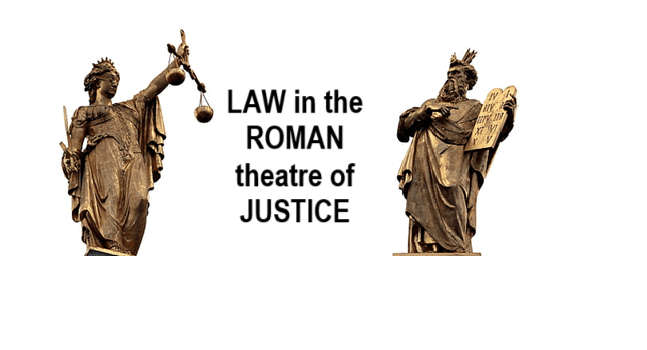
    Justina Roman goddess pictured "LAW in the Roman theatre of JUSTICE

    Roman Law

    In today’s setting of Acts of the Apostles it’s important for us to remember that in Jerusalem – Judean LAW (it isn’t even fully JEWISH LAW applicable in other Roman Provicences (or States by contemporary comparison) – as administered by the Sanhedron separate of the Roman Governor, a minor appointed Proconsul accountable to the Emporor.

    This jurisdictional oversight – similar to that when Pontius Pilate tried to pass the political hot potato of the King of the Jews back and forth to Herod or the Jewish leaders of Jerusalem – is little different when just a few years later Paul retuns to Jerusalem to face JUSTICE redefined in various venues.

    Jews demanding JUSTICE

    The Apostle of Jesus sent to the Gentiles (Greeks) has just returned home.

    After his witness to the Jews (in Hebrew) of being sent by Jesus (who had been crucified) on the road to Damascus) AND being sent to the Gentiles — (this had been 20 years ago, back in A.D. 37) — once again, Paul proclaims Christ risen!

    The adjitated jewish crowd was about to stone him, just as when he himself had witnessed the execution of Stephen.

    “Is it lawful for you to flog a man who is a Roman citizen and uncondemned?”

    When the centurion heard this, he went to the tribune..

    Acts of the Apostles 22:25b-26a ESV

    There he's done it! 

    Paul initiates a whole chain-of-events triggering the chain-of-command in Roman oversight and justice.

    But on the next day, desiring to know the real reason why he was being accused by the Jews, he [the Tribune in charge of the Centurians] unbound him and commanded the chief priests and all the council to meet, and he brought Paul down and set him before them.

    Acts 22:30 ESV

    This JEWISH council — about seventy leading men, SUMMONED to apprear before the ROMAN Tribune and his COURT of Roman justice in Jerusalem — are NOT in charge of the proceedings. 

    Acts 23:

    And looking intently at the council, Paul said, “Brothers, I have lived my life before God in all good conscience up to this day.”

    Remember: Although the courtroom is that of the Jews, Paul — the DEFENDENT — faces them as his PROSECUTOR (not his judge).

    And the high priest Ananias commanded those who stood by him to strike him on the mouth.

    “God is going to strike you, you whitewashed wall!

    Are you sitting to judge me according to the law, and yet contrary to the law you order me to be struck?”

    Some savvy oral arguments take place (as is common in court). Paul seeks to divide the jury of his accusers:

    “.. It is with respect to the hope and the resurrection of the dead that I am on trial.”

    It worked. One of his fellow Pharisees stands in his defense,

    “We find nothing wrong in this man.

    What if a spirit or an angel spoke to him?”

    The dissension (between the two parties of the Pharisees and Sadducees)became violent.

    Now the Jews of this local lower court — to which the rules of the Pax Romana defer — sound more like a lynch mob than a place of justice AND (let’s not forget) Paulos is a ROMAN CITIZEN.


    And as a great dissension was developing, because the commander was afraid Paul would be torn to pieces by them, he ordered the troops to go down and take him away from them by force, and bring him into the barracks.

    Acts 23:10 LSB

    Conspiracy against Christ and His Apostle

    The world will often witness an unexplainable boldness in a certain saint of God is seemingly insurmountable circumstances. (This had happened with the Apostle time and time again during his ten-plus years of travel among the gentiles and Greeks.)

    The night before his highly anticipated public trial in Jerusalem the Apostle of Christ Jesus again received supernatural instruction.

    But on that very night, the Lord stood at his side and said,

    “Take courage; for as you have solemnly borne witness to My cause at Jerusalem, so you must bear witness at Rome also.”

    Acts 23:11 LSB

    Imagine — the Lord Jesus Christ, who had been crucified twenty-seven years ago —  the same risen Lord who had appeared in a vision of great glory twenty years ago —  stands beside the Apostle and now sends him to Rome!

    So of course, Paul is emboldened when he is brought to trial before the Roman court the next day.

    Meanwhile, more than forty of the jews made a plot to murder Paul (outside of the jurisdiction of the Roman authorities).

    They went to the chief priests and elders and said,

    “We have strictly bound ourselves by an oath to taste no food till we have killed Paul. Now therefore you, along with the council, give notice to the tribune to bring him down to you, as though you were going to determine his case more exactly. And we are ready to kill him before he comes near.”


    The Plot Thickens
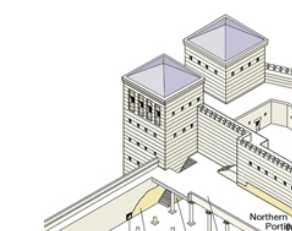
    steps from Antonia Fortress to roofs of Temple porticos

    Paul’s jewish nephew hears of the plot of these forty men, so the young man heads to the Roman fortress to try to warn Paul.

    Paulos —  the Roman citizen held in protective custody after the big hubbub of the jewish crowds —  instructs his guards to go to the man in charge.

    Paul called one of the centurions and said,

    “Take this young man to the tribune, for he has something to tell him.”

    Acts 23:17 ESV

    The tribune [Claudius Lysias] took him by the hand, and going aside asked him privately, “What is it that you have to tell me?”

    Note the gentleness of this tribune, Claudius Lysias - a man in charge of the centurions of Antonia Fortress as he seeks to get to the truth of the matter. 

    The young son of Paul’s sister responds:

    “The Jews have agreed to ask you to bring Paul down to the council tomorrow, as though they were going to inquire somewhat more closely about him.

    But do not be persuaded by them, for more than forty of their men are lying in ambush for him, who have bound themselves by an oath neither to eat nor drink till they have killed him. And now they are ready, waiting for your consent.”

    Acs 23:21b-22 ESV

    “Tell no one that you have informed me of these things.”


    An Imposed Authority of Roman Justice

    “Get ready two hundred soldiers, with seventy horsemen and two hundred spearmen to go as far as Caesarea at the third hour of the night.[9 pm]

    Caesarea! a model of Roman incursion into all the world of the Mediterranean - a key port for Romans, a city where Cornelius, Philip, Peter, Paul and others brought the gospel
    Caesarea – (Caesar’s Palace in Judea

    Also provide mounts for Paul to ride and bring him safely to Felix the governor.”

    This military escort of a Roman citizen Paulos is most unlike the handling of Jesus the king of the Jews sent to the Pontius Pilate, governor of that time, (who happened to be in Jeruslem rather than Caesarea). 

    Official Orders sent with Paul

    “Claudius Lysias,

    to his Excellency the governor Felix,

    greetings.

    This man was seized by the Jews and was about to be killed by them when I came upon them with the soldiers and rescued him, having learned that he was a Roman citizen. And desiring to know the charge for which they were accusing him, I brought him down to their council. And desiring to know the charge for which they were accusing him, I brought him down to their council. And when it was disclosed to me that there would be a plot against the man, I sent him to you at once, ordering his accusers also to state before you what they have against him.”

    Acts 23:26-30 ESV

    You might call this 'the official COURT record.' 

    Of course —  ALL follow orders and the next scene with, with Roman effeciency, take place in Caesarea.

    Marcus Antonius Felix

    Antonius Felix, served as the Roman procurator of Judea from ~AD 52-58. He was appointed by the Emperor Claudius and was known for his harsh and often corrupt administration. Felix was a freedman of Claudius' mother, Antonia. - source: BibleHub 

    When they had come to Caesarea and delivered the letter to the governor, they presented Paul also before him.

    The Governor inquires about jurisdiction – that is, in effect – Am I the appropriate judge of this case?

    And when he learned that he [Paulos] was from Cilicia, he said, “I will give you a hearing when your accusers arrive.” And he [Antonius Felix] commanded him [the Centurian in charge of Paul’s escort] to be guarded in Herod’s praetorium [there in Caesarea].

    Acts of the Apostles 23:35 ESV [with names of prepositions]

    Justice – a Case to be continued


    Talk of JESUS . com

    Comment on Scripture – Share the Gospel

  • The Sun and the Moon Stood Still – Why won’t we?

    The Sun and the Moon Stood Still – Why won’t we?

    The sun and moon stood still in their habitation:

    Habakkuk 3:11 KJV

    Sun and moon stood still before God

    What’s the picture?


    Habakkuk – a Prophet burdened for a people humbled

    1:2 עַד־אָנָה יְהוָה שִׁוַּעְתִּי וְלֹא תִשְׁמָע אֶזְעַק אֵלֶיךָ חָמָס וְלֹא תוֹשִׁיעַ׃


    The burden which Habakkuk the prophet did see.

    IF you have not already felt the full weight of a Prophet painting a picture for men without eyes to see

    a sun and a moon which had stood still, — then you have sensed a low and quiet place where the Lord has prepared an unseeing Common Era people by a BLINDING LIGHT in the darkness of these last days…


    O LORD, how long shall I cry,
    And You will not hear?
    Even cry out to You, “Violence!”
    And You will not save.

    Habakkuk 1:2 NKJV


    Sound familiar?

    (Even from your own arrogant lips?)


    Why do You show me iniquity,
    And cause me to see trouble?
    For plundering and violence are before me;
    There is strife, and contention arises.

    Therefore the law is powerless,
    And justice never goes forth.
    For the wicked surround the righteous;
    Therefore perverse judgment proceeds.

    Habakkuk 1:2-3

    The LAW of which the Prophet speaks 
    -- the Commandments of the LORD
    -- NO LAW = No Justice!

    Do we blindly suppose that the righteous are US?
    AND therefore WE the named and claimed PEOPLE of God suffer by His Almighty Hand!
    COULD THAT BE JUST?

    WHY does this sound so familiar to a Common Era people who rarely read or hear the oracles of WARNING by the Prophets of God?

    And what does Habakkuk ask early-on in his plea to the LORD?

    Why do You look on those who deal treacherously,
    And hold Your tongue
    when the wicked devours
    A person more righteous than he?
    14 Why do You make men like fish of the sea,
    Like creeping things that have no ruler over them?

    Habakkuk 13b-14 NKJV


    IS THIS any way to PLEA to the Lord our God of Whom WE are commanded to 'love the LORD your God with all your heart, with all your soul, and with all your mind’ even confirmed by the Messiah and Lord Jesus? 

    More Writing on the wall

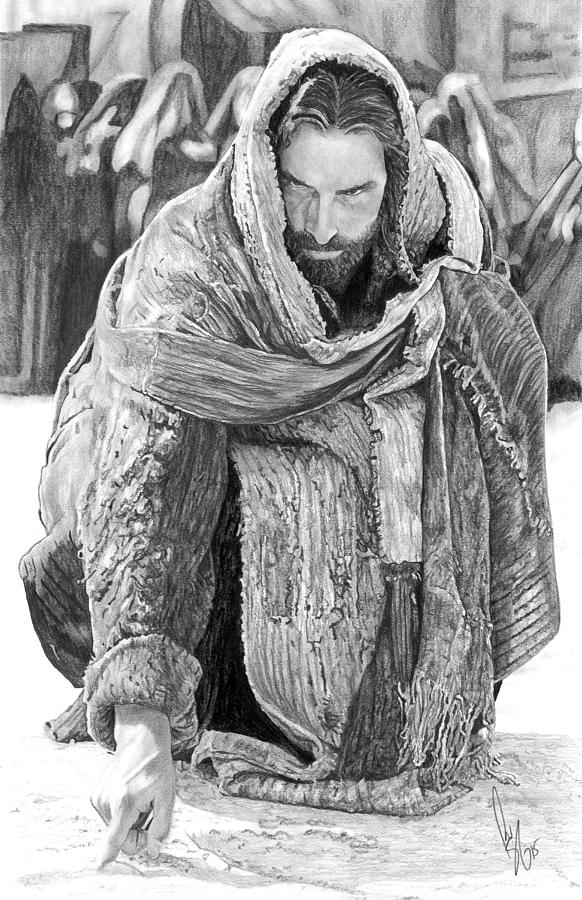
    Jesus writing in the sand with his finger
    (for those casting a first stone at Habakkuk) 

    Then the Lord answered me and said:

    “Write the vision
    And make it plain on tablets,
    That he may run who reads it.

    For the vision is yet for an appointed time;
    But at the end it will speak, and it will not lie.

    Though it tarries, wait for it;
    Because it will surely come,
    It will not tarry.

    “Behold the proud,
    His soul is not upright in him;
    But the just shall live by his faith.

    Habakkuk 2:2-4 NKJV


    Again, what is the picture? 

    The SOUL of the proud is fallen.
    AND the soul of the Lord's faithful remains bowed down in the witness of our lives.

    Therefore, for the hope of the faithful know that the LORD pronounces many woes (and NOT blessings) on the proud who seem to be in charge of our mortal lives. And to name just a few:

    THEN the LORD closes his response to the Prophet with an authoritatively THUNDERING VOICE to humble worshipers bowed down in faithfulness:

    “But the Lord is in His holy temple.
    Let all the earth keep silence before Him.”

    Habakkuk 2:20

    What would happen IF Common Era worshipers would put down our devices and our coffees and entered into WORSHIP like this? 

    Let thos whw with eyes to see Christ's writing in the sand see God's zeal for faithful worshipers.

    and now:

    This prayer sung by the prophet Habakkuk:

    O Lord, I have heard Your speech and was afraid;
    O Lord, revive Your work in the midst of the years!
    In the midst of the years make it known;
    In wrath remember mercy.

    Habakkuk 3:2 NKJV

    And the earth was full of His praise.

    4 His brightness was like the light;
    He had rays flashing from His hand,
    And there His power was hidden...

    He looked and startled the nations.
    And the everlasting mountains were scattered,
    The perpetual hills bowed.

    from the prayer of Habakkuk


    GET THE IDEA?

    all bowed down before the Lord – in HIS Presence everything else stood still or was swept away by the hidden power of HIS GLORY!

    The sun and the moon stood still


    Now returning to the context of our opening picture and illustration: 
    red moon of an eclipse The sun and moon stood still in their habitation: at the light of thine arrows they went, and at the shining of thy glittering spear. Habakkuk 3:11

    You divided the earth with rivers.
    10 The mountains saw You and trembled;
    The overflowing of the water passed by.
    The deep uttered its voice,
    And lifted its hands on high.
    11 The sun and moon stood still in their habitation;
    At the light of Your arrows they went,
    At the shining of Your glittering spear.

    12 You marched through the land in indignation;
    You trampled the nations in anger.
    13 You went forth for the salvation of Your people,
    For salvation with Your Anointed.
    You struck the head from the house of the wicked,
    By laying bare from foundation to neck.

    Selah

    When I heard, my body trembled;
    My lips quivered at the voice;
    Rottenness entered my bones;
    And I trembled in myself,
    That I might rest in the day of trouble.

    Habakkuk 3:16a NKJV

    Is THIS your reaction -- contemporary christian worshiper? 

    A Hymn of Faith

    NO hymns for OUR praise band! 
    NO Old Testament Prophets and their drama that could SILENCE the applause and bring the CROWD to its knees.

    Who remembers Jesus cursing the fig tree as the Lord entered Jerusalem?

    The unfamiliar picture and significant symbolism Jesus drew is the same as that of Habakkuk’s hymn of faith.

    We examined this great symbolism in an earlier series.


    Even if you choose not to read the prologue above you will find these references from Habakkuk below -with which we will conclude.

    AND consider our 2025 CE Lenten theme of contrition replanted in the hearts of 21st century worshipers:

    We stood there and did nothing

    • Habakkuk and other Prophets of the Lord have warned us to WORSHIP the Lord our God.
    • The Messiah JESUS — Son of the Living God — enters Jerusalem cursing a tree that bore no fruit (though thousands applaud Him).
    • Crowds of worshipers enter a Common Era gathering little noticing a cursed fig tree as they bring their coffees and distracting devices toward the gate of the grand stage.
    • LENT?
      • WE don’t do that anymore…

    O, faithless fig tree, dear dried up vine;

    do you believe that you alone have cried out to the Lord for mercy?

    Habakkuk 3:

    O Lord, I have heard Your speech and was afraid;
    O Lord, revive Your work in the midst of the years!
    In the midst of the years make it known;
    In wrath remember mercy.

    for it was not the season for figs – 7 – July 9, 2017 TalkofJESUS.com

    Comment on Scripture – Share the Gospel
  • Lamentations of our past in a Lenten path forward

    Lamentations of our past in a Lenten path forward

    Jeremiah tells us [in Lamentations 3,4 & 5]:

    I am the man who has seen affliction
    Because of the rod of His wrath..

    Remember my affliction and my wandering, the wormwood and bitterness.

    Source: TalkofJesus.com category Old Testament History

    Kinoth-Ecah How? :אֵיכָה

    How doth the city sit solitary, that was full of people!

    how is she become as a widow! she that was great among the nations, and princess among the provinces,

    how is she become tributary!

    Lamentations 1:1 KJV – the sorrows of Zion

    stone wall "city of David" in Hebrew and English in Jerusalem
    Zion צִיּוֹן
    Gaza Israel war damage
    Gaza, Israel July 2018 CE

    The ways of Zion do mourn, because none come to the solemn feasts:

    all her gates are desolate: her priests sigh, her virgins are afflicted, and she is in bitterness.

    Her adversaries are the chief, her enemies prosper; for the LORD hath afflicted her for the multitude of her transgressions:

    her children are gone into captivity before the enemy.

    the Lamentations of Jeremiah 1:4-5 KJV


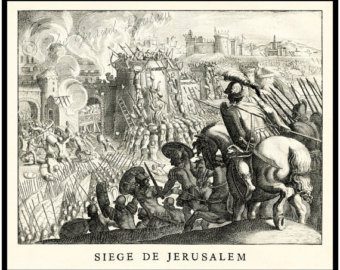
    Get the picture? Jerusalem completely destroyed and its people led captive into Babylon – 605-597 B.C.

    In A.D.70 it would be ROME that would again destroy a Jerusalem built under the Caesars by its Herodian kings who again rejected God. 

    Commentary on Lamentations

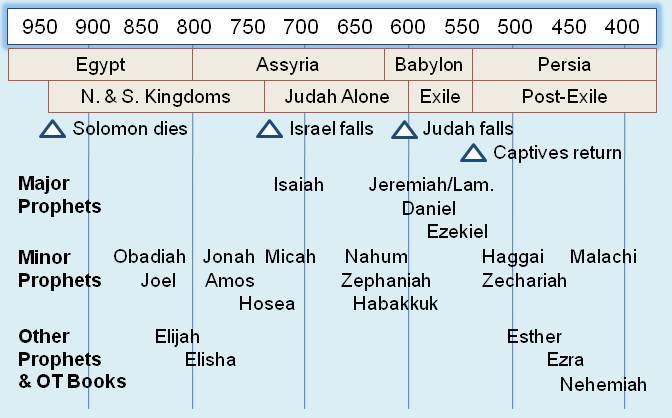
    timeline of prophets after David

    As noted in my introduction and outline to this SERIES for Lent 2025 CE, although JEREMIAH belongs to the timeline as a PROPHET predicting the destruction of Jerusalem by the LORD, Lamentations – written AFTER its fall — (like the Psalms) belongs with the Scriptures.


    Matthew Henry

    An Exposition, With Practical Observations, of
    The Lamentations of Jeremiah

    Since what Solomon says, though contrary to the common opinion of the world, is certainly true, that sorrow is better than laughter, and it is better to go to the house of mourning than to the house of feasting,

    we should come to the reading and consideration of the melancholy chapters of this book, not only willingly, but with an expectation to edify ourselves by them;

    and, that we may do this, we must compose ourselves to a holy sadness and resolve to weep with the weeping prophet.

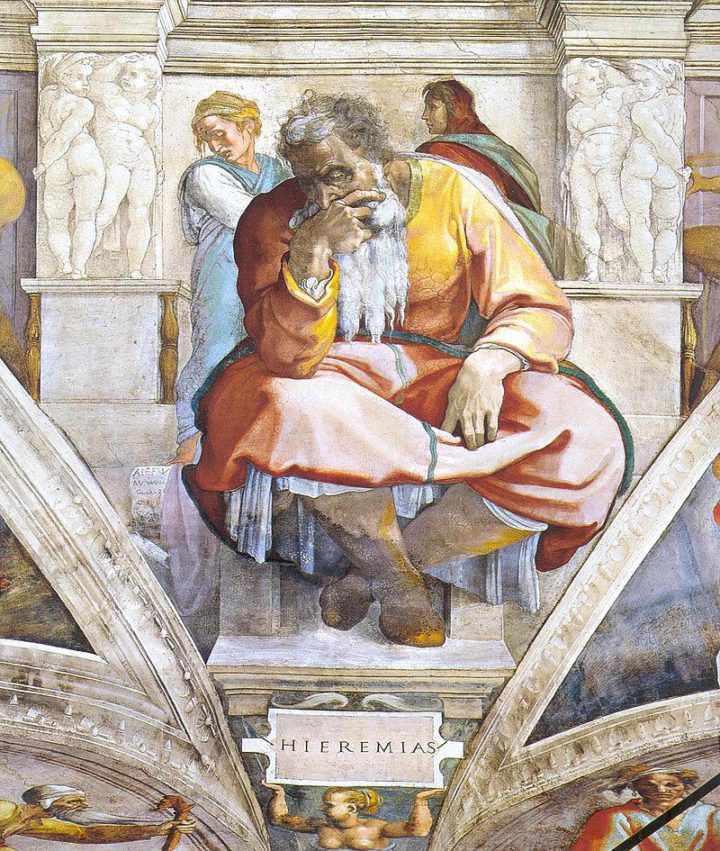
    stone carving of the prophet Jeremiah reading Bible - Isaiah, Jeremiah, Ezekiel and Daniel are major Prophets of the Old Testament
    Jeremiah by Michelangelo
    • from the first word Ecah-How
    • Jewish commentators call it, as the Greeks do, and we from them, Kinoth-Lamentations.

    As we have sacred odes or songs of joy, so have we sacred elegies or songs of lamentation;

    such variety of methods has Infinite Wisdom taken to work upon us and move our affections, and so soften our hearts and make them susceptible of the impressions of divine truths, as the wax of the seal.

    We have not only piped unto you, but have mourned likewise, Mt. 11:17.

    Reverend Matthew Henry, minister of the Gospel in Chester, England,

    About Reverend Matthew Henry:

    Born 1662 the year that the Act of Uniformity was enacted, which saw over 2,000 Anglican clergymen ejected from their pulpits.

    In 1686, Matthew Henry was invited by a local Nonconformist minister to establish an assembly in Chester, England, While in Chester, Matthew Henry founded the Presbyterian Chapel on Trinity Street.

    June 22nd 1714, he went to be with God.


    The Lord Has Destroyed Without Pity

    ESV HEADING – Lamentations 2

    The elders of the daughter of Zion
    sit upon the ground, and keep silence:
    they have cast up dust upon their heads;
    they have girded themselves with sackcloth:
    the virgins of Jerusalem hang down their heads to the ground.

    Lamentations 2:10
    Authorized (King James) Version


    “I am the man:” – Before and After

    I'll remind us again of my discovery that the Hebrew Bible [Tanakh] includes Yirmiyahu (Jeremiah) Nevi'im (Prophets) and in a later section Eichah in Ketuvim (Scriptures).

    HERE we must see the Prophet in both his earlier identification with a chosen people turned against the LORD and later as a man suffering along with them after the prophesies had come true.

    You have persuaded me, O YHWH, and I am persuaded;

    You have hardened me, and prevail, “

    ” I have been for a laughter all the day,”” Everyone is mocking at me,

    Jeremiah 20:7 LSV

    Yet now the Prophet identifies with them as he surveys God’s people under the wrath and punishment of the LORD.

    Lam 3:1 – I am the man that hath seen affliction by the rod of his wrath.

    2 He hath led me, and brought me into darkness, but not into light …

    17 -18 And thou hast removed my soul far off from peace: I forgat prosperity. And I said,

    My strength and my hope is perished from the LORD:

    What HOPELESSNESS! What travail! 

    And HERE we find the thread connected to ASH WEDNESDAY and LENT — a dark and narrow inescapable path out of a dark garden toward a Cross overlooking Jerusalem’s refuse.


    Crushed – dāḵā‘ : דָּכָא

    Before we proceed and also show where Jeremiah uses this word both here and earlier in his prophesy, let's consider its DEFINITION: 

    Strong’s H1792 – dāḵā’ –

    dakā'- 
    ----------------
    * Lexicon numbers of Hebrew parts of speech in  Strong's H???? will help you apply these to English, Greek (G????) and other translations.

    verb – A primitive root (compare דָּכָה (H1794)) another verb (same pronunciation) [A primitive root (compare דַּךְ (H1790)-adjective, and דָּכָא (H1792))-another verb]


    To crush, be crushed, be contrite, be broken

    – be shattered, to be made contrite, (Hithpael) to allow oneself to be crushed

    • Have you found this most appropriate thread for the contrition of Lent?

    They are not humbled [H1792 – the same Hebrew word] even unto this day,

    neither have they feared,

    nor walked in my law, nor in my statutes, that I set before you and before your fathers.

    From the Prophesy of Jeremiah 44:10 KJV (Hebrew visible in the link)

    Therefore thus saith the LORD of hosts, the God of Israel; Behold, I will set my face against you for evil, and to cut off all Judah.

    Jeremiah 44:11 KJV

    Humble your-SELVES or be CRUSHED!

    Jeremiah, who served as both a priest and a prophet for decades even before 568 B.C. 

    The warning of the LORD is clear, yet still ignored. The Nation claimed for G_d already DIVIDED (captive Israel and soon to be captive Judah) — in spite of Jeremiah’s strong rebukes continues to reject the will of the LORD.

    Therefore, when Jeremiah wrote or dictated Lamentations during or soon after Jerusalem’s fall in 586 B.C. we observe that it is too late, for the LORD has crushed His own disobedient Nation.


    Lamentations 3:31-35 BSB


    To crush underfoot

    This phrase evokes imagery of oppression and domination, often used in the context of military conquest or tyrannical rule. In biblical times, crushing underfoot symbolized complete subjugation and defeat.

    .. as a metaphor for the spiritual and emotional oppression experienced by the people.

    In a broader biblical context, it reflects the consequences of sin and rebellion against God, as seen in other scriptures..

    Commentary ‘ Doth not the Lord look on this? 

    (34-36) To crush . . .—The triplet of verses forms one sentence dependent upon the final clause, “The Lord approveth not,” literally, doth not look on. ..The three forms of evil specified are (1) the cruel treatment of prisoners of war, such as Jeremiah had witnessed daily at the hands of the Chaldeans; (2) the perversion of justice in a public tribunal acting in the name of God (Exodus 23:6); (3) every form even of private injustice.

    Ellicott’s Commentary for English Readers


    HOW has Christ been sent to the CROSS?


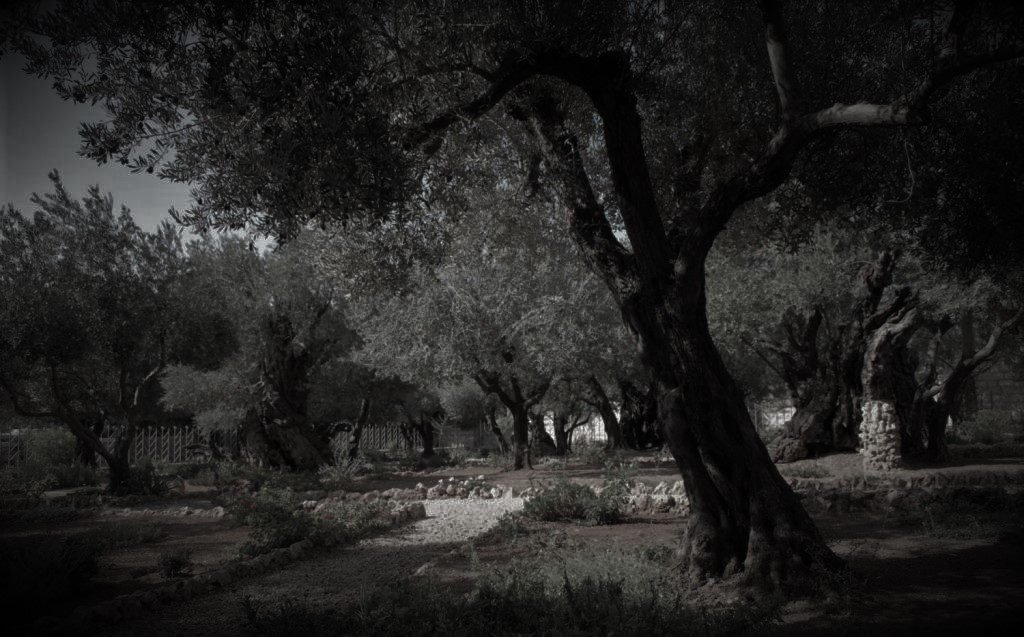
    garden in darkness

    Consider Christ in the Garden of Gethsemane :

    as prophesied by Isaiah


    But he was pierced because of our rebellion,

    crushed because of our iniquities;

    punishment for our peace was on him,

    and we are healed by his wounds.

    We all went astray like sheep;

    we all have turned to our own way;

    and the LORD has punished him

    for the iniquity of us all.

    Isaiah 53:5-6 CSB


    Talk of JESUS . com

    a crushed worker

    Are you a CRUSHED worker for the Gospel of our Lord and Saviour CHRIST JESUS, who was crushed for us?

    Talk of JESUS .com logo with earth Mark 16:15 Comment on Scripture + Share the Gospel
    TalkofJESUS.com