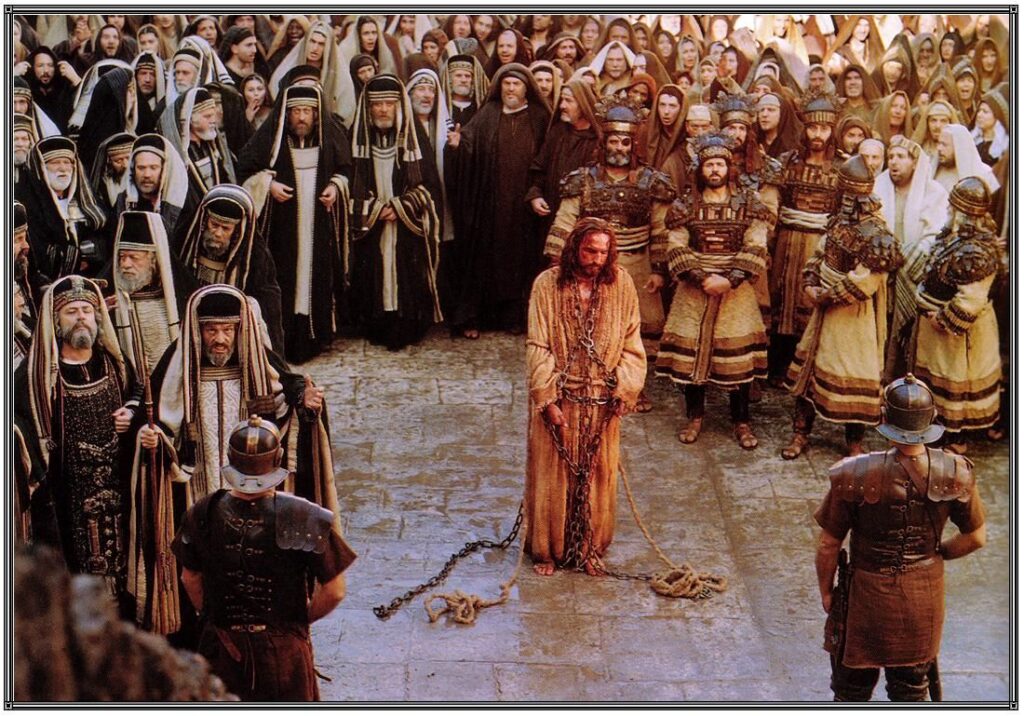
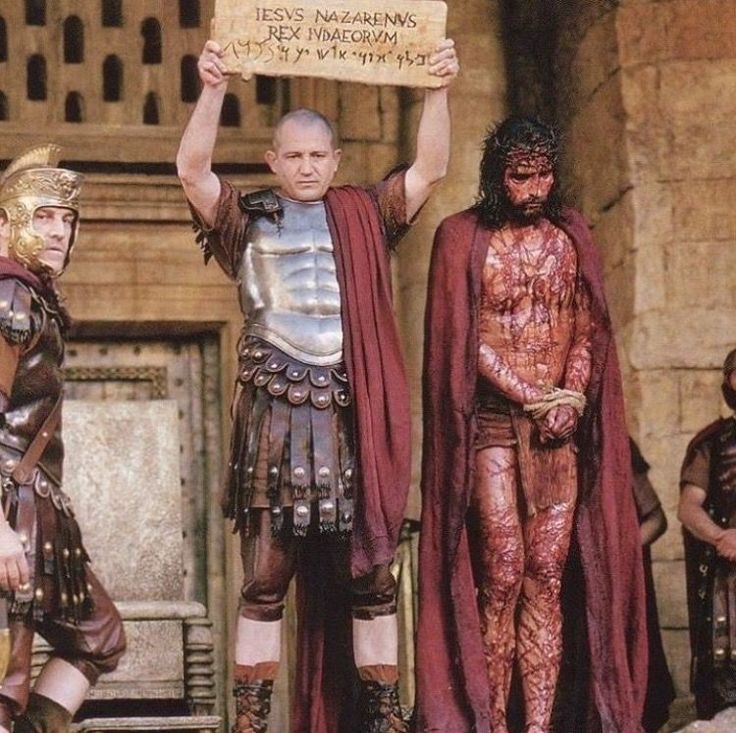
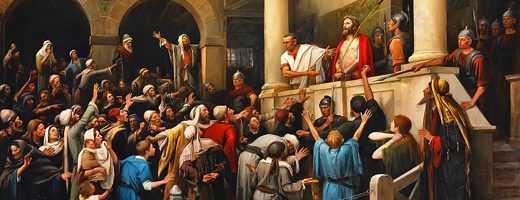
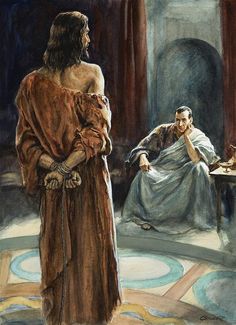
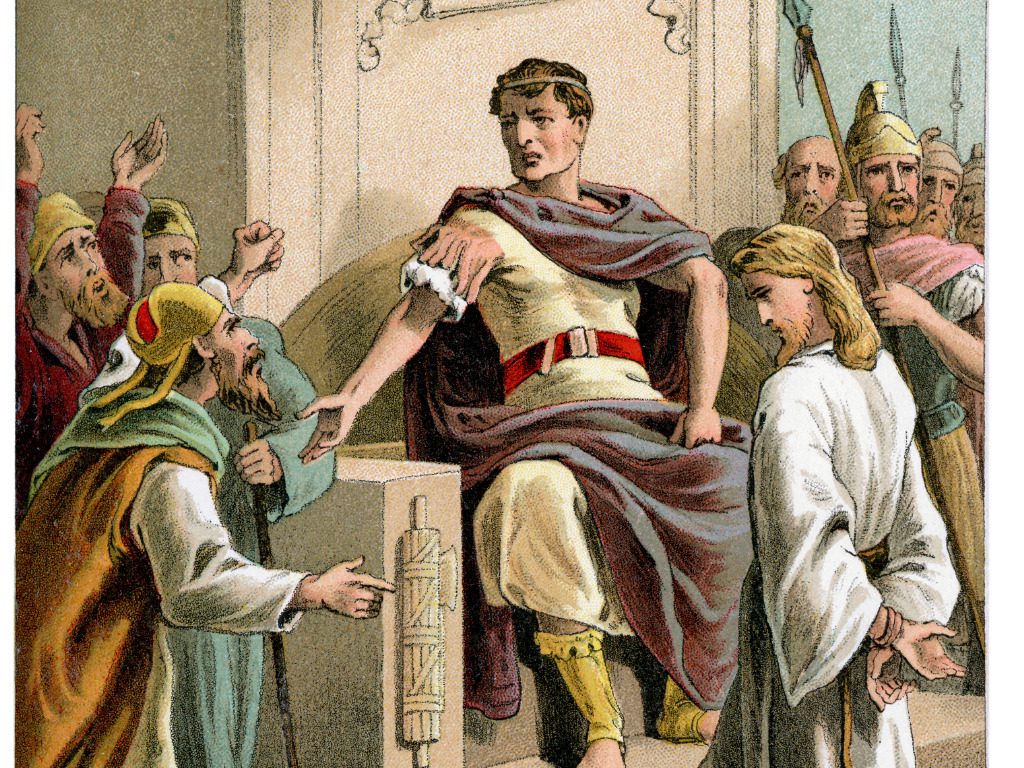
“See, I am bringing Him out to you so that you will know that I find no grounds at all for charges in His case.”
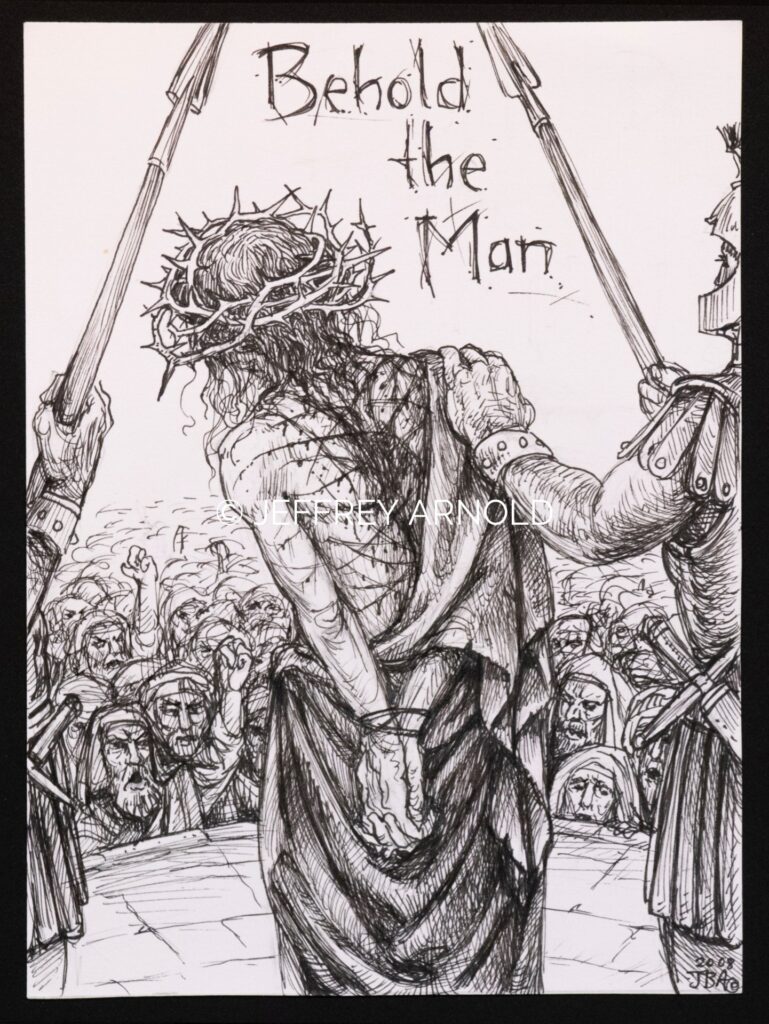
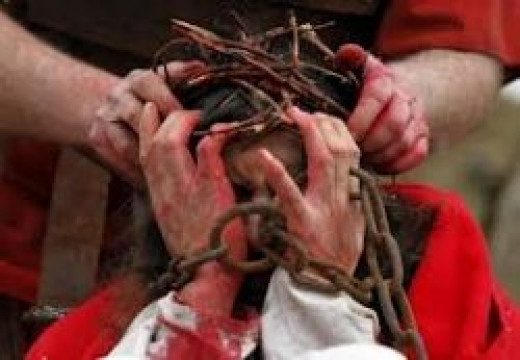
Jesus then came out, wearing the crown of thorns and the purple robe. And Pilate said to them, “Behold, the Man!”
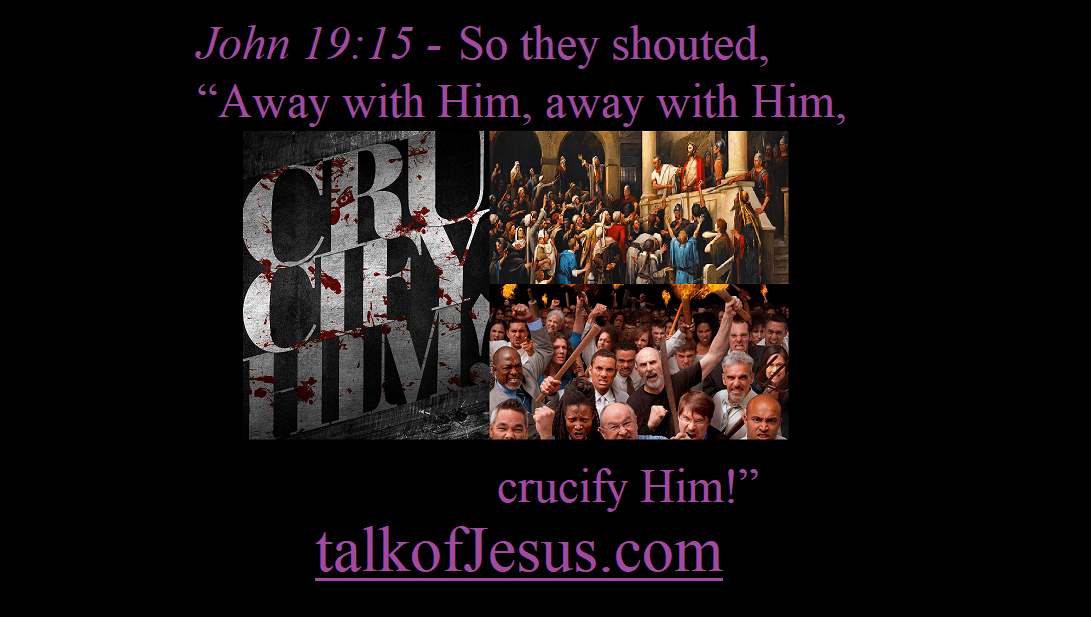
So when the chief priests and the officers saw Him, they shouted, saying, “Crucify, crucify!”
Behold the Man
Pilate said to them, “Take Him yourselves and crucify Him; for I find no grounds for charges in His case!”
John 19:6b NASB
Justice of the Crowds
Though the politician in charge who happens to be Governor and Judge finds no case against Jesus Christ and mockingly charges those politicized religious officials to take justice into their own hands, the high profile trials of Jesus will continue before the watching eyes of the Jews ‘seeking justice.’
We’ve been following the false accusations against Jesus and cruel punishments placed on the innocent Son of Man for revealing the truth of who He IS.
No political correctness required here, only political expediency to please the crowds.
From indictment of Truth to the Scapegoat of Sacrifice
Where is mercy?
You will not find it anywhere in the worldly darkness of this sacrificial scene. (Just read brief description of what has already taken place.)
His face already bruised, swollen, bloodied by the blows from Caiaphas, they continued the abuse by smiting Him, putting on the crown of thorns, mocking Him.
Chuck Smith commentary on John 19
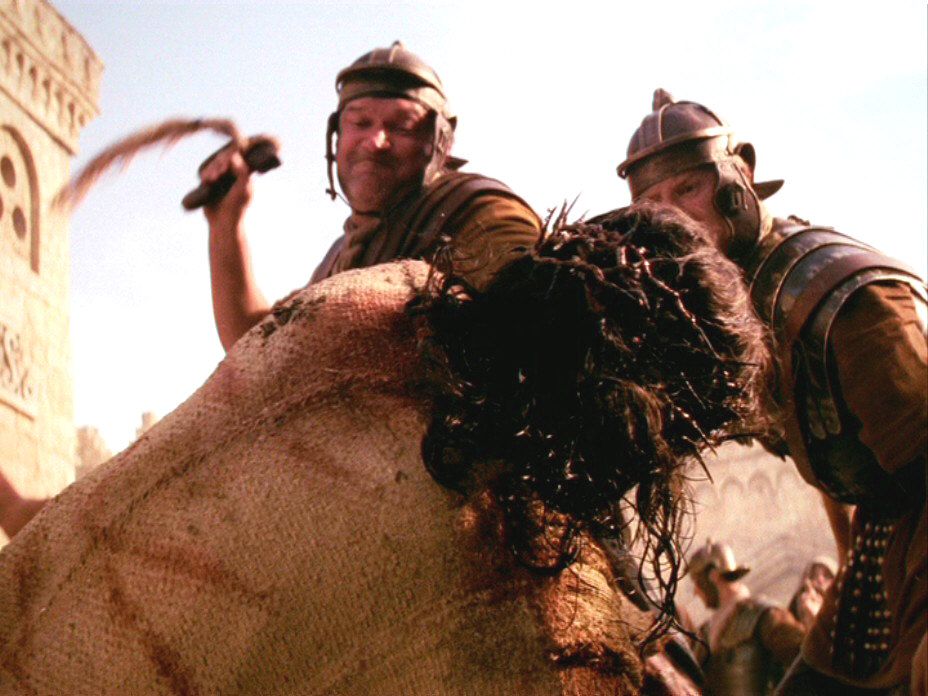
They had a third degree that was totally unmerciful. They would tie a prisoner to a post so that the back was stretched out. And then with a cat of nine tails whip, a leather whip with little bits of glass and lead imbedded in it designed to rip the flesh, they would lay the whip across the back of the prisoner thirty-nine times.
.. Many times prisoners died as the result of these scourgings. Before the thirty-ninth stripe was laid upon them, they were already dead from the loss of blood and just from the extreme pain. But Jesus bore that suffering.
The ruthless brutality (which pleases the crowds) charged to Rome by the captive Jews presumes death by suffering – a bloodied man – hung on crossbeams from a tree, by nails through outstretched hands and a hammer-driven nail through his taughtly-bound feet.
Our own fear of pain so etched into this fragile flesh that scarcely can we look upon this Blood of Sacrifice for our own sins.
Pilate governs a people ruled over by corrupt religious officials of Jerusalem and simmering in Rome’s unstable peace.
What better way to eliminate all who threaten the Roman political peace?
The murderous shouts of the crowds are no doubt incited by the powerful, seeking yet more power over an incited powerless people.
Roger Harned – talkofJesus.comon religious & political leaders seeking influence
The familiar Roman outcome of public trials is so matter-of-fact and suffering so severe that the other Gospels move through it quickly.
Matthew 27:
And he said, “Why, what evil has He done?” But they kept shouting all the more, saying, “Crucify Him!”
When Pilate saw that he was accomplishing nothing, but rather that a riot was starting, he took water and washed his hands in front of the crowd, saying, “I am innocent of this Man’s blood; see to that yourselves.”
And all the people said, “His blood shall be on us and on our children!” .. Then he released Barabbas for them;
.. but after having Jesus scourged, he handed Him over to be crucified.
Mark 15:
The crowd went up and began asking him to do as he had been accustomed to do for them.. But the chief priests stirred up the crowd to ask him to release Barabbas for them instead. ..They shouted back, “Crucify Him!”
Luke 23:
.. but they kept on calling out, saying, “Crucify, crucify Him!” .. But they were insistent, with loud voices asking that He be crucified. And their voices began to prevail. And Pilate pronounced sentence that their demand be granted.
.. And following Him was a large crowd of the people…
How will we judge the Son of God?
They knew the truth of Jesus’ signs:
Lazarus raised to life.
The blind given sight.
And most threatening to their religious rule,Jesus riding to the gate of Jerusalem like a victorious King David.
..“What are we doing? For this man is performing many signs. If we let Him go on like this, all men will believe in Him, and the Romans will come and take away both our place and our nation.”
Why is God about to suffer by the hands of His enemies?
To fully understand what is about to take place, we examine the motivations of those in charge:
The religious enemies of Jesus and
The political enemies of Jesus
Mocking your Enemy in Public
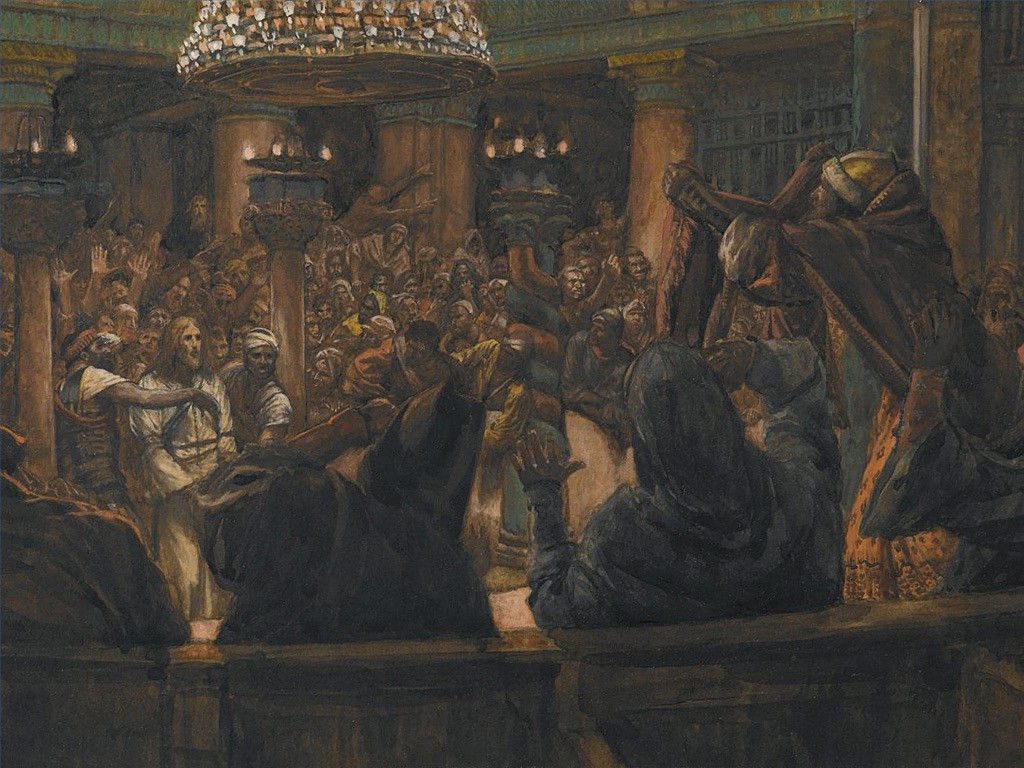
By now we have seen the betrayal of Jesus by one of His own. And because of Jesus’ popularity with the populace of Jerusalem, powerful religious leaders had seized Jesus under the cover of darkness and tried Him in pre-choreographed trials away from the crowds.
You may find it helpful to understand the background of Rome’s mocking its enemies in public, which you can read more about in the commentary.
Much of the following insight quotes BlueletterBible.org commentary of Chuck Smith,secure link of full text & audio versions::C2000 Series on John 18-19
- Graphics & secure internal links below open separate tabs to previous posts from this series from the Gospel of John.
Eternal Life
Jesus, the Christ of GOD
Logos: Greek describing Jesus Christ. “In the beginning was the word… John 1:1
You’ll notice that the word he is in italics, which means that is was added by the translators.Jesus just said, “I am.” That divine name of the eternal God. When Jesus said, “I am,” there went forth, no doubt, a blast of power, divine power.
And as he said unto them, I am he, they fell backward to the ground.
(Jhn 18:6)
Now, at that point, Jesus could have just walked off and left them lying there. It is interesting that Jesus is in control of the whole situation. He is the Master. And though they have come to arrest Him, He is the one that is giving the orders.
Now we examine the motives of Jesus’ enemies:
Religious Rule over the Jews
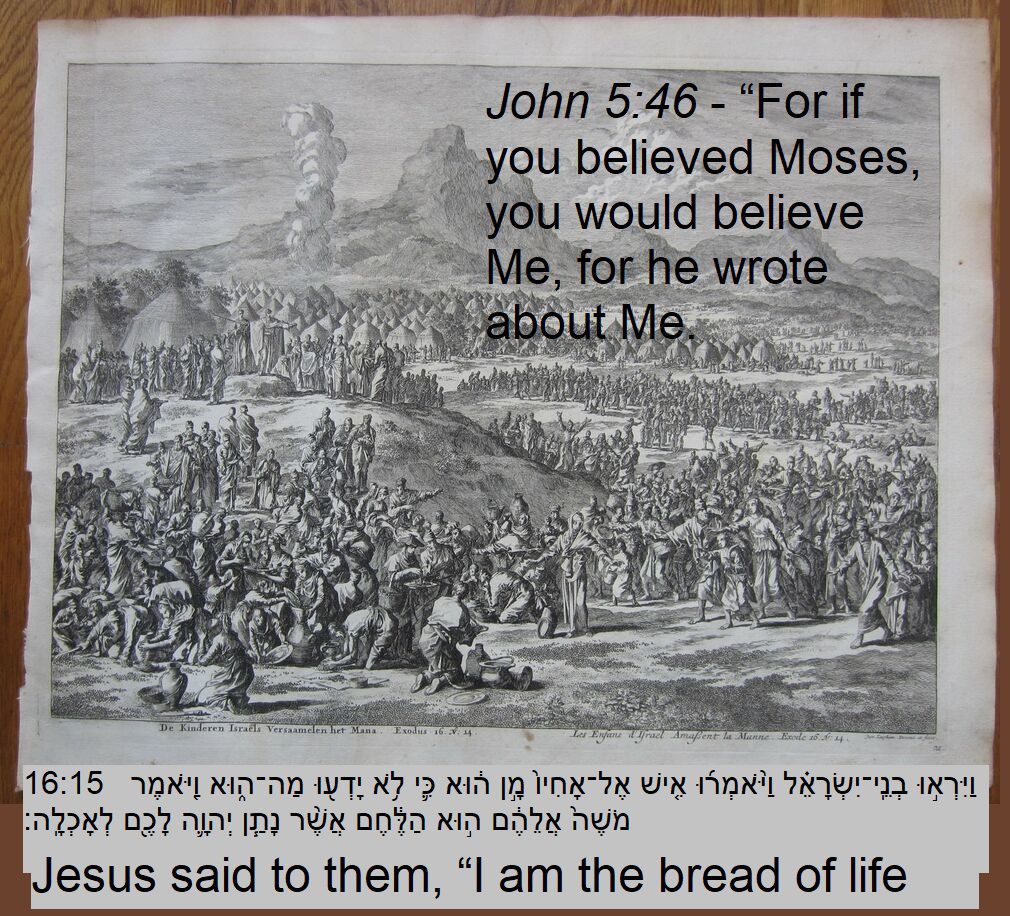
I AM the Bread of Life
Jerusalem’s previous administration had lost power over the Empire’s right to tax their captive kingdom (Herod’s, in name only). When the Jews violently took to the streets in protest a couple of years previously, Pilate executed many Jews and revoked the authority of their leaders to execute anyone.
And they led him away to Annas first; for he was the father-in-law to Caiaphas, which was the high priest that same year (Jhn 18:13).
Annas had been the high priest from the year five to the year sixteen. Annas was probably one of the most influential, powerful, wealthy men in the city of Jerusalem. At this particular time, the high priesthood was a political kind of an appointment by the Roman government. And it was secured by a bidding kind of a process. They paid and bribed for the privilege of being the high priest. It was extremely corrupted at this point. Annas was the high priest, and being the patriarch of that family, was recognized still as the power behind the office of the high priest.
More about Monday's incident of Jesus overturning the tables of the moneychangers at the Temple in the commentary link.
.. And so, He was first brought to this man, an extortioner, a wealthy man, a Sadducee.
Caiaphas
So that’s why there were two high priests, Annas the patriarch, the old man, recognized by the people; but the Roman government had appointed politically Caiaphas as the high priest. [My emphasis. – RH]
Now, this Caiaphas was the one who said, “Look, it’s necessary that one be killed for the whole nation.”
And Simon Peter followed Jesus (Jhn 18:15),
And John does not tell us about His trial before Caiaphas, but the other gospels, Matthew and Mark tell us about the trial before Caiaphas.
Physical Abuse of Jesus by the Jews!
Note further from Smith’s commentary the beginnings of the sufferings of their Messiah Jesus by the hands of the Jewish leaders clinging to their tenuous power in Jerusalem.
Now, Jesus had already experienced a tremendous buffeting in the house of Caiaphas. There, they put a covering over His head. And with this bag over His head, they began to hit Him. Now, that’s vicious. We are fearfully and wonderfully designed, and we are designed to have automatic reflex actions. And when we see a blow coming, we automatically reflex to protect ourselves from that blow by fainting and going with the blow, thus cushioning it. And as long as you see the blow coming, it’s amazing what you can absorb. As long as your body can see it coming and you can then compensate and cushion and relax and flow with it.
.. So by covering Jesus’ eyes, by covering His head, and then buffeting Him, no chance to faint or to respond, and you take the full force of the blow, you don’t know it’s coming, Wham! That hurts! He’d already taken that kind of abuse.
His face already bruised, swollen, bloodied by the blows from Caiaphas, they continued the abuse by smiting Him, putting on the crown of thorns, mocking Him. There is a horrible mob psychology, where people lose all of their natural inhibitions and restraints and act as a mob and like an animal. And it’s always shocking the things that people can do in the anonymity of a mob. The true vicious nature of man, sinful nature of man is revealed.
Click the next page number below
to continue...
Continued on Page 3.. (question for comment follows on Page 2)
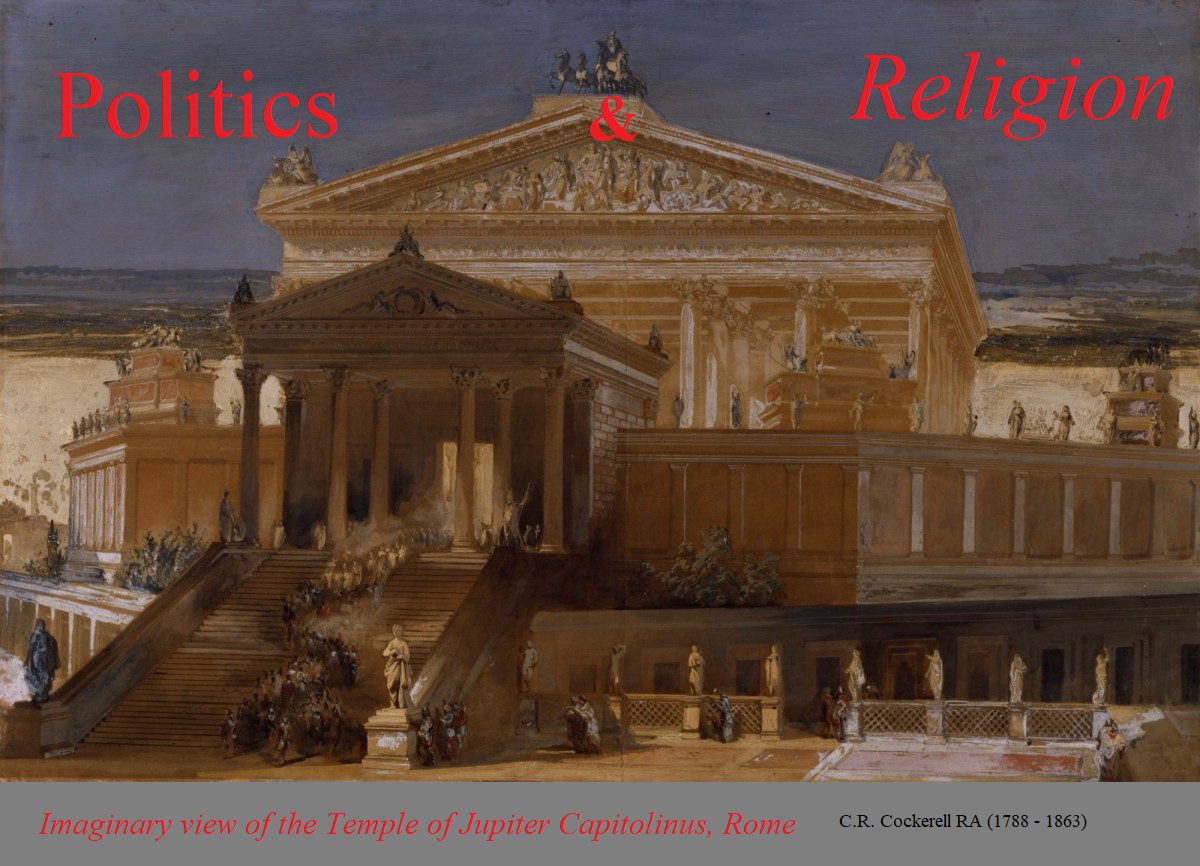
A lengthy consideration of the history of Rome may seem to have little to do with 1st c. Jerusalem and the trial of Jesus Christ. In fact, Rome’s lessons of politics and religion not only add context to this pivotal event in history, but to our own struggle between empires and the rule of God.
As you breeze through it or dig into some of Rome’s culture through additional secure links, think about the dance of power between political and religious leaders.
We have thus far examined the impact of politics in religion and actions by officials of the Temple against Jesus.
Now we will briefly leave Jerusalem for Rome and examine the culture Rome’s religions and impact on a Roman Governor like Pontius Pilate in this small and distant part of Roman Syria.
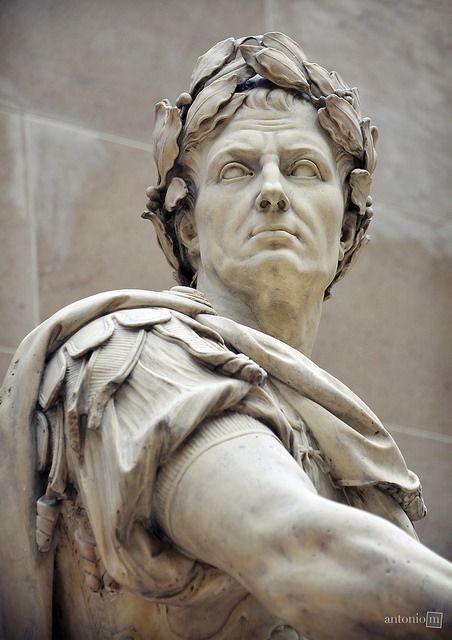
Gaius Julius Caesar
Roman general and statesman
b. 100 BC – until his assassination 15 March 44 BC
less than a century before the Roman crucifixion of Jesus Christ
The Julii Caesares traced their lineage back to the goddess Venus
Britannica.com
The Republic of Rome
..the late Roman Republic was surely the sole superpower of the western world..
Disclaimer: I am a theologian, not a historian and therefore make no claim to accuracy of the extensive knowledge of several researchers linked separately here for your additional understanding of the history of Rome and its culture as it affected the Empire of the 1st century AD.

continued quote below from Realm of History
[Rome] ..Then came the ascendancy of the great Julius Caesar, one of the greatest generals of his time, who was responsible for bringing Gaul (present-day France) into the Roman dominion by 50 BC. These signs of progress were matched by the conquering of eastern Anatolia and Armenia proper (in the preceding decade), thus bringing the Romans to the very edge of the Caspian Sea.
But then came the chaotic times, with the assassination of Caesar, the subsequent Triumvirate troubles, and civil wars, and ultimately the eclipse of the Roman Republic – thus making way for the rise of the Roman Empire in 27 BC, under the helm of Augustus.
Culture of the Republic
Remember that this diminishing concept of the Republic had begun centuries before in a city-state on Italia then ends abruptly with the assassination of Julius Caesar.

Source below: National Geographic
The Roman Republic was founded in 509 B.C.
after the last Etruscan king that ruled Rome was overthrown.
Rome’s next government served as a representative democracy
in the form of a republic.
Rome’s wealthiest families .. held power
only they could hold political or religious offices.
lower classes later gained power within the government.
At the heart of the Roman Republic was the Senate.
The Senate lasted as a sole governing body for the republic for only a brief time until 494 B.C.
.. in the 1st century B.C. the famous Roman orator Marcus Cicero uncovered a plot by a Roman senator .. to overthrow the Roman government.
Ultimately, factions emerged (loyal to either the patrician or plebeian classes or to a specific military general), hostilities erupted, and a series of civil wars plagued the republic.
During these civil wars, a prominent general and statesmen named Julius Caesar began gaining significant power. He commanded the loyalty of the soldiers in his army and enjoyed access to substantial wealth after conquering the province of Gaul.
The Senate, fearful of Caesar’s power, demanded he give up command of his army and return to Rome as a citizen.
Caesar refused, instead marching his army south directly into Rome.
As a result, another civil war erupted between Caesar and his chief political rival, Pompey.
a group of senators conspired and assassinated him.
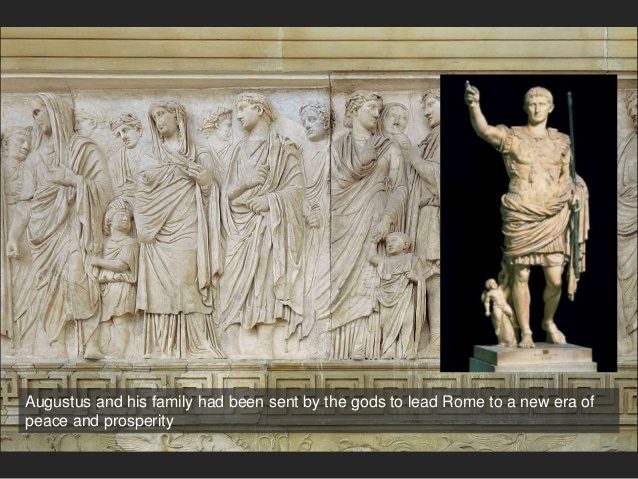
Augustus Caesar – Rome’s First Emperor
In response to Caesar’s death, his nephew and heir Augustus defeated the conspirators. He then established himself as the first Roman emperor.
The Roman Empire dramatically shifted power away from representative democracy to centralized imperial authority, with the emperor holding the most power. Unlike Julius, Augustus Caesar (i.e. Octavian) used political prowess to appoint officials to government.
Now in those days a decree went out from Caesar Augustus, that a census be taken of all the inhabited earth. This was the first census taken while Quirinius [Publius Sulpicius Quirinus] was governor of Syria.
Rome’s political bickering between the classes ends abruptly on the ides of March, 44 B.C. with the assignation of Julius Caesar, effectively dissolving Rome’s flailing republic with its Senate and representatives of lower free classes of citizens.
Julius Caesar’s recognition as a god of the Roman state in ..42 BC enhanced Octavian’s prestige as son of a god.
Had I been living at the time of Christ's trial this would have taken place about the time of my own birth, i.e. seven decades ago
Octavian also launched elaborate religious and patriotic publicity, centring on the classical god of order, Apollo..
In addition, Octavian had started to prefix his name with the designation “Imperator,” to suggest that he was the commander par excellence.. gradually concentrating on the plain, emotive name “Caesar Son of a God.”
… his name Caesar, acquired through adoption in Julius’s will, was supplemented by “Augustus,” an appellation with an antique religious ring… – Britannica
Might makes right and establishes its peace by the power of war.
Caesar Augustus, by his military might and political prowess, introduced a peace of Rome forcing a better world of prosperity and restoring ‘the religion of the Republic.’
‘The strength of Rome lay in the iron discipline of its troops rather than fortified positions.
Pilate was likely born to a middle-class family in southern Italy with some influence in Rome.
He probably served in the Roman army before promotion.
Pilate would have had a military command before becoming prefect of Judaea in 26 A.D.
‘Prefect‘ was a title for a temporary appointment of the leader of a city-state, later used for a more permanent regional govenor.
The post of governor of Judaea was of relatively low prestige.
Technically the Prefect of Judea served under a governor of the Roman province of Syria, however Tiberius had not bothered to appoint one to replace Syria’s former governor.
Where does Pilate fit in to the religions of Rome?
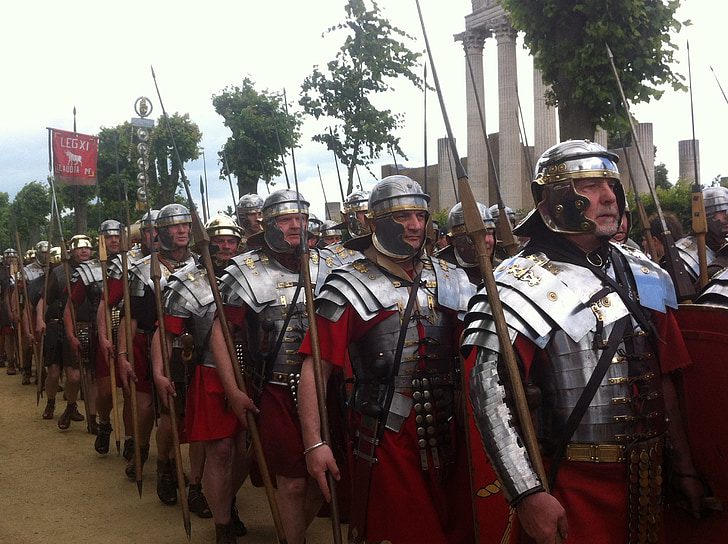
Roman soldiers would have regularly paraded though the public streets of Rome during festivals (some religious, some civic), when returning victorious from war (which was with some frequency) and after ceremoniously worshiping in public and marching from Rome for their next military campaign.
Pilate no doubt would have been a participant in these public shows of the military many times in his early career. As a participant and possibly a leader of such public processions in Rome, Pilate would fully understand the implications of this man Jesus riding into Jerusalem just a few days prior to the cheers and adulations of the crowds.
Was Jesus entering Jerusalem a religious processional?
To Pilate it seemed more like a victorious popular leader praised by the multitudes of Jerusalem (like when conquering generals return to Rome.
No doubt the Sanhedrin sees this Jesus as a religious threat to them, but what is that to Rome?
Meaningless. The vanity of these Jews thinking that they still had anything to do with governing Judea.
Roman religion was practical and contractual, based on the principle of do ut des, “I give that you might give”. Religion depended on knowledge and the correct practice of prayer, ritual, and sacrifice, not on faith or dogma..
This religion of the Roman Prefect Pontius Pilate is, of course, quite different from the worship of the Jews of Judea.Although some aspects or Roman and Jewish religion were similar.
For ordinary Romans, religion was a part of daily life. Each home had a household shrine at which prayers and libations to the family’s domestic deities were offered. Neighborhood shrines and sacred places such as springs and groves dotted the city. The Roman calendar was structured around religious observances.
.. when Rome struggled to establish itself as a dominant power, many new temples were built by magistrates in fulfillment of a vow to a deity for assuring their military success.
Pilate and other Roman soldiers would have been part of festivals and honors paid to such victories at these shrines or temples in Rome.
Roman theology acknowledged that di immortales (immortal gods) ruled all realms of the heavens and earth. There were gods of the upper heavens, gods of the underworld and a myriad of lesser deities between. Some evidently favoured Rome because Rome honoured them, but none were intrinsically, irredeemably foreign or alien.
Public religious ceremonies of the official Roman religion took place outdoors, and not within the temple building.
Wikipedia
Religion and the military
Military success was the touchstone of a special relationship with the gods, and to Jupiter Capitolinus in particular; triumphal generals were dressed as Jupiter, and laid their victor’s laurels at his feet.
Roman commanders offered vows to be fulfilled after success in battle or siege; and further vows to expiate their failures…
Roman camps followed a standard pattern for defense and religious ritual; in effect they were Rome in miniature.
Caesarea, Roman capitol of Judea built with cooperation of Herod the Great, was home to the Prefect of Judea Pontius Pilate, his family and loyal troops for ten years.
Each camp had its own religious personnel; standard bearers, priestly officers and their assistants, including a haruspex, and housekeepers of shrines and images. A senior magistrate-commander (sometimes even a consul) headed it, his chain of subordinates ran it and a ferocious system of training and discipline ensured that every citizen-soldier knew his duty.
Judea (and other provinces) after Augustus
Under the rule of Augustus, there existed a deliberate campaign to reinstate previously held belief systems amongst the Roman population. These once held ideals had been eroded and met with cynicism by this time.
The imperial order emphasized commemoration of great men and events which led to the concept and practice of divine kingship.
Emperors postceding Augustus subsequently held the office of Chief Priest (pontifex maximus) combining both political and religious supremacy under one title.
Jews and Judaism were tolerated in Rome by diplomatic treaty with Judaea’s Hellenised elite. Diaspora Jews had much in common with the overwhelmingly Hellenic or Hellenised communities that surrounded them.
By the Augustan era, the city of Rome was home to several thousand Jews.
Wikipedia
Again, even prior to his later appointment as Prefect of Judea, Pilate would have been familiar with the Jews.
We will return to Pilate's problem of the 'king of the Jews' as Prefect of Judea.

To be continued...
Page TWO - Please click Page 2 below for the questions.
Used to monitor number of Google Analytics server requests
10 minutes
__utmb
Used to distinguish new sessions and visits. This cookie is set when the GA.js javascript library is loaded and there is no existing __utmb cookie. The cookie is updated every time data is sent to the Google Analytics server.
30 minutes after last activity
__utmc
Used only with old Urchin versions of Google Analytics and not with GA.js. Was used to distinguish between new sessions and visits at the end of a session.
End of session (browser)
__utmz
Contains information about the traffic source or campaign that directed user to the website. The cookie is set when the GA.js javascript is loaded and updated when data is sent to the Google Anaytics server
6 months after last activity
__utmv
Contains custom information set by the web developer via the _setCustomVar method in Google Analytics. This cookie is updated every time new data is sent to the Google Analytics server.
2 years after last activity
__utmx
Used to determine whether a user is included in an A / B or Multivariate test.
18 months
_ga
ID used to identify users
2 years
_gali
Used by Google Analytics to determine which links on a page are being clicked
30 seconds
_ga_
ID used to identify users
2 years
_gid
ID used to identify users for 24 hours after last activity
24 hours
_gat
Used to monitor number of Google Analytics server requests when using Google Tag Manager
1 minute
_gac_
Contains information related to marketing campaigns of the user. These are shared with Google AdWords / Google Ads when the Google Ads and Google Analytics accounts are linked together.