A 21st Century Parable
You know the old story (actually, several variations on a theme). Three men (but today you might have to include other designations) encounter the same situation and the third one gets the punch line.
That’s not quite what happened to me recently as I witnessed the following story (which also includes a woman I don’t mention and a well-dressed black man I include).
My story’s ending may be unexpected but to the best of my knowledge none of the three strangers were a priest, rabbi or a pastor. You may see some humor in it. Picture these strangers I encountered today.
Which neighbor of the three might you have been?
Stranded at our Neighborhood Kroger
It was no emergency and I was prepared. Yet I was unprepared for what would follow when my car wouldn’t start.
Yes, I had jumper cables in the trunk so I raised my hood and looked for some help.
Stranger number one
A man approached from the grocery store with just a few things in his bag. He headed for his car parked in the row just behind my stranded car with the hood up. I approached him as he entered his car.
“Could you help me jump my car?”
He rather reluctantly looked down and away from my glancing appeal from outside his door. “Sorry, but I can’t.”
Okay, I thought. He’s dressed up and could be in a hurry. Someone else will help. So I walked to a car on the other side of the same row where my car sat helplessly with its hood up.
Stranger number two
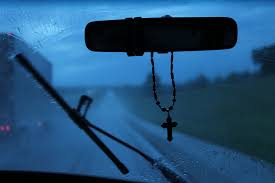
Another kind-looking man had just entered his car with a soft-knit cross hanging from the mirror. My spirit lifted with hope that here was a brother who would help. So I asked.
“Could you help me jump my car? I have battery cables.”
He nodded his head gently saying, “My battery is really low. I don’t think it would help.”
My heart dropped as I walked back to my car thinking of his cross on the mirror.
Later I thought, “Gee, I should have asked him if he was a priest or Levite?” (Of course I would never do that and neither would you, but we all think those things.)
So I called for road service, which could reach me in my local neighborhood grocery parking lot in something like forty minutes. It was then that Jesus’ Parable of the Good Samaritan came to mind. Even most non-believers know that one, but no good Samaritan here today, I thought. No big deal. I’ll just wait.
Stranger number three
As I sat in my car with the hood up for a bit more time in thought a man walked up to me and asked if I had help on the way.
“Yes, I called a tow truck, but all I need is for someone to help jump my car.” He agreed to try and pulled his car up in front of mine.
After connecting my jumper cables to both cars I got in my car and turned the key. Nothing.
The man then said, “Let me get in my car and give it a little gas.”
I reconnected the cables making certain to have the best contact possible then we both got in our cars and I tried again. This time, success!
I thanked him, disconnected it all, drove home, unloaded groceries from my idling vehicle and drove to a neighborhood repair shop for a new battery.
Just like one helped by a fictional hero of my youth, ‘I didn’t even ask this man his name.’ He was The ‘Lone Stranger’ helping someone in need.
God knows the name of each good Samaritan and some praise their witness to a world steeped in self-righteousness, unlike a neighbor loved by the LORD.
A Not so Funny ending
Unlike the man in Jesus parable of the Good Samaritan, I was not on a distant highway, hurt and hopeless due to such a severe attack by robbers.
Ok, you might laugh that I’m not exactly your helpless victim in peril here. And you may laugh just a bit more at the great irony of the man with the cross in the window not helping a brother in Christ. (It’s really kind of typical of our witness, isn’t it?)
Yes, maybe there’s a lesson here too.
So in our 21st century story I guess it’s the second guy who gets the punch line and the third guy’s no joke. In fact he’s just the kind of neighbor we all wish we had.
The Good Samaritan
Jesus’ parable could have begun with ‘a priest, a rabbi and a pastor’ scenario because in this same way His characters were just as familiar to the parable’s hearers.
Three characters who could have helped
A priest happened to be going down that road. When he saw him, he passed by on the other side.
Luke 10:31 CSB
To our many dear Jewish friends I might mention that the Messiah Jesus was considered a ‘lesser’ Jew from Galilee in the eyes of those proper Judean Jews who leaned on their status and the Law. After all, His parable was told to answer a question from the crowd mostly of Jews.
This Priest is a Jewish Priest, a very pure and proper sort of guy. (We would not have much difficulty envisioning a Roman Catholic Priest or Orthodox Priest with all the robes, incense and the like.) The Priest of the LORD is a long-forgotten intermediary of Jewish worship.
In the same way, a Levite, when he arrived at the place and saw him, passed by on the other side.
Luke 10:32 CSB
The Levites were a Priestly class of Jews better than everyone else by their nearness to religious duties. (Of course nobody in charge of ‘christian’ churches would ever feel like that.)
We get it (and so did the Messiah’s crowds). A second man also could have helped, but didn’t. (The crowd awaits the Rabbi’s punch line.)
So everyone knows that the next one will help. (Perhaps they will be of a different religious school of thought.)
A Samaritan Stranger
Samaria, on the other hand, had a bad rap in Judah due to long-established cultural prejudices.
Those who followed the best religious practices expected a Jew to be the hero (just like we might expect a ‘good christian’ to do the right thing). Nobody expected a “Samaritan” to be ‘the good guy.’
But a Samaritan on his journey came up to him, and when he saw the man, he had compassion… He went over to him… and took care of him… [paid an innkeeper] and said, ‘Take care of him. When I come back I’ll reimburse you for whatever extra you spend.’
Luke 10: excerpt from Jesus’ parable of The Good Samaritan
Questions from Lawyers
Those who know a little more about the parable where two ‘religious’ guys (yes, Jews) didn’t help a man in need may know what prompted the Messiah’s parable.
Jesus was answering another question from a lawyer. (You probably know his question.)
But wishing to justify himself, he said to Jesus, “And who is my neighbor?”
Luke 10:29 NASB
Don’t falsely assume that the Samaritan was not a religious man with good and godly principles (just as Jesus points out that we cannot conclude that everyone who claims obedience to the Law will do what is right).
Prior to this question, most of us know Jesus confirmed the lawyer’s restated validity of the Law of Moses, which even Samaritans likely followed.
But then the lawyer went a step further by asking, ‘How does this apply in this contemporary case?’ (Who is my neighbor?)
A Contemporary Contention
By now most of us tire of endless questioning by contentious legal minds. They demand the right of their differences.
Who did right and how should we judge the failures of others?
They play to the crowds who expect more from religious and political leaders than the ordinary people they represent.
Careful, though. I tend toward this ‘phariseeism;’ and likely, beloved Christian brother, faithful Jew and misled Muslim, so do you.
Jesus said, “You judge according to the flesh; I judge no one.
And yet if I do judge, My judgment is true; for I am not alone, but I am with the Father who sent Me.
John 8:15-16 NKJV
Ordinary powerless Jews and gentiles loved Jesus’ leading because He has an answer to the endless questioning of others by self-righteous men. It is God’s answer to an all-important question.
The Questioning before the Law
So the lawyer in the crowd standing in the spotlight of the crowds surrounding Jesus restates the Law. (Moses had reiterated it so many times.)
Deuteronomy – Devarim, “the words [of Moses]”.
וּמָ֨ל יְהוָ֧ה אֱלֹהֶ֛יךָ אֶת־לְבָבְךָ֖ וְאֶת־לְבַ֣ב זַרְעֶ֑ךָ לְאַהֲבָ֞ה אֶת־יְהוָ֧ה אֱלֹהֶ֛יךָ בְּכָל־לְבָבְךָ֥ וּבְכָל־נַפְשְׁךָ֖ לְמַ֥עַן חַיֶּֽיךָ׃
source:
30:12  לֹא בַשָּׁמַיִם הִוא לֵאמֹר מִי יַעֲלֶה־לָּנוּ הַשָּׁמַיְמָה וְיִקָּחֶהָ לָּנוּ וְיַשְׁמִעֵנוּ אֹתָהּ וְנַעֲשֶֽׂנָּה׃

5:20 ‘You shall not bear false witness against your neighbor.

15:2 “And this is the form of the release: Every creditor who has lent anything to his neighbor shall release it; he shall not require it of his neighbor or his brother, because it is called the LORD's release.

27:24 ‘Cursed is the one who attacks his neighbor secretly.' “And all the people shall say, ‘Amen!'
Thou shalt not avenge, nor bear any grudge against the children of thy people, but thou shalt love thy neighbour as thyself: I am the LORD.
Leviticus 19:18 KJV
Do ‘christians’ know the question Jesus answered with this parable?
ANSWER: The lawyer had asked Jesus this leading question:
“… what must I do to inherit eternal life?”
The Good News of Luke 10:
Recall that Doctor Luke is a gentile disciple of the first century church, who would have been an outsider to ‘God’s chosen.’
The Parable of the Good Samaritan
25 Then an expert in the law stood up to test him, saying, “Teacher, what must I do to inherit eternal life?”
26 “What is written in the law?” he asked him. “How do you read it?”
27 He answered, “Love the Lord your God with all your heart, with all your soul, with all your strength, and with all your mind,” and “your neighbor as yourself.”
28 “You’ve answered correctly,” he told him. “Do this and you will live.”
Do you as well have yet another question?
“Do this and you will live,” the Messiah Jesus tells us.
What must I do to receive eternal life? …
This is the question Jesus answered with the parable of The Good Samaritan.
Do you have a ‘Jesus’ bumper sticker on your car? (Didn’t you just cut me off in traffic? And you were on your cell, right?)
You don’t really want to know more than what the LORD has commanded us, do you?
Who’s right?
So Jesus seems to pick on the Jews (rather than pick the Jews).
Can a stranger actually inherit eternal life?
Christians often treat Jews and Muslims who worship the One God as Samaritans, even though some follow custom and righteousness without grieving the Holy Spirit of the LORD.
We all see and judge those Catholic Crosses and Protestant Jesus symbols. Yet what do these witness to others?
Can anyone but the Lord God judge a man’s heart or draw one to repentance and eternal life?
Some who do not fully believe that Jesus IS the only way to eternal life may be destined to see the Light of Truth on the path of righteousness.
Even some secretive believers must hide their faith in the Living Messiah of the Lord God. Christians traveling the road between this temporary earthly home and the Jerusalem of true worship must go into all the world with Good News (and not false witness).
Do you have a question for Jesus?
You can take the LORD at His Word. Or ask a brother or sister truly following Christ as their personal Lord and Savior, “What must I do?”
Beloved wounded man of flesh, fallen into the pit of sin along the dust of this dry and temporal life in failing flesh, I pray for your restoration to life, a recharging of your soul into the beginning of a true witness for the Messiah Jesus, One with the Father and Holy Spirit of the Most High God.
Along this busy quick highway of life, before its end what must you do?
Jesus told him, “Go and do the same.”