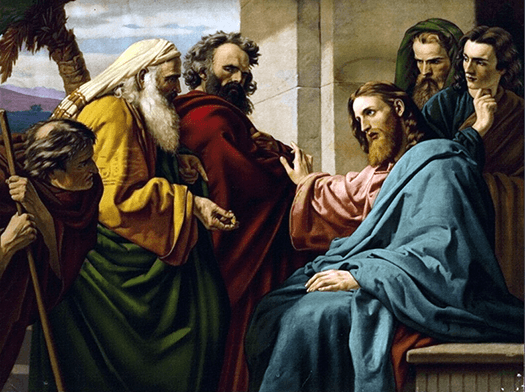
Tag: jews

  • The Burden of the Word of the Lord

    The Burden of the Word of the Lord

    The burden of the word of the LORD to Israel by Malachi.

    מַשָּׂא דְבַר־יְהוָה אֶל־יִשְׂרָאֵל בְּיַד מַלְאָכִֽי׃

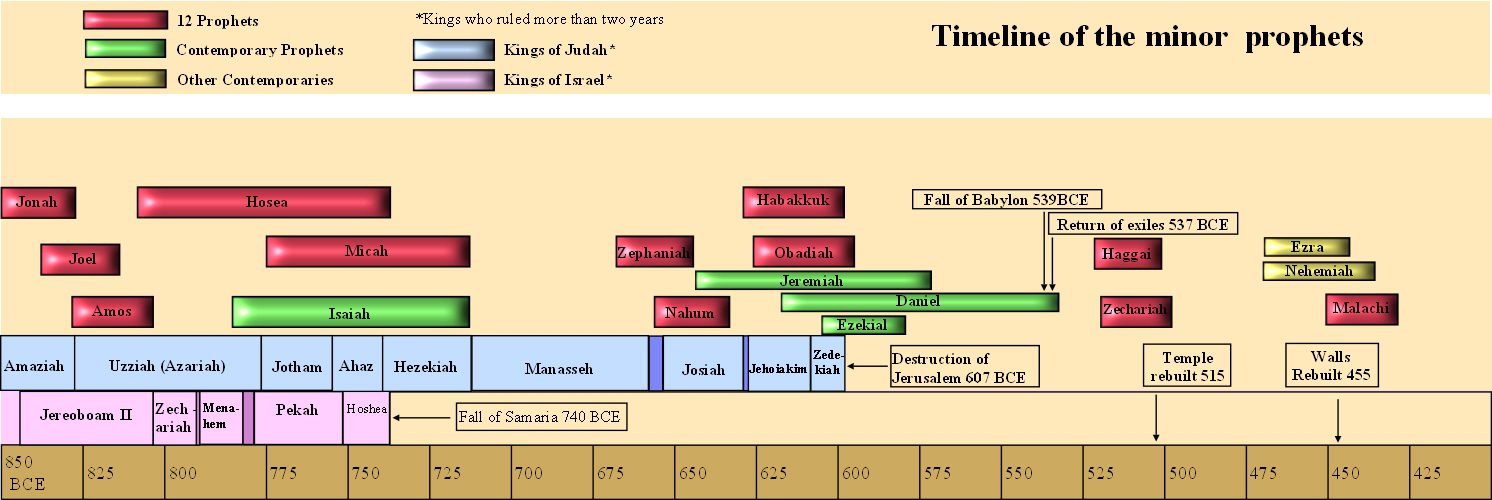
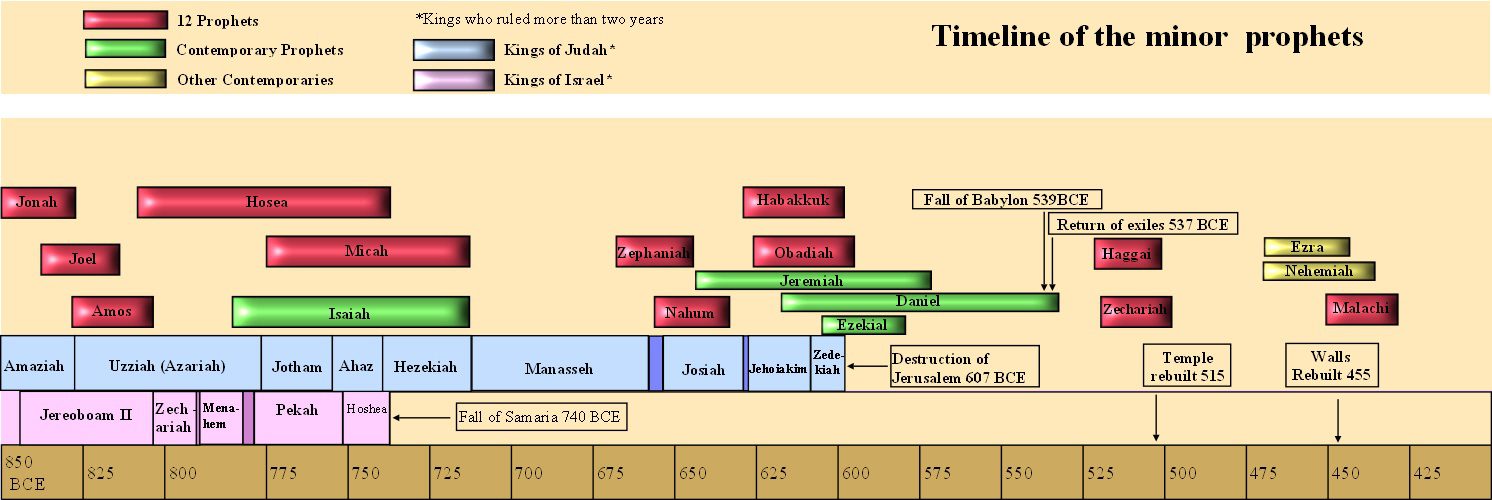
    We have heard it before: a ‘burden,’ a weight laid upon the back of a mortal soul, an oracle from the LORD laid upon the tongue of a Prophet. Malachi was the last Prophet of Judah. Israel (Samaria) had already fallen. Defeat of the Jews and a silence of the LORD prevails until the voice in the wilderness of John the Baptist.

    The LORD had spoken severely to disobedient sons and daughters through many Prophets. In fact, the argument of the burden of leading the LORD’s chosen goes all the way back to Moses.

    Numbers 11:11

    Moses said to the LORD, “Why have you dealt ill with your servant? And why have I not found favor in your sight, that you lay the burden of all this people on me?

    Leading a people or a family steeped in our own righteousness is not an easy thing.

    How quickly we forget what the LORD has done to redeem us, how He saves us from the slavery of our past.

    Before the Lord came to us in a manger in Bethlehem in the Person of the Messiah, a great silence would follow the chastening of the Prophets.

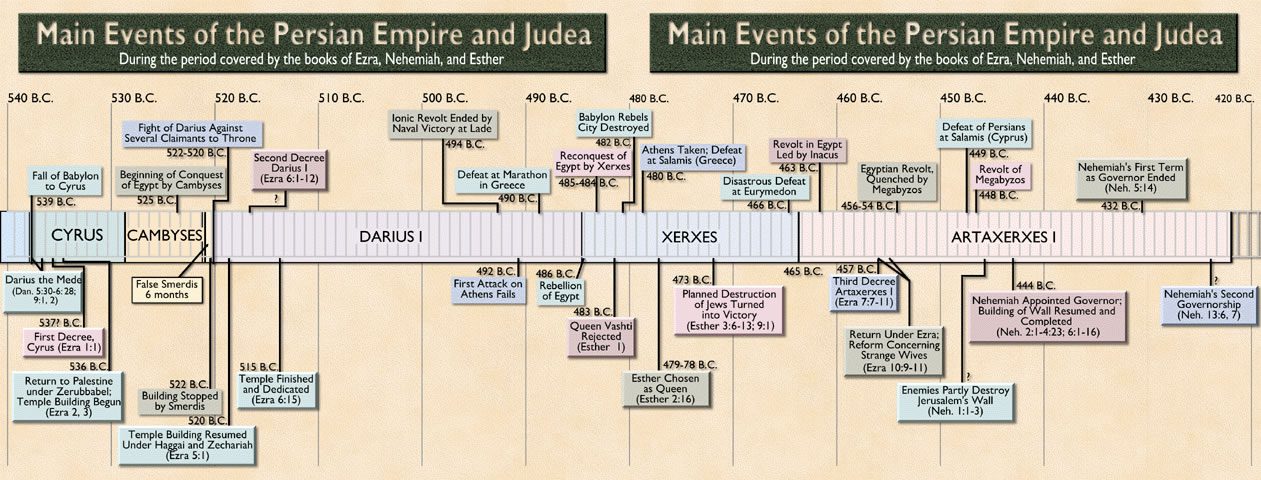
    Malachi wrote to the Jews of the Persian province of Judea about 500 years before the Christ. The burden of the LORD on Malachi is a heavy correction even of our own thinking.

    persian-empire-chartMalachi 1:

    2 “I have loved you,” says the Lord. But you say, “How have you loved us?”

    Isn’t that our own question to God our Father? Are we not disrespectful in asking how God has loved us? We are impudent spoiled children to ask our Creator, “How have you loved us?”

    The Priests’ Polluted Offerings
    6 “A son honors his father, and a servant his master. If then I am a father, where is my honor? And if I am a master, where is my fear? says the Lord of hosts to you, O priests, who despise my name. But you say, ‘How have we despised your name?’


    If Moses had been burdened by the leading of a rebellious people, surely these rebellious sons of Levi offered no purification for our sins before God our Father. Who could even imagine that the LORD would allow His Chosen People, the Jews, to be ruled by Egypt once more!?


    10 Oh that there were one among you who would shut the doors, that you might not kindle fire on my altar in vain!  I have no pleasure in you, says the Lord of hosts, and I will not accept an offering from your hand. 11 For from the rising of the sun to its setting my name will be great among the nations, and in every place incense will be offered to my name, and a pure offering. For my name will be great among the nations, says the Lord of hosts. 12 But you profane it…

    14b For I am a great King, says the Lord of hosts, and my name will be feared among the nations.

    Malachi 2:

    Judah Profaned the Covenant
    10 Have we not all one Father? Has not one God created us? Why then are we faithless to one another, profaning the covenant of our fathers? 11 Judah has been faithless, and abomination has been committed in Israel and in Jerusalem. For Judah has profaned the sanctuary of the Lord, which he loves…

    Minor-Prophets-Timeline

    The Messenger of the Lord
    17 You have wearied the Lord with your words. But you say, “How have we wearied him?” By saying, “Everyone who does evil is good in the sight of the Lord, and he delights in them.” Or by asking, “Where is the God of justice?”

    Malachi preaches repentance to the Jews, captured by Babylon and now ruled by Persia. The word of the LORD is a hard burden on the Prophet, in these days prior to re-building a Second Temple by Ezra and Nehemiah. Yet even the Second Temple would fall.

    Judea of Persia:
    • Alexander the Great will conquer Persia in 331 B.C.
    • Alexander the Great will conquer Egypt a year earlier in 332 B.C.
    Judea of the Macedonian Kingdom:
    • Ptolemy I rules Judea
    • Alexander the Great rules the world
    • The Hebrew Bible is translated into Greek (Septuagint) in Egypt
    Judea of the Ptolemaic Kingdom:
    • The Ptolemy successors of Egypt rule Judea once more until 198 B.C.
    • Political upheaval brought the Seleucids to power from 321 B.C. until 64 B.C.
    • Ptolemy VIII (170-163 B.C.) and Cleopatra II (170-142 B.C.) vie for political power in Egypt
    • The Maccabean revolt in Judea defeats the Seleucids (166-142 B.C.)
    Judea of the Hasmoneans
    • Judas Maccabeus begins the line of Hasmonean rule (166-160 B.C.)
    • Pompey annexes Judea to Rome (63 B.c.)
    Judea under Rome
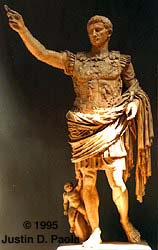
    • Augustus CaesarC. Octavius (later Augustus) was born on 23 September, 63 BC

    • Herod the Great (37-4 B.C.) gains political power in Judea as an ally of Rome.
    • Egypt, under Cleopatra VII, falls to Octavian (30 B.C.)
    • Rome (27 B.C.- A.D. 395) rules much of the world under Octavian
    • Judea is under the jurisdiction or Syria, part of the Roman Empire under Caesar Augustus.
    • Herod, funded by Rome, builds strategic roads for his Roman administration and rules over Judea with ruthless political savvy.

    The Prophet Malachi has foretold with accuracy these difficulty for the Jews in the time between the Temples and the coming of the Messiah.

    Malachi 3:  “Behold, I send my messenger, and he will prepare the way before me. And the Lord whom you seek will suddenly come to his temple; and the messenger of the covenant in whom you delight, behold, he is coming, says the Lord of hosts.

    To be continued…

    This post is part of a series in preparation for Christmas in the year of our Lord, 2015.


  • What’s the DIFFERENCE between Christians & non-Christians?

    What’s the DIFFERENCE between Christians & non-Christians?

    So as not to reinvent the wheel or simply understate what others have taught previously, I share with you the Christian witness of a wonderful background history of context, culture, and some geography of Paul’s Letters to the Thessalonians as HOMEWORK for a Bible Study I will be teaching, God willing, next Sunday, 9:15 a.m. at Bender’s Mennonite Church.  Please pray also for me.

    The following is for benefit of ALL believers. Please SHARE YOUR COMMENTS.

    +

    What’s the DIFFERENCE between Christians & non-Christians?

    This is essentially the question by residents of every city and every town to first century Christians as they preached the Gospel.

    “What makes YOU different from US?

    How do you answer this question in your town for your 21st century non-Christian neighbors and unsaved relatives?

    Do you get it right?  Do you TELL them how DIFFERENT you are from them?  Do you suppose that this DIFFERENCE sounds like “Good News” to unbelievers?

    Many Letters of the New Testament make much mention of ‘Jews and Gentiles,’ from the language and cultures of the first century.  What we fail to realize of this distinction is an important one of Holiness that requires separation to God from the evil and sin of the world.

    • The Jew was separated to the Holiness of God.
    • The Gentile was not yet adopted for separation to the Holiness of God. Gentile is a term meaning Nations or Ethic Peoples other than Jews.
    • The Gospel, consistent throughout ALL Letters to the first century church, is Good News:

    “The Perfect Sacrifice of Christ Jesus on the Cross is for ALL Peoples – Jew and Gentile.

     +

    So in a nutshell, what was the first century Christian answer?  Essentially:

    There is NO difference between me (a follower of Christ Jesus) and you (an unbeliever).

    You may read of it in great detail in Paul’s Letter to the Romans; or you may read succinct summary in Paul’s Letter to the Ephesians; OR you may study your Old Testament and the History of the first century Church as detailed by Luke in The Acts of the Apostles.

    With some homework and study of the background leading up to the Letters to the Churches, God will reveal much more than the former and current relevance of all Scripture, including the Good News of these New Testament Letters.

    The familiar New Testament story of witness is that a Jew from Judea, with Jerusalem as home of their God, travels to a town.

    Take for example, Thessaloniki, Macedonia on the Aegean Sea, with local gentiles (Greeks) of their own traditions and culture.  Thessalonians (as they are called) are ruled by the same empire (country) Rome, on the Tyrrhenian Sea, on the Italia peninsula across the Adriatic Sea from Macedonia, with power over all the lands of the Mediterranean.

    (The embedded PowerPoint Slideshow by Cooper Church of Christ in Cooper, Texas, US is our homework.)

    Thessalonica of Macedonia

    For 21st century readers of Thessalonians: Consider the hostile environment of the Roman Empire as compared to our current environment in all the world, hostile to Jesus Christ.

    • Jews who had dispersed into the Nations (Gentiles) tended to act as if they were morally better than their native hosts.
    • ALL Gentiles had in common a civil authority and local culture inclined toward godlessness, unless some rule of god could help maintain the political power of local, state, national, and international rule.

    (Of course, 21st century governments are so much different in their attitudes toward religion and God.  Right?)

    These first century Christians acted different from other “religious” people.

    HOW ARE CHRISTIANS DIFFERENT?

    WHY would a non-believer WANT to accept our GOOD NEWS?

    Learn a lesson from the first century evangelists.

    We are ALL the same WITHOUT Christ.  Yet ALL believers of every NATION are equal in CHRIST OUR LORD.

  • This is my son

    This is my son

     “This is My beloved Son, in whom I am well pleased.”

    I am well pleased in some things: like how hard he has worked and what he has achieved as part of his football team. In other things: I am not so well pleased.

    We know that this quote is not mine alone and that the original speaks of another Son.

    Yet I would like you to think of God our Father in a more Personal way.  I would like you to have a more personal picture of God’s only son Jesus.

    Imagine that Jesus grew up doing other things (like football) that boys and young men do as part of their preparation for what God, our Father has planned for their life.

    Can you picture our Heavenly Father saying, “I am well pleased,” when He watches every play of that football game? 

    Of course, God our Father witnessed this of his only Son: Jesus.

    You probably haven’t thought much about Luke 2 past the familiar Christmas pageant scriptures.

    Jesus of Nazareth, as he was known, was born of a virgin… And the Child grew and became strong in spirit, filled with wisdom; and the grace of God was upon Him. – Luke 2:40

    You know the story that follows: Jesus was twelve and remained in Jerusalem after His parent’s left for Nazareth without Him. We don’t know every detail of Jesus’ youth.

    God did not reveal much about this young man; but the Father watched over every game and all the challenges of His growing up in obedience to His Father and His step-father, Joseph.  Turn the page in Luke’s Gospel and Jesus’ story now continues in about his thirtieth year.  

    This is one source of our familiar quote when Jesus was baptized AND born again in the Holy Spirit (as we say; but that is a different conversation).

    Luke 3:22 And the Holy Spirit descended in bodily form like a dove upon Him, and a voice came from heaven which said, “You are My beloved Son; in You I am well pleased.”

    Returning to our personal picture:

    Just like I am far from the example of a Perfect Father, our son is not the Perfect Son, either.  I am not so pleased in other things with my son; but I love him and pray for him that he will look to the Perfect example of Jesus, with whom our heavenly Father is well-pleased with all things.

    We’re thankful that David is not a prodigal son.’ (We know Jesus’ story is a parable about our Heavenly Father.) Our son is not a rebellious prodigal anymore than King David was a prodigal when he sinned against God with Bathsheba.

    Our David is not the resentful son who would not rejoice with the father when the prodigal son was welcomed back to the family.  I don’t think my son resents anyone, but loves his family and friends.

    While I’m at it, David is my step-son. I am no more his father than Joseph, husband of Mary and father to Jesus’ brothers, was father of Jesus, born to Mary when she was a virgin.

    Jesus’ parable of the prodigal son (you may remember) was about adoption.

    The resentful son is Israel, chosen sons of God. The prodigal son is the gentiles, nations rebellious to God before Abraham; and their descendants include most of us.

    When Jesus was born of Mary, God our Father was not pleased with the Jews.

    God was not pleased with the Gentiles (or Nations).

    Yet God through his mercy and grace, gave Jew and Gentile alike the welcome of a loving Father to the rebellious sons of the Nations AND of his Chosen family.

    “The means of grace is Christ Jesus, in whom God our Father is well-pleased.

    So why my picture of David?

    Two reasons:

    1. The Jews had become comfortable in the nostalgia of their past and worshiped King David more as the Son and the Temple as their heritage.  Jesus IS the Son AND our heritage. The Father has adopted followers of Jesus.
    2. We often fail to think of God in the way that Jesus taught – as a Personal Father to a Personal Son.  Picture our David and think of me sending my only son to the cross. This is how personal God’s love is for us.

    David is my beloved son.  His soul is a personal concern of mine.

    The Apostle Paul had adopted or mentored a son of the faith, Timothy, who followed his earthly example of righteous leadership of the church, people he loved personally like a father.  Paul writes: 

     Timothy 1:15 This is a faithful saying and worthy of all acceptance, that Christ Jesus came into the world to save sinners, of whom I am chief. 

    16 However, for this reason I obtained mercy, that in me first Jesus Christ might show all longsuffering, as a pattern to those who are going to believe on Him for everlasting life.

    Imagine: Christ Jesus came into the world to save you and me. How Personal.

    Imagine: The Father condemning His only Son to the suffering and Sacrifice of the Cross for you and me. How personal.

    And imagine the confidence we have knowing that the Father will send the Third Person to His obedient children in the HOLY Spirit who follow His Son our Savior.

    (Imagine Paul writing to Timothy about his Personal God… imagine me, a step-father to David writing about our Personal God… Imagine God your Father sending the Holy Spirit to you.

    +

    Our Father will always be Personally with you IF you will call on His Son Personally.  Christ Jesus.

    God will do much more than just watch over you, as He watches your every game (mine too).

    Remember, our Heavenly Father, His Heavenly Son and His Holy Spirit all want to hold us very near.

    “God’s love for us is Very Personal.

    1 Tim. 1:17 Now to the King eternal, immortal, invisible, to God who alone is wise, be honor and glory forever and ever. Amen.