Tag: jews

  • Most Excellent Felix – Tertullus for the Prosecution

    Most Excellent Felix – Tertullus for the Prosecution

    Today we find ourselves with Paul in Caesarea facing Felix.

    (The plot thickens even after a secretive conspiracy to assassinate the Apostle.)

    History plays out over time through the interactions of its leading actors. Luke records the Acts of these men of the A.D. first century whose leading actors include:

    • the Apostle Paul,
    • Claudius Lysias (via his letter),
    • Felix,
    • Festus,
    • Agrippa and a host of minor actors in the plot of the Jews to execute Jesus’ Apostle
    • and of course, Roman generals – pawns of the Emperors and Caesars.
    Luke focuses on each of these in Acts, which we have cataloged into chapters 22-26. 

    He does not need to set the stage for his first century readers, but you may benefit from a few details.

    ~ A.D. 58

    This courtroom scene (so to speak) now takes place in the Roman stronghold of Caesarea before the Roman Governor Felix, rather than in a biased Jewish court from where the Apostle and Roman citizen Paulos had been whisked away.

    The Political Place of Antonius Felix

    Antonius Felix (b. ~ A.D. 5-10)

    Appointed Governor of Judea in ~AD 53, the Emperor Claudius had responded to a petition of his Secretary of the Treasury Marcus to elect his own younger brother Felix as Judea’s new Procurator.

    Although his name Felix means ‘happy,’ sources agree that in his rule of Judea:

    He ruled the province in a mean, cruel, and profligate manner. His period of office was full of troubles and seditions.

    Strong’s G5344 – phēlix – BlueLetterBible.org

    And for the politically unastute, a brief definition of sedition:

    "The raising of commotion in a state, not amounting to insurrection; conduct tending to treason, but without an overt act; excitement of discontent against the government, or of resistance to lawful authority."
    - source: Wordnik

    Just in case you missed the dramatic events leading up to this change of venue, READ all about it below for a better understanding of the Jewish prosecutors about to appear before Felix. 

    Paul’s Trial before Felix in Caesarea

    Acts of the Apostles 24:

    Scriptural quotes primarilary from the ASV 

    And after five days the high priest Ananias came down with certain elders, and with an orator, one Tertullus; and they informed the governor against Paul. And when he was called, Tertullus began to accuse him..


    Now the high priest of the Jews has no standing in a judicial court of the Roman government of Judea. However the lead prosecutor of Jerusalem’s religious council has hired a well-known orator to prosecute their case in Caesarea.

    Tertullus, which means “triple-hardened,” was a Roman orator in the tradition of Cicero and several of the Caesars known for public speeches designed to sway large crowds of fellow Romans to their way of thinking.


    Seeing that by thee we enjoy much peace,

    and that by thy providence evils are corrected for this nation,

    we accept it in all ways and in all places, most excellent Felix, with all thankfulness.

    But, that I be not further tedious unto thee, I entreat thee to hear us of thy clemency a few words. But, that I be not further tedious unto thee, I entreat thee to hear us of thy clemency a few words.


    Always beware.. when a politician claims to have 'a few words.' 

    For we have found this man a pestilent fellow, and a mover of insurrections among all the Jews throughout the world, and a ringleader of the sect of the Nazarenes:

    (that is, followers of Jesus of Nazareth) 

    who moreover assayed to profane the temple: on whom also we laid hold: and we would have judged him according to our law.


    Tertullus, the prosecuting Roman orator hired by the Jews, then turns to make charges against the Roman military athority who snatched Paul (the defendant) from their jurisdiction of Jerusalem’s local authorities and justice of the Sanhedrin.

    Lysius, commanding his

    (that is Paul's or the defendant's) 

    accusers to come before thee. from whom thou wilt be able, by examining him thyself, to take knowledge of all these things whereof we accuse him.


    (In other words, you will find him guilty of our charges.)

    And, as in so many venues where Paul had been called to defend his actions for the gospel of Jesus Christ — practically on cue, the men of the council accompanying the high priest Ananias, ‘joined in the charge, affirming that these things were so.’

    judge gavel

    The Court will hear from the Defendant

    Paul:

    Forasmuch as I know that thou hast been of many years a judge unto this nation, I cheerfully make my defence: seeing that thou canst take knowledge that it is not more than twelve days since I went up to worship at Jerusalem:

    and neither in the temple did they find me disputing with any man or stirring up a crowd, nor in the synagogues, nor in the city.

    Neither can they prove to thee the things whereof they now accuse me.

    The opening arguments have concluded.


    Paul’s Defense of the Gospel

    Rome, of course, has NO interest in the Gospel; although politicians and orators may claim the Good News when politically expediant.

    Everyone in the courtroom of Felix would have known that some twenty years ago the Emperor Caligula had declared himself a god. And his successor Claudius (to whom Felix was connected) had recently conquered Britain and seemed to have little interest in affairs to the east, here in remote Judea.

    But as Paul, Tertullus, Ananias and the elders all knew, Caesar was no friend of the Jews, since Claudius had deported them from Rome just nine years ago. And they gained no favor with the current Emperor Nero either.

    So Paul continues his defense:


    But this I confess unto thee, that after the Way which they call a sect, so serve I the God of our fathers,

    believing all things which are according to the law, and which are written in the prophets;

    having hope toward God, which these also themselves look for,

    that there shall be a resurrection both of the just and unjust.

    Acts of the Apostles 24:14-15 ASV

    Of course as always, the resurrection brings into play the great controversy of GOD exercising both reward and punishment to every soul after the death of our mortal flesh. 

    AND at the center of the controversy of this GOSPEL proclamation of the Apostle stands the MESSIAH JESUS - the risen Christ of the Jews crucified on a Roman Cross under Pontius Pilate in Jerusalem some two-dozen years before.

    Paul tells the court the reason for his return to Jerusalem.

    Now after some years I came to bring alms to my nation, and offerings: amidst which they found me purified in the temple, with no crowd, nor yet with tumult..

    Remember? There had been a famine. And Paul had been asking all the churches in his missionary jouneys for help for the poor (alms) in Jerusalem. 
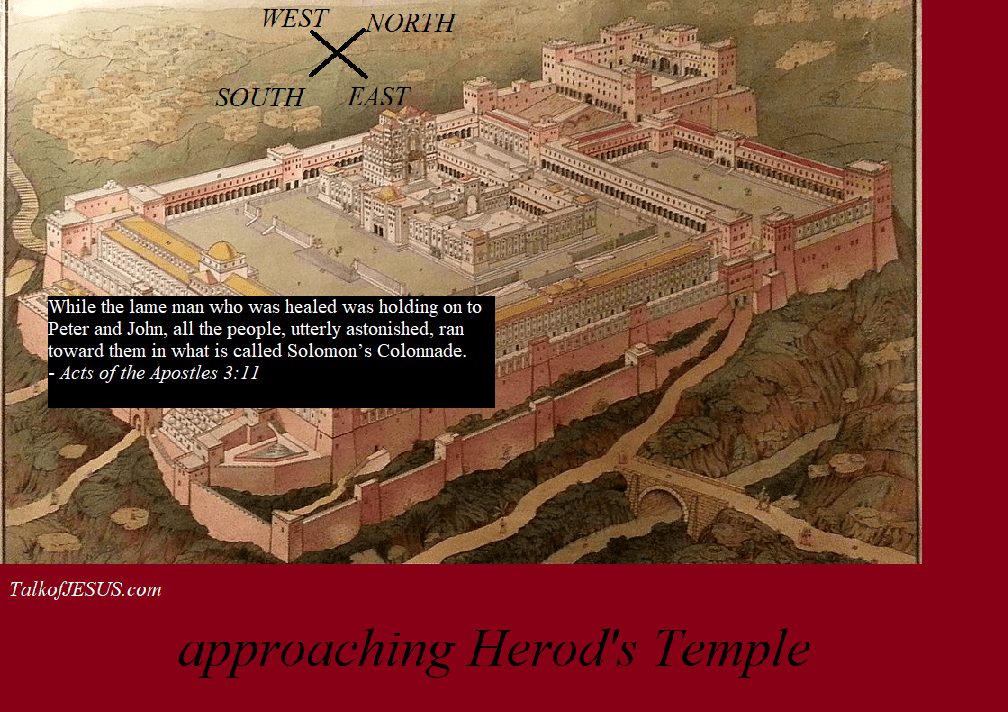
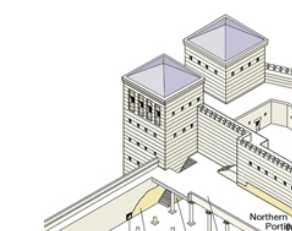
    drawing of Herod's Temple

    Herod’s temple in Jerusalem effectually becomes a large, highly regulated public square during festivals. It is unlike a church building or large meeting house.

    Paul defends his public worship there and the lack of evidence that he caused any trouble:

    but there were who ought to have been here before thee [Felix, that is], and to make accusation, if they had aught against me.

    Acts 24:19 ASV

    Obviously, these so-called-witnesses were NOT called to the stand to accuse Paulos in person. 

    Furthermore, Paul continues answering such inadmissable hearsay by challenging those Elders present.
    Was it something I said?

    “Or else let those who are here [Ananias and the Elders of Jerusalem’s council] themselves say if they found any wrongdoing in me [or what wrongdoing] while I stood before the council, unless it is for this one statement which I cried out, standing among them, ‘Concerning the resurrection of the dead I am being judged by you this day.’ ”

    Acts 24:20-21 NKJV

    judge gavel

    The Court will be in recess

    Luke’s transcript of the court proceedings ends and he adds additional background of context for the reader.

    But Felix, having more exact knowledge concerning the Way, deferred them, saying,

    ‘When Lysias the chief captain shall come down, I will determine your matter.’

    The Governor, Felix, is a skillfull politician dealing with Jews, Christians (followers of the Way), financial supporters of Nero and Rome, Centurians of Rome’s powerful occupying military and even the handling of grandious prosecuting oraters selling their case such as Tertullus.

    And he gave order to the centurion that he [Paulos] should be kept in charge [custody], and should have indulgence [provisions]; and not to forbid any of his friends to minister unto him.

    Acts 24:23 ASV


    Political inaction — and the Judgment to come

    What happens next may look familiar to any who follow the cunning of political strategists.

    Since Felix’s obvious action that fairness and justice would demand will create additional trouble in governing, Felix the Governor waits for a more opportune time for public support — and for filling the coffers of his personal PAC which he might use later to gain higher office.

    (Felix is looking for a handout $$.)

    Luke continues by accounting for Felix’s delay in justice:

    But after certain days, Felix came with Drusilla, his wife, who was a Jewess, and sent for Paul, and heard him concerning the faith in Christ Jesus.

    Acts 24:24 ASV

    Drusilla was the youngest daughter of Herod Agrippa I and the sister of Herod Agrippa II, making her a member of the Herodian dynasty, which played a significant role in the political and religious landscape of Judea during the first century. 
    - source BibleHub.com

    And as he [her husband the Governor] reasoned of righteousness, and self-control, and the judgment to come, Felix was terrified..

    The Apostle had noted the appropriate fear of Felix for judgment of his own guilty soul.

    Luke adds Felix’s sudden dismissal of Paul saying:

    .. ‘Go thy way for this time; and when I have a convenient season, I will call thee unto me.’

    Days pass… and more time passes.

    Luke notes what everyone knew: it took a bribe to garner a favorable outcome from the Governor:

    He hoped withal that money would be given him of Paul: wherefore also he sent for him the oftener, and communed with him.

    But while Paul remained in ‘protective custody’ of the Governor of Judea in Caesarea, time not only passed but grows short for Felix.

    He was succeeded by Porcius Festus, and when recalled to Rome, he escaped being sentenced to death by Nero only through the intercession of his brother, Pallas. His oppressive rule caused deep resentment among the Jews and strengthened the anti-Roman party.

    source: Encyclopedia.com

    Again.. time passes, Luke records:

    But when two years were fulfilled, Felix was succeeded by Porcius Festus; and desiring to gain favor with the Jews, Felix left Paul in bonds.

    Acts of the Apostles 24:27 ASV

    To be continued — in the NEXT administration…

    Talk of JESUS . com

    Comment on Scripture – Share the Gospel

  • Justice deferred in a Political Theatre of Law

    Justice deferred in a Political Theatre of Law

    We suppose Law to be a tool of Justice

    Citizens of Greek City-States claimed freedom and justice..

    (although like everywhere else, Greek democracy did not apply to its slaves.)

    Socrates drank the hemlock of justice weighed by his opponents of classic philosophy.

    And, of course, Alexander the Great Macedonian claiming all Greece and the world had different ideas of law to make the world Greek again.

    (“There’s nothing new under the sun,” stated Solomon, King over much of the same empire nearly a thousand years before Alexander.)

    Justina Roman goddess pictured "LAW in the Roman theatre of JUSTICE

    Roman Law

    In today’s setting of Acts of the Apostles it’s important for us to remember that in Jerusalem – Judean LAW (it isn’t even fully JEWISH LAW applicable in other Roman Provicences (or States by contemporary comparison) – as administered by the Sanhedron separate of the Roman Governor, a minor appointed Proconsul accountable to the Emporor.

    This jurisdictional oversight – similar to that when Pontius Pilate tried to pass the political hot potato of the King of the Jews back and forth to Herod or the Jewish leaders of Jerusalem – is little different when just a few years later Paul retuns to Jerusalem to face JUSTICE redefined in various venues.

    Jews demanding JUSTICE

    The Apostle of Jesus sent to the Gentiles (Greeks) has just returned home.

    After his witness to the Jews (in Hebrew) of being sent by Jesus (who had been crucified) on the road to Damascus) AND being sent to the Gentiles — (this had been 20 years ago, back in A.D. 37) — once again, Paul proclaims Christ risen!

    The adjitated jewish crowd was about to stone him, just as when he himself had witnessed the execution of Stephen.

    “Is it lawful for you to flog a man who is a Roman citizen and uncondemned?”

    When the centurion heard this, he went to the tribune..

    Acts of the Apostles 22:25b-26a ESV

    There he's done it! 

    Paul initiates a whole chain-of-events triggering the chain-of-command in Roman oversight and justice.

    But on the next day, desiring to know the real reason why he was being accused by the Jews, he [the Tribune in charge of the Centurians] unbound him and commanded the chief priests and all the council to meet, and he brought Paul down and set him before them.

    Acts 22:30 ESV

    This JEWISH council — about seventy leading men, SUMMONED to apprear before the ROMAN Tribune and his COURT of Roman justice in Jerusalem — are NOT in charge of the proceedings. 

    Acts 23:

    And looking intently at the council, Paul said, “Brothers, I have lived my life before God in all good conscience up to this day.”

    Remember: Although the courtroom is that of the Jews, Paul — the DEFENDENT — faces them as his PROSECUTOR (not his judge).

    And the high priest Ananias commanded those who stood by him to strike him on the mouth.

    “God is going to strike you, you whitewashed wall!

    Are you sitting to judge me according to the law, and yet contrary to the law you order me to be struck?”

    Some savvy oral arguments take place (as is common in court). Paul seeks to divide the jury of his accusers:

    “.. It is with respect to the hope and the resurrection of the dead that I am on trial.”

    It worked. One of his fellow Pharisees stands in his defense,

    “We find nothing wrong in this man.

    What if a spirit or an angel spoke to him?”

    The dissension (between the two parties of the Pharisees and Sadducees)became violent.

    Now the Jews of this local lower court — to which the rules of the Pax Romana defer — sound more like a lynch mob than a place of justice AND (let’s not forget) Paulos is a ROMAN CITIZEN.


    And as a great dissension was developing, because the commander was afraid Paul would be torn to pieces by them, he ordered the troops to go down and take him away from them by force, and bring him into the barracks.

    Acts 23:10 LSB

    Conspiracy against Christ and His Apostle

    The world will often witness an unexplainable boldness in a certain saint of God is seemingly insurmountable circumstances. (This had happened with the Apostle time and time again during his ten-plus years of travel among the gentiles and Greeks.)

    The night before his highly anticipated public trial in Jerusalem the Apostle of Christ Jesus again received supernatural instruction.

    But on that very night, the Lord stood at his side and said,

    “Take courage; for as you have solemnly borne witness to My cause at Jerusalem, so you must bear witness at Rome also.”

    Acts 23:11 LSB

    Imagine — the Lord Jesus Christ, who had been crucified twenty-seven years ago —  the same risen Lord who had appeared in a vision of great glory twenty years ago —  stands beside the Apostle and now sends him to Rome!

    So of course, Paul is emboldened when he is brought to trial before the Roman court the next day.

    Meanwhile, more than forty of the jews made a plot to murder Paul (outside of the jurisdiction of the Roman authorities).

    They went to the chief priests and elders and said,

    “We have strictly bound ourselves by an oath to taste no food till we have killed Paul. Now therefore you, along with the council, give notice to the tribune to bring him down to you, as though you were going to determine his case more exactly. And we are ready to kill him before he comes near.”


    The Plot Thickens

    steps from Antonia Fortress to roofs of Temple porticos

    Paul’s jewish nephew hears of the plot of these forty men, so the young man heads to the Roman fortress to try to warn Paul.

    Paulos —  the Roman citizen held in protective custody after the big hubbub of the jewish crowds —  instructs his guards to go to the man in charge.

    Paul called one of the centurions and said,

    “Take this young man to the tribune, for he has something to tell him.”

    Acts 23:17 ESV

    The tribune [Claudius Lysias] took him by the hand, and going aside asked him privately, “What is it that you have to tell me?”

    Note the gentleness of this tribune, Claudius Lysias - a man in charge of the centurions of Antonia Fortress as he seeks to get to the truth of the matter. 

    The young son of Paul’s sister responds:

    “The Jews have agreed to ask you to bring Paul down to the council tomorrow, as though they were going to inquire somewhat more closely about him.

    But do not be persuaded by them, for more than forty of their men are lying in ambush for him, who have bound themselves by an oath neither to eat nor drink till they have killed him. And now they are ready, waiting for your consent.”

    Acs 23:21b-22 ESV

    “Tell no one that you have informed me of these things.”


    An Imposed Authority of Roman Justice

    “Get ready two hundred soldiers, with seventy horsemen and two hundred spearmen to go as far as Caesarea at the third hour of the night.[9 pm]

    Caesarea! a model of Roman incursion into all the world of the Mediterranean - a key port for Romans, a city where Cornelius, Philip, Peter, Paul and others brought the gospel
    Caesarea – (Caesar’s Palace in Judea

    Also provide mounts for Paul to ride and bring him safely to Felix the governor.”

    This military escort of a Roman citizen Paulos is most unlike the handling of Jesus the king of the Jews sent to the Pontius Pilate, governor of that time, (who happened to be in Jeruslem rather than Caesarea). 

    Official Orders sent with Paul

    “Claudius Lysias,

    to his Excellency the governor Felix,

    greetings.

    This man was seized by the Jews and was about to be killed by them when I came upon them with the soldiers and rescued him, having learned that he was a Roman citizen. And desiring to know the charge for which they were accusing him, I brought him down to their council. And desiring to know the charge for which they were accusing him, I brought him down to their council. And when it was disclosed to me that there would be a plot against the man, I sent him to you at once, ordering his accusers also to state before you what they have against him.”

    Acts 23:26-30 ESV

    You might call this 'the official COURT record.' 

    Of course —  ALL follow orders and the next scene with, with Roman effeciency, take place in Caesarea.

    Marcus Antonius Felix

    Antonius Felix, served as the Roman procurator of Judea from ~AD 52-58. He was appointed by the Emperor Claudius and was known for his harsh and often corrupt administration. Felix was a freedman of Claudius' mother, Antonia. - source: BibleHub 

    When they had come to Caesarea and delivered the letter to the governor, they presented Paul also before him.

    The Governor inquires about jurisdiction – that is, in effect – Am I the appropriate judge of this case?

    And when he learned that he [Paulos] was from Cilicia, he said, “I will give you a hearing when your accusers arrive.” And he [Antonius Felix] commanded him [the Centurian in charge of Paul’s escort] to be guarded in Herod’s praetorium [there in Caesarea].

    Acts of the Apostles 23:35 ESV [with names of prepositions]

    Justice – a Case to be continued


    Talk of JESUS . com

    Comment on Scripture – Share the Gospel
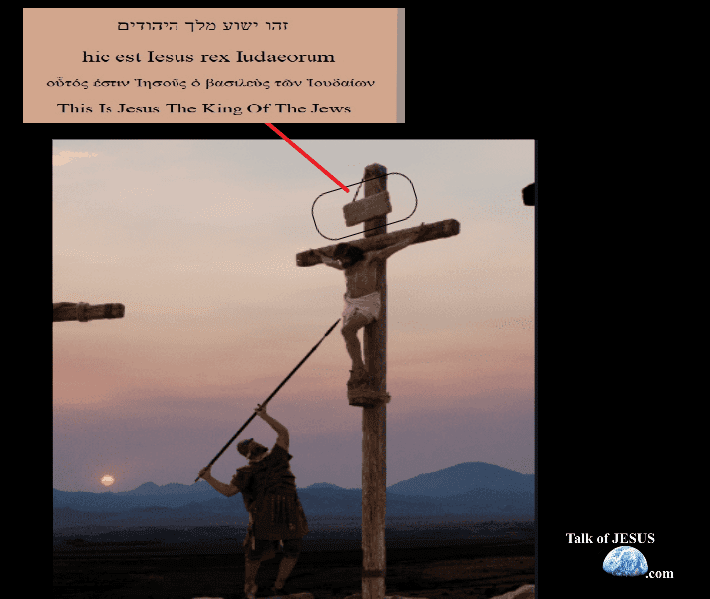
  • Who IS this KING OF THE JEWS nailed to a Roman Cross?

    Who IS this KING OF THE JEWS nailed to a Roman Cross?

    “Are you the king of the Jews? ” the governor asked him. Jesus answered, You say so.”

    — Matthew 27:11 (CSB)

    Religion — Mingled with Politics – A.D. 30’s style

    You know the old expression about mixing religion and politics -- ('Don't do it' all warn. Yet in every century our religious and political leaders rely on it.) 

    Today, Good Friday 2025 of the Common Era, we will address both!

    The POLITICS of ROME mingling with the RELIGION of JEWISH rulers of first century Jerusalem.

    First, ROME and the rule of Pilate, the Roman Governors, several Caesars and captive/cooperative kings. This of course would include several King Herod’s and various Governor Herod‘s.

    The cooperative nature of the Roman peace made strange bedfellows, so to speak.

    Although it all comes to its pinnacle in the trial of Jesus Christ, the politics of these Roman and faux-Jewish governors and subject-kings will continue to affect the Apostles and saints well beyond Jerusalem’s destruction by Rome just forty years from this pivotal day in history.

    For MORE insight into the politics of first century Jerusalem take a look at the above post from September, A.D. 2020. - RH 

    The Governor’s Examination of the Jewish King Jesus

    From Pilate’s early-morning awakening by Jerusalem’s Jewish officials it began like this (as reported by Matthew, Jesus’ Disciple who had himself had an official tax-collecting post for Rome).

    After tying him [Jesus] up, they [the chief priests and elders of Jerusalem] led him away and handed him over to Pilate, the governor.

    — Matthew 27:2 (CSB)

    At this point Matthew reports nothing more of the examination of Jesus by Pilate.


    Let’s look at the testimony of the other Gospels.

    So Pilate asked him, “Are you the king of the Jews? ”

    He answered him, “You say so.”

    3 And the chief priests accused him of many things.

    Pilate questioned him again, “Aren’t you going to answer? Look how many things they are accusing you of! ”

    But Jesus still did not answer, and so Pilate was amazed.

    – Mark 15:2-5 (CSB)

    (The Gospels witness this mix of the Jewish false charges and the examination of the Governor in this brief early-morning balcony scene of sorts.) 

    Let’s move back a bit further in the transition of the actions which brought the accused King Jesus of the Jews before the Roman Governor.

    Luke 23:

    Then the whole company of them [the gathering of the Council] arose and brought him before Pilate. And they began to accuse him, saying,

    “We found this man [Jesus] misleading our nation and forbidding us to give tribute to Caesar, and saying that he himself is Christ, a king.”

    And Pilate asked him,

    “Are you the King of the Jews?”

    And he answered him, “You have said so.”

    Then Pilate said to the chief priests and the crowds,

    “I find no guilt in this man.”

    But they were urgent, saying,

    “He stirs up the people, teaching throughout all Judea, from Galilee even to this place.”

    Gospel of Luke 23:1-5 ESV

    Do you see the political manipulation here?

    Can you see the contemptable REJECTION of Pilate’s authority by the same religious officials?

    They falsely claimed that JESUS would not allow Jewish followers to pay a Roman tax to Caesar — a tax which of course funds the Roman Governor and legions overseeing this captive city of Jerusalem.

    Therefore the next POLITICAL move of both the Governor and these Jewish religious officials is to send the case to a more mutually agreeable jurisdiction – that of the Roman-appointed King legitimately appointed by the Caesar’s from the ruling family of the Herod’s.

    The King’s Examination of King Jesus

    We refer, of course, to political Judean King receiving Jesus, the Christ of the Jews! 

    (How volatile this judgment challenging who is king?)

    And when he (the Roman Governor Pilate) learned that he [Jesus of Galilee] belonged to Herod’s jurisdiction, he sent him over to Herod, who was himself in Jerusalem at that time.

    When Herod saw Jesus, he was very glad, for he had long desired to see him, because he had heard about him, and he was hoping to see some sign done by him. So he questioned him at some length, but he [Jesus] made no answer.

    The chief priests and the scribes stood by, vehemently accusing him. And Herod with his soldiers treated him [the Jewish Christ or Messiah, Jesus] with contempt and mocked him. Then, arraying him in splendid clothing, he [King Herod] sent him [Christ Jesus] back to Pilate [the Roman Prefect/Governor].

    And Herod and Pilate became friends with each other that very day, for before this they had been at enmity with each other.

    Gospel of Luke 23:7-12 ESV

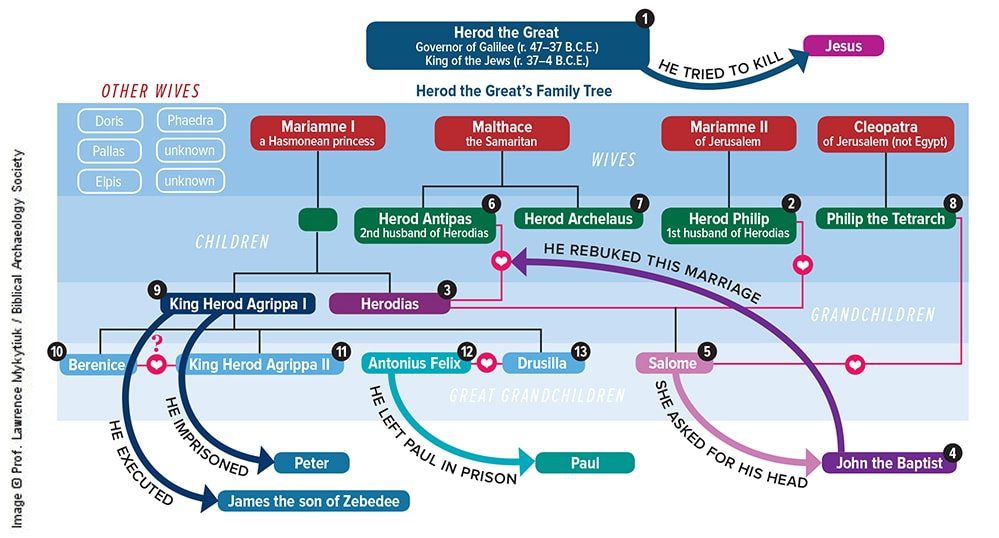
    Yes, 'strange bedfellows' indeed, but not so out of the ordinary for the great Herod's - Kings of the Jews!
    family tree of the Herod's from Herod the Great

    Friends, Romans and Jewish countrymen.. (let us make pax–shalom)..

    Pilate then called together the chief priests and the rulers and the people, and said to them,

    “You brought me this man as one who was misleading the people. And after examining him before you, behold, I did not find this man guilty of any of your charges against him.

    Neither did Herod, for he sent him back to us.

    Look, nothing deserving death has been done by him. I will therefore punish and release him.”

    Luke 23:13-16 ESV

    judge gavel

    a political verdict and sentence

    NOT Guilty .. but we will punish Him.


    JEWPAC

    Now don't get all bent out of shape over my fictional illustration of the San Hedren of A.D. first century Jerusalem -- religious leaders beholden to the politics of Rome. 

    WE all know and recognize the function of Political Action Committees -- even 21st century C.E. Christian Evangelical PAC's

    -- they raise and spend MONEY to influence a political outcome desired by leaders holding the purse-strings of THE PEOPLE.

    “What will you give me if I deliver him over to you?” And they paid him [Judas Iscariot] thirty pieces of silver.

    Gospel of Matthew 26:15 ESV

    Let’s take a quick look back to how the religious leaders of Jerusalem sought to bring Jesus to trial and the Cross.

    instituted by Judas Maccabaeus [164 BC] in memory of the cleansing of the temple from the pollution of Antiochus Epiphanes 

    source

    Jesus was walking in the temple, in the colonnade of Solomon. So the Jews gathered around him and said to him,

    “How long will you keep us in suspense? If you are the Christ, tell us plainly.”

    Jesus answered them, “I told you, and you do not believe

    “I and the Father are one.”

    The Jews picked up stones again to stone him.,,

    Again they sought to arrest him, but he escaped from their hands.

    Gospel of John 10:22-39 ESV excerpt

    • Jesus’ Parable of the Wicked Tenants

    One day, as Jesus was teaching the people in the temple and preaching the gospel, the chief priests and the scribes with the elders came up..

    “.. But when the tenants saw him, they said to themselves, ‘This is the heir. Let us kill him, so that the inheritance may be ours.’ ..”

    The scribes and the chief priests sought to lay hands on him at that very hour, for they perceived that he had told this parable against them, but they feared the people. So they watched him and sent spies, who pretended to be sincere, that they might catch him in something he said, so as to deliver him up to the authority and jurisdiction of the governor.

    Gospel of Luke 20 ESV excerpt

    Buying Betrayal

    Then Judas Iscariot, who was one of the twelve, went to the chief priests in order to betray him to them. And when they heard it, they were glad and promised to give him money. And he sought an opportunity to betray him.

    Gospel of Mark 14:10-11 ESV

    Later Bribery against Truth

    • A man called Barabbas was in prison with the insurrectionists who had committed murder in the uprising.
      • Governor Pilate had already ordered crosses readied for Barabbas and two others,
    • the chief priests stirred up the crowd to have Pilate release Barabbas
      • and to have Jesus executed
    • the crowds gathered before Pilate’s house …

    and they cried out—the whole multitude—saying, “Away with this One, and release Barabbas to us,” .. Pilate again then—wishing to release Jesus—called to them, but they were calling out, saying,

    “Crucify! Crucify Him!”

    Gospel of Luke 23:18-21 Literal Standard Version

    Surly, a pre-meditated placement of party members loyal to its leaders pressing against true judgment -- shouting down all opposition in order to create a consensus of social truth opposed to the True Savior of Jew and gentile. 

    These Chief Priests of Jerusalem had party leaders and blind sheep in their political pocket!

    No Jew would dare oppose the mammon of their political power and leadership.

    Buying the lies of status quo

    AFTER Jesus burial and resurrection these same Political Action Committee-men would have to counter true witness of over five hundred men who knew that the Christ – Jesus of Nazareth – was no longer in the grave.

    Easter or Resurrection Sunday is the day the tomb of Jesus is found empty and when the risen Messiah appears risen after His crucifixion on a Corss
    HE IS RISEN!

    .. some of the guards went into the city and told the leading priests what had happened.

    A meeting with the elders was called, and they decided to give the soldiers a large bribe. They told the soldiers,

    “You must say, ‘Jesus’ disciples came during the night while we were sleeping, and they stole his body.’ If the governor [Pontius Pilate] hears about it, we’ll stand up for you so you won’t get in trouble.”

    So the guards accepted the bribe and said what they were told to say.

    Their story spread widely among the Jews, and they still tell it today.

    [.. reports the Disciple Matthew Levi, who recorded his Gospel in Hebrew about 30 years later.

    Matthew 28:11-15 NLT


    Who IS this CHRIST JESUS –crucified for our sins and Risen?


    Talk of JESUS .com logo with earth Mark 16:15 Comment on Scripture + Share the Gospel
    TalkofJESUS.com