LISTEN to one of the best arguments of Christians to refute the nonsense of supposedly “scientific” skepticism about the RESURRECTION OF JESUS CHRIST after 3 days in a guarded grave.
“So if they were interested in affirming the fact of his death, all they had to do was take the body and put it in the middle of Jerusalem and say,
“Look, don’t let anybody live with any nonsense. Jesus is dead.”
BUT the body of JESUS was not in the tomb!
Pastor Begg makes a notable case about the RESURRECTION which makes so much more sense than EVERY objection by those who REFUSE to believe in Jesus Christ for their own selfish excuses.
This, of course, was where we left Thessalonica with Paul, Silas and Timothy last time in v. 10a
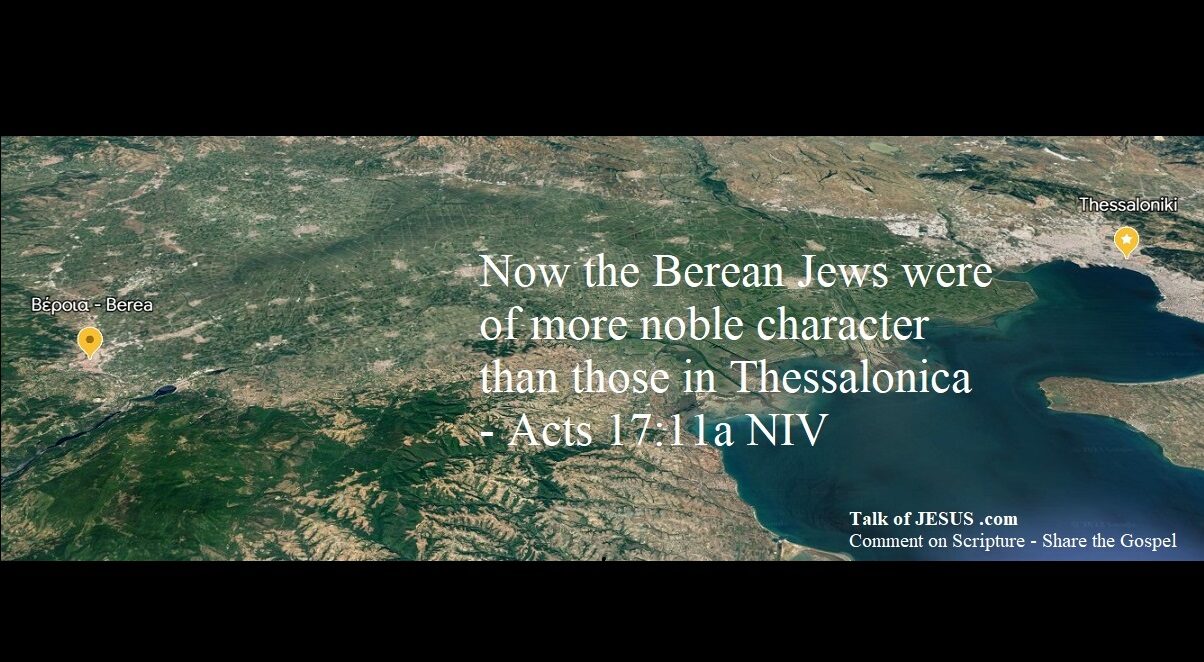
Now these Jews were more noble than those in Thessalonica; they received the word with all eagerness, examining the Scriptures daily to see if these things were so.
Acts of the Apostles 17:11 – English Standard Version
12 Many of them therefore believed, with not a few Greek women of high standing as well as men.
13 But when the Jews from Thessalonica learned that the word of God was proclaimed by Paul at Berea also, they came there too, agitating and stirring up the crowds.
14 Then the brothers immediately sent Paul off on his way to the sea, but Silas and Timothy remained there.
A Brief Stay in Berea
Luke, as you can see, covers this apostolic visit to Berea in just four and a half verses. And from their arrival [v. 10b] until Paul’s hurried departure [14a] even less time and scripture.
Yet hardly a Protestant Church lacks a “Berean” Bible Study or group of some sort (even those churches lacking a Berean store front to bring in believers of the Bible).
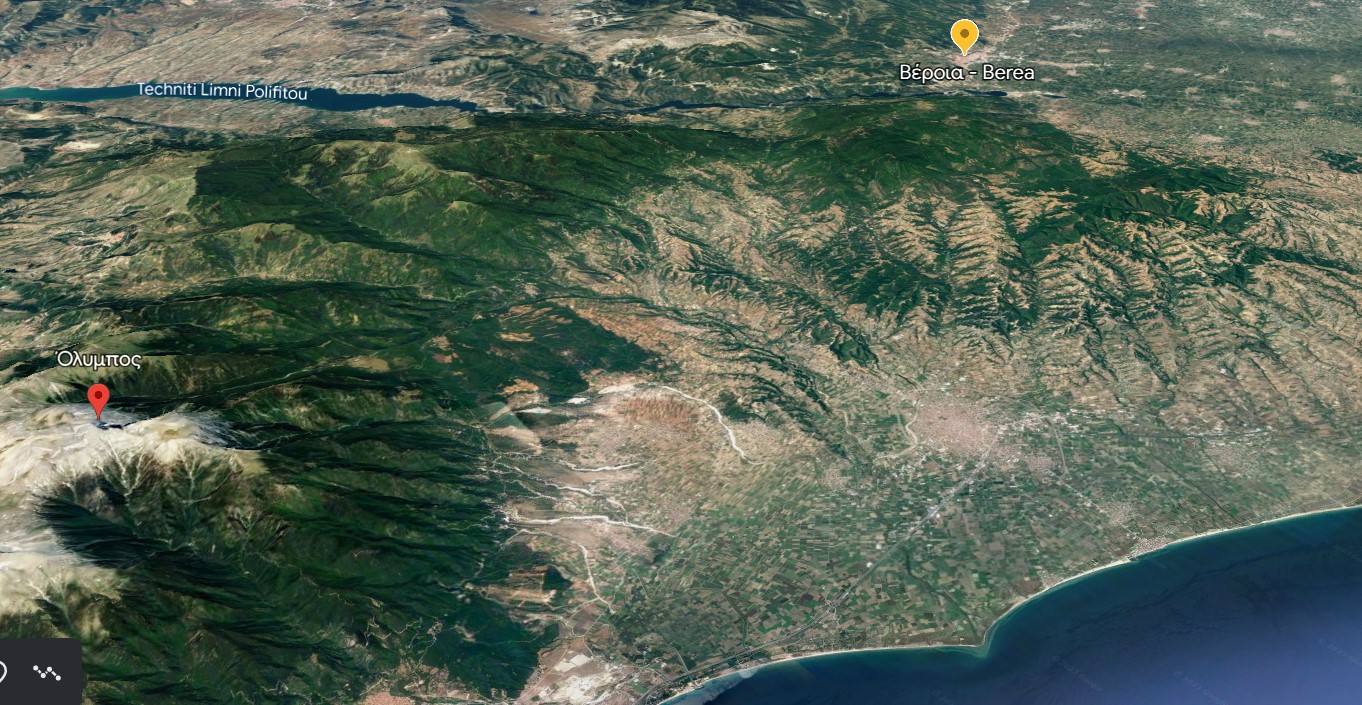
Mount Olympus and Berea near base of Olympus Mountains
Although the drama of Paul in this place was most brief, the mythical influence of the ancient Greek gods of Mount Olympus impacted nearby Berea. Olympus is a familiar stage of the Hellenist culture of all Greece.
The Clash of Titans and Cultures
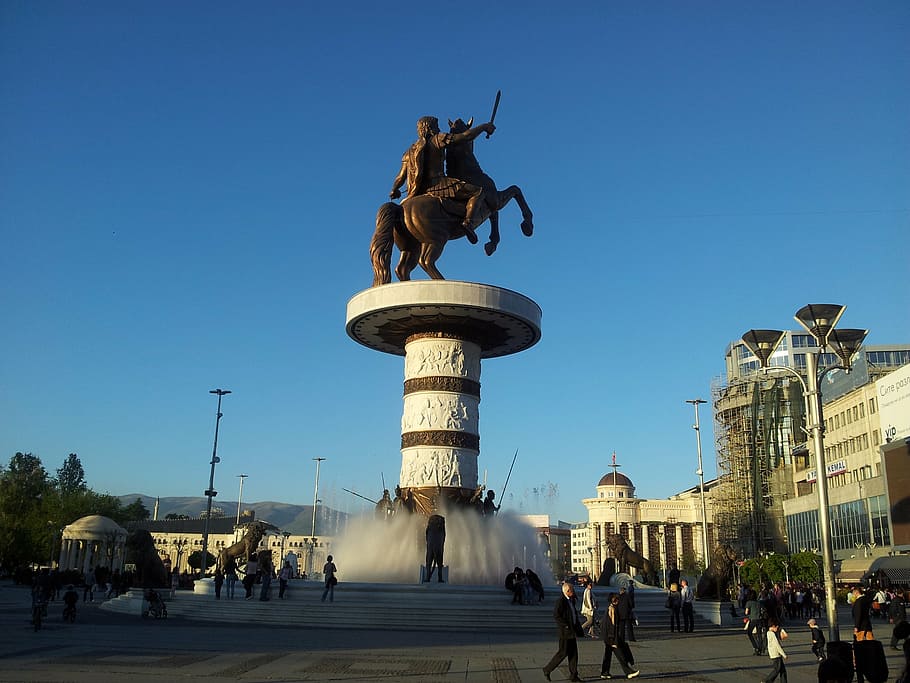
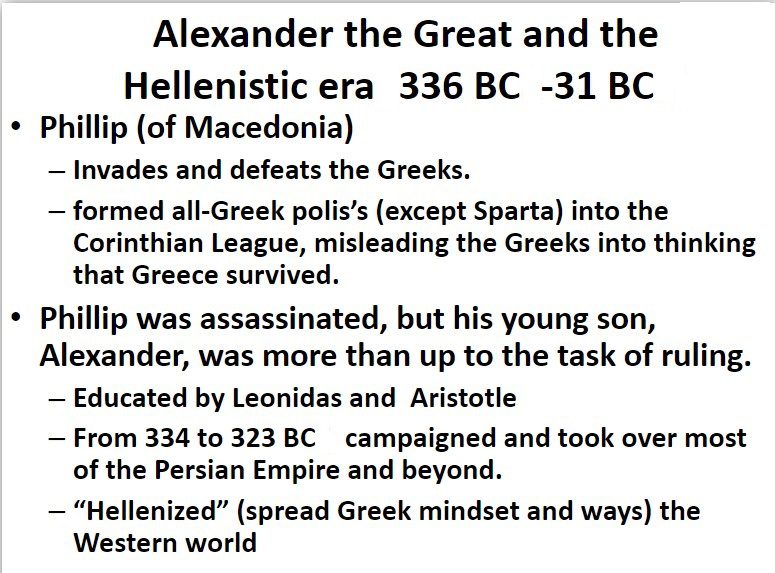
ALEXANDER – the Great Macedonian
The former classical glory of Alexander’s empire had faded into a Hellenist culture for nearly four centuries and was then absorbed into a modern Roman culture of the A.D. 1st century.
As Rome’s Caesars sought to conquer the vast lands ruled by Alexander they discovered that the same ancient Babylonians, Medes and Persians to the East had all been influenced by the Hellenist culture of Alexander.
A Pax Romana created a culture of peace with Rome’s captive peoples and incorporated their gods and traditions into local practice.
41 foot tall statue of the god of gods Zeus
The cultural clashes between Jews, Greeks and other Hellenist-influenced peoples of the Roman Empire are inevitable, undeniable and central to Paul’s proclamation of the Gospel to Greeks.
No better place than Berea near Mount Olympus to set the stage for the world into which these apostles have been sent to proclaim the Gospel of Jesus Christ.
What is Luke’s point in Acts 17:11?
FIRST, what it is NOT:
The Scriptures here are NOT the New Testament (which will later include two letters of Paul to to the Thessalonians).
And although like in OTHER Jewish synagogues Paul undoubtedly had proclaimed the Gospel to these Jews AND probably shared the letter from the Council of Jerusalem with believers, the SCRIPTURES referenced here were EXCLUSIVELY ‘Old Testament’ similar to earlier preaching of Peter, Paul, Stephen and others connecting it all to Jesus the risen Messiah of Israel.
Nobility
Why does Luke refer to these Jews as ‘more noble than those in Thessalonica?’
(After all, Paul will later write two encouraging letters to those in Thessalonica and the Epistles do NOT include a single correspondence to Berea.)

Let's take a 'Berean' examination of the Scriptures illustrating Luke's meaning.
“noble” occurs 18 times in 16 verses in the ESV, yet only 7 times in 7 verses in the KJV.
Hear, for I will speak noble things,
and from my lips will come what is right,
for my mouth will utter truth;
wickedness is an abomination to my lips.

Proverbs 8:6-7 ESV

Yet I had planted thee a noble vine, wholly a right seed: how then art thou turned into the degenerate plant of a strange vine unto me?


Jeremiah 2:21 KJV (after the LORD asking Judah in v.11:
Hath a nation changed their gods, which are yet no gods?
Luke, using Greek also common to Macedonia’s Roman rulers uses the word εὐγενής, meaning, ‘more noble-minded.’
Nobility refers associatively to a higher class; kings, princes, the well-born of certain families.
(Remember that Roman, Hellenist or Greek and Eastern cultures included many slaves as well; although Christ taught that more slaves than rich would follow the righteousness attached to nobility and ‘leading Jews.’)
Paul later addresses two Roman Governors as ‘most noble’ when addressing them.
It is this same meaning attached to the Greek women of high standing [v.12] as well.
Why are they more noble-minded?
Rather than being dissuaded by cultural arguments of leading Jews who rejected Jesus the Messiah of Scripture these Berean Jews examined what Paul had taught from the Scriptures.
Luke also records an attitude perhaps equally important to new Christians receiving the Word, who was and IS and will be, the LORD God of the heavens and earth.
“they received the word with all eagerness.”
Your Savior from sin and death, the Messiah of Israel will be the judge of ALL men. JESUS saved you!
The Macedonians of these towns and cities who examined the true witness of the Hebrew Scriptures and obeyed the guidance of the Council of Jerusalem formed a strong, vibrant, and spirited church who witnessed the Good News of Jesus Christ to all the Hellenists, Romans and anyone else who believed.
Paul’s briefer stay in Berea
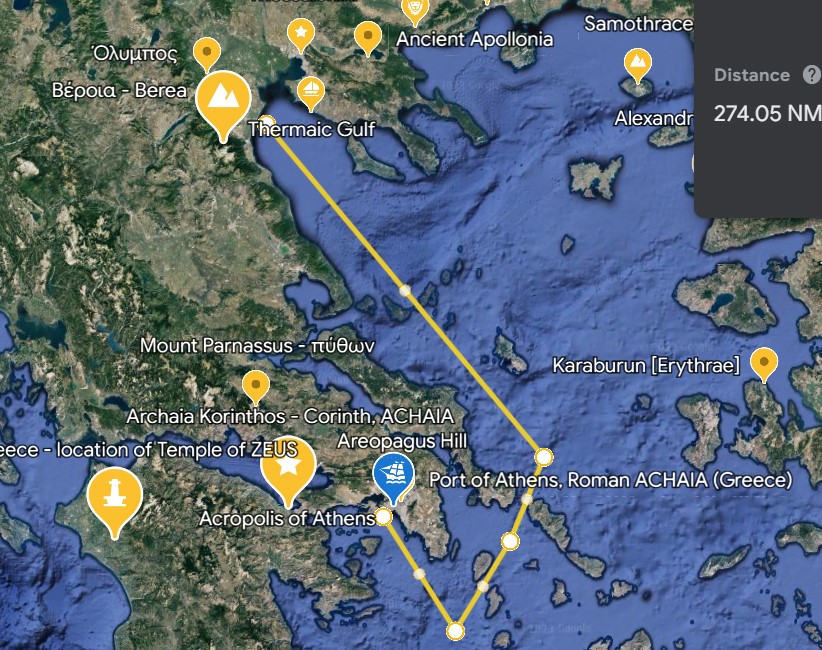
14 Then the brothers immediately sent Paul off on his way to the sea,
Christians generally note the moving on of the apostle Paul to Athens and what will become one of his most important speeches. However here we will continue our focus on the work of two remaining apostles sent out to Macedonia, Silas and Timothy.
Timothy and Silas in Berea
.. but Silas and Timothy remained there. 15 Those who conducted Paul brought him as far as Athens,
and after receiving a command for Silas and Timothy to come to him as soon as possible, they departed.
While the Berean brothers helped Paul to flee the Thessalonian Jewish posse, Silas and Timothy stayed on (as Paul and other apostles had done in the past) to organize this church who studied the Scriptures daily.
Once arriving in distant Athens, Paul then commands them to return home and send Silas and Timothy to continue their journey later when they too will finally arrive from Macedonia NOT in Athens, but in the larger nearby city of Corinth.
When Silas and Timothy arrived from Macedonia, Paul was occupied with the word, testifying to the Jews that the Christ was Jesus.
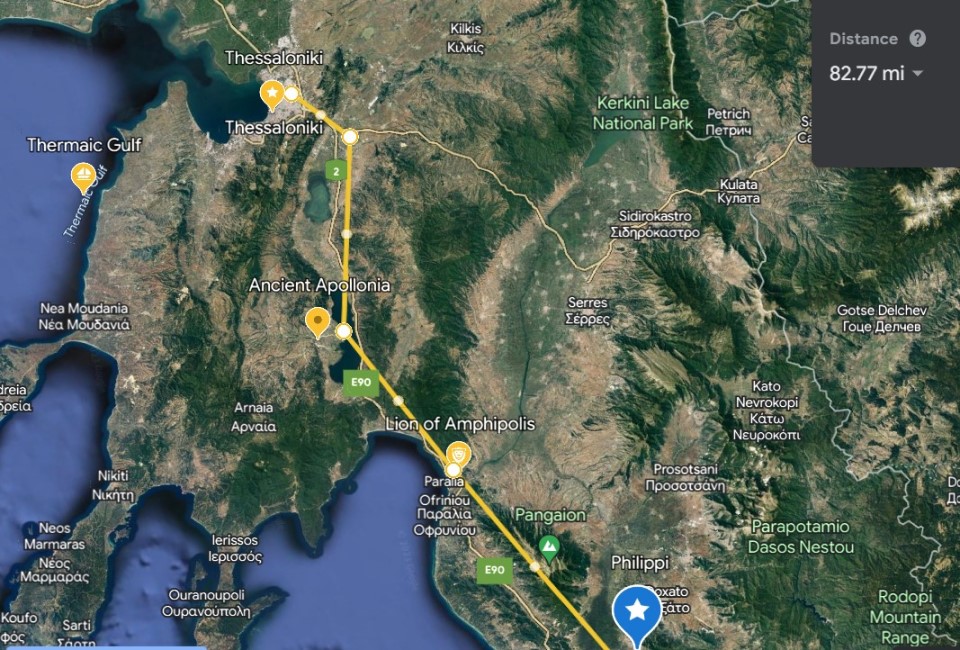
Luke summarizes an 80-90 mile [~130 km] journey from Philippi by these apostles of Christ in a single verse.
~ A.D. 50 – Philippi to Thessalonica (by land)
Silas and Paulos, who are Roman citizens, as these apostles of the Messiah have just reminded Roman magistrates in Philippi;
with Timotheus, a Greek Jew and fellow follower of the Lord Jesus Christ.
Once again in the city of their second stop in Europe the context of culture comes into play.
Whereas Philippi (which they have just left after unjust imprisonment and a freeing sign from God) was a ROMAN city on Macedonian soil, Thessalonica is more Greek (in a sense) and has a Jewish place of worship.
So as in Cypress on Paul's first missionary journey and in most of the large cities of both missions to Asia, Thessalonica has a synagogue where Jews may gather, exchange thoughts and worship God.
2 And Paul went in, as was his custom..
Again Paul, Silas and Timothy would have listened to the prescribed Scriptures of the day and then would have discussed their relevance to the Gospel of the Messiah Yeshua.

AND once again on the next Sabbath Saulos, Silas and Timotheus would have repeated this customary worship routine of the Sabbath at the synagogue in Thessalonica.
No doubt many of the Thessalonians became convinced by these three apostles during these three weeks that Jesus IS risen from the grave and that many Jews have witnessed this Good News of His resurrection.
(And then, they might confidently add, we have witnessed the many such signs including those last month in Philippi.)
And the men and women we baptized were Romans, including our jailer!
.. and on three Sabbath days he [Paul] reasoned with them from the Scriptures, 3 explaining and proving that it was necessary for the Christ to suffer and to rise from the dead,
“This Jesus, whom I proclaim to you, is the Christ.”
– Did Saulos of Tarsus PREACH IT IN HEBREW to the JEWS?
Did Paulos PROCLAIM IT from the Greek Septuagint?
For that would be how Jewish Thessalonians knew their Scripture of the Old Testament better than you and I
Faithful Jews took the Old Covenant of God’s written word to heart.
Were these Jews converted to their own Messiah by Paul’s reasoning with them perhaps daily for three weeks?
This Christ whom I Preach
.. he reasoned with them from the Scriptures, explaining and proving that it was necessary for the Christ to suffer and to rise from the dead, and saying, “This Jesus, whom I proclaim to you, is the Christ.”
4 And some of them were persuaded and joined Paul and Silas, as did a great many of the devout Greeks and not a few of the leading women.
When the gentile Physician Luke records in his second account that, 'many of the devout Greeks and not a few of the leading women' joined Paul and Silas, he refers not to Jews but to local Hellenist gentiles of Thessalonica - local Greeks.
Saul of Tarsus, first a Jew, also a Roman, goes to the Jews first AND when they refuse to listen to reason from their own Scripture about the Messiah of Israel, Savior of sinners in all the world, these Apostles and disciples of Yeshua PREACH CHRIST CRUCIFIED in their own HOME Churches, the public squares and to any of the places a humble created people of any origin gather to seek our Lord and only Savior.
5 But the Jews were jealous, and taking some wicked men of the rabble, they formed a mob, set the city in an uproar, and attacked the house of Jason, seeking to bring them out to the crowd.
Why would they attack 'the house of Jason' (who is first mentioned here)?

Jason is a Jew who certainly also worshipped in the Thessalonian synagogue and who apparently hosted these three travelers as had Lydia hosted them in Philippi. Some commentators suggest that Jason may be related to Paul.

Like back in Philippi, or contemporarily like those crashing the doors of the US Capitol, this lynch mob (so to speak) wants to rule over the city and throw their opponents out of town.
6 And when they could not find them, they dragged Jason and some of the brothers before the city authorities, shouting,
“These men who have turned the world upside down have come here also, and Jason has received them, and they are all acting against the decrees of Caesar, saying that there is another king, Jesus.”
Another King, Jesus
“KING Jesus in v. 7 is just an accusation
Worldly god claimants would use the same title for JESUS as Pontius Pilate when the GOVERNOR asks his accused prisonor:
Are you a king?
Paul, Silas, Timothy and Christian disciples of the Lord Jesus addressed the Risen Messiah as Christ or Lord!
In fact, “Caesar is lord” and “Jesus, king of the Jews“(like Herod was) were ROMAN labels. Except here, as false accusations these are not in any way legitimate Jewish labels OR acknowledgement of a Roman emperor.
Caesar is Lord evoked emotional reaction to SOME Jews, but others compromised their faith to acknowledge that any MAN other than the LORD God Almighty could be THEIR Lord.
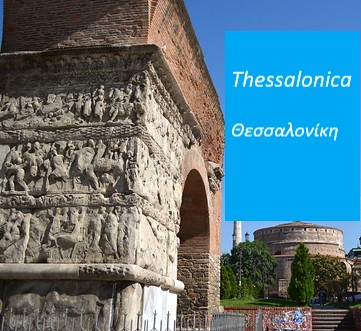
Thessalonica
Θεσσαλονίκη
Thessalonica founded in 315 BC by Cassander of Macedon, who named it after his wife Thessalonike, daughter of Philip II of Macedon and sister of Alexander the Great.
The same claim that offends the Jews, JESUS IS LORD, also offends those who worship MANY gods out of our own selfish motives to worship only our SELF by choosing which gods to which we will bow down. INCLUDING:
ROMANS, who worship Caesar as a god and Greeks, who in addition to celebrating many gods worship their own philosophies of self-deduced knowledge.
SOON we will travel to Corinth where Paul will later write to the church:
For Jews demand signs and Greeks seek wisdom, but we preach Christ crucified, a stumbling block to Jews and folly to Gentiles, but to those who are called, both Jews and Greeks, Christ the power of God and the wisdom of God.
~ A.D. 55 – from the first letter of Paul to the Church at Corinth – Corinthians 1:22-24 ESV
Time to move on from Thessalonica
“These men have turned the world upside down
Jason has received them
they are all acting against the decrees of Caesar
saying that there is another king, Jesus.”
8 And the people and the city authorities were disturbed when they heard these things.
9 And when they had taken money as security from Jason and the rest, they let them go.
The brothers immediately sent Paul and Silas away by night to Berea..
ACTS of the apostles Paul, Silas and Timothy — To Be Continued…
Cookie Consent
We use cookies to improve your experience on our site. By using our site, you consent to cookies.
Used to monitor number of Google Analytics server requests
10 minutes
__utmb
Used to distinguish new sessions and visits. This cookie is set when the GA.js javascript library is loaded and there is no existing __utmb cookie. The cookie is updated every time data is sent to the Google Analytics server.
30 minutes after last activity
__utmc
Used only with old Urchin versions of Google Analytics and not with GA.js. Was used to distinguish between new sessions and visits at the end of a session.
End of session (browser)
__utmz
Contains information about the traffic source or campaign that directed user to the website. The cookie is set when the GA.js javascript is loaded and updated when data is sent to the Google Anaytics server
6 months after last activity
__utmv
Contains custom information set by the web developer via the _setCustomVar method in Google Analytics. This cookie is updated every time new data is sent to the Google Analytics server.
2 years after last activity
__utmx
Used to determine whether a user is included in an A / B or Multivariate test.
18 months
_ga
ID used to identify users
2 years
_gali
Used by Google Analytics to determine which links on a page are being clicked
30 seconds
_ga_
ID used to identify users
2 years
_gid
ID used to identify users for 24 hours after last activity
24 hours
_gat
Used to monitor number of Google Analytics server requests when using Google Tag Manager
1 minute
_gac_
Contains information related to marketing campaigns of the user. These are shared with Google AdWords / Google Ads when the Google Ads and Google Analytics accounts are linked together.
![The Statue of Zeus at Olympia was a giant seated figure, about 12.4 m (41 ft) tall,[1] made by the Greek sculptor Phidias around 435 BC at the sanctuary of Olympia, Greece, and erected in the Temple of Zeus there. Zeus is the sky and thunder god in ancient Greek religion](https://talkofjesus.com/wp-content/uploads/2022/11/Le_Jupiter_Olympien_ou_lart_de_la_sculpture_antique.jpg)