Tag: job

Job is first of the books of wisdom in the Bible and thought to be the oldest text included in the Bible.

  • The Curse of Disease and Death – 3

    The Curse of Disease and Death – 3

    Moses & Joseph, Two Paths to the Palace

    Joseph suffered prior to his blessing more like Job than Moses. He had no choice in his suffering, except his choice of response. Isn’t that how our suffering most impacts others, by our godly response? Blessed be the Lord!

    In part two of this series about our attitude toward disease and death we examined Moses’ story from Exodus. Unlike Job, Moses chose to leave the riches of the palace of Pharaoh where he was raised. Moses could have followed a royal path which may have made him Pharaoh. He chose instead to identify himself with his people and his God.

    You may be familiar with how Moses came to live with the daughter of Pharaoh to be raised as her son.

    Exodus 1:

    15 Then the king of Egypt said to the Hebrew midwives, one of whom was named Shiphrah and the other Puah, 16 “When you serve as midwife to the Hebrew women and see them on the birthstool, if it is a son, you shall kill him…

    22 Then Pharaoh commanded all his people, “Every son that is born to the Hebrews you shall cast into the Nile, but you shall let every daughter live.”


    Moses’ birth story begins in Exodus 2 with a baby protected in an ark of wicker retrieved from the bullrushes by none other than Pharaoh’s own daughter. As stated previously. Moses was raised in a palace only to leave at age forty then return again at age eighty to challenge Pharaoh on behalf of the Lord. Moses would live out the remainder of his 120 years in the wilderness.

    A careful reading of Exodus 2 will reveal that the Hebrews were persecuted by the Egyptians because they were afraid of them, for they had been blessed by the Lord. A look back into Genesis will reveal a much different path to Pharaoh’s palace by a man the Lord used to bless the Hebrew nation in Egypt, Joseph.

    Jacob (Israel) From Canaan to Egypt

    Genesis 37:

    Jacob lived in the land of his father’s sojournings, in the land of Canaan…

    .. Joseph, being seventeen years old, was pasturing the flock with his brothers..

    So Joseph went after his brothers and found them at Dothan.

    18 They saw him from afar, and before he came near to them they conspired against him to kill him. 19 They said to one another, “Here comes this dreamer. 20 Come now, let us kill him and throw him into one of the pits…
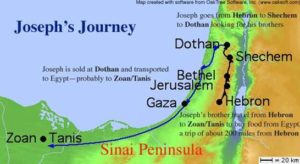
    26 Then Judah said to his brothers, “What profit is it if we kill our brother and conceal his blood? 27 Come, let us sell him to the Ishmaelites, and let not our hand be upon him, for he is our brother, our own flesh.” And his brothers listened to him. 28 Then Midianite traders passed by. And they drew Joseph up and lifted him out of the pit, and sold him to the Ishmaelites for twenty shekels of silver. They took Joseph to Egypt.

    Joseph Sold

    The whole story contains many more exciting details for the reader (or listener). Most of us first heard of Joseph during our childhood instruction in the Bible. As for Joseph, the hopelessness of the situation would seem to be insurmountable, that is, except that the Lord redeems Joseph for His own purpose.

    Death had seemed certain more than once. Even in survival as a slave, Joseph would suffer injustice yet be redeemed by the Lord.

    Genesis 39:1 Now Joseph had been brought down to Egypt, and Potiphar, an officer of Pharaoh, the captain of the guard, an Egyptian, had bought him from the Ishmaelites who had brought him down there…

    20 And Joseph’s master took him and put him into the prison, the place where the king’s prisoners were confined, and he was there in prison.

    Genesis 41:

    After two whole years, Pharaoh dreamed.. seven other cows, ugly and thin.. seven ears of grain.. he sent and called for all the magicians of Egypt and all its wise men. Pharaoh told them his dreams, but there was none who could interpret them to Pharaoh.


    An official who remembered Joseph’s interpretation of a dream now tells Pharaoh of Joseph. The Lord showed Joseph the meaning of Pharaoh’s dream. (You don’t think you could have guessed from visions of cows eating other cows and random pictures of grain, do you?)

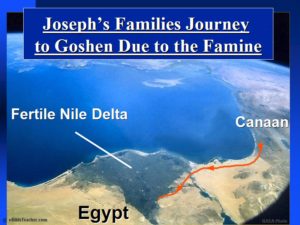
    The Lord brings famine to both Canaan, home of Jacob and Joseph’s brothers. Jacob’s son Joseph prepares Egypt for the same seven years of severe famine ahead and manages stored resources for the people to whom he was sold.


    a 2017 famine FYI
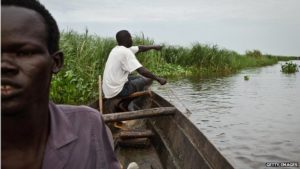
    Mandari fishermen on Nile River in South Sudan

    I mentioned in Part 2 the importance of the 4160 mile long (6670 km) Nile River basin to life in Egypt. (The Jordan river valley was also important to Canaan and the small countries bordering the Jordan to a lesser extent.) Both crops and herds of animals must have both the water and the grain which grows in these fertile areas. Yet when drought comes and the rivers dry up many suffer. Many die, both animals and people die due to lack of water and too little food.

    Did you know:

    UN: World facing greatest humanitarian crisis since 1945

    [ctt title=”Millions suffering in famine and war. Many will die in 2017. Why does the world ignore it?” tweet=”https://ctt.ec/dNle1+” coverup=”dNle1″]

    Humanitarian groups fear this could be just the beginning: a lack of water – blamed partially on the El Nino weather phenomenon – has killed off livestock and crops, leaving 6.2 million people in urgent need of help.

    The greater causes of suffering relate to war, civil war, greed, oil, extremism, religious differences which cause one sect (of several) to oppose other sects to the death (so to speak) and in fact starve them out.

    Is genocide of African terror so different in 21st c. S. Sudan, Yemen, Somalia and so many other shoreline divided rich and poor so different from ancient Pharaohs ordering deaths of opponents?

    [ctt title=”http://www.bbc.com/news/world-africa-39238808” tweet=”Genocide by starvation and war. The terrors of extreme local and religious hatreds.” coverup=”1UNA2″]

    The Lord Prevails

    Returning to Joseph’s story, let us recall how we do not know or understand the ways of the Lord. Not until the end of the story of Job do we learn that the Lord brings Job double blessing. Job didn’t know why he suddenly suffered. We knew from the beginning that satan was behind Job’s suffering.

    Pharaoh caused the great suffering of the Hebrew people in Moses’ time. The Lord brought suffering to Egypt. Pharaoh opposed the Lord; not as a man, but as if a man or a leader could be a god to his own people suffering though plagues and death.

    A Nero, Hitler or Muhammed murdering innocents is no less opposed to the Lord! Even kings of Israel and kings of Judah “did what was evil in the sight of the Lord.

    Yet Joseph, a slave in Egypt promoted to the palace, becomes a type of redeemer for the people of the lands he loved. Yes, the lands Joseph loved – both Goshen, a state of Egypt where the Lord would multiply the Hebrew people, and a promised land along the Jordan from which he unwillingly emigrated.

    Forgiveness and Redemption

    Joseph’s story reveals first a reunion of forgiveness with his brothers who sold him into captivity.

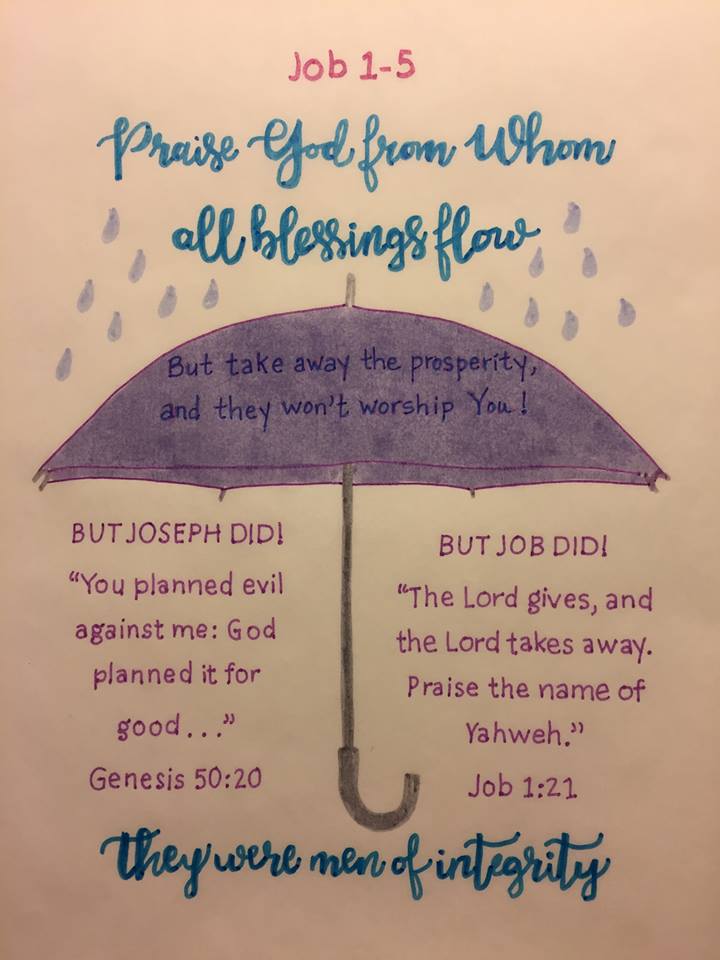
    But Joseph said to them, “Do not fear, for am I in the place of God? As for you, you meant evil against me, but God meant it for good, to bring it about that many people should be kept alive, as they are today. – Genesis 50:19-20

    Joseph’s reply to his brothers from his own position and power:  “Do not fear, for am I in the place of God?”[ctt title=” A redeemer does not judge his enemies, but leaves judgment to the Lord.” tweet=”Neither Moses nor Joseph redeemed Israel, but the LORD.” coverup=”367rc”]

    The curse of sin: War, Disease, Famine, Suffering & Death

    From Adam to this very day: many hurt, many suffer, many will die.

    Who is your Redeemer, dear brother, beloved sister – who will redeem you from the enemy of your sin?

    Christ Jesus, He IS! For our Lord shed His Blood of Sacrifice for us while we were yet sinners, enemies of the Lord.

    Like Israel, a man with twelve sons and like a people enslaved by injustice, the Lord has passed over a sinful flesh condemned to die in our sin.

    Christ Jesus IS risen to eternal life and as our Redeemer and Judge the Lord pours over us the Blood of His own righteous and immeasurable outpouring of His own love for our eternal soul.

    Joseph’s brothers eventually bowed down before their brother, humble before the Lord.

    Won’t you bow down before Christ Jesus, loving Lord and Savior of the Hebrews and of the Nations?


  • The Curse of Disease and Death

    The Curse of Disease and Death

    We don’t understand death. Illness, disease and all the relatives of pain. These challenge our sense of mortality and question our grasp of purpose.

    Why did God make it this way?

    Wrong question. God created mankind in his image. Sin brought forth death and suffering out of our disobedience to a Father’s command.

    Just like understanding death, we cannot eat of the tree of all knowledge the fruit of what the spirit will endure. Death brings judgment of decay and suffering. But what of the spirit resting, the spirit awakened from death?

    Why a man can hardly understand the fall of adam, let alone the fall of angels. Yet angels and adam rebel against the righteous authority of Almighty God. These fallen ones affect our lives in ways we cannot know. Yet unseen scores of angels answer the righteous beckoning of a loving heavenly Father, who looks upon the mortal and eternal lives of His own.


    A Story of Suffering

    We think we know this oldest of stories of a man whose final blessing we cherish. He received twice the blessing. Fair enough. That’s worth some time when God will not help. Right?

    You don’t really believe that, do you? At least, not if you are the suffering one or the one living every minute with the anguishing pain of a dear loved one. This is the story of Job we quickly overlook on the way to the double-blessed ending.

    Job 1:

    There was a man in the land of Uz whose name was Job, and that man was blameless and upright, one who feared God and turned away from evil.

    Question #1

    Would that be a man like you? Or a woman like you (if that is your gender)? Was Job a man like me?

    Certainly not. I am a sinner time and time again, certainly not ‘blameless‘ nor upright before the Lord God.

    [ctt title=”תָּם – täm – blameless: complete, perfect, sound, wholesome, morally innocent, having integrity” tweet=”How are you doing at ‘blameless’ minute by measured minute of your mortal life?” coverup=”jaG0i”]

    The fallen angel of disobedience challenges God:

    “Does Job fear God for no reason? 10 Have you not put a hedge around him and his house and all that he has, on every side? You have blessed the work of his hands, and his possessions have increased in the land…

    Isn’t that how we pray to the Lord?

    Hedge us in. Protect us. Give us those double blessings. It’s as if our mortal minutes were all about God giving us a gardens of blessings in all that we do.

    Is that why the Lord created man?


    Job’s Bad Day

    Job didn’t bring on his own distress as we often do. Yet put yourself in this loving father’s place as he hears of the fates of the sons and daughters he has raised.

    15 and the Sabeans fell upon them and took them and struck down the servants with the edge of the sword..

    … “Your sons and daughters were eating and drinking wine in their oldest brother’s house, 19 and behold, a great wind came across the wilderness and struck the four corners of the house, and it fell upon the young people, and they are dead, and I alone have escaped to tell you.”

    … the Lord has taken away; blessed be the name of the Lord.” – Job 1:21c

    Would that have been your (blameless) reaction?


    Me neither; but it gets worse. Once again, Satan challenges the Lord at the integrity of Job.

    Job 2:

    “Skin for skin! All that a man has he will give for his life. 5 But stretch out your hand and touch his bone and his flesh, and he will curse you to your face.”

    7 So Satan went out from the presence of the Lord and struck Job with loathsome sores from the sole of his foot to the crown of his head.

    Can you imagine any righteous man suffering like this, though he is blameless? Image the constant suffering, the pain this man endured.

    8 And he took a piece of broken pottery with which to scrape himself while he sat in the ashes.


    11 Now when Job’s three friends heard of all this evil that had come upon him, they came each from his own place…

    12 And when they saw him from a distance, they did not recognize him. And they raised their voices and wept, and they tore their robes and sprinkled dust on their heads toward heaven.

    13 And they sat with him on the ground seven days and seven nights, and no one spoke a word to him, for they saw that his suffering was very great.


    Tragic Suffering

    Have you ever seen it? (Did you for a moment blame God?) Was it your wife, or a parent, perhaps even a child…

    Why such suffering!?

    Job’s friends came to him because of the report of the evil Job was suffering. The story of Job in the Bible clearly not only shows us the unseen origin of Job’s tormentor, the fallen angel Satan, but also describe Job’s suffering as evil.

    רַע

    [ctt title=”The evil of suffering sometimes seems larger than God.” tweet=”Remember, though, the Lord suffered for your sins and for mine.” coverup=”Sm646″]

    Wickedness, mischief, hurt, trouble, affliction, ill, adversity, harm and other suffering often leading to death have nearly disappeared from our mortal consciousness.

    For like good, evil has become a measure of no meaning in the minds of mankind.


    Job goes on to lament his very life. Have we not done that when in great distress? Have we not questioned God’s motives in the suffering of man, especially those nearest our mortal hearts?

    All the lessons of life taught from Moses to the Prophets to the Revelation of Jesus Christ to John show suffering – consequence of the disease of sin, yet a hope of redemption and cure of righteousness, resurrection from the suffering of this fragile flesh.

    To be continued…

  • A Crying Out to the Wind

    Prelude to Disaster

    When life has been comfortable for you, do you cry out in amazement at a turn of events?

    Let’s take a look at a righteous man from the oldest book in the Bible and later examine Job’s pleas to the Lord after his friends have offered no help. Should we cry out to the wind in the day of disaster? What good could possibly come of it; what good could return from a God who allows the winds of change to bring us into the place of disaster?

    Job 1:

    There was a man in the land of Uz whose name was Job, and that man was blameless and upright, one who feared God and turned away from evil…

    19 and behold, a great wind came across the wilderness and struck the four corners of the house, and it fell upon the young people, and they are dead, and I alone have escaped to tell you.”

    20 Then Job arose and tore his robe and shaved his head and fell on the ground and worshiped. 21 And he said, “Naked I came from my mother’s womb, and naked shall I return. The Lord gave, and the Lord has taken away; blessed be the name of the Lord.”

    22 In all this Job did not sin or charge God with wrong.

    Job’s pain described to his friends

    Job 30:

    15 Terrors are turned upon me;
        my honor is pursued as by the wind,
        and my prosperity has passed away like a cloud.

    16 “And now my soul is poured out within me;
        days of affliction have taken hold of me.
    17 The night racks my bones,
        and the pain that gnaws me takes no rest.
    18 With great force my garment is disfigured;
        it binds me about like the collar of my tunic.
    19 God has cast me into the mire,
        and I have become like dust and ashes.


    When disaster strikes, when disaster even threatens, do you cry out to the wind? When terrors seem to fall upon us, when pain gives no rest, do you even blame God?

    For it is Almighty God who allows the winds of change. It is Almighty God who painfully refines us in the fire.

     Job’s plea to God

    20 I cry to you for help and you do not answer me;
        I stand, and you only look at me.
    21 You have turned cruel to me;
        with the might of your hand you persecute me.
    22 You lift me up on the wind; you make me ride on it,
        and you toss me about in the roar of the storm.
    23 For I know that you will bring me to death
        and to the house appointed for all living.

    24 “Yet does not one in a heap of ruins stretch out his hand,
        and in his disaster cry for help?


    Have you been there? Has this been your prayer, perhaps even now?

    Job’s Appeal

    25 Did not I weep for him whose day was hard?
        Was not my soul grieved for the needy?
    26 But when I hoped for good, evil came,
        and when I waited for light, darkness came.
    27 My inward parts are in turmoil and never still;
        days of affliction come to meet me.
    28 I go about darkened, but not by the sun;
        I stand up in the assembly and cry for help…


    There is more to the sad turn of events in the life of this righteous man, both prior to our glance at this portion of Job’s tragedy and after this chapter when Job confronts the LORD!

    If you cry out to the wind even now, will you be saved by your own righteousness?

    (I will not give away the ending, in case you have not read or do not recall the conclusion found in the remaining twelve chapters of the Book of Job.) Job faces Almighty God as a righteous man. How will you?


    Wind is a tempest we cannot see and a power we cannot control. Can a man of dust grasp the ungraspable? Will a mere mortal stand still or bow down before the LORD?

    Wind רוּחַ  ἄνεμος

    In Hebrew: wind, breath, mind, spirit; and also used in an attempt to describe the Holy Spirit of God.

    In Greek: wind, a violent agitation and stream of air; a very strong tempestuous wind; the four principal or cardinal winds, hence the four corners of heaven

    Behind the invisible imagery one must see beyond the feel, effect and cause of the wind to a more mysterious meaning of a Source for all wind; therefore a Source also of all calm.

    NOTE: Linked text to source for scripture, Hebrew & Greek definitions and other source material for Roger Harned posts on http://talkofJesus.com


    Pray for us; for we wait in the path of the tempest for the unwielding hand of God!

    Are you a righteous man or woman created by God?

    The heavens and the earth and all mankind is created by God! None is righteous; no, not one.

    Would you confront the LORD without humility and grace?

    Or do you pray to the wind?

    Do you pray to a dead prophet or powerless dead saint?

    Do you depend on the name of your dead ancestors?


    Dearly beloved, for whom Christ Jesus came to this chaotic earth as Son of Man sacrificed for your sins: pray in His Holy Name to God our heavenly Father that you will receive his Holy Spirit, the very breath of eternal life; lest the tempest of His wrath sweep your perishing soul into the abyss of darkness.

    +++