χαλεπός – chalepos –
- perhaps from G5465 through the idea of reducing the strength; difficult, i.e. dangerous, or (by implication) furious:—fierce, perilous.
But Mark This:
The Apostle Paul continues in his second epistle to pastors, beginning a central section we label, 2 TIMOTHY 3, with a reminder of danger announced in the NIV, “But mark this: ..”
But mark this: There will be terrible times in the last days.
2 Timothy 3:1 NIVYou should know this, Timothy, that in the last days there will be very difficult times.
2 Tim 3:1 NLT
This know also, that in the last days perilous times shall come.
2 Tim 3:1 KJV
But understand this, that in the last days there will come times of stress.
2 Tim 3:1 RSV
The great enemy of God is not Nation or Ruler who turns upon God’s people from without, but the strong-speaking leader weakening the Lord’s elect from within.
Last Days and Difficult Times
The last days — eschatos hēmera, difficult times — chalepos kairos...
We will not speculate (as do so many) when these last days were, are or will be. The emphasis of Paul’s added reminder is NOT the last days, but his long list of evidences found in the unfaithful, whether in the first century, the time of Moses or in the 21st century of this Common Era.
Further HEADINGS of this from various Bibles:
- A warning of what to expect – J.B. Phillips New Testament
- Godlessness in the Last Days – ESV
- The Tasks of a Man of God – New Catholic Bible
- Repulse the Onslaughts of False Teachers – [sub-heading] NCB
AND in verse 2, Paul immediately gets to his long list of characteristics (or perhaps I should say, lack of character) against which the Apostle warns.
3:2 ἔσονται γὰρ οἱ ἄνθρωποι
For men [anthrōpos – lit. human beings, whether male or female] shall be…
2 Timothy 3:2 gar anthrōpos esomai – For men shall be
Familiar (yet Infrequent) Warnings to the Church
first, from their Greek words and the King James English translation,
- philautos – lovers of their own selves
- philargyros – covetous
- alazōn – boasters
- hyperēphanos – proud
- blasphēmos – blasphemers
- apeithēs goneus – disobedient to parents
- acharistos – unthankful
- anosios – unholy
- astorgos – Without natural affection
- aspondos – trucebreakers
- diabolos – false accusers
- akratēs – incontinent
- anēmeros – fierce
- aphilagathos – despisers of those that are good
- prodotēs – traitors
- propetēs – heady
- typhoō – highminded
- philēdonos mallon – lovers of pleasures more
- ē philotheos – than lovers of God;
echō morphōsis eusebeia – Having a form of godliness,
de arneomai ho dynamis autos – but denying the power thereof:
2 Timothy 3:2-4,5a Transliterated – KJV – source BLB.org
Paul urges Timothy not to accept soft faith threating the church like a ship in a storm.
kai toutous apotrepō – from such turn away.
2 Timothy 3:1-5
A warning of what to expect
secondly, J.B. Phillips taking these oft-forgotten concepts directed into our more familiar English.
But you must realise that in the last days the times will be full of danger. Men will become
utterly self-centred, greedy for money, full of big words.
They will be proud and contemptuous,
without any regard for what their parents taught them.
They will be utterly lacking in gratitude, purity and normal human affections.
They will be men of unscrupulous speech and have no control of themselves.
They will be passionate and unprincipled, treacherous, self-willed and conceited, loving all the time what gives them pleasure instead of loving God.
They will maintain a facade of “religion”, but their conduct will deny its validity.
You must keep clear of people like this.
Some English Synonyms and Scriptural Reminders
Considering a few descriptive adjectives:
Honestly, who doesn’t have some love of himself [philautos].. or love of money [philargyros] to pay our creditors?
But do you love me, Jesus asks a disciple?
Now the Pharisees, who were lovers G5366 of G5366 money G5366, were listening to all these things and were scoffing at Him [Jesus}.
Gospel of Luke 16;14
You likely know the Old Testament command using this same word, covetous:
Thou shalt not covet thy neighbour’s house, thou shalt not covet thy neighbour’s wife, nor his manservant, nor his maidservant, nor his ox, nor his ass, nor any thing that is thy neighbour’s.
Exodus 20:17 KJV
[hyperēphanos alazōn] Proud boasters WE know, not only in politics and business but in our own church.
God resisteth the proud, G5244 but giveth grace unto the humble.
Epistle of James 4:6
Blasphemers
Blasphemy is an even more serious offense, much neglected in this Common Era.
- scurrilous
- once commonly descriptive of those known for vulgar, coarse, or abusive language, especially of a malicious or slanderous nature
- or (specially) impious (against God)
But he that shall blaspheme against the Holy Ghost hath never forgiveness, but is in danger of eternal damnation:
Gospel of Mark 3:29 KJV – a warning of Jesus
Disobedient to Parents
Doesn't seem so serious, does it?
5:16 כַּבֵּד אֶת־אָבִיךָ וְאֶת־אִמֶּךָ
Honour thy father and thy mother, as the LORD thy God hath commanded thee
Deuteronomy 5:16a,b – Masoretic text, KJV
Commandment of the LORD and the Law of Israel.
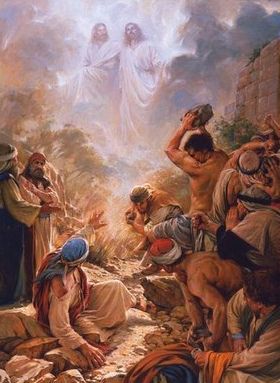
If a man have a stubborn and rebellious son, which will not obey the voice of his father, or the voice of his mother, and that, when they have chastened him, will not hearken unto them: .. lay hold on him, and bring him out unto the elders of his city,.. And they shall say unto the elders of his city, This our son is stubborn and rebellious, he will not obey our voice.. And all the men of his city shall stone him with stones, that he die: so shalt thou put evil away from among you; and all Israel shall hear, and fear.
Deuteronomy 21:18-21 excerpt KJV
Unthankful, Unholy, ‘Unaffectionate’.. unChristian?
Every believer associates with christians who do NOT imitate Christ.
- Are YOU one of them at times?
- Do you lack affection or appear unholy to others?
Other hints of false teachers:
We cannot cover the entire list.
Incontinent.
- powerless, i.e. without self-control:—incontinent.
- Lacking sexual restraint; unchaste.
Such sins (though known, even obvious to church leaders) remain veiled to the saints, until sudden revelation unveils that their witness for Christ always fell short of the Way and the Truth of JESUS.
Trucebreakers and Traitors.
These christians want to do ‘their own thing’ without public vow, or covenant.
AND they will not be convinced to refrain from such worldly things that malign Christ.
Judas wanted to follow Jesus his own way as long as the Lord led him as a conquering King of Israel.
- We can use that money for better things.
- Why should You sacrifice your Life for sinners?
Do these descriptions point to some Judas influencing ideas behind a world-like vision of your church?
διάβολος – diabolos
When you hear, ‘FALSE ACCUSERS’ on Paul’s list, you may not consider the weight of the Apostle’s adjective.
Recognize the ‘accuser of the brethren’ — diabolos.
[Simon Peter responds] And we believe and are sure that thou art that Christ, the Son of the living God.
Jesus answered them, Have not I chosen you twelve, and one of you is a devil? G1228
Gospel of John 6:69-70 KJV
Avoid such people!
YES, they may be prominent members, even Elders, leaders, priests or pastors in Christ’s church where you worship.
They will maintain the outward appearance of religion but will have repudiated its power. So avoid people like these.
2 Timothy 3:5 New English Translation
a Warning to single moms!
No, you won't find that HEADING for 2 Timothy 3:6-7 in your Bible because the very concept is false teaching of a social gospel.
This danger to a first century Ephesian or Corinthian saint we might label: ‘a Warning to our Widows.’
For of this sort are those who creep into households and make captives of gullible women loaded down with sins, led away by various lusts,
always learning and never able to come to the knowledge of the truth.
2 Timothy 3:6-7 NKJV
Those first century saints were vulnerable socially and economically moreso than 21st c. women who lead their husbands, initiate divorce amd refuse to be bound by vows of marriage.
Paul’s point: whether the man or woman claiming Christ, the danger is lusts.
Enemies to the Truth
The Apostle points back to Moses who also faced such opposition, as did Timothy.
John MacArthur in his commentary points out that although Exodus shows no record of Jannes and Jambres, that Paul may know of them from other Jewish writings and traditions.
Because Jannes perhaps means “he who seduces” and Jambres “he who makes rebellion,” those may have been symbolic names given to these men at a later time. Jewish tradition holds that they pretended to convert to Judaism in order to subvert Moses’ divine assignment to liberate Israel from Egypt, that they led in making and worshiping the golden calf while Moses was on Mt. Sinai receiving the Law from God, and that they were slaughtered by the Levites along with the other idolaters (see Ex. 32).
New Testament Commentary 2 Timothy, John MacArthur, p.120
The Apostle then assures the Church and Timothy:
But they won’t get away with this for long.
Someday everyone will recognize what fools they are, just as with Jannes and Jambres.
2 Timothy 3:9 NLT
NEXT: Standing Strong against Apostasy
Talk of JESUS . com
Comment on Scripture – Share the Gospel