Tag: John

  • A River of Redemption Flowing from Eden – Redeemer

    A River of Redemption Flowing from Eden – Redeemer

    For I know that my Redeemer lives,
    and at the last he will stand upon the earth. – Job 19:25 ESV

    Redeemed from what?

    Scripture records that Job is a righteous man. Can you say that? Most assuredly, I cannot.

    A great and powerful leader loves God and does everything right, yet the Lord permits Satan to test him. He has everything a man could ever want, but then the Lord takes it away. Job loses everything except his life. 

    And how does he respond? 

    Job cries out to the Lord to be saved from miseries which have come to him in the flesh of this life (and his miseries are many). Yet hear Job’s assurance of judgement by a just God.

    19:25 וַאֲנִי יָדַעְתִּי גֹּאֲלִי חָי וְאַחֲרֹון עַל־עָפָר יָקֽוּם׃

    19:26 וְאַחַר עֹורִֽי נִקְּפוּ־זֹאת וּמִבְּשָׂרִי אֶֽחֱזֶה אֱלֹֽוהַּ׃

    And though after my skin worms destroy this body, yet in my flesh shall I see God: – Job 19:26 KJV

    Though he dies he will see God his Redeemer, face to face. In a word: resurrection. Judgment, face to face judgment by God!

    Our return to dust

    The Lord’s original curse against man does not dissuade Job from hope of seeing his Redeemer on the day of his judgment. Job repents before God acknowledging that he knows that he is dust. 

    Do you? Have you acknowledged before God that you are only dust?

    By the sweat of your face
    you shall eat bread,
    till you return to the ground,
    for out of it you were taken;
    for you are dust,
    and to dust you shall return.” – Genesis 3:19 

    Redeemers

    What is a Redeemer? (It’s certainly another important concept this world has relegated to triteness, as in ‘redeeming coupons.’)

    Redeemto buy or pay off, buy back, recover, exchange or convert (as in the blood of an animal for sin or money for a sacrificial animal), to discharge or fulfill a promise or a debt, to make amends for (some wrong), obtain release by a payment, restoration; theology: to deliver from sin and its consequences by means of a sacrifice offered for the sinner.

    Job was a righteous man, yet he knew he would face his redeemer after his death. Have you had enough to have cried out to your Redeemer?

    Earlier in this series I referred to Joseph as a redeemer not only Israel, but also of Egypt by saving them from famine. Joseph was purchased and no ransom was paid for his release. With God’s help Joseph paid for his own redemption.

    Many look to Moses as a redeemer of the Hebrews, saving them from slavery. Moses had been born into slavery under imminent threat of death, but the Lord rescued the Hebrew boy into the household of Pharaoh. He escaped when discovered buy returned when called by the Lord. Moses freed the Hebrews from slavery under Pharaoh. The Lord used Moses to save His covenant people, but Moses did not pay a ransom for their return.

    The Lord saves David and other later kings of Israel and Judah. In fact, it is always the LORD who intervenes in these and other rescues of mankind. Even Noah had been rescued by God.

    From Noah, Abraham, Jacob and Joseph before the Law, to Moses, David and kings after the Law you will read of sacrifices made to the Lord. All of these faithful men recognized their own need for a Redeemer for their sins.

    If you have never considered your own need for a Redeemer, you may want to weigh the significance of its antonym as it could apply to your soul at the Judgment without a Redeemer: 

    Antonyms

    1. abandon.

    Strong currents of these last days

    Have you plead to the Lord for mercy? ‘Oh Lord, do not abandon me.’

    Though requirements of the Law placed severe penalties upon those disobedient to the Lord, Moses assured the faithful:

    “Be strong and courageous; don’t be terrified or afraid of them. For the LORD your God is the one who will go with you; he will not leave you or abandon you.” – Deuteronomy 31:6 

    In Psalm 16, David offers an assurance similar to to that of Job:

    10 For you will not abandon me to Sheol;
    you will not allow your faithful one to see decay.

    God warned Adam and Eve that on the day they ate of the tree of the knowledge of good and evil that they would surely die. Adam died. So did Eve and their sons, daughters and descendants, except the family of Noah.

    So did Eve and their sons, daughters and descendants, except the family of Noah. And all mankind from Adam until now has sinned, every one of us.

    Surely we will also die; then as Job said, we will be resurrected to the Judgment.

    LORD, the hope of Israel,
    all who abandon you
    will be put to shame.
    All who turn away from me
    will be written in the dirt,
    for they have abandoned
    the LORD, the fountain of living water. – Jeremiah 17:13

    A Redeemer and Judge

    Our Redeemer was before Eden and was in Eden. He IS a river of righteousness, pure waters springing forth which refresh the soul and give life to dust.

    John 1:2 He was with God in the beginning. 3 All things were created through him… 3:5 Jesus answered, “Truly I tell you, unless someone is born of water and the Spirit, he cannot enter the kingdom of God. 6 Whatever is born of the flesh is flesh, and whatever is born of the Spirit is spirit.

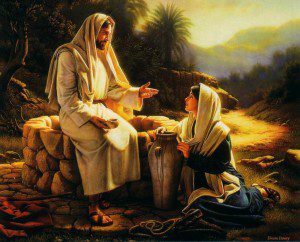
    John 4:13 Jesus said, “Everyone who drinks from this water will get thirsty again. 14 But whoever drinks from the water that I will give him will never get thirsty again. In fact, the water I will give him will become a well of water springing up in him for eternal life.”

    John 5:24 “Truly I tell you, anyone who hears my word and believes him who sent me has eternal life and will not come under judgment but has passed from death to life.

    25 “Truly I tell you, an hour is coming, and is now here, when the dead will hear the voice of the Son of God, and those who hear will live… a time is coming when all who are in the graves will hear his voice 29 and come out—those who have done good things, to the resurrection of life, but those who have done wicked things, to the resurrection of condemnation.

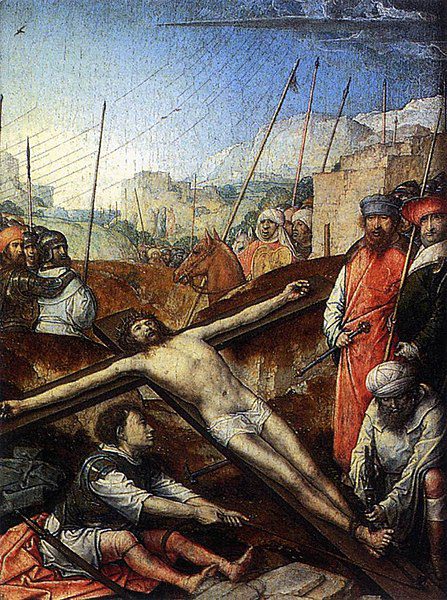
    Christ Jesus! He IS our Redemption, for He has sacrificed His own blood as payment for our sins. Jesus the Son of Man sacrificed His life as payment for mine. He IS the river of life, springing forth from before Eden and cleansing our sins.

    Beloved brother of dust and sister of sin, will you plea to our Redeemer for His great mercy?

    Then he showed me the river of the water of life, clear as crystal, flowing from the throne of God and of the Lamb down the middle of the city’s main street. The tree of life was on each side of the river…

    Revelation 22: 
  • A River of Redemption Flowing from Eden – 7 – Upstream in History

    A River of Redemption Flowing from Eden – 7 – Upstream in History

    Philip found Nathanael and said to him, “We have found him of whom Moses in the Law and also the prophets wrote, Jesus of Nazareth, the son of Joseph.” – John 1:45 ESV

    What does it mean to look upstream in history? Those seeking eternal truth look back through the eyes of scripture.

    A Basis of Law and Justice

    Looking back on the source of law somewhat resembles our search for Eden and the basis of life. We move from the still waters of a river with visible bottom to swim upstream against torrents of the unseen. How can we see justice and redemption, so distant to our own existence? 

    The answers of justice rest not in the law, but in the Lawgiver and relationship of the redeemed.


    Before the incarnation of the Messiah, yet long after the fall of Jerusalem  the Prophet Isaiah [יְשַׁעְיָה] had proclaimed: 1:27 צִיֹּון בְּמִשְׁפָּט תִּפָּדֶה וְשָׁבֶיהָ בִּצְדָקָֽה׃

    Zion shall be redeemed by justice, and those in her who repent, by righteousness. But rebels and sinners shall be broken together,
    and those who forsake the LORD shall be consumed. – Isaiah 1:27-28


    Even Isaiah had looked back upstream through the torrent of sin, just as Moses had warned in Genesis.

    9 If the Lord of hosts
    had not left us a few survivors,
    we should have been like Sodom,
    and become like Gomorrah.

    10 Hear the word of the Lord,
    you rulers of Sodom!
    Give ear to the teaching of our God,
    you people of Gomorrah!

    These warnings to obedience refer not to the law, but a broken relationship with the Lord and sinful relationships with other men. Law has basis in the relationships of men and women to each other; but above all, law requires a relationship to the commands of the Living God.

    Do godless men and evil women desire judgment?

    Their contempt for authority reflects the darkness of a mortal life lacking fear of The Almighty God. They neglect, trespass and try to circumvent the law. 

    Evil men and godless women rebel against righteousness, without regard of consequence for others or their own inevitable punishment when convicted. Do you rebel against righteousness?

    Justice fails when licentiousness claims all sin as freedom.    

    Though we tend towards lawlessness, we are free to choose obedience to the Lord. A humble sinner desires mercy and the repentant law-breaker wants restoration of relationship with the Lord. And this in addition to redemption with a community of loved-ones.

    Returning to Joseph, further upstream

    Moses, giver of the Law, was educated in Egypt and instructed by the Lord. In our previous look at these two men we learned  that Joseph was educated by Israel in Canaan, but also apprenticed under Potiphar and Pharaoh in Egypt.

    GENESIS 41:

    28 “It is just as I told Pharaoh: God has shown Pharaoh what he is about to do…

    … all the abundance in the land of Egypt will be forgotten. The famine will devastate the land… the matter has been determined by God, and he will carry it out soon.

    34 Let Pharaoh do this: Let him appoint overseers over the land and take a fifth of the harvest of the land of Egypt during the seven years of abundance.


    Does anyone note the 20% tax here? It allows the administration of government to help its citizens in the seven years of struggle ahead. Of course, the tithe (tenth) to the Lord was long established.

    Even in Egypt the King may have just required a double-portion to balance the years ahead when major markets would fail. No crops, therefore no income for the country. In addition, the people would need help or they would perish.

    We cannot think of law separate of its authority, intent and righteousness.

    Joseph, with God’s help, redeems not only Egypt, but also its struggling neighbors (for a small price). These would include his own brothers and father.

    Where there is no vision, the people perish: but he that keepeth the law, happy is he. – Proverbs 29:18 KJV


    Prince Zaphenath-paneah

    41 Pharaoh also said to Joseph, “See, I am placing you over all the land of Egypt.” 

    … 45 Pharaoh gave Joseph the name Zaphenath-paneah and gave him a wife, Asenath daughter of Potiphera, priest at On. [Heliopolis] And Joseph went throughout [Joseph gained authority over] the land of Egypt…

    50 Two sons were born to Joseph before the years of famine arrived. Asenath daughter of Potiphera, priest at On, bore them to him.

    53 Then the seven years of abundance in the land of Egypt came to an end, 54 and the seven years of famine began, just as Joseph had said. There was famine in every land, but in the whole land of Egypt there was food.

    55 When the whole land of Egypt was stricken with famine, the people cried out to Pharaoh for food. Pharaoh told all Egypt, “Go to Joseph and do whatever he tells you.”


    Moses and Pharaoh would have both spoken Egyptian (the language that became Coptic, not modern Egyptian Arabic). Moses would have almost certainly spoken Hebrew too. – source 

    As Moses looks upstream toward this time he reminds the Hebrew people, who have not yet entered the promised land of Joseph. It would be accurate in Hebrew to say this. 

    41:55 וַתִּרְעַב כָּל־אֶרֶץ מִצְרַיִם וַיִּצְעַק הָעָם אֶל־פַּרְעֹה לַלָּחֶם וַיֹּאמֶר פַּרְעֹה לְכָל־מִצְרַיִם לְכוּ אֶל־יֹוסֵף אֲשֶׁר־יֹאמַר לָכֶם תַּעֲשֽׂוּ׃

    Yet in their native Egyptian language, now the fluent first language of Joseph, these God-spoken words through Pharaoh would have been heard and later told in all the land:

    Pharaoh told all Egypt, “Go to Zaphenath-paneah and do whatever he tells you.”

    A familiar Redeemer we do not understand

    Later, Israel will send his other sons to Pharaoh to buy the grain they must have for survival of their animals and for food.

    The ruler of Egypt they hear (actually, Joseph) speaks a different language. He looks different than these poor men who humbly raise sheep and trade for those things they require. This redeemer they hear speaks through others in a foreign language.

    Genesis 42:

    “Where do you come from?” he asked.

    “From the land of Canaan to buy food,” they replied.

    “You are spies. You have come to see the weakness of the land.”

    “No, my lord. Your servants have come to buy food,” they said.

    17 So Joseph imprisoned them together for three days.

    18 On the third day Joseph said to them, “I fear God—do this and you will live.

    Moses’ hearers knew the outcome of redemption as we do; but Israel’s other sons did not.

    Read this reunion story again, as experienced from the fear of these men now humbled, hungry and imprisoned by a rich foreign ruler. 

    Their Redeemer Revealed

    Time passes as Israel’s sons return to him in Canaan, but the famine continues and they again run out of food. No alternative but to return to Egypt, ruled by Zaphenath-paneah, whose word is law of the land.

    Genesis 43:

    But the men were afraid because they were taken to the house of Zaphenath-paneah. (Of course, Moses tells us his true identity even before this redeemer of Israel reveals the Lord’s purpose.)

    … they brought him the gift they had carried into the house, and they bowed to the ground before him.

    27 He asked if they were well, and he said, “How is your elderly father that you told me about? Is he still alive?”

    28 They answered, “Your servant our father is well. He is still alive.” And they knelt low and paid homage to him.

    32 They served him by himself, his brothers by themselves, and the Egyptians who were eating with him by themselves, because Egyptians could not eat with Hebrews, since that is detestable to them.


    Are you, poor sinner, detestable to the rich? Would they choose to disavow you because they do not know the God we serve?


    Everyone leaves and they depart the next morning. Then yet another deceptive plot to bring them back once more.

    Judah pleads: “My lord, please let your servant speak personally to my lord. Do not be angry with your servant, for you are like Pharaoh. [44:18]

    Genesis 45:

    Joseph could no longer keep his composure in front of all his attendants, so he called out, “Send everyone away from me!”

    No one was with him when he revealed his identity to his brothers. 2 But he wept so loudly that the Egyptians heard it, and also Pharaoh’s household heard it.


    You know the rest, but have you weighed justice by the measure of the Lord’s purposes?

    Do you truly believe that God provides a redeemer not only through your own sufferings, but through suffering and injustice to another?

    ‘Why does God allow evil?’ we ask.

    The Redeemer of Israel gives us the Lord’s answer.

    Moses tells a people who have endured forty years in the wilderness after the passing of a generation who turned against the Law, which they both heard from the Lord and read on tablets of stone from the finger of God:

    Listen to Joseph’s words to his brothers of why this evil has happened.


    4 Then Joseph said to his brothers, “Please, come near me,” and they came near. “I am Joseph, your brother,” he said, “the one you sold into Egypt.

    7 God sent me ahead of you to establish you as a remnant within the land and to keep you alive by a great deliverance. 8 Therefore it was not you who sent me here, but God.


    And consider the weight and Authority in Joseph’s next words about Providence:

    He has made me a father to Pharaoh, lord of his entire household, and ruler over all the land of Egypt.

    A ‘father‘ to Pharaoh; not only as Jacob is their father but also in authority, even loving authority, as God IS our Father.

    Later Joseph will give the reason for their redemption:

    As for you, you meant evil against me, but God meant it for good, to bring it about that many people[fn] should be kept alive, as they are today. – Genesis 50:20 ESV

    22 Joseph and his father’s family remained in Egypt. Joseph lived 110 years.


    To be continued…


  • Disaster From Disobedience, A Savior From Before Eden – 6

    Instruction in Good and Evil

    This is My command: Love one another as I have loved you. – John 15:12

    The Lord loved the work of His creation, especially man, made in his own image. Adam and Eve were more special and blessed than any of God’s created ones. The Lord had been like a father instructing them and walking beside the man and the woman in Eden.

    In our last look at Adam’s temptation and original sin we established the radical change required now that man knew good and evil. At first Adam had only one rule to obey. The Lord commanded. DO NOT desire the knowledge of good and evil. That’s it; don’t eat that fruit! Everything else? Fine.

    Now man will require some instruction as to what is good and what is evil. Not so easy. The Lord will instruct them.

    Adam and Eve have children (after all, not only was it pleasurable and fulfilling, but the Lord had commanded it). These first parents had a relationship with God and could ask the Lord for help with their children.  (We do that, right? … or at least we should.)

    God blessed them, and God said to them, “Be fruitful, multiply, fill the earth, and subdue it. Rule the fish of the sea, the birds of the sky, and every creature that crawls on the earth.” – Genesis 1:28

    God had instructed them like a loving father; now these original parents will instruct their children in that same love. Children who know nothing of evil and have never seen paradise will learn of good and evil, with God’s help.

    Godly Instruction in Good and Evil

    You will recognize sin leading to a later Commandment, ‘Thou shalt not murder;’ but note other sins present here as well.  Our familiarity with two of Adam’s sons, Cain and Abel, could obscure some of the Lord’s instruction. 

    Your full consideration of Scripture linked here is always welcome, however let’s read just an excerpt.

    Genesis 4:

    6 Then the Lord said to Cain, “Why are you furious? And why do you look despondent?

    For our instruction in good and evil, note the Lord’s two descriptive emotions: furious and despondent. Think of your own emotions related to jealousy or envy of another, as was the case with Cain of Abel.

    “Why art thou wroth,” reads the King James, for translation from Hebrew of Charah  חָרָה  speaks of a burning anger.

    Do you suppose that Adam, also now knowing good and evil instructed his sons in righteousness? What parent doesn’t? And for that matter what parent does not also need the help of the Lord?

    (God help me with this child! What parent has not made this plea?)

    The other emotion mentioned also causes us much anguish, perhaps as consequence of our powerless ability to please others. Again, the King James translates, “and why is thy countenance fallen?”

    Despondent is apt image of the fallen face of one so disappointed. If we have eyes to see the face of another we can always see it, just as a face may also reflect radiant joy.

    Our sin and guilt will cause a fallen countenance, translated from the Hebrew: פָּנִים paniym or face נָפַל naphal or fall. After man’s fall, a fallen face due to our inability to please the Lord.

    What instruction could the Lord have for the son of Adam about his fallen condition?

    A Caution to choose Good and not Evil

    Genesis 4:7 If you do what is right, won’t you be accepted? 

    We do not automatically receive God’s blessing. The Lord instructs us to consider our choices. 

    In this case, Abel had received blessing, but Cain’s offering to the Lord was not accepted. It begs a weighty question for us when we fall short of the Lord’s expectation (and we all do at times).

    What should I do to be accepted by God?

    The Lord’s answer seems so simple, ‘do what is right,’ yet it comes with a caution as well.

    But if you do not do what is right, sin is crouching at the door.

    Again, a helpful picture, ‘sin crouching at the door.’ This is actually the Bible’s first reference to sin, חַטָּאָת chatta’ath, from the root word חָטָא, meaning ‘to miss the mark.’ I can easily picture the Lord’s caution to not trip over the obstacle of sin before the doorstep of heaven.

    Its desire is for you, but you must rule over it.”

    Do you also find it interesting that the Lord personifies sin here as having desire for you?

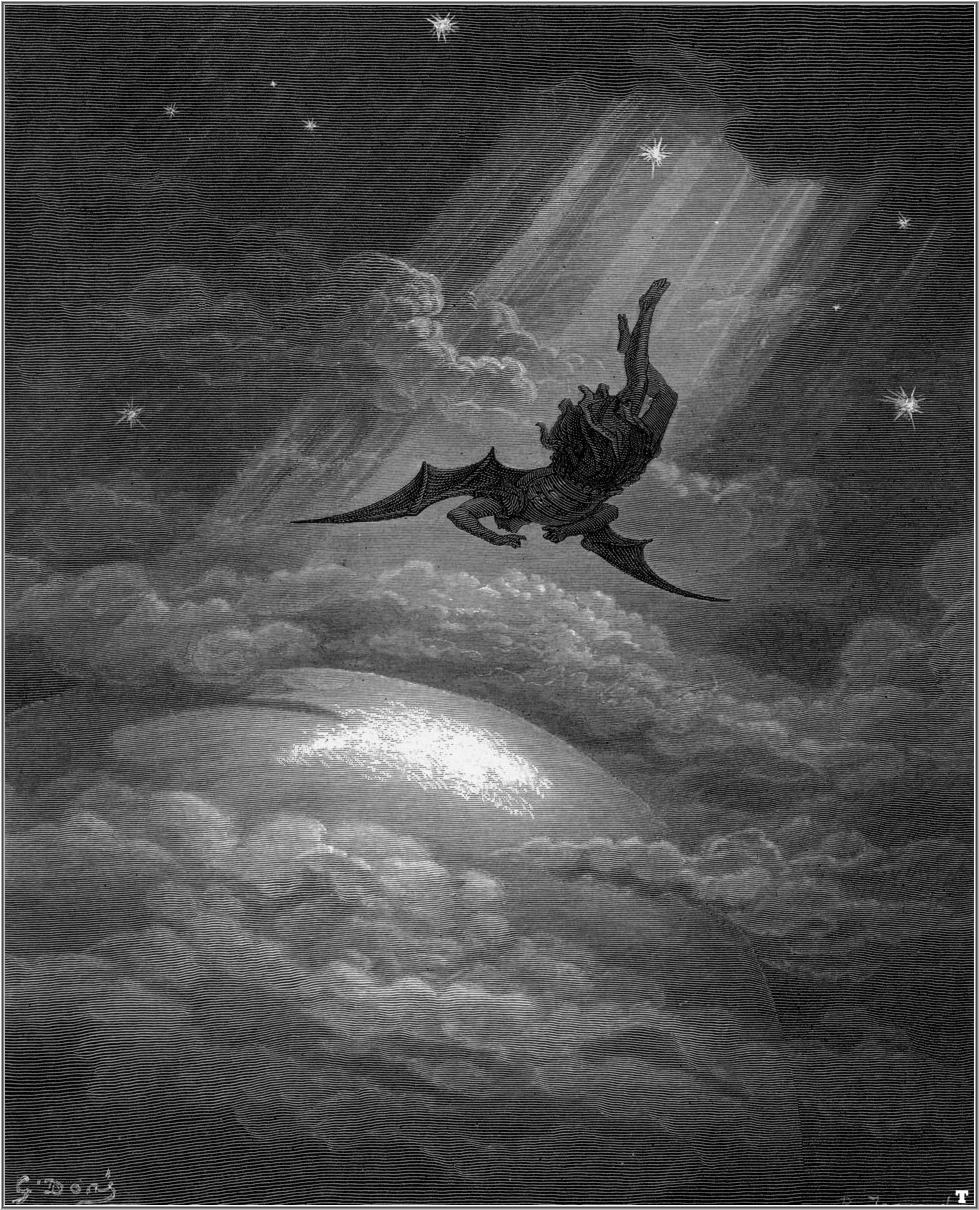
    Desire is certainly a human trait; but as we learned from Satan’s fall, also an angelic trait. 

    Sin! crouching at our door: its desire is for you and for me.

    But we must rule over it, says the Lord. We must defeat sin in the great and ongoing battle between good and evil.

    Cain failed and sinned. Yet do not condemn Cain like the son of another, but rather have pity for him like you would your own son. And have compassion on other sinners. With God’s help some who fall short will do good and gain the Lord’s acceptance. And in Christ even a sinner like you and me has hope.

    Now That We Have the Knowledge of Good and Evil

    Perhaps on occasion your face falls at the thought of our past and inevitable sin. For the task of our earthly knowledge of good and evil weighs heavily upon us. ‘There is no one righteous, not even one.’

    For all have sinned and fall short of the glory of God. – Romans 3:23


    Do you recall that Adam and Eve had more sons? For we are sons of Seth, Son of Adam. Therefore our instruction in good and evil must progress.

    The Lord will not only give us the Law through Moses, but also redeem us from our sin by the Son of Man.


    To be continued…