Tag: John

  • The Commitment of Christian Marriage

    The Commitment of Christian Marriage

    This is a great mystery: but I speak concerning Christ and the church.

    Did we miss this? I love a good mystery. Don’t you? Especially at the moment you finally get it – the moment you figure out where the story has been headed all along.

    Paul writes a letter to the church (at Ephesus). It is a letter to you and a letter to me, IF we claim Christ as our Lord… IF we are consumed with the promised return of our Lord. But there’s a mystery here you might overlook if you see Ephesians only as a letter with rules and regulations. It is the mystery of relationship.

    Ephesians 5

    English Standard Version (ESV)

    Walk in Love

    Therefore be imitators of God, as beloved children.  2 And walk in love, as Christ loved us and gave himself up for us, a fragrant offering and sacrifice to God.

    Walk in love. We get that, right?

    Walk. Make progress in our faith. Don’t just stay as we were, but become as Christ would want us.

    We are beloved children of the Living God. WOW! We love that. But now, as children we are expected to grow up as a member of the family of God our father. Yet as the rebellious child will often do, we get hung-up on Dad’s rules. (See vs. 5-21)

    Then, it seems (like in all good mysteries) that the author is headed down a different road with just the obvious connection to that ‘sexual immorality’ thing: porneia. We know that marriage should solve all of that. But why is Paul giving marriage so much ink?

    Wives and Husbands

    22 Wives, submit to your own husbands, as to the Lord. 23 For the husband is the head of the wife even as Christ is the head of the church, his body, and is himself its Savior. 24 Now as the church submits to Christ, so also wives should submit in everything to their husbands.

    25 Husbands, love your wives, as Christ loved the church and gave himself up for her, 26 that he might sanctify her, having cleansed her by the washing of water with the word,

    27 so that he might present the church to himself in splendor, without spot or wrinkle or any such thing, that she might be holy and without blemish.

    28 In the same way husbands should love their wives as their own bodies. He who loves his wife loves himself.

    29 For no one ever hated his own flesh, but nourishes and cherishes it, just as Christ does the church, 30 because we are members of his body.

    Lets pause for a moment and look at this from a different perspective. Many a sermon has been preached using Ephesians 5:22 as a reason for husbands to have their wives “submit” to their will. I will point out here that MANY a husband is NOT submitted to Jesus Christ as his Lord. For the text says, “as to the Lord.” Therefore, BOTH the husband and the wife who claim Jesus Christ as their Lord MUST be submitted to Christ as Lord.

    Is your Christian marriage submitted to Christ as your Lord?

    Husbands, love your wives. (Don’t get mixed up on this now.) Love here is not sexual love. (That’s OK and expected, but Paul refers to something bigger here.)

    Love, that is: agapaōis inclusive of the same love expected from all Christians for each other on a most intimate basis.

    Paul adds: as Christ loved the church. (Same word for loved: agapaō). This means that in a sense if you think of Jesus as the Husband and you as the Bride, it’s the love that Jesus has for you IF He were your Husband. It’s the same love that God has for all of us in the sense that ‘adam’ means not only man, but mankind.

    But Paul does not stop there with his example for husbands. He adds: and gave himself up for her.

    What does he mean by, gave himself up?

    Husbands, he means a sacrificial love for your wife. Do you do that? (For you were glad enough to have your wife sacrifice her humility to serve you. Do you sacrifice your being for her?)

    Paul emphasized the sacrifice of the husband even more (in a way that we cannot get around), for he adds to that a purpose: that he might sanctify her, having cleansed her by the washing of water with the word.

    Sanctify her: a husbands duty. A religious term meaning to to separate her from profane things and dedicate a wife to God. My responsibility as her husband. (And I pray in the Lord that she will submit to it.)

    The prodigal wife has returned from the pig sty. She is filthy. She has had an unloving master who has not cared that she has wasted all of her blessing and inheritance from her father on foolish things. She begs to return home, even as a servant with not even the rights of one of the family of the father.

    How will you welcome this filthy prodigal wife?

    (Need direction in this? Read Luke 15.)

    Sanctify her, having cleansed her by the washing of water with the word. 

    Picture the purification of the Bible, a waterfall showering the one sanctified to God until all the filth of the pig sty of the worldly places is gone.

    The water of purification is the word of the Lord.

    Will your wife listen? That is what the Lord wants to know. Will you and she both become sanctified in the Word?

    John 1 In the beginning was the Word, and the Word was with God, and the Word was God. 2 He was in the beginning with God. 3 All things were made through him, and without him was not any thing made that was made. 4 In him was life, and the life was the light of men.

    It all goes back to the beginning, to Eden, to God’s intention of the intimacy of the relationships involved of adam.

    31 “Therefore a man shall leave his father and mother and hold fast to his wife, and the two shall become one flesh.” 

    Paul now refers to the mystery of marriage. The climax, however, is more than you ever expected. (Paul adds that the mystery is profound.) 

    32 This mystery is profound, and I am saying that it refers to Christ and the church.

    JESUS + HIS CHURCH = a Marriage made in Heaven.

    As a member of Christ’s body, the church; Christians are Jesus’ Bride.

    Every prepared and purified soul of the church awaits the coming again of our Bridegroom: Christ Jesus, our Lord and Husband betrothed to each of us.

    It is a very great mystery, Jesus Christ + the Church; Husband + wife. We are by His sacrifice one with Him and will be with Him in His heavenly home for all time.

    Paul adds, as our example of that marriage:

    33 However, let each one of you love his wife as himself, and let the wife see that she respects her husband.

     Why is the witness of Christian marriage so important?

    We are the respect of Christ in this world, until He returns for His faithful Bride.

    Christians must live as Christ and be witness to His love and righteousness.

    Would you (IF you were Jesus) want an unfaithful wife?

    The hypocrisy of failed christian marriages is no mystery to the world.

    WE, by the witness of our divorces are prodigal wives gone off to the pig sty on our own.

    It is because of the hardness of our hearts and not love for Christ Jesus, our Betrothed Bridegroom.

    Will we return to the vows of our faithfulness?

    OR will the Lord return before we purify our church once more?

    They are no longer two, but one.

    Is your marriage one with Christ Jesus our returning Bridegroom?

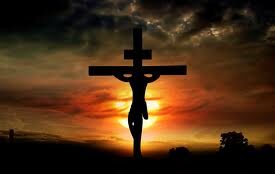
    For He poured out His sacrifice of love for His Bride on the Cross.

    May we in our Christian marriages once more take up our cross and follow the Bridegroom.


  • Covenant and Truth – 4

    Covenant and Truth – 4

    And many will follow their sensuality, and because of them the way of truth will be blasphemed. – 2 Peter 2:2

    1 John 1:6 If we say we have fellowship with him while we walk in darkness, we lie and do not practice the truth

    8 If we say we have no sin, we deceive ourselves, and the truth is not in us. 

    [Links open separate windows to different Hebrew & Greek roots or scripture.]

    Amos 5:8  They hate him who reproves in the gate,
    and they abhor him who speaks the truth.

    Malachi 2:6 True instruction was in his mouth, and no wrong was found on his lips. He walked with me in peace and uprightness, and he turned many from iniquity.

    The Prophets speak of truth, the Apostles speak of truth, God speaks of truth time and time again. Truth must be important.

    No Gospel mentions truth more than the Gospel of John. (You would do well to consider the Truth of every verse of this Good News.)

    John 1:14 And the Word became flesh and dwelt among us, and we have seen his glory, glory as of the only Son from the Father, full of grace and truth. 15 (John bore witness about him, and cried out, “This was he of whom I said, ‘He who comes after me ranks before me, because he was before me.’”)

    The Gospel is a testimony of Truth in the Court of God with witness before all mankind.

    17 For the law was given through Moses; grace and truth came through Jesus Christ.

    John 4:24 “God is spirit, and those who worship him must worship in spirit and truth.”

    John 14:6 Jesus said to him, “I am the way, and the truth, and the life. No one comes to the Father except through me.”

    God values Truth so much that He sent His only Son to the Cross as witness of His love for us.

    Ephesians 4:25 Therefore, having put away falsehood, let each one of you speak the truth with his neighbor, for we are members one of another.

    Let those of us with ears to hear, hear the words of Jesus about our spoken words and our promises (not even addressing the more serious violations of breaking the covenants of our written words).

    Matthew 5

    English Standard Version (ESV)

    Oaths

    33 “Again you have heard that it was said to those of old, ‘You shall not swear falsely, but shall perform to the Lord what you have sworn.’

    34 But I say to you, Do not take an oath at all, either by heaven, for it is the throne of God, 35 or by the earth, for it is his footstool, or by Jerusalem, for it is the city of the great King.

    36 And do not take an oath by your head, for you cannot make one hair white or black.

    37 Let what you say be simply ‘Yes’ or ‘No’; anything more than this comes from evil.

     Do we realize the context of this teaching from Jesus?

    It is from the Sermon on the Mount: after the Beatitudes (or blessings), after His call to us to become salt and light to the world, after His warning that He has not come to abolish the Law or the Prophets, after His warning against anger and call to reconciliation, after his warning again lust; and after His prohibition of divorce.

    bride signs certificate

    Christians and Christian marriages are being watched. We are witness to Christ Jesus and the permanence of His relationship with His faithful Bride the church – a topic which we will pursue after our next focus on hypocrisy.

    To be continued…

  • Lord of the Sabbath

    Lord of the Sabbath

    Dr. Luke retells two stories of witnesses about Jesus and the Sabbath. (We should consider that the Good News is witness of the message of salvation, though the story of Jesus is not always chronological.) The time of these witnessed stories is not so important as the point.

    Returning (for this) to Luke 6:

    Jesus Is Lord of the Sabbath

    6 On a Sabbath, while he was going through the grainfields, his disciples plucked and ate some heads of grain, rubbing them in their hands. 2 But some of the Pharisees said, “Why are you doing what is not lawful to do on the Sabbath?” 3 And Jesus answered them, “Have you not read what David did when he was hungry, he and those who were with him: 4 how he entered the house of God and took and ate the bread of the Presence, which is not lawful for any but the priests to eat, and also gave it to those with him?” 5 And he said to them, “The Son of Man is lord of the Sabbath.”

    (We will return to this example of Jesus and David in a moment.)

    A Man with a Withered Hand

    6 On another Sabbath, he entered the synagogue and was teaching, and a man was there whose right hand was withered.7 And the scribes and the Pharisees watched him, to see whether he would heal on the Sabbath, so that they might find a reason to accuse him. 8 But he knew their thoughts, and he said to the man with the withered hand, “Come and stand here.”And he rose and stood there. 9 And Jesus said to them, “I ask you, is it lawful on the Sabbath to do good or to do harm, to save life or to destroy it?” 10 And after looking around at them all he said to him, “Stretch out your hand.” And he did so, and his hand was restored. 11 But they were filled with fury and discussed with one another what they might do to Jesus.

    “They were filled with fury and ‘discussed…’”

    Nothing like the mixing of politics and religion, but that is the background and subject of these discussions; therefore let’s once again take on this controversy of Sundays, Sabbaths and the time and place of worship of God. [The ‘Sundays’ link points to my earlier post on Exodus: Remember the Sabbath to keep it holy.]


    Richard A Horsley, in ‘Scribe, Visionaries, and the Politics of Second Temple Judes,’ points out: The attention to conflict, whether with external imperial powers or internally between scribes and priest or between wealthy elites and others, results in a story of endless power struggles…

    Horsley continues: ‘a credible picture of the diversity of Judaism in Hellenistic Palestine emerges… ‘conflict: this time between the priestly aristocratic rulers of the Judean temple-state and their scribal retainers…

    Jesus lived under the watchful eyes of several opposing religious and political views, the two mentioned here: Scribes and Pharisees. Perhaps your church has a ‘scribe’ or ‘pharisee’ who would go on and on over endless controversies of how and when to worship God.

    It’s certainly not only the Saturday vs. Sunday controversy or what ‘Christians’ ought to do or ought not do on ‘the Lord’s Day.  As more recent controversies: “The State shouldn’t sell liquor on Sunday. The mall used to be closed on Sunday. God help us if we don’t have football and other sports to watch on Sunday!”

    No, the Sabbath controversy (artificial and particular as it can be) is not new and sometimes results in ‘christians’ being ‘filled with fury’ or resigned to unrighteousness. Jesus encountered such controversies every day. In fact, like conservatives and liberals, the religious and political types enjoyed such ‘discussions’ as a part of their ongoing emphasis of beliefs. (Nothing new under the sun.)

    When the Bible (Hebrew Bible, Orthodox Bible, Catholic Bible or Protestant Bible – {Get the idea?}) mentions Scribes, Pharisees, Priests or other religious officials; understand that these men had ongoing differences in their views of God and worship.

    The simplicity of Jesus approach to the Sabbath (or Sunday) is evident enough in Luke 6:9 KJV

    I will ask you one thing; Is it lawful on the sabbath days to do good, or to do evil?

    Jesus answer is so intuitive: It it lawful to do good seven days a week and 365 days every year; and unlawful to do evil on ANY day.

    Doing good is not work and failing to do good is evil.

    Jesus healed a man on the Sabbath and you would not expect your doctor to take Sunday off if you had a heart attack or were injured in an accident on the way home from church or the Sunday afternoon sporting event.

    In the earlier example, Jesus addresses the Sabbath ‘work’ controversy a little differently. (Imagine these men following you and your family to a restaurant after church.) Jesus and His Disciples were hungry and broke open some grain in a field as they walked through it (perfectly legal: Deuteronomy 24:19-22). The question of the Pharisees for these poor and hungry sojourners or travelers (Jesus and the Disciples) was ‘should you prepare and eat food on the Sabbath?’

    Jesus then uses the example of bread prepared for the Temple of God and an incident with King David.

    breadLuke 6:4 KJV How he went into the house of God, and did take and eat the shewbread, and gave also to them that were with him; which it is not lawful to eat but for the priests alone?

    Let’s examine this less-familiar reference a moment.

    Exodus 25:30  And you shall set the bread of the Presence on the table before me regularly.

    Leviticus 24: 5 “You shall take fine flour and bake twelve loaves from it… 6 And you shall set them in two piles, six in a pile, on the table of pure gold before the Lord… 7 …as a memorial portion as a food offering to the Lord. 8 Every Sabbath day Aaron shall arrange it before the Lord regularly… 9 And it shall be for Aaron and his sons, and they shall eat it in a holy place, since it is for him a most holy portion out of the Lord’s food offerings, a perpetual due.”

     David is not a Priest or a Levite of the line of Aaron.

    David and the Holy Bread

    21 Then David came to Nob to Ahimelech the priest. And Ahimelech came to meet David trembling and said to him, “Why are you alone, and no one with you?” 2 And David said to Ahimelech the priest, “The king has charged me with a matter and said to me, ‘Let no one know anything of the matter about which I send you, and with which I have charged you.’ I have made an appointment with the young men for such and such a place. 3 Now then, what do you have on hand? Give me five loaves of bread, or whatever is here.” 4 And the priest answered David, “I have no common bread on hand, but there is holy bread—if the young men have kept themselves from women.” 5 And David answered the priest, “Truly women have been kept from us as always when I go on an expedition. The vessels of the young men are holy even when it is an ordinary journey. How much more today will their vessels be holy?” 6 So the priest gave him the holy bread, for there was no bread there but the bread of the Presence, which is removed from before the Lord, to be replaced by hot bread on the day it is taken away.

    Or course, the Disciples are not Levite. Neither are Jesus and the Disciples in the holy place of the Temple. Yet the Pharisees did not recognize that they were in the Presence of Holiness.

    One earlier instance of the Hebrew use of this word for the Bread of the Presence.

    Genesis 14

    18 And Melchizedek king of Salem (where Jerusalem now stands) brought out bread and wine. (He was priest of God Most High.) 19 And he blessed him and said,

    “Blessed be Abram by God Most High,
    Possessor of heaven and earth;
    20 and blessed be God Most High,
    who has delivered your enemies into your hand!”

    And Abram gave him a tenth of everything.

    Jesus is our Redeemer and High Priest.

    Later, Jesus would say, “Before Abraham was, I AM.” (See John 8.)

    Here Jesus closes all discussion on the Sabbath controversies of the Scribes and Pharisees with a remarkable statement.

    Luke 6:5 KJV And he said unto them, That the Son of man is Lord also of the sabbath.

    Jesus’ most frequent reference of his person is “son of man,’ that is:  huios anthrōpos. How bold a statement for Jesus to say that He lord [kyrios] also of the sabbath.

    Jesus IS Lord.

    He IS either your Lord…

    the Son of Man, who is Lord even over the days of the week – yes, even our measured days

    OR He will be Lord at your Judgment.

    Will you acknowledge Christ Jesus as your Savior and Redeemer?

    Abraham and Lot worshiped the Lord after the destruction of Sodom. God judged the sinful men and sinful women of those cities, yet saved Lot and his children. He would save you, also… before the wrath of the Lord rains down on you and it is too late.

    Worship Him.

    The Son of Man is Lord also of the Sabbath. Is He also your Lord and Savior?