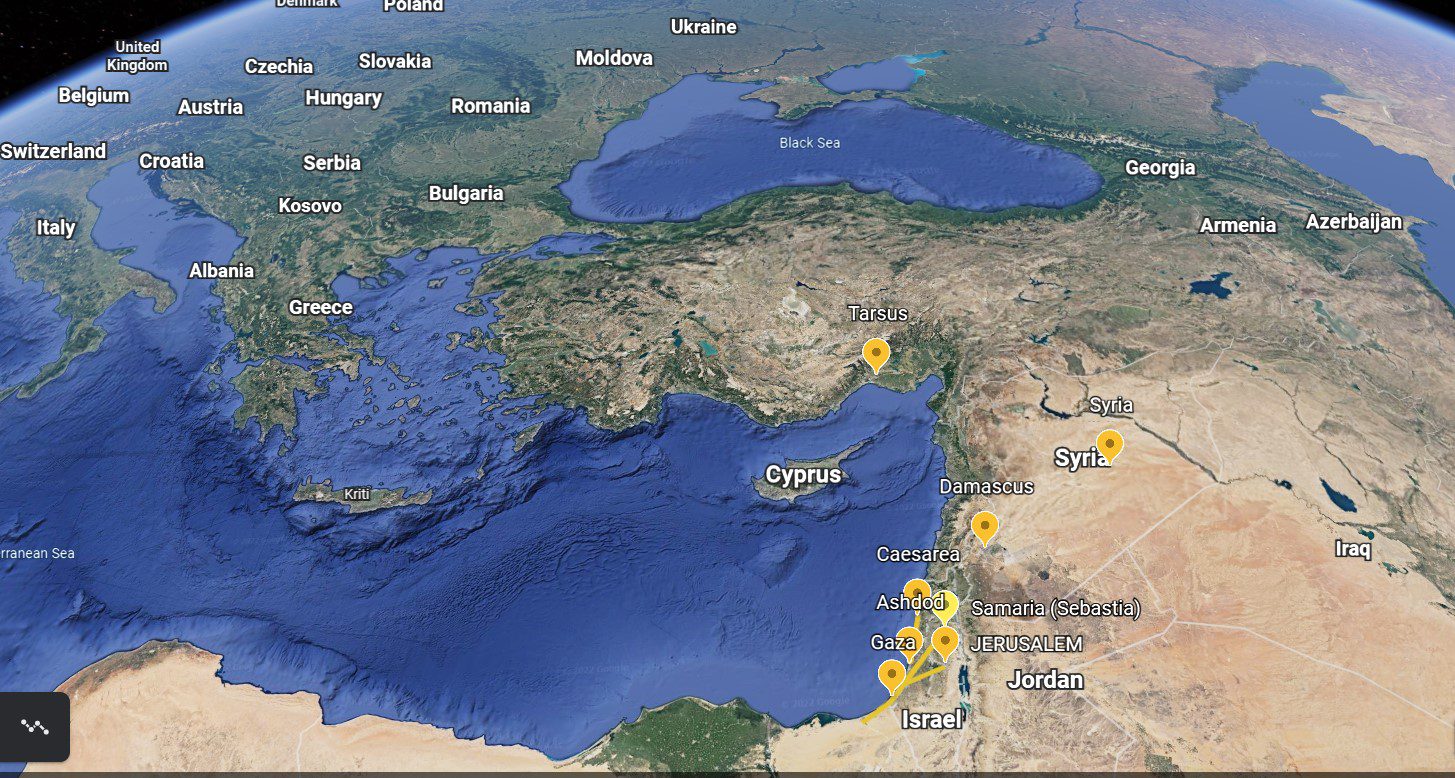
Now Joseph, a Levite of Cyprian birth, who was also called Barnabas by the apostles (which translated means Son of Encouragement) owned a tract of land. So he sold it, and brought the money and laid it at the apostles’ feet.
Encouragement of Christ’s Apostles by Joseph of Cypress
“Just a moment,” you are likely thinking. “I remember this from That’s Not Fair! Possessions and Community, but I thought that now Luke is talking about Saul of Tarsus in Acts 9?”
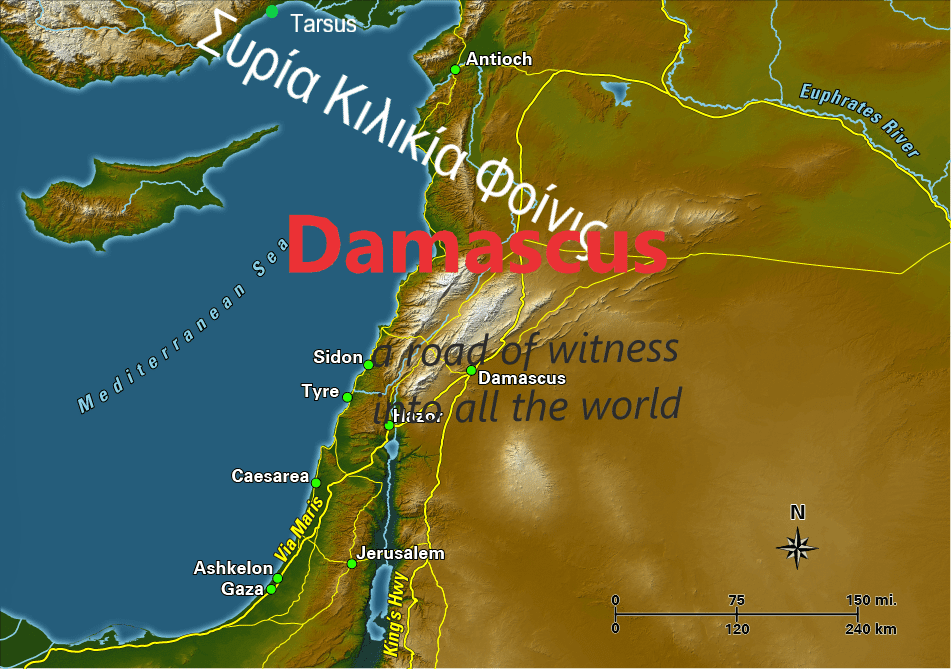
Last time, Luke’s account included not only Saul of Tarsus on the road to Damascus, CALLED BY THE RISEN CHRIST JESUS, but also a two disciples of The Way: Ananias, to whom the Lord spoke in a vision, and Judas of Damascus (in the house on Straight Street where BOTH encouraged the blinded and FEARED Saul of Tarsus.)
Of course if the Lord had appeared to you directly, as was the case with both Ananias and Saul, YOU too would obey. But just as Jesus had called James and John a descriptive nickname, “the Sons of Thunder,” and called “Simon son of John, Peter or ‘the Rock,’ so have Peter and the Apostles had named Joseph, Barnabas, or Son of Encouragement.
paraklēsis Outline of Biblical Usage
a calling near, summons, (esp. for help)
importation, supplication, entreaty
exhortation, admonition, encouragement
consolation (14x), comfort, solace; that which affords comfort or refreshment
thus of the Messianic salvation (so the Rabbis call the Messiah (or Christ, in Greek) the consoler, the comforter)
Isaiah 40:1-3 “Comfort, comfort my people,” says your God.
Encouragement & Comfort
Encouragement and comfort become the Gospel Good NEWS to a God-pursued people. And let’s not forget the context of persecution of both Jews and Christians not only in Acts of the Apostles, but throughout the history of the world.
Skipping ahead just a bit in Luke’s account before we proceed with Saul of Tarsus:
ACTS 9:31
So the church throughout Judea, Galilee, and Samaria enjoyed peace, as it was being built up; and as it continued in the fear of the Lord and in the comfort G3874 of the Holy Spirit, it kept increasing.
And later in ACTS 11:19 Luke gives us the present context of Saul in Jerusalem in Acts 9:
So then those who were scattered because of the persecution that occurred in connection with Stephen made their way to Phoenicia, Cyprus, and Antioch, speaking the word to no one except to Jews alone.
Saul was with the disciples in Damascus for some time.
20 Immediately he began proclaiming Jesus in the synagogues: “He is the Son of God.”
21 All who heard him were astounded and said, “Isn’t this the man in Jerusalem who was causing havoc for those who called on this name and came here for the purpose of taking them as prisoners to the chief priests?”
22 But Saul grew stronger and kept confounding the Jews who lived in Damascus by proving that Jesus is the Messiah.
Saul leaves Damascus, spends three years in the wilderness of Arabia, THEN returns.
23 After many days had passed, the Jews conspired to kill him, but Saul learned of their plot. So they were watching the gates day and night intending to kill him, but his disciples..
[NOTE Luke’s description, that these are now disciples of the Apostle Saul of Tarsus!]
..took him by night and lowered him in a large basket through an opening in the wall.
ACTS of SAUL OF TARSUS to be continued in Jerusalem...
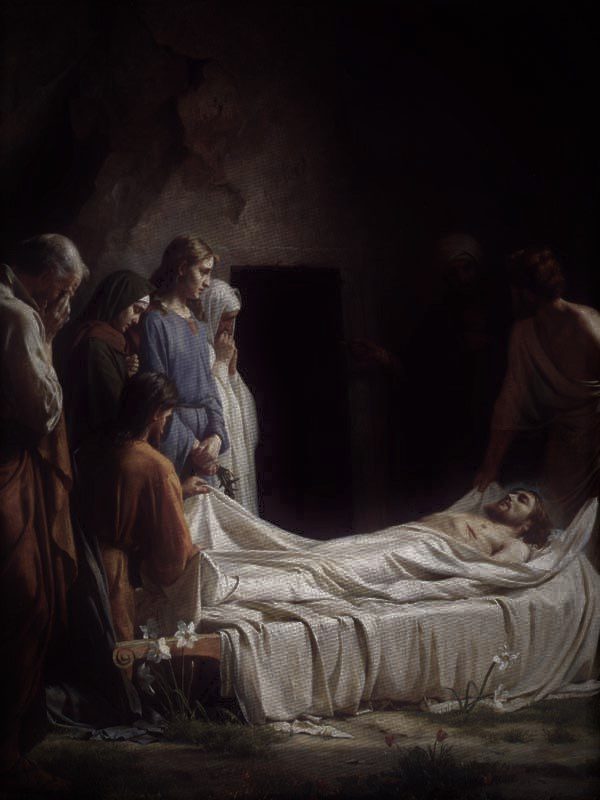
It’s a familiar scene — loved ones mourning their loss in silence once the dead body can no longer be embraced by eyes or arms.
All that remains are our fleeting memories of a life which has passed into lifeless dust. I have been there. Likely you have as well.
It happens that the Beloved Body laid to rest previously is Jesus Christ.
Perhaps you missed these mourners outside the tomb of Joseph of Arimathea where the remains of Jesus were sealed. In our own grief we lament how such a public spectacle of Jesus’ Crucifixion on a Roman Cross could have been inflicted on the Son of God.
After a brief time of carrying His pierced body from the Cross, Joseph and the others must wait until the completion of the Passover feast and until the day after the Sabbath to return and dutifully complete their burial task.
We noted several witnesses to Jesus’ crucifixion previously in It is finished.. + Death’s witnesses. John does not list everyone nor does the Apostle include some additional events.
John has not mentioned Judas Iscariot since his betrayal of the Lord in Gethsemane. Yet Matthew’s Gospel reveals the death of Jesus’ betrayer, the 30 pieces of silver purchasing the field of blood and how it fulfills prophesy.
3 When Y’hudah, who had betrayed him, saw that Yeshua had been condemned, he was seized with remorse and returned the thirty silver coins to the head cohanim and elders..
“I sinned in betraying an innocent man to death.”
the confession of Judas Iscariot – Matthew 27:4 HNV
5 Hurling the pieces of silver into the sanctuary, he left; then he went off and hanged himself.
From Crucifixion until Christ’s Resurrection
Before we proceed to John’s witness of Christ’s Resurrection, let’s linger just one more day to note events and witnesses beyond the tomb where Jesus’ body lay.
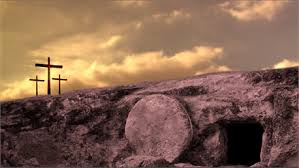
59 And when Joseph had taken the body, he wrapped it in a clean linen cloth, And laid it in his own new tomb, which he had hewn out in the rock: and he rolled a great stone to the door of the sepulchre, and departed.
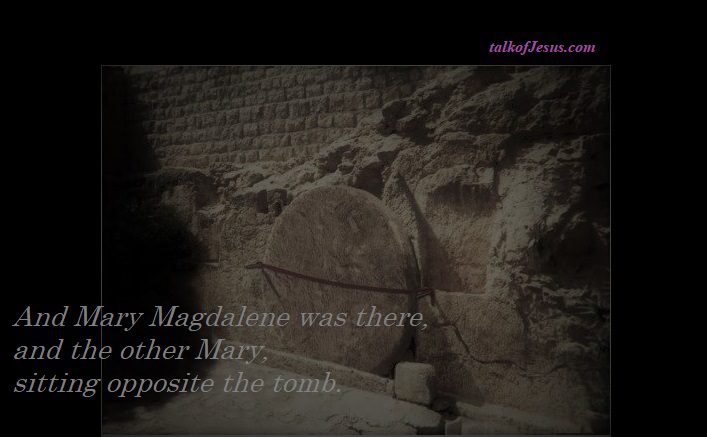
61 And there was Mary Magdalene, and the other Mary, sitting over against the sepulchre.
What a sorrowful scene…
And Matthew records:
62 Now the next day, that followed the day of the preparation, the chief priests and Pharisees came together unto Pilate..
64 Command therefore that the sepulchre be made sure until the third day..
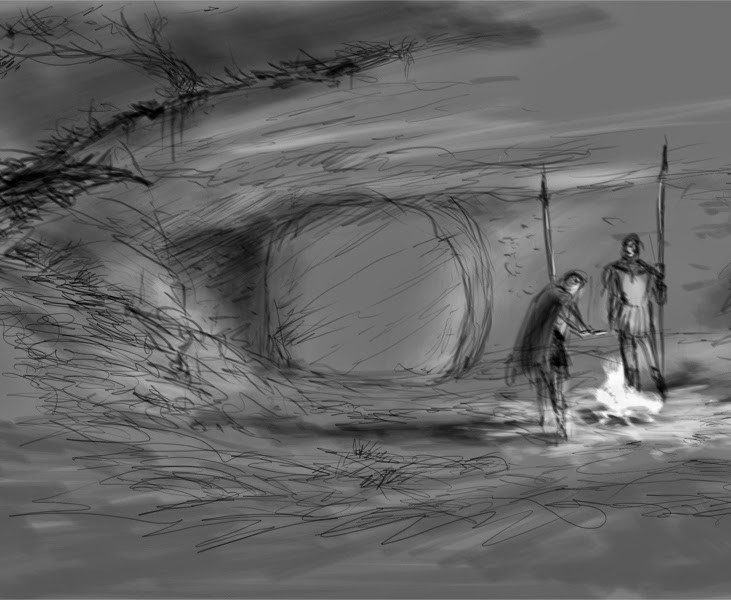
65 Pilate said to them, “You have a guard; go, make it as secure as you know how.” And they went and made the tomb secure with the guard, sealing the stone.
And a man named Joseph, who was a member of the Council, a good and righteous man (he had not consented to their plan and action), a man from Arimathea, a city of the Jews, who was waiting for the kingdom of God; this man went to Pilate and asked for the body of Jesus.
And he took it down and wrapped it in a linen cloth, and laid Him in a tomb cut into the rock, where no one had ever lain. It was the preparation day, and the Sabbath was about to begin.
Now the women who had come with Him out of Galilee followed, and saw the tomb and how His body was laid. Then they returned and prepared spices and perfumes.
(Note the brief amount of time these women John names had to see the tomb, return with spices and just begin the wrapping of Jesus’ slain body.)
Luke tells us (Luke 23:56b) why they had to leave Jesus’ body until later.
And on the Sabbath they rested according to the commandment.
But on the first day of the week, at early dawn, they came to the tomb bringing the spices which they had prepared.
Luke 24:1 NASB
The Apostle Matthew tells how Joseph wrapped Jesus’ crucified body in a clean line cloth and laid the Lord in a place he had prepared for his own death.
Then Matthew tells us (27:60b NASB):
and he rolled a large stone against the entrance of the tomb and went away.
Matthew, the Disciple of Jesus also records the sad scene of silent mourning, where Joseph must have recalled these two women who lingered there.
61 And there was Mary Magdalene, and the other Mary, sitting over against the sepulchre.
Joseph rolled a great stone to the door of the sepulcher, and departed.
To be continued..
.. at dawn the first day of the week ...
Ephraim was the second child of Zaphnath-Paaneah and Asenath. His father’s high position second only to Pharaoh gave Ephraim every advantage as he was brought up with all the riches of the palace.
You may recognize him as brother of Manasseh and both brothers known as sons of Joseph, son of Israel (Jacob).
He was much like the church we know in the US now. These sons and their families grew up with practically everything a man could desire. But one change in leadership would relegate them to lesser roles before they lost faith in the wilderness.
Even though they had followed the Lord when Moses returned to save Israel from slavery, during forty years in the wilderness each year of yearning for former days turned their hearts from the Lord.
Think about their roles as followers of God in the way Asaph contemplates years later. Think also closer to home, considering your own push-back from faithfulness from the Lord who would save you.
 God’s Kindness to Rebellious Israel
 A Contemplation of Asaph.
9 The children of Ephraim, being armed and carrying bows, Turned back in the day of battle. 10 They did not keep the covenant of God; They refused to walk in His law, 11 And forgot His works And His wonders that He had shown them.
How like US
Forget for a moment your own heritage.
Perhaps your forefathers came to a land of promise or a home of the free. They may have bought passage to new hope in a land of milk and honey, a hopeful homeland of riches.
Or perhaps they fled in huddled masses from persecution, slavery and imminent death. Oh, the hope of our poor and tired aliens embarking on a pilgrimage of promise.
Who will you trust if not the Lord?
Of Ephraim’s blessing
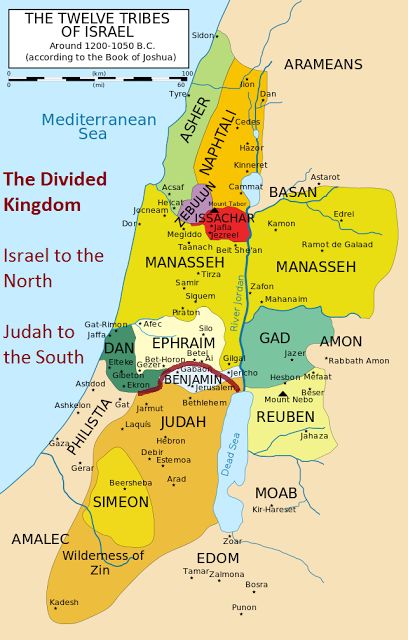
Note centrality of Ephraim & Manasseh, Joseph’s sons to the promised land and a divided people of the LORD
12 Marvelous things He did in the sight of their fathers, In the land of Egypt, in the field of Zoan.
Do you, even in your days of difficulty, remember what the Lord has done for you and your fathers in days past, how the Lord has saved you?
13 He divided the sea and caused them to pass through; And He made the waters stand up like a heap. 14 In the daytime also He led them with the cloud, And all the night with a light of fire. 15 He split the rocks in the wilderness, And gave them drink in abundance like the depths. 16 He also brought streams out of the rock, And caused waters to run down like rivers.
Here is Asaph’s embrace of the Lord’s blessing many years prior to his own life in the Kingdom of David.
How like the blessings thousands of years later of the ‘new world,’ a new land to conquer and colonize. Ephraim was one blessed by the Lord, but the promise of the Lord was long forgotten.
Sin and Rebellion
Egypt or England will call it rebellion, or course. But your journey of hope from oppression must remain in the hand of the Lord.
We know in your heart that our forefathers were not without sin. The cause of our exodus from a former existence was not so righteous as our national celebrations would have us believe.
Though Asaph laments of his founding fathers, we could well apply their rebellion to our own hearts.
But they sinned even more against Him By rebelling against the Most High in the wilderness.
Psalm 78:17 NKJV
18 And they tested God in their heart By asking for the food of their fancy. 19 Yes, they spoke against God: They said, “Can God prepare a table in the wilderness? 20 Behold, He struck the rock, So that the waters gushed out, And the streams overflowed. Can He give bread also? Can He provide meat for His people?”
The PERSON of GOD
If God IS a Person, then how does He feel about your sin?
How does God the Father react to the sin of His child?
Roger Harned – talkofJesus.com on Psalm 78
21 Therefore the Lord heard this and was furious;
So a fire was kindled against Jacob, And anger also came up against Israel, 22 Because they did not believe in God, And did not trust in His salvation.
I’ll own it – I’m a rebel like Ephraim. Lord forgive me.
And remember this, along with His many blessings to our forefathers, your own faithful or rebellious children, and what the Lord does for you.
23 Yet He had commanded the clouds above, And opened the doors of heaven, 24 Had rained down manna on them to eat, And given them of the bread of heaven. 25 Men ate angels’ food; He sent them food to the full.
Do you remember the miracles of the Lord’s blessings?
Here we are so blessed more than most, yet craving the past and coveting the riches of others. Are we not like Joseph’s sons – Ephraim, the most blessed, whose rebellion failed to trust in the Lord?
The Father’s wrath
29 So they ate and were well filled, For He gave them their own desire. 30 They were not deprived of their craving;
But while their food was still in their mouths, 31 The wrath of God came against them, And slew the stoutest of them, And struck down the choice men of Israel.
How like the children of Ephraim we are!
We plea to the Lord our God, ‘Father, give us this one thing we must have.’ Then, we think, because our Father has blessed us we will tell him of our next desire for blessing.
32 In spite of this they still sinned, And did not believe in His wondrous works.
33 Therefore their days He consumed in futility, And their years in fear.
34 When He slew them, then they sought Him; And they returned and sought earnestly for God.
Have you taught your children?
SPOILED CHILDREN
A meditation of J.C. Ryle 4 min. 23 sec.
John Charles Ryle was born of well-to-do parents at Macclesfield England, 10 May 1816, appointed first Bishop of Liverpool. "His successor in Liverpool described him as ‘the man of granite with the heart of a child.’ - source
Have you told your children of blessing that God our Father, the Lord, must be their Lord or they will suffer His wrath?
Do you fear death and judgment (or even judgment, then death)?
In fear have you promised God one thing, then in your comfort forgotten your Father?
Psalm 78: (cont.)
35 Then they remembered that God was their rock, And the Most High God their Redeemer.
36 Nevertheless they flattered Him with their mouth, And they lied to Him with their tongue; 37 For their heart was not steadfast with Him, Nor were they faithful in His covenant.
A Father’s love
Exodus 34:6 Then the LORD passed in front of Moses and called out:
 “The LORD, the LORD God,
 is compassionate and gracious,
 slow to anger,
 abounding in loving devotion and faithfulness,
 7 maintaining loving devotion to a thousand generations,
 forgiving iniquity, transgression, and sin.

 Yet He will by no means excuse the guilty;
 He will visit the iniquity of the fathers
 on their children and grandchildren
 to the third and fourth generations.”
Do you, forgetful unfaithful claimant of the Lord, remember your repentance?
Have you returned to the way of your sin, though your fathers repented and told you the faithfulness of the Lord?
But he, being full of compassion, forgave their iniquity, and destroyed them not: yea, many a time turned he his anger away, and did not stir up all his wrath.
For he remembered that they were but flesh; a wind that passeth away, and cometh not again.
52 But he brought his people out like a flock; he led them like sheep through the wilderness. 53 He guided them safely, so they were unafraid; but the sea engulfed their enemies. 54 And so he brought them to the border of his holy land, to the hill country his right hand had taken. 55 He drove out nations before them and allotted their lands to them as an inheritance; he settled the tribes of Israel in their homes.
Testing the Lord
56 But they put God to the test and rebelled against the Most High; they did not keep his statutes. 57 Like their ancestors they were disloyal and faithless, as unreliable as a faulty bow. 58 They angered him with their high places; they aroused his jealousy with their idols.
Does any sin of ours deserve the wrath of God our Father more than our worship of idol after lifeless idol, while we fail to remember our Father and Shepherd?
Consequence of the Sin of Ephraim
When God heard this, he was wroth, and greatly abhorred Israel:
So that he forsook the tabernacle of Shiloh, the tent which he placed among men..
Psalm 78:59-60 KJV
The Very Presence of God left the Tabernacle of worship for Israel, because of their rebellion.
Psalm 78: (CSB)
67 He also rejected the tent of Joseph, And did not choose the tribe of Ephraim, 68 But chose the tribe of Judah, Mount Zion which He loved. 69 And He built His sanctuary like the heights, Like the earth which He has founded forever.
God then chose Judah
70 He also chose David His servant And took him from the sheepfolds…
… He brought him To shepherd Jacob His people, And Israel His inheritance. 72 So he shepherded them according to the integrity of his heart, And guided them with his skillful hands.
Are we children of Ephraim?
Children of Moses or of David?
WHO HAS THE LORD CHOSEN?
Abraham, Isaac and Jacob: yes Israel was chosen and blessed.
Joseph, who came to be known in Egypt as Zaphnath-Paaneah, was blessed over his eleven brothers who finally bowed down to him.
Then the LORD through a final blessing by Joseph’s father Israel blessed his sons, Manasseh the eldest, but giving the greater blessing to Ephraim.
Yet through disobedience of the sons of Ephraim Israel’s blessing fell upon Judah.
God’s Guidance of His People in Spite of Their Unfaithfulness – Psalm 78
And after this all of Israel and its ten tribes were given over to their enemies Judah remained.
But in time by their own wickedness, refusal to hear the Lord’s Prophets and turning against the Lord their God, the LORD also gave Judah over to its enemies.
A Lament over the Destruction of Jerusalem, and Prayer for Help – Psalm 79
Another Psalm of Asaph – a short reading of 13 verses
Then the Lord brought back a remnant to Judah. They again discovered the Law of Moses in the Temple the Lord had abandoned.
Yet again after a short time they again turned against the Lord their God. And for a time no word of the Lord was heard in all Israel. Again as Israel, Judah failed to listen to the Lord’s Prophets.
“Your own eyes will see this, and you yourselves will say, ‘The LORD is great, even beyond the borders of Israel.’
“A son honors his father, and a servant his master. But if I am a father, where is my honor? And if I am a master, where is your fear of me? says the LORD of Armies to you priests, who despise my name.”
He gave his one and only Son, so that everyone who believes in him will not perish but have eternal life. For God did not send his Son into the world to condemn the world, but to save the world through him.
The one who believes in the Son has eternal life, but the one who rejects the Son will not see life; instead, the wrath of God remains on him.
Do you, sons and daughters of blessing, sons and daughters of great blessings through the Lord our God, believe in the Son of the Father, the Messiah Jesus, the Son of Man and only Son of God in whom you have eternal life rather than God’s wrath, as we well deserve?
What must you do?
Cookie Consent
We use cookies to improve your experience on our site. By using our site, you consent to cookies.
Used to monitor number of Google Analytics server requests
10 minutes
__utmb
Used to distinguish new sessions and visits. This cookie is set when the GA.js javascript library is loaded and there is no existing __utmb cookie. The cookie is updated every time data is sent to the Google Analytics server.
30 minutes after last activity
__utmc
Used only with old Urchin versions of Google Analytics and not with GA.js. Was used to distinguish between new sessions and visits at the end of a session.
End of session (browser)
__utmz
Contains information about the traffic source or campaign that directed user to the website. The cookie is set when the GA.js javascript is loaded and updated when data is sent to the Google Anaytics server
6 months after last activity
__utmv
Contains custom information set by the web developer via the _setCustomVar method in Google Analytics. This cookie is updated every time new data is sent to the Google Analytics server.
2 years after last activity
__utmx
Used to determine whether a user is included in an A / B or Multivariate test.
18 months
_ga
ID used to identify users
2 years
_gali
Used by Google Analytics to determine which links on a page are being clicked
30 seconds
_ga_
ID used to identify users
2 years
_gid
ID used to identify users for 24 hours after last activity
24 hours
_gat
Used to monitor number of Google Analytics server requests when using Google Tag Manager
1 minute
_gac_
Contains information related to marketing campaigns of the user. These are shared with Google AdWords / Google Ads when the Google Ads and Google Analytics accounts are linked together.