
Tag: judas

  • Jude – Now I will praise the Lord

    Jude – Now I will praise the Lord

    Who is Jude?

    The first thing I want to know about any letter I receive is who sent it to me. So as a leader or member of one of several churches we would want to be certain of the identity of the author of Jude and the authenticity of Jude’s message.

    Jude, a bondservant of Jesus Christ, and brother of James

    Letter of Jude 1:1a NKJV

    To fully understand the identity of the man who’s name is translated in English as ‘Jude” we must look to both the original Greek text and the common name of its Hebrew origin in first century Judea and Galilee.

    Ἰούδας

    Pronounced: ē-ü’-däs — Most translations of the Greek use Jude, the Latin Iudas and Yehudah in the Hebrew Names Version. The root word of the Greek name is Yĕhuwdah from the Hebrew יְהוּדָה meaning “praised” and translated at Judas. (We understand why after Jesus’ betrayal no man wanted to be known by this name now synonymous with ‘betrayer.’)

    In James – Witness of a Converted Brother we learned that Roman names derived from local languages had become Hellenized. James could be Jim, but Judas and Judah easily become, Jude.

    Some fathers named their sons after a forefather of their tribe like Judah or Israel. Judah יָדָה is the familiar Hebrew root of both the Greek and English.

    Brother of James

    Jude means: he shall be praised.

    The author of our letter identifies himself as the brother of James.

    Jude refers to James, head of the church of Jerusalem, leader of the first century churches who exchanged letters throughout Asia minor, Greece, Palestine and other areas receiving the Good News of Christ. Most Biblical commentators agree that like James, Jude is is also a half-brother of Jesus.

    Both James and Jude identify themselves as servants of Jesus, rather than claiming their biological relationship to the Lord. Most kings come to power via their family connection and install relatives in high positions.

    One of the great Jewish controversies Jesus would take no part in was that of the legitimacies of kings and followers of certain political traditions. These political/family controversies had progressed and preceded Jude, James and Jesus by several generations back to the second century B.C.

    Maccabees

    Source: BibleHub.org (a hammer), This title, which was originally the surname of Judas, one of the sons of Mattathias, was afterward extended to the heroic family of which he was one of the noblest representatives. Asmonaeans or Hasmonaeans is the Proper name of the family, which is derived from Cashmon, great grandfather of Mattathias. The Maccabees were a family of Jews who resisted the authority of Antiochus Epiphanes king of Syria and his successors who had usurped authority over the Jews, conquered Jerusalem, and strove to introduce idolatrous worship.

    Judas, one of the sons of Mattathias generally called in English the Maccabees, a celebrated family who defended Jewish rights and customs in the 2nd century B.C. (1 Maccabees 2:1-3 {from the Apocrypha, for those unfamiliar with extra-Biblical texts.}

    Herodians

    The end of the era of the Hasmoneans is probably the most turbulent time in Jewish history. It is hard to imagine a “Jewish” government more antithetical to Jewish principles and ideals than that of Herod and his successors, whose murderous, tyrannical ways would eventually lead to the destruction of the Temple and the beginning of the long exile that Jews find themselves in.Source: JewishHistory.org

    Herod the Great, born in Rome around 70 B.C and known as Herodes Magnus, was appointed a governor at around age 20 (along with his brother) and appointed King by the Roman senate in 37 B.C. He became known as Judah’s great builder and built the Temple in Jerusalem.

    During the time of Jesus, James and Jude and continuing into the years of the early church, the Herods wielded much power. Rome finally turned on Jerusalem and their client king appointed to help Rome defend the Empire against enemies east of Palestine. The Herodians failed to control the “Jewish problem,” which caused trouble throughout the Empire.

    Bondservant of Jesus Christ

    The brother of James could have begun his letter to the church as a ‘brother of the King and Messiah,’ implying his authority of position via his family. The Herodians or Maccabees made familial claims to kingdom leadership, but not these half-brothers of Jesus who had not even followed the Lord prior to His resurrection.

    James begins his letter (ἐπιστολή epistle, in greek): James, a bond-servant of God and of the Lord Jesus Christ.’ Jude chooses to identify in the same way as a bondservant of Christ.

    Jude would have been known to his readers as the brother of James, leader of the church in Jerusalem, both related to Jesus the Messiah.

    Understanding the Servant of Christ

    The Bible uses the word ‘servant‘ almost 500 times. A few English translations use the word ‘bondservant,’ a concept we no longer use or understand. Furthermore, many contemporary christians resist this concept of sometime voluntary compliance.

    I am the LORD your God, which brought you forth out of the land of Egypt, that ye should not be their bondmen; and I have broken the bands of your yoke, and made you go upright.

    Leviticus 26:13 KJV

    עָבַד עֶבֶד – A slave or servant; to work, serve. Also used as form of address between equals.

    Genesis 18: KJV

    And the LORD appeared unto him [Jacob] in the plains of Mamre: … three men stood by him: and when he saw them, he ran to meet them from the tent door, and bowed himself toward the ground, And said, My Lord, if now I have found favour in thy sight, pass not away, I pray thee, from thy servant:

    Jacob served the LORD. We serve the LORD. Jude served Christ, the Lord.

    Malachi 4:

    About four centuries before Christ (and Jesus’ half-brothers) the prophet Malachi writes:

    “Remember the instruction of Moses my servant, the statutes and ordinances I commanded him at Horeb for all Israel.

    Malachi 4:4

    The closing verses of Malachi clearly point back to Moses and the Law with the Lord calling Moses, “my servant.” James and Jude are servants of Jesus just as Moses was servant to the Lord at Horeb.

    עֶבֶד – `ebed

    Are you, beloved follower of Christ, first a servant of the Lord?

    διάκονος – diakonos

    “If anyone serves me, he must follow me. Where I am, there my servant also will be. If anyone serves me, the Father will honor him.

    Command of the Lord Jesus – Gospel of John 12:26 CSB

    The servant (from the Greek context) is ‘one who executes the commands of another, esp. of a master.

    1. the servant of a king
    2. a deacon [diakonos], one who, by virtue of the office assigned to him by the church, cares for the poor and has charge of and distributes the money collected for their use.
    3. a waiter, one who serves food and drink

    “The greatest among you will be your servant.

    The word of the Lord – Matthew 23:11

    Abraham was a servant of the Lord. Moses was a servant of the Lord. And like their forefathers in the faith, Jude and James became servants of the Lord first and servants of the Lord’s followers second.

    Paul, referring to the church writes to the church at Colossae:

    I have become its servant, according to God’s commission that was given to me for you, to make the word of God fully known …

    Jude writes to the church

    Jude, a servant of Jesus Christ and a brother of James:

    To those who are the called, loved by God the Father and kept for Jesus Christ.

    Jude 1:1b CSB

    Are you a fellow servant of Christ Jesus? If so, know that you are loved by God the Father. Know that by His grace you are kept for Jesus Christ at the day of His victorious return.

    2 May mercy, peace, and love be multiplied to you.

    To be continued

  • For you will always have the poor – 5

    For you will always have the poor – 5

    Help the poor later or honor Jesus now?

    Sell everything you have and follow me. Leave your hometown and follow me. Give up you job and follow me. These things Jesus had asked of his followers and for three years they all followed on foot.

    The culmination of events, so it seemed, came two days before when Jesus entered Jerusalem like an anointed King. Then nothing.

    Today is Tuesday and the Lord foretells his death to the Apostles, that which they have feared. Another choice.

    MATTHEW 26

    2 “You know that after two days the Passover is coming, and the Son of Man will be delivered up to be crucified.”

    3 Then the chief priests and the elders of the people gathered in the palace of the high priest, whose name was Caiaphas, 4 and plotted together in order to arrest Jesus by stealth and kill him. 5 But they said, “Not during the feast, lest there be an uproar among the people.”

    Bethany and Jerusalem

    In two scenes related by Matthew we see Jesus and the Apostles and learn of what Matthew would know later about the leaders of the Temple.
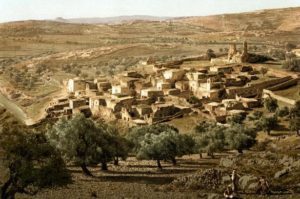

    6 Now when Jesus was at Bethany in the house of Simon the leper, 7 a woman came up to him with an alabaster flask of very expensive ointment, and she poured it on his head as he reclined at table. 8 And when the disciples saw it, they were indignant, saying, “Why this waste? 9 For this could have been sold for a large sum and given to the poor.”


    Recall that the Apostle John has told us that the ‘why this waste?’ question came from Judas Iscariot, though it seems others joined in.

    In Bethany, near Jerusalem, notice first the anointing honoring Jesus takes place. Then discontent and criticism from those present, opposition no different than in Jerusalem from those who seek to crucify the Lord. As always, Jesus cuts to the quick with the truth.

    The poor are with you always.

    10 But Jesus, aware of this, said to them, “Why do you trouble the woman? For she has done a beautiful thing to me. 11 For you always have the poor with you, but you will not always have me.

    12 In pouring this ointment on my body, she has done it to prepare me for burial. 13 Truly, I say to you, wherever this gospel is proclaimed in the whole world, what she has done will also be told in memory of her.”

    How would you have responded to Judas?

    Would I have said something like,

    ‘Come on, Judas, focus on the significance of the worship of Jesus, the Lord your God, here; will you?’

    Probably not! And we dare not accuse the other Apostles for joining in on ‘save it for the poor.’ Jesus was not so abrupt here as you or I might have been, but you get the point.

    We examined one incident prior to Palm Sunday where John dissects the motives of Judas. We began with the gospel of Mark reporting a second incident just prior to the trial of Jesus. Matthew adds some additional detail to this report. We judge these scenes of unfamiliar experience based on our distant understanding of practically nothing about these oppressed men and women of a conquered Israel of the first century.

    After-dinner betrayal

    14 Then one of the twelve, whose name was Judas Iscariot, went to the chief priests 15 and said, “What will you give me if I deliver him over to you?”

    And they paid him thirty pieces of silver. 16 And from that moment he sought an opportunity to betray him.


    The greatest story ever told does not end there. We know that.

    The Gospel is Good News to us! Yet do we proclaim Jesus? Does our faith fade into our own hopes and not the calling of Christ?

    [ctt title=”Casual \’christians\’ are no less vulnerable to Satan than Judas.” tweet=”Do you believe that? Is your witness of Jesus vulnerable? https://ctt.ec/tea44+” coverup=”tea44″] 

    Even knowing the ending, a glorious resurrection of Christ Jesus in the flesh, we offer similar excuse, don’t we?

    ‘I am saving up to help the poor.’

    ‘Someone else will have to help this mission.’

    ‘I may be the poor in my retirement.’

    Worship or excuse?

    How do I compare to when called on to witness Jesus?

    A humble woman, lowly in station of life and offering a worship of her highest value, anoints the Lord Jesus. Are we too involved in something else to do the same? For you will always have the poor.


  • For you will always have the poor – 2

    For you will always have the poor – 2

    “For the poor you have with you always, but Me you do not have always.” – John 12:1 NKJV

    This remark of Jesus cuts right to the quick, does it not? A sense of urgency here: the Son of Man is about to depart from the company of those the Lord came to save.

    An earlier story (in the home of Lazarus)

    Once again, I ask us to examine the 5 W’s of the gospel accounts.

    In the first part of this series we examined the gospel of Mark.

    We established some facts:

    1. It took place on Tuesday, two days prior to the Passover.
    2. It took place in Bethany, in the home of Simon the Leper.
    3. An unnamed woman came in and broke an alabaster flask, anointing Jesus’ head.
    4. There were some who said to themselves indignantly, “Why was the ointment wasted like that?” [Once more, ‘to themselves.’]
    5. Jesus praises the unnamed woman.

    Read carefully a similar, earlier incident from the gospel of John:

    John 12:

    Six days before the Passover, Jesus therefore came to Bethany, where Lazarus was, whom Jesus had raised from the dead.


    Again, earlier – six days before the Passover, not two. And as we mentioned the Passover that year was a Thursday; therefore, most likely on the evening of the Sabbath, Friday, not the following Tuesday after Jesus’ triumphal entry into Jerusalem.


    Jesus therefore came to Bethany, where Lazarus was, for a final Sabbath meal with his dear friends.

    2 So they gave a dinner for him there. Martha served, and Lazarus was one of those reclining with him at table.


    Once again, we are in Bethany, but with all certainty Lazarus is hosting the meal with Jesus as honored guest in his own home (not one of another resident of Bethany who will host them all just four days later). Martha, Mary, Lazarus and Judas Iscariot are all named in addition to Jesus.


    3 Mary therefore took a pound of expensive ointment made from pure nard, and anointed the feet of Jesus and wiped his feet with her hair. The house was filled with the fragrance of the perfume.


    Some new detail

    In addition to naming Lazarus, Mary and Martha, we now learn that Mary anointed the feet of Jesus and wiped his feet with her hair. It is the act of a servant, an act of humility. Furthermore, we learn from the Apostle John, who wrote this account and knew the disciples well, that Judas complains about the value of the pure nard. It is Judas who suggests to all the value that could be uses for the poor; yet John reveals Judas’ motive in mentioning the poor, that Judas steals cash from this treasury of the disciples.


    4 But Judas Iscariot, one of his disciples (he who was about to betray him), said, 5 “Why was this ointment not sold for three hundred denarii and given to the poor?” 6 He said this, not because he cared about the poor, but because he was a thief, and having charge of the moneybag he used to help himself to what was put into it.

    7 Jesus said, “Leave her alone, so that she may keep it for the day of my burial. 8 For the poor you always have with you, but you do not always have me.”


    Jesus, of course, ignores the false suggestion that Judas and the disciples can sell Mary’s expensive ointment for a profit to ‘help the poor.’ Jesus defends Mary’s generous and kind act of worship.

    I ask us, though: aren’t you and I just like Judas in that way?

    Don’t we so often accuse the generous act of another in a way to imply that we could be better stewards of their gift to the Lord?


    Jesus’ last Sabbath before the Sacrifice

    Exodus 16:26  שֵׁשֶׁת יָמִים תִּלְקְטֻהוּ וּבַיֹּום הַשְּׁבִיעִי שַׁבָּת לֹא יִֽהְיֶה־בֹּֽו׃

    It is now Saturday, the Sabbath.


    9 When the large crowd of the Jews learned that Jesus was there, they came, not only on account of him but also to see Lazarus, whom he had raised from the dead.

    10 So the chief priests made plans to put Lazarus to death as well, 11 because on account of him many of the Jews were going away and believing in Jesus.

    The Triumphal Entry

    12 The next day the large crowd that had come to the feast heard that Jesus was coming to Jerusalem. 13 So they took branches of palm trees and went out to meet him, crying out, “Hosanna! Blessed is he who comes in the name of the Lord, even the King of Israel!”


    Jesus, the Twelve and some followers had traveled one final journey from Galilee to Jerusalem, via Bethany. In preparation for the time at hand, they rest in the home of their risen friend, Lazarus.

    Do you remember what Jesus had assured Mary after Lazarus had been in the grave four days?

    (This was not the first resurrection Jesus caused, but it was the most recent.)

    John 11:

    25 Jesus said to her, [ctt title=”“I am the resurrection and the life. Whoever believes in me, though he die, yet shall he live, and everyone who lives and believes in me shall never die.” tweet=”Do you believe this? – John 11:25-26 ESV” coverup=”Q4g8Y”]

    Do you believe this?”

    27 She said to him, “Yes, Lord; I believe that you are the Christ, the Son of God, who is coming into the world.”


    No words speak more of the life of one who believes than these:

    To be continued…