Every Jew coming to the festival knew all-to-well of our obligation to buy a kind of kosher indulgence.
We tried to follow this KING
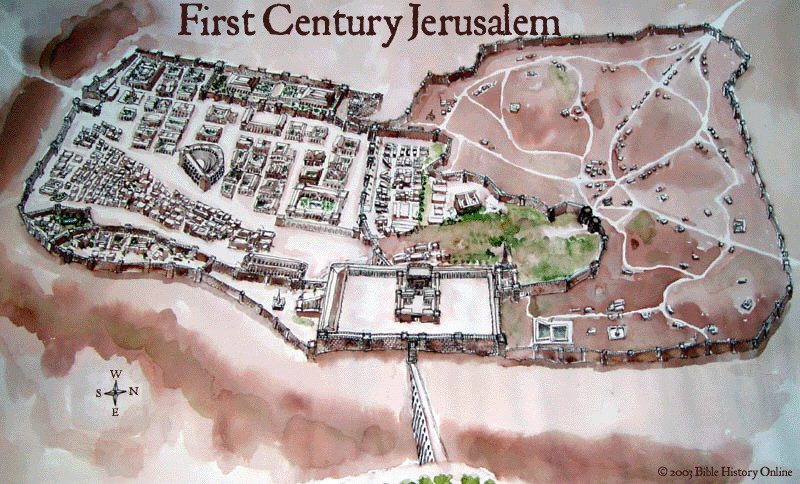
ALL of Jerusalem was abuzz with this Jesus, who had ridden into our captive city like a KING! And this Son of Man (as he called himself) began the day overturning tables of moneychangers and chasing merchants and animals out of the Temple courts!
Of course the Temple police appeared (though unprepared for such a disturbance as this), then pharisees and priests and scribes, even the chief priests.
In fact — they WITNESSED the marvelous miracles, signs of JESUS’s power from God!
.. and the children crying out in the temple and saying, “Hosanna to the Son of David!”
Gospel of Matthew 21:15b New King James Version – witness of Jesus in the Temple
Rather than praising GOD as even the children were now doing, THEY BECAME INDIGNANT.
One of them said to him (I think it was a chief priest):
“Do You hear what these are saying?”
YES, this Jesus answered him AND then quoted a familiar Psalm.
“Yes, Have you never read,
‘Out of the mouth of babes and nursing infants You have perfected praise’?”
Gospel of Matthew 25:16 NKJV – Jesus’ response to children singing about Him
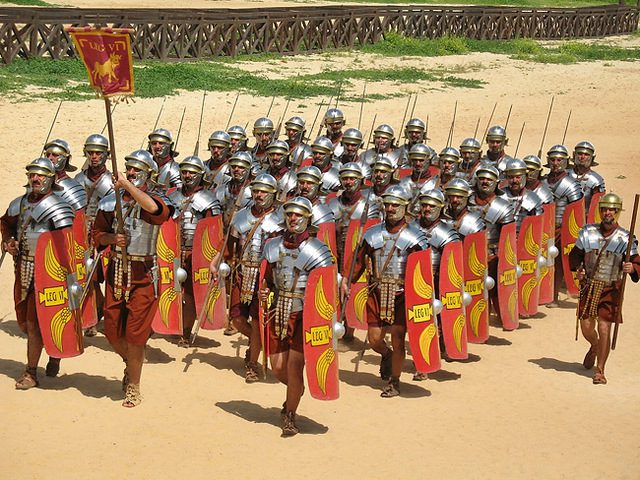
By now a few more Legions became clearly visible in the distance, yet the Temple police seemed to be nowhere in sight.
In general the crowds were JOYFUL and above all praising the healings which Jesus had been doing for some who came to Him.
This irked the officials of the Sanhedrin, although they now turned away from making any trouble today for this Son of Man and Son of David, who some zealots in the multitudes were urging to be KING.
This Jesus slipped out through the crowds quickly and headed toward a gate leading to the road to Bethany.
an earlier Passover
I'm trying to recall if it was last year [A.D. 29] or the year before that I had heard from someone that this was not unusual for this humble Nazarian Rabbi.
Jesus had shown signs to more than five thousand men near Nazareth.
Then those men, when they had seen the sign that Jesus did, said,
“This is truly the Prophet who is to come into the world.”
Therefore when Jesus perceived that they were about to come and take Him by force to make Him king, He departed again to the mountain by Himself alone.
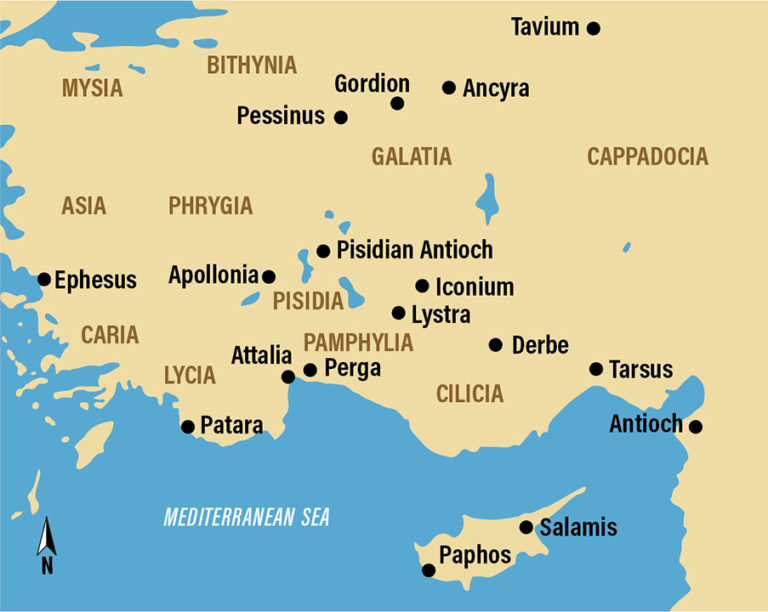
Previously, Luke tells us about Apollos leaving Ephesus as the Apostle Paul arrives and begins preaching to the Jews.
Two Schools of Thought in Ephesus
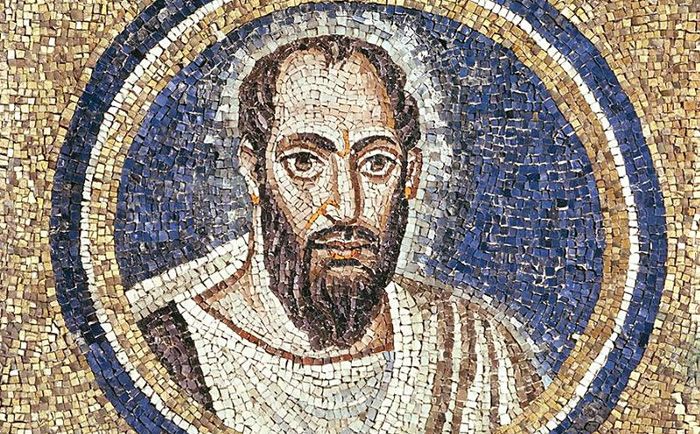
The School of Our Master the Lord Jesus Christ is led by the lecturer Paul; known as the Apostle to the Gentiles and formerly known as Saul of Tarsus.

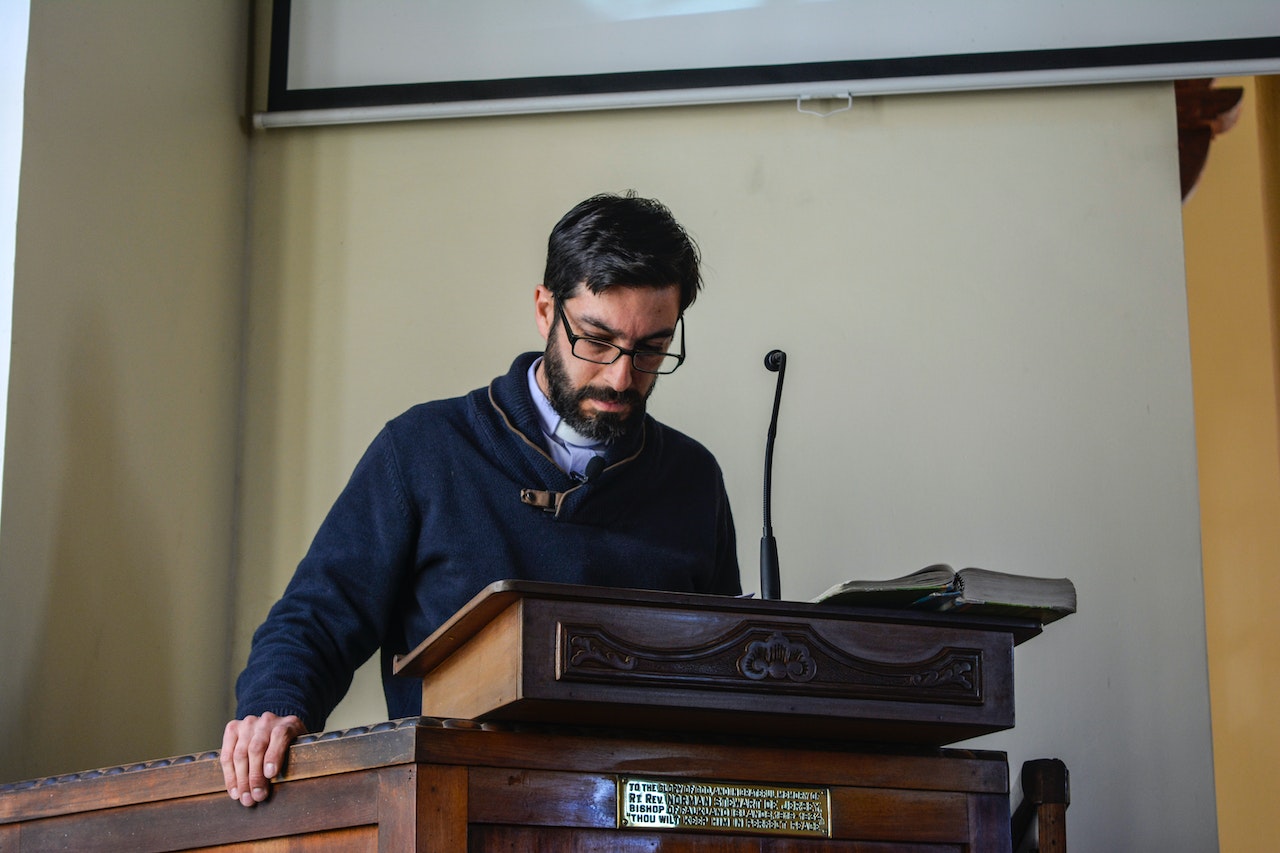
Picture this setting & scene in either the 1st century A.D. where it took place OR in a more Common Era scene in a University of this time:
‘We haven’t heard from Paul in a while. I heard that he has been teaching in the School of Tyrannus. Is that so?‘
‘Let’s go over to the big lecture hall and see.‘
Paul has already encountered various schools of thought at several points on his missionary journeys. His Pharisaical School in Jerusalem had taught different doctrines than an exclusive School the Sadducees. So the renounced Jewish scholar comfortably challenged other beliefs and philosophies.
And just like back in Corinth Achaia, Paul must reconcile perceptions of Christ with the Greeks and Yeshua Messiah of the Jews to followers of The Way in Ephesus.
Now that he resides in this key city of Asia Minor where the Holy Spirit initially had prevented Paul from going, Paul will no doubt need to answer many questions about our Lord Jesus Christ.
AND let’s not overlook Paul’s perseverance during several months of Apostolic teaching in Ephesus that took place here which Luke covers in just a few summary verses.
A brief reminder:
Paul began his journey to Ephesus in ~A.D. 52 by land from the church in Antioch and will not return from this 2700 mile mission for about five years.
As is his general practice the Apostle first teaches the Good News of the Messiah Jesus to the Jews.
And he entered the synagogue and for three months spoke boldly, reasoning and persuading them about the kingdom of God.
Twelve converted disciples join Paul, listening to the Gospel as the Apostle teaches fellow Jews how Jesus fulfilled the Scriptures as the Promised One. Many Jews believe during this time of Paul’s proclaiming Jesus in the synagogue and consequently follow The Way.
Yet like everywhere else, some remain immovable by truth or any other teaching than that which serves them.
But when some became stubborn
and continued in unbelief,
speaking evil of the Way before the congregation..
[A familiar pattern of stiff-necked men standing firm on their shaky ground of unreasoned truth and false doctrine.]
.. he withdrew from them and took the disciples with him, reasoning daily in the hall of Tyrannus.
Acts of the Apostles 19:9
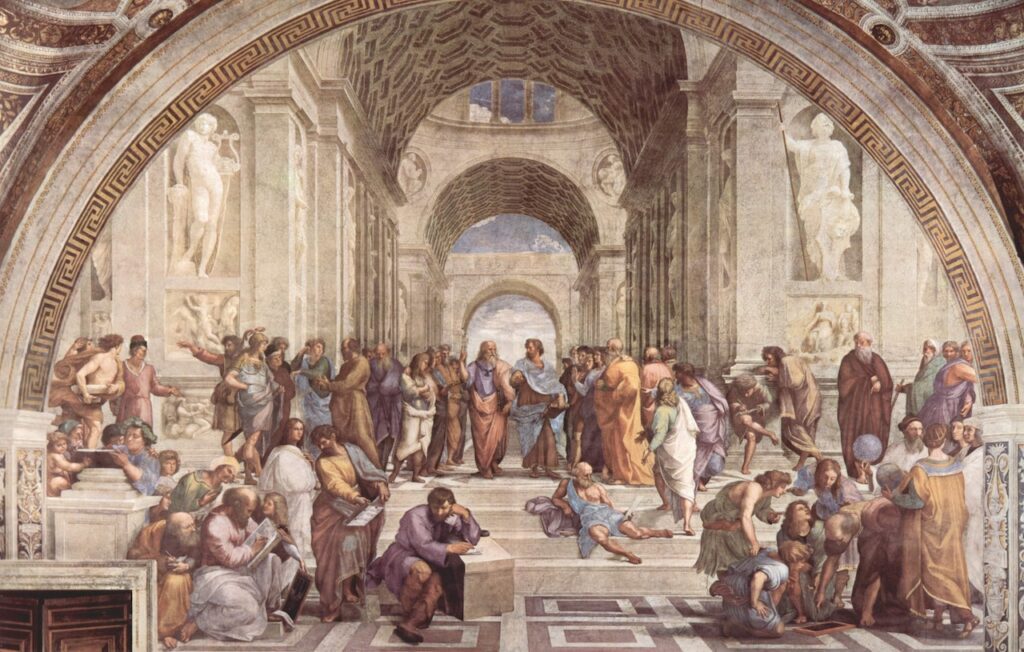
NOTE: Although this picture is NOT the School of Tyrannus, don't miss the significance of this School in the city of Ephesus as a university where men could gather to hear lecturers in order to learn and discuss their teachings.
~A.D. 53 – A.D. 54
Let’s look a root problem of unbelievers from the Greek root words Luke chooses translated from the NASB:
But when some were becoming hardened and disobedient, speaking evil of the Way before the [multitude]..
Acts 19:9a NASB20
ἐσκληρύνοντο – to make hard, harden, metaph. to render obstinate, stubborn
ἀπειθέω – apeitheō [Does any familiar English term come to mind?] –
to refuse or withhold belief
to refuse belief and obedience
not to comply with
Men APATHETICto sound doctrine and truth of the Gospel may claim to be religious men. Stubborn and stiffnecked sinners TURNED AGAINST Christ’s Apostle of Good News and they will turn against YOU as well for your witness of JESUS Christ as your Lord.
Apparent apathy to Christ and disobedience to the very word of God go hand in hand.
“The one who believes in the Son has eternal life; but the one who does not G544 [apeitheō] obey the Son will not see life, but the wrath of God remains on him.”
Gospel of John 3:36
THREE MONTHS Paul had reasoned with the Ephesian Jews in his manner of quoting Scripture and applying the Old Covenant to their Messiah JESUS. A remnant is saved and follow. The rest will continue in their false faith for refusing to look up to the LORD from the wilderness of their refining.
The heart-hardened enemies of the Gospel murmur to the multitudes against the followers [disciples] of the Way, the Truth and the Life redeemed through Christ our Lord.
in the hall of Tyrannus
DAILY, from the fifth hour to the tenth (that is, from 11 a.m. to 4 p.m.) according to some manuscripts
Lecture Hall
The lecture hall of Tyrannus is an important place of teaching Roman cultural context in a Roman community of the empire.
21st century believers may not understand the openness in a university-type forum from the teaching and disciples of Paul OR even the Lord Jesus. So in order to understand this PLACE of Paul’s CLASSROOM better we will examine it from the Greek which Luke records in just one of today’s three verses:
Τύραννος – tyrannos – A provincial form of the derivative of the base of κύριος (G2962)
Its base word and root Christians may recognize but have never considered in this context of first century A.D. controversy in witness to the Gospel in the Roman Empire.
Tyrannus = “sovereign“
kyrios – From kuros (supremacy)
It’s the ‘sovereign school’ OR School of the Sovereign.
Is Paul now teaching in the highest school, so to speak, in Ephesus, an environment we would understand to be a University?
scholē – probably feminine of a presumed derivative of the alternate of G2192; properly, loitering (as a withholding of oneself from work) or leisure, i.e. (by implication) a “school” (as vacation from physical employment):—school.
OR
Does the SCHOOL NAME imply a particular Sovereign for whom it is named?
(And, let the hearer understand, Ephesus, like Jerusalem, Corinth or Rome itself has only ONE SOVEREIGN.)
But they cried out,
Away with him, away with him, crucify him.
Pilate saith unto them, Shall I crucify your King?
The chief priests answered, We have no king but Caesar.
κύριος – kyrios – Strong’s G2962 – masculine noun From kuros (supremacy)
Lord, Lordship:
properly an adjective, signifying “having power” (kuros) or “authority,” is used as a noun, variously translated in the NT, “‘Lord,’ ‘master,’ ‘Master,’ ‘owner,’ ‘Sir,’ a title of wide significance, occurring in each book of the NT save Titus and the Epistles of John. It is used
Vine’s Expository Dictionary
WHAT DID THE APOSTLE PAUL PREACH IN EPHESUS?
Luke does not say specifically in these four verses, but we must believe that in one form or other that the Apostle proclaims the Gospel, JESUS IS LORD.
Paul said, “John baptized with a baptism of repentance, telling the people to believe in Him who was coming after him, that is, in Jesus.” When they heard this, they were baptized into the name of the Lord G2962 Jesus.
Acts of the Apostles 19:5 NASB20
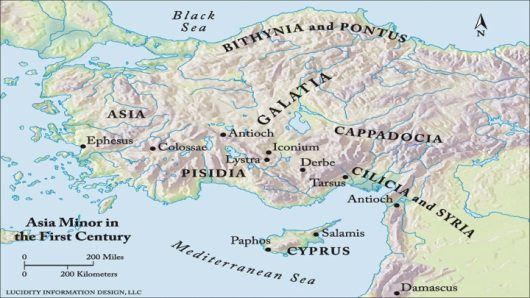
Asia Minor
This continued for two years, so that all the residents of Asia heard the word of the LordG2962, both Jews and Greeks.
Now about that time Herod the king stretched forth his hands to vex certain of the church.
Acts of the Apostles 12:1 King James Version
A contest is about to begin between: King Herod Agrippa verses the Apostles of Jesus.
Today we'll read the King James Version of the Bible for our look at Acts 12. Like me you'll probably have to look up some of these 'kingly' 17th c. 'Olde English'  words like "vex."
And he killed James the brother of John with the sword.
Last time we pointed out that James (in English) is rooted in the Hebrew name Jacob.
Score one for Agrippa (ten to go)
And because he saw it pleased the Jews, he proceeded further to take Peter also.
(Then were the days of unleavened bread.) And when he had apprehended him, he put him in prison, and delivered him to four quaternions of soldiers to keep him; intending after Easter to bring him forth to the people.
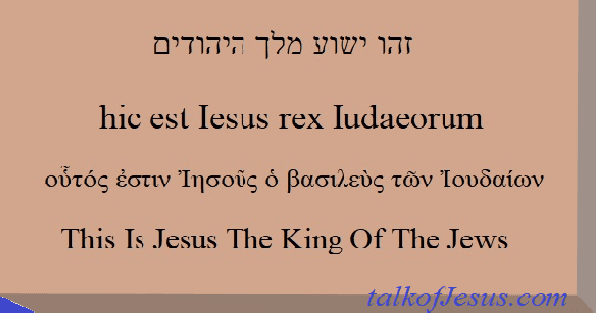
King James of the 17th century translates the Pascal Feast as Easter. Jews of the first century church celebrate the same Passover Feast before which the Messiah Jesus had been hurriedly convicted as “KING OF THE JEWS” then hung on a Cross as our Pascal Lamb of Sacrifice for sin.
the paschal sacrifice (which was accustomed to be offered for the people’s deliverance of old from Egypt)
the paschal lamb, i.e. the lamb the Israelites were accustomed to slay and eat on the fourteenth day of the month of Nisan (the first month of their year) in memory of the day on which their fathers, preparing to depart from Egypt, were bidden by God to slay and eat a lamb, and to sprinkle their door posts with its blood, that the destroying angel, seeing the blood, might pass over their dwellings; Christ crucified is likened to the slain paschal lamb
the paschal supper
the paschal feast, the feast of the Passover, extending from the 14th to the 20th day of the month Nisan
If you think of the Easter Jesus rose from death as ~A.D. 30, then this Pascal Feast takes place in ~A.D. 44, some fourteen years later.
the Herod’s Vex their Opponents
‘Who will be king of the Jews’ becomes a question of self-preservation and obsession of most of the Herod’s who consequently eliminated other heirs and vexed ANY potentially popular opponents such as John the Baptist and Jesus of Nazareth.
Jerusalem’s religious leaders had harassed these little Christs by stoning Stephen [A.D. 32] and sending their most zealous Pharisee Saul of Tarsus after them for nearly five years. But then on his way to Damascus, Saul miraculously became a Christian and disappears in Arabia [in AD 37] just as Agrippa comes to power in Jerusalem.
So now Jerusalem’s political king begins with Jesus’ inner circle of Apostles.
Peter, James, John and the other Apostles have challenged authority of the Herod’s ever since their bold appearance in the Temple during Pentecost more than a decade ago [A.D 30].
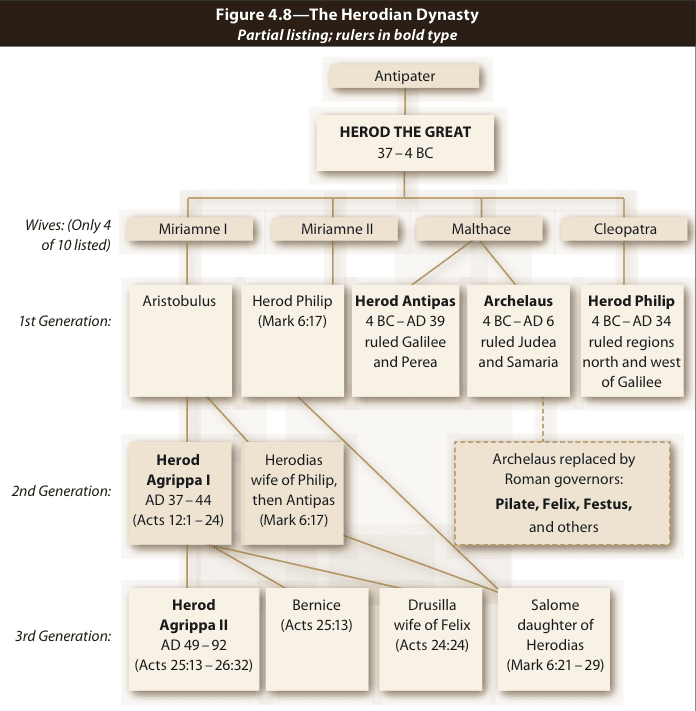
As you know, the Herod’s are not a particularly nice family. Agrippa’s grandfather, King Herod the Great, tried to kill Jesus as soon as Israel’s Messiah was born. Agrippa is not quite so powerful, but his grandpa had built many of Judah’s great buildings (with Roman taxes and adept political action of Herod intermingling with Rome’s unpredictable leaders).
King Agrippa’s grandfather also had five wives! Herod’s wives had ten sons in the line of kingly succession. So everyone’s question: Which one will become king?
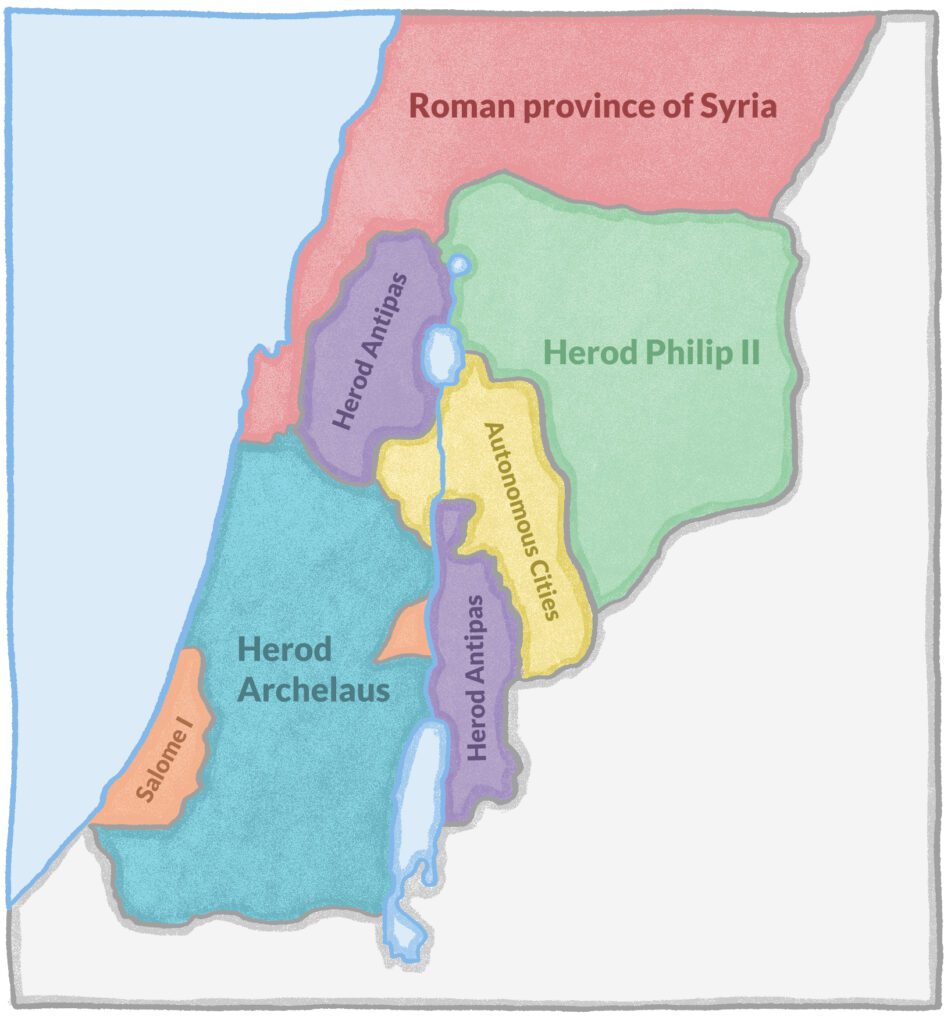
What you may not understand about the ‘maps’ of your Bible is this:
Several subtle shifts in the political winds of Rome blurred boundaries of the landscape of what was once Israel and corrupted Jerusalem’s Jewish rulers who have been under Rome’s control during this half century since the death of Herod the Great in 4 B.C. until now [A.D. 44].
The Jerusalem of Agrippa is looking back at Herod the Great’s glory days and the Jews want to make Jerusalem great again.
Herod had Agrippa’s mother Mariamne killed.
Herod charged his sons Alexander and Aristobulus (Agrippa’s father) with treason and received Caesar Augustus’ permission to execute them.
Antipater II (his son not listed here) was executed just days before Herod died.
Judea had been annexed to Rome in AD 6. No Herod’s had any authority in Jerusalem until AD 37 when Agrippa I became a king cooperating with his Roman Prefect.
Antipas, ruler of Galilee who had beheaded John the Baptist (and questioned Jesus at his trial even though he was NOT a king of the Jews or had any authority in Judea) was now dead, as was Herod Philip. King Agrippa prevails.
Herod the Great (whose father Antipater was a son of Esau, not a son of Jacob {Israel}) chose his successor son with the same cunning and ruthlessness by which he ruled as king.
In AD 44, Herod Agrippa is the ONLY King of the Jews remaining in the line of his grandfather, Herod the Great.
BUT, Jerusalem is still all abuzz with the boldness of these Apostles of Jesus.
For a king whose power is waning..
.. every month is an election year.
The killing of James:
And because he saw it pleased the Jews, he proceeded further to take Peter also…
Peter therefore was kept in prison: but prayer was made without ceasing of the church unto God for him.
And when Herod [Agrippa I] would have brought him forth, the same night Peter was sleeping between two soldiers, bound with two chains: and the keepers before the door kept the prison.
Do you recall the much earlier embarrassment of the Temple's religious officials questioning Peter and John?
Acts 4:3 And they laid hands on them, and put them in hold unto the next day..

.. So when they had further threatened them, they let them go, finding nothing how they might punish them, because of the people: for all men glorified God for that which was done. - Acts of the Apostles 4:21
Now about that time Herod the king stretched forth his hands to vex certain of the church…
Agrippa makes certain that this leading Apostle of Jesus will not elude his Roman authority to execute any who cause them trouble. There will be no turning Peter loose to his crowds of disciples while Herod sits on the throne of Jerusalem.
BUT, a messenger of One with more authority than a mere king comes to Christ’s Apostle.
And, behold, the angel of the Lord came upon him, and a light shined in the prison: and he smote Peter on the side, and raised him up, saying, Arise up quickly.
And his chains fell off from his hands. And the angel said unto him, Gird thyself, and bind on thy sandals.
And so he did. And he saith unto him, Cast thy garment about thee, and follow me.
And he went out, and followed him; and wist not that it was true which was done by the angel; but thought he saw a vision.
When they were past the first and the second ward, they came unto the iron gate that leadeth unto the city; which opened to them of his own accord:
and they went out, and passed on through one street; and forthwith the angel departed from him.
Peter's Escape from Herod: +To be continued
Cookie Consent
We use cookies to improve your experience on our site. By using our site, you consent to cookies.
Used to monitor number of Google Analytics server requests
10 minutes
__utmb
Used to distinguish new sessions and visits. This cookie is set when the GA.js javascript library is loaded and there is no existing __utmb cookie. The cookie is updated every time data is sent to the Google Analytics server.
30 minutes after last activity
__utmc
Used only with old Urchin versions of Google Analytics and not with GA.js. Was used to distinguish between new sessions and visits at the end of a session.
End of session (browser)
__utmz
Contains information about the traffic source or campaign that directed user to the website. The cookie is set when the GA.js javascript is loaded and updated when data is sent to the Google Anaytics server
6 months after last activity
__utmv
Contains custom information set by the web developer via the _setCustomVar method in Google Analytics. This cookie is updated every time new data is sent to the Google Analytics server.
2 years after last activity
__utmx
Used to determine whether a user is included in an A / B or Multivariate test.
18 months
_ga
ID used to identify users
2 years
_gali
Used by Google Analytics to determine which links on a page are being clicked
30 seconds
_ga_
ID used to identify users
2 years
_gid
ID used to identify users for 24 hours after last activity
24 hours
_gat
Used to monitor number of Google Analytics server requests when using Google Tag Manager
1 minute
_gac_
Contains information related to marketing campaigns of the user. These are shared with Google AdWords / Google Ads when the Google Ads and Google Analytics accounts are linked together.