Tag: leviticus

  • Concerning This Salvation – a letter from 1 Peter – 1

    Concerning This Salvation – a letter from 1 Peter – 1

    Remembering Our Great Salvation

    Who needs to be encouraged more than believers in Christ suffering for His sake? And who trusted the Lord for their salvation more than any?

    First century Christians expelled from Rome and major cities of the Empire.

    Jews dispersed throughout the Empire, seeking to separate their identities from followers of The Way, increasingly persecuted believers of Christ, as did Roman authorities.

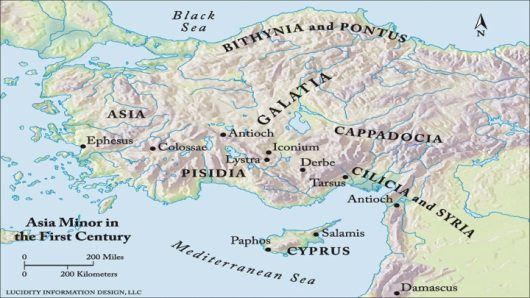
    The Apostle Peter writes to the church, primarily in first century cities in modern-day Turkey.

    1 Peter 1:
    Peter, an apostle of Jesus Christ:

    To those chosen, living as exiles dispersed abroad in Pontus, Galatia, Cappadocia, Asia, and Bithynia,

    Peter’s first encouragement of these persecuted believers of the dispersion is to call them elect or chosen by God the Father. He calls upon imagery of Israel as the Lord’s ‘chosen people.’ These faithful will also know prophesy from scripture of the Lord’s Messiah.

    “Behold! My Servant whom I uphold,
    My Elect One in whom My soul delights!
    I have put My Spirit upon Him;
    He will bring forth justice to the Gentiles.

    Isaiah 42:1 NKJV

    Peter speaks of the foreknowledge ‘through the sanctifying work of the Spirit’ and calls on believers ‘to be obedient and to be sprinkled with the blood of Jesus Christ.’ This clear reference of his greeting reassures their anointing by the Father, Christ Jesus and the Holy Spirit.

    Grace to you and peace multiplied.

    That the Lord chose you and me, as well as certain believers in these Asian provinces to whom Peter and other Apostles write, is great grace. We have received undeserved mercy and peace through Christ’s immeasurable love for sinners redeemed.

    Even so, Peter continues with an uplifting opening blessing, perhaps familiar to Christians from an opening call to your own worship.

    Blessed be God

    εὐλογητὸς ὁ θεὸς καὶ πατὴρ τοῦ κυρίου ἡμῶν Ἰησοῦ Χριστοῦ ὁ κατὰ τὸ πολὺ αὐτοῦ ἔλεος ἀναγεννήσας ἡμᾶς εἰς ἐλπίδα ζῶσαν δι’ ἀναστάσεως Ἰησοῦ Χριστοῦ ἐκ νεκρῶν - 1Peter1:3MGNT [Greek New Testament]

    Blessed be the God and Father of our Lord Jesus Christ, who according to His great mercy has caused us to be born again to a living hope through the resurrection of Jesus Christ from the dead, to obtain an inheritance which is imperishable and undefiled and will not fade away, reserved in heaven for you, who are protected by the power of God through faith for a salvation ready to be revealed in the last time.

    1 Peter 1:3-5 NASB

    Before considering the depth of this salvation introduced in Peter’s blessing, read what follows as one who has experienced the persecution of those to whom the Apostle writes:

    6 You rejoice in this, even though now for a short time, if necessary, you suffer grief in various trials so that the proven character of your faith—more valuable than gold which, though perishable, is refined by fire—may result in praise, glory, and honor at the revelation of Jesus Christ.

    8 Though you have not seen him, you love him; though not seeing him now, you believe in him, and you rejoice with inexpressible and glorious joy, because you are receiving the goal of your faith, the salvation of your souls.

    The Salvation of your Souls

    Salvation – σωτηρία – sōtēria { sō-tā-rē’-ä }

    Let’s begin with salvation, ‘the goal of our faith.’ Salvation is first deliverance, preservation, or safety. It includes deliverance from the molestation of enemies and our enemy is satan, ruler of this world, our temporal flesh and angelic opponent to Christ Jesus.

    In an ethical sense, salvation is ‘that which concludes to the soul’s safety,’ guaranteed by the Messiah of God.

    Future salvation is the sum of benefits and blessings which the Christians, redeemed from all earthly ills, will enjoy after the visible return of Christ from heaven in the consummated and eternal kingdom of God. source: BlueLetterBible.com

    It’s worth mentioning that the root word for salvation in greek is σωτήρ {sōtēr}, meaning savior, deliverer or preserver. Christ Jesus has saved, delivered and preserved all believers born again to a living hope, as Peter encourages us.

    Preserve your body and soul

    Peter speaks here to the church in the plural, souls. Perhaps you recognize the anglicized greek word, psychē, from it much maligned meaning by unbelieving contemporary interpreters of our complex God-given life. Our soul is defined as: the breath of life, the vital force which animates the body and shows itself in breathing; the seat of the feelings, desires, affections, aversions (our heart, soul etc.), as an essence which differs from the body and is not dissolved by death (distinguished from other parts of the body).

    Much we could discuss here, yet Peter addresses it sufficiently in his letter to the church, the body of believers saved by Christ Jesus. One form of the greek word for soul used by Jesus address the cooling breath of life of those who no longer believe in God.

    Matthew 24:9-11 “Then they will deliver you to tribulation, and will kill you, and you will be hated by all nations because of My name. At that time many will fall away and will betray one another and hate one another.

    Many false prophets will arise and will mislead many. (Peter addresses this later in his letter in 1 Peter 4.)

    Because lawlessness is increased, most people’s love will grow cold.

    Matthew 24:12 NASB

    A Communion Plea
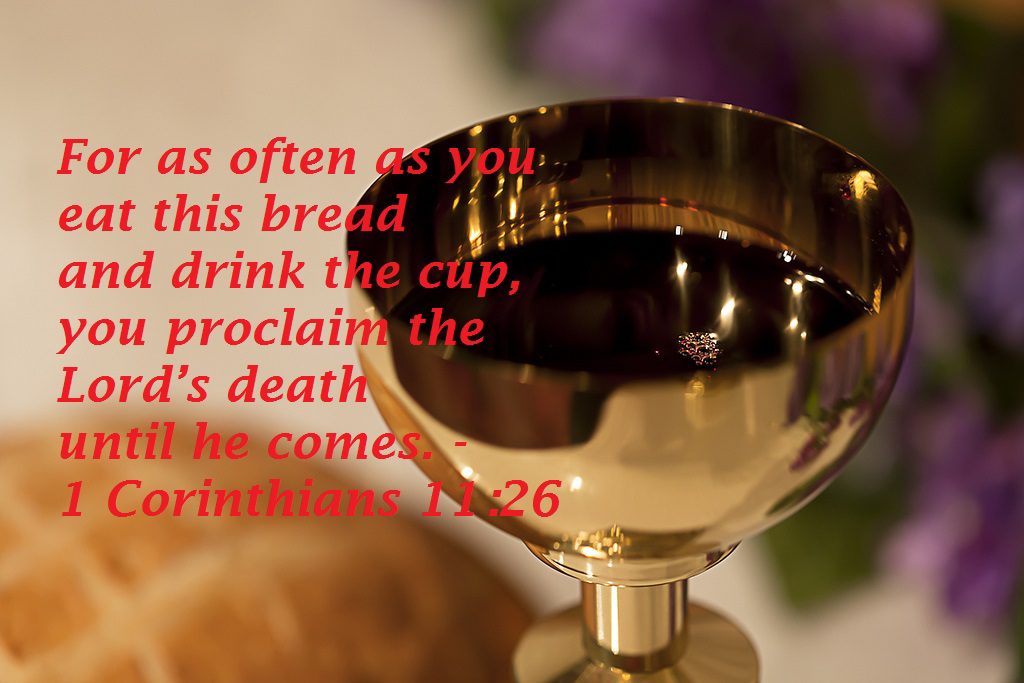
    communion cup of wine

    We do not presume
    to come to this your table, merciful Lord,
    trusting in our own righteousness,
    but in your manifold and great mercies…

    The body of our Lord Jesus Christ, which was given for you,

    preserve your body and soul to eternal life.

    Take and eat this in remembrance that Christ died for you,

    and feed on him in your heart by faith with thanksgiving.


    The blood of our Lord Jesus Christ, which was shed for you,

    preserve your body and soul to eternal life.

    Drink this in remembrance that Christ’s blood was shed for you,

    and be thankful.

    from The Book of Common Prayer

    The Grace that would come to us

    Now Peter encourages from the foundation of scripture.

    10 Concerning this salvation, the prophets, who prophesied about the grace that would come to you, searched and carefully investigated. 11 They inquired into what time or what circumstances the Spirit of Christ within them was indicating when he testified in advance to the sufferings of Christ and the glories that would follow.

    Prophets also asked about the Christ before His own sufferings for us. Once Jesus suffered, died and rose again, what would follow?

    What follows for believers in Christ?

    In a word, grace.

    Grace – χάρις – charis

    Grace is that which affords joy, pleasure, delight, sweetness, charm, loveliness.

    Certainly in this mortal life of suffering and persecution these hearers of Peter’s letter must have yearned for a return to a grace guaranteed beyond today.

    Grace is described [by Strong’s concordance] as a gift, a benefit, the spiritual condition of one governed by the power of divine grace. It is good will and loving-kindness, the merciful kindness by which God, exerting his holy influence upon souls, turns them to Christ, keeps, strengthens, increases them in Christian faith, knowledge, affection, and kindles them to the exercise of the Christian virtues.

    Grace through the Holy Spirit

    Peter assures them that the Prophets prophesied about the grace that would come to you. He testifies that the Spirit of Christ was within them, a reference to the Holy Spirit, living breath of God in the Word of Christ.

    12b These things have now been announced to you through those who preached the gospel to you by the Holy Spirit sent from heaven—angels long to catch a glimpse of these things.

    Be Holy

    ‘Thus you are to be holy to Me, for I the LORD am holy; and I have set you apart from the peoples to be Mine.

    Leviticus 20:26 NASB

    Peter points back to Moses and several commands of the Lord. He uses Jesus’ familial authority of holiness.

    17 If you appeal to the Father who judges impartially according to each one’s work…

    He urges followers of Christ (v.13b), set your hope completely on the grace to be brought to you at the revelation of Jesus Christ. And as Jesus taught, Peter urges us to be like Christ as an obedient child of the Father.

    14 As obedient children, do not be conformed to the desires of your former ignorance. 15 But as the one who called you is holy, you also are to be holy in all your conduct; 16 for it is written, Be holy, because I am holy.

    What’s it like to be holy?

    13-16 [PHILLIPS] So brace up your minds… Live as obedient children before God. Don’t let your character be moulded by the desires of your ignorant days, but be holy in every department of your lives…

    … you should spend the time of your stay here on earth with reverent fear.

    22 [CSB] Since you have purified yourselves by your obedience to the truth, so that you show sincere brotherly love for each other, from a pure heart love one another constantly, 23 because you have been born again—not of perishable seed but of imperishable—through the living and enduring word of God.

    Peter’s call to holiness in our Christian living and witness to the world is challenging enough. And for those facing true persecution and opposition to our faithfulness to the Lord, Peter encourages us in our new and permanent salvation in Christ, Redeemer of our sinful souls.

    This brief life of ours

    What more can Peter say to encourage those first century Christians suffering for their true faith in Christ Jesus?

    In fact, Peter has much more to say beginning with cautions about those ‘christians’ who disobey God our Father and Christ. We began this series with “They Stumble Because They Disobey,” from 1 Peter 2.

    Just prior to this, Peter reminds us that by comparison to eternity (and judgment) this mortal life in the flesh is very brief. Comfort to those faced with persecution or death for their faith in Christ.

    Once again, he quotes scripture, specifically the Prophet Isaiah, in the thought connecting their faithfulness and his caution against false prophets.

    Isaiah 40:

    The verses from Isaiah preceding 1 Peter 24-25 will be familiar to the persecuted church of the first century. Prophesy of John the Baptist and Jesus both resound in the powerful imagery of Isaiah 40:1-5.

    All flesh is grass, and all its loveliness is like the flower of the field.
    7 The grass withers, the flower fades,
    When the breath of the Lord blows upon it;
    Surely the people are grass.
    8 The grass withers, the flower fades,
    But the word of our God stands forever.

    Isaiah 40:6c-8

    Beloved believer, we are like grass, yet so are opponents to our faith in Christ Jesus. By His grace we know our salvation.

    Isaiah urges us to be a bearer of the Good News.

    “Here is your God!”

    Behold, His reward is with Him

    Like a shepherd He will tend His flock,
    In His arm He will gather the lambs
    And carry them in His bosom;
    He will gently lead the nursing ewes.

    excerpts from Isaiah 40 NASB

    Peter ends this opening of his first letter:

    25 BUT THE WORD OF THE LORD ENDURES FOREVER.”
    And this is the word which was preached to you.

    To be continued...

  • Jude – Now I will praise the Lord

    Jude – Now I will praise the Lord

    Who is Jude?

    The first thing I want to know about any letter I receive is who sent it to me. So as a leader or member of one of several churches we would want to be certain of the identity of the author of Jude and the authenticity of Jude’s message.

    Jude, a bondservant of Jesus Christ, and brother of James

    Letter of Jude 1:1a NKJV

    To fully understand the identity of the man who’s name is translated in English as ‘Jude” we must look to both the original Greek text and the common name of its Hebrew origin in first century Judea and Galilee.

    Ἰούδας

    Pronounced: ē-ü’-däs — Most translations of the Greek use Jude, the Latin Iudas and Yehudah in the Hebrew Names Version. The root word of the Greek name is Yĕhuwdah from the Hebrew יְהוּדָה meaning “praised” and translated at Judas. (We understand why after Jesus’ betrayal no man wanted to be known by this name now synonymous with ‘betrayer.’)

    In James – Witness of a Converted Brother we learned that Roman names derived from local languages had become Hellenized. James could be Jim, but Judas and Judah easily become, Jude.

    Some fathers named their sons after a forefather of their tribe like Judah or Israel. Judah יָדָה is the familiar Hebrew root of both the Greek and English.

    Brother of James

    Jude means: he shall be praised.

    The author of our letter identifies himself as the brother of James.

    Jude refers to James, head of the church of Jerusalem, leader of the first century churches who exchanged letters throughout Asia minor, Greece, Palestine and other areas receiving the Good News of Christ. Most Biblical commentators agree that like James, Jude is is also a half-brother of Jesus.

    Both James and Jude identify themselves as servants of Jesus, rather than claiming their biological relationship to the Lord. Most kings come to power via their family connection and install relatives in high positions.

    One of the great Jewish controversies Jesus would take no part in was that of the legitimacies of kings and followers of certain political traditions. These political/family controversies had progressed and preceded Jude, James and Jesus by several generations back to the second century B.C.

    Maccabees

    Source: BibleHub.org (a hammer), This title, which was originally the surname of Judas, one of the sons of Mattathias, was afterward extended to the heroic family of which he was one of the noblest representatives. Asmonaeans or Hasmonaeans is the Proper name of the family, which is derived from Cashmon, great grandfather of Mattathias. The Maccabees were a family of Jews who resisted the authority of Antiochus Epiphanes king of Syria and his successors who had usurped authority over the Jews, conquered Jerusalem, and strove to introduce idolatrous worship.

    Judas, one of the sons of Mattathias generally called in English the Maccabees, a celebrated family who defended Jewish rights and customs in the 2nd century B.C. (1 Maccabees 2:1-3 {from the Apocrypha, for those unfamiliar with extra-Biblical texts.}

    Herodians

    The end of the era of the Hasmoneans is probably the most turbulent time in Jewish history. It is hard to imagine a “Jewish” government more antithetical to Jewish principles and ideals than that of Herod and his successors, whose murderous, tyrannical ways would eventually lead to the destruction of the Temple and the beginning of the long exile that Jews find themselves in.Source: JewishHistory.org

    Herod the Great, born in Rome around 70 B.C and known as Herodes Magnus, was appointed a governor at around age 20 (along with his brother) and appointed King by the Roman senate in 37 B.C. He became known as Judah’s great builder and built the Temple in Jerusalem.

    During the time of Jesus, James and Jude and continuing into the years of the early church, the Herods wielded much power. Rome finally turned on Jerusalem and their client king appointed to help Rome defend the Empire against enemies east of Palestine. The Herodians failed to control the “Jewish problem,” which caused trouble throughout the Empire.

    Bondservant of Jesus Christ

    The brother of James could have begun his letter to the church as a ‘brother of the King and Messiah,’ implying his authority of position via his family. The Herodians or Maccabees made familial claims to kingdom leadership, but not these half-brothers of Jesus who had not even followed the Lord prior to His resurrection.

    James begins his letter (ἐπιστολή epistle, in greek): James, a bond-servant of God and of the Lord Jesus Christ.’ Jude chooses to identify in the same way as a bondservant of Christ.

    Jude would have been known to his readers as the brother of James, leader of the church in Jerusalem, both related to Jesus the Messiah.

    Understanding the Servant of Christ

    The Bible uses the word ‘servant‘ almost 500 times. A few English translations use the word ‘bondservant,’ a concept we no longer use or understand. Furthermore, many contemporary christians resist this concept of sometime voluntary compliance.

    I am the LORD your God, which brought you forth out of the land of Egypt, that ye should not be their bondmen; and I have broken the bands of your yoke, and made you go upright.

    Leviticus 26:13 KJV

    עָבַד עֶבֶד – A slave or servant; to work, serve. Also used as form of address between equals.

    Genesis 18: KJV

    And the LORD appeared unto him [Jacob] in the plains of Mamre: … three men stood by him: and when he saw them, he ran to meet them from the tent door, and bowed himself toward the ground, And said, My Lord, if now I have found favour in thy sight, pass not away, I pray thee, from thy servant:

    Jacob served the LORD. We serve the LORD. Jude served Christ, the Lord.

    Malachi 4:

    About four centuries before Christ (and Jesus’ half-brothers) the prophet Malachi writes:

    “Remember the instruction of Moses my servant, the statutes and ordinances I commanded him at Horeb for all Israel.

    Malachi 4:4

    The closing verses of Malachi clearly point back to Moses and the Law with the Lord calling Moses, “my servant.” James and Jude are servants of Jesus just as Moses was servant to the Lord at Horeb.

    עֶבֶד – `ebed

    Are you, beloved follower of Christ, first a servant of the Lord?

    διάκονος – diakonos

    “If anyone serves me, he must follow me. Where I am, there my servant also will be. If anyone serves me, the Father will honor him.

    Command of the Lord Jesus – Gospel of John 12:26 CSB

    The servant (from the Greek context) is ‘one who executes the commands of another, esp. of a master.

    1. the servant of a king
    2. a deacon [diakonos], one who, by virtue of the office assigned to him by the church, cares for the poor and has charge of and distributes the money collected for their use.
    3. a waiter, one who serves food and drink

    “The greatest among you will be your servant.

    The word of the Lord – Matthew 23:11

    Abraham was a servant of the Lord. Moses was a servant of the Lord. And like their forefathers in the faith, Jude and James became servants of the Lord first and servants of the Lord’s followers second.

    Paul, referring to the church writes to the church at Colossae:

    I have become its servant, according to God’s commission that was given to me for you, to make the word of God fully known …

    Jude writes to the church

    Jude, a servant of Jesus Christ and a brother of James:

    To those who are the called, loved by God the Father and kept for Jesus Christ.

    Jude 1:1b CSB

    Are you a fellow servant of Christ Jesus? If so, know that you are loved by God the Father. Know that by His grace you are kept for Jesus Christ at the day of His victorious return.

    2 May mercy, peace, and love be multiplied to you.

    To be continued

  • Hebrews -4- Rest Promised or Pursued?

    But the message they heard did not benefit them…

    Hebrews 4:2a CSB

    Previously I asked, “Will you enter into God’s perfect rest?” The author of Hebrews traces our Hebrew heritage and history back to Moses and then states, “So we see that they were unable to enter [rest] because of unbelief.” It is significant warning to those who only pursue righteousness, rather than obtaining its rest.

    What is rest?

    Perhaps ‘rest from your work,’ as in Sabbath rest, a vacation or retirement?

    Do we think ‘rest in peace,’ when in fact it is rest in life we seek? Vanity. (Or futility, as Solomon suggests in Ecclesiastes.)

    Life convinces me of the elusiveness of rest more each day.

    closed on sunday
    Closed on Sunday – Rest in the Lord (it’s a Commandment).

    We begin with the application of these scriptures about the promised rest in our own lives, but first a look at definitions.

    Hebrews 4:

    Therefore, since the promise of entering his rest still stands – NIV

    Note some subtle differences of approach from verse 1.

    A promise to enter, a promise remains, a promise still open, a promise stands – all promises made, but not yet fulfilled. Surely the Lord will keep His promise.

    The warning of Hebrews 4:1 is that we ‘have fallen short, therefore take heed to our own obligation to the promise of the Lord. In fact, the previous warning to God’s chosen was, “So I sware in my wrath, They shall not enter into my rest.” KJV

    So what role do we have in completing the promises between the Lord and His faithful?

    The followers of Moses and many generations since did not receive the promise. Some continue to pursue the promise, others have abandoned God’s word. What is left to us is an inheritance; a promise not yet received, but a rest to be received – a rest only in the promised Messiah of God.

    “Come to me, all of you who are weary and burdened, and I will give you rest.

    Words of the Messiah Jesus, Matthew 11:28 CSB

    Rest defined

    • ἀναπαύω anapauō – One rest of which Jesus speaks is quiet, calm, an earthly collecting of strength. God can give us rest.
    • נָחַם nacham – in Hebrew is rest. In the sense of being comforted it means that God has compassion on us. In a most curious application from Moses’ story of creation he says,

    Now he called his name Noah, saying, “This one will give us rest from our work and from the toil of our hands arising from the ground which the LORD has cursed.”

    Genesis 5:29 NASB

    The LORD cursed creation, regretted man for our evil on the earth; yet in the LORD’s compassion He called נֹחַ Noah, which means ‘rest’ as a savior of creation.

    Instructions for the priesthood speak of a complete Sabbath, an increased rest in addition to our weekly worship of the LORD.

    שַׁבַּ֨ת שַׁבָּתֹ֥ון הוּא֙ לָכֶ֔ם וְעִנִּיתֶ֖ם אֶת־נַפְשֹׁתֵיכֶ֑ם בְּתִשְׁעָ֤ה לַחֹ֨דֶשׁ֙ בָּעֶ֔רֶב מֵעֶ֣רֶב עַד־עֶ֔רֶב תִּשְׁבְּת֖וּ שַׁבַּתְּכֶֽם׃ פ

    “It is to be a sabbath of complete rest to you, and you shall humble your souls…

    Leviticus 23:32 NASB

    Again, I remind us that first century Jews who practiced regular worship of the LORD with sacrifice knew scripture better than most modern Jews and Christians. The application of a promised rest, a rest pursued by the faithful, had more meaning in completion of the promise.

    • κατάπαυσις  katapausis in the common Greek of the day –
      • a putting to rest or a calming of the winds.
      • resting place; נוּחַ; metaphor for the heavenly blessedness in which God dwells, and of which he has promised to make persevering believers in Christ partakers after the toils and trials of life on earth are ended

    When the author of Hebrews, Paul and other Jews speak of perfection, it is this complete rest in the Lord of which they speak metaphorically.

    εὐαγγελίζω – Good News / Bad News

    We’ve all heard it told: I have good news and bad news. (Which do you want to hear first?) Once again the writer of Hebrews supports his gospel with scripture.

    2 For we also have received the good news just as they did…

    Hebrews 4:2a CSB

    Again he quotes scripture from Psalm 95 and Genesis, applying a warning to us.

    Psalm 95:

    Worship and Warning

    Come, let us shout joyfully to the Lord,
    shout triumphantly to the rock of our salvation!
    Let us enter his presence with thanksgiving;
    let us shout triumphantly to him in song.

    אַל־תַּקְשׁ֣וּ לְ֭בַבְכֶם כִּמְרִיבָ֑ה כְּי֥וֹם מַ֝סָּ֗ה בַּמִּדְבָּֽר׃

    אֲשֶׁ֣ר נִ֭סּוּנִי אֲבוֹתֵיכֶ֑ם בְּ֝חָנ֗וּנִי גַּם־רָא֥וּ פָעֳלִֽי׃

    10 אַרְבָּ֘עִ֤ים שָׁנָ֨ה׀ אָ֘ק֤וּט בְּד֗וֹר וָאֹמַ֗ר עַ֤ם תֹּעֵ֣י לֵבָ֣ב הֵ֑ם וְ֝הֵ֗ם לֹא־יָדְע֥וּ דְרָכָֽי׃

    11 אֲשֶׁר־נִשְׁבַּ֥עְתִּי בְאַפִּ֑י אִם־יְ֝בֹא֗וּן אֶל־מְנוּחָתִֽי׃

    So I swore in my anger,
    “They will not enter my rest.”

    Psalm 95:11 CSB

    A bad news warning

    … and those who formerly received the good news did not enter because of disobedience, 7 he again specifies a certain day—today.

    The writer of Hebrews warns that Joshua did not give them rest.

    Therefore, a Sabbath rest remains for God’s people. 

    11 Let us then make every effort to enter that rest, so that no one will fall into the same pattern of disobedience.

    Make every effort.

    He pleads with the readers and listeners of scripture to σπουδάζω – be diligent or eager to hear the gospel of our promised rest in Christ Jesus, the Messiah.

    Again, the common first century Greek logic to think toward what the LORD God meant in giving rest to us through the Messiah. (And this time don’t ignore His warnings spoken in scripture.)

    Then, as if speaking to those who feared the very Voice of G_d spoken from Sinai,

    11 Let us then make every effort to enter that rest, so that no one will fall into the same pattern of disobedience.

    And the author of Hebrews then follows with perhaps scripture’s best reason for all to read, hear and obey scripture.

    The Word of God

    12 For the word of God is living and active and sharper than any two-edged sword, and piercing as far as the division of soul and spirit, of both joints and marrow, and able to judge the thoughts and intentions of the heart.

    Hebrews 4:12 NASB

    The word of God, λόγος logos θεός theos is living and active.

    In the Greek does this have a familiar ring to it, beloved Christian or Messianic Jewish brother or sister?

    ἐν ἀρχῇ ἦν ὁ λόγος καὶ ὁ λόγος ἦν πρὸς τὸν θεόν καὶ θεὸς ἦν ὁ λόγος

    In the beginning was the Word, and the Word was with God, and the Word was God.

    Gospel of John 1:1

    Could the writer of Hebrews possibly be referring to Yeshua the Messiah, witnessed by many as risen from the dead?

    He is living and active! ‘and piercing as far as the division of soul and spirit, of both joints and marrow, and able to judge the thoughts and intentions of the heart.’

    Who can divide the soul and the spirit? Who holds power over our heart and every breath of life?

    Only the LORD God! This sounds like the True Judge, who is ‘able to judge the thoughts and intentions of the heart.’

    Nothing hidden from God’s sight

    The writer of Hebrews then continues appropriate warning to those who hear this word of scripture, all those who seek our promised rest.

    13 And there is no creature hidden from His sight…

    Not you, not his first century Hebrew audience, and certainly not me.

    … but all things are naked and open to the eyes of Him to whom we must give account.

    So imagine the Perfect Judge who can separate joints and marrow, discerning our thoughts and looking upon the nakedness of the intents of our hearts.

    How will we ever rest, when we have not laid down our sin before the Perfect Sacrifice of the Lord, slain for us – the Son of God Who IS and will judge our sin?

    Our Compassionate High Priest

    מֹשֶׁה Mosheh פָּלַל palal עַם `am

    And Moses interceded for the people.

    Numbers 21:7 NASB

    Moses interceded, then Aaron interceded as High Priest. Later anointed descendants of Levi stood in the Holy of Holies between the people and the Lord. But these godly men were all imperfect.

    Yet all priests, pastors and rabbis sin. Their sacrifices have been imperfect.

    The Messiah, however, is our perfect intercessor, a Son of man like us. He became our sinless Lamb whose Body and Blood were broken and shed for us.

    14 Therefore, since we have a great high priest who has passed through the heavens—Jesus the Son of God—let us hold fast to our confession. 15 For we do not have a high priest who is unable to sympathize with our weaknesses, but one who has been tempted in every way as we are, yet without sin.

    A promise fulfilled – rest in the Messiah Jesus. Confidence that the Lord has chosen us through Him. Yet have we pursued our rest in Christ, or presumed the promise as those who perished in the wilderness?

    Draw near to the Throne of grace, for we have confidence in Christ.

    Receive His compassionate mercy and grace, which is favor with God. For we are chosen if we believe in our compassionate High Priest, Christ Jesus.

    Is this your time of need?

    Do you desire God’s help?

    Pray – pray through our loving intercessor who has descended to His own and ascended to the Throne of heaven.

     To be continued...