Tag: Lord

  • Balaam – Inauguration of a Politician’s Prophet – 2

    Balaam – Inauguration of a Politician’s Prophet – 2

    Previously

    For those of you who missed Part 1 of our story of Balaam, we began by noting Balaam’s best inaugural speech in Numbers 24, to which we will return chronologically in Part 3. Now turning back to some background and the beginning of our story, King Balak of Moab sent diplomats to Balaam to urge him to prophesy against Israel, whose tribes have invaded nearby Canaan.


    Numbers 22:

    … Moab was overcome with fear of the people of Israel. 4 And Moab said to the elders of Midian, “This horde will now lick up all that is around us, as the ox licks up the grass of the field.” So Balak the son of Zippor, who was king of Moab at that time, 5 sent messengers to Balaam the son of Beor at Pethor, which is near the River in the land of the people of Amaw, to call him, saying,

    “Behold, a people has come out of Egypt. They cover the face of the earth, and they are dwelling opposite me. 6 Come now, curse this people for me, since they are too mighty for me. Perhaps I shall be able to defeat them and drive them from the land, for I know that he whom you bless is blessed, and he whom you curse is cursed.”


    Some beckoning!

    This foreign king gives great compliment to a prophet living miles away in another land (modern day, Iraq). We may be familiar with a western perspective from Egypt of the Hebrew people crossing of the Sea of Reeds. Perhaps we recall the fall of the major Canaanite city, Jericho. But let’s look at these events as reported to a Prophet living by the Euphrates River. The invasion of Canaan by the Hebrews coming into Canaan looks different from the west beyond Moab.

    …  9 And God came to Balaam…

    What happens next, of course, is that Balaam listens to God and tells Balak’s ambassadors, “Go to your own land, for the Lord has refused to let me go with you.”

    Later they return with a more money for Balak’s campaign.

    20 And God came to Balaam at night and said to him, “If the men have come to call you, rise, go with them; but only do what I tell you.” 21 So Balaam rose in the morning and saddled his donkey and went with the princes of Moab.


    Seems fairly simple for a man to whom God speaks – a man who princes and kings know hear, a mere mortal who speaks the word of the Lord.

    So Balaam joins the entourage of important men for their long return journey to Moab. King Balak believes inviting Balaam will be the inauguration (under good omens) of a new era in his land near the Jordan.


    22 But God’s anger was kindled because he went, and the angel of the Lord took his stand in the way as his adversary.

    Wait just a minute

    Something’s wrong here. Why would God be angry with Balaam; for the Lord had said, “go with them?”

    Balaam’s attitude at a second return of more men with more political promises of riches in Moab must have swayed his original steadfastness to just send these politicians of Balak back home empty-handed. Look closely at some of the detail leading to Balaam’s return on this second journey of the Moabites and Midianites.


    Prior to the first diplomatic mission to Balaam:

    7 So the elders of Moab and the elders of Midian departed with the fees for divination in their hand… 13 So Balaam rose in the morning and said to the princes of Balak, “Go to your own land, for the Lord has refused to let me go with you.”

    I see no mention of acceptance of their ‘fees for divination.’


    Second Diplomatic Junket

    Take a look at Balaam’s challenge of the second mission of these diplomats from the Jordan River valley, a land promised to Israel by the Lord.

    15 Once again Balak sent princes, more in number and more honorable than these. 16 And they came to Balaam and said to him, “Thus says Balak the son of Zippor: ‘Let nothing hinder you from coming to me, 17 for I will surely do you great honor, and whatever you say to me I will do. Come, curse this people for me.’”


    Hear once more Balaam’s reply the first time:  “Go to your own land, for the Lord has refused to let me go with you.” (No room for negotiation in his words.)

    Listen to the subtlety of his second reply:

    “Though Balak were to give me his house full of silver and gold, I could not go beyond the command of the Lord my God to do less or more. 19 So you, too, please stay here tonight, that I may know what more the Lord will say to me.”


    If I’m a negotiator in the middle east, it sure sounds like an opening to me.

    ‘I’ll sleep on it. I’ll ask the Lord again. (Maybe God will change His mind.)

    Do you ask the Lord to command you twice?

    In response to these high officials coming again to him with promises of power and influence, after already having received the Lord’s answer, Balaam went to the Lord once more. “Are you sure.” he asked?

    Do we ask the Lord, “Are you sure?” Of course we do (even though the Lord’s command to us is clear).

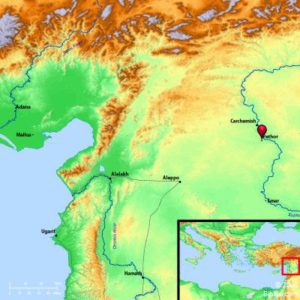
    Pethor on the Euphrates – 400 miles from Moab

    Now comes the familiar story of Balaam’s journey with the princes and diplomats to the powerful capitals of their kings. It could be (if the Lord would allow) a great career move for Balaam.

    Now the prophet, distracted by men of influence and dreams of earthly riches, misses the Lord’s message for him. In fact, Balaam’s procession to this inauguration puts him in great danger.


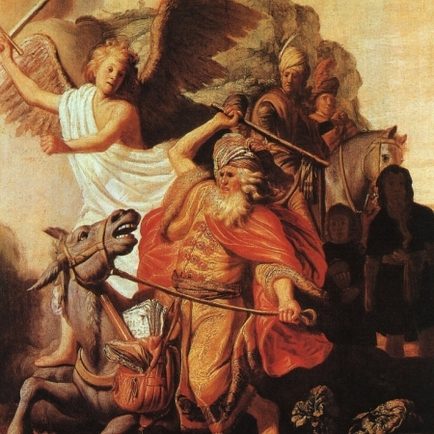
    Balaam and his Donkey

    You probably know this story and like many, smirk at its absurdity.

    Now he was riding on the donkey, and his two servants were with him. 23 And the donkey saw the angel of the Lord standing in the road, with a drawn sword in his hand. And the donkey turned aside out of the road and went into the field.

    And Balaam struck the donkey, to turn her into the road. 24 Then the angel of the Lord stood in a narrow path between the vineyards, with a wall on either side. 25 And when the donkey saw the angel of the Lord, she pushed against the wall and pressed Balaam’s foot against the wall.

    So he struck her again. 26 Then the angel of the Lord went ahead and stood in a narrow place, where there was no way to turn either to the right or to the left. 27 When the donkey saw the angel of the Lord, she lay down under Balaam.

    And Balaam’s anger was kindled, and he struck the donkey with his staff.


    Balaam’s hopes for the inauguration

    Balaam certainly expected a reward at the end the journey of about 400 miles. rather than trouble at the beginning. Perhaps this new year will offer us opportunity to consider Balaam’s failure to go forward without listening to God.

    [ctt title=”Do your New Year\’s goals include God?” tweet=”What path does the LORD lead you to follow this year?” coverup=”6Gmbd”]

    28 Then the Lord opened the mouth of the donkey, and she said to Balaam, “What have I done to you, that you have struck me these three times?” 29 And Balaam said to the donkey, “Because you have made a fool of me. I wish I had a sword in my hand, for then I would kill you.”


    Again, let’s overlook the humor for a moment of an ass rebuking a prophet of God. And while we are at it, let’s not be so quick to miss that God can make an ass speak that is obedient to His will, when a man will not speak God’s will (as a prophet is expected to do).


    30 And the donkey said to Balaam, “Am I not your donkey, on which you have ridden all your life long to this day? Is it my habit to treat you this way?” And he said, “No.”

    31 Then the Lord opened the eyes of Balaam, and he saw the angel of the Lord standing in the way, with his drawn sword in his hand. And he bowed down and fell on his face. 32 And the angel of the Lord said to him, “Why have you struck your donkey these three times? Behold, I have come out to oppose you because your way is perverse before me.

    Are your ways contrary to the Lord?

    The leaders of Midian and the leaders of Moab led lives in opposition to the Lord. Their sacrifices to idol gods offended the Lord. (Surely Balaam knew of this.)

    Like Abraham he was willing to travel this great distance. Unlike Abraham, Balaam traveled because he refused to listen to command of the Lord. Even so, the Lord was merciful here and spared Balaam’s life.


    Balaam – Inauguration of a Politician’s Prophet – To be continued…


  • Balaam – Inauguration of a Politician’s Prophet – 1

    Balaam – Inauguration of a Politician’s Prophet – 1

    Prophesy of a man with eyes to see

    Numbers 24:

    “The oracle of Balaam the son of Beor,
    the oracle of the man whose eye is opened,
    4 the oracle of him who hears the words of God,
    who sees the vision of the Almighty,
    falling down with his eyes uncovered:

    5 How lovely are your tents, O Jacob,
    your encampments, O Israel!
    6 Like palm groves that stretch afar,
    like gardens beside a river,
    like aloes that the Lord has planted,
    like cedar trees beside the waters.
    7 Water shall flow from his buckets,
    and his seed shall be in many waters;
    his king shall be higher than Agag,
    and his kingdom shall be exalted.
    8 God brings him out of Egypt
    and is for him like the horns of the wild ox;
    he shall eat up the nations, his adversaries,
    and shall break their bones in pieces
    and pierce them through with his arrows.
    9 He crouched, he lay down like a lion
    and like a lioness; who will rouse him up?

    [ctt title=”Blessed are those who bless you, and cursed are those who curse you.”” tweet=”The LORD God of #Israel” coverup=”We237″]

    Looking back on election

    Let’s look at an ancient analogy about changes of political winds all too frequent throughout history.

    The inaugural event spoken by Balaam son of Beor illustrates hope for one group of hearers present, but not those who elected Balaam to his present situation. Backing up some (two chapters), we see Balaam’s nomination by powerful men with entirely different motives.

    You may need to map out some unfamiliar geography and history for understanding this election.

    First, understand that Balaam’s journey to Moab may have been about 400 miles from Pethor on the Euphrates. Yes, even then wars and skirmishes between nations surrounding Israel frequently involved foreign intervention. Balaam’s family may have been Canaanites who migrated to Mesopotamia, perhaps even to flee from local war of invading warriors.

    Election

    Israel (Jacob) claims election by God as a people set aside for the LORD. The LORD had led Israel by the hand of the prophet and leader, Moses [Mosheh]. מֹשֶׁה

    Joshua then defeats Canaan and begins capturing the lands promised to Israel [Jacob], son of Isaac, son of Abraham.

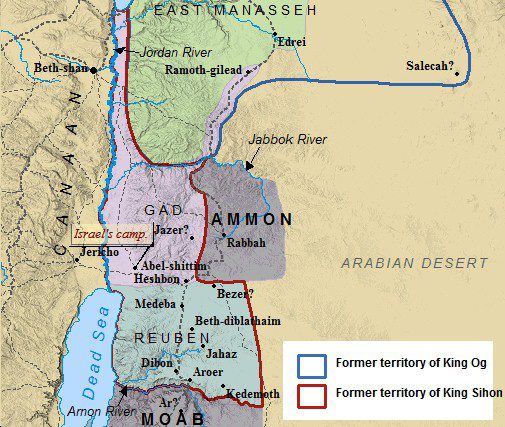
    We now glance into these tumultuous times of trouble in the middle east, just east of the Jordan during the campaigns of Balak, Balaam, Og, Sihon and other forgotten men of the 14th c. BC.

    Balak Summons Balaam

    Numbers 22

    Then the people of Israel set out and camped in the plains of Moab beyond the Jordan at Jericho. 2 And Balak the son of Zippor saw all that Israel had done to the Amorites. 3 And Moab was in great dread of the people, because they were many. Moab was overcome with fear of the people of Israel…


    Conflict between local leaders in the middle east (nothing new) and one leader, Balak, reaches out to foreign powers to fight Israel. Some mysterious power of Balaam is known, yet what if not known is something Balaam sends back as a message.


    … So the princes of Moab stayed with Balaam. 9 And God came to Balaam and said, “Who are these men with you?” 10 And Balaam said to God, “Balak the son of Zippor, king of Moab, has sent to me, saying, 11 ‘Behold, a people has come out of Egypt, and it covers the face of the earth. Now come, curse them for me. Perhaps I shall be able to fight against them and drive them out.’”


    These men of influence, likely with bribes for Balaam, return to Balak saying that Balaam will not come; but Balak orders them to make the long journey again promising even more riches as is typical of the diplomacy of influence.


    … God came to Balaam at night and said to him, “If the men have come to call you, rise, go with them; but only do what I tell you.” 21 So Balaam rose in the morning and saddled his donkey and went with the princes of Moab.

    Now the seer or prophet Balaam embarks on a potentially perilous journey of many miles into unknown outcomes of the middle east.


    Balaam – Inauguration of a Politician’s Prophet – To be continued…


  • A Psalm of Thanksgiving – Psalm 100, Psalm 50

    A Psalm of Thanksgiving – Psalm 100, Psalm 50

    Psalm 100

    Who is giving thanks? And to whom? “For what do we give thanks on Thanksgiving?” 

    The New International Version tells us it is For giving grateful praise. The New King James Version calls it, A Song of Praise for the Lord’s Faithfulness to His People and the English Standard Version, borrowing from its text reminds us, His Steadfast Love Endures Forever.

    מִזְמֹור לְתֹודָה

    A Psalm of Praise, in Hebrew, תּוֹדָה, towdah, a common theme in the Psalms, means, thanksgiving.

    “Thanksgiving, done proper, is worship of the Lord God.”

    Psalm 100 for the year of our Lord, 2016

    A select version of verses 1-5

    A Psalm of Thanksgiving.

    Make a joyful shout to the Lord, all you lands!

    Worship the Lord with gladness;
    come before him with joyful songs.

    Acknowledge that the Lord is God!

    It is He who has made us, and not we ourselves;
    We are His people and the sheep of His pasture.

    Enter into His gates with thanksgiving,
    And into His courts with praise.

    Give thanks to him; bless his name!

    For the Lord is good.
    His unfailing love continues forever,

    And His truth endures to all generations.

    תּוֹדָה tôwdâh -a definition:

    תּוֹדָה tôwdâh, to-daw’; from H3034; properly, an extension of the hand, i.e. (by implication) avowal, or (usually) adoration; specifically, a choir of worshippers:—confession, (sacrifice of) praise, thanks(-giving, offering).

    give praise to God
    thanksgiving in songs of liturgical worship, hymn of praise
    thanksgiving choir or procession or line or company
    thank-offering, sacrifice of thanksgiving
    confession

    An extension of the hand

    Psalm 100, though written for the Hebrew people speaks to all. Make a joyful shout, a joyful noise, a celebration unto the LORD, all you lands, all people, all of His creation, all of the earth. And why not? Has the Lord God not been gracious to many peoples of many lands, most especially US?

    This should be a time of joyful songs, not quiet personal celebration of what we have done. We have food, we have shelter, most of us have not been driven from our homes, like those so oppressed in lands of conflict. We are blessed!

    “Is it not appropriate for us to extend our hand of thanks to the Lord who has provided for us so abundantly?” Thanksgiving is an extension of praise and worship to our One Provider.”

    The long tradition which precedes Thursday’s annual holiday is worship, acknowledging the Lord who provides the fruits of the harvest. At times some have no food, yet even these learn to rely on the graciousness of God – all the more reason to say more than grace over our meal.

    What is our problem with God?

    It is He who has made us, and not we ourselves. Even if sinful man points to a big bang without cause, reason or likelihood, we like to take credit for everything we do – all we accomplish, even the very act of creation, cell from cell or primate from amphibian. Some even would imagine alien intelligence (yet who created them) before humbly considering a God greater than man. We don’t want to be sheep and certainly resist being led by a God or a King or even someone of an opposing political persuasion.

    Know that the Lord, he is God! Acknowledge that the Lord is God! We know it in our hearts, but a certain humility must bow down to worship the One we do not understand with all power and mercy we cannot comprehend.

    Perhaps you never thought of this as a time of worship or a place to have your hands extended in praise and thanksgiving to your creator who knows each synapse of your thoughts and every pulsing of your heart. Though you resist any as King over you, even a most benevolent Lord over all of our provision, the King of the heavens and earth welcomes you through the gates of the eternal place of worship and into the courts of loving worshipers saved in the blood of His own Sacrifice for our sins.

    The LORD יְהֹוָה Yĕhovah

    Be thankful to Him, and bless His name. Give thanks to him and praise his name. Do you need a reason to make the Lord the center of your celebrations? It’s really quite simple: He is good. The LORD is good.

    For the Lord is good; his steadfast love endures forever… Not only is the Lord good – the only One – God’s love endures. Whose love in your life has endured more than a season? Who truly loves you until your death… and beyond, can a mortal soul love your flawed flesh forever? The Lord will when you extend your hand in worship.

    His unfailing love continues forever, and his faithfulness continues to each generation. His mercy is everlasting, And His truth endures to all generations. Praise the Lord with what words the Spirit will share. God is good.

    Mark this, then…

    Psalm 50:22-23

    “Mark this, then, you who forget God,
    lest I tear you apart, and there be none to deliver!

    The one who offers thanksgiving as his sacrifice glorifies me;
    to one who orders his way rightly
    I will show the salvation of God!”