Tag: Lord

  • How much do you owe God?

    How much do you owe God?

    You think of every dollar, euro or yen you make as being yours – it is what you earned.

    money symbols

    This is not a reminder of what you may owe the government on ‘tax day’ nor a reminder that our benevolent government may “refund” some money to you (as if you had not earned it instead of them).

    This is not even a Biblical reminder that we are obligated to give one tenth of our income back to God (a tithe) and also give to Caesar what is Caesar’s (another tithe, or so…).

    Jesus poses a question to us about what we owe to God; in this context, not so much as may be measured in dollars and cents, euros or any measure of gold, but what we fail to measure of God giving what they deserve to those who we think deserve something different.

    Consider this:

    What do you deserve from God? 

    (Should you expect a large refund?)

    Luke 7

    English Standard Version (ESV)

    36 One of the Pharisees asked him to eat with him, and he went into the Pharisee’s house and reclined at the table. 37 And behold, a woman of the city, who was a sinner, when she learned that he was reclining at table in the Pharisee’s house, brought an alabaster flask of ointment, 38 and standing behind him at his feet, weeping, she began to wet his feet with her tears and wiped them with the hair of her head and kissed his feet and anointed them with the ointment.

    Let’s pause here for a moment from a story of which you may be too familiar.

    Suppose Jesus comes over to your house? What would you have for dinner? Where would He sit? How would you welcome Jesus to eat at your table?

    We are Pharisees. We know a lot about God and we know a lot about the Bible. Jesus, (of questionable parentage, from Nazareth) a sojourner in His own land, accepts your invitation to dinner. The crowds have been talking about Him and even fellow worshipers of God have witnessed miracles.

    “Come in. Sit over here. Let’s talk about God. 🙂 ”

    Now, a common prostitute slips in while you are eating! (You know her, because she came to church once, but is still plying her trade. {Of course, none of the men of the church hang out with here at the pub down the street.}) Before you can ask her to leave, she makes a scene directly with your guest. (What would God think?)

    The woman has thrown herself on Jesus at His feet. (No doubt this woman has thrown herself at many men.) She is crying out to Jesus and caressing His feet. (Who knows what she may do next?) Then she splashes a large amount of expensive perfume over Jesus’ sandals and feet – the odor so great as to ruin the aroma of our well-prepared meal. What will this teacher of God do? Will He allow me, even ask me to throw her out of my house?

    39 Now when the Pharisee who had invited him saw this, he said to himself, “If this man were a prophet, he would have known who and what sort of woman this is who is touching him, for she is a sinner.”

    40 And Jesus answering said to him, “Simon, I have something to say to you.” And he answered, “Say it, Teacher.”

    (Here it comes… Jesus’ permission for me to get rid of her.)

    41 “A certain moneylender had two debtors. One owed five hundred denarii, and the other fifty. 42 When they could not pay, he cancelled the debt of both. Now which of them will love him more?”

    (What? This Jesus has gone back to talk about God and things of God as we were doing before. Maybe this so-called prophet couldn’t care less what’s going on here.

    Let’s see… what answer?)

    43 Simon answered, “The one, I suppose, for whom he cancelled the larger debt.” And he said to him, “You have judged rightly.”

    (Of course. That was an easy one. But what is His point? I know this Rabbi is going somewhere with this. What does this comparison have to do with God? God is no moneylender. I guess the moneylender is like God. I think I would want both men to pay me back.)

    Then Jesus looks down to His feet and the woman making the scene.

    (Now, at last, He has had enough and will ask me to have her leave. I guess she has caused us no harm… only embarrassment.)

    44 Then turning toward the woman he said to Simon, “Do you see this woman? I entered your house; you gave me no water for my feet, but she has wet my feet with her tears and wiped them with her hair. 45 You gave me no kiss, but from the time I came in she has not ceased to kiss my feet. 46 You did not anoint my head with oil, but she has anointed my feet with ointment.

    (I should have welcomed Jesus. He is right: I was unsure of Him and did not treat Him as my guest of honor. But this woman! This is not her house. She should not even be here.)

    47 Therefore I tell you, her sins, which are many, are forgiven—for she loved much. But he who is forgiven little, loves little.” 48 And he said to her, “Your sins are forgiven.”

    (Remarkable! He did know. Now He’ll send her on her way. … “But he who is forgiven little, loves little.” The debtors! She is the debtor. Of course. She owes God much because of all of her sins.)

    49 Then those who were at table with him began to say among themselves, “Who is this, who even forgives sins?”

    50 And he said to the woman, “Your faith has saved you; go in peace.”

    (My guest has just told a prostitute, “Your sins are forgiven.” What can this mean? He said, “Your faith has saved you.” How can this be?)

    Romans 1

    English Standard Version (ESV)

    16 For I am not ashamed of the gospel, for it is the power of God for salvation to everyone who believes, to the Jew first and also to the Greek. 17 For in it the righteousness of God is revealed from faith for faith, as it is written, “The righteous shall live by faith.”

    God’s Wrath on Unrighteousness

    18 For the wrath of God is revealed from heaven against all ungodliness and unrighteousness of men, who by their unrighteousness suppress the truth.

    Romans 2

    God’s Righteous Judgment

    2 Therefore you have no excuse, O man, every one of you who judges. For in passing judgment on another you condemn yourself, because you, the judge, practice the very same things. 2 We know that the judgment of God rightly falls on those who practice such things. 3 Do you suppose, O man—you who judge those who practice such things and yet do them yourself—that you will escape the judgment of God? 4 Or do you presume on the riches of his kindness and forbearance and patience, not knowing that God’s kindness is meant to lead you to repentance? 5 But because of your hard and impenitent heart you are storing up wrath for yourself on the day of wrath when God’s righteous judgment will be revealed.

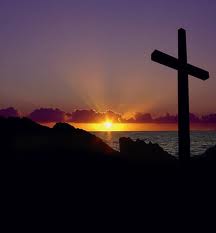
    Cross by waterTwo debtors: one, a repentant prostitute; the other, an unrepentant believer (expecting a refund).


    Which are you?

    Romans 3

    No One Is Righteous

    9 What then? Are we Jews any better off? No, not at all.

    For we have already charged that all, both Jews and Greeks, areunder sin, 10 as it is written:

    “None is righteous, no, not one;
    11     no one understands;
    no one seeks for God.
    12 All have turned aside; together they have become worthless;
    no one does good,
    not even one.”

    How much do you owe God?

    For our Heavenly Father has sent His only Son to the cross for our sins – a great debt none can repay.

    Yet, fellow sinner, we do owe Jesus our Lord much worship and love; love as unabashedly shown by the humility and repentance of the woman who bowed and wept at Jesus’ feet.

    Though we are sinners and great debtors, Christ Jesus IS a great and gracious Lord.

    Worship Him will all your love; for He sacrificed all of His love for you.


  • Lord of the Sabbath

    Lord of the Sabbath

    Dr. Luke retells two stories of witnesses about Jesus and the Sabbath. (We should consider that the Good News is witness of the message of salvation, though the story of Jesus is not always chronological.) The time of these witnessed stories is not so important as the point.

    Returning (for this) to Luke 6:

    Jesus Is Lord of the Sabbath

    6 On a Sabbath, while he was going through the grainfields, his disciples plucked and ate some heads of grain, rubbing them in their hands. 2 But some of the Pharisees said, “Why are you doing what is not lawful to do on the Sabbath?” 3 And Jesus answered them, “Have you not read what David did when he was hungry, he and those who were with him: 4 how he entered the house of God and took and ate the bread of the Presence, which is not lawful for any but the priests to eat, and also gave it to those with him?” 5 And he said to them, “The Son of Man is lord of the Sabbath.”

    (We will return to this example of Jesus and David in a moment.)

    A Man with a Withered Hand

    6 On another Sabbath, he entered the synagogue and was teaching, and a man was there whose right hand was withered.7 And the scribes and the Pharisees watched him, to see whether he would heal on the Sabbath, so that they might find a reason to accuse him. 8 But he knew their thoughts, and he said to the man with the withered hand, “Come and stand here.”And he rose and stood there. 9 And Jesus said to them, “I ask you, is it lawful on the Sabbath to do good or to do harm, to save life or to destroy it?” 10 And after looking around at them all he said to him, “Stretch out your hand.” And he did so, and his hand was restored. 11 But they were filled with fury and discussed with one another what they might do to Jesus.

    “They were filled with fury and ‘discussed…’”

    Nothing like the mixing of politics and religion, but that is the background and subject of these discussions; therefore let’s once again take on this controversy of Sundays, Sabbaths and the time and place of worship of God. [The ‘Sundays’ link points to my earlier post on Exodus: Remember the Sabbath to keep it holy.]


    Richard A Horsley, in ‘Scribe, Visionaries, and the Politics of Second Temple Judes,’ points out: The attention to conflict, whether with external imperial powers or internally between scribes and priest or between wealthy elites and others, results in a story of endless power struggles…

    Horsley continues: ‘a credible picture of the diversity of Judaism in Hellenistic Palestine emerges… ‘conflict: this time between the priestly aristocratic rulers of the Judean temple-state and their scribal retainers…

    Jesus lived under the watchful eyes of several opposing religious and political views, the two mentioned here: Scribes and Pharisees. Perhaps your church has a ‘scribe’ or ‘pharisee’ who would go on and on over endless controversies of how and when to worship God.

    It’s certainly not only the Saturday vs. Sunday controversy or what ‘Christians’ ought to do or ought not do on ‘the Lord’s Day.  As more recent controversies: “The State shouldn’t sell liquor on Sunday. The mall used to be closed on Sunday. God help us if we don’t have football and other sports to watch on Sunday!”

    No, the Sabbath controversy (artificial and particular as it can be) is not new and sometimes results in ‘christians’ being ‘filled with fury’ or resigned to unrighteousness. Jesus encountered such controversies every day. In fact, like conservatives and liberals, the religious and political types enjoyed such ‘discussions’ as a part of their ongoing emphasis of beliefs. (Nothing new under the sun.)

    When the Bible (Hebrew Bible, Orthodox Bible, Catholic Bible or Protestant Bible – {Get the idea?}) mentions Scribes, Pharisees, Priests or other religious officials; understand that these men had ongoing differences in their views of God and worship.

    The simplicity of Jesus approach to the Sabbath (or Sunday) is evident enough in Luke 6:9 KJV

    I will ask you one thing; Is it lawful on the sabbath days to do good, or to do evil?

    Jesus answer is so intuitive: It it lawful to do good seven days a week and 365 days every year; and unlawful to do evil on ANY day.

    Doing good is not work and failing to do good is evil.

    Jesus healed a man on the Sabbath and you would not expect your doctor to take Sunday off if you had a heart attack or were injured in an accident on the way home from church or the Sunday afternoon sporting event.

    In the earlier example, Jesus addresses the Sabbath ‘work’ controversy a little differently. (Imagine these men following you and your family to a restaurant after church.) Jesus and His Disciples were hungry and broke open some grain in a field as they walked through it (perfectly legal: Deuteronomy 24:19-22). The question of the Pharisees for these poor and hungry sojourners or travelers (Jesus and the Disciples) was ‘should you prepare and eat food on the Sabbath?’

    Jesus then uses the example of bread prepared for the Temple of God and an incident with King David.

    breadLuke 6:4 KJV How he went into the house of God, and did take and eat the shewbread, and gave also to them that were with him; which it is not lawful to eat but for the priests alone?

    Let’s examine this less-familiar reference a moment.

    Exodus 25:30  And you shall set the bread of the Presence on the table before me regularly.

    Leviticus 24: 5 “You shall take fine flour and bake twelve loaves from it… 6 And you shall set them in two piles, six in a pile, on the table of pure gold before the Lord… 7 …as a memorial portion as a food offering to the Lord. 8 Every Sabbath day Aaron shall arrange it before the Lord regularly… 9 And it shall be for Aaron and his sons, and they shall eat it in a holy place, since it is for him a most holy portion out of the Lord’s food offerings, a perpetual due.”

     David is not a Priest or a Levite of the line of Aaron.

    David and the Holy Bread

    21 Then David came to Nob to Ahimelech the priest. And Ahimelech came to meet David trembling and said to him, “Why are you alone, and no one with you?” 2 And David said to Ahimelech the priest, “The king has charged me with a matter and said to me, ‘Let no one know anything of the matter about which I send you, and with which I have charged you.’ I have made an appointment with the young men for such and such a place. 3 Now then, what do you have on hand? Give me five loaves of bread, or whatever is here.” 4 And the priest answered David, “I have no common bread on hand, but there is holy bread—if the young men have kept themselves from women.” 5 And David answered the priest, “Truly women have been kept from us as always when I go on an expedition. The vessels of the young men are holy even when it is an ordinary journey. How much more today will their vessels be holy?” 6 So the priest gave him the holy bread, for there was no bread there but the bread of the Presence, which is removed from before the Lord, to be replaced by hot bread on the day it is taken away.

    Or course, the Disciples are not Levite. Neither are Jesus and the Disciples in the holy place of the Temple. Yet the Pharisees did not recognize that they were in the Presence of Holiness.

    One earlier instance of the Hebrew use of this word for the Bread of the Presence.

    Genesis 14

    18 And Melchizedek king of Salem (where Jerusalem now stands) brought out bread and wine. (He was priest of God Most High.) 19 And he blessed him and said,

    “Blessed be Abram by God Most High,
    Possessor of heaven and earth;
    20 and blessed be God Most High,
    who has delivered your enemies into your hand!”

    And Abram gave him a tenth of everything.

    Jesus is our Redeemer and High Priest.

    Later, Jesus would say, “Before Abraham was, I AM.” (See John 8.)

    Here Jesus closes all discussion on the Sabbath controversies of the Scribes and Pharisees with a remarkable statement.

    Luke 6:5 KJV And he said unto them, That the Son of man is Lord also of the sabbath.

    Jesus’ most frequent reference of his person is “son of man,’ that is:  huios anthrōpos. How bold a statement for Jesus to say that He lord [kyrios] also of the sabbath.

    Jesus IS Lord.

    He IS either your Lord…

    the Son of Man, who is Lord even over the days of the week – yes, even our measured days

    OR He will be Lord at your Judgment.

    Will you acknowledge Christ Jesus as your Savior and Redeemer?

    Abraham and Lot worshiped the Lord after the destruction of Sodom. God judged the sinful men and sinful women of those cities, yet saved Lot and his children. He would save you, also… before the wrath of the Lord rains down on you and it is too late.

    Worship Him.

    The Son of Man is Lord also of the Sabbath. Is He also your Lord and Savior?


  • Are You the One? – 2

    Are You the One? – 2

    Jesus to the multitudes

    Speaking of John the Baptist…

    Luke 7

    English Standard Version (ESV)

    26 What then did you go out to see? A prophet? Yes, I tell you, and more than a prophet. 27 This is he of whom it is written,

    “‘Behold, I send my messenger before your face,
    who will prepare your way before you.’

    28 I tell you, among those born of women none is greater than John. Yet the one who is least in the kingdom of God is greater than he.” 29 (When all the people heard this, and the tax collectors too, they declared God just, having been baptized with the baptism of John, 30 but the Pharisees and the lawyers rejected the purpose of God for themselves, not having been baptized by him.)

    31 “To what then shall I compare the people of this generation, and what are they like? 32 They are like children sitting in the marketplace and calling to one another,

    “‘We played the flute for you, and you did not dance;
    we sang a dirge, and you did not weep.’

    See the contrast of walking into two very different churches and hearing the complaints of the ‘worshipers.’

    33 For John the Baptist has come eating no bread and drinking no wine, and you say, ‘He has a demon.’

    We will have only grape juice (and only on occasion).

    34 The Son of Man has come eating and drinking, and you say, ‘Look at him! A glutton and a drunkard, a friend of tax collectors and sinners!’

    We will have wine (and every time).

    35 Yet wisdom is justified by all her children.”

    One preacher is loud; one is soft. One place of worship is grand; another quaint. One has an organ and a choir; another only one with a guitar. One place they kneel; in another they jump up and down and fall to the floor.

    And what do the multitudes say?

    Jesus is not John… and John was not Jesus.

    Perhaps they were pious before John, while they were joyful around Jesus. Yet they complained of John’s piety and Jesus’ lack of it. Two brothers of the faith; two sons of God — yet both were more than that.

    God has a family of his own children. The speech and ways of one child of God will win the heart of another, while a very different way of  witness will not win this soul.  Our brother or sister of the family of God may win a soul that we cannot.

    John and Jesus (even cousins) were so different in so many ways. And you are so different from me.

    Wisdom is justified by all of her children (and God has many children). The words and ways and witness of the children are important, each for different times, different purposes and different souls for the family of God; but it is the Father and the wisdom of the Father to which all must yield.

    Worship is not for the multitudes; worship is of the Father.

    Wisdom is justified by all of her children.

    John was one child of God (none greater, according to Jesus). Jesus was One child of God. They taught different. They had different purposes for our Father God.

    Some children were chosen for the family of God long before their birth. (Jews.) Some children were chosen by adoption into the family of God before we were conceived in the womb. (Gentiles.)

    I thank the Lord for my inclusion in the family of our Heavenly Father by His redemption for my sin. I thank God for all of my brothers and sisters in the Lord – the multifaceted family of believers who have eternal life in Christ Jesus.

    And the merciful and Almighty God is justified by ALL His children.

    God is NOT justified by those who refuse to worship Him and honor the Lord our God humbly as a child of God. Jesus, John, Peter, Paul, the Prophets have always pointed out that these are children of their father the devil.

    Consider for just a moment the individual living souls of two witnesses:

    Jesus was NOT John and John was NOT Jesus, yet both are children of the Father.

    I am NOT my brother Ed nor my brother Ken nor my sister Jenny. I am NOT my wife Lissette. I am NOT my father Bill nor my mother Marie.  I am NOT my daughter Rachel nor my step-daughter Ashley nor my step-son David. I am not even the same as any Christian brother or sister in the Lord.

    Jesus asks John’s messengers (and the multitudes) to stop comparing one child of God to another and to take no offense.

    Luke 7:23 KJV And blessed is he, whosoever shall not be offended in me.

    It is good advice for ANY brother or sister, whether in the Lord at this time or not.

    Do not be skandalizō by the teachings and miracles of your ‘brother’ Jesus or the right teachings of any child of God our Father.

    The religious ones and outwardly righteous ones in the crowds (as recorded in Luke 7:30) were scandalized by the teachings of Jesus.  The common sinners, tax collectors, drunkards and others (v. 29) repented when they heard John and changed their ways to continue to follow Jesus as their brother and our Lord.

    My dear brother; my dear sister; my beloved wife and beloved children:

    What is my message for you?

    Do NOT be offended by the teachings of Christ Jesus.

    What is the fruit of your witness?