WE, as Christians, tend to compartmentalize the tenants of our faith. FATHER, that is GOD of the Old Testament. And then the SON, Jesus born, crucified buried, resurrected in body and Spirit — walking around the earth for fifty days in the flesh — then rising into the clouds on Pentecost. Then finallythe HOLY SPIRIT sent to the Apostles of Jesus Christ to help them take the GOSPEL into all the world.
Is that about it?
Does this come close to your concept of the doctrine of TRINITY and timeline of Scripture?
If so, today I want to challenge and expand your compartmentalized view of Jesus Christ and the Holy Spirit. For this deeper dive into Scripture we turn to the original Greek of the New Testament and the role of the Paraclete.
.. but you will receive power when the Holy Spirit has come upon you..
And after He had said these things, He was lifted up while they were watching, and a cloud took Him up, out of their sight.
Source: This post quotes the teaching of R. C. Sproul extensively. Not enough can be said to credit this mentor to many for R.C.'s concise scriptural approach to logical conclusions concerning Christ Jesus. I will provide additional information and a link to R.C.'s lifelong ministry near the conclusion of this post.
With Glory to God and gratitude to R.C. Sproul.
Roger Harned
So what is the Paraclete?
FIRST: What the Paraclete is NOT.
As R.C. Sproul states, he is not the Holy Spirit. Since I have just taught on the Holy Spirit and Pentecost we will not spend much time here.
“We sometimes miss Pentecost by idolatry of its imagery. (The Holy Spirit is NOT a dove — it descended on men and women receiving it ‘like a dove.’) – Roger@talkofJesus.com
παράκλητος – Paraclete:
The KJV translates Strong’s G3875 in the following manner:
comforter (4x), advocate (1x).
summoned, called to one’s side, esp. called to one’s aid
par-ak’-lay-tos; an intercessor, consoler:—advocate, comforter.
You’ve probably heard all of these used for the Holy Spirit.
Thayer’s Greek Lexicon adds some additional insight:
παράκλητος, παρακλητου, ὁ (παρακαλέω), properly, summoned, called to one’s side, especially called to one’s aid; hence,
“one who pleads another’s cause before a judge, a pleader, counsel for defense, legal assistant; an advocate”
Consider all of these definitions of the Paraclete.
Perhaps the Holy Spirit is a Paraclete, but not our only comforter, counselor, helper or advocate.
And in the Doctrine of Trinity we must allow for some ambiguity due to the One God being Father, Son and Holy Spirit.
Christ the Paraclete
Rather than looking to the Acts of the Apostles at Pentecost as we often do, R.C. Sproul suggests that we look to the Gospels.
Consider the context of the words of Jesus Himself before His crucifixion, resurrection, the glory of Jesus rising into the clouds AND the Power given to the Apostles on Pentecost.
Our soft views of contemporary ‘Christianity’ diminish the role of the Hole Spirit, which is NOT a dove nor is it TONGUES of fire or the speaker of tongues. In like manner we also misunderstand the Paraclete.
Click on the link above to John 14:16 and find the source of our misunderstanding. Translations of the Greek [ἄλλον παράκλητον] allos paraklētos vary widely. For example: another Comforter, another Helper, another Counselor or another Advocate.
We cling to very different imagery of each of these descriptions of the same Greek word spoken by Jesus Christ.
“What kind of Paraclete?” Sproul addresses this in his teaching.
“I don’t like the term counselor here.. because it smacks too much of a mentor who gives us guidance, such as the guidance counselor in school.”
more than a ‘comforter‘
We all need comfort, don’t we? Certainly Jesus’ Disciples and the five hundred first century witnesses of the risen Lord all needed the power of some comforter in view of their persecution to come. Again, to quote Sproul:
“It’s certainly true that one of the things the Holy Spirit does in the life of people of God is to bring comfort. Jesus, in fulfilling the role of the original Paraclete, was also given the title.”
“.. another Paraclete..”
R.C. points out that ‘if we’re paying attention to what Jesus says here, he promises.. “another Paraclete.” An he asks, “Who was the Paraclete?”
Christ is the Paraclete, states Dr. Sproul; and allowing for the complete unity of Trinity, so is the Holy Spirit (as ‘another’ Paraclete).
Again quoting Sproul:
“.. but when Jesus said, ‘I’m going to sent another Paraclete,’ he was not saying, ‘I’m going to send somebody whose primary purpose will be to comfort you.’”
Christians would sure like that, wouldn’t we?Yet Jesus does promise us a Paraclete even better than this.
Advocate – Someone called along side
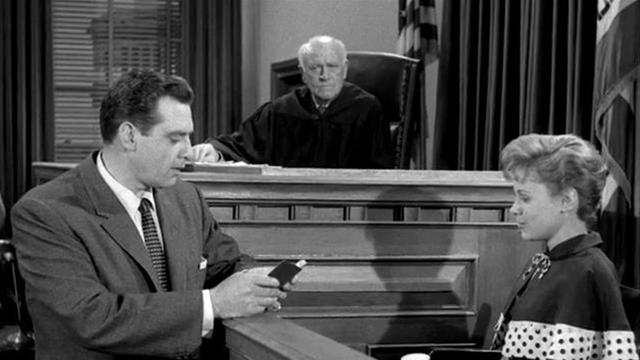
When I hear the word ‘advocate,’ I picture the T.V. courtroom scenes of Perry Mason.
He is the advocate every innocent defendant will want to stand with them to defend against charges brought before the court. (Perry Mason always wins.)
So I like the idea that Jesus will send us a powerful advocate.
Sproul breaks down the literal Greek to Latin translation:
Para – Along side & kletos, from the verb, kaleo, which means “to call.”
Literally, a paraclete or a parakletos was somebody who was called alongside.
R.C. Sproul in Holy Spirit, Counselor
Sproul points out the Greek word was used for an attorney. Furthermore, a family attorney. He will always be there to defend you.
Again, my Perry Mason imagery, “Counsel, approach the bench.”
Jesus sends this one called alongside believers to defend us. Christ comes beside every saint to defend every time. Sproul then takes us to a scene of Stephen inActs 7, defending him before the court of Heaven.
JUDGMENT!
Do you understand that God has appointed Christ to judge the earth?
from the teaching of R.C. Sproul
Now allow me to ask you this:
Who may stand in the Presence of God?
Only Christ Jesus!
He IS holy in a way equal to God the Father, Jesus Christ the Son is perfectly holy as no other man has ever been.
A courtroom scene of Judgment now gets even better than Perry Mason.
Picture this:
Look up to heaven. The courtroom door is opened by an official who summons you to come in. At the bench as Judge sits Jesus.
You’re more than a little afraid! The Apostle John probably describes the heavenly court best in Revelation saying,
“When I saw Him, I fell at His feet like a dead man. And He placed His right hand on me, saying, “Do not be afraid; I am the first and the last..”
‘the Judge is going to stand up from behind the bench, come around to the front, an be our defense attorney, our advocate. Isn’t it incredible that Christ will be our defender?
Christ who comes along side us
What every Christian knows is true differs from the T.V. courtroom scene. Yes, Perry Mason also wins the case; but his client is innocent. What we know for certain is that we are guilty!
for all have sinned and fall short of the glory of God, being justified as a gift by His grace through the redemption which is in Christ Jesus..
Therefore, every creature in the image of God must have an Advocate to come alongside and Christ Jesus, who died for sinners, is the only One who can represent us, each mortal sinner made from dust into which God has breathed spirit.
‘and they worshipped Him.’
We’ve glanced at the scene of the Apostles looking up at Jesus as the Lord leaves them once more as Luke records in Acts 1. Yet as Sproul points out, back in Luke’s Gospel he adds an important detail.
50 And He led them out as far as Bethany, and He lifted up His hands and blessed them. Now it came to pass, while He blessed them, that He was parted from them and carried up into heaven.
And they worshiped Him, and returned to Jerusalem with great joy, and were continually in the temple praising and blessing God. Amen.
Previously, back in Jerusalem He had said:
“These things I have spoken to you so that you will not be led into sin.. “But because I have said these things to you, grief has filled your heart. But I tell you the truth: it is to your advantage that I am leaving; for if I do not leave, the [paraklētos] will not come to you; but if I go, I will send Him to you. – John 16:1,6-7
the Paraclete will convict the world
I would be remiss to close this case scheduled for the Highest Court with the Paraclete called to your side without presenting R.C.’s plea to the church concerning Judgment.
Sproul makes a case for the Holy Spirit you need to hear.
The Spirit will convince or convict the world of sin, of righteousness, and of Judgment.
The Triune God, p.331
‘One of the things Jesus did was expose false theories of righteousness..’ ‘Perhaps what Jesus is saying is, “What I did in my earthly ministry, now the Spirit will do as my replacement –“
We have a choice, my fellow beloved sinner.Who will be your Paraclete at the last Judgment?Hear what the Spirit says to the churches. — Or not.
Are you completely convinced? OR
Will you be convicted along with the world (without Christ Jesus to represent you)?
Why are you a Christian?
In the year of our Lord 2021, the world continues to grow population currently about seven billion, nine hundred million people and increasingly continues in its sin. Yet in these last days Jesus Christ is mocked as He was on the Cross by a world embroiled in sin. Did you sign up for that?
Sproul asks: What brought you to repentance? He continues:
“In addition to the objective evidence of your sin, the Holy Spirit cut through all your deceitful barriers that kept you from coming to the cross of Christ..
And here R.C. adds a judicial foreshadowing of the heavenly court.
“.. throwing yourself at his mercy, and saying, ‘God, be merciful to me, a sinner.’ God had to melt your heart.. and it was God the Holy Spirit who brought that inner conviction.”
the Courtroom of Heaven!
And He, when He comes, will convict the world regarding sin, and righteousness, and judgment: regarding sin, because they do not believe in Me..
Jesus Christ IS in heaven, seated at the right hand of the Father. A call will go out from the courtroom of heaven to all mortal flesh.
We cannot see this Highest Court.. And we will not get in until, like any other defendant, we are called.
the Paraclete of Pentecost
Christ Jesus is our Advocate! (Or He may be IF you will make Him your Lord.) Sproul concludes:
The Holy Spirit will not allow the world’s view of sin, righteousness, and judgment to prevail, because he’s the Spirit of truth, sent to the world by the Father and by the Son.
R.C. Sproul – Holy Spirit, Counselor
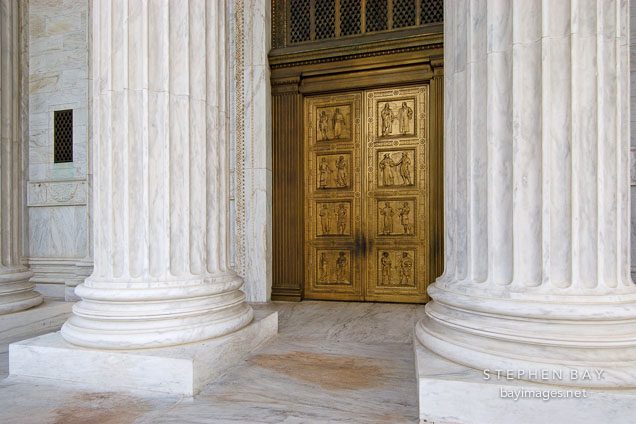
Heaven’s courtroom door is not the gate of Eden. And we are NOT called up to see heaven until our case comes up on the JUDGE’s docket.
But our time is near — Death! OR even The End of all earthly things…
What will you see when death’s door opens?
Who will you see when your NAME is called?
Will the Judge, seated behind the bench, STAND in your defense?
Roger, [or your Name] – ‘APPROACH THE BENCH’
R.C. Sproul(1939-2017)
With gratitude for his teaching of Scripture, I thank God for the source of most of the previous material, one of the Lord’s most faithful teaching mentors of many scriptural pastors, R. C. Sproul.
For more information and many doctrinally sound sermons and teaching please visit Dr. Sproul’s lifelong library at LIGONIER MINISTRIES.
Two Cities DESTROYED!! 1:47 suggest viewing until end as you read of Abraham negotiating with the LORD to spare some souls of this city of Sodom & also Gomorrah
WHAT JUST HAPPENED!?!
Have you forgotten what happened before?
Did you hear the WARNINGS?
Lot’s wife is not only returned to her new home after being captured by enemy kings, but they move from their tent into the city of Sodom. In addition to tending his sheep, her husband is now an important man of the city.
Abraham, whose pastures were separate from Lot, welcomes three heavenly visitors. With the help of the Lord he had rescued Lot. Therefore, Lot, his wife and daughters and servants were returned to the land near Sodom, where they moved within the walls of the wicked city of the land they entered as sojourners.
Messengers of Mamre
20 Adonai said, “The outcry against S’dom and ‘Amora is so great and their sin so serious that I will now go down and see whether their deeds warrant the outcry that has reached me; if not, I will know.”
22 The men turned away from there and went toward S’dom, but Avraham remained standing before Adonai.
What follows in Mamre is a very personal negotiation between Abraham and G-d.
23 Abraham approached and said, “Will You indeed sweep away the righteous with the wicked?
.. will You indeed sweep it away and not spare the place for the sake of the fifty righteous who are in it?
.. “Now behold, I have ventured to speak to the Lord, although I am only dust and ashes. Suppose the fifty righteous are lacking five..?
.. forty..?
“Oh may the Lord not be angry.. thirty..?
..twenty-one..? ..ten..?
.. And He said, “I will not destroy it on account of the ten.”
Two angels sojourning to Sodom
The two strangers have traveled from Mamre and entered the gates of Sodom at a time when darkness falls.
When Lot saw them, he stood up to meet them and bowed himself to the ground.
“Here now, my lords, please come over to your servant’s house. Spend the night, wash your feet, get up early, and go on your way.”
“No, we’ll stay in the square.”
3 And he pressed upon them greatly; and they turned in unto him, and entered into his house; and he made them a feast, baking matzah for their supper, which they ate.
A Bible story not preached ‘at church’
The actions of evil intentions which follow are too intense for common preaching to our socially-correct, all-inclusive gatherings of 21st century ‘christian families.’
Even so, we bring with us to church (sometimes) our own children who are heavily influenced by such things in the world of media and by their everyday school friends.
4 Before they lay down, the men of the city—the men of Sodom—surrounded the house..
[MANY MEN, a MOB perhaps drunken with wine and other spirits] 5 and they called to Lot..
6 But Lot went out to them at the doorway, and shut the door behind him, and said,
“Please, my brothers, do not act wickedly.
Who will judge sin?
Lot includes himself in their community of Sodom, calling them brothers. For after their rescue by his uncle he is now esteemed to sit at the gate among Sodom’s leaders.
So Lot now bids his fellow rulers of Sodom, ‘do not act wickedly.‘
He actually offers his two betrothed daughters (of whom we will hear more of later) to satisfy the passions of the mob who would surge past him if possible and into his house.
As now is evident to US, wicked mobs are not easily dissuaded.
This one fellow came in to sojourn, and he will needs be a judge: now will we deal worse with thee, than with them.
And they pressed sore upon the man, even Lot, and came near to break the door. 10 But the men [the two angels, messengers of the Lord] put forth their hand, and pulled Lot into the house to them, and shut to the door.
11 And they smote the men that were at the door of the house with blindness..
Flee the Wrath to Come
“Whom else do you have here? .. for we are about to destroy this place,
because their outcry has become so great before the Lord that the Lord has sent us to destroy it.”
Do NOT miss the WARNING!
For it is not entirely about the destruction of SODOM & GOMMORAH, or even a fading recent memory from a century past of two cities: HIROSHIMA & NAGASAKI.
The END of these last days will come upon us suddenly!!
A.D. 2021 may or may not be the time, but no flesh and blood can hide from the wrath which is to come at the fulfillment of time.
Used to monitor number of Google Analytics server requests
10 minutes
__utmb
Used to distinguish new sessions and visits. This cookie is set when the GA.js javascript library is loaded and there is no existing __utmb cookie. The cookie is updated every time data is sent to the Google Analytics server.
30 minutes after last activity
__utmc
Used only with old Urchin versions of Google Analytics and not with GA.js. Was used to distinguish between new sessions and visits at the end of a session.
End of session (browser)
__utmz
Contains information about the traffic source or campaign that directed user to the website. The cookie is set when the GA.js javascript is loaded and updated when data is sent to the Google Anaytics server
6 months after last activity
__utmv
Contains custom information set by the web developer via the _setCustomVar method in Google Analytics. This cookie is updated every time new data is sent to the Google Analytics server.
2 years after last activity
__utmx
Used to determine whether a user is included in an A / B or Multivariate test.
18 months
_ga
ID used to identify users
2 years
_gali
Used by Google Analytics to determine which links on a page are being clicked
30 seconds
_ga_
ID used to identify users
2 years
_gid
ID used to identify users for 24 hours after last activity
24 hours
_gat
Used to monitor number of Google Analytics server requests when using Google Tag Manager
1 minute
_gac_
Contains information related to marketing campaigns of the user. These are shared with Google AdWords / Google Ads when the Google Ads and Google Analytics accounts are linked together.