Tag: Luke

  • Witnesses to Jesus Risen! – Mary Magdalene

    Witnesses to Jesus Risen! – Mary Magdalene

    John’s Gospel – Witnesses to Jesus’ Resurrection!

    Understanding John’s Good News

    of Christ Crucified, Risen, Ascended & Returning

    Without dwelling on detail, note that:

    • Jesus was crucified around the year AD 30
    • The last surviving Apostle John lives until about AD 90
    • John writes his Gospel to the churches in about AD 85

    Some who witnessed the risen Jesus fifty years earlier still lived! Many more had confirmed the truth of Jesus’ crucifixion and resurrection to their families and nearly everyone else they encountered (the beginning of the great commissionMark 16:15).

    Many of these persecuted saints insistently witnessed Christ Crucified and risen in Body and Spirit to all until their own deaths.

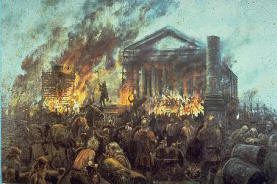
    They too suffered and died, either by the hand of Roman rule or result of persecution by zealous leaders of Jerusalem (until Rome sacked it in AD 70), a major event which had already taken place when John wrote his Gospel, letters and the Revelation of Jesus Christ.

    Fall of Jerusalem

    Today we begin John’s accounts of the Resurrection not chronologically (for the events had already taken place a half-century before), but from the witness of individuals, beginning with Mary Magdalene.

    “..we know not where they have laid him.”

    John 20:

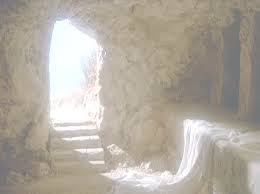
    Now on the first day of the week Mary Magdalene came early to the tomb, while it was still dark, and saw the stone already removed from the tomb.

    Recall from before the day of preparation for the Sabbath that Joseph had sealed the tomb. Matthew tells us that as Joseph walked away:

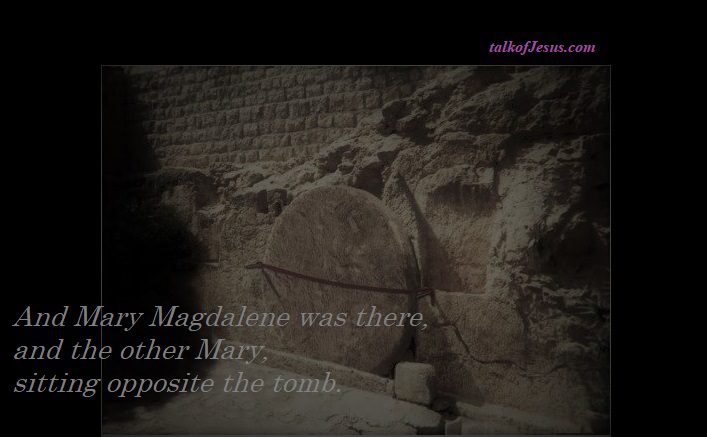
    ‘And there was Mary Magdalene, and the other Mary, sitting over against the sepulcher.’

    sealed tomb of Jesus

    Now, early on the first day of the week, John and Peter first hear Mary’s alarm.

    So she ran and came to Simon Peter and to the other disciple whom Jesus loved, and said to them, 

    They have taken away the Lord out of the sepulchre, and we know not where they have laid him.

    John 20:2b KJV

    Mary the mother of James and John was likely with her once again hoping to finally complete their task of embalming Jesus’ corpse.

    We will forego the likely familiar account of Simon Peter and John for the moment and focus on the witness of Mary Magdalene.

    10 Then the disciples went away again unto their own home.

    Mary Magdalene

    Μαρία Μαγδαληνὴ 

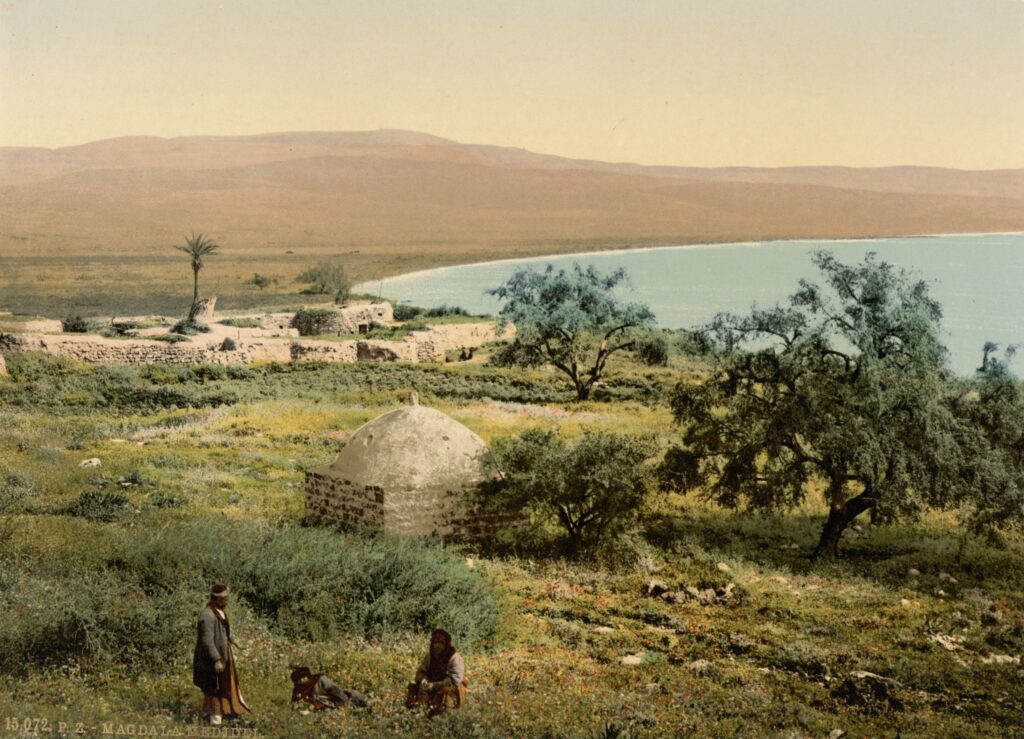
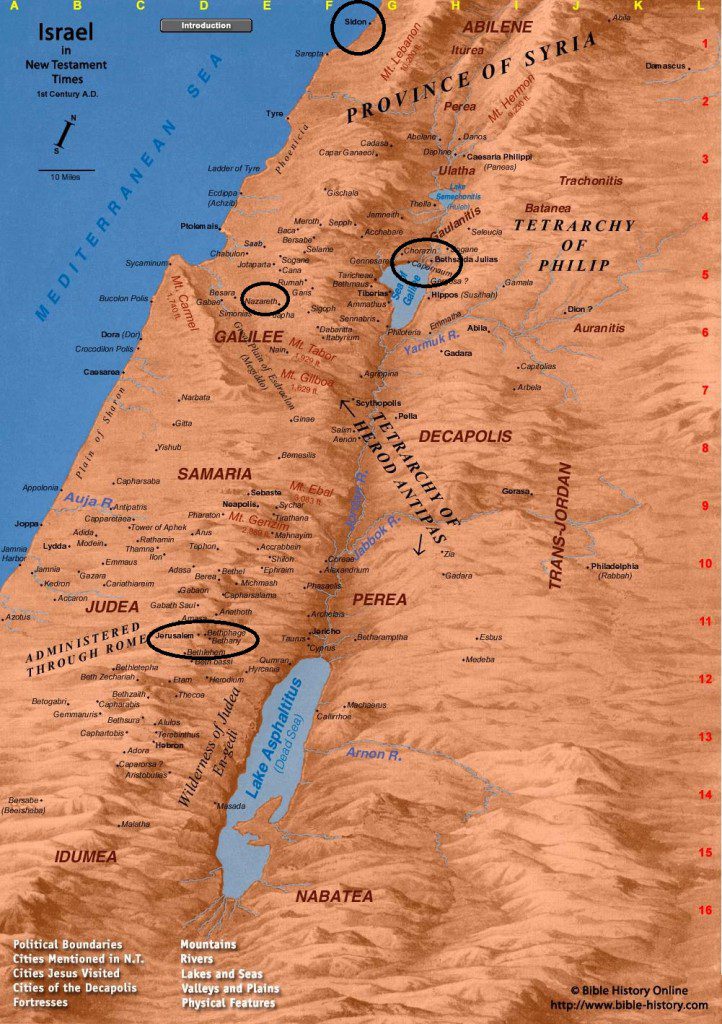
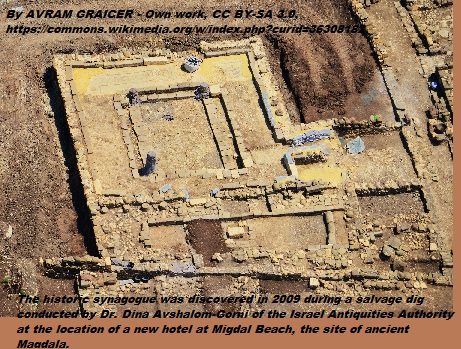
    Mary Magdalene is from the town of Magdala, a fishing town on the western shore of the Sea of Tiberias (Galilee). She is known by several names and sometimes confused with many other Mary’s of the Bible. Here are her common names:

    • Mary of Magdala
    • Miryam from Magdala
    • Maria Magdalene (even Saint Mary, which is not proper)
    • Μαρία ἡ Μαγδαληνὴ
    • also, the “apostle to the apostles,” which inappropriately elevates these important women who followed Christ to ‘Saints.’

    Jesus first encountered her during His teaching in Galilee.

    Luke 7:

    1 When He had completed all His discourse in the hearing of the people, He went to Capernaum.

    (We know it as Jesus’ Sermon on the Mount and Capernaum became Jesus home.)

    And a centurion’s slave, who was highly regarded by him, was sick and about to die. (A local Roman Centurion’s personal servant, perhaps a Jew.)

    When he heard about Jesus, he sent some Jewish elders asking Him to come and save the life of his slave.

    (Here is a Roman Centurion sending an envoy, a sort of ambassador sent from him to Jesus, comprising of Jewish officials of a local synagogue.) We’ll get to the local connection to Mary in a moment.

    7:11 Soon afterwards He went to a city called Nain; and His disciples were going along with Him, accompanied by a large crowd. Now as He approached the gate of the city, a dead man was being carried out, the only son of his mother, and she was a widow; and a sizeable crowd from the city was with her…

    And He came up and touched the coffin; and the bearers came to a halt. And He said, “Young man, I say to you, arise!” The dead man sat up and began to speak. And Jesus gave him back to his mother.

    Fear gripped them all, and they began glorifying God, saying,

    “A great prophet has arisen among us!” and,

    “God has visited His people!”

    Luke 7:16 NASB – reaction of the crowds in Nain after Jesus raised a young man from death

    This report concerning Him went out all over Judea and in all the surrounding district.

    (Reports on into Judea, even though Nain lies in Galilee, north of Samaria, some 144 km or about 90 miles by road from Jerusalem.)

    At that very time He cured many people of diseases and afflictions and evil spirits; and He gave sight to many who were blind.

    Luke 7:21 NASB

    From Magdala to Jerusalem

    Luke 8:1-3

    Soon afterwards, He began going around from one city and village to another, proclaiming and preaching the kingdom of God.

    The twelve were with Him, and also some women who had been healed of evil spirits and sicknesses:

    topical map of Israel from sea of Galilee, valley of the Jordan

    Mary who was called Magdalene, from whom seven demons had gone out, and Joanna the wife of Chuza, Herod’s steward, and Susanna, and many others who were contributing to their support out of their private means.

    .. she brought an alabaster vial of perfume, and standing behind Him at His feet, weeping, she began to wet His feet with her tears, and kept wiping them with the hair of her head, and kissing His feet and anointing them with the perfume.

    Those who were reclining at the table with Him began to say to themselves, “Who is this man who even forgives sins?”Luke 7:49

    John 20:

    10 So the disciples went back again to their homes.

    This continuation in John 20 uses language from multiple versions or translations linked above. - RH

    Jesus’ Resurrection Appearance

    11 but Miryam stood outside crying. As she cried, she bent down, peered into the tomb, and saw two angels in white sitting where the body of Yeshua had been, one at the head and one at the feet.

    “Why are you crying?” they asked her.

    She said to them, “Because they have taken away my Lord, and I do not know where they put Him.” As she said this, she turned around and saw Yeshua standing there, but she didn’t know it was he.

    15 Jesus said to her, “Woman, why are you weeping? Whom are you seeking?”

    Supposing he was the gardener, she replied, “Sir, if you’ve carried him away, tell me where you’ve put him, and I will take him away.”

    16 Jesus said to her, “Mary!”

    Turning, she cried out to him in Hebrew, “Rabbani!” (that is, “Teacher!”).

    17 Jesus saith unto her, “Touch me not; for I am not yet ascended to my Father: but go to my brethren, and say unto them, I ascend unto my Father, and your Father; and to my God, and your God.”

    To be continued...
    
  • Another Day of Silence at the Grave of a Loved One

    Another Day of Silence at the Grave of a Loved One

    It’s a familiar scene — loved ones mourning their loss in silence once the dead body can no longer be embraced by eyes or arms.

    All that remains are our fleeting memories of a life which has passed into lifeless dust. I have been there. Likely you have as well.

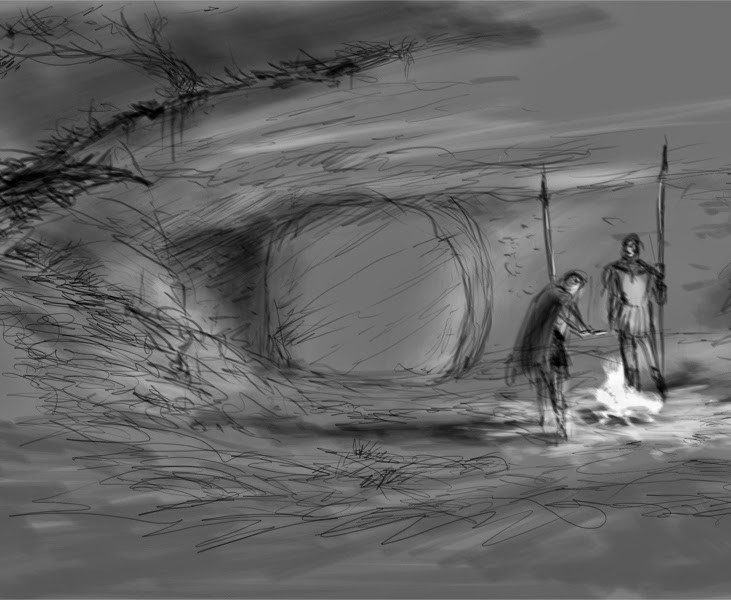
    two Roman soldiers standing by fire at night by Jesus' tomb

    It happens that the Beloved Body laid to rest previously is Jesus Christ.

    Perhaps you missed these mourners outside the tomb of Joseph of Arimathea where the remains of Jesus were sealed. In our own grief we lament how such a public spectacle of Jesus’ Crucifixion on a Roman Cross could have been inflicted on the Son of God.

    A Day of the silence of the Passover Lamb

    “An evil and adulterous generation demands a sign, but no sign will be given to it except the sign of Jonah.” Then he left them and went away.

    Matthew 16:4 CSB

    Now the LORD had prepared a great fish…

    (Certain death: Three days & three nights away.)

    Now the LORD had appointed a great fish to swallow Jonah, and Jonah spent three days and three nights in the stomach of the fish.

    Jonah 1:17 – with commentaries

    Perhaps the bereaving Apostles or distraught mourners had recalled this and other sayings of Jesus.

    “A little while, and you will no longer see Me; and again a little while, and you will see Me.”

    John 16:16 NASB
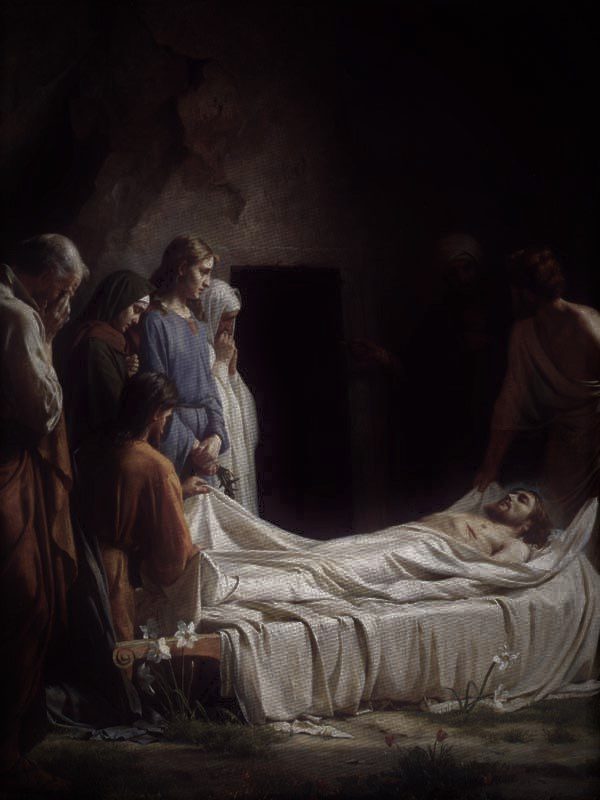
    body of Jesus outside tomb of Joseph with others

    Christ :: The Three Days and the Three Nights

    Don't become too immersed in the discussions of 'days' or 'dates' of Christ's Crucifixion and Resurrection, but for the curious here is an article discussing some of the Jewish calendar issues involved.

    After a brief time of carrying His pierced body from the Cross, Joseph and the others must wait until the completion of the Passover feast and until the day after the Sabbath to return and dutifully complete their burial task.

    We noted several witnesses to Jesus’ crucifixion previously in It is finished.. + Death’s witnesses. John does not list everyone nor does the Apostle include some additional events.

    John has not mentioned Judas Iscariot since his betrayal of the Lord in Gethsemane. Yet Matthew’s Gospel reveals the death of Jesus’ betrayer, the 30 pieces of silver purchasing the field of blood and how it fulfills prophesy.

    3 When Y’hudah, who had betrayed him, saw that Yeshua had been condemned, he was seized with remorse and returned the thirty silver coins to the head cohanim and elders..

    “I sinned in betraying an innocent man to death.”

    the confession of Judas Iscariot – Matthew 27:4 HNV

    5 Hurling the pieces of silver into the sanctuary, he left; then he went off and hanged himself.

    From Crucifixion until Christ’s Resurrection

    Before we proceed to John’s witness of Christ’s Resurrection, let’s linger just one more day to note events and witnesses beyond the tomb where Jesus’ body lay.

    Matthew 27:

    59 And when Joseph had taken the body, he wrapped it in a clean linen cloth, And laid it in his own new tomb, which he had hewn out in the rock: and he rolled a great stone to the door of the sepulchre, and departed.

    two Roman soldiers standing by fire at night by Jesus' tomb

    61 And there was Mary Magdalene, and the other Mary, sitting over against the sepulchre.

    What a sorrowful scene…

    And Matthew records:

    62 Now the next day, that followed the day of the preparation, the chief priests and Pharisees came together unto Pilate..

    64 Command therefore that the sepulchre be made sure until the third day..

    65 Pilate said to them, “You have a guard; go, make it as secure as you know how.” And they went and made the tomb secure with the guard, sealing the stone.

    Luke 23:

    And a man named Joseph, who was a member of the Council, a good and righteous man (he had not consented to their plan and action), a man from Arimathea, a city of the Jews, who was waiting for the kingdom of God; this man went to Pilate and asked for the body of Jesus.

    And he took it down and wrapped it in a linen cloth, and laid Him in a tomb cut into the rock, where no one had ever lain. It was the preparation day, and the Sabbath was about to begin.

    Now the women who had come with Him out of Galilee followed, and saw the tomb and how His body was laid. Then they returned and prepared spices and perfumes.

    (Note the brief amount of time these women John names had to see the tomb, return with spices and just begin the wrapping of Jesus’ slain body.)

    • Luke tells us (Luke 23:56b) why they had to leave Jesus’ body until later.

    And on the Sabbath they rested according to the commandment.

    But on the first day of the week, at early dawn, they came to the tomb bringing the spices which they had prepared.

    Luke 24:1 NASB
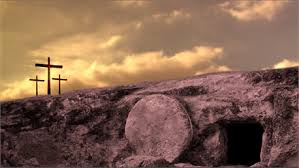
    3 crosses, cave tomb with stone rolled away
    • The Apostle Matthew tells how Joseph wrapped Jesus’ crucified body in a clean line cloth and laid the Lord in a place he had prepared for his own death.
    • Then Matthew tells us (27:60b NASB):

    and he rolled a large stone against the entrance of the tomb and went away.

    • Matthew, the Disciple of Jesus also records the sad scene of silent mourning, where Joseph must have recalled these two women who lingered there.

    61 And there was Mary Magdalene, and the other Mary, sitting over against the sepulchre.

    Joseph rolled a great stone to the door of the sepulcher, and departed.
    To be continued..
    .. at dawn the first day of the week ...
  • Are You a King?

    Are You a King?

    Therefore Pilate entered again into the Praetorium, and summoned Jesus and said to Him,

    “Are You the King of the Jews?”

    John 18:33 NASB

    The Politically Charged Question

    Pilate interrogates Jesus by beginning privately with a loaded question.

    As Governor AND presiding judge (in chambers), the Prefect questions the defendant already declared guilty by the Jews, local leaders who have no authority in this Roman court of Judea.

    Pilate’s questions (to which he must have had prepared standard answers to usual responses) went to motive.

    • “What is your authority here?”
    • “Are you a threat to true authority, which as Governor I represent?”

    The Gospels do not record these words, but the timing and context of Jesus’ trial suggests to the Governor that he recognizes a political hot potato in dealing with this popular Rabbi during the religious festival of the Jews in Jerusalem.

    For further understanding of Pontius Pilate look back to: 
    1st century Rome – an awkward embrace of RELIGION & politics

    John 18:

    Very early that morning:

    praetorium in Jerusalem
    • As the Jewish officials brought Jesus to the exterior of the Praetorium Pilate came out to them.
    • .. and they themselves did not enter into the Praetorium so that they would not be defiled, but might eat the Passover.

    29 Therefore Pilate went out to them and said, “What accusation do you bring against this Man?”

    They answered and said to him, “If this Man were not an evildoer, we would not have delivered Him to you.”

    31 So Pilate said to them, “Take Him yourselves, and judge Him according to your law.”

    The Jews said to him, “We are not permitted to put anyone to death..”

    Sentenced to death by accusation

    We already know of the deceptive stealth of the Temple officials, ceasing Jesus at night then bringing the Messiah of Israel to trial before them.

    The Jews really had no authority in Judea and regardless of their predetermined verdict of guilt and sentence of death, Pilate dismisses their case. But now the politics come into play.

    These religious emissaries want to execute the man opposed to their religious positions of power, the Man who had ridden victorious into town on a donkey just a few days before, Jesus of Nazareth (a town not even in Pilate’s Judea).

    Although we seldom consider the passage of time within a single verse or two of scripture, consider this possibility in the scene about to take place:

    • Certainly the Jews with their prisoner Jesus on the outside and Pilate with his advisors inside the Praetorium must ponder what to do next.
    • Since Pilate is in charge of Jerusalem and responsible to Rome for any potential trouble, he makes the first move in trying to keep peace between the politics and religion of Jerusalem.

    Questions with political consequences

    33 Therefore Pilate entered again into the Praetorium, and summoned Jesus and said to Him…

    Although the trial of Jesus takes place like all Roman trials in the public square, Pilate begins his questioning of this prisoner of the Jews in private.

    painting of pontius pilate

    “Are You the King of the Jews?”

    Are you the King?

    Questions with political consequences are best asked first in private. Leaders must know the politically correct answer before asking it in public.

    Remember Jesus’ accusers were not present because they would not defile themselves by their self-righteous rule of separation from this gentile Governor responsible for every civic event in Jerusalem. The Jews needed to maintain their white-washed public image before their followers.

    • Pilate summoned Jesus to him.
    • As a result of his summons the Jews had to release Jesus into the governor’s custody.

    βασιλεύς

    What is the root meaning of Pilate’s question to Jesus?

    βασιλεύς basileús, bas-il-yooce’; probably from G939 (through the notion of a foundation of power); a sovereign (abstractly, relatively, or figuratively):—king.

    • leader of the people, prince, commander, lord of the land, king

    What are you, Jesus?

    (It’s a fair question — to which the Governor would have had a standard reply.

    Imagine some of these pre-prepared political answers of Pilate.)

    • We have no kings here. You are not a king of Egypt or even Herod who was once king in Jerusalem. Kings do not matter here.
    • Our king resides in Rome and I am his governor. What I say comes from our king: Tiberius Caesar.
    • Are you a king? It does not matter. Tiberius Caesar is king.

    Rather than being led into a conversation about who He is not, Jesus asks the Governor a question.

    34 Jesus answered,

    “Are you saying this on your own initiative, or did others tell you about Me?”

    • Is this really your question
    • or did someone tell you that I am a King?

    The Governor immediately reminds the accused that in fact he, Pilate, is Roman (and Rome governs Jerusalem).

    Pilate answered, “I am not a Jew, am I?

    Your own nation and the chief priests delivered You to me;

    what have You done?”

    John 18:38 NASB

    Pilate’s response confirms indictment by the chief priests, but the judge’s question, ‘What have you done?” is opportunity for the defendant to appeal His ill-gotten verdict.

    Israel’s Messiah Jesus answers the Governor’s original question about His Authority.

    My Kingdom – βασιλεία

    Jesus answered, “My kingdom is not of this world.

    John 18:36a

    The Accused makes no claim to Jerusalem or to Judea or any Syrian territory governed by Pilate.

    Rather Jesus claims an authority of the gods (in Pilate’s understanding). In this case:

    ‘royal power, kingship, dominion, rule, not to be confused with an actual kingdom but rather the right or authority to rule over a kingdom.’source: blueletterbible.org

    Jesus continues His assurance to Pilate that He is no threat to Rome as other kings and threatening rebels fight to gain influence in places like Jerusalem.

    “… If My kingdom were of this world, then My servants would be fighting so that I would not be handed over to the Jews;

    but as it is, My kingdom is not of this realm.”

    What Realm?

    • “..but as it is, My kingdom is not of this realm.” – John 18:36c NASB
    • “..but now is my kingdom not from hence.” – John 18:36c KJV
    • “..But as it is, my kingdom is not from here.” – John 18:36c CSB

    A King must have a country, a realm to rule here and now. Jesus Christ makes no such claim.

    The Lord Jesus when brought before Pilate confirms, ‘my kingdom is not from here.”

    ἐντεῦθεν

    Outline of Biblical Usage

    1. from this place, hence
    2. on the one side and on the other, on each side

    Luke records an incident from earlier in Jesus ministry describing it with the same Greek word.

    Just at that time some Pharisees approached, saying to Him, “Go away, leave here, G1782 for Herod wants to kill You.” – Luke 13:31

    Herod, of course, is a pawn not only of Jerusalem’s Jewish politics but also of Rome. Jesus continued at that time to prophesy the events of these three days:

    And He [Jesus] said to them [Pharisees who secretly followed Jesus],

    “Go and tell that fox [Herod],

    ‘Behold, I cast out demons and perform cures today and tomorrow, and the third day I reach My goal.’

    “Nevertheless I must journey on today and tomorrow and the next day; for it cannot be that a prophet would perish outside of Jerusalem.

    Luke 13:32-33 NASB

    οὐκοῦν, adverb, not therefore

    This is subtle, as well as a function of speech; but don’t miss it.

    Several translations of the original Greek from this passage read differently in attempts to convey the argument here of Jesus’ judge Pilate.

    37 Therefore Pilate said to Him, “So You are a king?”

    (You are a king, but from where {if not here}?)

    • .. but it is better to write οὐκοῦν, so that Pilate, arguing from the words of Christ, asks, not without irony, art thou not a king then? or in any case, thou art a king, art thou not? cf. Winer’s Grammar, 512 (477).
    • and since a speaker often introduces in this way his own opinion, the particle is used affirmatively, therefore, then, the force of the negative disappearing. Hence, the saying of Pilate οὐκοῦν βασιλεύς εἰ σύ must be taken affirmatively: – Source: Strong’s

    To this end was I born

    Jesus answered, Thou sayest that I am a king. To this end was I born, and for this cause came I into the world, that I should bear witness unto the truth. Every one that is of the truth heareth my voice.

    John 18:37b KJV

    In answer to Pilate’s restatement of his own question, “Art thou a king then?” Jesus clearly states His purpose to which He was born as Son of Man and Son of David, the Christ of Hebrew Scripture.

    John began his Gospel (Good News) of Jesus Christ stating this same purpose. It really has nothing to do with anything kinglike, as the Jews expected of their Messiah that He would be like King David or King Solomon.

    In the beginning was the Word, and the Word was with God, and the Word was God.

    And the Word became flesh, and dwelt among us, and we saw His glory, glory as of the only begotten from the Father, full of grace and truth.

    John 1:1,14 NASB

    Jesus proclaims privately to Pontius Pilate:

    “I was born for this, and I have come into the world for this: to testify to the truth… CSB

    Pilate is about to ask Jesus the question a Judge must ask himself honestly before concluding a trial, but first Christ continues with purpose for all:

    “… Everyone who is of the truth listens to my voice.”

    the words of Jesus Christ to Pontius Pilate – John 18:37c CSB

    Do you with ears to hear listen to the voice of Christ Jesus?

    To be continued...
    Page TWO - Please click Page 2 below for the questions.

    Pages: 1 2