Tag: Luke

  • Kings, Governors, Politicians & Priests 2– Pontius Pilate

    Kings, Governors, Politicians & Priests 2– Pontius Pilate

    Τίνα κατηγορίαν φέρετε κατὰ τοῦ ἀνθρώπου τούτου

    “Tis katēgoria pherō kata ho anthrōpos hoytos?

    John 18:29 – question of Pilate to the Jews who brought Jesus before him

    What accusation do you bring against this Man?”

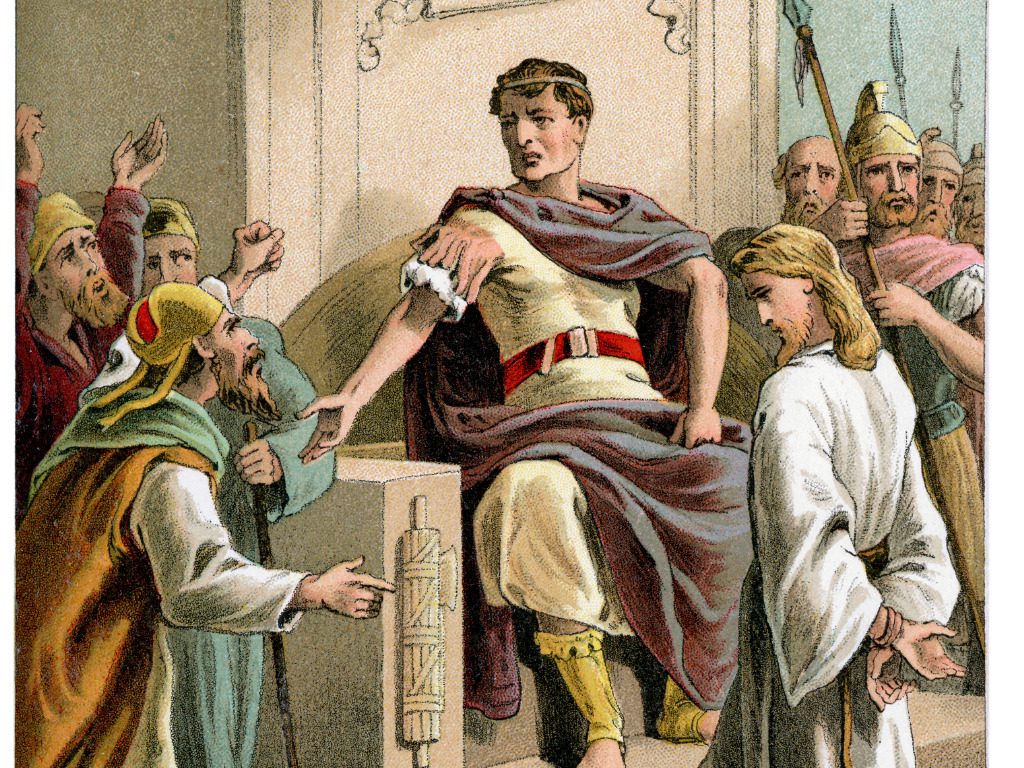
    Pilate’s question to those who brought Jesus before him is most appropriate for any judge of a man brought to law before the court.

    Previously we discussed in Kings, Governors, Politicians & Priests – Power in the Palaces of Justice the political nature of the accusations of Jerusalem’s religious officials. We also addressed why the Jewish prosecutors brought their Messiah to the Roman Prefect, Pontius Pilate.

    Then the Jewish leaders took Jesus from Caiaphas to the palace of the Roman governor. By now it was early morning, and to avoid ceremonial uncleanness they did not enter the palace, because they wanted to be able to eat the Passover.

    John 18:28 NIV

    John 18:

    29 Therefore Pilate went out to them and said, “What accusation do you bring against this Man?”

    30 They answered and said to him, “If this Man were not an evildoer, we would not have delivered Him to you.”

    Did these Jewish religious prosecutors answer Pilate’s question – what charge against this man?

    The Jewish officials make no specific charge before the judge of this court, the Governor Pilate. They indict Jesus as ‘an evildoer.’

    31 So Pilate said to them, “Take Him yourselves, and judge Him according to your law.”

    In effect, the Roman Governor of all the province of Judea acting as High Court Judge of Jerusalem tells them, ‘Case dismissed.’

    Politics & Religion

    If you read too quickly through the trial transcript (as we often do Scripture) you may miss more of the motivation and underpinnings of politics and religion in Jerusalem.

    • Pilate (Governor and Judge) dismisses the case of the Jews against Jesus.
    • The Prosecutors (Jewish officials) appeal his judgment immediately.
    We'll return to the Praetorium of Pilate,
    but first the questions of politics.

    Who is Pontius Pilate?

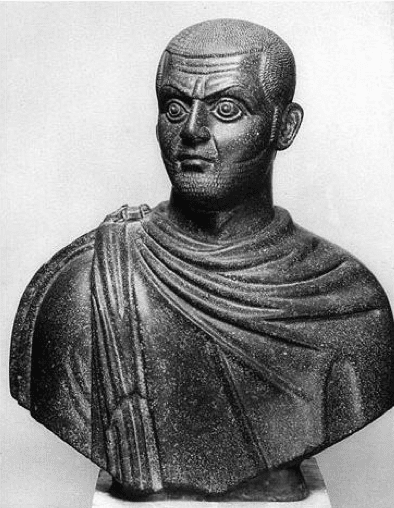
    Pontius Pilate (Latin: Pontius Pīlātus [ˈpɔntɪ.ʊs piːˈlaːtʊs]; Ancient Greek: Πόντιος Πιλάτος, Póntios Pilátos) was the fifth governor of the Roman province of Judaea, serving under Emperor Tiberius from 26/27 to 36/37 AD.

    Source: Wikipedia
    • First, Pilate is Roman in every context of culture.

    • Second, Pilate is a politician.

    He was appointed by Roman leaders as Prefect for this challenging eastern extreme of the Empire. His ten year appointment means that Pilate has full understanding of Jerusalem’s politics of religion prior to the Jews bringing Jesus to trial.

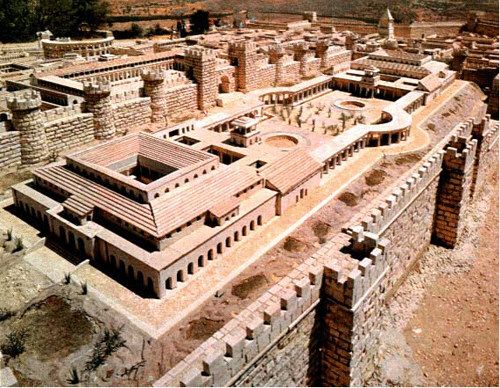
    It may be helpful to think of the Roman Prefect Pilate, governing from Herod’s elegant palace during every large Jewish festival, as a governor replacing the former kings – a sort of remote emperor of Rome.

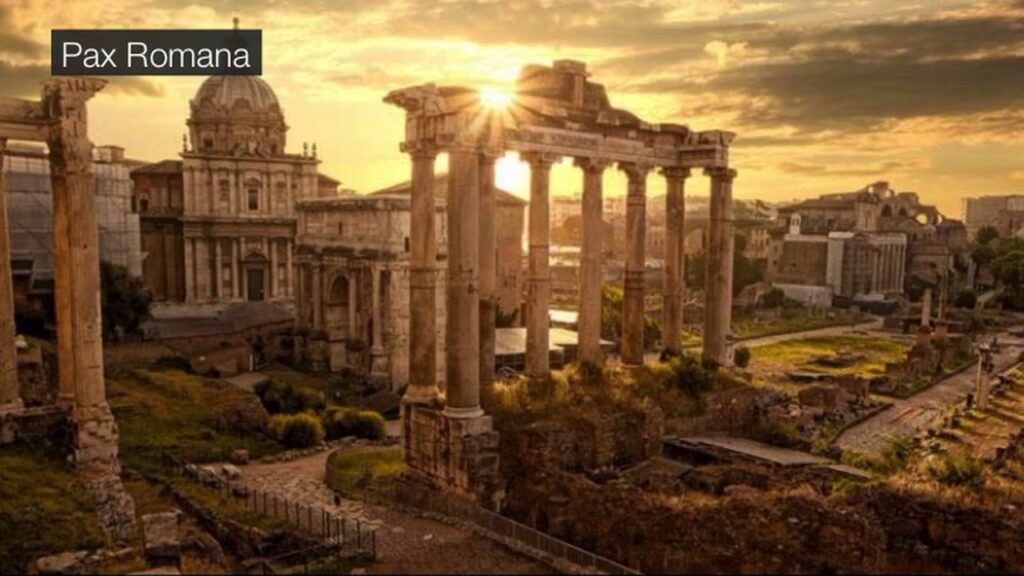
    He commands nearly 3000 troops, which Pilate can order at will to control Jerusalem’s crowds and zealous pilgrims. Jesus’ trial for Pilate falls only in the jurisdiction of keeping the pax Romana peace for Rome in Jerusalem.

    To understand Pilate, Rome’s Governor, you first must understand the politics & religion of Rome.

    anno Domini is Medieval Latin and means “in the year of the Lord”

    Rome – 1st c. Anno Domini

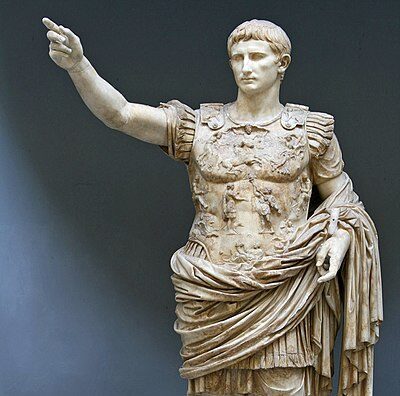
    We know the connection of Caesar Augustus to the birth {in approximately 6-4 BC} of Jesus Christ.

    In those days Caesar Augustus issued a decree that a census should be taken of the entire Roman world.

    Luke 2:1 NIV

    But understand the politics of Caesar throughout the Empire over time and gain insight into Pilate’s politics in this trial of Jesus {in approximately AD 30-33} far-removed from Rome in distant Judea.

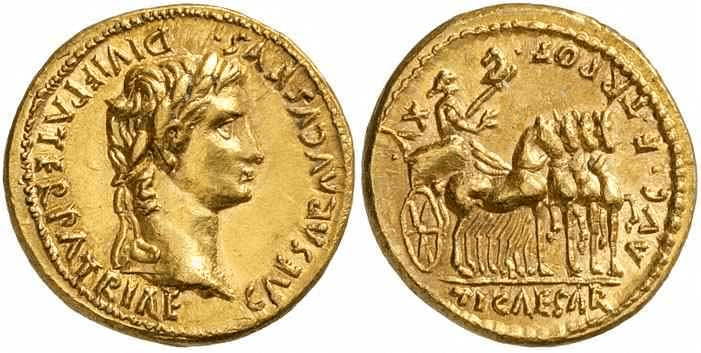
    Coin of Caesar Augustus

    Caesar

    Καῖσαρ, Καίσαρος , Caesar (properly, the surname of Julius Caesar, which being adopted by Octavianus Augustus and his successors afterward became an appellative, and was appropriated by the Roman emperors as a part of their title)

    • Tiberius Caesar Augustus was the second Roman emperor, reigning from AD 14 to 37 (during the time of Jesus’ trial). He succeeded his stepfather, the Roman emperor Augustus. – source: Wikipedia
    • Tiberius’s father, also named Tiberius Claudius Nero, a high priest and magistrate, was a former fleet captain for Julius Caesar. – source: Britannica.com
      • Don’t miss this: he was a Roman soldier commanding a fleet AND a judge AND a high priest; that is military, governing and religious authority
    • Emperor (Tiberius Caesar Augustus), ‘one of the greatest Roman generals’ appointed Pontius Pīlātus [ˈpɔntɪ.ʊs piːˈlaːtʊs] governor of the Roman province of Judea in AD 26/27 {a few years prior to Jesus’ trial for which he is best known}.
    More about the politics & religions of Rome to come…
    Page TWO - Please click Page 2 below for the questions.
    We’ll return to the Pilate’s trial of Jesus Christ, but I would like to provide a few more resources about the politics and religions of the Roman Empire before we do.

    To be continued...

    Pages: 1 2

  • Kings, Governors, Politicians & Priests – Power in the Palaces of Justice

    Kings, Governors, Politicians & Priests – Power in the Palaces of Justice

    Then led they Jesus from Caiaphas unto the hall of judgment: and it was early; and they themselves went not into the judgment hall, lest they should be defiled; but that they might eat the passover.

    John 18:28 KJV

    the Praetorium – in the Palace of Power

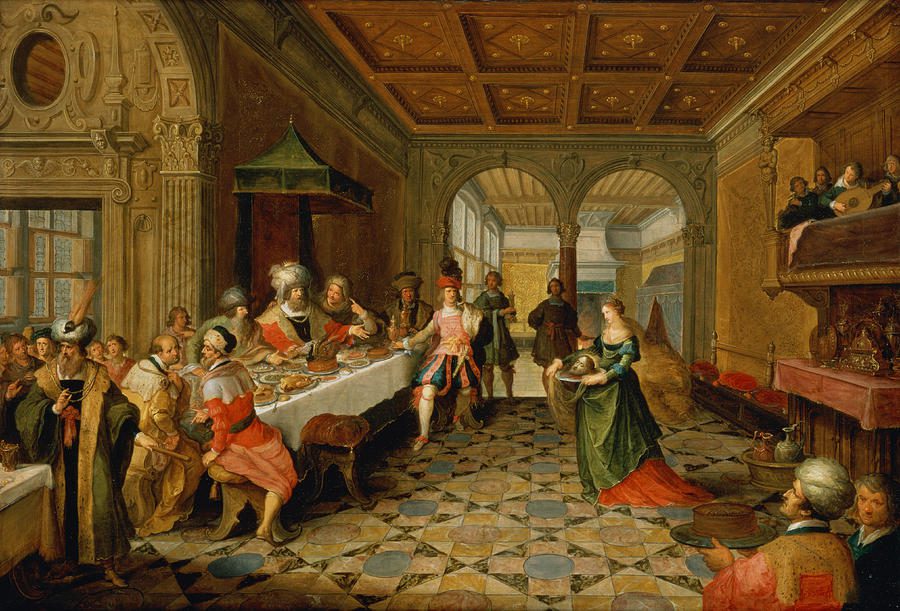
    painting of scene of banquet table of Herod with Salome presenting head of John the Baptist
    Herod’s Palace – Salome presents head of John the Baptist to Herod

    I don’t know about you, but the rapid-fire events of the conviction of the Messiah Jesus in so brief a time in the early hours of the day confuses me concerning the places these trials took place.

    If you have a comment of clarification please add it to this post.

    IF, unlike those present at the Lord’s first century trials you do not understand who is in charge, the venues of Jesus’ trials can get a little confusing.

    You may ask, ‘What does this banquet hall of Herod..’ (where King Herod had been presented the head of John the Baptist) ‘.. have to do with the Messiah Jesus on this morning following the betrayal of Judas?’

    The Praetorium is a semi-public place where Jesus has been sent — this place is on the grounds of the palace of King Herod.

    Let’s look back briefly at the history of the keys players in this developing drama which convicts the Messiah Jesus at night.

    King Herod

    Briefly, the history of the Herod’s gets complicated at times, but remember here that we are not talking about Herod the Great who navigated the complex politics of Rome with great agility.

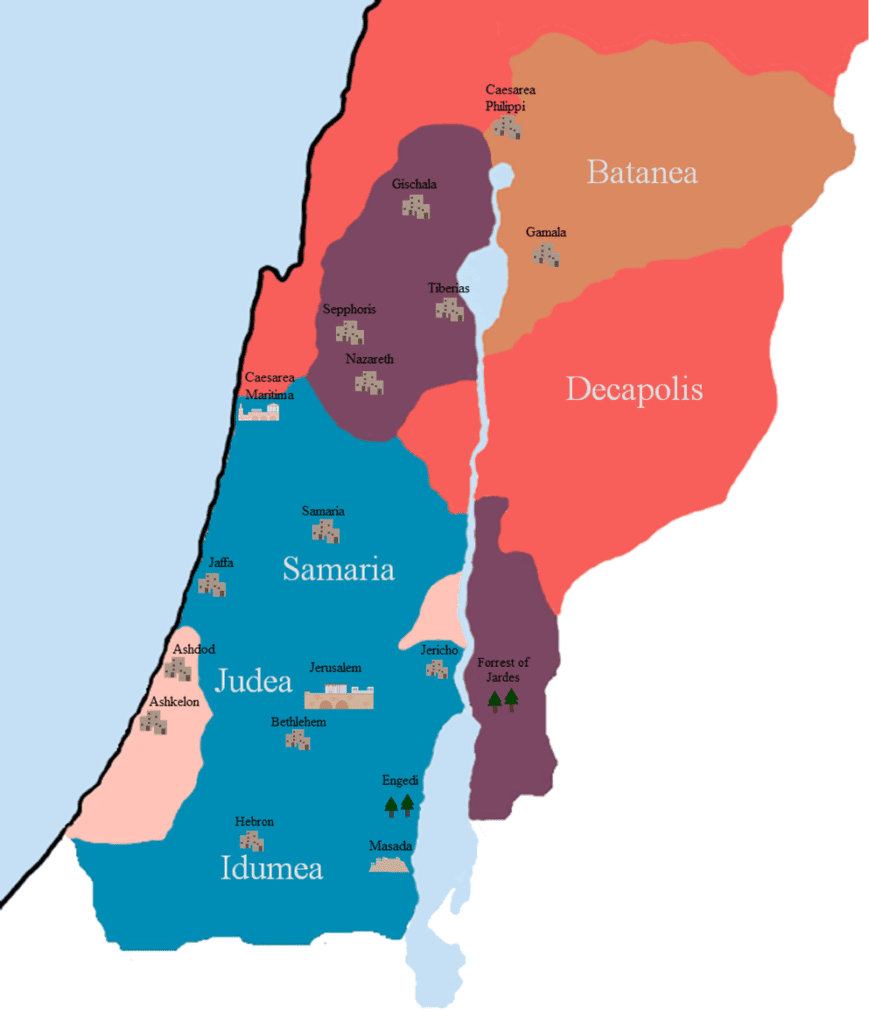
    After Herod’s death, Augustus Caesar ratified the wishes of his client king, Herod, to divide this eastern territory of Rome into three parts.

    Source: Herodian Tetrarchy
    From Wikipedia, the free encyclopedia
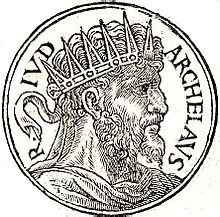
    1. Herod Archelaus was appointed Ethnarch (a governor & not king) of Idumaea, Judea (including Jerusalem) and Samaria.
    2. Herod Antipas (simply, Antipas to the Romans & his subjects, but described as ‘Herod‘ in the Gospels) became Tetrarch of Galilee (including Nazareth and Capernaum) and Perea.
    3. Philip I, son of Herod the Great and Cleopatra of Jerusalem, became Tetrarch of the northern part of Herod’s kingdom (area in modern Lebanon & Syria).

    ‘Governor Herod

    You've never heard Herod called that, have you?

    This is no longer the Jerusalem of Herod the Great! Jews are now considered merely as an ethnic people and Judeans an ‘ethnic group’ similar to nearby client Roman states. They are now governed as a regional people rather than as a small kingdom allied to Rome for mutual military advantage.

    Ethnarch (technically) is a Roman rank just a little higher than Tetrarch. (Kind of like Arch-Bishop is to Bishop in the church.)

    Judean Governors (like Herod) sometimes appear politically and practically to be more Roman than like traditional sons of David.

    IF these Herod’s were officially governors of their respective Roman regions, i.e. Judea, Galilee, Ituria, etc., — who then governed the governors?

    Who governs these Jews?

    John now addresses the question of who’s in charge in Jerusalem, who’s in charge of Judea, which Tetrarch governor of which ethnic region has authority in what was once the Kingdom of Israel.

    As Jesus is dragged from place to place for trial the quiestions mount:

    Is He a Judean? A Galilean? A Jew with authority in Jerusalem? A would-be King? Who IS this Man?

    Other Gospel writers have hinted earlier how this delicate duality of rule in first century Jerusalem provided opportunity of great hypocrisy among the rulers of the Jews and their religious political parties, i.e. Sadducees, Pharisees, etc..

    The scribes and the chief priests tried to lay hands on Him…

    So they watched Him, and sent spies who pretended to be righteous, in order that they might catch Him in some statement, so that they could deliver Him to the rule and the authority of the governor.

    Luke 20:19a,20 NASB

    “Is it lawful for us to pay taxes to Caesar, or not?”

    But He detected their trickery and said to them,

    “Show Me a denarius. Whose likeness and inscription does it have?”

    They said, “Caesar’s.” – Luke 20:22-24 NASB

    John 18:

    28 Then they led Jesus from Caiaphas into the Praetorium, and it was early; and they themselves did not enter into the Praetorium so that they would not be defiled, but might eat the Passover.

    29 Therefore Pilate went out to them and said,

    “What accusation do you bring against this Man?”

    the Praetorium – palace of the Governor

    WAIT! Even knowing something of the political intrigue and complexity of the Herod’s, I’m still confused.

    Again, please comment if you can help or have a question.

    Note that the King James Version {at beginning of this post} states:

    ‘Then led they Jesus from Caiaphas unto the hall of judgment…’

    I get that a hall of judgment could be a large room in the palace.


    Note now in the NASB translation,

    ‘.. into the [a]Praetorium..’

    AND by definition:

    πραιτώριον = Praetorium [note a]

    ‘John 18:28 i.e. governor’s official residence’

    Why is Pilate there?

    Why does Pilate emerge from the Governor’s palace to greet the religious police who have taken the Messiah Jesus into custody?

    The CSB clearly calls it 'the governor’s headquarters.'

    Wasn’t Pilate’s headquarters outside Jerusalem’s walls with the Roman Legion he commanded?

    NO!

    When Rome moved into a captured land they ‘civilized’ its remaining residents to become supporting (taxed) residents (not citizens) under Roman rule. As long as they paid their taxes and did not rebel against Roman authority these local Jews could do what they want with their own ethnic people.

    What accusation?

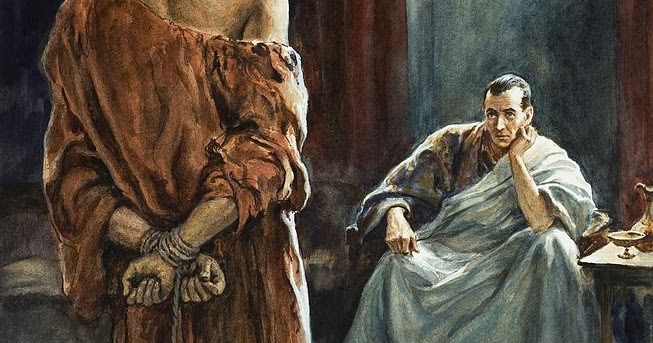
    Roman custom is such that some public judgments are made from the court of the Governor in charge. Pilate asks the local Jewish leaders who have led a prisoner to him the reasonable question of a Governor and Judge:

    https://www.blueletterbible.org/nasb/jhn/18/1/t_concf_1015029Τίνα κατηγορίαν φέρετε κατὰ τοῦ ἀνθρώπου τούτου

    “Tis katēgoria pherō kata ho anthrōpos hoytos?

    John 18:29 – question of Pilate to the Jews who brought Jesus before him

    These Jewish leaders of Jerusalem have brought a prisoner to Pilate in the earliest hours of the morning. Pilatos, the sixth Roman procurator of Judah and Samaria, addresses them in the universal language of the vast Empire, Greek not his native Latin, the religious Hebrew tongue of these Jews or a local Aramaic language.

    Their prisoner bound for trial appears to be Jesus, who had led thousands of followers to Jerusalem’s gates just a few days ago. Pilate would already know that the Man has not caused any trouble, except one minor incident within the courts of the Jews own Temple.

    The Governor has plenty to be concerned about for the upcoming day in monitoring the massive multitudes here for the Jewish holiday Pesach.

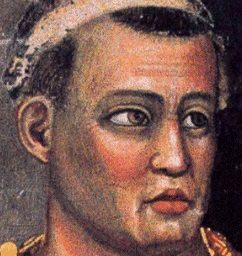
    painting of pontius pilate

    Imagine the thoughts of Pilatos:

    You’ve brought a prisoner to the governor in these early hours of this busy day?

    What does your warrant accuse that I should imprison the Man now?

    I have more important things to do than trifle with such matters of your religious concern.

    So Pilate, the governor, went out to them and asked,

    “What is your charge against this man?”

    John 18:29 NLT
    To be continued...
    
  • Defending GOD!

    Defending GOD!

    Apologetics

    You may know of a Christian ministry or witness whose stated purpose is to defend God.

    RZIM.org and others focus on apologetics witness Jesus Christ to unsaved souls, comparing Christianity to other religions — even to atheism. Some have come to Christ through these ministries by learning the logic and love of the Lord God calling sinners to Christ.

    Yet think of the irony of it:

    If any have NO NEED of defense, it would be ALMIGHTY GOD.

    “I and the Father are one.”

    Christ Jesus
    (Apologetics is not really defending God, 
    but answering those who question God - unbelievers
    and those who refuse God's love - apostates.) 

    Defending God and Christ Jesus to unbelievers is not my purpose, which is to grow your faith IF you are a Christian follower of the Lord.

    As I have stated recently, talkofJesus.com is not focused on unbelievers, but on followers of Christ who want to talk of Jesus in the context of scripture.

    Continuing in the Gospel of John we move on from the betrayal of Jesus by Judas to the defense of Jesus by Peter in the Garden of Gethsemane.

    John 18:

    8 Jesus answered, “I told you that I am He; so if you seek Me, let these go their way,” …

    10 Simon Peter then, having a sword, drew it and struck the high priest’s slave, and cut off his right ear; and the slave’s name was Malchus.

    11 So Jesus said to Peter, “Put the sword into the sheath; the cup which the Father has given Me, shall I not drink it?”

    Who is Malchus?

    Malchus is δοῦλος doulos of the High Priest, perhaps better translated in the KJV and other translations as ‘servant.’

    In fact, Judas had left the upper room in Jerusalem to betray Jesus to the ruling council headed by the High Priest Caiaphas.

    The chief priests and the whole Sanhedrin were looking for testimony against Jesus to put him to death, but they could not find any.

    Mark 14:55 CSB – of the Sanhedrin, religious rulers of Jerusalem

    Malchus’ name means ‘king,’ from a Hebrew origin pointing to the tribe of Benjamin. (The priests of course were Levites as prescribed by Law.)

    How ironic that Peter should defend Jesus, King of the Jews, by lopping off the ear of this man Malchus, whose name meant king.

    More about Malchus

    Malchus would have been ordered to lead these armed police officers of the Sanhedrin, guided by Judas, to bring this popular Messiah back to them for trial.

    John has already told us:

    But one of them, Caiaphas, who was high priest that year, said to them, “You know nothing at all, nor do you take into account that it is expedient for you that one man die for the people, and that the whole nation not perish.”

    John 11:49-50 NASB –

    Malchus would have been a personal servant to Caiaphas, an assistant with some authority assumed by his role in serving the High Priest. The Temple police held similar authority. And add to that a few Roman soldiers in the entourage lead by Malchus whose role was to see that the Jews did not get out of hand in this area governed by Pilate.

    scene of torches approaching a dark garden area

    Judas is, no doubt, among the men sent to bring Jesus to the justice of the Sanhedrin, but Malchus, servant of the High Priest is the man leading them into Gethsemane under the cover of night.

    Luke’s account

    Of course John, Matthew and Peter would have been among the awakened Apostles present in Gethsemane. Peter, who would later lead the church until his own crucifixion, responded by cutting off Malchus’ ear just after Judas’ kiss of betrayal of Jesus.

    Brash as always, Peter will defend the Lord – an ironic gesture defending the One who could instantly have angels present to ‘smite’ the lot of them – IF, that is, defeating men of dust was Jesus’ will.

    Of course, it wasn’t.

    Luke 22: KJV

    And while he yet spake, behold a multitude, and he that was called Judas, one of the twelve, went before them, and drew near unto Jesus to kiss him.

    But Jesus said unto him,

    Judas, betrayest thou the Son of man with a kiss?

    When they which were about him saw what would follow, they said unto him,

    (The Eleven have now drawn near to Jesus…)

    Lord, shall we smite with the sword?

    And one of them smote the servant of the high priest, and cut off his right ear.

    Details of witness from John:

    • As soon then as he [Jesus] had said unto them, I am he, they went backward, and fell to the ground. John 18:6
    • A second time Jesus answered them (probably their leader): I have told you that I am he: if therefore ye seek me, let these go their way John 18:8
    • Simon Peter drew the sword… John 18:10 & 11
    • The name of the High Priest’s slave (servant) is Malchus. John 18:10

    Luke’s detail of a miracle

    But Jesus answered and said, “Permit even this.”

    And He [Christ Jesus]

    touched his {Malchus’} ear

    and healed him {the servant of Caiaphas, High Priest of the Jews}.

    Luke 22:51 NKJV

    Jesus heals the ear struck by Peter’s sword! His enemy, head of an armed force sent by the Jews to apprehend their Messiah Jesus to be tried and convicted covertly under the cover of night. The Lord just betrayed by one of His Disciples shows mercy to the men Judas led to apprehend Him.

    Defending Jesus

    John is about to tell us more of the saga of Peter on this night in which our Lord was betrayed. In fact, as you know, away from Jesus Peter could no longer defend Jesus even by admitting to be a follower.

    If that how it is for you, beloved believer in Christ Jesus?

    • How do you defend Jesus when confronted by the multitudes?
    • Is your defense of God an aggressive agenda of man, a political position of proving that Jesus wants what you do?
      • (For that was what Judas expected of his King Jesus.)
    • Do you praise the Lord in the church building, yet deny your God on trial in the rise and fall of blame by the darkness of this world’s accusations?
      • Even Peter struggled with that, dear friend, but the risen Lord Jesus restored Him again and again.

    How ironic that we would defend the LORD God, that we want to defend Christ Jesus who came into the world to save us.


    garden in darkness

    In these last days, which began under the darkness of a night in Gethsemane, God has defeated sin and death for us

    — by the grace of the Lord’s love

    for those He has chosen.

    We believe in the One Son the Father sent to suffer for our sins, the Messiah Jesus.

    For Christ Jesus our Lord, we make no apologies to a world without ears to hear the Good News — a world directed by Satan for just a time more.

    Jesus IS LORD!

    To be continued...