Tag: Luke

  • James – Above all – 9

    James – Above all – 9

    But above all things, my brethren, swear not…

    James 5:12a KJV

    You had begun to count the barrage of important words to the congregation. “FINALLY,” says the preacher after a lengthy sermon, as our dull ears and glassy eyes slowly return, “point number nine.”

    Peter, Paul and others frequently conclude with ‘finally,’ James closes his letter, ‘above all.’

    In conclusion

    Before we examine this specific closing of James and the concluding nine verses, consider a few closing points of other pastoral letters.

    • Finally, brothers and sisters, rejoice. Become mature, be encouraged, be of the same mind, be at peace, and the God of love and peace will be with you. – Paul, in his second and final letter to the church at Corinth.
    • Finally, be strengthened by the Lord and by his vast strength. – Paul’s brief closing to his church at Ephesus
    • Finally, brothers and sisters, whatever is true, whatever is honorable, whatever is just, whatever is pure, whatever is lovely, whatever is commendable ​— ​if there is any moral excellence and if there is anything praiseworthy ​— ​dwell on these things. – Paul’s closing to the church at Philippi

    James closes: Above all, my brothers and sisters, do not swearso that you won’t fall under judgment.

    Other first generation church leaders also include similar phrases as if to say, ‘last, but not least.’ Their letters also emphasize some of same points to remember as does James.

    • Above all, put on love, which is the perfect bond of unity. – Paul’s letter to the church at Colossae
    • Above all, maintain constant love for one another, since love covers a multitude of sins. – First letter of Peter to the church, echoed by James’ concluding sentence.
    • Above all, be aware of this: Scoffers will come in the last days scoffing and following their own evil desires – Second letter of Peter to the church. Early in his letter James makes a similar point:

    James 5:

    Oaths

    12 Above all, my brothers and sisters, do not swear, either by heaven or by earth or with any other oath. But let your “yes” mean “yes,” and your “no” mean “no,” so that you won’t fall under judgment.

    James does not prohibit oaths; rather he calls out those who take oaths, vows or solemn promises lightly.

    If a Christian’s oath is the fruit of God, then our words must convey pure truth. NO guarantees by god, as unbelievers see the Lord, and NO guarantees by earth and NO oaths by any other authority outside your own true word.

    Yes equals yes and your no equals no. Simplicity. And truth by your own personal guarantee of your own words. Does this not go back to the opening point of James’ letter to the church?

    My dear brothers and sisters, understand this: Everyone should be quick to listen, slow to speak, and slow to anger, for human anger does not accomplish God’s righteousness.

    James 1:19-20 CSB

    Don’t get God involved in your words to another. By your words you will be judged.Matthew 12:37

    Prayer

    13 Is anyone among you suffering? He should pray…

    What believer in Christ does not suffer? All sometimes suffer hardship, sickness, troubles and many evils.

    Pray, beloved brother, James urges in his letter. Pray, beloved sister. Yet he also points to the encouragement from others in our church family, because their joy reflects the Lord to us.

    Are you cheerful? Then sing praises to the Lord.

    (Are you? Then do you?) Those brothers and sisters who suffer hardship feel your joy in Christ. At times you also need to hear the joy of beloved brothers and sisters in Christ.

    14 Is anyone among you sick? He should call for the elders of the church, and they are to pray over him, anointing him with oil in the name of the Lord.

    Here James points to leadership roles of encouragement by our local church. His corporate letter tells all who are sick to seek the anointing and prayer of our local leaders, the elders who shepherd us. Though the anointing oil does not heal the unknown mysteriously; the Lord, in answer to prayer, may heal the one who believes, if it is His will.

    Mark relates good news of such results by those sent out into surrounding towns by the Lord Jesus.

    So they went out and preached that people should repent. They drove out many demons, anointed many sick people with oil and healed them.

    Mark 6:12-13 CSB

    Once again, before the Lord’s half-brother repented of his disbelief, James most likely knew some of these who experienced miraculous healings. James continues:

    The prayer of faith will save the sick person, and the Lord will raise him up; if he has committed sins, he will be forgiven.

    James 5:15 CSB

    Jesus forgives a lame man

    Perhaps you recall a healing by Jesus in a public event where James may have been among the crowds outside the house.

    Luke 5:

    17 On one of those days while he was teaching… sitting there … from every village of Galilee and Judea, and also from Jerusalem. 18 Just then some men came, carrying on a stretcher a man who was paralyzed… because of the crowd, they went up on the roof and lowered him on the stretcher through the roof tiles into the middle of the crowd before Jesus.

    20 Seeing their faith he said, “Friend, your sins are forgiven.”

    … Who can forgive sins but God alone?”

    23 Which is easier: to say, ‘Your sins are forgiven,’ or to say, ‘Get up and walk’?

    24 But so that you may know that the Son of Man has authority on earth to forgive sins”—he told the paralyzed man, “I tell you: Get up, take your stretcher, and go home.”

    25 Immediately he got up before them, picked up what he had been lying on, and went home glorifying God.

    James 5: Do you need healing?

    photo of man wearing t-shirt "PRAY" JAMES 5-16
    James 5:16

    Above all, remember that God judges and that the Lord answers prayer.

    16 Therefore, confess your sins to one another and pray for one another, so that you may be healed. The prayer of a righteous person is very powerful in its effect.

    James points to Elijah, whose prayers God heard and answered because of his righteousness.

    Are we not cleansed of our sin in Christ Jesus, dear brother?

    Confess your sins and be cleansed by the righteousness of Christ. Pray for the sick among you.

    Community

    19 My brothers and sisters, if any among you strays from the truth…

    James closes with this: IF any among you.

    He does not begin by asking us to judge others, our neighbors or the world, but simply points this directly to application to the community of our church by saying, ‘if any among you.’

    Christians tend to be quick to speak and slow to listen, as James cautions earlier in his letter.

    strays from the truth

    This closing call to truth is not to the grey-edged truths of the world which are not truth at all. His pastoral call to us is to that higher absolute truth of Christ Jesus.

    Do not stray from truth. But if you do — and some of you will — bring your brother or sister back into the love of our church community.

    and someone turns him back

    We all know the Way, the Truth and the Life. To bring someone back to Jesus will require their repentance.

    But who will go to a brother in the Lord asking for his repentance?

    It is not an easy thing to confront another in truth and love. (All the more reason we should limit this to the community of our church.)

    20 let that person know that whoever turns a sinner from the error of his way will save his soul from death and cover a multitude of sins.

    James’ question to those of the church is really more like:

    Do you care at all if your brother (or sister) in the church will go to hell?

    Go to him seeking his repentance and ask him to return to the Lord.

    We all have many sins in need of covering by our works of grace.

    see James 5:20

    No Post Script

    James writes to the church corporately, perhaps with certain individuals in various churches in mind.

    He could have closed with a few personal greetings or asked for a personal messenger to come to him with help of some sort, but he does not. And James could have appealed to the authority given him as one of the brothers of Jesus, son of Mary the same mother. Again, he does not.

    Rather, he appeals to all as brethren and himself humbly as a fellow servant of the Lord. James and the church at that time identify themselves as Jews.

    Christians are no different than Jews to Rome and the world. Cause any trouble and you are not welcome in this city.

    map major Jewish cities of Roman Empire - Rome Antioch Damascas Jerusalem Alexandria

    James writes to encourage several congregations throughout the region of the eastern empire of Rome.

    Most hearers of his letter are poor, some very poor. Trials of life test your faith in the Lord.

    Persist — show the fruit of your joy in the Lord, the evidence of your faith.

    Count it all JOY, dear brothers and sisters, whenever you face the challenges of your faith in Christ Jesus!

    HOW?

    Any trial is an outward circumstance which could challenge your faith. Temptation always lurks inwardly as an enticement to sin. Here is one good way to resist:

    …let every man be swift to hear, slow to speak, slow to wrath.

    James 1:19b KJV

    Do what the Law of God says and allow the Lord to judge others. Those rich who dispersed you to hard circumstances in difficult places will also be judged. Do not allow them to lead your church or you into sin.

    All must show their works of their faith, bringing each other into repentance before the Lord. God commands peace between believers. Repent and love each other, for the sake of Christ Jesus.

    Do you, beloved believer to whom I write, hear the Lord Christ Jesus in our appeal?

    James writes to many churches, asking us to build community and faith by our works of faith in Jesus.

    Above all, hear the heart of James.

    For he was once the unbelieving brother of our Lord Jesus Christ. Now he asks us to show our faith by our works.

  • James and Jesus: Brothers – 6

    James and Jesus: Brothers – 6

    Although we took an initial look at the identity of the letter writer in Witness of a Converted Brother, before we ask ourselves about the conclusion of James’ letter, I would like to go back to take a look at the relationship between James and Jesus.

    James, Bond-servant of his Brother

    Ἰάκωβος θεοῦ καὶ κυρίου Ἰησοῦ Χριστοῦ

    James, a bond-servant of God and of the Lord Jesus Christ,

    James 1:1a Greek; NASB
    Roman auction of bond-slaves to be sold

    Picture James and Jesus after the resurrection. What a humble relationship the author James states here.

    First and foremost, he is a bond-servant, δοῦλος, doulos or slave.

    Slaves were common in the Roman empire. They served men of importance at many levels: kings, the rich, military leaders, land owners, regular citizens to whom one owed money. Slaves were not uncommon in Judea and servitude required the self-control of humility.

    If the relationship between James and Jesus is one of a bond-servant to his master, James acknowledges that as a servant of God he serves Jesus as his lord. The risen brother (actually, half-brother) of James is God in the flesh!

    James and Jesus of Nazareth

    Surely by now Mary has told Jesus’ brothers and sisters what she had held in her heart: this son is the Son of the Living God by the Holy Spirit!

    Isn’t this the carpenter’s son? Isn’t his mother called Mary, and his brothers James, Joseph, Simon, and Judas? And his sisters, aren’t they all with us? So where does he get all these things?” And they were offended by him.

    Jesus said to them, “A prophet is not without honor except in his hometown and in his household.” And he did not do many miracles there because of their unbelief.

    Matthew 13:55-58 CSB

    James was always the younger brother. Joseph had died, then Jesus assumed his role as head of their household. Later Jesus would leave Nazareth over controversy related to His teaching to live in nearby Capernaum.

    He traveled throughout Israel for three years prior to His crucifixion and resurrection. James, as the elder brother, would have cared for his mother, brother and sisters.

    What was it like to grow up with Jesus?

    Much of the commentary to follow is best read as historical fiction from a probable first-person narrative of James, half-brother of Jesus, based on the scriptures linked.

    Although the risen Christ anoints James as head the church of Jerusalem, he would have traveled there many times.

    James and Jesus would have been known as Galileans, Nazarenes and familial brothers, not Judeans or leaders of Jerusalem. But now he is one of more than five hundred witnesses to Jesus’ resurrection. James accepts the difficult call to lead the church in Jerusalem.

    Though we have no sermon, but only his letter to the churches, his personal witness of Jesus must have been subject of much preaching.

    “What was it like to grow up with the Lord Jesus,” so many believers must have asked?

    Humbly, James would have confessed, “I did not believe.”

    The Child James and Jesus

    {Hear James’ voice in his later good news to the church.}

    The physician Luke interviewed our mother Mary and many others in order to tell us about Jesus, before His recent miraculous and powerful earthly ministry of only three years. Our mom now retells a story I will share with you of when Jesus was a young man and I was just a small child.

    Luke 2:

    [Jesus] grew up and became strong, filled with wisdom, and God’s grace was on him. Every year our parents traveled to Jerusalem for the Passover Festival. When he was twelve years old, they went up according to the custom of the festival. Jesus stayed behind in Jerusalem, and they had to return to Jerusalem to search for him. (They sent us back to Nazareth with relatives.)

    After three days, they found him in the temple sitting among the teachers, listening to them and asking them questions.

    (I remember when they came back to us in Nazareth.)

    And Jesus increased in wisdom and stature, and in favor with God and with people.

    In the Synagogue of Nazareth

    A few years later Dad died, and Jesus watched over all of us. When we grew older I heard my brother teach in our synagogue. but I did not believe in Him. Of course, I too worshiped in the synagogue on the Sabbath Jesus read from the scroll of the Prophet Isaiah.

    Luke 4:

    The Spirit of the Lord is on me,
    because he has anointed me
    to preach good news to the poor.
    He has sent me…

    Luke 4:14 from Isaiah 61:1

    Then my brother Jesus said: “The Scripture you’ve just heard has been fulfilled this very day!”

    My own brother, yet I could not believe the words He proclaimed to all of us, we who witnessed the Lord in the flesh. They all spoke well of my brother. We all wondered what Jesus meant.

    “Isn’t this Joseph’s son?” What does your brother mean by this?

    Then He said: ‘Physician, heal yourself!’ referring to a local rumor of a miracle He was said to have done nearby.

    Jesus said they resented that He did not prove himself in our hometown, using familiar illustrations of the prophets Elijah and Elisha doing miracles outside of Israel.

    Then the crowd turned. I didn’t know what to think, but I still didn’t believe Jesus and I too would have loved to have seen proof.

    Everyone in our synagogue was enraged. They got up, drove Jesus out of town to the edge of the cliff, intending to hurl him over it.

    I thought of the words of Judah after Joseph’s brothers had thrown him into the pit. A few of us helped Jesus to quickly escape the angry Nazarene worshipers.

    Capernaum and Jesus Preaching Nearby

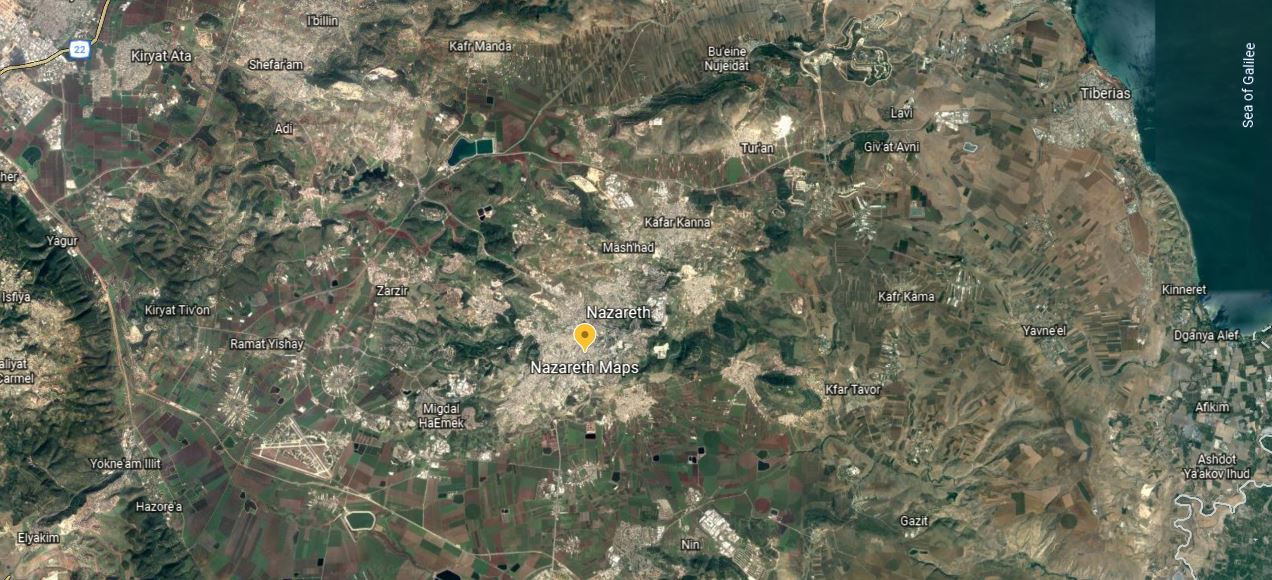
    Google maps route from Nazareth to Capernaum

    Jesus had already become very popular in Galilee before Nazareth rejected Him. Although I had not seen any yet, many attested to miracles my brother worked in nearby towns. That is why some had said, “do a sign for us here in your hometown.”

    People now followed Jesus into towns and everywhere He went.

    view from mountainside near Capernaum
    Hillside near Capernaum where Sermon on the Mount may baye been preached

    Matthew 4:

    13 He left Nazareth and went to live in Capernaum by the sea…

    From then on Jesus began to preach, “Repent, because the kingdom of heaven has come near.”

    Matthew 4:17

    We heard reports of my brother’s teaching many times as people traveled through Nazareth from here or there. Merchants of the fish markets and others also told us that Jesus had preached things like, “blessed are the poor,” and “blessed are the humble.”

    Teaching, Preaching, and Healing

    23 Now Jesus began to go all over Galilee, teaching in their synagogues, preaching the good news of the kingdom, and healing every disease and sickness among the people. 24 Then the news about him spread throughout Syria. (That’s what the Romans now call the region near us.)

    … 25 Large crowds followed him from Galilee, the Decapolis, Jerusalem, Judea, and beyond the Jordan.

    James and Jesus, a family visit

    Jesus lived in Capernaum, but He traveled mostly. When word came to us where to find Him, we often followed the crowds to see my brother. Mom delighted to see and hear Him, when we could. But me… I still didn’t fully believe all the reports we heard.

    We heard that some Scribes and Pharisees had come up from Jerusalem to see Jesus. So we traveled alongside the crowds to see Jesus.

    I sent a messenger to push through the crowds to speak to our brother.

    Luke 8:

    20 He was told, “Your mother and your brothers are standing outside, wanting to see you.”

    21 But he replied to them, “My mother and my brothers are those who hear and do the word of God.”

    We waited for Jesus to finish, listening to Him. Jesus preached many of the sayings we had already heard. And finally, we managed to meet our brother, who kissed and embraced us all. Then we stayed with Him, returning to Nazareth the following day.

    I met with Jesus other times too, but of course I could not follow Him because of my responsibilities to our family.

    Jerusalem

    Jesus had said to give to Caesar what is Caesar’s and to God what is God’s.

    I won’t get into politics since it’s so complicated. But next I would like to tell you where my brother stood on some of the controversies in Jerusalem.

    To be continued... James and Jerusalem
  • James – a Word on Works – 3

    James – a Word on Works – 3

    In a visual word about works. James entreats us, “let everyone see your works,” in this proverb of James, ‘be doers of the word.’

    What does it have to do with his initial advice, Consider it a great joy, my brothers and sisters, whenever you experience various trials?”

    James details the connection as he continues his pastoral letter to the church (actually, several churches). He makes a case that our works refine our faith and prove our faith to other potential followers of the Lord.

    But be doers of the word and not hearers only, deceiving yourselves.

    James 1:22 CSB

    Hearing and Doing the Word

    Did you ever hear the rebuke as a child, “You have two ears and one mouth?” It’s advice from this section of the letter of James to the church. Perhaps you haven’t read it in a while, but allow your heart to listen well to the Spirit.

    James 1:19-2:26

    19 My dear brothers and sisters, understand this:

    Everyone should be quick to listen, slow to speak, and slow to anger, for human anger does not accomplish God’s righteousness.

    James 1:19b-20 CSB

    Think about what we see and hear everyday. The world has this upside down. Doubtless the world of the first century encountered the same.

    People are angry about this, angry about that. They speak first and frequently. We can see it on television or online, and social media thrives on the polarized opinions of those who speak without understanding.

    We are quick to anger, impulsive to speak, and slow fo listen.

    How we reflect the world, dear claimants of Christ!

    Sadly, our works in this area of speaking boldly to others out of our zeal for the Lord likely needs the most work.

    Listen

    It takes humility to listen to another before speaking your heart.

    Do you converse with a brother or a sister in Christ? Our conversation with and unbeliever should be different, but the same principles apply. Before we answer do we understand the heart of the one speaking or if they oppose Christ possibly, but have interest because of something they ask about?

    “Swift to hear,” say some translations. Certainly not swift to react, as is our tendency. But to whom must we listen? What does the Apostle want the church to hear?

    Perhaps the most telling use of the Greek word here is found in a familiar teaching from Jesus.

    “You have heard that it was said, An eye for an eye and a tooth for a tooth. – Matthew 5:38

    It’s the traditional measured response of justice, seek no more from someone who has sinned against you than what he has taken by his trespass. Of course what follows is the Lord’s command for us to love our enemies.

    Though we all want “justice” for our enemy, we also seek “mercy” for our transgressions of the law. So let’s skip to the issue of anger, source of our own reactive speech, for the wisdom of James’ suggestion.

    Anger

    Everyone should be quick to listen … and slow to anger, 20 for human anger does not accomplish God’s righteousness.

    This is the only place James uses this word, which points to our reaction to the anger of others. The root verb suggests a stretching out in order to understand another. James continues:

    21 Therefore, ridding yourselves of all moral filth and the evil that is so prevalent, humbly receive the implanted word, which is able to save your souls.

    Don’t react, but receive the implanted word. (We’ll get to that in a moment.)

    Favoritism

    2:1 My brothers and sisters, do not show favoritism as you hold on to the faith in our glorious Lord Jesus Christ.

    … and yet you say to the poor person, “Stand over there,” or “Sit here on the floor by my footstool,” 4 haven’t you made distinctions among yourselves and become judges with evil thoughts?

    James cautions the church against certain worshipers who expect special treatment. The ‘hearers’ to whom he writes must guard against men and women actively provoking the saints of the church to react with anger.

    Yet he reminds us that those souls provoking us to anger ought to see the love of Christ Jesus in our response.

    Fellow ‘church member,’ allow me to restate in an excerpt from a different version. James addresses us:

    A Warning against Prejudice

    James 2: My dear brothers and sisters, how can you claim to have faith in our glorious Lord Jesus Christ if you favor some people over others?

    2 For example, suppose someone comes into your meeting dressed in fancy clothes and expensive jewelry… 3 If you give special attention… to the rich person, but you say to the poor one, “You can stand over there…”—well, 4 doesn’t this discrimination show that your judgments are guided by evil motives?

    5 Listen to me, dear brothers and sisters. Hasn’t God chosen the poor in this world to be rich in faith? Aren’t they the ones who will inherit the Kingdom he promised to those who love him? 6 But you dishonor the poor!

    Isn’t it the rich who oppress you and drag you into court? 7 Aren’t they the ones who slander Jesus Christ, whose noble name you bear?

    8 Yes indeed, it is good when you obey the royal law as found in the Scriptures: “Love your neighbor as yourself.”

    9 But if you favor some people over others, you are committing a sin. You are guilty of breaking the law.

    James 2 excerpt from NLT (preaching emphasis my own)

    This very favoritism provokes my anger this very moment!

    Yet James asks us to keep silent, listen, do not speak first and remember that “Human anger does not produce the righteousness God desires. 1:20

    Convicted!

    The Lord holds all authority to punish or pardon. Leave it to His will.

    Slow to speak

    Whenever we face ‘various trials,’ inevitably they will come from the actions and words of others. How difficult for us to show the same humble temperament as our Lord Jesus.

    James reminds us (in verse 8), ‘If you love your neighbor as yourself,’ as Jesus taught, ‘you are doing well.’ Then (in verse 9) he applies the challenge of favoritism. Now apply this to your own reactions.

    Were you slow to speak before you judged your neighbor?

    Did you listen first, before you answered?

    James addresses real issues of the church, like anger and favoritism.

    Therefore put away all filthiness and rank growth of wickedness and receive with meekness the implanted word, which is able to save your souls.

    James 1:21 RSV

    Quick to hear, slow to speak, slow to anger; for our own moral filthiness and wickedness must not arrogantly replace the word of God.

    Mirror of our Hypocrisy

    James illustrates our brief partial glances at self in this way:

    If you are a hearer of the word and not a doer of the word (in other words, if you have not works), then you are like one observing your own face in the mirror. You then go away, forgetting what you are like.

    Isn’t this our false image of our own righteousness?

    James urges you and me to stand in front of the mirror for a while. (I hate to do that.) Worse, for those of us who quickly walk away, he asks us to look into the reflection of what God wants to see.

    But the one who looks intently into the perfect law of freedom and perseveres in it, and is not a forgetful hearer but a doer who works—this person will be blessed in what he does.

    James 1:25 CSB

    Royal Law vs Law of Freedom

    See the freedom Christ gives us. Persevere in the perfect law and don’t forget to work out your salvation with fear and trembling. Be blessed in your trials for the Lord.

    All of the Apostles, including James in this letter, encourage the new church.

    Christ redeemed slaves of the Law, awaiting our sentence of death, to the grace of the law of freedom.

    The Royal Law

    A good reason for true followers of Jesus to be slow to speak lies in our varying opinions of how to apply the Commandments. Most of us have a great need to consider how to act as one under authority. Here many disagreements begin as anger simmers below the surface.

    Your opponent asks, “By whose authority do you tell me what I must do?

    Paul tells us in one instance illustrating such authority.

    “I was traveling to Damascus under these circumstances with authority and a commission from the chief priests.Acts 26:12

    Saul (Paul) testifies that his mission and authority came directly from the chief priests (bound by the Authority of Almighty God).

    His court case before King Herod Agrippa, the last reigning King of Judea with the royal title [AD 41-44], takes place about the same time as the letter of James. Agrippa’s royal authority (as opposed to a priestly commission) was his appointment of succession as king, confirmed by the authority of Rome.

    Authority

    ἐξουσία – power, authority, right, liberty, jurisdiction, strength – power of choice, liberty of doing as one pleases

     Strong’s G1849 – exousia

    Royal authority, religious leadership authority, government authority, military authority – any and all authority remain contentious issues to this day, as they were for the first century church.

    Be slow to speak, therefore; that you might hear not only the words, but the authority from where they speak,

    Jesus cautions followers to obey all of these authorities, where their law applies to us. Further, the Lord presents a practical example of faith through a Roman centurion.

    Luke 7

    6 Jesus …was not far from the house, the centurion sent friends to tell him, “Lord, don’t trouble yourself, since I am not worthy to have you come under my roof…

    Beloved, here is true humility, true acceptance of Jesus’ Divine Authority. The centurion continues:

    But say the word, and my servant will be healed. For I too am a man placed under authority, having soldiers under my command.

    I say to this one, ‘Go,’ and he goes; and to another, ‘Come,’ and he comes; and to my servant, ‘Do this,’ and he does it.”

    9 Jesus heard this and was amazed at him, and turning to the crowd following him, he said, “I tell you, I have not found so great a faith even in Israel.”

    Do you — do the shepherds of your church have such authority?

    The Law of Freedom

    What should we say if we speak from the Law of Freedom?

    The Greek word here is also translated as liberty in some translations. Perhaps it will help to know that in Christ we have the liberty to speak judiciously. James had pointed to this liberty when he warned of looking in the mirror. Later he provides this law for us as judges of our own speech.

    [I reverse the order of James description to provoke your thought.]

    13 For judgment is without mercy to the one who has not shown mercy.

    In Christ we are free to judge, yet will we show mercy?

    [Therefore,] 12 Speak and act as those who are to be judged by the law of freedom. 13b Mercy triumphs over judgment.

    Jesus’ authority gives us that same grace to show mercy to another, who like us, does not deserve mercy for breaking the Royal Law of Almighty God.

    Faith and Works

    What good is it, my brothers and sisters, if someone claims to have faith but does not have works? Can such faith save him?

    James 2:14 CSB

    James immediately goes to examples so familiar of faithlessness and hypocrisy by those of the church. He points to the same partiality and inaction to help the poor where our words only have no impact for Christ.

    “Go in peace, stay warm, and be well fed…” Words, empty, fruitless dismissal of a soul in need.

    18 But someone will say, “You have faith, and I have works.”

    James never argues that we are saved by works (as some misleadingly emphasize). Nor does he dispute that we are saved by faith alone (which some use as excuse for a no-works easy one-time claim to Christ).

    20 Senseless person! Are you willing to learn that faith without works is useless?

    He continues with the scriptural examples of Abraham and Rahab, then categorically states:

    You see that a person is justified by works and not by faith alone… For just as the body without the spirit is dead, so also faith without works is dead.

    James 2:24,26 CSB

    James tells us, “judge the true faith of one who claims Christ by their works.

    Do they show evidence of their faith by how Jesus has become their Lord? Do you?

    δικαιόω – Justified

    δικαιόω – dikaioō from the root  δίκαιος (G1342)

    • to render righteous or such he ought to be
    • show, exhibit, evince, one to be righteous, such as he is and wishes himself to be considered
    • declare, pronounce, one to be just, righteous, or such as he ought to be

    The root word of ‘just‘ is more often translated as ‘righteousness.’

    • righteous, observing divine laws
    • in a wide sense, upright, righteous, virtuous, keeping the commands of God
    • in a narrower sense, rendering to each his due and that in a judicial sense, passing just judgment on others, whether expressed in words or shown by the manner of dealing with them

    James has much more practical advice for the church.

    To be continued...