Tag: Luke

  • James – a Word on Works – 3

    James – a Word on Works – 3

    In a visual word about works. James entreats us, “let everyone see your works,” in this proverb of James, ‘be doers of the word.’

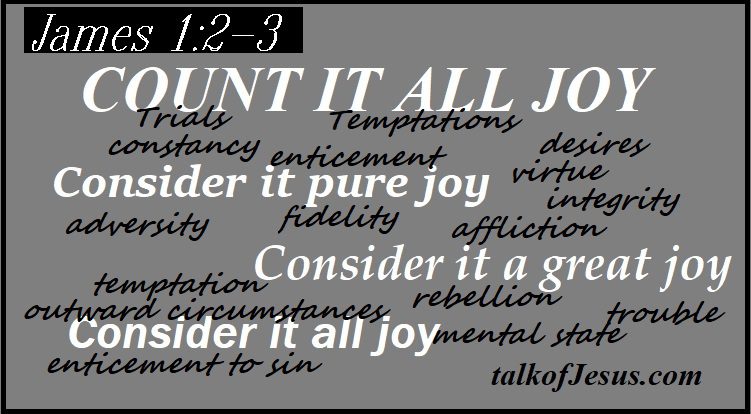
    What does it have to do with his initial advice, Consider it a great joy, my brothers and sisters, whenever you experience various trials?”

    James details the connection as he continues his pastoral letter to the church (actually, several churches). He makes a case that our works refine our faith and prove our faith to other potential followers of the Lord.

    But be doers of the word and not hearers only, deceiving yourselves.

    James 1:22 CSB

    Hearing and Doing the Word

    Did you ever hear the rebuke as a child, “You have two ears and one mouth?” It’s advice from this section of the letter of James to the church. Perhaps you haven’t read it in a while, but allow your heart to listen well to the Spirit.

    James 1:19-2:26

    19 My dear brothers and sisters, understand this:

    Everyone should be quick to listen, slow to speak, and slow to anger, for human anger does not accomplish God’s righteousness.

    James 1:19b-20 CSB

    Think about what we see and hear everyday. The world has this upside down. Doubtless the world of the first century encountered the same.

    People are angry about this, angry about that. They speak first and frequently. We can see it on television or online, and social media thrives on the polarized opinions of those who speak without understanding.

    We are quick to anger, impulsive to speak, and slow fo listen.

    How we reflect the world, dear claimants of Christ!

    Sadly, our works in this area of speaking boldly to others out of our zeal for the Lord likely needs the most work.

    Listen

    It takes humility to listen to another before speaking your heart.

    Do you converse with a brother or a sister in Christ? Our conversation with and unbeliever should be different, but the same principles apply. Before we answer do we understand the heart of the one speaking or if they oppose Christ possibly, but have interest because of something they ask about?

    “Swift to hear,” say some translations. Certainly not swift to react, as is our tendency. But to whom must we listen? What does the Apostle want the church to hear?

    Perhaps the most telling use of the Greek word here is found in a familiar teaching from Jesus.

    “You have heard that it was said, An eye for an eye and a tooth for a tooth. – Matthew 5:38

    It’s the traditional measured response of justice, seek no more from someone who has sinned against you than what he has taken by his trespass. Of course what follows is the Lord’s command for us to love our enemies.

    Though we all want “justice” for our enemy, we also seek “mercy” for our transgressions of the law. So let’s skip to the issue of anger, source of our own reactive speech, for the wisdom of James’ suggestion.

    Anger

    Everyone should be quick to listen … and slow to anger, 20 for human anger does not accomplish God’s righteousness.

    This is the only place James uses this word, which points to our reaction to the anger of others. The root verb suggests a stretching out in order to understand another. James continues:

    21 Therefore, ridding yourselves of all moral filth and the evil that is so prevalent, humbly receive the implanted word, which is able to save your souls.

    Don’t react, but receive the implanted word. (We’ll get to that in a moment.)

    Favoritism

    2:1 My brothers and sisters, do not show favoritism as you hold on to the faith in our glorious Lord Jesus Christ.

    … and yet you say to the poor person, “Stand over there,” or “Sit here on the floor by my footstool,” 4 haven’t you made distinctions among yourselves and become judges with evil thoughts?

    James cautions the church against certain worshipers who expect special treatment. The ‘hearers’ to whom he writes must guard against men and women actively provoking the saints of the church to react with anger.

    Yet he reminds us that those souls provoking us to anger ought to see the love of Christ Jesus in our response.

    Fellow ‘church member,’ allow me to restate in an excerpt from a different version. James addresses us:

    A Warning against Prejudice

    James 2: My dear brothers and sisters, how can you claim to have faith in our glorious Lord Jesus Christ if you favor some people over others?

    2 For example, suppose someone comes into your meeting dressed in fancy clothes and expensive jewelry… 3 If you give special attention… to the rich person, but you say to the poor one, “You can stand over there…”—well, 4 doesn’t this discrimination show that your judgments are guided by evil motives?

    5 Listen to me, dear brothers and sisters. Hasn’t God chosen the poor in this world to be rich in faith? Aren’t they the ones who will inherit the Kingdom he promised to those who love him? 6 But you dishonor the poor!

    Isn’t it the rich who oppress you and drag you into court? 7 Aren’t they the ones who slander Jesus Christ, whose noble name you bear?

    8 Yes indeed, it is good when you obey the royal law as found in the Scriptures: “Love your neighbor as yourself.”

    9 But if you favor some people over others, you are committing a sin. You are guilty of breaking the law.

    James 2 excerpt from NLT (preaching emphasis my own)

    This very favoritism provokes my anger this very moment!

    Yet James asks us to keep silent, listen, do not speak first and remember that “Human anger does not produce the righteousness God desires. 1:20

    Convicted!

    The Lord holds all authority to punish or pardon. Leave it to His will.

    Slow to speak

    Whenever we face ‘various trials,’ inevitably they will come from the actions and words of others. How difficult for us to show the same humble temperament as our Lord Jesus.

    James reminds us (in verse 8), ‘If you love your neighbor as yourself,’ as Jesus taught, ‘you are doing well.’ Then (in verse 9) he applies the challenge of favoritism. Now apply this to your own reactions.

    Were you slow to speak before you judged your neighbor?

    Did you listen first, before you answered?

    James addresses real issues of the church, like anger and favoritism.

    Therefore put away all filthiness and rank growth of wickedness and receive with meekness the implanted word, which is able to save your souls.

    James 1:21 RSV

    Quick to hear, slow to speak, slow to anger; for our own moral filthiness and wickedness must not arrogantly replace the word of God.

    Mirror of our Hypocrisy

    James illustrates our brief partial glances at self in this way:

    If you are a hearer of the word and not a doer of the word (in other words, if you have not works), then you are like one observing your own face in the mirror. You then go away, forgetting what you are like.

    Isn’t this our false image of our own righteousness?

    James urges you and me to stand in front of the mirror for a while. (I hate to do that.) Worse, for those of us who quickly walk away, he asks us to look into the reflection of what God wants to see.

    But the one who looks intently into the perfect law of freedom and perseveres in it, and is not a forgetful hearer but a doer who works—this person will be blessed in what he does.

    James 1:25 CSB

    Royal Law vs Law of Freedom

    See the freedom Christ gives us. Persevere in the perfect law and don’t forget to work out your salvation with fear and trembling. Be blessed in your trials for the Lord.

    All of the Apostles, including James in this letter, encourage the new church.

    Christ redeemed slaves of the Law, awaiting our sentence of death, to the grace of the law of freedom.

    The Royal Law

    A good reason for true followers of Jesus to be slow to speak lies in our varying opinions of how to apply the Commandments. Most of us have a great need to consider how to act as one under authority. Here many disagreements begin as anger simmers below the surface.

    Your opponent asks, “By whose authority do you tell me what I must do?

    Paul tells us in one instance illustrating such authority.

    “I was traveling to Damascus under these circumstances with authority and a commission from the chief priests.Acts 26:12

    Saul (Paul) testifies that his mission and authority came directly from the chief priests (bound by the Authority of Almighty God).

    His court case before King Herod Agrippa, the last reigning King of Judea with the royal title [AD 41-44], takes place about the same time as the letter of James. Agrippa’s royal authority (as opposed to a priestly commission) was his appointment of succession as king, confirmed by the authority of Rome.

    Authority

    ἐξουσία – power, authority, right, liberty, jurisdiction, strength – power of choice, liberty of doing as one pleases

     Strong’s G1849 – exousia

    Royal authority, religious leadership authority, government authority, military authority – any and all authority remain contentious issues to this day, as they were for the first century church.

    Be slow to speak, therefore; that you might hear not only the words, but the authority from where they speak,

    Jesus cautions followers to obey all of these authorities, where their law applies to us. Further, the Lord presents a practical example of faith through a Roman centurion.

    Luke 7

    6 Jesus …was not far from the house, the centurion sent friends to tell him, “Lord, don’t trouble yourself, since I am not worthy to have you come under my roof…

    Beloved, here is true humility, true acceptance of Jesus’ Divine Authority. The centurion continues:

    But say the word, and my servant will be healed. For I too am a man placed under authority, having soldiers under my command.

    I say to this one, ‘Go,’ and he goes; and to another, ‘Come,’ and he comes; and to my servant, ‘Do this,’ and he does it.”

    9 Jesus heard this and was amazed at him, and turning to the crowd following him, he said, “I tell you, I have not found so great a faith even in Israel.”

    Do you — do the shepherds of your church have such authority?

    The Law of Freedom

    What should we say if we speak from the Law of Freedom?

    The Greek word here is also translated as liberty in some translations. Perhaps it will help to know that in Christ we have the liberty to speak judiciously. James had pointed to this liberty when he warned of looking in the mirror. Later he provides this law for us as judges of our own speech.

    [I reverse the order of James description to provoke your thought.]

    13 For judgment is without mercy to the one who has not shown mercy.

    In Christ we are free to judge, yet will we show mercy?

    [Therefore,] 12 Speak and act as those who are to be judged by the law of freedom. 13b Mercy triumphs over judgment.

    Jesus’ authority gives us that same grace to show mercy to another, who like us, does not deserve mercy for breaking the Royal Law of Almighty God.

    Faith and Works

    What good is it, my brothers and sisters, if someone claims to have faith but does not have works? Can such faith save him?

    James 2:14 CSB

    James immediately goes to examples so familiar of faithlessness and hypocrisy by those of the church. He points to the same partiality and inaction to help the poor where our words only have no impact for Christ.

    “Go in peace, stay warm, and be well fed…” Words, empty, fruitless dismissal of a soul in need.

    18 But someone will say, “You have faith, and I have works.”

    James never argues that we are saved by works (as some misleadingly emphasize). Nor does he dispute that we are saved by faith alone (which some use as excuse for a no-works easy one-time claim to Christ).

    20 Senseless person! Are you willing to learn that faith without works is useless?

    He continues with the scriptural examples of Abraham and Rahab, then categorically states:

    You see that a person is justified by works and not by faith alone… For just as the body without the spirit is dead, so also faith without works is dead.

    James 2:24,26 CSB

    James tells us, “judge the true faith of one who claims Christ by their works.

    Do they show evidence of their faith by how Jesus has become their Lord? Do you?

    δικαιόω – Justified

    δικαιόω – dikaioō from the root  δίκαιος (G1342)

    • to render righteous or such he ought to be
    • show, exhibit, evince, one to be righteous, such as he is and wishes himself to be considered
    • declare, pronounce, one to be just, righteous, or such as he ought to be

    The root word of ‘just‘ is more often translated as ‘righteousness.’

    • righteous, observing divine laws
    • in a wide sense, upright, righteous, virtuous, keeping the commands of God
    • in a narrower sense, rendering to each his due and that in a judicial sense, passing just judgment on others, whether expressed in words or shown by the manner of dealing with them

    James has much more practical advice for the church.

    To be continued...
  • A Witness through John – King of the Darkness

    A Witness through John – King of the Darkness

    And they had as king over them the angel of the bottomless pit, whose name in Hebrew is Abaddon, but in Greek he has the name Apollyon.

    The Revelation of Jesus Christ to John 9:11

    Light from Darkness

    What do you believe about light and darkness, about good and evil, about God and the opponents of the LORD?

    John begins his gospel much like Genesis with contrasts between light and darkness and introduces evidence of the presence of Christ and the Spirit of God.

    In the beginning was the Word, and the Word was with God, and the Word was God… 

    That light shines in the darkness, and yet the darkness did not overcome it.

    John 1:1,5 CSB

    John compares Jesus to light, God’s answer to formlessness and darkness. Moses illustrates darkness in the beginning (Genesis) as chaos prior to God’s intervention by creation. 

    Genesis 1:

    2 Now the earth was formless and empty, darkness covered the surface of the watery depths, and the Spirit of God was hovering over the surface of the waters. 3 Then God said, “Let there be light,” and there was light. 4 God saw that the light was good, and God separated the light from the darkness.

    And the Spirit of God moved like the wind over the gathering wave of a deep unending sea.

    And God saw that it was good.

    Light and darkness, good and evil, God’s plan and chaos: always separated. The Apostle John makes this separation very clear to the church as he writes in his third letter:

    3 John 1:11 Beloved, do not imitate evil but imitate good. Whoever does good is from God; whoever does evil has not seen God.

    Choose Light or descend  into darkness?

    We like the Apostle John because he points us toward Christ’s love for the world. His gospel emphasizes Jesus’ love with little mention of the devil.

    Some christians and others of this twenty-first century doubt the existence of the devil or question the influence, if any, of Satan and demons. We think we know these influencers of evil from other books of the Bible and tend to dismiss demons and devils.

    John’s gospel is all about the Light.

    John 1:9 The true light that gives light to everyone, was coming into the world.

    Yet Jesus cautions us, pointing to contrasts between light and darkness, good and evil, and yes, between following Him or the prince of darkness.

    Jesus spoke to them again: “I am the light of the world. Anyone who follows me will never walk in the darkness but will have the light of life.”

    “I have come as light into the world, so that everyone who believes in me would not remain in darkness.

    John 8:12 & John 12:46

    These warnings against darkness from the Son of God ought to be enough, yet the prince of the world would tempt us to worldliness.

    These warnings from John’s gospel do not differ from those of the Prophets.

    Woe to you who long for the day of the LORD!
    What will the day of the LORD be for you?
    It will be darkness and not light.

    Amos 5:15 CSB

    Revelation – ἀποκάλυψις apokalypsis

    When we think of young John, the loving faithful follower of Jesus, we forget that he lived a long life as the only surviving Apostle. Rome finally banished John to Patmos where he received a terrifying apocalypse from the risen Christ.

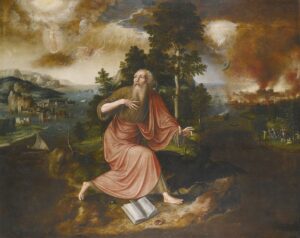
    Orazio Fidani, Saint John the Apostle, c. 1640-56

    God judges the world; that is, those of the world who have turned away from the only Savior, our Lord.

    Do you fear the uncertainty of darkness?

    Consider the uncertainty of death!

    Should God punish sin?

    Dare you consider the darkness of death, experienced by your soul?

    Judgement of the World

    “Go and pour out the seven bowls of God’s wrath on the earth.”

    Revelation 16:1
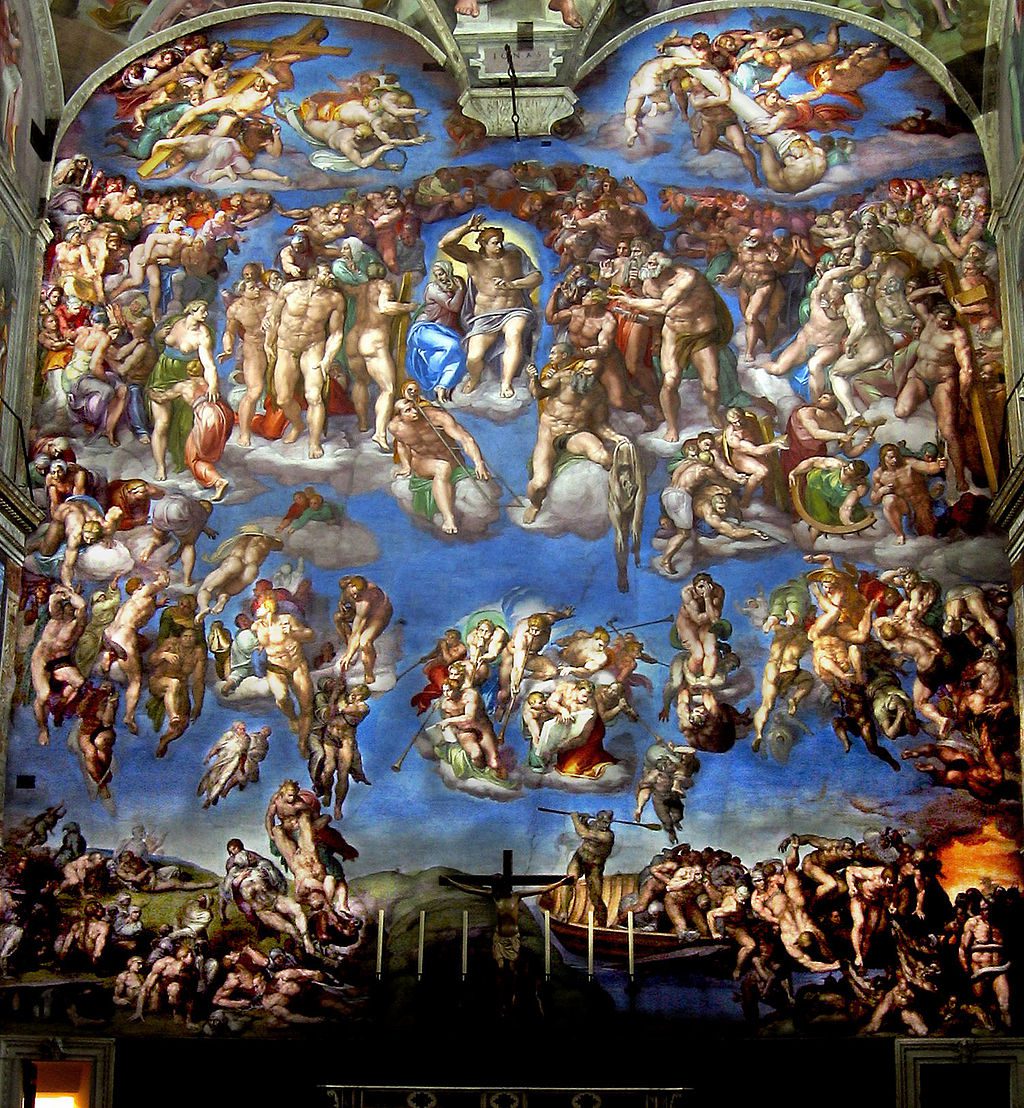
    Last Judgment painted by Michaelango on ceiling of Sistine chapel
    Last Judgement – Michelangelo

    10 The fifth [angel] poured out his bowl on the throne of the beast, and its kingdom was plunged into darkness.

    People gnawed their tongues because of their pain

    11 and blasphemed the God of heaven because of their pains and their sores, but they did not repent of their works.

    Judgement! And punishment, even after death.

    No redemption from sin, no help from the beast or false prophet.

    Certainly no post-death incarnation into a new or different body, not even that of a lowly animal. (Such selfish idolatry of those lost souls who strictly adhere to such ancient lies or worship false gods.)

    John proclaims Jesus’ love for the world! Yet the world rejects Him, because their deeds done in darkness are evil.

    And who is behind it all? Who would lead sinners into a place of darkness and evil since the beginning of the world? John tells us.

    That Great Dragon of Darkness

    12:9 καὶ ἐβλήθη ὁ δράκων ὁ μέγας ὁ ὄφις ὁ ἀρχαῖος ὁ καλούμενος Διάβολος καὶ ὁ Σατανᾶς ὁ πλανῶν τὴν οἰκουμένην ὅλην ἐβλήθη εἰς τὴν γῆν καὶ οἱ ἄγγελοι αὐτοῦ μετ’ αὐτοῦ ἐβλήθησαν

    He was thrown to earth, and his angels with him. – Revelation 12:9

    Revelation 9: The Fifth Trumpet

    The fifth angel blew his trumpet, and I saw a star that had fallen from heaven to earth. The key for the shaft to the abyss was given to him. 2 He opened the shaft to the abyss, and smoke came up out of the shaft like smoke from a great furnace so that the sun and the air were darkened by the smoke from the shaft.

    The Dragon Thrown Out of Heaven

    Then war broke out in heaven: Michael and his angels fought against the dragon. The dragon and his angels also fought, but he could not prevail, and there was no place for them in heaven any longer. 

    You with eyes to see, souls seeking the Light of salvation: observe the terrible intensity of the battle between good and evil – Satan’s opposition to the Lord God and Christ Jesus. It is a battle to the death for our souls!

    Yet by the mercy of the LORD’s Sacrifice of love on the Cross for you, Christ Jesus purchased victory eternal over the dragon of darkness.

    So the great dragon was thrown out—the ancient serpent, who is called the devil and Satan, the one who deceives the whole world. He was thrown to earth, and his angels with him.

    The many names of the evil one

    He hides in the shadows of darkness and speaks lies to false prophets. We know this dark imitator of light by many names, confusing even more our blurred vision of his subtle evil.

    The great dragon – δράκων  from familiar imagery of Greek mythology to John’s audience. The ancient serpent – ὄφις , a familiar reference to the cunning tempter in Eden , a clear reference to original sin חַטָּאָת.

    John clarifies the identity of the enemy with two additional names more familiar to us, first: the devil – διάβολος diabolos in the familiar Greek, which means slanderer or accuser. He is known as the tempter πεῖρα, one who would bring you to a trial or terrible experience. It is a word from a root word πέραν meaning,  ‘to pierce,’ which contains significant symbolism in the war between good and evil, between Christ and Satan.

    John’s second identification is the most familiar and most feared: Satan. The contemporary name in the Greek,  Σατανᾶς  Satanas, also known to fellow Jews, believers along with John, as Satan שָׂטָן.  

    Revelation 16:10 refers to Satan’s princely throne as ‘throne of the beast,’ θηρίον thērion, implying his wild, venomous nature, even brutal, savage and ferocious, sometime illustrated as a bestial man.

    Is is any wonder that the evil one wants man, created in the image of God, to dismiss him as myth?

    More names of the prince of darkness

    While relating the prophesy known as the fifth trumpet, John refers to Satan as: the angel of the abyss; his name in Hebrew is Abaddon, and in Greek he has the name Apollyon.’

    Luke’s Gospel describes the actions of demons, evil spirits influencing a human soul, confronting Jesus.

    28 When he saw Jesus, he cried out, fell down before him, and said in a loud voice,

    “What do you have to do with me, Jesus, Son of the Most High God? I beg you, don’t torment me!”

    29 For he had commanded the unclean spirit to come out of the man…

    31 And they begged him not to banish them to the abyss.

    Deep in the darkness of the pit of the abyss sits the throne of its angel and prince.

    John identifies the destroyer of souls as Abaddōn, from the Hebrew אֲבַדּוֹן ‘abaddown most associated with the sheol and the grave.

    The LORD brings death and gives life;
    he sends some down to Sheol, and he raises others up.

    1 Samuel 2:6

    Knowing its familiarity to the learned Greek culture of the Roman empire, John also refers to the prince of darkness as Apollyōn, the Greek adjective for destroyer.

    War in Heaven

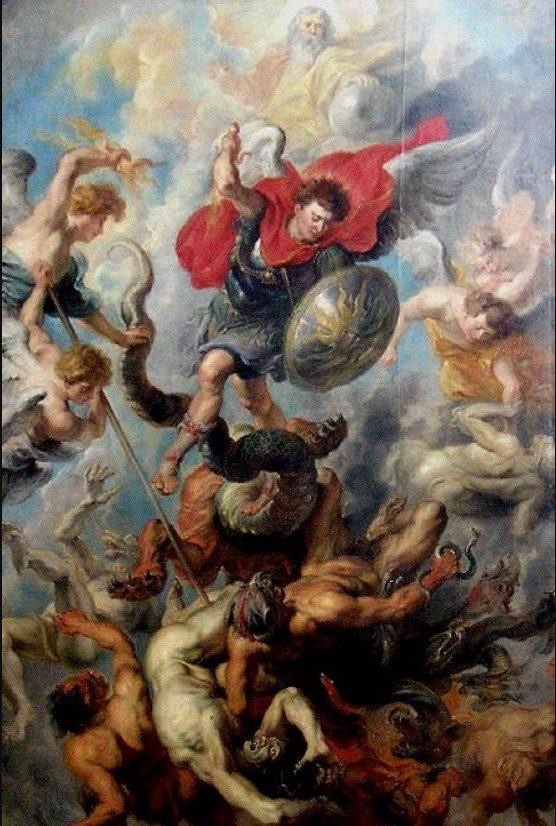
    war in heaven warriors depicted by Rebens
    War in Heaven by Pieter Paul Rubens, 1619

    Then war broke out in heaven: Michael and his angels fought against the dragon. The dragon and his angels also fought, but he could not prevail, and there was no place for them in heaven any longer.

    Revelation 12:7-8

    Though Satan rules the darkness and entices sinners to turn against Christ Jesus and bow down at the throne of darkness, dare you doubt the consequence of the war between good and evil? 


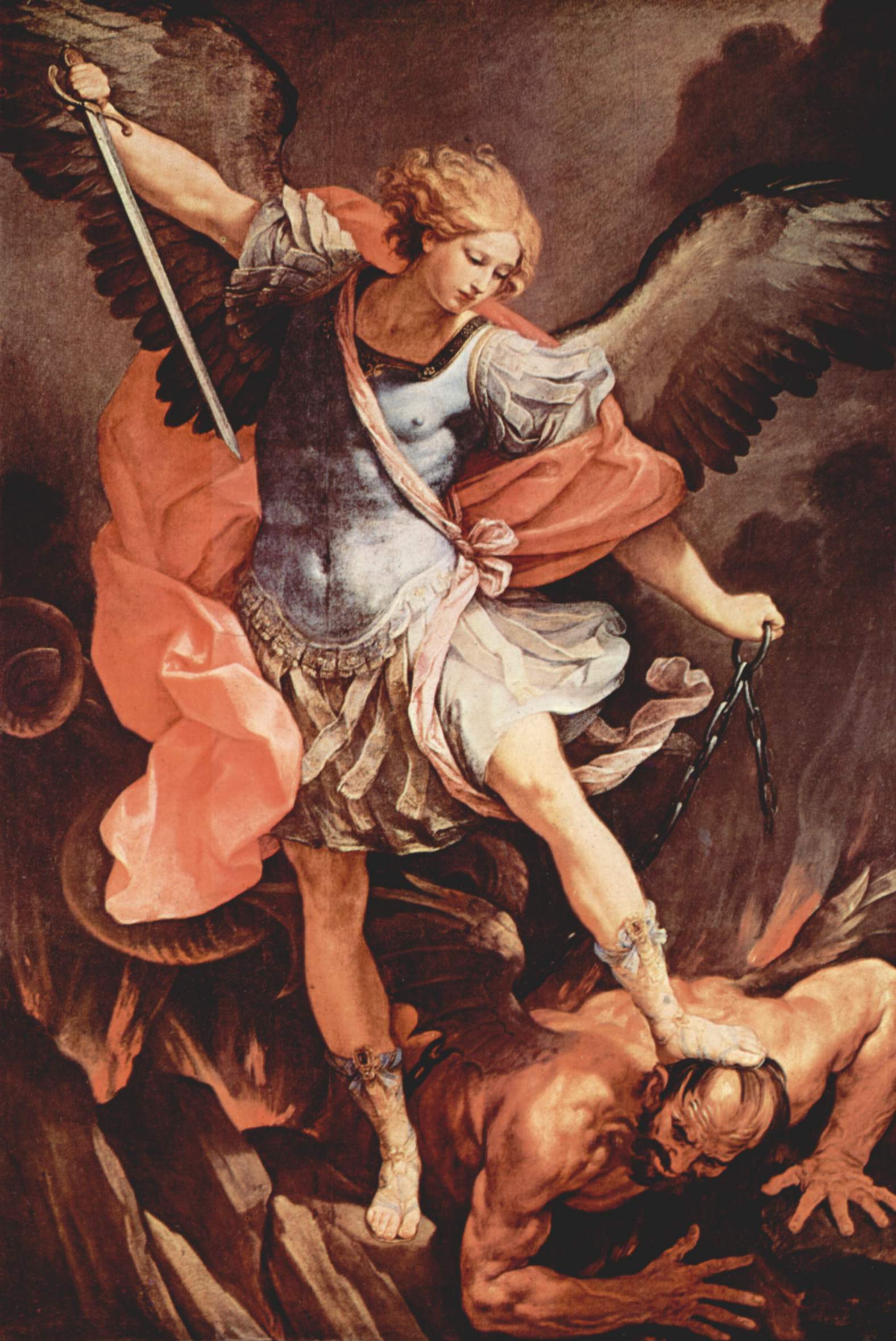
    Michael and Satan, by Guido Reni, c. 1636

    Revelation 19:

    Satan and the false prophet are defeated and punished.

    The saints then reign with Christ.

    The Lord reigns over a new creation and a new Jerusalem.

    The throne of God and of the Lamb will be in the city, and his servants will worship him. 4 They will see his face, and his name will be on their foreheads. 5 Night will be no more…

    Revelation 22:3b-4a

    The Apostle John pleas to his beloved churches, to beloved saints who claim Christ. The commandment of God is love, as Christ has loved us.

    This is the message we have heard from him and declare to you: God is light, and there is absolutely no darkness in him.

    1 John 1:5

    Amen! Come, Lord Jesus!

  • Disaster From Disobedience, A Savior From Before Eden – 3

    The Fall before the Fall

    … so also the Messiah, having been offered once to bear the sins of many, will appear a second time, not to bear sin, but to bring salvation to those who are waiting for Him.

    Hebrews 9:28 HCSB

    In ‘Disaster From Disobedience 2’  we considered the ‘In the beginning’ creation narrative. Genesis continues with the creation of man. We know that the fall of mankind and our expulsion from Eden will follow, but consider first an earlier significant event, the fall of angels.

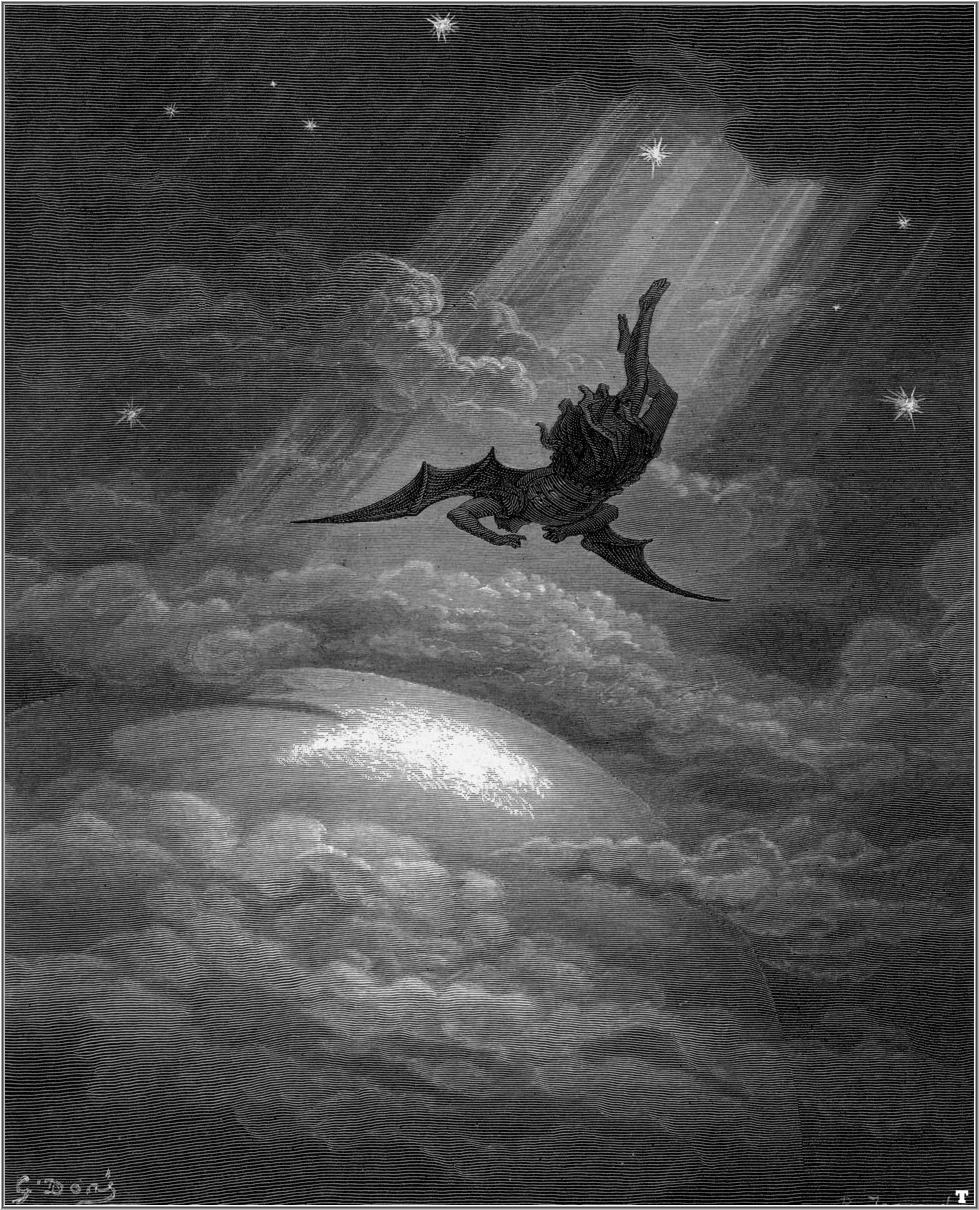
    The Fall Of The Rebel Angels Painting by Gustave Dore

    Luke 10:

    … “Lord, even the demons submit to us in Your name.”

    18 He said to them, “I watched Satan fall from heaven like a lightning flash.

    19 Look, I have given you the authority … over all the power of the enemy; nothing will ever harm you. 20 However, don’t rejoice that the spirits submit to you, but rejoice that your names are written in heaven.”


    Christ Jesus instructs followers of what only the Son of Man from before creation can know. Angels disobeyed God, Creator and Master of all He Created.

    Yet witness here Christ’s authority over fallen angels. Demons submit to God by the Apostle.s command in Christ’s authoritative Name.

    Angels – Other Beings who Serve

    Angels were created also to serve God. When? We can’t be certain, but we do know that it was prior to the fall of man. And like us, they were also given freedom for obedience. 

    I suppose it is possible that angels and man were created at the same time, since Adam and Eve may have lived many years in Eden until the fall. Yet the presence of the serpent in Eden would seem to indicate an earlier creation of angels.

    Like mankind, some angels rebelled against the purpose for which the Lord God created them. God created angels as several, specific types of spirit-creatures. Angels are not the spirits of those who have died, but were created as beings in heaven. And like the creatures of earth, not all angels are alike. 

    Picture angels as many individual and diverse spirit-beings just as the creatures of this Earth vary.  Visualize their lives in a real and existing, unseen dimension, separate of this visible place.

    Unlike the Lord, no spirit rules over the day or fills flesh with the power of life! Angels are messengers for good or for evil, depending on who they serve.

    The Fallen Star 

    Satan is just one of the disobedient angels of darkness, posing falsely as hope for mankind.

    Returning briefly to a time after the fall of Jerusalem, the Prophet Isaiah had predicted Israel’s return after seventy years of captivity. Isaiah also interestingly described hell and the fall of Satan.

    Isaiah 14:

    12 “How you are fallen from heaven,
    O Lucifer, son of the morning!
    How you are cut down to the ground,
    You who weakened the nations!
    13 For you have said in your heart:
    ‘I will ascend into heaven,
    I will exalt my throne above the stars of God…
    14 I will ascend above the heights of the clouds,
    I will be like the Most High.’
    15 Yet you shall be brought down to Sheol,
    To the lowest depths of the Pit…

    Disaster is not punishment for sin, but consequence of the fall.

    Job chronicles several conversations between the Lord and Satan. Here Satan comes before the Lord asking for permission to inflict evil upon Job, even though God sites Job as blameless. The common scene is Satan as prosecutor, accusing and condemning the criminal to death for some sin; even tempting man to turn again God and follow his own demise into eternal punishment.

    Job 1

    6 One day the sons of God came to present themselves before the Lord, and Satan also came with them. 7 The Lord asked Satan, “Where have you come from?”

    “From roaming through the earth,” Satan answered Him, “and walking around on it.”

    Beware of the tempter

    Beware of what you cannot see, for Satan roams the earth for the prize of sinners tempted into disobedience against God.

    Satan rules unseen spirits and principalities of darkness. Whether original sin, where the tempter is mentioned as the serpent or in Isaiah, where Lucifer appears as false light, Satan seeks disobedient sinners.

    Even now that prince of devils opposes righteous men and women who seek to serve God and Christ faithfully.


    8 Then the Lord said to Satan, “Have you considered my servant Job? No one else on earth is like him, a man of perfect integrity, who fears God and turns away from evil.”

    9 Satan answered the Lord, “Does Job fear God for nothing? 10 Haven’t you placed a hedge around him, his household, and everything he owns? You have blessed the work of his hands, and his possessions have increased in the land. 11 But stretch out your hand and strike everything he owns, and he will surely curse you to your face.”


    The entire saga of Job begs the question from his wife, his friends and the reader, “Why would God allow this to happen to ‘a man of perfect integrity, who fears God and turns away from evil?’” 

    The Lord even permits Job to question the intentions of the Almighty! However the LORD answers Job and the readers at length.

    HE IS THE LORD! … and man is not. 

    Nor is Satan, or angels; kings or idols. God IS God and we are not. Yet we would do well to remember the tempter’s appeal to our own desires, even as in Eden and since the inherited evil of ‘adam.

    Angels who serve God

    Much more is written of angels serving the fallen prince of the darkness and angels who remain messengers and worshipers of the Lord God.

    Though our series addresses our disobedience, let’s close with a brief description by a Prophet of spirits near to the Living God. And like other descriptions of heaven, our mortal minds can barely take-in the immense glory of the scene.

    Ezekiel 1

    4 I looked, and there was a whirlwind coming from the north, a huge cloud with fire flashing back and forth and brilliant light all around it. In the center of the fire, there was a gleam like amber. 5 The likeness of four living creatures came from it, and this was their appearance:

    They looked something like a human, 6 but each of them had four faces and four wings. 7 Their legs were straight, and the soles of their feet were like the hooves of a calf, sparkling like the gleam of polished bronze. 8 They had human hands under their wings on their four sides. All four of them had faces and wings. 9 Their wings were touching. The creatures did not turn as they moved; each one went straight ahead.

    10 Their faces looked something like the face of a human, and each of the four had the face of a lion on the right, the face of an ox on the left, and the face of an eagle. 11 That is what their faces were like. 

    Their wings were spread upward; each had two wings touching that of another and two wings covering its body. 12 Each creature went straight ahead. Wherever the Spirit wanted to go, they went without turning as they moved…

    Throne of the LORD

    lapis lazuli

    25 A voice came from above the expanse over their heads; when they stopped, they lowered their wings. 26 Something like a throne with the appearance of lapis lazuli was above the expanse over their heads.

    On the throne, high above, was someone who looked like a human…


    Read on if you like, or read other descriptions of the awe of the Lord and of the heavenly servants which include angels

    Man is fallen and sin has consequence. Next, we will return to the fall of man.


    To be continued…