Tag: malachi

  • Jude – Now I will praise the Lord

    Jude – Now I will praise the Lord

    Who is Jude?

    The first thing I want to know about any letter I receive is who sent it to me. So as a leader or member of one of several churches we would want to be certain of the identity of the author of Jude and the authenticity of Jude’s message.

    Jude, a bondservant of Jesus Christ, and brother of James

    Letter of Jude 1:1a NKJV

    To fully understand the identity of the man who’s name is translated in English as ‘Jude” we must look to both the original Greek text and the common name of its Hebrew origin in first century Judea and Galilee.

    Ἰούδας

    Pronounced: ē-ü’-däs — Most translations of the Greek use Jude, the Latin Iudas and Yehudah in the Hebrew Names Version. The root word of the Greek name is Yĕhuwdah from the Hebrew יְהוּדָה meaning “praised” and translated at Judas. (We understand why after Jesus’ betrayal no man wanted to be known by this name now synonymous with ‘betrayer.’)

    In James – Witness of a Converted Brother we learned that Roman names derived from local languages had become Hellenized. James could be Jim, but Judas and Judah easily become, Jude.

    Some fathers named their sons after a forefather of their tribe like Judah or Israel. Judah יָדָה is the familiar Hebrew root of both the Greek and English.

    Brother of James

    Jude means: he shall be praised.

    The author of our letter identifies himself as the brother of James.

    Jude refers to James, head of the church of Jerusalem, leader of the first century churches who exchanged letters throughout Asia minor, Greece, Palestine and other areas receiving the Good News of Christ. Most Biblical commentators agree that like James, Jude is is also a half-brother of Jesus.

    Both James and Jude identify themselves as servants of Jesus, rather than claiming their biological relationship to the Lord. Most kings come to power via their family connection and install relatives in high positions.

    One of the great Jewish controversies Jesus would take no part in was that of the legitimacies of kings and followers of certain political traditions. These political/family controversies had progressed and preceded Jude, James and Jesus by several generations back to the second century B.C.

    Maccabees

    Source: BibleHub.org (a hammer), This title, which was originally the surname of Judas, one of the sons of Mattathias, was afterward extended to the heroic family of which he was one of the noblest representatives. Asmonaeans or Hasmonaeans is the Proper name of the family, which is derived from Cashmon, great grandfather of Mattathias. The Maccabees were a family of Jews who resisted the authority of Antiochus Epiphanes king of Syria and his successors who had usurped authority over the Jews, conquered Jerusalem, and strove to introduce idolatrous worship.

    Judas, one of the sons of Mattathias generally called in English the Maccabees, a celebrated family who defended Jewish rights and customs in the 2nd century B.C. (1 Maccabees 2:1-3 {from the Apocrypha, for those unfamiliar with extra-Biblical texts.}

    Herodians

    The end of the era of the Hasmoneans is probably the most turbulent time in Jewish history. It is hard to imagine a “Jewish” government more antithetical to Jewish principles and ideals than that of Herod and his successors, whose murderous, tyrannical ways would eventually lead to the destruction of the Temple and the beginning of the long exile that Jews find themselves in.Source: JewishHistory.org

    Herod the Great, born in Rome around 70 B.C and known as Herodes Magnus, was appointed a governor at around age 20 (along with his brother) and appointed King by the Roman senate in 37 B.C. He became known as Judah’s great builder and built the Temple in Jerusalem.

    During the time of Jesus, James and Jude and continuing into the years of the early church, the Herods wielded much power. Rome finally turned on Jerusalem and their client king appointed to help Rome defend the Empire against enemies east of Palestine. The Herodians failed to control the “Jewish problem,” which caused trouble throughout the Empire.

    Bondservant of Jesus Christ

    The brother of James could have begun his letter to the church as a ‘brother of the King and Messiah,’ implying his authority of position via his family. The Herodians or Maccabees made familial claims to kingdom leadership, but not these half-brothers of Jesus who had not even followed the Lord prior to His resurrection.

    James begins his letter (ἐπιστολή epistle, in greek): James, a bond-servant of God and of the Lord Jesus Christ.’ Jude chooses to identify in the same way as a bondservant of Christ.

    Jude would have been known to his readers as the brother of James, leader of the church in Jerusalem, both related to Jesus the Messiah.

    Understanding the Servant of Christ

    The Bible uses the word ‘servant‘ almost 500 times. A few English translations use the word ‘bondservant,’ a concept we no longer use or understand. Furthermore, many contemporary christians resist this concept of sometime voluntary compliance.

    I am the LORD your God, which brought you forth out of the land of Egypt, that ye should not be their bondmen; and I have broken the bands of your yoke, and made you go upright.

    Leviticus 26:13 KJV

    עָבַד עֶבֶד – A slave or servant; to work, serve. Also used as form of address between equals.

    Genesis 18: KJV

    And the LORD appeared unto him [Jacob] in the plains of Mamre: … three men stood by him: and when he saw them, he ran to meet them from the tent door, and bowed himself toward the ground, And said, My Lord, if now I have found favour in thy sight, pass not away, I pray thee, from thy servant:

    Jacob served the LORD. We serve the LORD. Jude served Christ, the Lord.

    Malachi 4:

    About four centuries before Christ (and Jesus’ half-brothers) the prophet Malachi writes:

    “Remember the instruction of Moses my servant, the statutes and ordinances I commanded him at Horeb for all Israel.

    Malachi 4:4

    The closing verses of Malachi clearly point back to Moses and the Law with the Lord calling Moses, “my servant.” James and Jude are servants of Jesus just as Moses was servant to the Lord at Horeb.

    עֶבֶד – `ebed

    Are you, beloved follower of Christ, first a servant of the Lord?

    διάκονος – diakonos

    “If anyone serves me, he must follow me. Where I am, there my servant also will be. If anyone serves me, the Father will honor him.

    Command of the Lord Jesus – Gospel of John 12:26 CSB

    The servant (from the Greek context) is ‘one who executes the commands of another, esp. of a master.

    1. the servant of a king
    2. a deacon [diakonos], one who, by virtue of the office assigned to him by the church, cares for the poor and has charge of and distributes the money collected for their use.
    3. a waiter, one who serves food and drink

    “The greatest among you will be your servant.

    The word of the Lord – Matthew 23:11

    Abraham was a servant of the Lord. Moses was a servant of the Lord. And like their forefathers in the faith, Jude and James became servants of the Lord first and servants of the Lord’s followers second.

    Paul, referring to the church writes to the church at Colossae:

    I have become its servant, according to God’s commission that was given to me for you, to make the word of God fully known …

    Jude writes to the church

    Jude, a servant of Jesus Christ and a brother of James:

    To those who are the called, loved by God the Father and kept for Jesus Christ.

    Jude 1:1b CSB

    Are you a fellow servant of Christ Jesus? If so, know that you are loved by God the Father. Know that by His grace you are kept for Jesus Christ at the day of His victorious return.

    2 May mercy, peace, and love be multiplied to you.

    To be continued
  • God’s Love Through John: A God-sent Baptist

    God’s Love Through John: A God-sent Baptist

    John the Baptist is a brash Nazarite, an older cousin of Jesus who confronts all with our need for repentance.
    There was a man sent from God whose name was John. He came as a witness to testify about the light, so that all might believe through him.

    John 1:6-7 CSB

    The Gospel prologue of the Apostle John describes John the Baptist as an apostellō ἀποστέλλω, one commissioned or sent.

    See: John 1:6

    The Baptist has gained a notable following, therefore officials of the Temple send men to keep tabs on this brash Prophet.

    John the Baptist is not the kind of parishioner you particularly want to visit your synagogue.  He even challenges the validity of Herod, King of Judea. And even more threatening than that, John now has a growing following among common Jews, even as some advocate violence against their Roman captors.

    Who are you?

    19 This was John’s testimony when the Jews from Jerusalem sent priests and Levites to ask him, “Who are you?”

    John the Baptist’s Testimony

    And he confessed and did not deny; and this is what he confessed:

    “I am not the Christ.”

    21 “What then?” they asked him. “Are you Elijah?”

    “I am not,” he said.

    They asked this because of a prophesy of Malachi. 

    “Look, I am going to send you the prophet Elijah before the great and terrible day of the LORD comes.

    click for Malachi reference

    John is not the Messiah, but a messenger of the incarnation of the Messiah. Yet the Messiah would no more bring a terrible immediate judgment on Israel than John, but a lasting fulfillment of all prophesy.

    “Are you the Prophet?”

    “No,” he answered.

    John humbly answers that he is not a Prophet, but Jesus will later state clearly that John is the greatest Prophet who has ever lived. The purpose for which John is sent is not prophesy, but announcement of the Messiah.

    22 “Who are you, then?” they asked. “We need to give an answer to those who sent us. What can you tell us about yourself?”

    23 He said,

    “I am a voice of one crying out in the wilderness:

    Make straight the way of the Lord—just as Isaiah the prophet said.”

    click for reference to Yeshaiya (Isaiah) 40:3

    What did they expect?

    Let’s take a brief look at this prophesy of Isaiah for a contemporary Jewish understanding of what John the Baptist had told them as an answer to who he was.

    Isaiah 40:

    “Comfort, comfort my people,”
    says your God.
    2 “Speak tenderly to Jerusalem,
    and announce to her
    that her time of forced labor is over,
    her iniquity has been pardoned,
    and she has received from the Lord’s hand
    double for all her sins.”

    Understand that Jerusalem is not only a political capital of Judea, but a religious capital — a place of worship of the LORD for all Israel. 

    A once united Kingdom of Israel under David and Solomon is now ruled as several different Roman-governed captive states called principates. [click to see more] Octavian has seized power from the republic of Rome and proclaimed himself as the Emperor Augustus Caesar, a ruler to be worshiped as one of many Roman gods in the world he conquers.

    3 A voice of one crying out:

    Prepare the way of the Lord in the wilderness;
    make a straight highway for our God in the desert.
    4 Every valley will be lifted up,
    and every mountain and hill will be leveled;
    the uneven ground will become smooth
    and the rough places, a plain.
    5 And the glory of the Lord will appear,
    and all humanity together will see it,
    for the mouth of the Lord has spoken.

    Isaiah’s prophecy for the freedom of Jerusalem does not say that all will take place at once; however the Jews, captives of Rome and led by a corrupt, evil and powerless King Herod, certainly must have hoped for the Lord to intervene as in the days of Moses.

    In the time of John the Baptist, the wildness near the Jordan would have been a welcome escape from the delicate politics of the Pharisees, Priests, Scribes, Temple guards and Roman legions, who all maintained strict loyalties and delicate alliances.

    Why do you baptize?

    In fact, John, the messenger of the coming Messiah preached repentance. It is the same message proclaimed by all prophets whose message is from the Lord. ‘Return to Me and I will again be your Lord.’

    John’s call to baptism of repentance is far more than a temporary religious cleansing, but personal commitment to a personal transformed return to the Lord.

    Baptism is a symbolic and public witness of this permanent change.

    click to learn more βάπτισμα

    New traditions of worship established during Israel’s several recent captivities had cultivated a politically-charged conversation about religious observances and traditions. Not least among these religious disputes is the need for cleansing and the role of various religious authorities. Of course, Jerusalem’s religious authorities had been limited not only by Rome, but also by the Herod’s.

    John 1:

    24 Now they had been sent from the Pharisees. 25 So they asked him, “Why then do you baptize if you aren’t the Messiah, or Elijah, or the Prophet?”

    26 “I baptize with water,” John answered them.

    Here is John’s message for the religious officials of captive Jerusalem:

    “Someone stands among you, but you don’t know him.

    27 He is the one coming after me, whose sandal strap I’m not worthy to untie.”

    MORE: He will baptize you with the Holy Spirit and fire.

    What next for John the Baptist?

    What do you suppose the reaction of the Pharisees in Jerusalem, Herod and others might be? 

    Fear, perhaps?

    For if the one coming after John stands among them and they don’t even know Him, the Messiah of God will have great power.

    Would the Messiah oppose the religious leaders of the chosen?

    Further, John the Baptist has a great following of the common people, faithful Jews willing to repent of their sins. A righteous crowd following powerful leaders threaten a religious and political establishment subservient to Rome and disobedient to the LORD.

    The Pharisees must be concerned about both the preaching of John and his announcement of the Messiah.

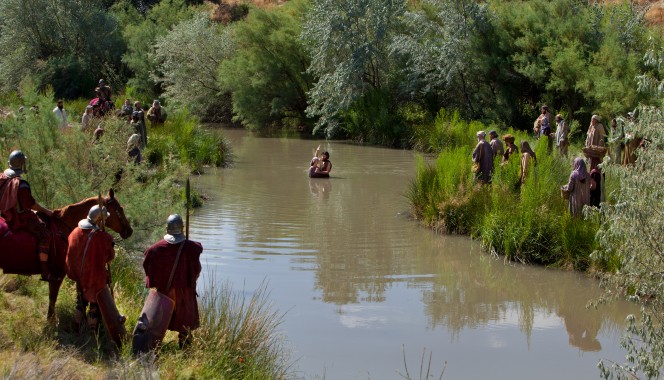
    depiction of John baptizing a man at the Jordan river

    28 All this happened in Bethany across the Jordan, where John was baptizing.


    To be continued...
  • The Beginning of the End – A Burden of the Prophets – 4

    The Beginning of the End – A Burden of the Prophets – 4

    Where is the promise of his coming? For ever since the fathers fell asleep, all things are continuing as they were from the beginning of creation.”

    Remember the predictions of the holy prophets

    Previously: Part 1; Part 2; Part 3
    

    The Lord is not slow to fulfill his promise as some count slowness, but is patient toward you, not wishing that any should perish, but that all should reach repentance. 2 Peter 3:9

    Think back beyond your years and perhaps you may recall an event  just two generations past in the days of your grandfather. But who can understand the times a hundred generations before us, even the lives of those living when Christ was born.

    Even before Christ the impatience of man questioned the patience of the Lord. Early Prophets like Amos had been long forgotten by the time some promises had been fulfilled by the birth of a Messiah.

    Just as now the unexplored landscape of our new world would have been completely unimaginable to Columbus, men in the days of the first century did not remember Moses or David or the Prophets with any contemporary context of understanding. Yet in each generation before Christ men and women of those days could hardly imagine the promise of the Messiah to come.

    Each century between the Prophets and Christ would have seemed unmeasurable with the century’s beginning unfamiliar to the generations of its completion. Think about each hundred years of history as if today you looked back upon the just ending World War I [November 11, 1918], then multiply our forgetfulness of the promise by 21 centuries since the manger of Bethlehem.

    Promise of a Messiah a long time away

    How far away could you imagine the promise of hope spoken by a Prophet of the LORD in each of these centuries, so many generations ‘Before Christ?’

    A thousand years, ten centuries, uncountable generations from the success of Solomon to the hope of a Savior.

    Challenge: Scroll slowly through the centuries between David and the Son of David, the promised Messiah.
             
           
    * Date estimates by Roger Harned http://talkofJesus.co
          Source: TOW
           
       Period / Century


    Northern Kings – Israel (Samaria)


    Northern Prophets Israel Sararia


    Southern Kings – Judah (Judea)


    Southern Prophets Judah 


    United kingdom under Saul, David, Solomon, c. 1030 – 931


    10th c. B.C.
    Divided kingdom Jeroboam (931-910) Rehoboam (931-913)
    Nadab (910-909) Abijah (913)
    Baasha (909-886) Asa (911-870)
    9th c. B.C.
    Elah (886)
    Zimri (885)
    Omri (885-874)
    Ahab (874-853) Elijah
    Jehoshaphat (873-848)
    Jehoram (852-841) Jehoram (853-841)
    Jehu (841-814) Elisha Queen Athaliah (841-835) Obadiah
    Jehoahaz (814-798) Joash (835-796)
    8th c. B.C.
    Jehoash (798-782) Amaziah (796-767)
    Jeroboam II (793-753) Amos
    Zechariah (753-752) Jonah Isaiah (760-700)
    Shallum (752)
    Menahem 752-742)
    Pekahiah (742-740) Hosea (c. 792-740 B.C.) Uzziah (790-740)  Joel
    Pekah (752-732) Jotham (750-731)
     Israel ruled by other nations Hoshea (732-722) Ahaz (735-715) Nahum
      Hezekiah (715-686) Micah
    7th c. B.C.
    Manasseh (695-642)
    Amon (642-640)
    Josiah (640-609) Jeremiah
    Zephaniah
    Jehoahaz (609) Huldah
    Jehoiakim (609-597) Nahum
    6th c. B.C.
    Habakkuk
    Judah ruled by other nations – Babylonian exile (597 – 538 BC) Jehoiachin (597)
    Zedekiah (597-586) Ezekiel
    Persian Period (539-322 BC) Zerubbabel, governor {538-520 BC) Daniel
    Post-exilic prophets Haggai
    5th c. B.C. Darius I (521-486), king of Persia Zechariah (520-???)
    Nehemiah, governor (445-425) Malachi
    4th c B.C. Artaxerxes II, king of Persia (404-358 BC)
    Hellenistic Period (332-141 BC)
    Alexander the Great Macedonian Greek empire 356 – 323 BC
    Ptolemaic (Egyptian) Seleucid rule in Jerusalem
    Seleucos I (Persian) 321-215
    3rd c. B.C.
    Antiochos III inherited in 223 BCE
    2nd c. B.C.
    1st c. B.C. Herod the Great, Roman appointed king of Judea 37–4 BC

    John the Baptist

    c. 5 BC – AD30

    * Period summary source


    Prophets Predicted Christ

    How long did you consider the generations between the time of David, 3000 years ago and the thousand years until the birth of the Messiah?

    The LORD saved and redeemed a people who in every generation believed that God had forgotten them.

    “Blessed be the Lord God of Israel, for he has visited and redeemed his people and has raised up a horn of salvation for us in the house of his servant David, as he spoke by the mouth of his holy prophets from of old..

    Luke 1:68-70 ESV

    A short list of Prophecies: Promises of many generations

    Joel 1:

    15 Alas for the day!
    For the day of the Lord is near,
    and as destruction from the Almighty it comes.

    19 To you, O Lord, I call.
    For fire has devoured
    the pastures of the wilderness,
    and flame has burned
    all the trees of the field.

    Joel 2:28  “And it shall come to pass afterward,
    that I will pour out my Spirit on all flesh;
    your sons and your daughters shall prophesy,
    your old men shall dream dreams,
    and your young men shall see visions.
    29 Even on the male and female servants
    in those days I will pour out my Spirit.

    Joel lived about eight centuries before fulfillment of his prophecies.


    Micah 1:

    2 Hear, you peoples, all of you;
    pay attention, O earth, and all that is in it,
    and let the Lord God be a witness against you,
    the Lord from his holy temple.

    Speaking of ‘Peace’

    Micah 3:
    5 Thus says the Lord concerning the prophets
    who lead my people astray,
    who cry “Peace”
    when they have something to eat,
    but declare war against him
    who puts nothing into their mouths.

    Micah 4:

    (Some may recognize this scripture forgotten from the charter of the United Nations at a time Israel was reborn as a nation in 1947.)

    “Come, let us go up to the mountain of the Lord,
    to the house of the God of Jacob,
    that he may teach us his ways
    and that we may walk in his paths.”
    For out of Zion shall go forth the law,
    and the word of the Lord from Jerusalem.

    3 He shall judge between many peoples,
    and shall decide disputes for strong nations far away;
    and they shall beat their swords into plowshares,
    and their spears into pruning hooks;
    nation shall not lift up sword against nation,
    neither shall they learn war anymore;

    4 but they shall sit every man under his vine and under his fig tree,
    and no one shall make them afraid,
    for the mouth of the Lord of hosts has spoken.

    The Place of Birth of the Messiah

    Micah 5:

    But you, O Bethlehem Ephrathah,
    who are too little to be among the clans of Judah,
    from you shall come forth for me
    one who is to be ruler in Israel,
    whose coming forth is from of old,
    from ancient days.
    3 Therefore he shall give them up until the time
    when she who is in labor has given birth;
    then the rest of his brothers shall return
    to the people of Israel.
    4 And he shall stand and shepherd his flock in the strength of the Lord,
    in the majesty of the name of the Lord his God.
    And they shall dwell secure, for now he shall be great
    to the ends of the earth.
    5 And he shall be their peace.

    Micah’s promise of the birth of Christ would not be fulfilled for about 700 years.


    Zephaniah 3:

    16 On that day it shall be said to Jerusalem:
    “Fear not, O Zion;
    let not your hands grow weak.
    17 The Lord your God is in your midst,
    a mighty one who will save;
    he will rejoice over you with gladness;
    he will quiet you by his love;
    he will exult over you with loud singing.

    Zephaniah is the great-great grandson of Judah’s King Hezekiah from the time Micah prophesied. He prophesied during the time of a successful and good King Josiah ( 640 to 609 BC). Zephaniah saw in the day of the Lord the destruction of his country, his neighbors, and eventually the whole earth. Source.


    Malachi 1:

    2 “I have loved you,” says the Lord…

    Should this not be sufficient for worship of the Lord our God?

    Over the centuries and generations Israel repeatedly has turned from the Lord, rejecting God’s love. Yet the Lord is merciful and promises a Messiah, the Savior of the faithful.

    The Messenger of the Lord

    Malachi 2:

    17 You have wearied the Lord with your words.

    But you say, “How have we wearied him?”

    By saying, “Everyone who does evil is good in the sight of the Lord, and he delights in them.” Or by asking, “Where is the God of justice?”


    Are we so different, even in these last days? Has Christ not promised an eternal redemption for our sin? Yet we remain impatient with mortal life.

    Malachi was a late messenger among the Prophets, one after whom a great silence from the Lord would follow until another messenger of the Messiah would appear to announce the onslaught of these last days.


    Malachi 3:

    “Behold, I send my messenger, and he will prepare the way before me. And the Lord whom you seek will suddenly come to his temple; and the messenger of the covenant in whom you delight, behold, he is coming, says the Lord of hosts.

    The Book of Remembrance

    16 Then those who feared the Lord spoke with one another. The Lord paid attention and heard them, and a book of remembrance was written before him of those who feared the Lord and esteemed his name.

    17 “They shall be mine, says the Lord of hosts, in the day when I make up my treasured possession, and I will spare them as a man spares his son who serves him. 18 Then once more you shall see the distinction between the righteous and the wicked, between one who serves God and one who does not serve him.

    Malachi likely delivered his message many years after the Israelites rebuilt the temple in 515 BC. The prophet’s concerns mirror those of Nehemiah’s, suggesting that Malachi prophesied to the people while Nehemiah left the city for several years, beginning in 432 BC. Source.


    Generations of silence without prophecy, then the LORD sends a messenger to the wilderness and a Messiah to a manger in Bethlehem.

    Judgment and mercy will be in His right hand. He will be a Savior of the Remnant and Hope to the Nations.

    A messenger will announce the Son of David, the Promised One…

    In the LORD’s time… the Messiah of Israel and Savior of the Nations; predicted by the Prophets, proclaimed by angels, born in a manger, worshiped by shepherds and kings: Jesus, Son of God, Son of man!


    +