WE THE PEOPLE of every nation have heard it before. ‘NO CONFIDENCE’
Australian Parliament debate in troubled times of COVID
Today's Short Take on Scripture for ASH WEDNESDAY in the year of our LORD 2022 may help your perception of confidence in these contemporary troubled times.

Our Scriptures from Psalm 94 and another context from history in 2 Chronicles 15 are linked to 5 language translations:
English: Authorized (King James) Version
Псалми Ukrainian Bible
Douay-Rheims 1899 American Edition
诗篇 Revised Chinese Union Version (Simplified Script) Shen Edition
O Lord God, to whom vengeance belongeth; O God, to whom vengeance belongeth, shew thyself..
They break in pieces thy people, O Lord, and afflict thine heritage. 6 They slay the widow and the stranger, and murder the fatherless. Yet they say, The Lord shall not see..
And the Spirit of God came upon Azariah the son of Oded:
3 Now for a long season Israel hath been without the true God, and without a teaching priest, and without law. But when they in their trouble did turn unto the Lord God of Israel, and sought him, he was found of them.
During those dark times, it was not safe to travel. Problems troubled the people of every land. Nation fought against nation, and city against city, for God was troubling them with every kind of problem.
12 And they entered into a covenant to seek the Lord God of their fathers with all their heart and with all their soul; that whosoever would not seek the Lord God of Israel should be put to death, whether small or great, whether man or woman.
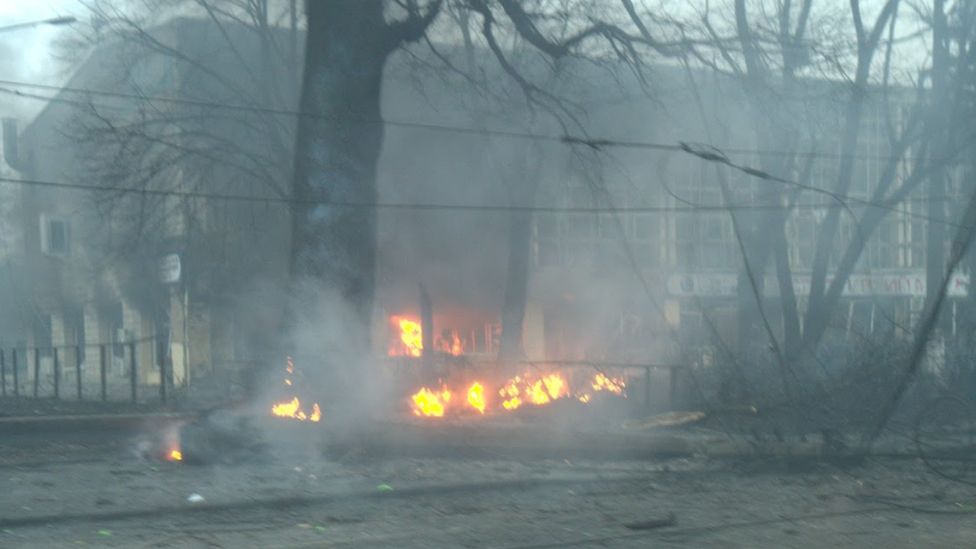
BBC News TODAY: Babyn Yar: Anger as Kyiv’s Holocaust memorial is attacked
Confidence in Christ Jesus
“Teacher, look! What wonderful stones and what wonderful buildings!”
“But be on your guard; for they will hand you over to the [Sanhedrin; or Council] courts, and you will be flogged in the synagogues, and you will stand before governors and kings for My sake, as a testimony to them.
Gospel of Mark 13:9 – Reply of Jesus to Peter, James, John and Andrew about signs of the beginning of the last days.
martyrion – From a presumed derivative of μάρτυς (G3144)
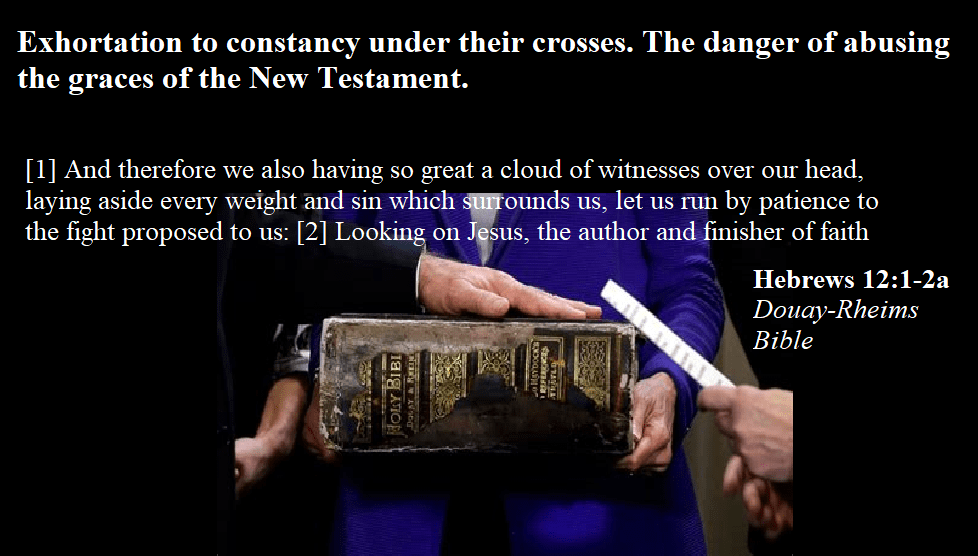
WE know it by sometimes sworn oath:
Sworn testimony is evidence given by a witness who has made a commitment to tell the truth. If the witness is later found to have lied whilst bound by the commitment, they can often be charged with the crime of perjury. The types of commitment can include oaths, affirmations and promises.. – Source: Wikipedia
Note: Talk of JESUS .com will occasionally include a testimony of Christ in other languages for our readers in other countries. Above: from Chinese law
Now Moses was faithful in all God’s house as a servant, for a testimony of those things which were to be spoken later
Our fathers had the tabernacle of the Testimony with them in the wilderness. It was constructed exactly as God had directed Moses, according to the pattern he had seen. – Acts 7:44
We have reached the point in his trial where Stephen’s testimony will quickly move on from Moses to David.
7:45 Years later, when Joshua led our ancestors in battle against the nations that God drove out of this land, the Tabernacle was taken with them into their new territory. And it stayed there until the time of King David.
Timeline: Moses *uncertain *(~15th or 13th c. B.C.); (Precise timeline of Joshua & the Judges of Israel uncertain.):
David *~1000 B.C. (dates differ between various sources); Solomon ~900's B.C. - First Temple of the United Kingdom of Israel (Judah in the south & Israel in the north) ended in 931 B.C. at Solomon's death.

Stephen's testimony before Jerusalem's leaders takes place about ten centuries (1000 years) after David,
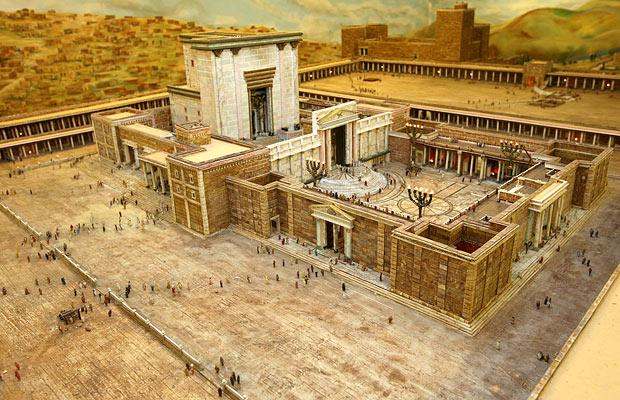
but just two years after these judges of Herod's temple reject their Messiah Jesus.
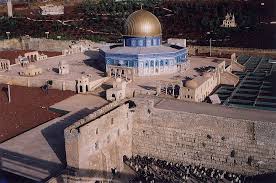
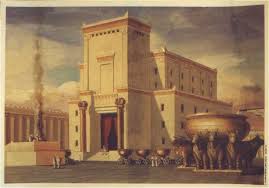
First TempleHerod’s temple
46 David found favor in God’s sight, and asked that he might find a dwelling place for the house of Jacob. But it was Solomon who built a house for Him..
Herod’s temple
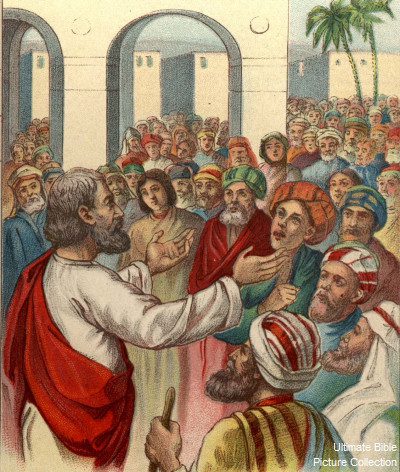
Stephen then Testifies for the LORD from Scripture:
Proverbs 29:18 WLC, ESV Where there is no prophetic vision [חָזוֹן]. the people cast off restraint,but blessed is he who keeps the law.
The Lord God has kept silent for centuries between the Prophets and John the Baptist.
These Judges of Jerusalem’s Sanhedrin have witnessed rare wonders and signswhich have prompted the faithful to ask if certain men have been sent to them from the Lord God.
Peter, John and the Apostles have healed many in Jerusalem for two years now.
And with great power the apostles were giving testimony to the resurrection of the Lord Jesus, and abundant grace was upon them all.
Before that, for three years Jesus, whom they called Son of David, performed many signs and proofs throughout Judah, Samaria and Galilee. Some had speculated that their Messiah from Nazareth could have been John the Baptist resurrected from the dead.
(Others even claim to have seen Jesus after His crucifixion on a Cross and burial in a nearby tomb!)
And many Jews, leaders of the Sanhedrin and even Herod had marveled at the preaching of John the Baptist.
John the Baptist
from the Good News of Matthew, Mark, Luke and John (who had stood with Peter during his sign at the temple):
This was John’s testimony when the Jews from Jerusalem sent priests and Levites to ask him, “Who are you? ”
He didn’t deny it but confessed: “I am not the Messiah.”
“What then? ” they asked him. “Are you Elijah? ”
“I am not,” he said.
“Are you the Prophet? ”
“No,” he answered.
“Who are you, then? ” they asked. “We need to give an answer to those who sent us. What can you tell us about yourself? ”
He said, “I am a voice of one crying out in the wilderness: Make straight the way of the Lord — just as Isaiah the prophet said.”
Jerusalem’s elders held a distant fear of the Lord, as when the Hebrew elders had asked Moses NOT to look upon the Face of the LORD. Isaiah and the Prophets of old had had visions like no earthly corporate vision of a gathering at the temple or in synagogues. So they had to be certain that men like John the baptizer and Jesus and Peter and now, Stephen (addressing them with the face of an angel) would not strike them down for their turning from God.
It is a fearful thing to fall into the hands of the living God.
Israel's ruling council, now judging Stephen, would have been well familiar with these prophesies of Isaiah,
*whose name means “The LORD is salvation,” and is similar to the names Joshua, Elisha, and Jesus; and ministered in and around Jerusalem as a prophet to Judah during the reigns of 4 kings of Judah, c. 739–686 B.C. - *Source
Holy, Holy, Holy, is the Lord of armies…
And the foundations of the thresholds trembled at the voice of him who called out, while the temple was filling with smoke.
Recall now from the testimony of Acts 6: 'All who were sitting in the Sanhedrin looked intently at Stephen, and they saw that his face was like the face of an angel,' also used of Moses after having received the Law from the LORD and Isaiah's own testimony of having seen the Lord and heard Him speak.
Isaiah – חֲזוֹן יְשַֽׁעְיָהוּ
The vision of Isaiah the son of Amoz concerning Judah and Jerusalem, which he saw during the reigns of Uzziah, Jotham, Ahaz, and Hezekiah, kings of Judah.
Listen, heavens, and hear, earth; For the LORD has spoken: “Sons I have raised and brought up, But they have revolted against Me.
“An ox knows its owner, And a donkey its master’s manger, But Israel does not know, My people do not understand.”
Oh, sinful nation, People weighed down with guilt, Offspring of evildoers, Sons who act corruptly! They have abandoned the LORD, They have despised the Holy One of Israel, They have turned away from Him.
2:12 For the Lord of armies will have a day of reckoning
Against everyone who is arrogant and haughty,
And against everyone who is lifted up,
That he may be brought low.

3:14 The Lord enters into judgment with the elders and leaders of His people,
“It is you who have devoured the vineyard;
The goods stolen from the poor are in your houses.
15 What do you mean by crushing My people
And [m]oppressing the face of the poor?”
Declares the Lord God of armies.
6:1 .. I saw the Lord sitting on a throne, lofty and exalted, with the train of His robe filling the temple.
.. And the foundations of the thresholds trembled at the voice of him who called out, while the temple was filling with smoke.
.. Then I heard the voice of the Lord, saying,
“Whom shall I send, and who will go for Us?”
.. “Send me.”
Then I said, “Lord, how long?”
And He answered, “Until cities are devastated and without inhabitant, Houses are without people, And the land is utterly desolate..
7:13 Then he said, “Listen now, house of David! Is it too trivial a thing for you to try the patience of men, that you will try the patience of my God as well?
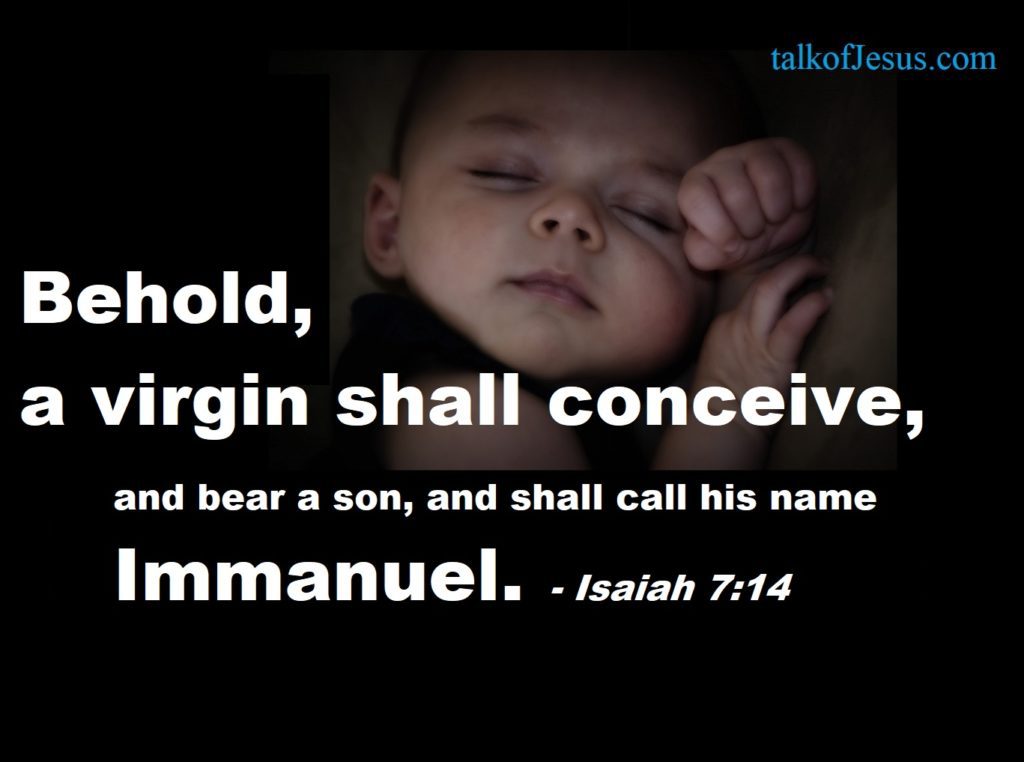
“Therefore the Lord Himself will give you a sign: Behold, the virgin will conceive and give birth to a son, and she will name Him Immanuel…
“The LORD will bring on you, on your people, and on your father’s house such days as have not come since the day that Ephraim separated from Judah—the days of the king of Assyria.”
For My hand made all these things, So all these things came into being,” declares the Lord. “But I will look to this one, At one who is humble and contrite in spirit, and who trembles at My word.
Isaiah 66:2 NASB
NEXT: Stephen’s closing argument and Sentence of the Sanhedrin
Now that we have defined some key terms of the church (including ‘church’ – ἐκκλησία), we can proceed to examine the administration of disciples following the Lord Jesus Christ (‘Christians).
If you missed this defining first post about ACTS 6, you may want to visit some of the secure links included in Ministering to a Growing Church (BELOW).
Who would lead change after hearing their murmurings?
Last time we only got to one verse, Acts 6:1, then encountered a roadblock before I could address how the Twelve ran their administration of the multitudes.
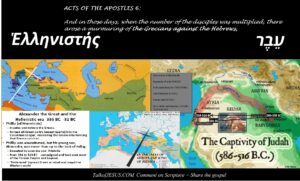
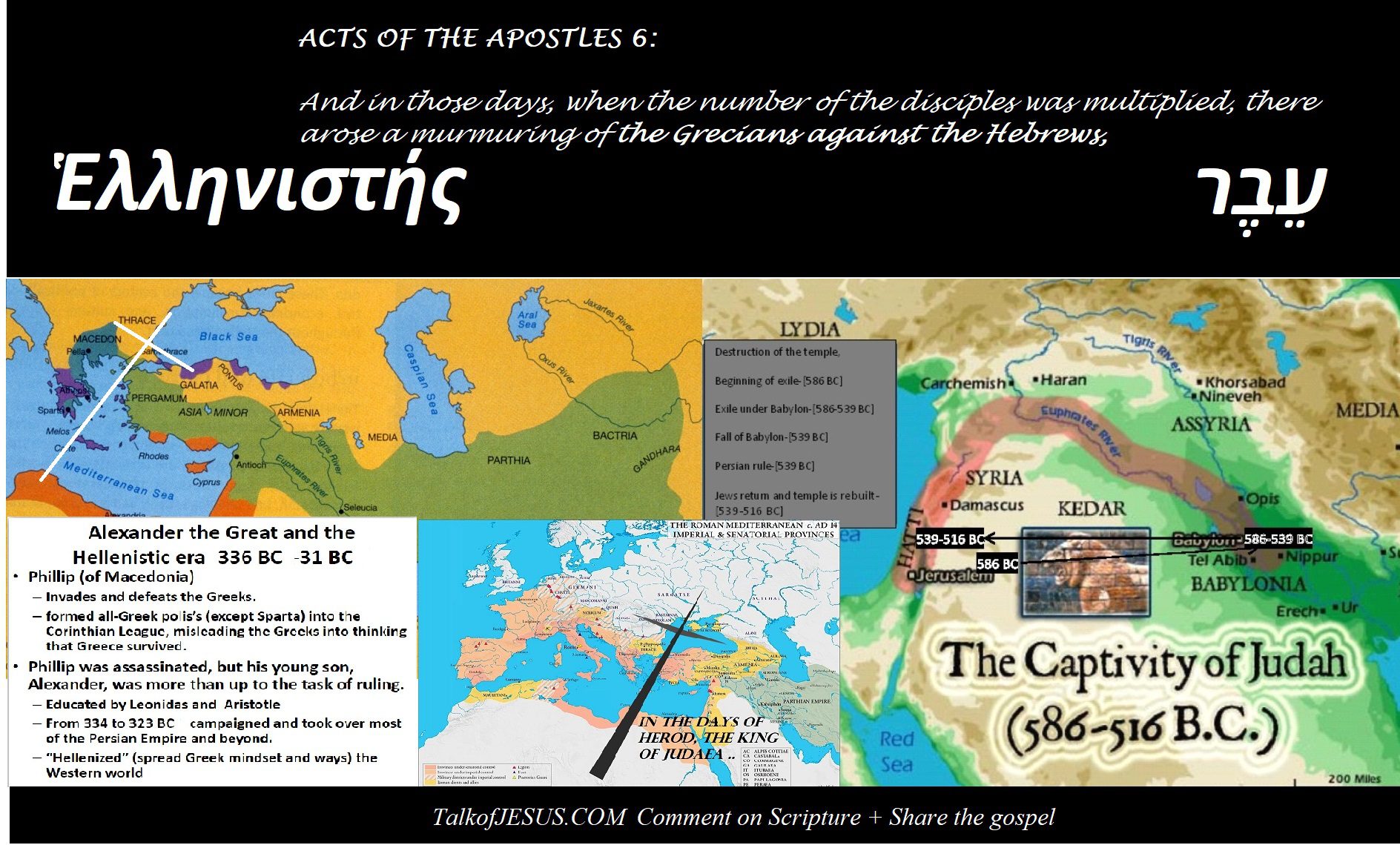
..when the number of the disciples was multiplied, there arose a murmuring of the Grecians against the Hebrews,
Acts 6:1 excerpt KJV
Does that sound like YOUR Church?
Let’s address my next question from our previous post about ministering to the personalities in this initial Church of the Apostles.
How can WE help relieve so many PERSONAL problems for hundreds of families belonging to our growing church?
Filling in a four-hundred year gap between the OLD and NEW TESTAMENTS:

(The Apostles, of course, understood their church family history better than we do.)
Mapping out traditions of our pasts
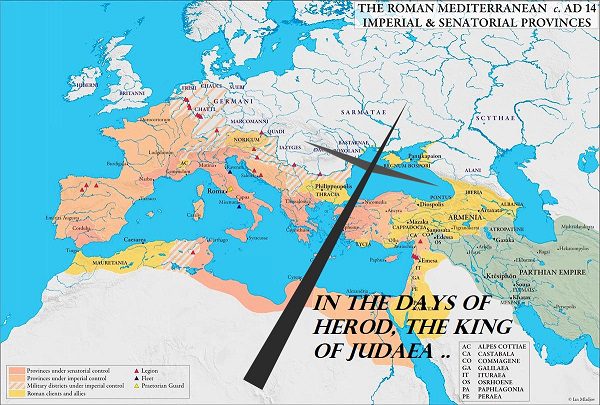
I suppose you have wondered about my FIRST CENTURY CHURCH MOSAIC attached to this post. So let’s take a look at the diverse ethnic gathering of the lost sheep of Israel (along with some NON-JEWS as well).
First Jerusalem Church of the Apostles
Here’s an unspoken issue of ethnosunderpinning their recent ‘murmurings.’
Israel did not exist!
In the time of the Apostles, a divided Greek-speaking Roman empire changed administrations frequently.
Before the Herod’s
JEWS exiled to the EAST to Babylon, some returning to Jerusalem AFTER Persia defeats Babylon.
Many JEWS remained in cities WEST of Jewish influence in cities of the Greek and Roman world.
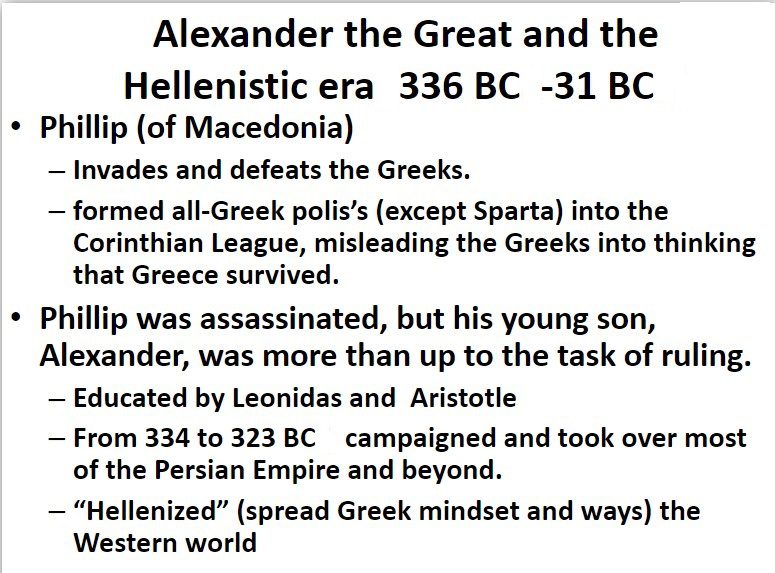
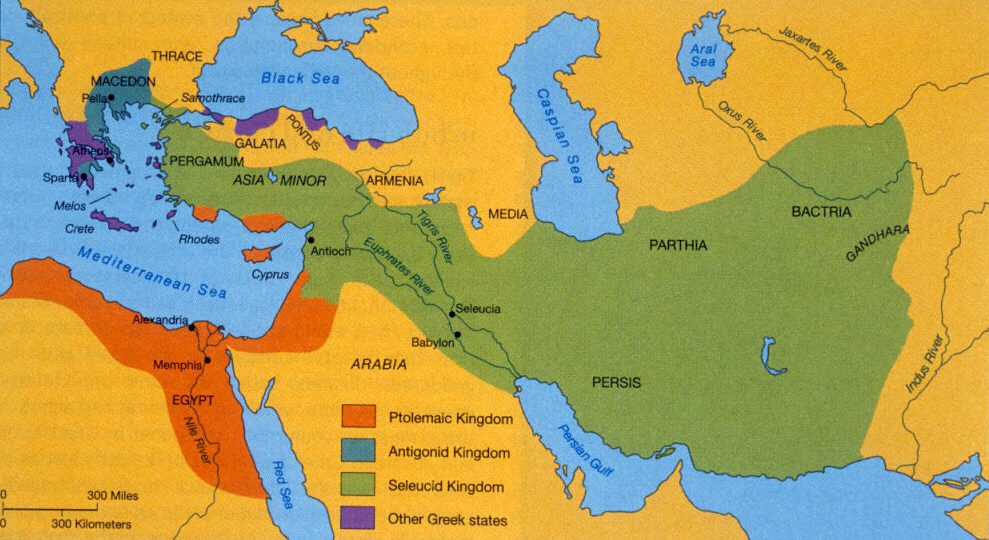
BEFORE HEROD – Kingdom of Alexander the Great 336-323 B.C.
323 BC, Alexander died in the palace of Nebuchadnezzar II, in Babylon
Alexander had conquered cities, kingdoms & empires from Greece to Asia and to Egypt, Babylon, Persia and beyond.
These ‘Hellenized‘ cultures then embraced or tolerated Greek customs and language as a universalist ethnos applied to trading and communication between cultures.
(Compare to a contemporary founding culture three centuries ago in North America.)
200’s BC, The Ptolemy’s of Egypt (who had also been Hellenized by Alexander’s conquests) ruled Jerusalem and the eastern Mediterranean coast to Syria beyond Tyre and Sidon.
100’s BC, Seleucia (modern-day Bagdad) was the Hellenized capital of the Seleucid Empire which survived until 63 BC
As you can see on the top-left of my map mosaic, much of this massive empire lies east of Rome’s later reach.
167-134 BC, Maccabean revolt and resistance against Seleucid rule in Judah
63 BC, Gnaeus Pompeius Magnus or Pompey the Great, captured Jerusalem for Rome
37 BC, Herod the Great (of Edomite ancestry, born in Idumea) aligned himself with Rome.
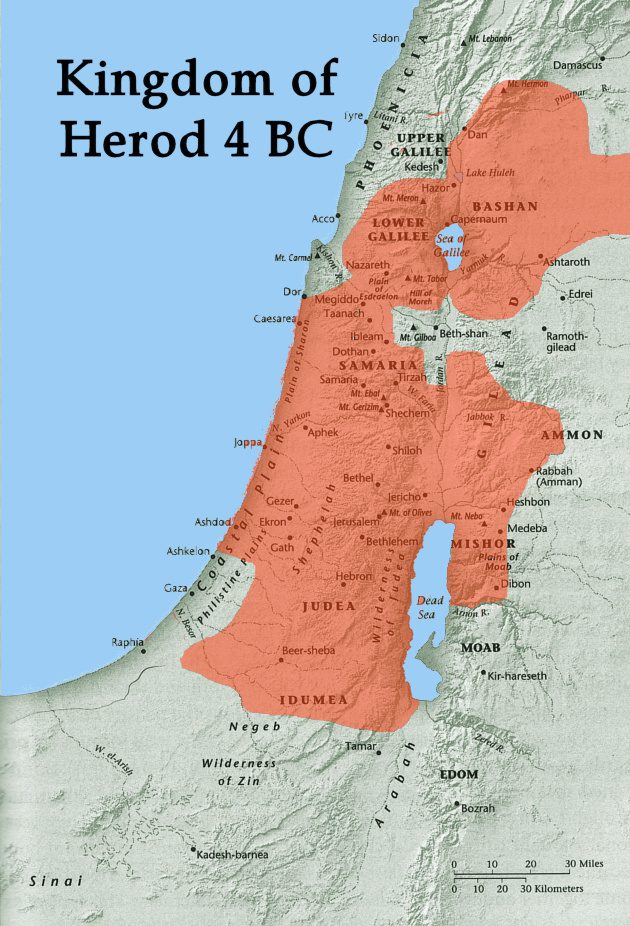
Rome divides its client kingdom into:
Bashan
Lower Galilee
Samaria
Mishor
Judea &
Idumea
In the time of Jesus and the Apostles into:
Samaria, Judea & Idumea
Perea & Galilee
Batania (Caesarea Philippi) & Auranitis
Syria, including Phoenicia & Ituraea
(with Antioch, Roman city of 500,000+ residents, residence of its Governor)
6:2 So the Twelve gathered all the disciples together and said,
“It would not be right for us to neglect the ministry of the word of God in order to wait on tables.
NIV
WHEN will we ever have time to minister to our church family?
NOT OUR PROBLEM?NO! That’s not what the Apostles leading the growing church are saying.
In fact, the Apostles lead other servants of God to solve the church’s own ministry ‘challenge.’
Waiting tables is just one of our many ministries
“Instead, brothers and sisters, select from among you seven men of good reputation, full of the Spirit and of wisdom, whom we may put in charge of this task.
(NOTas we might think, but i.e. ‘to affirm that one has seen or heard or experienced something, or that he knows it because taught by divine revelation or inspiration.’
Seven men from the
.. full of the [Holy] Spirit
.. and of wisdom σοφία[sophia] who we should put in charge [administrators] of this task.
These laymen disciples will choose those who will administer the daily tasks of the church.
An Administration by More Servant Leaders
And they chose:
Stephen, a man full of faith and the Holy Spirit, and
Philip,
Prochorus, [Greek, probably a Hellenist]
Nicanor, [a Greek name]
Timon,
Parmenas, [may have been from Asia minor] and
Nicolas, a proselyte from Antioch [a pagan converted to Judaism from the city in Syria where he will soon to minister to the gentiles]
What must we do for each and every saint of our Lord Christ Jesus?
Administration of our designated authority
And they brought these men before the apostles; and after praying, they laid their hands on them.
ACTS of BLESSING the seven men in Jerusalem given authority by the Apostles 6:6
Prayer (inquiring of the LORD) followed by Blessing
We see such acts as this throughout Scripture.
Moses chooses seventy to help. Israel blesses each of his grown sons before his death. (Isaac had blessed Jacob and not Esau.) Moses blesses Joshua. David blesses Solomon.
Conversation with the LORD followed by the Lord’s blessing of continued authority of administration of His work through another.
They laid their hands … - Among the Jews it was customary to lay hands on the head of a person who was set apart to any particular office, Numbers 27:18; Compare Acts 8:19. This was done, not to impart any power or ability, but to "designate" that they received their authority or commission from those who thus laid their hands on them, as the act of laying hands on the sick by the Saviour was an act signifying that the power of healing came from him, Matthew 9:18; compare Mark 16:18. In such cases the laying on of the hands conveyed of itself no healing power, but was a sign or token that the power came from the Lord Jesus. Ordination has been uniformly performed in this way. See 1 Timothy 5:22.
Though the seven deacons had been chosen by the church to this work, yet they derived their immediate commission and authority from the apostles.
Later he [Jesus] appeared to the Eleven themselves as they were reclining at the table. He rebuked their unbelief and hardness of heart, because they did not believe those who saw him after he had risen. Then he said to them,
“Go into all the world and preach the gospel to all creation.
Gospel of Mark 16:15 CSB
.. but you will receive power when the Holy Spirit has come upon you; and you shall be My witnesses both in Jerusalem and in all Judea, and Samaria, and as far as the remotest part of the earth.”
Used to monitor number of Google Analytics server requests
10 minutes
__utmb
Used to distinguish new sessions and visits. This cookie is set when the GA.js javascript library is loaded and there is no existing __utmb cookie. The cookie is updated every time data is sent to the Google Analytics server.
30 minutes after last activity
__utmc
Used only with old Urchin versions of Google Analytics and not with GA.js. Was used to distinguish between new sessions and visits at the end of a session.
End of session (browser)
__utmz
Contains information about the traffic source or campaign that directed user to the website. The cookie is set when the GA.js javascript is loaded and updated when data is sent to the Google Anaytics server
6 months after last activity
__utmv
Contains custom information set by the web developer via the _setCustomVar method in Google Analytics. This cookie is updated every time new data is sent to the Google Analytics server.
2 years after last activity
__utmx
Used to determine whether a user is included in an A / B or Multivariate test.
18 months
_ga
ID used to identify users
2 years
_gali
Used by Google Analytics to determine which links on a page are being clicked
30 seconds
_ga_
ID used to identify users
2 years
_gid
ID used to identify users for 24 hours after last activity
24 hours
_gat
Used to monitor number of Google Analytics server requests when using Google Tag Manager
1 minute
_gac_
Contains information related to marketing campaigns of the user. These are shared with Google AdWords / Google Ads when the Google Ads and Google Analytics accounts are linked together.