Tag: Matthew

  • 2 Timothy – Apostolic Faith and Pastoral Oversight by Paul

    2 Timothy – Apostolic Faith and Pastoral Oversight by Paul

    Introduction

    God and Christ became incarnate in order to restore Their personal relationship with sinful man.

    Roger@TallkofJesus.com


    God and Apostles, Disciples of men

    Our purpose in introducing Paul’s final epistle to a pastor is:

    1. to reintroduce you to the Apostle Paul and

    2. to reacquaint you with Timothy, a disciple of Paul who served him in varying roles,

    BOTH whom we’ve met in Acts of the Apostles and other epistles.


    Let us begin with God

    (says the teacher to his class). 

    God — YHWH the LORD — Is One.

    One in Being. One in Essence. One in Substance.

    There IS no other god.

    God IS the Creator of all things and of all mankind.

    He had a relationship in the beginning of time — before which He Exists and after which He Exists — the LORD’s relationships are perfectly personal.

    God IS: Father, Son — Jesus Christ, and the Holy Spirit.


    Christ, Apostles and Disciples

    The Apostle Paul writes to Timothy in his first epistle:

    This is a faithful saying and worthy of all acceptance, that Christ Jesus came into the world to save sinners, of whom I am chief.

    First letter of the Apostle Paul to Timothy

    Jesus, the incarnate Son of God the Father, taught the Gospel with all perfection to men for three years.

    The Twelve Disciples (which included neither Paul nor Timothy) followed the Lord, ate and slept with Jesus — they all knew the incarnate Son of God personally.


    Consider the interpersonal relationships connecting each of these roles as defined by Scripture and what the Lord Jesus, our Teacher, instructs:

    Disciple (follower), Master (teacher), Servant (slave) and Lord

    The Disciples Matthew, John and Peter were all present with the incarnate Christ Jesus personally when the Lord said this:

    The disciple is not above his master, nor the servant above his lord.

    Gospel of Matthew 24:14 – Jesus’ to The Twelve Disciples; Instructions for Service & meaning of discipleship – KJV

    μαθητής – mathētēs – disciple (268x) – a learner, pupil, one who follows one’s teaching:

    The Twelve followed JESUS for three years, discipleship at its most personal.

    Furthermore, many others would follow JESUS’s teachings as ‘Christians’ chosen by God for the Way of eternal life.


    Apostles to the Jews and Gentiles

    Of course from the beginning Jesus knew that Judas would betray Him and that a disciple Mathias would be chosen to replace the betrayer of Christ as a twelfth Apostle to the Jews.

    Christ had taught and trained the Twelve how they would become Apostles — primarily, but not exclusively, to their fellow Jews —after His death, resurrection and ascension.


    Simon Peter, a servant and an apostle of Jesus Christ, to them that have obtained like precious faith with us through the righteousness of God and our Saviour Jesus Christ:

    2 Peter 1:1 KJV


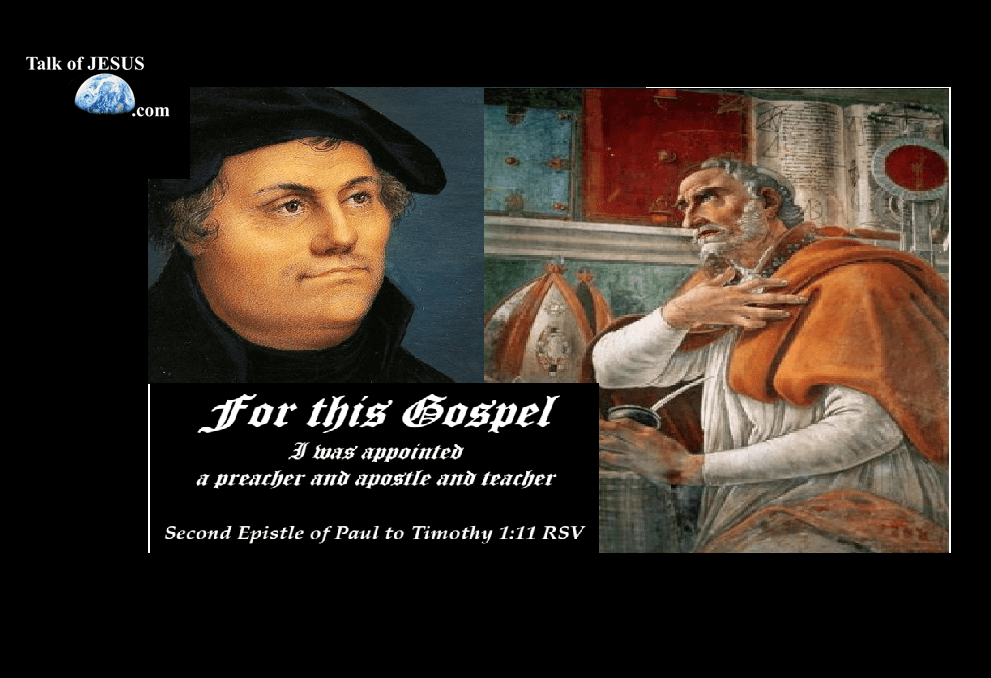
    Paul also refers to himself as an Apostle, greeting his disciples (followers) in his first epistle and this final letter.

    Paul, an apostle of Jesus Christ by the will of God, according to the promise of life which is in Christ Jesus,

    To Timothy, my dearly beloved son:

    2 Timothy 1:1-2a KJV

    So who are apostles?

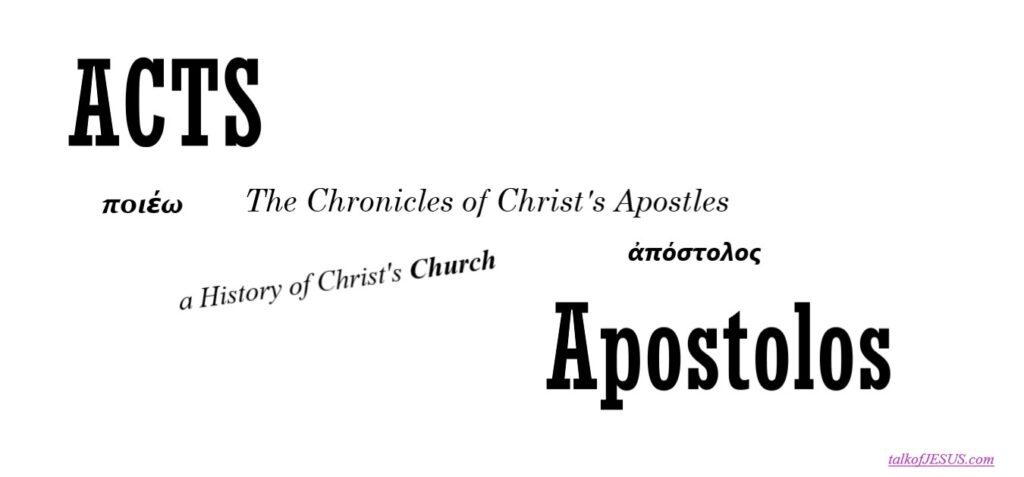
    Acts Apostolos - Acts 1 of the Apostles begins a 28 chapter account of the chronicles of Christ's Apostles - a history of Christ's Church

    Apostolos – a delegate, messenger, one sent forth with orders

    • specifically applied to the twelve apostles of Christ
    • in a broader sense applied to other eminent Christian teachers
    • – of Barnabas of Timothy and Silvanus

    Apostles are ‘sent out’ by Christ.

    As in the case of the Twelve and the Apostle Paul, the Lord himself instructed them Personally — that is, the Person of Jesus sent these Apostles out into the world personally.

    Other apostles continued to be ‘sent out into all the world’ by the Holy Spirit after Jesus’ ascension, as Luke records for us of the day of Pentecost in ACTS 1.


    As we learned from Acts of the Apostles that after the AD 49 Council in Jerusalem, Peter, Paul, John and all others were sent out ‘first to the Jews,’ but also into gentile areas of the Roman Empire (mostly Hellenist or Greek provinces) to include ALL as follows of Christ as part of each local church.

    Jesus is Lord

    Note that Jesus Christ refers to the Father as Lord (Kyrios in their common Greek language of the Roman Empire) with an authority and meaning no different than the original Hebrew scripture (Yahweh).

    “Teacher, which is the great commandment in the Law?”

    And He said to him,

    “‘YOU SHALL LOVE THE LORD YOUR GOD WITH ALL YOUR HEART, AND WITH ALL YOUR SOUL, AND WITH ALL YOUR MIND.’

    Matthew 22:36-37 LSB


    Saul, a Jew of Jews, sent out by a Master crucified and risen!

    About five years after the Jews of Jerusalem had crucified Jesus, a young disciple of Gamaliel witnessed the stoning of a follower of The Way.

    They went on stoning Stephen as he was calling out and saying, “Lord Jesus, receive my spirit!” Then falling on his knees, he cried out with a loud voice, “Lord, do not hold this sin against them!” And having said this, he fell asleep.

    Acts of the Apostles 7:59-60 LSB

    Stephen, even in his dying breath, called JESUS, “Lord” – twice.

    And this young disciple of the rabbi Gamaliel had witnessed it personally.

    Saul of Tarsus would become an apostle of the Sanhedrin specifically sent out to continue persecuting Christians.

    But then, as we know, Christ appeared to Saul and instructed this new and unwilling (at first) Apostle to go to the Gentiles.

    Paul frequently writes that He is a slave (doulos) of JESUS or God(or of the gospel). The Lord Jesus himself points to the service required of this most personal relationship.

    Many translations prefer servant to slave, but it is the same Greek word: doulos. 

    The disciple is not above his master, nor the servant above his lord.

    Gospel of Matthew 10:24 KJV

    The Apostle Paul describes himself in another pastoral epistle written about the same time as his two letters to Timothy:

    Paul, a servant G1401 of God, and an apostle of Jesus Christ, according to the faith of God’s elect, and the acknowledging of the truth which is after godliness;

    Epistle of Paul to Titus 1:1

    Timothy – Paul enlists a disciple of The Way

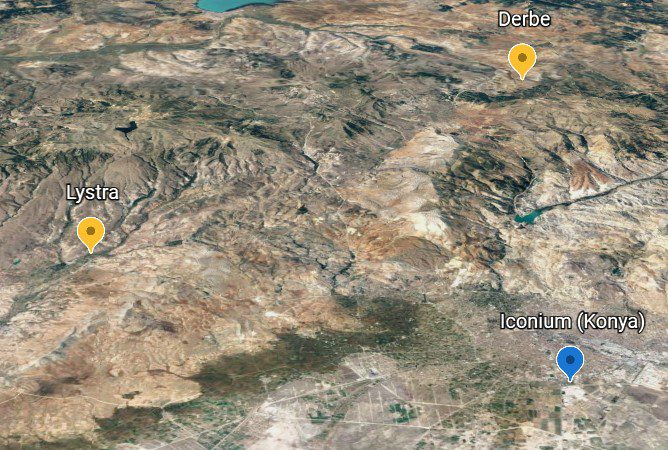
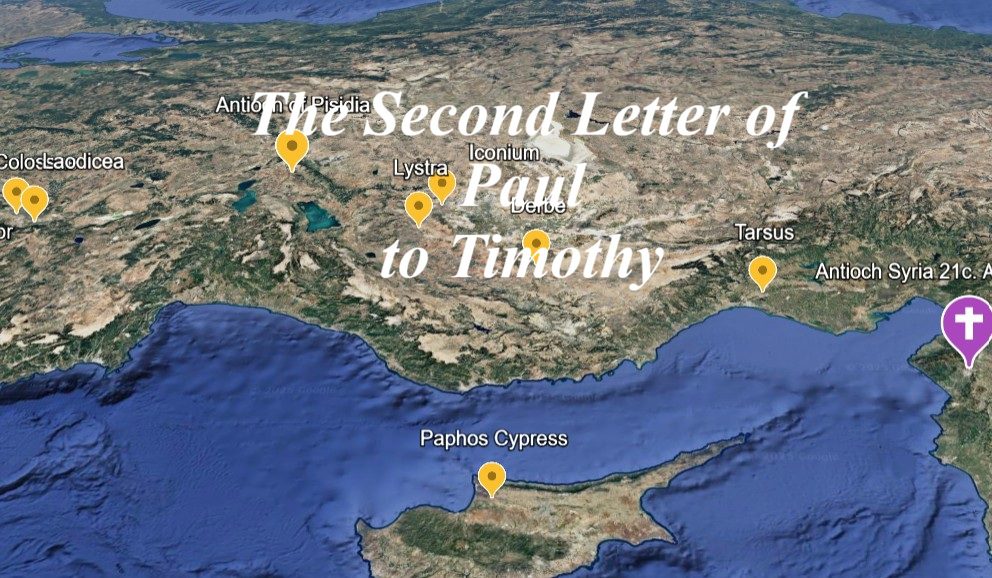
    Lystra, Derbe and Iconium in the Taurus mountains and general Roman region of Galatia to where Paul sends the first of his epistles.

    Now Paul also arrived at Derbe and at Lystra.

    And behold, a disciple was there, named Timothy,

    the son of a Jewish woman who was a believer,

    but his father was a Greek,

    Acts of the Apostles 16:1

    During Paul’s second missionary journey, which had begun inland through the mountains northwest of Tarsus in rural Galatia. While visiting churches established by Barnabas and him on a first missionary journey, the Apostle meets a young Timothy — a Greek, because of his father, but brought up as a Christ-follower by his mother(a Jew, as Paul had been) and Timothy’s grandmother.

    A brief introduction of Timothy (Τιμόθεος – Timotheos)

    Timothy's early journeys are found in Acts of the Apostles. 

    ~AD 49

    Timothy joined Paul and Silas on mission, staying behind at Berea for a time with Silas. Paul, later commands the two by the Spirit to join him in Athens from where the trio proceed to Macedonia.

    Paul then ‘sent into Macedonia two of them that ministered unto him, Timotheus and Erastus; but he himself stayed in Asia for a season.

    Acts 19:22 KJV

    We observe how personal all of the mentoring relations of the Apostle remain to Paul as Luke records those with the Apostle when once again the Jews laid wait to capture and kill him.

    Paul was accompanied by Sopater son of Pyrrhus from Berea,

    Aristarchus and Secundus from Thessalonica,

    Gaius from Derbe, Timothy, and Tychicus

    and Trophimus from the province of Asia.

    Acts of the Apostles 20:4 Berean Standard Bible

    We will mention more of Timothy's crucial later pastoral roles later in this epistle.  

    Timothy wrote other epistles with Paul :

    It is important for us to note that these Pastoral Epistles make known the Spirit-directed teaching of the Apostle Paul we must study, rather than focus on any pastors or saints to whom Paul writes, such as Timothy.

    • ~AD 50-51
    • ~AD 55-56 the Apostle Paul writes:
      • 1 Corinthians with Sosthenes and
      • 2 Corinthians with Timothy
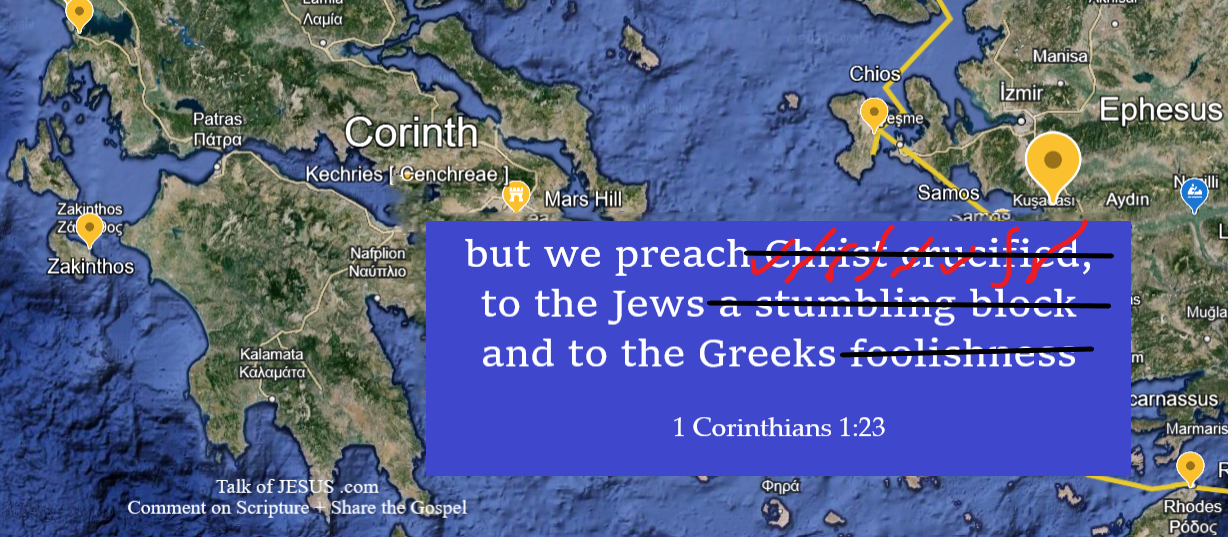
    preaching to them that perish - Paul writes to the Corinthians to consider his different way of preaching
    The Apostle Paul writes to the Corinthians with Sosthenes and a second time with Timothy
    *graphic from a 2024 TalkofJESUS SERIES Post: Rebuke of ministers that perish without the Cross
    • ~AD 60-62 The Apostle Paul writes to:
      • the Ephesians
      • the Philippians
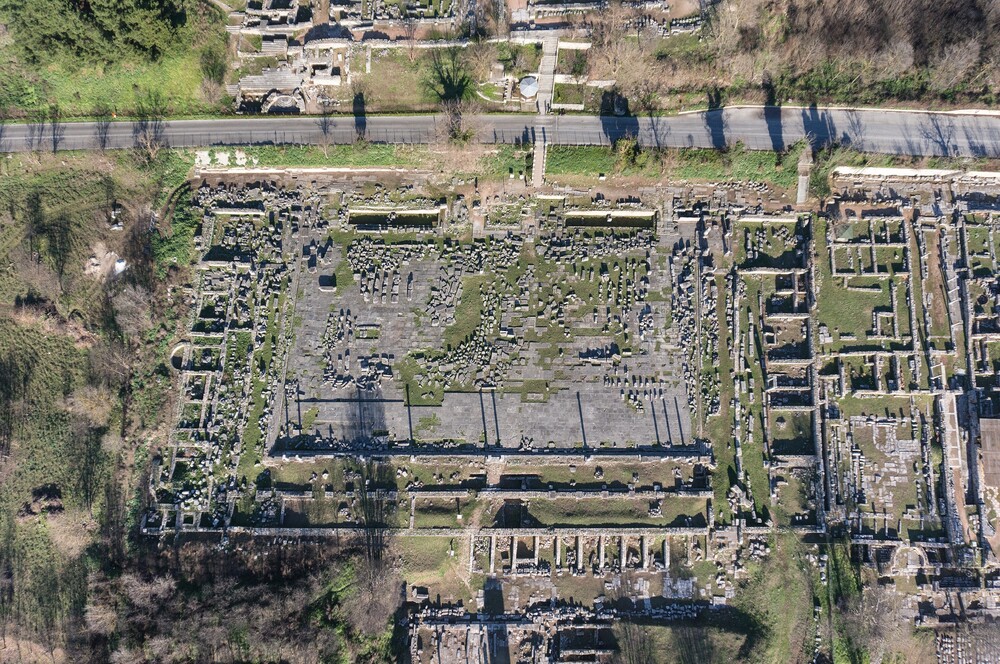
    Archaeological Site of Philippi: General view of the forum with adjacent agora marketplace

    Paul and Timothy, servants of Christ Jesus,

    To all God’s holy people in Christ Jesus at Philippi, together with the overseers and deacons:

    Philippians 1:1 NIV

    • the Colossians, with Timothy
    • and a personal plea along with Timothy to Philemon, concerning Onesimus.

    NEXT: 2 Timothy 1:

    timotheos agapētos teknon

    To Timothy, my beloved son


    Comment on Scripture – Share the Gospel


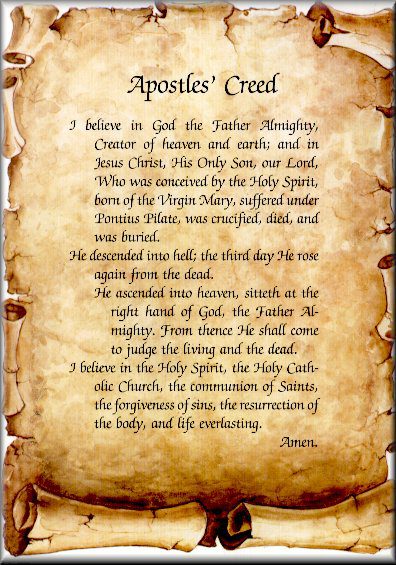
  • The Apostles Creed 10 the Remission (forgiveness) of Sins

    The Apostles Creed 10 the Remission (forgiveness) of Sins

    We believe in ..the communion of saints, the forgiveness of sins…

    The Apostles’ Creed — foundational to our Apostolic Christian faith

    Today we have reached the second to last points of our brief look at the Apostles’ creed, the forgiveness or remission of sins.

    (We’ll also take a brief glance at ‘the communion of saints,’ mentioned in part in our previous look at the Church.)

    For an overview and more instructive view of the outline of our SERIES, take a look at the Roman Creed below:

    Followers of Christ must always expect an attack against Scripture. Church doctrine is a line in the sand. - How will a leader or council of leaders choose what the Church will teach?
    I BELIEVE or WE BELIEVE IN:

    Structure of Christian CREEDS

    Here’s a brief outline found originally in The Roman Creed:

    1. I BELIEVE IN God almighty (or the Father almighty)
    2. And in Jesus Christ, his only Son, our Lord
    3. Who was born of the Holy Spirit and the Virgin Mary
    4. Who was crucified under Pontius Pilate and was buried
    5. And on the third day rose from the dead
    6. Who ascended into heaven
    7. Siteth at the right hand of the Father
    8. Whence He cometh to judge the living and the dead
    9. (I or WE believe in:) The Holy Ghost
    10. The Holy Church
    11. The remission of Sins
    12. The resurrection of the flesh
    • (and life everlasting).

    source: apostles-creed.org


    The early church taught what is basically in the Apostles creed

    It was not till heresies and divisions in the church that any creeds were established.

    source:

    The Apostles’ Creed


    The Apostles Creed

    I believe in

    the communion of the Saints,


    If you haven't read our previous post about the Church you may find helpful definitions not repeated here. 

    Last time we addressed one of the two definitions included in this section of the Apostles Creed:

    • hagios
      • most holy thing, a saint

    Today let’s also take a brief look at what the Creed means by communion.

    (In a sense, it’s not what you think of first.)

    Then they that gladly received his word were baptized..

    Acts of the Apostles 2:41a KJV

    (Now they are the saints or Holy ones of Christ, because of the remission of their sins.) 

    And they continued stedfastly in the apostles’ doctrine

    and fellowship, G2842

    and in breaking of bread,

    and in prayers.

    Acts of the Apostles 2:42 KJV

    Note that communion here is the fellowship of the saints whick follows learning the teaching or doctrine of the Apostles.

    AND that Communion (as we call it) is a corporate breaking of the bread [klasis artos], a symbolic remembrance of Christ’s broken body.


    They devoted themselves to

    (from the CSB) (and in addition to;)

    • the apostles’ teaching,
    • to the fellowship (communion of the saints),
    • to the breaking of bread,
    • and to prayer.

    ALL these together, as Christ’s local church, to keep them holy and separate from the sin and surrounding sinners of whom they once embraced.


    κοινωνία koinōnía, koy-nohn-ee’-ah; from G2844; partnership, i.e. (literally) participation, or (social) intercourse, or (pecuniary) benefaction (giving to the benefit of the church):—(to) communicate(-ation), communion, (contri-)distribution, fellowship.

    Source: BlueLetterBible.org


    I believe in

    the forgiveness of sins

    Nehemiah 9:

    After the Hebrews had abandoned the Law of Moses and their priest Ezra reads it to the people.

    .. the children of Israel were assembled with fasting, and with sackclothes, and earth upon them.

    repentant prayer

    .. And the seed of Israel separated themselves from all strangers,

    sanctification or holiness apart from the sin of their former life

    and stood and confessed their sins, and the iniquities of their fathers.

    Confession to God precedes asking for forgiveness. 

    But they and our fathers dealt proudly, and hardened their necks, and hearkened not to thy commandments,

    And refused to obey, neither were mindful of thy wonders that thou didst among them; but hardened their necks, and in their rebellion appointed a captain to return to their bondage:

    but thou art a God ready to pardon, gracious and merciful, slow to anger, and of great kindness, and forsookest them not.

    Nehamiah 9:16-17 KJV

    the remission of sins,

    Admittedly 'remission from the Creed is a little 'King James' in its sound. But recognize the New Testament application with which you may be able to relate from a familiar prayer and Scripture. 

    Forgive us our debts

    (Which comes from this OT application of the Law)

    “At the end of every seven years you shall grant a remission of debts.

    מִקֵּץ שֶׁבַע־שָׁנִים תַּעֲשֶׂה שְׁמִטָּה׃

    Deuteronomy 18:1 LSB


    ‘And forgive us our debts,
    as we also have forgiven our debtors.

    Gospel of Matthew 6:12 LSB

    “For if you forgive others for their transgressions,

    your heavenly Father will also forgive you.

    “But if you do not forgive others,

    then your Father will not forgive your transgressions.

    Matthew 6:14-15 LSB – the teaching of Jesus, the Son of Man, to followers


    paraptōma – transgressions

    • to fall beside or near something
    • a lapse or deviation from truth and uprightness
      • a sin, misdeed

    And you were dead in your transgressions G3900 and sins..

    Apostle Paul to the Ephesians 2:1

    For the wages of sin is death,
    but the gift of God is eternal life in Christ Jesus our Lord.

    Romans 6:23 NIV

    The remission of Sins through Christ

    • the concept of “wages,” which implies a payment or consequence that is earned. In the biblical context,
    • sin refers to any action, thought, or attitude that falls short of God’s holiness and commands.
    • Death here is both physical and spiritual, indicating separation from God.
      • Theologically, this underscores the seriousness of sin and its inevitable outcome without divine intervention.

    Contrasting with the earned wages of sin, the “gift of God” emphasizes grace, which is unmerited favor. Eternal life is not something humans can earn; it is a gift freely given by God.

    It is only through Jesus Christ, His death, and resurrection, that believers receive this gift. Jesus is seen as the fulfillment of Old Testament types and prophecies, such as the Passover Lamb (Exodus 12) and the Suffering Servant (Isaiah 53).

    Source: BibleHub.org – commentary on Romans 6:23


    In Him we have redemption through His blood,

    the forgiveness of sins, according to the riches of His grace.

    Ephesians 1:7 NKJV


    NEXT: Resurrection!

    Talk of JESUS . com

    Comment on Scripture – Share the Gospel

  • The Apostles Creed 8 We Believe in the Holy Spirit

    The Apostles Creed 8 We Believe in the Holy Spirit

    And whosoever shall speak a word against the Son of man, it shall be forgiven him;

    but whosoever shall speak against the Holy Spirit,

    it shall not be forgiven him, neither in this world, nor in that which is to come.

    Gospel of Matthew 12:32 ASV

    The Apostles’ Creed — foundational to our Apostolic Christian faith

    Followers of Christ must always expect an attack against Scripture. Church doctrine is a line in the sand. - How will a leader or council of leaders choose what the Church will teach?
    I BELIEVE or WE BELIEVE IN:

    We believe in ..

    1. God the Father almighty,
      • Creator of heaven and earth,
    2. Jesus Christ
      • God’s only Son, our Lord,
    3. who was conceived by the Holy Spirit,
      • born of the Virgin Mary
    4. Jesus suffered under Pontius Pilate,
      • was crucified
        • and was buried
    5. On the third day He rose from the dead
    6. He ascended to heaven
    7. He sits in the favored place of God the Father
      • He will judge the living and the dead.

    Here, the weightiness of what we have just confessed must certainly convict the faithful soul. Then follows a reiteration and underlining of the same fundamental faith:

    (I or WE believe in:)

    • The Holy Ghost
    • more…

    source: apostles-creed.org


    The Apostles’ Creed

    The Apostles’ Creed and other affirmations of faith were adopted corporately by the Church to refute permeating heresies plaguing believers since the time of the Apostles.

    Roger@TalkofJesus.com


    The Apostles Creed

    As Scripture states:

    GOD IS ONE IN ESSENCE,

    and as the Gospel reveals,

    THREE IN PERSON.

    More on Trinity from R.C. Sproul

    I believe in

    the third Person of the Trinity.


    The Holy Spirit, also referred to as the Holy Ghost, is the third Person of the Holy Trinity, co-equal and co-eternal with God the Father and God the Son. The Holy Spirit is a central figure in Christian theology and is integral to the believer’s life and the Church’s mission.

    Source: BibleHub.com Topical Encyclopedia


    Separate Roles of the Holy Spirit

    You may have thought that we had already addressed the Holy Spirit in the Apostle’s Creed.

    In fact, the Creed first brings up the Spirit in relation to His role in the conception of Jesus, the Only Son of the One God, by Mary through her virgin birth of the Christ or Messiah of Israel.

    Now the Creed reiterates our belief in the Person of the Holy Spirit mentioned in the Old Testament as well as the Gospels.

    Once again, let’s look to the Good News of what the Only Son who has seen the Father tells His Disciples about the Holy Spirit. (And note the context of Jesus’ answers about the Spirit.)

    (Possible) Good News of the Holy Spirit

    Returniing to our opening Scripture from the Gospel of Mark from the King James Version.

    And the scribes which came down from Jerusalem said, He hath Beelzebub, and by the prince of the devils casteth he out devils.

    “Verily I say unto you, All sins shall be forgiven unto the sons of men, and blasphemies wherewith soever they shall blaspheme:

    But he that shall blaspheme against the Holy Ghost hath never forgiveness, but is in danger of eternal damnation:”

    Because they said, He hath an unclean spirit.

    Gospel of Mark 3:22,28-30 KJV


    When the Lord Jesus was baptized by John then began His teaching as the Son of Man:

    And it came to pass in those days, that Jesus came from Nazareth of Galilee, and was baptized of John in Jordan.

    depiction of John baptizing a man at the Jordan river

    And there came a voice from heaven, saying,

    Thou art my beloved Son, in whom I am well pleased.

    And immediately the Spirit driveth him into the wilderness.

    Gospel of Mark 1:9-12 KJV


    Gospel of John

    For he whom God has sent utters the words of God, for he gives the Spirit without measure.

    John 3:34 ESV


    Whoever does not love me does not keep my words.

    And the word that you hear is not mine but the Father’s who sent me.

    These things I have spoken to you while I am still with you.

    Gospel of John 14:24-25 ESV – the words of JESUS Christ

    But the Helper, the Holy Spirit, whom the Father will send in my name, he will teach you all things and bring to your remembrance all that I have said to you.

    Gospel of John `3:26 ESV
    people receiving the Holy Spirit descending like a dove
    Why Is the Holy Spirit Compared to a Dove?

    Receive the Spirit!

    God the Father knew you and chose you long ago,

    and his Spirit has made you holy.

    As a result, you have obeyed him and have been cleansed by the blood of Jesus Christ. May God give you more and more grace and peace.

    The Apostle Peter, Greeting from his first epistle

    In the same way, the Spirit helps us in our weakness. For we do not know how we ought to pray, but the Spirit Himself intercedes for us with groans too deep for words.

    The Apostle Paul’s epistle to the Romans 8:26 BSB


    Who has directed the Spirit of the LORD?

    The Question is that of God speaking through the Prophet Isaiah, who the Apostle Paul later quotes [64:4] to the saints of the Corinthian church.
    or informed Him as His counselor? 
    Whom did He consult to enlighten Him,
    and who taught Him the paths of justice?
    Who imparted knowledge to Him
    and showed Him the way of understanding?

    Isaiah 40:13-14 BSB


    the mysterious and hidden wisdom of God

    But God has revealed it to us by the Spirit.

    The Spirit searches all things, even the deep things of God. For who among men knows the thoughts of man except his own spirit within him?

    So too, no one knows the thoughts of God except the Spirit of God.

    We have not received the spirit of the world, but the Spirit who is from God, that we may understand what God has freely given us.

    And this is what we speak, not in words taught us by human wisdom, but in words taught by the Spirit, expressing spiritual truths in spiritual words. The natural man does not accept the things that come from the Spirit of God…

    Paul’s First Letter to the Corinthians 10-14a BSB


    NEXT – the controversial CHURCH

    Comment on Scripture – Share the Gospel