Tag: Matthew

  • Jude – Now I will praise the Lord

    Jude – Now I will praise the Lord

    Who is Jude?

    The first thing I want to know about any letter I receive is who sent it to me. So as a leader or member of one of several churches we would want to be certain of the identity of the author of Jude and the authenticity of Jude’s message.

    Jude, a bondservant of Jesus Christ, and brother of James

    Letter of Jude 1:1a NKJV

    To fully understand the identity of the man who’s name is translated in English as ‘Jude” we must look to both the original Greek text and the common name of its Hebrew origin in first century Judea and Galilee.

    Ἰούδας

    Pronounced: ē-ü’-däs — Most translations of the Greek use Jude, the Latin Iudas and Yehudah in the Hebrew Names Version. The root word of the Greek name is Yĕhuwdah from the Hebrew יְהוּדָה meaning “praised” and translated at Judas. (We understand why after Jesus’ betrayal no man wanted to be known by this name now synonymous with ‘betrayer.’)

    In James – Witness of a Converted Brother we learned that Roman names derived from local languages had become Hellenized. James could be Jim, but Judas and Judah easily become, Jude.

    Some fathers named their sons after a forefather of their tribe like Judah or Israel. Judah יָדָה is the familiar Hebrew root of both the Greek and English.

    Brother of James

    Jude means: he shall be praised.

    The author of our letter identifies himself as the brother of James.

    Jude refers to James, head of the church of Jerusalem, leader of the first century churches who exchanged letters throughout Asia minor, Greece, Palestine and other areas receiving the Good News of Christ. Most Biblical commentators agree that like James, Jude is is also a half-brother of Jesus.

    Both James and Jude identify themselves as servants of Jesus, rather than claiming their biological relationship to the Lord. Most kings come to power via their family connection and install relatives in high positions.

    One of the great Jewish controversies Jesus would take no part in was that of the legitimacies of kings and followers of certain political traditions. These political/family controversies had progressed and preceded Jude, James and Jesus by several generations back to the second century B.C.

    Maccabees

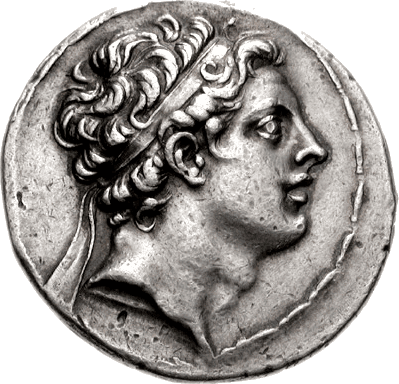
    Source: BibleHub.org (a hammer), This title, which was originally the surname of Judas, one of the sons of Mattathias, was afterward extended to the heroic family of which he was one of the noblest representatives. Asmonaeans or Hasmonaeans is the Proper name of the family, which is derived from Cashmon, great grandfather of Mattathias. The Maccabees were a family of Jews who resisted the authority of Antiochus Epiphanes king of Syria and his successors who had usurped authority over the Jews, conquered Jerusalem, and strove to introduce idolatrous worship.

    Judas, one of the sons of Mattathias generally called in English the Maccabees, a celebrated family who defended Jewish rights and customs in the 2nd century B.C. (1 Maccabees 2:1-3 {from the Apocrypha, for those unfamiliar with extra-Biblical texts.}

    Herodians

    The end of the era of the Hasmoneans is probably the most turbulent time in Jewish history. It is hard to imagine a “Jewish” government more antithetical to Jewish principles and ideals than that of Herod and his successors, whose murderous, tyrannical ways would eventually lead to the destruction of the Temple and the beginning of the long exile that Jews find themselves in.Source: JewishHistory.org

    Herod the Great, born in Rome around 70 B.C and known as Herodes Magnus, was appointed a governor at around age 20 (along with his brother) and appointed King by the Roman senate in 37 B.C. He became known as Judah’s great builder and built the Temple in Jerusalem.

    During the time of Jesus, James and Jude and continuing into the years of the early church, the Herods wielded much power. Rome finally turned on Jerusalem and their client king appointed to help Rome defend the Empire against enemies east of Palestine. The Herodians failed to control the “Jewish problem,” which caused trouble throughout the Empire.

    Bondservant of Jesus Christ

    The brother of James could have begun his letter to the church as a ‘brother of the King and Messiah,’ implying his authority of position via his family. The Herodians or Maccabees made familial claims to kingdom leadership, but not these half-brothers of Jesus who had not even followed the Lord prior to His resurrection.

    James begins his letter (ἐπιστολή epistle, in greek): James, a bond-servant of God and of the Lord Jesus Christ.’ Jude chooses to identify in the same way as a bondservant of Christ.

    Jude would have been known to his readers as the brother of James, leader of the church in Jerusalem, both related to Jesus the Messiah.

    Understanding the Servant of Christ

    The Bible uses the word ‘servant‘ almost 500 times. A few English translations use the word ‘bondservant,’ a concept we no longer use or understand. Furthermore, many contemporary christians resist this concept of sometime voluntary compliance.

    I am the LORD your God, which brought you forth out of the land of Egypt, that ye should not be their bondmen; and I have broken the bands of your yoke, and made you go upright.

    Leviticus 26:13 KJV

    עָבַד עֶבֶד – A slave or servant; to work, serve. Also used as form of address between equals.

    Genesis 18: KJV

    And the LORD appeared unto him [Jacob] in the plains of Mamre: … three men stood by him: and when he saw them, he ran to meet them from the tent door, and bowed himself toward the ground, And said, My Lord, if now I have found favour in thy sight, pass not away, I pray thee, from thy servant:

    Jacob served the LORD. We serve the LORD. Jude served Christ, the Lord.

    Malachi 4:

    About four centuries before Christ (and Jesus’ half-brothers) the prophet Malachi writes:

    “Remember the instruction of Moses my servant, the statutes and ordinances I commanded him at Horeb for all Israel.

    Malachi 4:4

    The closing verses of Malachi clearly point back to Moses and the Law with the Lord calling Moses, “my servant.” James and Jude are servants of Jesus just as Moses was servant to the Lord at Horeb.

    עֶבֶד – `ebed

    Are you, beloved follower of Christ, first a servant of the Lord?

    διάκονος – diakonos

    “If anyone serves me, he must follow me. Where I am, there my servant also will be. If anyone serves me, the Father will honor him.

    Command of the Lord Jesus – Gospel of John 12:26 CSB

    The servant (from the Greek context) is ‘one who executes the commands of another, esp. of a master.

    1. the servant of a king
    2. a deacon [diakonos], one who, by virtue of the office assigned to him by the church, cares for the poor and has charge of and distributes the money collected for their use.
    3. a waiter, one who serves food and drink

    “The greatest among you will be your servant.

    The word of the Lord – Matthew 23:11

    Abraham was a servant of the Lord. Moses was a servant of the Lord. And like their forefathers in the faith, Jude and James became servants of the Lord first and servants of the Lord’s followers second.

    Paul, referring to the church writes to the church at Colossae:

    I have become its servant, according to God’s commission that was given to me for you, to make the word of God fully known …

    Jude writes to the church

    Jude, a servant of Jesus Christ and a brother of James:

    To those who are the called, loved by God the Father and kept for Jesus Christ.

    Jude 1:1b CSB

    Are you a fellow servant of Christ Jesus? If so, know that you are loved by God the Father. Know that by His grace you are kept for Jesus Christ at the day of His victorious return.

    2 May mercy, peace, and love be multiplied to you.

    To be continued

  • James and Jesus: Brothers – 6

    James and Jesus: Brothers – 6

    Although we took an initial look at the identity of the letter writer in Witness of a Converted Brother, before we ask ourselves about the conclusion of James’ letter, I would like to go back to take a look at the relationship between James and Jesus.

    James, Bond-servant of his Brother

    Ἰάκωβος θεοῦ καὶ κυρίου Ἰησοῦ Χριστοῦ

    James, a bond-servant of God and of the Lord Jesus Christ,

    James 1:1a Greek; NASB
    Roman auction of bond-slaves to be sold

    Picture James and Jesus after the resurrection. What a humble relationship the author James states here.

    First and foremost, he is a bond-servant, δοῦλος, doulos or slave.

    Slaves were common in the Roman empire. They served men of importance at many levels: kings, the rich, military leaders, land owners, regular citizens to whom one owed money. Slaves were not uncommon in Judea and servitude required the self-control of humility.

    If the relationship between James and Jesus is one of a bond-servant to his master, James acknowledges that as a servant of God he serves Jesus as his lord. The risen brother (actually, half-brother) of James is God in the flesh!

    James and Jesus of Nazareth

    Surely by now Mary has told Jesus’ brothers and sisters what she had held in her heart: this son is the Son of the Living God by the Holy Spirit!

    Isn’t this the carpenter’s son? Isn’t his mother called Mary, and his brothers James, Joseph, Simon, and Judas? And his sisters, aren’t they all with us? So where does he get all these things?” And they were offended by him.

    Jesus said to them, “A prophet is not without honor except in his hometown and in his household.” And he did not do many miracles there because of their unbelief.

    Matthew 13:55-58 CSB

    James was always the younger brother. Joseph had died, then Jesus assumed his role as head of their household. Later Jesus would leave Nazareth over controversy related to His teaching to live in nearby Capernaum.

    He traveled throughout Israel for three years prior to His crucifixion and resurrection. James, as the elder brother, would have cared for his mother, brother and sisters.

    What was it like to grow up with Jesus?

    Much of the commentary to follow is best read as historical fiction from a probable first-person narrative of James, half-brother of Jesus, based on the scriptures linked.

    Although the risen Christ anoints James as head the church of Jerusalem, he would have traveled there many times.

    James and Jesus would have been known as Galileans, Nazarenes and familial brothers, not Judeans or leaders of Jerusalem. But now he is one of more than five hundred witnesses to Jesus’ resurrection. James accepts the difficult call to lead the church in Jerusalem.

    Though we have no sermon, but only his letter to the churches, his personal witness of Jesus must have been subject of much preaching.

    “What was it like to grow up with the Lord Jesus,” so many believers must have asked?

    Humbly, James would have confessed, “I did not believe.”

    The Child James and Jesus

    {Hear James’ voice in his later good news to the church.}

    The physician Luke interviewed our mother Mary and many others in order to tell us about Jesus, before His recent miraculous and powerful earthly ministry of only three years. Our mom now retells a story I will share with you of when Jesus was a young man and I was just a small child.

    Luke 2:

    [Jesus] grew up and became strong, filled with wisdom, and God’s grace was on him. Every year our parents traveled to Jerusalem for the Passover Festival. When he was twelve years old, they went up according to the custom of the festival. Jesus stayed behind in Jerusalem, and they had to return to Jerusalem to search for him. (They sent us back to Nazareth with relatives.)

    After three days, they found him in the temple sitting among the teachers, listening to them and asking them questions.

    (I remember when they came back to us in Nazareth.)

    And Jesus increased in wisdom and stature, and in favor with God and with people.

    In the Synagogue of Nazareth

    A few years later Dad died, and Jesus watched over all of us. When we grew older I heard my brother teach in our synagogue. but I did not believe in Him. Of course, I too worshiped in the synagogue on the Sabbath Jesus read from the scroll of the Prophet Isaiah.

    Luke 4:

    The Spirit of the Lord is on me,
    because he has anointed me
    to preach good news to the poor.
    He has sent me…

    Luke 4:14 from Isaiah 61:1

    Then my brother Jesus said: “The Scripture you’ve just heard has been fulfilled this very day!”

    My own brother, yet I could not believe the words He proclaimed to all of us, we who witnessed the Lord in the flesh. They all spoke well of my brother. We all wondered what Jesus meant.

    “Isn’t this Joseph’s son?” What does your brother mean by this?

    Then He said: ‘Physician, heal yourself!’ referring to a local rumor of a miracle He was said to have done nearby.

    Jesus said they resented that He did not prove himself in our hometown, using familiar illustrations of the prophets Elijah and Elisha doing miracles outside of Israel.

    Then the crowd turned. I didn’t know what to think, but I still didn’t believe Jesus and I too would have loved to have seen proof.

    Everyone in our synagogue was enraged. They got up, drove Jesus out of town to the edge of the cliff, intending to hurl him over it.

    I thought of the words of Judah after Joseph’s brothers had thrown him into the pit. A few of us helped Jesus to quickly escape the angry Nazarene worshipers.

    Capernaum and Jesus Preaching Nearby

    Google maps route from Nazareth to Capernaum

    Jesus had already become very popular in Galilee before Nazareth rejected Him. Although I had not seen any yet, many attested to miracles my brother worked in nearby towns. That is why some had said, “do a sign for us here in your hometown.”

    People now followed Jesus into towns and everywhere He went.

    view from mountainside near Capernaum
    Hillside near Capernaum where Sermon on the Mount may baye been preached

    Matthew 4:

    13 He left Nazareth and went to live in Capernaum by the sea…

    From then on Jesus began to preach, “Repent, because the kingdom of heaven has come near.”

    Matthew 4:17

    We heard reports of my brother’s teaching many times as people traveled through Nazareth from here or there. Merchants of the fish markets and others also told us that Jesus had preached things like, “blessed are the poor,” and “blessed are the humble.”

    Teaching, Preaching, and Healing

    23 Now Jesus began to go all over Galilee, teaching in their synagogues, preaching the good news of the kingdom, and healing every disease and sickness among the people. 24 Then the news about him spread throughout Syria. (That’s what the Romans now call the region near us.)

    … 25 Large crowds followed him from Galilee, the Decapolis, Jerusalem, Judea, and beyond the Jordan.

    James and Jesus, a family visit

    Jesus lived in Capernaum, but He traveled mostly. When word came to us where to find Him, we often followed the crowds to see my brother. Mom delighted to see and hear Him, when we could. But me… I still didn’t fully believe all the reports we heard.

    We heard that some Scribes and Pharisees had come up from Jerusalem to see Jesus. So we traveled alongside the crowds to see Jesus.

    I sent a messenger to push through the crowds to speak to our brother.

    Luke 8:

    20 He was told, “Your mother and your brothers are standing outside, wanting to see you.”

    21 But he replied to them, “My mother and my brothers are those who hear and do the word of God.”

    We waited for Jesus to finish, listening to Him. Jesus preached many of the sayings we had already heard. And finally, we managed to meet our brother, who kissed and embraced us all. Then we stayed with Him, returning to Nazareth the following day.

    I met with Jesus other times too, but of course I could not follow Him because of my responsibilities to our family.

    Jerusalem

    Jesus had said to give to Caesar what is Caesar’s and to God what is God’s.

    I won’t get into politics since it’s so complicated. But next I would like to tell you where my brother stood on some of the controversies in Jerusalem.

    To be continued... James and Jerusalem
  • James – Witness of a Converted Brother

    James – Witness of a Converted Brother

    We’ve just looked at testimonies of several witnesses to Jesus, risen in the flesh, in I have Seen the Lord. Here we will take a look at one witness converted by Jesus’ resurrection, James.

    painting of Jesus and guests at a feast in the house of Simon the Pharisee
    Feast for Jesus in home of Simon the Pharisee

    He frequently spent time with Jesus, heard His preaching, yet his name is not even mentioned in John’s Gospel. Was he was a doubter perhaps more skeptical than Thomas? Thousands heard the Lord preach on mountaintops, in homes, many synagogues and frequently in various public areas of the Temple.

    How does one of more than five hundred witnesses to Jesus’ resurrection become so important to the first century church? Why is he hardly mentioned in the four Gospel accounts? And could 21st century Christians have missed the identity and influence of the Apostle leading the church in Jerusalem after Jesus’ ascension?

    We’ll address some of this mystery later, but James’ familial witness is found in the important pastoral letter he wrote.

    Letter of James

    This won’t be a detailed look at the Epistle of James, but rather a study of the early church. You may want an answer to the same question I had (‘which James?’), but before we focus on our letter writer let’s take a quick look at a commentary on his letter.

    James at a Glance

    Source:  
    Willmington's Bible at a Glance 

    This book offers sound advice for practical Christian living, examining such issues as prayer, steadfastness in trial, impartiality, demonstrating one’s saving faith in God by one’s service for God, proper control of the tongue, overcoming worldliness, and finally, exhortation to practice patience while awaiting the return of Jesus!

    Bottom Line Summary

    THIS NEW TESTAMENT BOOK IS THE PROVERBS AND AMOS OF THE OLD TESTAMENT.

    Letter of James description from Willmington’s Bible at a Glance

    No doubt you understand the nature of Proverbs and his proverb-like quotes from the letter may have been intended for memorization. This commentary evokes questions about the author’s identity, but anyone familiar with the prophets will appreciate James’ intent.

    • The book of Amos, because of its uncompromising “in your face” rebuke of sin and hypocrisy!

    Our own examination of James applies in this same way to our easy-grace church of this twenty-first century perhaps even more that the first century church to which James wrote his letter.

    James, James, What’s in a name?

    Ἰάκωβος

    James, a servant of God and of the Lord Jesus Christ:
    To the twelve tribes dispersed abroad.
    Greetings.

    Gk for ‘James,’ James 1:1 CSB

    English translations of common names from Hebrew, Greek, Aramaic or other languages sometimes confuse our understanding of whose’s who in the Bible. We associate certain traits to people we read about in the Bible without really knowing much about then.

    Ἰάκωβος translated as James, means “the supplanter.” You may recognize it – same meaning as “Jacob.” The greek root, Ἰακώβ, derives from the Hebrew roots: יַעֲקֹב עָקַב

    The Lord God had made Jacob’s new name literally, Israel, meaning ‘God prevails’ – יִשְׂרָאֵל. And though we won’t go there now, let’s just mention the name of the father of Mary’s husband, Joseph, was also ‘Jacob.’

    So this common name in its numerous variations seems to denote a VIP, regardless of what we call him or what works he achieves for the Lord.

    James, and my other brother James

    Those from my generation may recall a familiar chorus by Jim Croce.

    They say you don't tug on Superman's cape. 
    You don't spit into the wind.
    You don't pull the mask off that old Lone Ranger
    And you don't mess around with Jim.

    You may know a James like ‘Jim,’ but let’s dispense with some preconceived notions about the writer James. We certainly recognize the superlative contributions of more than one James to the establishment of the early church.

    May I remind us that Jesus is the way, the truth and the life. Jesus came to justify sinners by faith. (The ‘American way’ is as fictional as Krypton and occasionally our arrogance spits into the wind of His great mercy.)

    In some ways James should not be unmasked; for every Apostle gave the glory to Jesus, whose order will be restored through grace and truth. The identity behind the mask of the author of James may not be certain, but let’s peak at some thoughts of who some theologians believe he may be.

    James the Great (Son of Zebedee)

    profile of James, kneeling in prayer, painting by Rembrandt
    Saint James the Greater

    ‘The Great,’ that’s what we probably would have called him.

    James, son of Zebedee was called James the Greater and sometimes, James the Elder. We all know the story of the influence his Jewish mother attempted to enhance his reputation in Jesus’ Kingdom.

    Matthew 20:21-22

    Then the mother of Zebedee’s sons approached him with her sons. She knelt down to ask him for something.

    “What do you want? ” he asked her.

    “Promise,” she said to him, “that these two sons of mine may sit, one on your right and the other on your left, in your kingdom.”

    Yes, the Apostle, older brother of John, was a pretty strong guy, part of Jesus’ inner circle along with his younger brother and Peter. Just as Jesus had called Simon by the name Peter, which means ‘the rock,’ He called the two brothers, Boanerges or ‘Sons of Thunder.

    Although James the Great, a leader among the twelve Apostles, would seem a logical choice as author to the letter, events suggest otherwise.

    Acts 12:

    About that time [during the reign of Claudius] King Herod violently attacked some who belonged to the church, 2 and he executed James, John’s brother, with the sword.

    James the Great was martyred for the sake of Christ circa AD 44. Although James may be the earliest New Testament book written, the date was likely not until AD 45 in Jerusalem.

    James the Less (Son of Alphaeus)

    Matthew 10:2 These are the names of the twelve apostles: First, Simon, who is called Peter, and Andrew his brother; James the son of Zebedee, and John his brother; 3 Philip and Bartholomew; Thomas and Matthew the tax collector; James the son of Alphaeus, and …

    This second James of the Twelve may have been called ‘the less’ because he was younger or smaller, but mostly to differentiate him from James Son of Zebedee, brother of John.

    Although some have speculated he may have written the Epistle (letter), he is probably not its author.

    James Half-brother of Jesus

    The gospels mention this younger son of Mary during the three-year ministry of Jesus. He would likely have been in his twenties. However, this other son of Mary did not believe until after the resurrection.

    Matthew 13:

    54 Coming to his hometown, he began teaching the people in their synagogue, and they were amazed. “Where did this man get this wisdom and these miraculous powers?” they asked.

    • 55 “Isn’t this the carpenter’s son?
    • Isn’t his mother’s name Mary,
    • and aren’t his brothers James, Joseph, Simon and Judas?
    • 56 Aren’t all his sisters with us?

    Where then did this man get all these things?” 57 And they took offense at him. But Jesus said to them, “A prophet is not without honor except in his own town and in his own home.”

    58 And he did not do many miracles there because of their lack of faith.

    Here we see witness of questions about Jesus’ brothers and sisters, although some false teaching of the early church denied this apparent family connection.

    Commentaries generally agree that Jesus’ half brother led the church in Jerusalem. Additional scripture also points toward this converted brother of Jesus.

    John 7:

    Jesus Goes to the Festival of Tabernacles

    It’s very public, the place for Jews to take time to worship the Lord. And festivals are a time when those in Galilee would have traveled to Jerusalem.

    2 But when the Jewish Festival of Tabernacles was near, 3 Jesus’ brothers said to him, “Leave Galilee and go to Judea, so that your disciples there may see the works you do. 4 No one who wants to become a public figure acts in secret. Since you are doing these things, show yourself to the world.” 5 For even his own brothers did not believe in him.

    Yes, skeptics. Even though others had already testified to Jesus’ miracles , the younger James and Joses did not believe. They no doubt had heard all the talk, but were in fact saying, ‘prove it.’

    … he stayed in Galilee. 10 However, after his brothers had left for the festival, he went also, not publicly, but in secret…

    12 Among the crowds there was widespread whispering about him. Some said, “He is a good man.” Others replied, “No, he deceives the people.” 13 But no one would say anything publicly about him for fear of the leaders.

    Jesus’ brothers certainly would have been drawn into the debates in Nazareth which now they experience in Jerusalem.

    Jesus Teaches at the Festival

    14 Not until halfway through the festival did Jesus go up to the temple courts and begin to teach. 15 The Jews there were amazed and asked, “How did this man get such learning without having been taught?”

    16 Jesus answered, “My teaching is not my own. It comes from the one who sent me. 17 Anyone who chooses to do the will of God will find out whether my teaching comes from God or whether I speak on my own.18 Whoever speaks on their own does so to gain personal glory, but he who seeks the glory of the one who sent him is a man of truth; there is nothing false about him…

    Would you miss your own brother teaching, knowing the witnesses to miracles and claims that this familiar older brother (actually, half-brother) is the promised Messiah?

    Probably not.

    26 Here he is, speaking publicly, and they are not saying a word to him. Have the authorities really concluded that he is the Messiah?

    Jesus and his brothers participated in the festival multiple days, further evidence that James fully knew everything that Jesus taught. For this reason he is later referred to as an Apostle, because he is witness to Jesus Incarnate (God in Flesh and Blood).

    On the last and greatest day of the festival, Jesus stood and said in a loud voice, “Let anyone who is thirsty come to me and drink. 38 Whoever believes in me, as Scripture has said, rivers of living water will flow from within them.”

    John 7:37-38 CSB

    After His Brother’s Resurrection

    The Apostle Paul essentially writes to the church the same gospel as James.

    Paul’s First Letter to the Corinthians 15:

    Now, brothers and sisters, I want to remind you of the gospel I preached to you, which you received and on which you have taken your stand. 2 By this gospel you are saved, if you hold firmly to the word I preached to you. Otherwise, you have believed in vain…

    5 … and that he appeared to Cephas, and then to the Twelve.

    Paul has already accounted for Jesus’ post-resurrection appearances to Peter and the Twelve Apostles. (Even Mathias may be counted here, a discussion for another time).

    6 After that, he appeared to more than five hundred of the brothers and sisters at the same time, most of whom are still living, though some have fallen asleep.

    Paul’s letter was written circa AD 55, while the letter of James was written ten years earlier, circa AD 45. Returning to Paul’s witness of those to whom Jesus appeared in the flesh after death:

    7 Then he appeared to James, then to all the apostles, 8 and last of all he appeared to me also, as to one abnormally born.

    Although some traditions conclude a writer other than the half-brother of Jesus, the authenticity of the letter of James and his firm scriptural leadership of the early church cannot be disputed. Like Paul, James preaches Christ crucified and risen; Jesus Lord, the One we serve and by the Holy Spirit He IS with us, before God the Father.

    James, converted skeptic, as was Saul of Tarsus until Jesus appeared to him, writes to the church – all the believers. These letters inform and shape Christians in every place in the world until Christ returns again.

    To be continued...