Tag: Matthew

  • Emmanuel -2

    Emmanuel -2

    Christmas according to the Gospel

    Yesterday, in part one of this 3-part Christmas series, I mentioned that ‘Emmanuel’ is a Latin or romanized spelling of “Immanuel” from the Hebrew. I also remind us that Christmas was a minor celebration, actually banned at times by the church.

    We began discussion of the Nativity (the birth of Jesus) with an introduction of the Gospels of Mark and John, discovering that the prophets had already predicted the coming of a Messiah, God With Us, Immanuel.

    Today we continue with the Gospel of Matthew, Disciple to Jesus and a Jew familiar with the Bible (Old Testament).

    The Genealogy of Jesus Christ

    Matthew 1: KJV

    The book of the generation of Jesus Christ, the son of David, the son of Abraham.

    Abraham begat Isaac; and Isaac begat Jacob; and Jacob begat…

    Wait! Why start the story of Jesus with a history of ancestry? It reads a little bit like Genesis 5 to me. Adam begat Seth, who begat Enoch, who begat... (you get the idea). We tend to skip over those little details anyway.

    We see Abraham in there and David on the list. 

    And Josias begat Jechonias and his brethren, about the time they were carried away to Babylon: a clear connection of this Jewish genealogy from Adam through David, then Kings of a divided, defeated and deported Israel.

    If we look at Mathew’s list of the genealogy of Jesus more closely, another question may even come to mind.

    and Jacob fathered Joseph the husband of Mary,
    who gave birth to Jesus who is called the Christ.

    Matthew 1:16 CSB

    Immediately following, Matthew mentions the controversy of the time:

    Now the birth of Jesus Christ was on this wise [in this way]:

    When as his mother Mary was espoused [betrothed] to Joseph, before they came together [physically {or sexually, if we may be so bold}], she was found with child of the Holy Ghost [pregnant, by the Holy Spirit of  God the Father!].

    Matthew 1:18 KJV [with comment]

    Before we address the controversies of verse 18, let’s address the obvious question about Joseph first.

    If Joseph was not the father of Jesus, why include Joseph’s family in the genealogy of Jesus?  

    Here we must first remove the blinders of our twenty-first century biases against practices of other cultures in distant places and former times we do not understand.

    Glance at a First Century Woman

    Our misunderstanding of the place and role of Mary may be helped by this brief glance at life at the time of Jesus’ birth.

    Make no mistake about it, first century life from Rome to Jerusalem and the hills of Syria was hierarchical. Caesar Augustus sought to build a civilized ‘Roman’ culture throughout the captive states of his reign.

    In Rome some women were freeborn citizens, but did not vote. Slaves had no inheritance rights and under Roman law a slave had no father. I mention this because Rome was highly dependent on slaves, including physicians, accountants, along with common laborers. Nearly four of every ten Romans were slaves of a citizen. Romans could actually sell their own children as slaves, property of the buyer with no family association. A woman belonged to her father or husband.

    Captive Israel and Judah were client states of Rome. Kings and others held some authority over the men of these captive states. Romans and Jews held similar views about the value of marriage, stability of families and value of the relationship of a virgin daughter joining herself to a husband and new family (betrothal).

    The light regulation of marriage by the law with regards to minimum age (12) and consent to marriage was designed to leave families, primarily fathers, with much freedom to propel girls into marriage whenever and with whomever they saw fit. [source]

    Mary is no queen, just a common girl, most likely age 13-16, promised to an older man of somewhat better standing.

    Two controversies

    Joseph, a carpenter born to a family from very rural Bethlehem near Jerusalem, by order of Rome, must register (in person) for a census in the city of his family. This, the reason for the genealogies of men in historical documents. Matthew 1:1-17 details Joseph’s ancestry. We will examine more of the details of the event in tomorrow’s concluding story of the Nativity from the Gospel of Luke.

    Mary, a virgin pledged to him as a wife, returns from an extended visit to her relatives – pregnant!

    Matthew clearly states that this is the Child of the Holy Spirit [ἐκ ἅγιος hagios πνεῦμα pneuma].

    Clearly, Joseph knows that the child in the womb of his betrothed is not his – he is not the father, suggesting divorce (rather than stoning her to death), which brings us to our second, even larger controversy.

    An angel of the Lord appeared to Joseph in a dream revealing both the identity and Holy conception of the Child.

    She will give birth to a son, and you are to name him Jesus, because he will save his people from their sins.”

    Matthew 1:21 CSB

    Ἰησοῦς Iēsous יְהוֹשׁוּעַ JESUS – THE LORD SAVES

    bLUElETTERbIBLE.ORG http://blb.sc/000q28

    Behold a virgin shall conceive and bear a son, and shall call his name Immanuel - Isaiah 7-14 = picture of sleeping baby
    Immanuel

    Prophesy

    Joseph and faithful Jews of first Century Judea and other captive Roman provinces would know predictions of a Messiah. Herod, vassal tenant king or tetrarch (one of four local Jewish governors) would have also known or learned the prophesy.

    Isaiah said, “Listen, house of David! Is it not enough for you to try the patience of men? Will you also try the patience of my God? Therefore, the Lord himself will give you a sign: 
    See, the virgin will conceive, have a son, and name him Immanuel.

    24 When Joseph woke up, he did as the Lord’s angel had commanded him. He married her 25 but did not have sexual relations with her until she gave birth to a son. And he named him Jesus.

    One other prophesy

    5:2 וְאַתָּה בֵּֽית־לֶחֶם אֶפְרָתָה צָעִיר לִֽהְיֹות בְּאַלְפֵי יְהוּדָה מִמְּךָ לִי יֵצֵא לִֽהְיֹות מֹושֵׁל בְּיִשְׂרָאֵל וּמֹוצָאֹתָיו מִקֶּדֶם מִימֵי עֹולָֽם׃

    But you, O Bethlehem Ephrathah,
    are only a small village among all the people of Judah.
    Yet a ruler of Israel will come from you,
    one whose origins are from the distant past.

    Micah 5:2 – Hebrew Bible & NLT

    Matthew 2:

    This familiar scene (of Kings following a star to worship Jesus takes place some time after His birth).

    After Jesus was born in Bethlehem of Judea in the days of King Herod, wise men from the east arrived in Jerusalem, 2 saying,

    “Where is he who has been born king of the Jews?

    For we saw his star at its rising and have come to worship him.”

    image of Herod the Great
    Herod the Great

    Traveling kings ask about one born ‘king of the Jews.’ And by protocol they ask the so-called king ruling in Jerusalem under Rome.

    The Herod’s have have held the captive thrones of Judea and surrounding Roman states for just a few decades.

    Where is this new King of the Jews?

    3 When King Herod heard this, he was deeply disturbed, and all Jerusalem with him. 4 So he assembled all the chief priests and scribes of the people and asked them where the Christ would be born.

    5 “In Bethlehem of Judea,” they told him, “because this is what was written by the prophet:

    6 And you, Bethlehem, in the land of Judah,
    are by no means least among the rulers of Judah:
    Because out of you will come a ruler
    who will shepherd my people Israel.”

    9 After hearing the king, they went on their way. And there it was—the star they had seen at its rising. It led them until it came and stopped above the place where the child was. 10 When they saw the star, they were overwhelmed with joy.

    11 Entering the house, they saw the child with Mary his mother, and falling to their knees, they worshiped him. Then they opened their treasures and presented him with gifts: gold, frankincense, and myrrh.

    12 And being warned in a dream not to go back to Herod, they returned to their own country by another route.

    Joseph and Mary take Jesus to Jerusalem, then escape Herod to live in Egypt during the early childhood of Jesus.

    To be continued... (tomorrow, Christmas Day)
    
    
  • Between Sabbaths – Convocations and Holiness

    Between Sabbaths – Convocations and Holiness

    Speak unto the children of Israel, and say unto them, Concerning the feasts of the LORD, which ye shall proclaim to be holy convocations, even these are my feasts.

    Leviticus 23:2 KJV

    Holy Holidays

    We’ve lost something of the holiness of the holidays in the translation. Worldliness seeps steadily into our daily lives and we don’t necessarily relate to what some versions of the Bible call, ‘sacred assemblies,’ or ‘holy feasts.’

    Six days shall work be done: but the seventh day is the sabbath of rest, an holy convocation; ye shall do no work therein: it is the sabbath of the LORD in all your dwellings.

    Leviticus 23:3 KJV

    Do we hear of or even know what “holy convocations” might be?

    Even though raised in the church, I didn’t until I looked it up during my college years. A convocation מִקְרָא is a sacred gathering, a called public meeting for the reading of God’s word.

    Perhaps you’ve noted our digression from holy worship  to a more culturally palatable feast of entertainment at church.

    Priests and religious officials would have taken all sorts of rules (and definitions of work) from Leviticus, which we recognize as the Sabbath Commandment. Yet what many contemporary gatherings may miss or dismiss from Exodus and Deuteronomy is holiness.

    Seasons and celebrations between the sabbaths may be designated as holy convocations; days for feasting — neither a time for fasting, nor ordinary work day.

    The sabbath of the LORD, which Christ points out it is ‘made for man,‘ is, never-the-less, set aside by the LORD for Holiness.

    So what are these convocations? And more importantly, how do their principles apply to us today?

    Note that these seven prescribed seasons of holy rest do not include certain notable minor holiday observances.


    Hanukkah חֲנֻכָּה and Christmas??

    Christmas and Hanukkah both focus on light and God’s faithfulness in helping men (and women) of faith to be restored to holiness.

    The minor celebration of Hanukkah began during the second temple period, about 200 years before Christ and was also known as the feast of dedication.

    The minor convocation of Christmas points to the holiness of God, humbly descending to us as the Son of Man; a baby like all others, yet without sin, like no other man. 

    Jews have recently celebrated eight days of Hanukkah.

    Christians have begun a preparatory season of Advent leading up to the festival of Christmas. 

    Do you feel rested? 

    Has God been a part of your celebrations of this season?

    I mention these holidays blown out of proportion by our sustained worldly emphasis on minor celebrations, because we fail to rest in the Lord.

    Return to the Lord’s rest

    “I hate all your show and pretense—
    the hypocrisy of your religious festivals and solemn assemblies.

    Amos 5:21 NLT

    This, too, is nothing new, as you can see from the rebuke of the Lord through the prophet Amos. His complaint sounds much like that of contemporary unbelievers, when Christians most of all ought to be questioning our own Christmas traditions. 

    God deserves worship שָׁחָה, not occasions of excess and entertainment.

    “Where is he who has been born king of the Jews? For we saw his star at its rising and have come to worship him.”

    Matthew 2:2

    Religious Convocations

    Without drilling down to the detail of ancient worship to the Lord called for in the Law, let’s briefly examine these other Sabbath rests. I invite you to research these scriptures and celebrations further, since I will only comment on each briefly.

    Most scriptures and quotes in this section from BlueLetterBible.org
    Below are festivals linked to this article from Easton's Bible Dictionary.

    1. The weekly Sabbath
    2. The Passover feast:
    3. Pentecost, or the feast of weeks.
    4. The Ingathering, or feast of Tabernacles 
    5. The seventh new moon or the feast of Trumpets (Num 28:11-15; Num 29:1-6)
    6. The Sabbatical year (Exd 23:10-11; Lev 25:2-7)
    7. The year of jubilee (Lev 25:8-16; Lev 27:16-25)

    “The Passover was kept just before the harvest commenced, Pentecost at the conclusion of the corn harvest and before the vintage, the feast of Tabernacles after all the fruits of the ground had been gathered in.

    As previously mentioned, Jews celebrated additional feasts after destruction of the first Temple.

    • The feast of Purim
    • The feast of Dedication (Hanukkah)

    The Day of Atonement, the tenth day of the seventh month (Lev 16:1; Lev 16:34; Lev 23:26-32; Num 29:7-11). 

    Christians cannot overemphasize God’s requirement of holiness, achieved by atonement for our sins.

    God presented Christ Jesus as an atoning sacrifice in his blood, received through faith, to demonstrate his righteousness, because in his restraint God passed over the sins previously committed.

    Romans 3:25

    The Sacrifice and death of Christ, made possible by the incarnation of God in the flesh of Jesus, exceeds the importance of our holy celebrations.

    Traditions of Sabbath Rests

    Contemporary worshipers may not relate to cultures of the times of these designated rests from the Lord; however, hear the Lord’s purpose in these additional Sabbaths made for man.

    On each of these occasions every male Israelite was commanded “to appear before the Lord” (Deu 27:7; Neh 8:9-12).

    The attendance of women was voluntary. (Luk 2:41; 1Sa 1:7; 1Sa 2:19.)

    The promise that God would protect their homes (Exd 34:23-24) while all the males were absent in Jerusalem at these feasts was always fulfilled.

    “During the whole period between Moses and Christ we never read of an enemy invading the land at the time of the three festivals. The first instance on record is thirty-three years after they had withdrawn from themselves the divine protection by imbruing their hands in the Saviour’s blood, when Cestius, the Roman general, slew fifty of the people of Lydda (Joppa) while all the rest had gone up to the feast of Tabernacles, A.D. 66.

    A few details of worship

    Of the new moon festivals the Lord commands: “this is the burnt offering of every month throughout the months of the year ‘And in the seventh month, on the first day of the month, ye shall have an holy convocation; ye shall do no servile work.’

    All men worship the Lord and all men have rest for this worship.

    Of the Sabbatical year the Lord commands rest for the field, the vineyard and orchard. 

    Celebration of the year of Jubilee each fiftieth year: “In the Year of Jubilee each of you may return to the land that belonged to your ancestors…Be assured that I will send my blessing for you in the sixth year, so the land will produce a crop large enough for three years… 

    ‘The land shall not be sold permanently, for the land is Mine; for you are strangers and sojourners with Me.

    Leviticus 25:23

    “You are to allow the redemption of any land you occupy.

    We walk with the Lord: our land, a temporary possession of sojourners in this temporary world where we work. The Lord grants redemption to us, the ability to repurchase what He has rightfully given to us from all that is His. Our worship returns but a portion of His abundance to our Lord.

    The Lord’s laws are unlike our own unbalanced views of righteousness and justice. His ways are higher than our ways. Though the birth of our Redeemer is important, Jesus’ sacrificial death and resurrection challenge the sinners of this world with consequence for our worldly ways. 

    Are you caught up in the restless rush of the holidays?

    1 Peter 1:

    3 Blessed be the God and Father of our Lord Jesus Christ. Because of his great mercy he has given us new birth into a living hope through the resurrection of Jesus Christ from the dead…

    Christmas defines the beginning of the life of God Incarnate, His gift to us: “new birth into a living hope…”

    14 As obedient children, do not be conformed to the desires of your former ignorance.

    15 But as the one who called you is holy, you also are to be holy in all your conduct; 16 for it is written, Be holy, because I am holy.

    “Be holy, because I am holy. – 1 Peter 1:15b, Leviticus 11:44-45; 19:2; 20:7

    Christ-mass: ‘because I am holy.’

    Be holy, because I am holy. – This is our promised rest, through a babe in a manger, a sinless Savior born for the Cross.


  • God’s Love Through John: Light of a greater testimony

    “John was a burning and shining lamp, and you were willing to rejoice for a while in his light.

    Jesus, of John the Baptist – John 5:35 CSB 

    The Illustration

    The Apostle John makes more references to light in his Gospel than any other New Testament writer.

    Job, Psalms and Isaiah in the Old Testament also use the concept to evoke reflection on varying comparisons, as Jesus does in John 6. Here are just a few illustrations from the Hebrew definition, familiar to disciples of both John the Baptist and followers of Jesus.

    אוֹר ‘owr [used 122 times as a noun] means:

    Light of day, of heavenly luminaries (moon, sun, stars), day-break, dawn, morning light, daylight, lightning, of a lamp (as Jesus uses here to refer to John the Baptist), of life, of prosperity,

    As a teacher with the greater ‘light of instruction,’ Jesus compares Himself to John the Baptist.

    John 1: a brief reflection

    Although we will not continually return to the beginning of John’s Gospel, it is important for us to understand the Apostle’s perspective as events unfold in the teaching ministry of Christ Jesus.

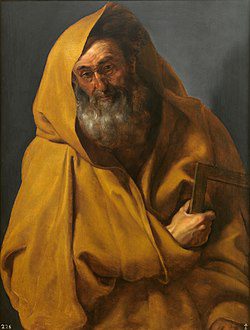
    Orazio Fidani, Saint John the Apostle, c. 1640-56

    Just a reminder here that the events of Jesus’ ministry occurred around AD 30 when the Apostle was a young man and John wrote his Gospel [Good News] between AD 70-100 as the only remaining Disciple who had not been martyred for Christ.

    John makes many references to light, including many in John 1, as we have already seen in ‘God’s Love Through John: In the Beginning.’

    Reflections of the Teacher

    John 1:4 In him was life, and that life was the light of men. That light shines in the darkness, and yet the darkness did not overcome it.

    John’s reference to Christ Jesus

    7 He came as a witness to testify about the light, so that all might believe through him.

    John refers to Jesus and the witness mentioned is the teacher, John the Baptist. Then John continues to clarify the difference by restating the comparison of John the Baptist to Jesus.

    8 He was not the light, but he came to testify about the light.

    The Gospel-writer then unequivocally states that Jesus the Messiah is both ‘the true light’ and the greater light than John. He was coming to the world as the light – a light of hope – for everyone in the world.

    9 The true light that gives light to everyone, was coming into the world.

    Gospel of John, of the Messiah Jesus

    As mentioned earlier, John then proceeds to both explain the role of Jesus and continues to reflect on the relationship of the Prophet of the wilderness, John, to the Messiah.

    What John’s Gospel does not say

    And there are also many other things that Jesus did, which, if every one of them were written down, I suppose not even the world itself could contain the books that would be written.

    John 21:25 CSB

    Although we are studying the Gospel of John, it is important for us to put some missing events detailed in other gospels about the life of John the Baptist. So before we proceed with Jesus’ teachings, let’s briefly chronicle a few events of the well-known teacher, John.

    Matthew

    Matthew, of course, was the other Jewish writer of the gospels who adds additional detail.

    In those days John the Baptist came, preaching in the wilderness of Judea and saying, “Repent, because the kingdom of heaven has come near! ”

    Matthew states later of Jesus and his reaction to the political events which led to the Baptist’s arrest, 

    When he heard that John had been arrested, he withdrew into Galilee.

    Matthew 4:12

    Jesus had been in Judea, but leaves for Galilee and gathers Disciples to Himself. John, no doubt, hears of this and sends some of his own disciples to Jesus with questions from John asking for assurance.

    Matthew 11:

    Now when John heard in prison what the Christ was doing, he sent a message through his disciples… Jesus replied to them, “Go and report to John what you hear and see:

    We will continue shortly from the Gospel of John with the signs they would witness to the Baptist and others. 

    “From the days of John the Baptist until now, the kingdom of heaven has been suffering violence, and the violent have been seizing it by force. … “Let anyone who has ears listen.

    The Messiah Jesus, Matthew 11:12

    Later in Jesus’ three-year ministry we learn the fears of Herod about Jesus from Matthew:

    At that time Herod the tetrarch heard the report about Jesus. 2 “This is John the Baptist,” he told his servants. “He has been raised from the dead, and that’s why miraculous powers are at work in him.”

    The Greater Light

    Immediately after John’s most quoted Scripture he testifies to the Messiah’s purpose and mission in Jesus’ own words. Jesus again uses comparisons of light and darkness.

    John 3:

    19 This is the judgment:

    The light has come into the world,

    and people loved darkness rather than the light

    because their deeds were evil.

    John 3:19

    20 For everyone who does evil hates the light and avoids it, so that his deeds may not be exposed. 21 But anyone who lives by the truth comes to the light, so that his works may be shown to be accomplished by God.”

    Before we speak of Jesus’ love we must remember repentance. Darkness and evil envelope our lives, yet some love the darkness. Jesus offers love not only to Israel but to the world.

    The Gospel of John shows many signs of the Messiah which should be recognizable to the Jews, even though many chose darkness.

    Where will you look? Do you have eyes to see?

    Do you rely on a lesser lamp or perhaps even live in complete darkness?

    John presents signs, evidence and explanation of the Messiah.

    Who is your hope?

    To be continued...