Tag: Matthew

  • That you may have Certainty – 7 – An outsider’s view from a Gentile

    That you may have Certainty – 7 – An outsider’s view from a Gentile

    That you may have Certainty in these Uncertain Times

    Our post-resurrection series is witness from the introduction of Luke-Acts and Jesus’ assurances to followers. In our previous post we pointed out: “The ultimate outsiders were Gentiles, and Luke emphasizes that God’s salvation extends even to them.” We began with a Hebrew view of a Gentile, noting that Prophets compared Jews who turned from the Lord to the Gentiles.

    Today we will view the meaning of Gentile in the first century context of Luke. Judea, Samaria and other Roman-ruled provinces had all spoken Greek since Alexander’s rule in third century before Christ. Therefore we’ll take a cultural view of the Gentile from a Hellenist or Greek usage.  (After all, most Greeks were considered Gentiles by Jews living in any land.)

    We ourselves are Jews by birth and not gentile sinners – Paul’s letter to the Galatians 2:15

    A Gentile in the time of Christ

    Luke, of course, was born a Gentile. Yet Luke does not refer to any person as “a gentile” and Christ’s only naming a person as a gentile makes connection to a groups of people.

    Matthew 18:17 ἐὰν δὲ παρακούσῃ αὐτῶν εἰπὲ τῇ ἐκκλησίᾳ ἐὰν δὲ καὶ τῆς ἐκκλησίας παρακούσῃ ἔστω σοι ὥσπερ ὁ ἐθνικὸς καὶ ὁ τελώνης

    If he refuses to listen to them, tell it to the church. And if he refuses to listen even to the church, let him be to you as a Gentile and a tax collector.

    Matthew (a Jew and a tax collector) quotes Jesus’ instructions to the church (plural) about differences with individuals. Gentiles is a plural reference to nations not of Jewish heritage.

    ἔθνος – ethnos

    • a multitude (whether of men or of beasts) associated or living together
    • a multitude of individuals of the same nature or genus: the human family
    • a tribe, nation, people group
    • in the OT, foreign nations not worshiping the true God, pagans, Gentiles
    • Paul uses the term for Gentile Christians

    Strong’s Definitions 
    ἔθνος éthnos, eth’-nos; a race (as of the same habit), i.e. a tribe; specially, a foreign (non-Jewish) one (usually, by implication, pagan):—Gentile, heathen, nation, people.

    Refer to someone as a gentile and we may not get it, but ethnos or ethnic we understand as culture.  Luke’s gospel is clear witness of the importance of Jesus to both Jew and Gentile.

    Luke 2:

    30 for my eyes have seen your salvation
    31 that you have prepared in the presence of all peoples,
    32 a light for revelation to the Gentiles,
    and for glory to your people Israel.”

    Luke expounds further on Jesus’ importance to the Nations (other ethnicities) in the Acts of the Apostles. Mathew’s gospel also addresses the ethnos of the Messiah and like Luke, also quoting a Prophet.

    Matthew 4:

    … he went and lived in Capernaum by the sea, in the territory of Zebulun and Naphtali, 14 so that what was spoken by the prophet Isaiah might be fulfilled:

    15 “The land of Zebulun and the land of Naphtali,
    the way of the sea, beyond the Jordan, Galilee of the Gentiles—
    16 the people dwelling in darkness
    have seen a great light,
    and for those dwelling in the region and shadow of death,
    on them a light has dawned.”

    17 From that time Jesus began to preach, saying, “Repent, for the kingdom of heaven is at hand.”

    A Gentile not like us

    Therefore, gentiles (ethnos) are those not like us. Different skin color, different language, different food, a different culture and yes, different gods.

    The following excepts are take from International Standard Bible Encyclopaedia

    Gentiles – jen’-tilz (goy, plural goyim; ethnos, “people,” “nation”): Goy (or Goi) is rendered “Gentiles” in the King James Version in some 30 passages, but much more frequently “heathen,” and oftener still, “nation,” … commonly used for a non-Israelitish people…

    Under Old Testament regulations they were simply non-Israelites, not from the stock of Abraham, but they were not hated or despised for that reason, and were to be treated almost on a plane of equality, except certain tribes in Canaan…

    But as we approach the Christian era the attitude of the Jews toward the Gentiles changes, until we find, in New Testament times, the most extreme aversion, scorn and hatred. They were regarded as unclean… All children born of mixed marriages were bastards.

    If we inquire what the reason of this change was we shall find it in the conditions of the exiled Jews, who suffered the bitterest treatment at the hands of their Gentile captors and who, after their return and establishment in Judea, were in constant conflict with neighboring tribes and especially with the Greek rulers of Syria. The fierce persecution of Antiochus IV, who attempted to blot out their religion and Hellenize the Jews, and the desperate struggle for independence, created in them a burning patriotism and zeal for their faith which culminated in the rigid exclusiveness we see in later times.

    A Centurion’s Faith

    Perhaps the best illustration of Jesus’ love for the Gentiles comes from Luke’s story of an encounter initiated by genuine love of a Roman official for his Jewish servant. In it Jesus highlights an exemplary example of faith in this Gentile Roman.

    Jesus returns home to Capernaum after teaching the people in other places. A Roman Centurion had messengers waiting to see Jesus. The local Jews in Capernaum understand both the message and the reason for this Gentile Roman soldier wanting to see Jesus. They had been asked to have Jesus come to heal this man’s servant.

    Luke 7:

    6 And Jesus went with them.

    When he was not far from the house, the centurion sent friends, saying to him, “Lord, do not trouble yourself, for I am not worthy to have you come under my roof. 7 Therefore I did not presume to come to you. But say the word, and let my servant be healed. 8 For I too am a man set under authority, with soldiers under me: and I say to one, ‘Go,’ and he goes; and to another, ‘Come,’ and he comes; and to my servant, ‘Do this,’ and he does it.”

    9 When Jesus heard these things, he marveled at him, and turning to the crowd that followed him, said, “I tell you, not even in Israel have I found such faith.”

    10 And when those who had been sent returned to the house, they found the servant well.


    Jesus heals a Jewish servant of a Gentile (without even enter the servant’s room). Faith of the Roman Centurion illustrates the love of Jesus also, His great compassion. For the Jews of Capernaum had told Jesus of this man, ” “He is worthy to have you do this for him, 5 for he loves our nation, and he is the one who built us our synagogue.”

    The local Jews praise a Roman Gentile for building a place to worship to the Lord. Think about it. A Gentile man of faith has already stood before Capernaum as an example of a man who loved others. This Gentile meets the Lord Jesus, who heals one he loves.  Consequently Jesus says, “I tell you, not even in Israel have I found such faith.”

    Our Gentile faith

    Jesus doesn’t look much like a Roman. For that matter our Lord does not look European or African or American. In so many ways Jesus does not look like other Jews or even Galileans. Yet He comes to you and encounters you personally.

    Will the Lord find such faith in me or in you, even though we differ in so many ways?

    In personal encounters with His followers for forty days Jesus has so much to tell Disciples now sent to all the nations. After His victorious Resurrection from the Cross of Sacrifice the Gospel is sent out not only to a faithful remnant of the Jews, but to the world.  Gentiles of the generations have this same faith until His certain return that we are chosen by the Lord, Christ Jesus.

    Isaiah 42:

    The Lord‘s Chosen Servant

    42 Behold my servant, whom I uphold,
        my chosen, in whom my soul delights;
    I have put my Spirit upon him;
        he will bring forth justice to the nations.
    He will not cry aloud or lift up his voice,
        or make it heard in the street;
    a bruised reed he will not break,
        and a faintly burning wick he will not quench;
        he will faithfully bring forth justice.
    He will not grow faint or be discouraged
        till he has established justice in the earth;
        and the coastlands wait for his law.

    Thus says God, the Lord,
        who created the heavens and stretched them out,
        who spread out the earth and what comes from it,
    who gives breath to the people on it
        and spirit to those who walk in it:
    “I am the Lord; I have called you in righteousness;
        I will take you by the hand and keep you;
    I will give you as a covenant for the people,
        a light for the nations,
        to open the eyes that are blind,
    to bring out the prisoners from the dungeon,
        from the prison those who sit in darkness.
    I am the Lord; that is my name;
        my glory I give to no other,
        nor my praise to carved idols.
    Behold, the former things have come to pass,
        and new things I now declare;
    before they spring forth
        I tell you of them.”


    Faith’s Certainty in Christ

    Jesus will send the Holy Spirit of the Lord to dwell with men and women of faith. He sends out disciples, Jews and Gentiles, in faith. The Lord IS the Good News, the Gospel of Light to those with eyes to see. 

    A Day of His return, the judgment of all flesh and restoration of all righteousness draws near. Shall His wrath not justify making the end of all sin and death?

    Beloved believer, your sin and mine did cause His suffering and Sacrifice. Does your love for Jesus and faith anticipate the grace of His return?

    Jesus IS LORD! 

    May He draw us together into the glory of His eternal love.

    Amen.

  • Behold the Light of a New Covenant Rises from an Empty Tomb

    Behold the Light of a New Covenant Rises from an Empty Tomb

    The Solid Promise of a Covenant

    And I, behold, I establish my covenant with you. Genesis 9:9a

    And Moses took the blood, and sprinkled it on the people, and said, Behold the blood of the covenant, which the LORD hath made with you concerning all these words. Exodus 24:8

    The LORD works miracles for those He loves and God works miracles impossible for man or hidden from those without eyes to see.

    Scripture records many miracles as the light of new hope for the faithful. Even when all hope seems lost, the Lord responds to prayers of the faithful.  Even before the greatest miracle ever, the Lord confirms new covenants with the return of sinners to righteousness. 

    Israel and Judah Defeated, Yet a King in the line of David Appears

    Christians may think that the miracle mentioned here is the incarnation of Jesus Christ, the Messiah. Yet even the greatest miracle of Jesus’ resurrection is not the only instance of an unexpected son of David.

    Perhaps a Jew diligent in scripture will recall a new covenant following a prior appearance of a son of David. 

    (Go ahead, take a shot. Do you recall such a miracle?)

    וַיִּכְרֹת כָּל־הַקָּהָל בְּרִית בְּבֵית הָאֱלֹהִים עִם־הַמֶּלֶךְ וַיֹּאמֶר לָהֶם הִנֵּה בֶן־הַמֶּלֶךְ יִמְלֹךְ כַּאֲשֶׁר דִּבֶּר יְהוָה עַל־בְּנֵי דָוִֽיד׃

    Sadly, most Christians discount the importance of the Old Covenant which enriches the New Covenant of Christ.


    In a commentary of David Guzik we learn: 

    From the place where the oath was made and the context of the oath, we learn that the worship of the true God was not dead in Judah. These captains could respond to their responsibility before the LORD.

    Behold, the king’s son shall reign:

    This was a dramatic moment. For six years everyone believed there were no more surviving heirs of David’s royal line and there was no legitimate ruler to displace the wicked Athaliah. The secret had to be secure, because the king’s son would be immediately killed if his existence were revealed. The captains must have been shocked by the sight of this six-year old heir to the throne.

    And all the congregation made a covenant with the king in the house of God. And he said unto them, Behold, the king’s son shall reign, as the LORD hath said of the sons of David.

    2 Chronicles 23:32


    Author’s note:

    Although I generally quote the English Standard Version, the King James suggests a forgotten formality appropriate to covenant with the LORD. 

    The King James Version English translation of the Bible was completed in 1611. It was brought to the original colonies of a rebellious new world, fleeing kingship served by religious authorities.

    Jesus entered a Jerusalem ruled by a king and religious authorities politically beholden to a godless foreign Emperor. The aging fallen empire of Israel and Judah was ruled by a growing Roman empire. But before Rome ruled Judea, Samaria, Galilee and more, several different empires had ruled a captive remnant of the Lord’s ‘chosen people.

    Israel and Judah defeated, yet another promise of a New King

    For further study of the original Hebrew, see the Jeremiah 31 link below, which includes the Orthodox Jewish Bible, ESV & KJV,

    Six centuries before Christ, Jeremiah partially reveals the character of the coming sinless Messiah 

    Jeremiah 31: KJV

    31 Behold, the days come, saith the LORD, that I will make a new covenant with the house of Israel, and with the house of Judah: 

    32-34 Not according to the covenant that I made with their fathers in the day that I took them by the hand to bring them out of the land of Egypt; which my covenant they brake, although I was an husband unto them, saith the LORD:

    But this shall be the covenant that I will make with the house of Israel; After those days, saith the LORD, I will put my law in their inward parts, and write it in their hearts; and will be their God, and they shall be my people.

    And they shall teach no more every man his neighbour, and every man his brother, saying, Know the LORD: for they shall all know me, from the least of them unto the greatest of them, saith the LORD: for I will forgive their iniquity, and I will remember their sin no more.


    Do you also recognize his mention of the Holy Spirit, the gift of a risen Christ?

    From the Second Temple to the Herod’s Temple

    Now we move on from survival of the line of David and renewal of covenant with the Lord to about four centuries before Christ.

    Malachi, the messenger and Prophet just before a great silence foretells the arrival of another great prophet.

    Malachi 3:

    Behold, I will send my messenger, and he shall prepare the way before me: and the Lord, whom ye seek, shall suddenly come to his temple, even the messenger of the covenant, whom ye delight in: behold, he shall come, saith the LORD of hosts.

    Again, Malachi speaks of not only a messenger, but also that he will be the messenger of the covenant.

    Before this most controversial teacher, prophet and King of the Jews will come another great prophet.

    Behold the Light

    “As long as I am in the world, I am the light of the world.”

    – John 9:5

    Genesis 1:

    In the beginning God created the heavens and the earth. 2 The earth was without form, and void; and darkness was[a] on the face of the deep. And the Spirit of God was hovering over the face of the waters.

    3 Then God said, “Let there be light”; and there was light. 4 And God saw the light, that it was good; and God divided the light from the darkness.

    John 1:

    In the beginning was the Word, and the Word was with God, and the Word was God.

    2 The same was in the beginning with God.

    3 All things were made by him; and without him was not any thing made that was made.

    4 In him was life; and the life was the light of men.

    5 And the light shineth in darkness; and the darkness comprehended it not.

    6 There was a man sent from God, whose name was John.

    7 The same came for a witness, to bear witness of the Light, that all men through him might believe.

    8 He was not that Light, but was sent to bear witness of that Light.

    9 That was the true Light, which lighteth every man that cometh into the world.

    10 He was in the world, and the world was made by him, and the world knew him not.

    11 He came unto his own, and his own received him not.

    The Expected Messiah

    Luke 3:15-22

    15 And as the people were in expectation, and all men mused in their hearts of John, whether he were the Christ, or not…

    And those in Judah remembered that Herod had beheaded John.

    Yet some recalled hearing thunder as Jesus had been baptized by John. Others recalled how Jesus had healed many, saying their sins were forgiven. Some even told of a boy in Nain who Jesus raised to life from a coffin! Even more witnesses knew the truth of Lazareth from nearby Bethany.

    But the authorities had arrested Jesus secretly at night during the Passover. How could they capture the seemingly all-powerful Son of Man and sentence Jesus to a death more horrendous than John? Why would God allow this to happen?

    The LORD began to reveal a few answers just at the time of the Sacrifice of Righteous Blood on a Cross. For only the Twelve had first witnessed the reason for Jesus’ Sacrifice as they shared a last Passover Seder in a private upper room.

    Matthew 26: NKJV

    ‘The Teacher says, “My time is at hand; I will keep the Passover at your house with My disciples.”’”

    19 So the disciples did as Jesus had directed them; and they prepared the Passover.

    20 When evening had come, He sat down with the twelve…

    A New Covenant

    26 And as they were eating, Jesus took bread, blessed and broke it, and gave it to the disciples and said, “Take, eat; this is My body.”

    27 Then He took the cup, and gave thanks, and gave it to them, saying, “Drink from it, all of you.

    28 For this is My blood of the new covenant, which is shed for many for the remission of sins.

    Between the Cross and the empty tomb

    We could have begun with the road to Emmaus or other liturgically familiar retelling of the Resurrection of Christ Jesus. I have chosen instead to share less familiar scriptures, also testimony to the Truth of the resurrection of Christ.

    Imagine the immanent fear of those who had cried out, “crucify him! crucify him!” when this happened?

    Matthew 27:52-53 KJV 

    And the graves were opened; and many bodies of the saints which slept arose, And came out of the graves after his resurrection, and went into the holy city, and appeared unto many.

    Who would not fear it, after realizing that our own words and actions had convicted the Messiah – God With Us in the flesh?

    Yet His Disciples, who witnessed His New Covenant, would teach the reason for His Sacrifice.

    “For this is my blood of the new testament, which is shed for many for the remission of sins.” – Matthew 26:23

    Those who had just celebrated Passover knew well the need for the shedding of blood for the remission of sins. But because of our contemporary worldly forgetfulness, allow me ask your consideration of the meaning of remission.

    ἄφεσις ἁμαρτία – in the common Greek of the day: aphesis hamartia

    The remission of sins:

     I. release from bondage or imprisonment

    II. forgiveness or pardon, of sins (letting them go as if they had never been committed), remission of the penalty

    [Sin] I. to be without a share in, pr to miss the mark, to err, be mistaken; to miss or wander from the path of uprightness and honour, to do or go wrong; to wander from the law of God, violate God’s law, sin

    II. that which is done wrong, sin, an offence, a violation of the divine law in thought or in act

    III. collectively, the complex or aggregate of sins committed either by a single person or by many

    The blood of Christ, given for you and for many for the remission of sins.

    His purpose is clear.

    Jesus becomes our Perfect Passover Sacrifice for the remission of sins. The Messiah suffered death, that final enemy captive to sin.

    Christ returned from the darkness of death; He IS the Light of eternal life!

    Now after the Sabbath, toward the dawn of the first day of the week Mary Magdalene and the other Mary saw Jesus. Jesus met the Apostles and they came up to Him, held the Lord by His feet and worshiped Him. [Matthew 28]

    The Lord walked with two disciples leaving Jerusalem, explaining the Messiah of Scripture, breaking bread with them and after being recognized, He vanished! Jesus appeared to the Disciples, allowing them to touch His resurrected body, and He ate fish with them. He taught them, as before; but now their eyes were opened. [Luke 24]

    Jesus appears to the Disciples again by the Sea of Tiberius (Sea of Galilee). John reveals an intimate conversation of Jesus with Peter, restoring him from denial and telling Peter of the kind of death he would suffer.  The Acts of the Apostles reveal that the risen Christ prepared the Apostles for their mission to go into all the world for forty days until His ascension into the clouds. (Imagine witnessing that!) And Paul later reveals that ‘Then he appeared to more than five hundred brothers at one time, most of whom [were alive at the time he wrote his letter to the church at Corinth].

    Clearly, Jesus IS! He is the Light of life and the hope of mankind.

    No covenant or promise between the LORD and His created is more important to the redeemed in Christ than this New covenant, a New Testament to the love of Almighty God for those made in his Image.

    May the joy of the resurrection of Christ Jesus fill your heart, satisfy your soul and embrace your failing flesh in the Light of His love.

    Grace and peace, beloved saint.

  • You’re a Damn Sinner

    Sinners and Damn Sinners

    Are you offended by me calling you a damn sinner? I must confess: I’m also a sinner every day; in thoughts, words and deeds. In that sense I’m just like you.

    Lord, forgive us our treapasses.

    For all have sinned, and come short of the glory of God… – Romans 3:23  (but read further for understanding the Sacrifice of Christ)

    “And if a man has committed a crime punishable by death and he is put to death, and you hang him on a tree, his body shall not remain all night on the tree, but you shall bury him the same day, for a hanged man is cursed by God. – Deuteronomy 21:22-23a ESV


    Damn; Damnation; Damnable:

    I was somewhat shocked to read in a definition that these words have changed meaning.  Yet I acknowledge a contemporary preaching trend toward not offending the hearers of God’s word.  A brief look at the definition of ‘damn, damnation and damnable’ reads:

    These words have undergone a change of meaning since the King James Version was made. They are derived from Latin damnare = ” to inflict a loss,” “to condemn,” and that was their original meaning in English.

    Now they denote exclusively the idea of everlasting punishment in hell. It is often difficult to determine which meaning was intended by the translators in the King James Version. They have been excluded altogether from the Revised Version (British and American).


    Damnation invades the guilty minds of the wicked.  They then accuse the Christian of morality irrelevant to their own demise. Hell for so many revelers is their daily entertainment of self-indulgence. Raising hell becomes their goal of response to a life without meaning and a death without consequence.

    A further defining of the concept of damnation will include uncomfortable synonyms given infrequent consideration by most men of dust. These include:

    condemn, damn, judgment, avenge, accusation, go to law, pernicious, perdition, destruction, waste, die and to perish.

    Not a list of well-used words in our 21st century lexicon or smiling solicitations from some pulpits.

    Hellfire and Brimstone!

    Not to dwell too long in these hell-pointing descriptions above for damnation, but here would be the time to mention that other contemporarily offensive word: sin.

    Sin, damnation and other uncomfortable, almost archaic words like judgement point to man’s accountability to God.

    Jesus, the Messiah, perfect and sinless, became substitution for my sins and for yours. God therefore sacrificed His righteousness, undeserving of death, as redemption from the damnation you and I deserve.

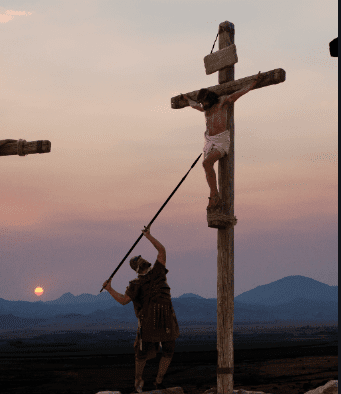
    The sin of man and love of God led to the Cross.

    Jesus and Judgment

    For the LORD is our judge; the LORD is our lawgiver;
    the LORD is our king; he will save us. – Isaiah 33:22

    John 8:

    31 So Jesus said to the Jews who had believed him, “If you abide in my word, you are truly my disciples… 

    42 Jesus said to them, “If God were your Father, you would love me, for I came from God and I am here. I came not of my own accord, but he sent me. 43 Why do you not understand what I say? It is because you cannot bear to hear my word. 44 You are of your father the devil, and your will is to do your father’s desires. He was a murderer from the beginning, and does not stand in the truth, because there is no truth in him. When he lies, he speaks out of his own character, for he is a liar and the father of lies. 45 But because I tell the truth, you do not believe me. 46 Which one of you convicts me of sin?


    No, they could not convict the Son of Man of sin. The accusers of Jesus could only bring the righteous Messiah to the Cross by bribery and lies.

    51 Truly, truly, I say to you, if anyone keeps my word, he will never see death.”

    A King’s Condemnation for the Sins of His Subjects

    Matthew 26:

    .. Judas came, one of the twelve, and with him a great crowd with swords and clubs, from the chief priests and the elders of the people…

    55 At that hour Jesus said to the crowds, “Have you come out as against a robber, with swords and clubs to capture me? Day after day I sat in the temple teaching, and you did not seize me. But all this has taken place that the Scriptures of the prophets might be fulfilled.”

    Then all the disciples left him and fled.

    57 Then those who had seized Jesus led him to Caiaphas the high priest, where the scribes and the elders had gathered…

    59 Now the chief priests and the whole council were seeking false testimony against Jesus that they might put him to death, but they found none, though many false witnesses came forward. At last two came forward and said, “This man said, ‘I am able to destroy the temple of God, and to rebuild it in three days.’”

    62 And the high priest stood up and said, “Have you no answer to make? What is it that these men testify against you?”

    63 But Jesus remained silent.

    And the high priest said to him, “I adjure you by the living God, tell us if you are the Christ, the Son of God.”

    Jesus said to him, “You have said so. But I tell you, from now on you will see the Son of Man seated at the right hand of Power and coming on the clouds of heaven.”

    65 Then the high priest tore his robes and said, “He has uttered blasphemy. What further witnesses do we need? You have now heard his blasphemy. What is your judgment?”

    They answered, “He deserves death.”

    67 Then they spit in his face and struck him. And some slapped him, saying, “Prophesy to us, you Christ! Who is it that struck you?”

    The Damn Shall Hang on a Cross, Yet this Passover Sacrifice is Pure

    Isaiah 42:

    Behold my servant, whom I uphold,
    my chosen, in whom my soul delights;
    I have put my Spirit upon him;
    he will bring forth justice to the nations.
    2 He will not cry aloud or lift up his voice,
    or make it heard in the street;
    3 a bruised reed he will not break,
    and a faintly burning wick he will not quench;
    he will faithfully bring forth justice.
    4 He will not grow faint or be discouraged
    till he has established justice in the earth;
    and the coastlands wait for his law…

    9 Behold, the former things have come to pass,
    and new things I now declare;
    before they spring forth
    I tell you of them.”

    … he suffered. And being made perfect, he became the source of eternal salvation to all who obey him… – Hebrews 5:8b-9


    Only two mortal choices: judgement or grace.

    Are you a damn sinner? Or are you a forgiven sinner In Christ?