Tag: Matthew

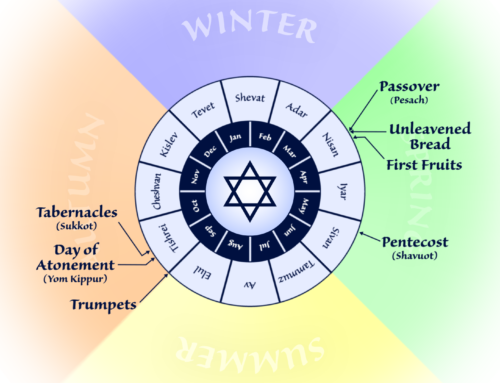
  • Between Sabbaths – Convocations and Holiness

    Between Sabbaths – Convocations and Holiness

    Speak unto the children of Israel, and say unto them, Concerning the feasts of the LORD, which ye shall proclaim to be holy convocations, even these are my feasts.

    Leviticus 23:2 KJV

    Holy Holidays

    We’ve lost something of the holiness of the holidays in the translation. Worldliness seeps steadily into our daily lives and we don’t necessarily relate to what some versions of the Bible call, ‘sacred assemblies,’ or ‘holy feasts.’

    Six days shall work be done: but the seventh day is the sabbath of rest, an holy convocation; ye shall do no work therein: it is the sabbath of the LORD in all your dwellings.

    Leviticus 23:3 KJV

    Do we hear of or even know what “holy convocations” might be?

    Even though raised in the church, I didn’t until I looked it up during my college years. A convocation מִקְרָא is a sacred gathering, a called public meeting for the reading of God’s word.

    Perhaps you’ve noted our digression from holy worship  to a more culturally palatable feast of entertainment at church.

    Priests and religious officials would have taken all sorts of rules (and definitions of work) from Leviticus, which we recognize as the Sabbath Commandment. Yet what many contemporary gatherings may miss or dismiss from Exodus and Deuteronomy is holiness.

    Seasons and celebrations between the sabbaths may be designated as holy convocations; days for feasting — neither a time for fasting, nor ordinary work day.

    The sabbath of the LORD, which Christ points out it is ‘made for man,‘ is, never-the-less, set aside by the LORD for Holiness.

    So what are these convocations? And more importantly, how do their principles apply to us today?

    Note that these seven prescribed seasons of holy rest do not include certain notable minor holiday observances.


    Hanukkah חֲנֻכָּה and Christmas??

    Christmas and Hanukkah both focus on light and God’s faithfulness in helping men (and women) of faith to be restored to holiness.

    The minor celebration of Hanukkah began during the second temple period, about 200 years before Christ and was also known as the feast of dedication.

    The minor convocation of Christmas points to the holiness of God, humbly descending to us as the Son of Man; a baby like all others, yet without sin, like no other man. 

    Jews have recently celebrated eight days of Hanukkah.

    Christians have begun a preparatory season of Advent leading up to the festival of Christmas. 

    Do you feel rested? 

    Has God been a part of your celebrations of this season?

    I mention these holidays blown out of proportion by our sustained worldly emphasis on minor celebrations, because we fail to rest in the Lord.

    Return to the Lord’s rest

    “I hate all your show and pretense—
    the hypocrisy of your religious festivals and solemn assemblies.

    Amos 5:21 NLT

    This, too, is nothing new, as you can see from the rebuke of the Lord through the prophet Amos. His complaint sounds much like that of contemporary unbelievers, when Christians most of all ought to be questioning our own Christmas traditions. 

    God deserves worship שָׁחָה, not occasions of excess and entertainment.

    “Where is he who has been born king of the Jews? For we saw his star at its rising and have come to worship him.”
    Matthew 2:2

    Religious Convocations

    Without drilling down to the detail of ancient worship to the Lord called for in the Law, let’s briefly examine these other Sabbath rests. I invite you to research these scriptures and celebrations further, since I will only comment on each briefly.

    Most scriptures and quotes in this section from BlueLetterBible.org
    Below are festivals linked to this article from Easton's Bible Dictionary.

    1. The weekly Sabbath
    2. The Passover feast:
    3. Pentecost, or the feast of weeks.
    4. The Ingathering, or feast of Tabernacles 
    5. The seventh new moon or the feast of Trumpets (Num 28:11-15; Num 29:1-6)
    6. The Sabbatical year (Exd 23:10-11; Lev 25:2-7)
    7. The year of jubilee (Lev 25:8-16; Lev 27:16-25)

    “The Passover was kept just before the harvest commenced, Pentecost at the conclusion of the corn harvest and before the vintage, the feast of Tabernacles after all the fruits of the ground had been gathered in.

    As previously mentioned, Jews celebrated additional feasts after destruction of the first Temple.

    • The feast of Purim
    • The feast of Dedication (Hanukkah)

    The Day of Atonement, the tenth day of the seventh month (Lev 16:1; Lev 16:34; Lev 23:26-32; Num 29:7-11). 

    Christians cannot overemphasize God’s requirement of holiness, achieved by atonement for our sins.

    God presented Christ Jesus as an atoning sacrifice in his blood, received through faith, to demonstrate his righteousness, because in his restraint God passed over the sins previously committed.

    Romans 3:25

    The Sacrifice and death of Christ, made possible by the incarnation of God in the flesh of Jesus, exceeds the importance of our holy celebrations.

    Traditions of Sabbath Rests

    Contemporary worshipers may not relate to cultures of the times of these designated rests from the Lord; however, hear the Lord’s purpose in these additional Sabbaths made for man.

    On each of these occasions every male Israelite was commanded “to appear before the Lord” (Deu 27:7; Neh 8:9-12).

    The attendance of women was voluntary. (Luk 2:41; 1Sa 1:7; 1Sa 2:19.)

    The promise that God would protect their homes (Exd 34:23-24) while all the males were absent in Jerusalem at these feasts was always fulfilled.

    “During the whole period between Moses and Christ we never read of an enemy invading the land at the time of the three festivals. The first instance on record is thirty-three years after they had withdrawn from themselves the divine protection by imbruing their hands in the Saviour’s blood, when Cestius, the Roman general, slew fifty of the people of Lydda (Joppa) while all the rest had gone up to the feast of Tabernacles, A.D. 66.

    A few details of worship

    Of the new moon festivals the Lord commands: “this is the burnt offering of every month throughout the months of the year ‘And in the seventh month, on the first day of the month, ye shall have an holy convocation; ye shall do no servile work.’

    All men worship the Lord and all men have rest for this worship.

    Of the Sabbatical year the Lord commands rest for the field, the vineyard and orchard. 

    Celebration of the year of Jubilee each fiftieth year: “In the Year of Jubilee each of you may return to the land that belonged to your ancestors…Be assured that I will send my blessing for you in the sixth year, so the land will produce a crop large enough for three years… 

    ‘The land shall not be sold permanently, for the land is Mine; for you are strangers and sojourners with Me.

    Leviticus 25:23

    “You are to allow the redemption of any land you occupy.

    We walk with the Lord: our land, a temporary possession of sojourners in this temporary world where we work. The Lord grants redemption to us, the ability to repurchase what He has rightfully given to us from all that is His. Our worship returns but a portion of His abundance to our Lord.

    The Lord’s laws are unlike our own unbalanced views of righteousness and justice. His ways are higher than our ways. Though the birth of our Redeemer is important, Jesus’ sacrificial death and resurrection challenge the sinners of this world with consequence for our worldly ways. 

    Are you caught up in the restless rush of the holidays?

    1 Peter 1:

    3 Blessed be the God and Father of our Lord Jesus Christ. Because of his great mercy he has given us new birth into a living hope through the resurrection of Jesus Christ from the dead…

    Christmas defines the beginning of the life of God Incarnate, His gift to us: “new birth into a living hope…”

    14 As obedient children, do not be conformed to the desires of your former ignorance.

    15 But as the one who called you is holy, you also are to be holy in all your conduct; 16 for it is written, Be holy, because I am holy.

    “Be holy, because I am holy. – 1 Peter 1:15b, Leviticus 11:44-45; 19:2; 20:7

    Christ-mass: ‘because I am holy.’

    Be holy, because I am holy. – This is our promised rest, through a babe in a manger, a sinless Savior born for the Cross.


  • God’s Love Through John: Light of a greater testimony

    “John was a burning and shining lamp, and you were willing to rejoice for a while in his light.

    Jesus, of John the Baptist – John 5:35 CSB 

    The Illustration

    The Apostle John makes more references to light in his Gospel than any other New Testament writer.

    Job, Psalms and Isaiah in the Old Testament also use the concept to evoke reflection on varying comparisons, as Jesus does in John 6. Here are just a few illustrations from the Hebrew definition, familiar to disciples of both John the Baptist and followers of Jesus.

    אוֹר ‘owr [used 122 times as a noun] means:

    Light of day, of heavenly luminaries (moon, sun, stars), day-break, dawn, morning light, daylight, lightning, of a lamp (as Jesus uses here to refer to John the Baptist), of life, of prosperity,

    As a teacher with the greater ‘light of instruction,’ Jesus compares Himself to John the Baptist.

    John 1: a brief reflection

    Although we will not continually return to the beginning of John’s Gospel, it is important for us to understand the Apostle’s perspective as events unfold in the teaching ministry of Christ Jesus.

    Orazio Fidani, Saint John the Apostle, c. 1640-56

    Just a reminder here that the events of Jesus’ ministry occurred around AD 30 when the Apostle was a young man and John wrote his Gospel [Good News] between AD 70-100 as the only remaining Disciple who had not been martyred for Christ.

    John makes many references to light, including many in John 1, as we have already seen in ‘God’s Love Through John: In the Beginning.’

    Reflections of the Teacher

    John 1:4 In him was life, and that life was the light of men. That light shines in the darkness, and yet the darkness did not overcome it.

    John’s reference to Christ Jesus

    7 He came as a witness to testify about the light, so that all might believe through him.

    John refers to Jesus and the witness mentioned is the teacher, John the Baptist. Then John continues to clarify the difference by restating the comparison of John the Baptist to Jesus.

    8 He was not the light, but he came to testify about the light.

    The Gospel-writer then unequivocally states that Jesus the Messiah is both ‘the true light’ and the greater light than John. He was coming to the world as the light – a light of hope – for everyone in the world.

    9 The true light that gives light to everyone, was coming into the world.

    Gospel of John, of the Messiah Jesus

    As mentioned earlier, John then proceeds to both explain the role of Jesus and continues to reflect on the relationship of the Prophet of the wilderness, John, to the Messiah.

    What John’s Gospel does not say

    And there are also many other things that Jesus did, which, if every one of them were written down, I suppose not even the world itself could contain the books that would be written.

    John 21:25 CSB

    Although we are studying the Gospel of John, it is important for us to put some missing events detailed in other gospels about the life of John the Baptist. So before we proceed with Jesus’ teachings, let’s briefly chronicle a few events of the well-known teacher, John.

    Matthew

    Matthew, of course, was the other Jewish writer of the gospels who adds additional detail.

    In those days John the Baptist came, preaching in the wilderness of Judea and saying, “Repent, because the kingdom of heaven has come near! ”

    Matthew states later of Jesus and his reaction to the political events which led to the Baptist’s arrest, 

    When he heard that John had been arrested, he withdrew into Galilee.

    Matthew 4:12

    Jesus had been in Judea, but leaves for Galilee and gathers Disciples to Himself. John, no doubt, hears of this and sends some of his own disciples to Jesus with questions from John asking for assurance.

    Matthew 11:

    Now when John heard in prison what the Christ was doing, he sent a message through his disciples… Jesus replied to them, “Go and report to John what you hear and see:

    We will continue shortly from the Gospel of John with the signs they would witness to the Baptist and others. 

    “From the days of John the Baptist until now, the kingdom of heaven has been suffering violence, and the violent have been seizing it by force. … “Let anyone who has ears listen.

    The Messiah Jesus, Matthew 11:12

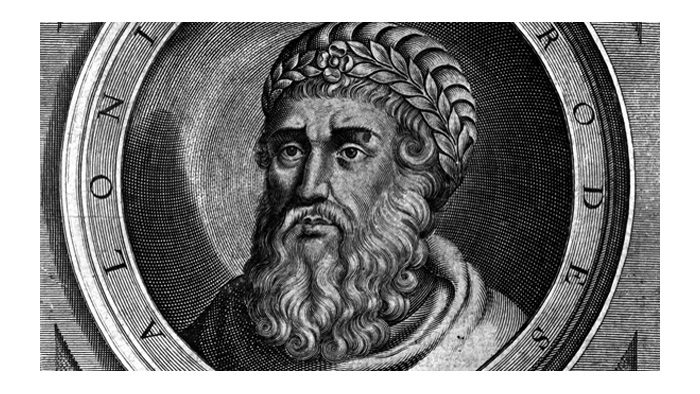
    Later in Jesus’ three-year ministry we learn the fears of Herod about Jesus from Matthew:

    At that time Herod the tetrarch heard the report about Jesus. 2 “This is John the Baptist,” he told his servants. “He has been raised from the dead, and that’s why miraculous powers are at work in him.”

    The Greater Light

    Immediately after John’s most quoted Scripture he testifies to the Messiah’s purpose and mission in Jesus’ own words. Jesus again uses comparisons of light and darkness.

    John 3:

    19 This is the judgment:

    The light has come into the world,

    and people loved darkness rather than the light

    because their deeds were evil.

    John 3:19

    20 For everyone who does evil hates the light and avoids it, so that his deeds may not be exposed. 21 But anyone who lives by the truth comes to the light, so that his works may be shown to be accomplished by God.”

    Before we speak of Jesus’ love we must remember repentance. Darkness and evil envelope our lives, yet some love the darkness. Jesus offers love not only to Israel but to the world.

    The Gospel of John shows many signs of the Messiah which should be recognizable to the Jews, even though many chose darkness.

    Where will you look? Do you have eyes to see?

    Do you rely on a lesser lamp or perhaps even live in complete darkness?

    John presents signs, evidence and explanation of the Messiah.

    Who is your hope?

    To be continued...

  • That you may have Certainty – 7 – An outsider’s view from a Gentile

    That you may have Certainty – 7 – An outsider’s view from a Gentile

    That you may have Certainty in these Uncertain Times

    Our post-resurrection series is witness from the introduction of Luke-Acts and Jesus’ assurances to followers. In our previous post we pointed out: “The ultimate outsiders were Gentiles, and Luke emphasizes that God’s salvation extends even to them.” We began with a Hebrew view of a Gentile, noting that Prophets compared Jews who turned from the Lord to the Gentiles.

    Today we will view the meaning of Gentile in the first century context of Luke. Judea, Samaria and other Roman-ruled provinces had all spoken Greek since Alexander’s rule in third century before Christ. Therefore we’ll take a cultural view of the Gentile from a Hellenist or Greek usage.  (After all, most Greeks were considered Gentiles by Jews living in any land.)

    We ourselves are Jews by birth and not gentile sinners – Paul’s letter to the Galatians 2:15

    A Gentile in the time of Christ

    Luke, of course, was born a Gentile. Yet Luke does not refer to any person as “a gentile” and Christ’s only naming a person as a gentile makes connection to a groups of people.

    Matthew 18:17 ἐὰν δὲ παρακούσῃ αὐτῶν εἰπὲ τῇ ἐκκλησίᾳ ἐὰν δὲ καὶ τῆς ἐκκλησίας παρακούσῃ ἔστω σοι ὥσπερ ὁ ἐθνικὸς καὶ ὁ τελώνης

    If he refuses to listen to them, tell it to the church. And if he refuses to listen even to the church, let him be to you as a Gentile and a tax collector.

    Matthew (a Jew and a tax collector) quotes Jesus’ instructions to the church (plural) about differences with individuals. Gentiles is a plural reference to nations not of Jewish heritage.

    ἔθνος – ethnos

    • a multitude (whether of men or of beasts) associated or living together
    • a multitude of individuals of the same nature or genus: the human family
    • a tribe, nation, people group
    • in the OT, foreign nations not worshiping the true God, pagans, Gentiles
    • Paul uses the term for Gentile Christians

    Strong’s Definitions 
    ἔθνος éthnos, eth’-nos; a race (as of the same habit), i.e. a tribe; specially, a foreign (non-Jewish) one (usually, by implication, pagan):—Gentile, heathen, nation, people.

    Refer to someone as a gentile and we may not get it, but ethnos or ethnic we understand as culture.  Luke’s gospel is clear witness of the importance of Jesus to both Jew and Gentile.

    Luke 2:

    30 for my eyes have seen your salvation
    31 that you have prepared in the presence of all peoples,
    32 a light for revelation to the Gentiles,
    and for glory to your people Israel.”

    Luke expounds further on Jesus’ importance to the Nations (other ethnicities) in the Acts of the Apostles. Mathew’s gospel also addresses the ethnos of the Messiah and like Luke, also quoting a Prophet.

    Matthew 4:

    … he went and lived in Capernaum by the sea, in the territory of Zebulun and Naphtali, 14 so that what was spoken by the prophet Isaiah might be fulfilled:

    15 “The land of Zebulun and the land of Naphtali,
    the way of the sea, beyond the Jordan, Galilee of the Gentiles—
    16 the people dwelling in darkness
    have seen a great light,
    and for those dwelling in the region and shadow of death,
    on them a light has dawned.”

    17 From that time Jesus began to preach, saying, “Repent, for the kingdom of heaven is at hand.”

    A Gentile not like us

    Therefore, gentiles (ethnos) are those not like us. Different skin color, different language, different food, a different culture and yes, different gods.

    The following excepts are take from International Standard Bible Encyclopaedia

    Gentiles – jen’-tilz (goy, plural goyim; ethnos, “people,” “nation”): Goy (or Goi) is rendered “Gentiles” in the King James Version in some 30 passages, but much more frequently “heathen,” and oftener still, “nation,” … commonly used for a non-Israelitish people…

    Under Old Testament regulations they were simply non-Israelites, not from the stock of Abraham, but they were not hated or despised for that reason, and were to be treated almost on a plane of equality, except certain tribes in Canaan…

    But as we approach the Christian era the attitude of the Jews toward the Gentiles changes, until we find, in New Testament times, the most extreme aversion, scorn and hatred. They were regarded as unclean… All children born of mixed marriages were bastards.

    If we inquire what the reason of this change was we shall find it in the conditions of the exiled Jews, who suffered the bitterest treatment at the hands of their Gentile captors and who, after their return and establishment in Judea, were in constant conflict with neighboring tribes and especially with the Greek rulers of Syria. The fierce persecution of Antiochus IV, who attempted to blot out their religion and Hellenize the Jews, and the desperate struggle for independence, created in them a burning patriotism and zeal for their faith which culminated in the rigid exclusiveness we see in later times.

    A Centurion’s Faith

    Perhaps the best illustration of Jesus’ love for the Gentiles comes from Luke’s story of an encounter initiated by genuine love of a Roman official for his Jewish servant. In it Jesus highlights an exemplary example of faith in this Gentile Roman.

    Jesus returns home to Capernaum after teaching the people in other places. A Roman Centurion had messengers waiting to see Jesus. The local Jews in Capernaum understand both the message and the reason for this Gentile Roman soldier wanting to see Jesus. They had been asked to have Jesus come to heal this man’s servant.

    Luke 7:

    6 And Jesus went with them.

    When he was not far from the house, the centurion sent friends, saying to him, “Lord, do not trouble yourself, for I am not worthy to have you come under my roof. 7 Therefore I did not presume to come to you. But say the word, and let my servant be healed. 8 For I too am a man set under authority, with soldiers under me: and I say to one, ‘Go,’ and he goes; and to another, ‘Come,’ and he comes; and to my servant, ‘Do this,’ and he does it.”

    9 When Jesus heard these things, he marveled at him, and turning to the crowd that followed him, said, “I tell you, not even in Israel have I found such faith.”

    10 And when those who had been sent returned to the house, they found the servant well.


    Jesus heals a Jewish servant of a Gentile (without even enter the servant’s room). Faith of the Roman Centurion illustrates the love of Jesus also, His great compassion. For the Jews of Capernaum had told Jesus of this man, ” “He is worthy to have you do this for him, 5 for he loves our nation, and he is the one who built us our synagogue.”

    The local Jews praise a Roman Gentile for building a place to worship to the Lord. Think about it. A Gentile man of faith has already stood before Capernaum as an example of a man who loved others. This Gentile meets the Lord Jesus, who heals one he loves.  Consequently Jesus says, “I tell you, not even in Israel have I found such faith.”

    Our Gentile faith

    Jesus doesn’t look much like a Roman. For that matter our Lord does not look European or African or American. In so many ways Jesus does not look like other Jews or even Galileans. Yet He comes to you and encounters you personally.

    Will the Lord find such faith in me or in you, even though we differ in so many ways?

    In personal encounters with His followers for forty days Jesus has so much to tell Disciples now sent to all the nations. After His victorious Resurrection from the Cross of Sacrifice the Gospel is sent out not only to a faithful remnant of the Jews, but to the world.  Gentiles of the generations have this same faith until His certain return that we are chosen by the Lord, Christ Jesus.

    Isaiah 42:

    The Lord‘s Chosen Servant

    42 Behold my servant, whom I uphold,
        my chosen, in whom my soul delights;
    I have put my Spirit upon him;
        he will bring forth justice to the nations.
    He will not cry aloud or lift up his voice,
        or make it heard in the street;
    a bruised reed he will not break,
        and a faintly burning wick he will not quench;
        he will faithfully bring forth justice.
    He will not grow faint or be discouraged
        till he has established justice in the earth;
        and the coastlands wait for his law.

    Thus says God, the Lord,
        who created the heavens and stretched them out,
        who spread out the earth and what comes from it,
    who gives breath to the people on it
        and spirit to those who walk in it:
    “I am the Lord; I have called you in righteousness;
        I will take you by the hand and keep you;
    I will give you as a covenant for the people,
        a light for the nations,
        to open the eyes that are blind,
    to bring out the prisoners from the dungeon,
        from the prison those who sit in darkness.
    I am the Lord; that is my name;
        my glory I give to no other,
        nor my praise to carved idols.
    Behold, the former things have come to pass,
        and new things I now declare;
    before they spring forth
        I tell you of them.”


    Faith’s Certainty in Christ

    Jesus will send the Holy Spirit of the Lord to dwell with men and women of faith. He sends out disciples, Jews and Gentiles, in faith. The Lord IS the Good News, the Gospel of Light to those with eyes to see. 

    A Day of His return, the judgment of all flesh and restoration of all righteousness draws near. Shall His wrath not justify making the end of all sin and death?

    Beloved believer, your sin and mine did cause His suffering and Sacrifice. Does your love for Jesus and faith anticipate the grace of His return?

    Jesus IS LORD! 

    May He draw us together into the glory of His eternal love.

    Amen.