What authority in A.D. 2018?
Can you come up with a proverb from scripture anymore applicable to leaders of this 21st century?
They self-appoint a leader with strong-arm authority as Caesar for life. Or perhaps the rich and powerful will poison your opposition, if not literally, at least in the press. The evil ones manipulate the election, anointing and celebrating key world leaders. They imprison, assassinate or remove vocal opponents from the spotlight of the multitudes. All new, right?
Certainly not. For such political intrigue preceded the entry of Jesus into Jerusalem, not only among its religious authorities, but also across the world in Rome.
Even though the popularity of Jesus, King of the Jews, threatened local leaders, the criminalization and public execution of Jesus could deter others from opposing the authority of the politically appointed.
Leaders in the first century
Israel is not a country; therefore Roman states and authority do not parallel Jewish identification of a former Judah and Israel.
As mentioned in previous posts in this lenten series, Rome’s conquest of the Mediterranean led to installment of Jewish leaders with limited power.
As Rome itself grew from republic to empire a strong military sought alliances with influential kings and leaders, including Herod the Great. Greek influence (Hellenism) gave way to Roman order.
The scepter shall not depart from Judah,
Nor a lawgiver from between his feet,
Until Shiloh comes;
And to Him shall be the obedience of the people.
Leaders during the time of Jesus’ teaching
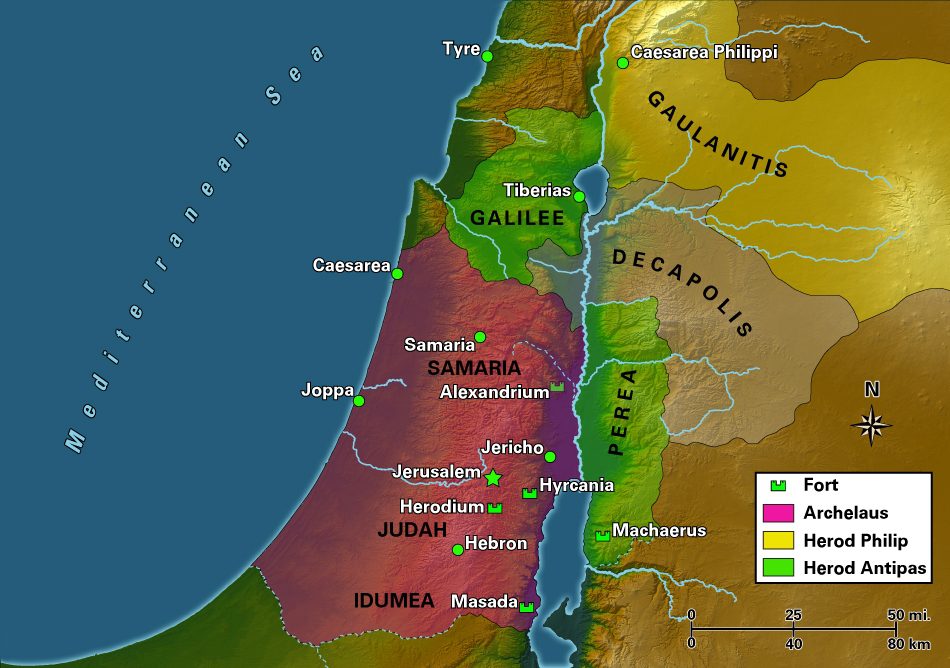
After Herod’s death, three sons (two named Herod and Philip) administered separate Roman-ruled provinces. Religious divisions and insurrections also sought to weaken Roman rule by selective terrorism.
The religious/political leaders of Jerusalem divided into three parties, really as much political beliefs as traditional religion. The Lord was not foremost in the philosophies of most of the Jewish elite, which included the Sadducees and Scribes or the more middle class Pharisees. The Essenes were sort of the monks of the day, with limited influence from the wilderness on the religious rule of the cities. (John the Baptist is thought to be one of the Essenes.)
All of this turmoil preceded the birth of the Messiah Jesus during the reign of Herod the Great and continued even beyond Jesus’ triumphant entry into Jerusalem, ruled by Herod Archelaus.
The natural question to Jesus by leaders on all sides of political and religious belief would of course be, “.. who gave you this authority?” – Matthew 21:23
Leaders of every political persuasion and religious belief had already challenged Jesus frequently in His three years of teaching. Everyone knew of His power, righteousness and positions in matters of Law, the Scriptures and God.
And they were all amazed, so that they questioned among themselves, saying,
“What is this? A new teaching with authority! He commands even the unclean spirits, and they obey him.”
Mark 1:
For the law was given through Moses; grace and truth came through Jesus Christ. – John 1:17
Sadducees believed the Law was literal and authority came though the Priests. Jesus challenged their authority, but not that of the Law.
“Do not think that I have come to abolish the Law or the Prophets; I have not come to abolish them but to fulfill them. For truly, I say to you, until heaven and earth pass away, not an iota, not a dot, will pass from the Law until all is accomplished… – Matthew 5:17-20
Jesus had explained to his Disciples:
The Son of Man will send his angels, and they will gather out of his kingdom all causes of sin and all law-breakers, and throw them into the fiery furnace.
Religious officials hearing him would likely have understood that Jesus identified them as the weeds in the parable of the weeds.
Pharisees too were far from immune to identification with sin and hypocrisy by Jesus. They had a tendency to impose priestly law and complex interpretation of the Law on the common people. Jesus challenged them.
“Woe to you, scribes and Pharisees, hypocrites! For you tithe mint and dill and cumin, and have neglected the weightier matters of the law: justice and mercy and faithfulness. These you ought to have done, without neglecting the others. – Matthew 23:23
This Jesus, arriving at the gate of Jerusalem, worshiped by huge crowds is no stranger to these religious leaders. In fact, the Son of Man, the Messiah of Scripture is a direct challenge to their own future.
Scriptures
You study the Scriptures diligently because you think that in them you have eternal life. These are the very Scriptures that testify about me, yet you refuse to come to me to have life. – John 5:39-40 NIV
Again, even now, no book is so controversial as the Bible.
Sadducees interpreted the written word of God so literally as to not leave room for the many modes of literary expression. Pharisees loved to spin their own interpretations of God’s word with such complexity as the Lord never intended. They added an oral law of their own making.
The Essenes actually had it right, using inspired exegesis of the Bible.
Jesus told Parables, but also quoted scripture to explain why the religious authorities failed in their teaching of scripture. The religious officials of Jerusalem knew what Jesus had previously spoken during the festival of the booths.
John 7:
… 2 Now the Jews’ Feast of Booths was at hand. … then he also went up, not publicly but in private. 11 The Jews were looking for him at the feast, and saying, “Where is he?” 12 And there was much muttering about him among the people…
13 Yet for fear of the Jews no one spoke openly of him.
Jesus went up into the temple and began teaching…
19 Has not Moses given you the law? Yet none of you keeps the law. Why do you seek to kill me?”
… 25 Some of the people of Jerusalem therefore said, “Is not this the man whom they seek to kill? 26 And here he is, speaking openly, and they say nothing to him! Can it be that the authorities really know that this is the Christ? …
37 On the last day of the feast, the great day, Jesus stood up and cried out, “If anyone thirsts, let him come to me and drink. 38 Whoever believes in me, as the Scripture has said, ‘Out of his heart will flow rivers of living water.’”
… 42 Has not the Scripture said that the Christ comes from the offspring of David, and comes from Bethlehem, the village where David was?”
This Jesus of Nazareth was well known in Jerusalem and controversial as well, even prior to His entry into Jerusalem, even after the resurrection of Lazarus.
God
Isaiah 44:22 מָחִיתִי כָעָב פְּשָׁעֶיךָ וְכֶעָנָן חַטֹּאותֶיךָ שׁוּבָה אֵלַי כִּי גְאַלְתִּֽיךָ׃
John:
In the beginning was the Word, and the Word was with God, and the Word was God. 2 He was in the beginning with God. 3 All things were made through him, and without him was not any thing made that was made.
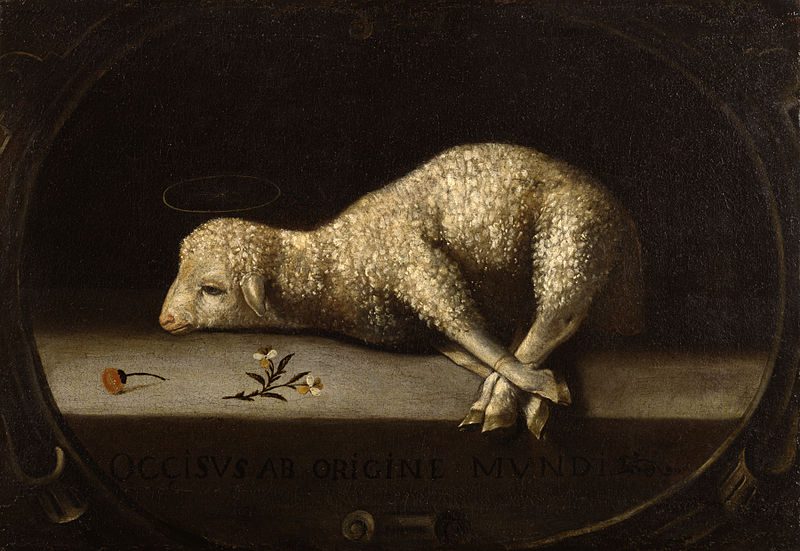
“Behold, the Lamb of God, who takes away the sin of the world! 30 This is he of whom I said, ‘After me comes a man who ranks before me, because he was before me.’
Jesus Is Equal with God
5:18 This was why the Jews were seeking all the more to kill him, because not only was he breaking the Sabbath, but he was even calling God his own Father, making himself equal with God.
The Authority of the Son
19 So Jesus said to them, “Truly, truly, I say to you, the Son can do nothing of his own accord, but only what he sees the Father doing. For whatever the Father does, that the Son does likewise.
וְכָל־בָּנַ֖יִךְ לִמּוּדֵ֣י יְהוָ֑ה וְרַ֖ב שְׁלֹ֥ום בָּנָֽיִךְ׃
6:45 It is written in the Prophets, ‘And they will all be taught by God.’ Everyone who has heard and learned from the Father comes to me—
John 10:30 “I and the Father are one.”
Zechariah 9:9 גִּילִי מְאֹד בַּת־צִיֹּון הָרִיעִי בַּת יְרוּשָׁלִַם הִנֵּה מַלְכֵּךְ יָבֹוא לָךְ צַדִּיק וְנֹושָׁע הוּא עָנִי וְרֹכֵב עַל־חֲמֹור וְעַל־עַיִר בֶּן־אֲתֹנֹֽות׃
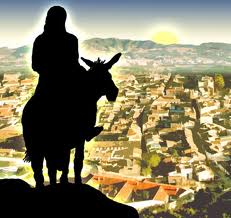
Rejoice greatly, O daughter of Zion!
Shout aloud, O daughter of Jerusalem!
Behold, your king is coming to you;
righteous and having salvation is he,
humble and mounted on a donkey,
on a colt, the foal of a donkey.
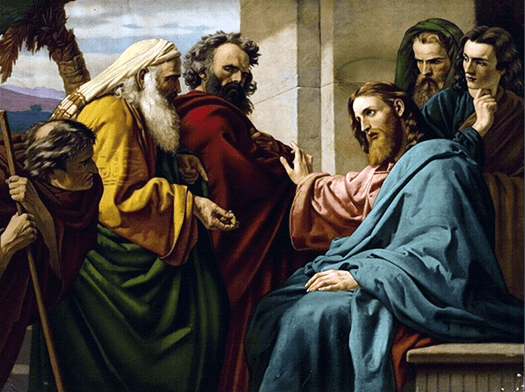
Matthew 21:23 And when he entered the temple, the chief priests and the elders of the people came up to him as he was teaching, and said,
“By what authority are you doing these things, and who gave you this authority?”