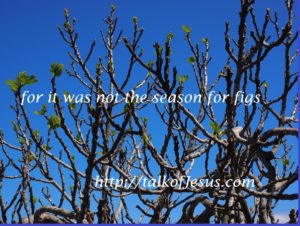
When I would gather them, declares the LORD, there are no grapes on the vine, nor figs on the fig tree; even the leaves are withered, and what I gave them has passed away from them.”
Jeremiah 8:13
Jesus’ Lament over Jerusalem’s crowds
Recall the fig tree and all the symbols of Jerusalem. You can almost hear Jesus lamenting:
“O Jerusalem, Jerusalem, the city that kills the prophets and stones those who are sent to it!
How often would I have gathered your children together as a hen gathers her brood under her wings, and you were not willing!
Even as Babylon had devoured Israel from the Euphrates to the Jordan, Rome ruled with an iron hand. Even as Jeremiah prophesied against Judah (now Judea), the crowds knew Jesus could save them from Rome.
Not just Jesus but the crowds of Jerusalem as well ALL knew scripture (so much better than 21st c. christians.
Deuteronomy 9:5
It is not because of your righteousness or your integrity that you are going in to take possession of their land; but on account of the wickedness of these nations, the Lord your God will drive them out before you, to accomplish what he swore to your fathers, to Abraham, Isaac and Jacob.
Perhaps you can hear Jesus preach this to the crowds who wanted a King to defeat the Rome who ruled Galilee, Samaria and Judea.
The Lord says: I will not be angry forever. Only acknowledge your guilt, that you rebelled against the Lord your God..
“Break up your fallow ground, and sow not among thorns. Circumcise yourselves to the Lord; remove the foreskin of your hearts, O men of Judah and inhabitants of Jerusalem; lest my wrath go forth like fire, and burn with none to quench it, because of the evil of your deeds.”
Again, thorns and the fire, not the fig tree bearing fruit.
You may have guessed it:
This is not Jesus preaching about Rome prior to cursing a fig tree. It well could have been Jesus’ commentary on preaching of the Prophets from scripture.
Repentance of scripture — from six hundred years earlier — from the Prophet Jeremiah who was ignored and then rejected in Judea — and dismissed in this day of first century Judea as warnings of Scripture are frequently rejected and dismissed in these last days of the 23rd century.
6:9 Thus says the Lord of hosts: “They shall glean thoroughly as a vine the remnant of Israel; like a grape gatherer pass your hand again over its branches.” 10 To whom shall I speak and give warning, that they may hear?
Again, the vine. The fruit of Israel taken by its enemies.
And that is exactly what happened as Babylon defeated Jeremiah's Judah.

Powerful Rome ruled over Jerusalem, not the Jews. The Temple was symbol of political power, not actual rule.
“Certainly worship of the Lord had become symbolic lost hope for Israel.”
The crowds following Jesus to Jerusalem knew of the recent resurrection of Lazarus in Judea!
They knew of Jesus’ miracle of raising a boy from his coffin in Nain of Galilee.
Scripture is witness of the great prophet Elijah raising a child from the dead.
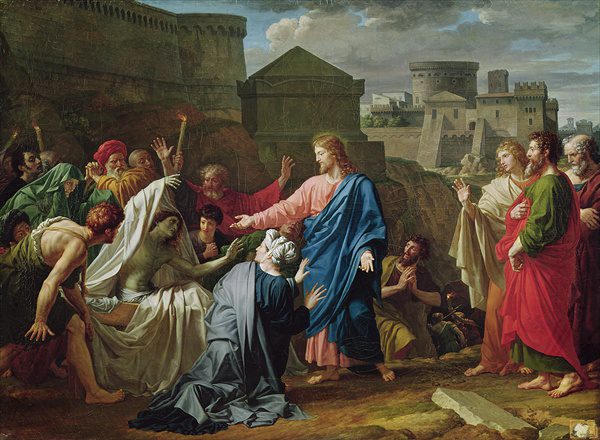
Jesus Resurrecting the Son of the Widow of Nain (oil on canvas) by Pierre Bouillon
A King and Prophet rides into Jerusalem, then later curses a fig tree.
These hopeful jews captive in their own land most likely ignored Jesus when the Lord had preached from Jeremiah and many other prophets.
DYK: John the Baptist also quoted Jeremiah?
We can almost hear Jesus or John the Baptizer preaching these words of repentance to a people without ears to hear from Jeremiah 7:11 and in the Prophet's context understand Jerusalem even more.
Jeremiah 7:
Amend your ways and your deeds, and I will let you dwell in this place. 4 Do not trust in these deceptive words: ‘This is the temple of the Lord, the temple of the Lord, the temple of the Lord.’
11 Has this house, which is called by my name, become a den of robbers in your eyes? Behold, I myself have seen it, declares the Lord.
16 “As for you, do not pray for this people, or lift up a cry or prayer for them, and do not intercede with me, for I will not hear you.
17 Do you not see what they are doing in the cities of Judah and in the streets of Jerusalem?
27 “So you shall speak all these words to them, but they will not listen to you.
You shall call to them, but they will not answer you.
28 And you shall say to them,
‘This is the nation that did not obey the voice of the Lord their God,
and did not accept discipline;
truth has perished; it is cut off from their lips.
When men fall, do they not rise again? If one turns away, does he not return?
5 Why then has this people turned away in perpetual backsliding?
They hold fast to deceit; they refuse to return.
6 I have paid attention and listened, but they have not spoken rightly; no man relents of his evil, saying, ‘What have I done?’
… but my people know not the rules of the Lord. 8 “How can you say, ‘We are wise, and the law of the Lord is with us’?
But behold, the lying pen of the scribes has made it into a lie. 9 The wise men shall be put to shame; they shall be dismayed and taken; behold, they have rejected the word of the Lord,
so what wisdom is in them?
… from prophet to priest, everyone deals falsely.
… saying, ‘Peace, peace,’ when there is no peace.
When I would gather them, declares the Lord, there are no grapes on the vine, nor figs on the fig tree; even the leaves are withered, and what I gave them has passed away from them.”
14 Why do we sit still? Gather together; let us go into the fortified cities and perish there, for the Lord our God has doomed us to perish and has given us poisoned water to drink, because we have sinned against the Lord. 15 We looked for peace, but no good came; for a time of healing, but behold, terror.
… and I will remove the iniquity of this land in a single day.
In that day, declares the LORD of hosts, every one of you will invite his neighbor to come under his vine and under his fig tree.” – Zechariah 3:9b-10 [circa 519 B.C.]
Looking Back to the Prophets
From Moses to the late Prophets at the time of Zechariah and Haggai, the LORD spoke to the faithful of Jacob. (Call them: Israel, Judah, Judea, Galilee, even Samaria at the time of Jesus.)
They were divided after David, captured after Solomon, conquered by foreign lands and driven into distant empires. Even after rebuilding Jerusalem and the Temple, Israel would never be the same.
Prophets spoke judgment of evil nations, cities and leaders.
Prophesy during the times of the first dispersion accomplished the Lord’s purpose. Jerusalem and the Temple were rebuilt, then rebuilt again by Herod and Rome. Between the time of these two Temples, no word from above – generations of silence.
Surely those hearing of the miracles of the great Prophet approaching Jerusalem for the Passover festival had high expectations of this greatest Prophet, Jesus.
He is the Messiah of God!
The crowds cover the road with palms and shout:
“Son of David,”
as the King of the Jews (Jesus) rode victoriously up to the gates of Jerusalem.
‘Hosanna!’ ‘Blessed be the Lord.’ ‘Savior!’
And what had the prophet Zechariah written?
“and I will remove the iniquity of this land in a single day..
.. In that day, declares the LORD of hosts, every one of you will invite his neighbor to come under his vine and under his fig tree.”
The Sacrifice of the Lamb of God accomplished the removal of sin; yes, in a single day: Good Friday.
What did Jerusalem expect?
The Judeans, Galileans, Samaritans, even Jews on faithful pilgrimage to the Passover festival from other lands followed Jesus with different high expectations from nearly forgotten writings of Zechariah and others.
The oracle of the word of the Lord is against the land of Hadrach (Syria) and Damascus is its resting place.
[Of course, Rome would control all of these Mediterranean lands 500 years later, not just Judah, Galilee and Samaria.]
The Coming King of Zion
9 Rejoice greatly, O daughter of Zion! Shout aloud, O daughter of Jerusalem! Behold, your king is coming to you; righteous and having salvation is he, humble and mounted on a donkey, on a colt, the foal of a donkey. 10 I will cut off the chariot from Ephraim and the war horse from Jerusalem; and the battle bow shall be cut off, and he shall speak peace to the nations; his rule shall be from sea to sea, and from the River A Powerful Professed King
The crowds, some who had followed Jesus for three years, knew the Son of Man riding victoriously into Jerusalem on a donkey had all power to defeat Rome in a day!
But it was not the Lord’s will to save Jerusalem in a day, but sinners.
“I have not come to call the righteous but sinners to repentance.”
You will notsee these HEADLINES in the Jerusalem News twenty-one centuries ago or even now.
MIRACLE!
ישוע המשיח עלה!
Changes in Worship
Peter and John went to the Temple one afternoon to take part in the three o’clock prayer service.
Acts:3:1 NLT
Post-resurrection Christians frequently miss some subtlety of detail in the Bible due to the amazing witness of the miracles which surround the circumstance. “Peter and John were:
a. going to the Temple just a few months after Jesus had been found guilty of violating church rules, was tortured, murdered and made an example to others by powerful leaders.
b. It was ‘three o’clock [3 p.m.] on a weekday afternoon and
c. the church (Temple) had a prayer service where faithful Jews actually prayed.
Like many believers I have multiple versions of the Bible and wanted to check the facts in the English Standard Version which I generally quote. “the hour of prayer, the ninth hour.Footnotes: a. Acts 3:1 That is, 3 p.m.
Who would be praying at 3 p.m. on a weekday?
Yet, they did. It was customary – usual. [ctt title=”21st century worshipers take a much more casual attitude toward God than most generations before us.” tweet=”#Prayer Peter and John went to the Temple one afternoon to take part in the three o’clock prayer service. Acts 3:1″ coverup=”XSu36″]
Nothing wrong with a 3 p.m. prayer service. Temple officials would soon show up with objections when disciples of Jesus worshiped the Lord on their way to the service by healing a man who witnessed Christ by following these leaders of the new Way.
The NLT version heading states:
Peter Heals a Crippled Beggar
The text shows detail which gives glory to God.
6 But Peter said, “I don’t have any silver or gold for you. But I’ll give you what I have. In the name of Jesus Christ the Nazarene,[a] get up and[b] walk!”
9 All the people saw him walking and heard him praising God.
The more politically correct heading of the ESV for Acts 3:1 states:
The Lame Beggar Healed
The witness of Peter continues: [ctt title=”Christianity is never about what we have done for Jesus.” tweet=”Our witness is what Jesus will also do for you. #Jesus” coverup=”3JM77″]
ESV: Acts 3:9
And all the people saw him walking and praising God, 10 and recognized him as the one who sat at the Beautiful Gate of the temple, asking for alms. And they were filled with wonder and amazement at what had happened to him.
The King James Version (translation) has no labels
Recalling that scripture was hand-transcribed until the printing press, note that modern editors add headings. Headline Titles help us to see the topic of a section, while we prejudicially dismiss some important detail. If fact, consider that the Bible, as a traditional Holy Writing did not even divide into chapters and verses. Like scripture before, Acts and the letters are one connected writing and the witness all connects to Christ Jesus.
Take a look at the link below and note the headings of three renderings of the Acts text.
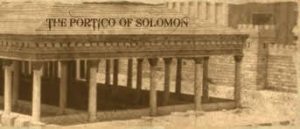
Preaching in Solomon’s Portico [NKJV]
11 Now as the lame man who was healed held on to Peter and John…
Peter Preaches in the Temple [NLT]
12 Peter saw his opportunity and addressed the crowd.
Peter Speaks in Solomon’s Portico [ESV]
11 While he clung to Peter and John, all the people, utterly astounded, ran together to them in the portico called Solomon’s.
And if you would like to translate for yourself from the original Greek, try this:
We don’t want to get caught up in this too much and miss the importance of witness of these verified miracles and the credit all witnesses give to the risen Christ Jesus. Note, however some of our natural prejudices in thinking about a setting over 2000 years ago. It is little different than not being able to wrap our heads around the concept of praying to the Lord our God and Creator at three in the afternoon.
Visual Prejudice of HEADLINE NEWS
Mohammed – Crippled Beggar – Africa
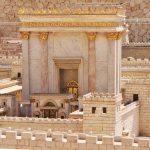
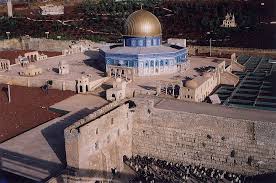
Temple
Jerusalem
Visual prejudice will not produce truth in your thoughts. The setting is not the Temple built by Solomon, but one built centuries later by a half-jew, Herod, a powerful puppet king beholden to the Caesars of Rome. The Herods, Jesus, Temple officials and Peter all appeal to traditions of Hebrew heritage.
Peter speaks to the crowds gathered after God’s miracle healing of the man:
“Men of Israel, why do you wonder at this, or why do you stare at us, as though by our own power or piety we have made him walk? 13 The God of Abraham, the God of Isaac, and the God of Jacob, the God of our fathers, glorified his servant Jesus…
22 Moses said, ‘The Lord God will raise up for you a prophet like me from your brothers…
26 God, having raised up his servant, sent him to you first, to bless you by turning every one of you from your wickedness.”
[ctt title=”But many of those who had heard the word believed, and the number of the men came to about five thousand.” tweet=”Acts 4:4 – after a singular witness on their way to an obligatory prayer service.” coverup=”kaY9r”]
As our series highlighting passages from many centuries prior to the Cross concluded with the resurrection. This post from the early history of the church reminds us that even the journeys of Acts will cover much more territory and the spread of Christianity continues for centuries.
TalkofJesus.com takes you to scripture to discover the details of truth and God’s love. Links included go to trusted sources you may search for further study. My commentary is minimal, but your comments by reply are more than welcome as witness of Jesus Christ to others.
In my continuing journey of Christian Social Witness via http://talkofJesus.com you will see several updates to our HEADLINE look over the next few weeks. Don’t let it throw you.
Please continue to SHARE our posts focused on Jesus Christ from our searchable website.
Used to monitor number of Google Analytics server requests
10 minutes
__utmb
Used to distinguish new sessions and visits. This cookie is set when the GA.js javascript library is loaded and there is no existing __utmb cookie. The cookie is updated every time data is sent to the Google Analytics server.
30 minutes after last activity
__utmc
Used only with old Urchin versions of Google Analytics and not with GA.js. Was used to distinguish between new sessions and visits at the end of a session.
End of session (browser)
__utmz
Contains information about the traffic source or campaign that directed user to the website. The cookie is set when the GA.js javascript is loaded and updated when data is sent to the Google Anaytics server
6 months after last activity
__utmv
Contains custom information set by the web developer via the _setCustomVar method in Google Analytics. This cookie is updated every time new data is sent to the Google Analytics server.
2 years after last activity
__utmx
Used to determine whether a user is included in an A / B or Multivariate test.
18 months
_ga
ID used to identify users
2 years
_gali
Used by Google Analytics to determine which links on a page are being clicked
30 seconds
_ga_
ID used to identify users
2 years
_gid
ID used to identify users for 24 hours after last activity
24 hours
_gat
Used to monitor number of Google Analytics server requests when using Google Tag Manager
1 minute
_gac_
Contains information related to marketing campaigns of the user. These are shared with Google AdWords / Google Ads when the Google Ads and Google Analytics accounts are linked together.