Tag: messiah

  • The Burden of the Word of the Lord

    The Burden of the Word of the Lord

    The burden of the word of the LORD to Israel by Malachi.

    מַשָּׂא דְבַר־יְהוָה אֶל־יִשְׂרָאֵל בְּיַד מַלְאָכִֽי׃

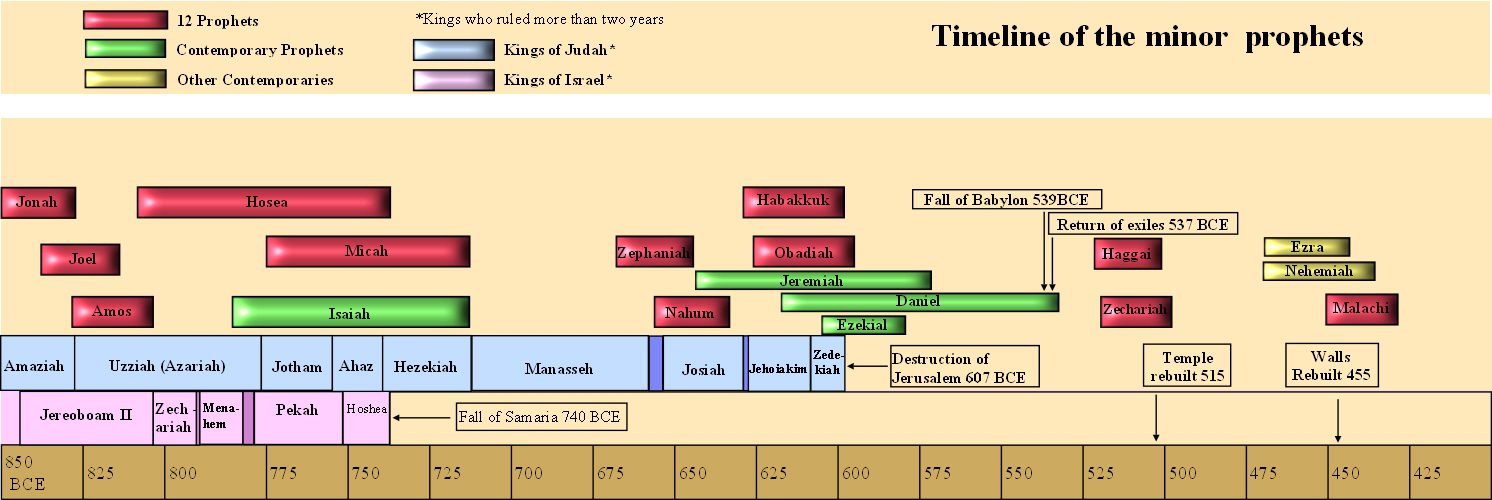
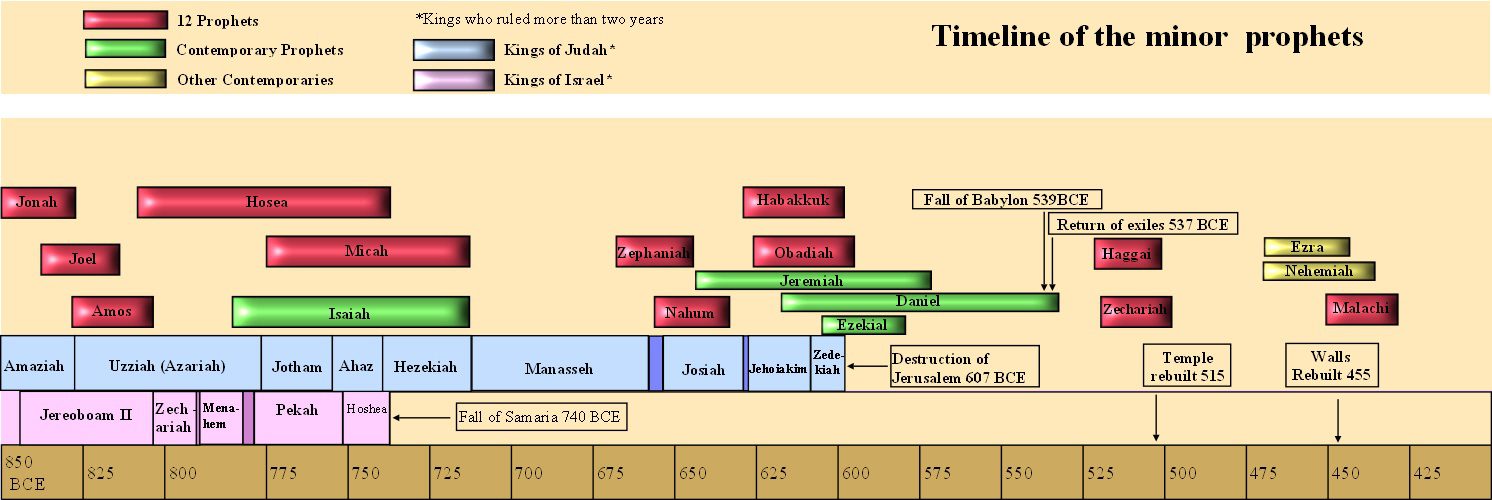
    We have heard it before: a ‘burden,’ a weight laid upon the back of a mortal soul, an oracle from the LORD laid upon the tongue of a Prophet. Malachi was the last Prophet of Judah. Israel (Samaria) had already fallen. Defeat of the Jews and a silence of the LORD prevails until the voice in the wilderness of John the Baptist.

    The LORD had spoken severely to disobedient sons and daughters through many Prophets. In fact, the argument of the burden of leading the LORD’s chosen goes all the way back to Moses.

    Numbers 11:11

    Moses said to the LORD, “Why have you dealt ill with your servant? And why have I not found favor in your sight, that you lay the burden of all this people on me?

    Leading a people or a family steeped in our own righteousness is not an easy thing.

    How quickly we forget what the LORD has done to redeem us, how He saves us from the slavery of our past.

    Before the Lord came to us in a manger in Bethlehem in the Person of the Messiah, a great silence would follow the chastening of the Prophets.

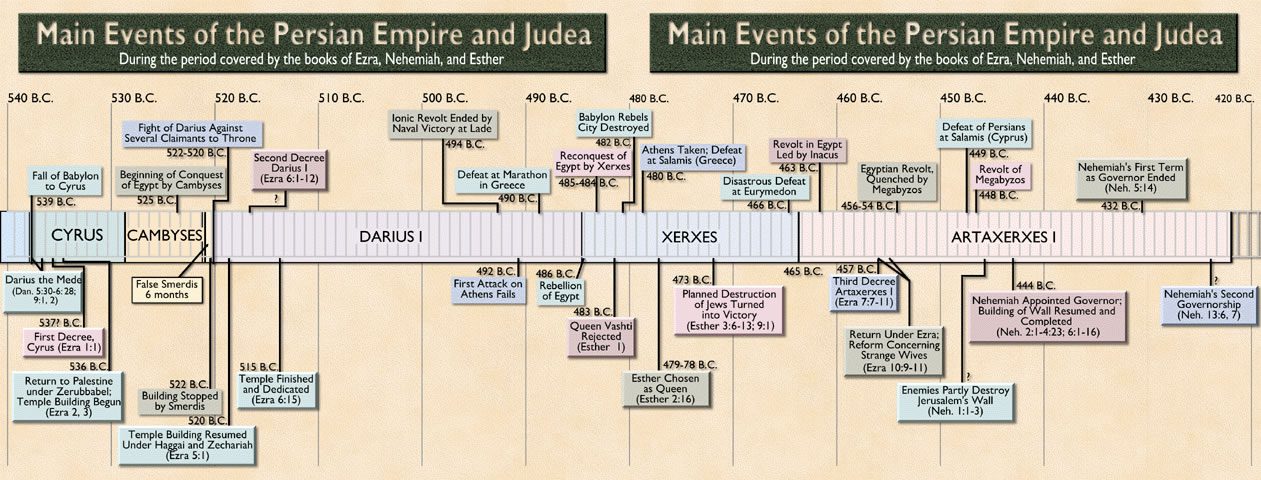
    Malachi wrote to the Jews of the Persian province of Judea about 500 years before the Christ. The burden of the LORD on Malachi is a heavy correction even of our own thinking.

    persian-empire-chartMalachi 1:

    2 “I have loved you,” says the Lord. But you say, “How have you loved us?”

    Isn’t that our own question to God our Father? Are we not disrespectful in asking how God has loved us? We are impudent spoiled children to ask our Creator, “How have you loved us?”

    The Priests’ Polluted Offerings
    6 “A son honors his father, and a servant his master. If then I am a father, where is my honor? And if I am a master, where is my fear? says the Lord of hosts to you, O priests, who despise my name. But you say, ‘How have we despised your name?’


    If Moses had been burdened by the leading of a rebellious people, surely these rebellious sons of Levi offered no purification for our sins before God our Father. Who could even imagine that the LORD would allow His Chosen People, the Jews, to be ruled by Egypt once more!?


    10 Oh that there were one among you who would shut the doors, that you might not kindle fire on my altar in vain!  I have no pleasure in you, says the Lord of hosts, and I will not accept an offering from your hand. 11 For from the rising of the sun to its setting my name will be great among the nations, and in every place incense will be offered to my name, and a pure offering. For my name will be great among the nations, says the Lord of hosts. 12 But you profane it…

    14b For I am a great King, says the Lord of hosts, and my name will be feared among the nations.

    Malachi 2:

    Judah Profaned the Covenant
    10 Have we not all one Father? Has not one God created us? Why then are we faithless to one another, profaning the covenant of our fathers? 11 Judah has been faithless, and abomination has been committed in Israel and in Jerusalem. For Judah has profaned the sanctuary of the Lord, which he loves…

    Minor-Prophets-Timeline

    The Messenger of the Lord
    17 You have wearied the Lord with your words. But you say, “How have we wearied him?” By saying, “Everyone who does evil is good in the sight of the Lord, and he delights in them.” Or by asking, “Where is the God of justice?”

    Malachi preaches repentance to the Jews, captured by Babylon and now ruled by Persia. The word of the LORD is a hard burden on the Prophet, in these days prior to re-building a Second Temple by Ezra and Nehemiah. Yet even the Second Temple would fall.

    Judea of Persia:
    • Alexander the Great will conquer Persia in 331 B.C.
    • Alexander the Great will conquer Egypt a year earlier in 332 B.C.
    Judea of the Macedonian Kingdom:
    • Ptolemy I rules Judea
    • Alexander the Great rules the world
    • The Hebrew Bible is translated into Greek (Septuagint) in Egypt
    Judea of the Ptolemaic Kingdom:
    • The Ptolemy successors of Egypt rule Judea once more until 198 B.C.
    • Political upheaval brought the Seleucids to power from 321 B.C. until 64 B.C.
    • Ptolemy VIII (170-163 B.C.) and Cleopatra II (170-142 B.C.) vie for political power in Egypt
    • The Maccabean revolt in Judea defeats the Seleucids (166-142 B.C.)
    Judea of the Hasmoneans
    • Judas Maccabeus begins the line of Hasmonean rule (166-160 B.C.)
    • Pompey annexes Judea to Rome (63 B.c.)
    Judea under Rome
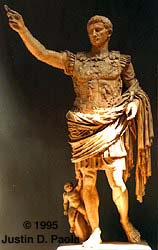
    • Augustus CaesarC. Octavius (later Augustus) was born on 23 September, 63 BC

    • Herod the Great (37-4 B.C.) gains political power in Judea as an ally of Rome.
    • Egypt, under Cleopatra VII, falls to Octavian (30 B.C.)
    • Rome (27 B.C.- A.D. 395) rules much of the world under Octavian
    • Judea is under the jurisdiction or Syria, part of the Roman Empire under Caesar Augustus.
    • Herod, funded by Rome, builds strategic roads for his Roman administration and rules over Judea with ruthless political savvy.

    The Prophet Malachi has foretold with accuracy these difficulty for the Jews in the time between the Temples and the coming of the Messiah.

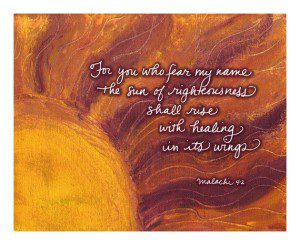
    Malachi 3:  “Behold, I send my messenger, and he will prepare the way before me. And the Lord whom you seek will suddenly come to his temple; and the messenger of the covenant in whom you delight, behold, he is coming, says the Lord of hosts.

    To be continued…

    This post is part of a series in preparation for Christmas in the year of our Lord, 2015.


  • as to a lamp shining in a dark place

    as to a lamp shining in a dark place

    Perhaps you look at Biblical prophesy as something of darkness from the past. Maybe in this 21st century we just don’t believe the lives and words of men like Jeremiah or Isaiah could shed any light on the struggles of our life.

    If God has spoken through certain men of old, why send Jesus to fulfill the many prophesies already given over the millennia? Why would God have to send a Messiah to the mortal men of the world?

    The Apostle Peter gives us an insight into what God has spoken through Jesus as a Prophet.

    2 Peter 1:

    • Prophets as light
      Prophets predicted the Messiah of God, Christ Jesus

      we made known to you the power and coming of our Lord Jesus Christ

    • we were eyewitnesses of his majesty.
    • he received honor and glory from God the Father, and the voice was borne to him by the Majestic Glory, “This is my beloved Son, with whom I am well pleased,”
    • we ourselves heard this very voice borne from heaven

    19 And we have the prophetic word more fully confirmed, to which you will do well to pay attention as to a lamp shining in a dark place, until the day dawns and the morning star rises in your hearts, 20 knowing this first of all, that no prophecy of Scripture comes from someone’s own interpretation.

    21 For no prophecy was ever produced by the will of man, but men spoke from God as they were carried along by the Holy Spirit.

    The Apostle Peter proclaims that God provided a first-hand witness, an intimate look at the Person of God Incarnate. Twelve Disciples witnessed the daily life and teaching of Christ Jesus. The rabbi, Jesus, spoke more than just a retelling of words of God.

    Though Jesus the Messiah prophesied, He IS more than a Prophet.

    • The most powerful predictions of Jesus Christ augmented even His highly acclaimed miracles.
    • Jesus not only explained the scriptures, He taught how He fulfilled them.
    • Christ foretold His own death on the Cross.
    • Jesus amazingly told of HIs resurrection from the dead in 3 days!
    • As a Prophet, the Messiah Jesus tells of His return.

    The Disciples continued to preach the Gospel, the Good News that God IS involved in our lives in the Person of Christ Jesus.

    The return of Christ Jesus in these last days will be a final fulfillment of all prophesy and perfection of God the Father’s plan of grace.

    After His resurrection and even now, He sends true followers into the world to tell the Good News (Gospel) until the number of the elect will fill the streets of a glorious New Jerusalem.

    Many are called; few are chosen.

    Believe in the Son of Man: born as a lowly babe in a manger. Believe in the Christ child who become a refugee to Egypt in Mary’s arms. Believe in the witness of His glory on earth by sinners like Peter, Levi, prostitutes and Pharisees. Believe in Jesus crucified on a Cross by gentile Roman soldiers, convicted by corrupt religious rulers manipulating mob-ruled injustice.

    Believe: Jesus IS risen from the dead! Believe scripture when we are told Jesus’ resurrection from the grave was witnessed by over five hundred mortals. He IS the Messiah of God, prophesied to return once more to rule in righteousness and love.

    In the year of our Lord, 2015, we see only though a mist these dark days of so many suffering souls.

    Let us be a light in Christ, a flicker of hope in the darkness of the sin so pervasive in the hearts and acts of mankind. Lord let your church and bride shed more than a flicker of hope on those lost souls who do not know the love of your great Light.

    To be continued…

    This is the fourth in a series of Christmas messages by Roger Harned. Please share the Gospel with others through your social media witness.
  • Interrupting Jesus 11 – a last supper in Jericho

    Interrupting Jesus 11 – a last supper in Jericho

    jericho-mapJericho, best known as the place where the Hebrew nation, led by Joshua, began their conquest of Canaan with a march around the walls of Jericho, strategically central to inland trade routes to the Mediterranean. old road jerusalem-jericho

    Along a barren highway to the west, about a 15 mile walk to Jerusalem after an ascent from the small town of Bethel. Galileans, Judeans, Samaritans and of course, Roman soldiers, traveled these highways through Jericho. It would be the path to the festival of the Passover, this one the time of the Sacrifice of Jesus.

    The crowds have traveled with the popular Rabbi, Jesus of Nazareth. In just days they would lay palms before His triumphal entry into the gates of Jerusalem. Like Joshua, His Hebrew Name means: “Jehovah is salvation.” 

    Jesus IS the Christ, the Messiah.

    Into the town of Jericho crowds enter. People allign the streets as if awaiting a King with riches or celebrity you must see once in your mortal life. One of the town’s lesser citizens is a resented tax collector. (Perhaps you have heard how the Jews hated the men who collected taxes for Rome.) In fact, one of the purported followers of Jesus used to be a tax collector. Perhaps you have read his Gospel.

    Luke 5:

    After this he went out and saw a tax collector named Levi, sitting at the tax booth. And he said to him, “Follow me.” And leaving everything, he rose and followed him.

    And Levi made him a great feast in his house, and there was a large company of tax collectors and others reclining at table with them. And the Pharisees and their scribes grumbled at his disciples, saying, “Why do you eat and drink with tax collectors and sinners?” And Jesus answered them, “Those who are well have no need of a physician, but those who are sick. I have not come to call the righteous but sinners to repentance.”

    The Messiah came to save sinners: seductive women, adulterous men, liars, thiefs and even tax collectors.

    Jesus did not come to save the regular attenders of church (synagogue). Jesus has tax collectors and sinners following Him as Disciples and as part of the crowds – sinners like you and me – sinners like Zacchaeus.

    In fact, Luke reports a parable Jesus had told about a Pharisee and a tax collector. Here is a story we can relate to about good ‘church’ people and the corrupt public official in their midst:

    Luke 18:

    The Pharisee and the Tax Collector

    He also told this parable to some who trusted in themselves that they were righteous, and treated others with contempt: 10 “Two men went up into the temple to pray, one a Pharisee and the other a tax collector. 11 The Pharisee,standing by himself, prayed thus:

    ‘God, I thank you that I am not like other men, extortioners, unjust, adulterers, or even like this tax collector.

    12 I fast twice a week; I give tithes of all that I get.’

    13 But the tax collector, standing far off, would not even lift up his eyes to heaven, but beat his breast, saying,

    ‘God,be merciful to me, a sinner!’

    14 I tell you, this man went down to his house justified, rather than the other. For everyone who exalts himself will be humbled, but the one who humbles himself will be exalted.”

    Do you, dear claimant of Christ, good observer of God’s ordinances, come to the LORD pleading for mercy while showing no mercy for your fellow sinners?

    Matthew, the tax collector who quit to follow Jesus, and the other repentant sinners of the crowds knew that the Messiah, the Christ, Jesus, was a merciful teacher. Not only the Gospel of His miracles preceded Jesus as He entered Jericho, but also the wisdom and compassion of His teaching of scripture. A tax collector like Zacchaeus might just have a chance to see this man of mercy traveling to Jerusalem through his town of Jericho.

    Luke 19:

    He entered Jericho and was passing through. And behold, there was a man named Zacchaeus. He was a chief tax collector and was rich. And he was seeking to see who Jesus was, but on account of the crowd he could not, because he was small in stature. So he ran on ahead and climbed up into a sycamore tree to see him, for he was about to pass that way.

    And when Jesus came to the place, he looked up and said to him, “Zacchaeus, hurry and come down, for I must stay at your house today.”

    Imagine, the leading teacher and prophet comes through town with crowds of followers. Jesus pauses where you are and looks up to you! He calls you by name. Further, this well-known teacher boldly tells you (in front of all of the witnesses around Him) that He has to come to your house for dinner. Unthinkable! Nobody wants to associate with tax collectors and corrupt politicians, let alone have dinner.

    Have you ever been looked down on by others, rejected by everyone of importance?

    Jesus did not think himself to be so important as to not interrupt His journey to Jerusalem to have dinner with a sinner. Zaccheaus

    So he hurried and came down and received him joyfully.

    And when they saw it, they all grumbled, “He has gone in to be the guest of a man who is a sinner.”

    And Zacchaeus stood and said to the Lord, “Behold, Lord, the half of my goods I give to the poor. And if I have defrauded anyone of anything, I restore it fourfold.”

    And Jesus said to him, “Today salvation has come to this house, since he also is a son of Abraham.

    10 For the Son of Man came to seek and to save the lost.”

    Jehovah is salvation: Jesus has interrupted the journey of His high sacrifice about to take place at the Passover. The Lamb of God, who takes away the sins of the world, has come to the house of a sinner for a feast.

    What is your response to Christ Jesus? Have you repented of your sins and accepted the grace of God?

    Lord have mercy on us. Christ have mercy on us.

    Therefore, let us keep the feast, beloved fellow forgiven sinner.