Tag: messiah

  • Jesus – Siloam – “I washed and I see

    Jesus – Siloam – “I washed and I see

    “Go,” he told him, “wash in the pool of Siloam” (which means “Sent”). So he left, washed, and came back seeing.

    John 9:7 CSB

    Sight to a blind man

    Previously we looked at John’s introduction to Jesus healing a man who was blind from birth. We left off with the Messiah sending the man to Siloam (which means ‘sent’) with mud Jesus had created by spitting on dust covering the blind man’s eyes.

    Besides being a clear sign of the Messiah’s mysterious power from God the Father, it’s important to note two things here:

    1. Right in the middle of John 9:7 at the beginning his witness of the Good News of Jesus healing a man blind from birth, time passes as the blind man leaves then returns later with sight.
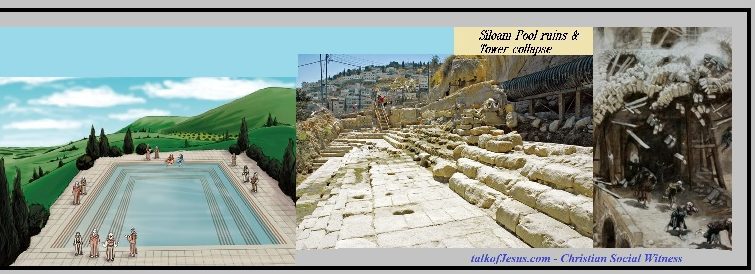
    2. Witnesses would have been familiar with the mysteries of God associated with the Pool of Siloam, but also the tragic deaths of those who had been killed in this same place when the Tower of Siloam fell upon them. (Luke later records this in his Gospel.)

    John tells of this sign of the blind man healed after he washed at Siloam, but to a later audience not present his testimony is scene of what others witnessed firsthand like him. Like most miracles of the Messiah those present had to debate the seemingly impossible scene which confronted their faith. Were they really seeing a miracle?

    I am the one

    John 9:

    So he … came back seeing.

    8 Therefore the neighbors, and those who previously saw him as a beggar, were saying,

    “Is not this the one who used to sit and beg?” (Yes.)

    9 Others were saying,

    “This is he,” (Yes, I am that man.)

    still others were saying,

    “No, but he is like him.” (Friend, you know it is me. Neighbor, you see that it is me.)

    He kept saying, “I am the one.”

    Of course any witnesses of the miraculous must ask: HOW?

    10 So they were saying to him, “How then were your eyes opened?”

    Therefore once again the man formerly blind, speaking to the crowds of Jerusalem (some who were not present before and others who were), now retells what has just happened.

    The Messiah however has moved with the crowds to other parts of Jerusalem.

    He ‘Sent’ me

    I remind us here of the context of what we already learned about Jesus, the true Light ‘sent’ to the world.

    When John writes, “Siloam” (which is translated, Sent), the Apostle uses a Greek word which should sound familiar to the Christian of this day: apostellō, ἀποστέλλω related to the word “Apostle,” ἀπόστολος – apostolos.

    The Apostle John also previously witnessed Jesus’ light hidden from the eyes of the Pharisees, using this same word for ‘sent’ and describing that He the Son was sent by God the Father.

    • Jesus said to them, “If God were your Father, you would love Me, for I proceeded forth and have come from God, for I have not even come on My own initiative, but He sent G649 Me. – John 8:42 (after which the Lord said: Before Abraham was, I AM.)
    • “What shall we do, so that we may work the works of God?” Jesus answered and said to them, “This is the work of God, that you believe in Him whom He has sent.” G649John 6:28b-29 (after Jesus had feed 5000 and walked on the Sea of Galilee)

    Same word as John uses to describe Siloam as meaning sent: apostellō. You likely know it best from John 3.

    “For God did not send G649 the Son into the world to judge the world, but that the world might be saved through Him.

    John 3:17 NASB – Strong’s G649 = apostellō

    11 He answered, “The man who is called Jesus made clay, and anointed my eyes, and said to me, ‘Go to Siloam and wash’; so I went away and washed, and I received sight.”

    I went and received sight

    Miraculous! We know how (after Jesus sent him to Siloam).

    12 They said to him, “Where is He?”

    He said, “I do not know.”

    Confirming the Sign (of the Messiah)

    We will find no group working harder on the Sabbath than religious authorities working to enforce religion.

    Pharisees believe in the resurrection, but deny the true life through the Messiah of God. John witnesses rejection of Jesus by their works of darkness.

    13 They brought him who formerly was blind to the Pharisees. Now it was a Sabbath when Jesus made the clay and opened his eyes.

    15 Then the Pharisees also asked him again how he had received his sight.

    Once again, controversy like in previous debates within the crowds witnessing the miracle.

    He said to them, “He put clay on my eyes, and I washed, and I see.”

    16 Therefore some of the Pharisees said, “This Man is not from God, because He does not keep the Sabbath.”

    Others said, “How can a man who is a sinner do such signs?”

    And there was a division among them.

    The Pharisees in charge continue to prosecute the man who can see even after rendering their judgment of the Messiah Jesus as witness to the court.

    “What have you to say about him? It was your eyes he opened.”

    “He is a prophet.”

    Calling Jesus a prophet compares Him to John the Baptist, Elijah and others. Refusing his truthful answer, they call the man’s parents to the stand.

    “Is this your son, who you say was born blind? Then how does he now see?”

    20 “We know this is our son and that he was born blind,” his parents answered. “But we don’t know how he now sees, and we don’t know who opened his eyes. Ask him; he’s of age. He will speak for himself.”

    Confess, for we find you guilty

    John now gives us an earlier insight from the trial here in addition to their judgment that Jesus is not the Messiah.

    22 His parents said these things because they feared the Jews, for the Jews had agreed already that if anyone confessed that He was Christ, he would be put out of the synagogue.

    So again they call the defendant who could now see to the stand.

    Give glory to God

    “Give God the glory! We know that this Man is a sinner.” – John 9:24 NKJV

    Give God (Theos) glory (Doxa)! Nothing wrong with that.

    Certainly those in the audience riveted to the outcome of this man’s trial to determine if he may remain a part of the community of the Jews with full participation in the worship of their places of learning (synagogues) would tend toward a praise of their opening. But then these judges (of the Sanhedrin) betray who they really put on trial here.

    The Messiah, a sinner?

    “We know this man (anthropos) is a sinner (hamartōlos).”

    Is JESUS ‘devoted to sin,’ a sinner? (For this is the definition of their judgment NOT of the defendant, but of their Messiah.)

    Has the Son of Man, as Jesus self-identifies as One born of Mary, a King of the Jews in the line of David, — has He shown Himself to be “pre-eminently sinful, especially wicked,” or even a lesser violation of Pharisaic interpretation of ‘work’ on the Sabbath as a lesser accusation that Jesus is not free from sin?

    Jesus has already accused them (not the man formerly blind on trial here):

    “You are of your father the devil, and you want to do the desires of your father. He was a murderer from the beginning, and does not stand in the truth because there is no truth in him. Whenever he speaks a lie, he speaks from his own nature, for he is a liar and the father of lies. But because I speak the truth, you do not believe Me.

    “Which one of you convicts Me of sin? If I speak truth, why do you not believe Me?

    John 8:44-46 NASB – Jesus the Messiah on Truth

    The Apostle John has already laid the foundation of Truth behind the accusations against the blind man who now sees and the Pharisees who convict out of the darkness.

    Conclusive evidence: Now I see

    25 He then answered, “Whether He is a sinner, I do not know; one thing I do know, that though I was blind, now I see.”

    “Now I see,” the man truthly states ONLY the facts. One thing further he does in which the court fails, he judges rightly that he cannot know if the man who healed him is a sinner. You see the evidence, I see. (Why ask me about another man, even the One who healed me?)

    “What did He do to you? How did He open your eyes?”

    “I told you already and you did not listen; why do you want to hear it again?

    (Perhaps a pregnant pause, as the audience hears his indisputable evidence.)

    Then a more personal question to the Court which certainly must have brought silent smiles to some witnesses of this precursor of a trial yet to come before them.

    You do not want to become His disciples too, do you?” (We can only imagine the uproar, but their reaction is severe.)

    You are His disciple?

    Their next accusation, false at this time because the blind man had never known Jesus’ teaching, draws the line of the Pharisees by which they held tightly their religions authority.

    But first for the crowds, they restate their tenuous authority.

    “We know that God has spoken to Moses, but as for this man, we do not know where He is from.”

    Now the answer from the man who repeatedly said, “now I see” that offends most.

    “Well, here is an amazing thing, that you do not know where He is from, and yet He opened my eyes… (Again, now I see!)

    Witness of the man who now sees

    The man who was once blind continues. John concludes with his witness and expulsion from the religious Jewish community.

    31 We know that God does not hear sinners; but if anyone is God-fearing and does His will, He hears him. Since the beginning of time it has never been heard that anyone opened the eyes of a person born blind. If this man were not from God, He could do nothing.”

    Guilty of witness of the Messiah

    34 They answered and said to him, “You were completely born in sins, and are you teaching us?”

    And they cast him out.

    It’s not just that the Court of the Pharisees ‘cast the man who witnessed ‘now I see’ and the sign that Jesus IS the Messiah; he would now be excluded from Jewish culture as well and subject to further persecution.

    The New King James Version of John’s Gospel emphasizes the gravity of the Court’s predetermined verdict:

    The Pharisees Excommunicate the Healed Man

    John will continue his Good News of the Messiah Jesus with yet another encounter with the blind man who witnessed, I washed and I see.’

    What must you do?

    On a more personal level I ask you, as the man once blind asked the Pharisees, ‘Do you want to be His disciples too,’ what will you do with the mud covering your eyes?

    Siloam – Sent by the Messiah

    … but have you washed?

    Then one of the elders answered, saying to me, “These who are clothed in the white robes, who are they, and where have they come from?”

    I said to him, “My lord, you know.”

    And he said to me, “These are the ones who come out of the great tribulation, and they have washed their robes and made them white in the blood of the Lamb.

    The Revelation of Jesus Christ to John: 7:13-14 NASB
    To be continued...

  • Who May Judge SIN?

    Who May Judge SIN?

    Continuing in the Gospel of John

    ‘Who made you judge and jury,’ some ask the Christian who applies the Law? “Don’t judge sin,” some even preach deceptively. Many a sinner will quote Jesus to you: “Judge not, that you be not judged. Matthew 7:1

    We have been following the Good News of the Messiah Jesus told by John, only surviving disciple after all others had died for their witness of Truth, rather than recant the only Way to heaven, Christ Jesus. His Good News is explanation and not necessarily chronological.

    Previously in John 7 at the Jewish Festival of Booths Jesus shouted out an invitation to the crowds:

    “He who believes in Me, as the Scripture has said, out of his heart will flow rivers of living water.”

    Now we move on to a discussion the following day about authority in the Law. Religious authorities who love to judge sin confront the Messiah with one of their favorites, adultery.

    John 8:

    2 At dawn he went to the temple again, and all the people were coming to him. He sat down and began to teach them.

    Let’s not miss that Jesus had been teaching on the Holy Spirit of God the previous day.

    He said this about the Spirit. Those who believed in Jesus were going to receive the Spirit, for the Spirit had not yet been given because Jesus had not yet been glorified.

    John 7:39 CSB

    Jesus said this about the Holy Spirit as witness to Himself as the Messiah of the Living God!

    Wouldn’t you want to know more about this Man claiming the very power of the One Lord and God? So the crowds came, along with those who claimed earthly authority over the Law of Moses.

    How do YOU judge sin?

    3 Then the scribes and the Pharisees brought a woman caught in adultery, making her stand in the center. 4 “Teacher,” they said to him, “this woman was caught in the act of committing adultery.

    Now, dear christian in this twenty-first century crowd, you think very little of the seriousness of her first century indiscretion with a man to whom she was not married. In fact, in all likelihood many of you commited a different and similar sin when you first loved the significant other of your own life. We are oh so ready to condemn any man who claims the authority of God over our own less severe way to judge sin.

    5 In the law Moses commanded us to stone such women. So what do you say?”

    So does Jesus believe in capital punishment?

    How dare she sleep with another man! After all, she is married.

    6 They asked this to trap him, in order that they might have evidence to accuse him.

    You know the old (not so funny, really) question of the lawyer: “When did you stop beating your wife?” No right answer to the prosecuting question as stated. There’s more to her story than the evidence presented.

    By the way, have you already answered without having had additional evidence presented – facts which perhaps only God may know?

    Is accusation not guilty until proven innocent in these last days?

    So here we look to the Messiah confronted an accusation of adultery in a court having already judged sin of the accused woman.

    Jesus as Judge

    The crowds look on. Religious officials have stated the Law clearly and ask for sentence confirming their judgment of this accused violator. Surly the Messiah who claims that every jot and tiddle of the Law must be fulfilled will not show mercy to this woman who sinned.

    Yet Jesus does not speak a sentence to judge sin clearly accused of this woman.

    7 When they persisted in questioning him, he stood up and said to them,

    “The one without sin among you should be the first to throw a stone at her.”

    8 Then he stooped down again and continued writing on the ground.

    How does the Messiah of God judge sin?

    Jesus has already witnessed the standard by which the Lord will judge sin.

    “I can do nothing on my own. I judge only as I hear, and my judgment is just, because I do not seek my own will, but the will of him who sent me.

    John 5:30

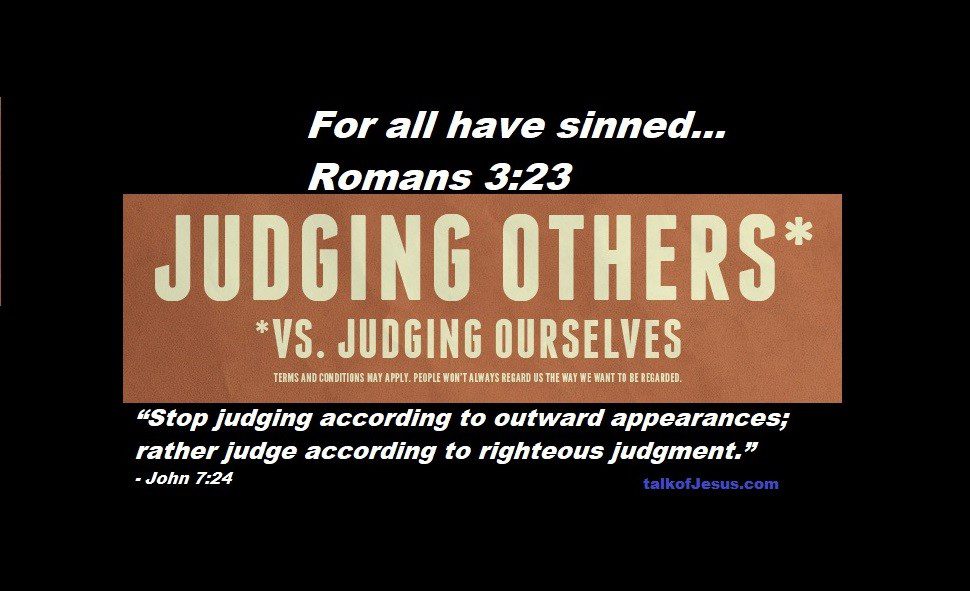
    “Stop judging according to outward appearances; rather judge according to righteous judgment.”

    John 7:24

    One reason the Pharisees confront Jesus rather than having arrested Him at that time is continuation from a previous confrontation.

    John 7:50 Nicodemus—the one who came to him previously and who was one of them [the Pharisees] —said to them,

    51 “Our law doesn’t judge a man before it hears from him and knows what he’s doing, does it?”

    Neither does the Lord Jesus judge this woman accused of adultery without full evidence of what she has done. In His judgment Jesus shows mercy.

    God is Light and Life – Sin is Darkness & Death

    Do you, man or woman of flesh, judge sin?

    Jesus stood to render His decision as Judge:

    “He that is without sin among you, let him first cast a stone at her.

    John 8:7b KJV

    8 Then he stooped down again and continued writing on the ground. 9 When they heard this, they left one by one, starting with the older men. Only he was left, with the woman in the center.

    Justice?

    Was the full justice of the Law served here? Certainly not.

    Did Jesus grant mercy to the woman who sinned against her husband and the Law of the land? Yes, mercy and grace where penalty could have been demanded.

    Would He judge sin at a later time? (Perhaps you had not thought of His temporary grace calling this sinner to repentance.)

    Will Jesus judge sin – adultery, dishonesty, failure to show mercy to the poor or unjustly accused, victims of hateful vengeance?

    • “Put boundaries for the people all around the mountain and say: Be careful that you don’t go up on the mountain or touch its base. Anyone who touches the mountain must be put to death. – Exodus 19:12
    • “Whoever strikes a person so that he dies must be put to death. – Exodus 21:12
    • “If a person schemes and willfully acts against his neighbor to murder him, you must take him from my altar to be put to death. – Exodus 21:14
    • “Whoever strikes his father or his mother must be put to death. – Exodus 21:15
    • “Whoever kidnaps a person must be put to death, whether he sells him or the person is found in his possession. – Exodus 21:16
    • “Whoever curses his father or his mother must be put to death. – Exodus 21:17
    • “Whoever has sexual intercourse with an animal must be put to death. Exodus 22:19

    “Observe the Sabbath, for it is holy to you. Whoever profanes it must be put to death. If anyone does work on it, that person must be cut off from his people. Work may be done for six days, but on the seventh day there must be a Sabbath of complete rest, holy to the LORD. Anyone who does work on the Sabbath day must be put to death.

    Exodus 31:14-15

    His Merciful Sentence

    “He who is without sin among you, let him be the first to throw a stone at her.” –

    Jesus’ question to accusers who would judge sin – John 8:7 NASB

    “I am the light of the world.

    You judge by human standards. I judge no one. And if I do judge, my judgment is true, because it is not I alone who judge, but I and the Father who sent me.

    Jesus’ standard to judge sin – John 8:15-16 CSB

    Is Jesus the Messiah?

    If Jesus was, IS, and will always be the Lord God, the Messiah, then He IS Light itself. Jesus is the very image of Light of the Father God our Creator, sustainer and Judge.

    12 Jesus spoke to them again: “I am the light of the world. Anyone who follows me will never walk in the darkness but will have the light of life.”

    13 So the Pharisees said to him, “You are testifying about yourself. Your testimony is not valid.”

    14 “Even if I testify about myself,” Jesus replied, “My testimony is true, because I know where I came from and where I’m going. But you don’t know where I come from or where I’m going. 15 You judge by human standards…

    Is this not true of every man or woman who must judge another man or woman?

    Therefore what is our standard of temporal justice, prior to the judgment of our souls?

    Leviticus 19: Laws of Holiness – Separation to the LORD

    לֹא־תַעֲשׂ֥וּ עָ֨וֶל֙ בַּמִּשְׁפָּ֔ט לֹא־תִשָּׂ֣א פְנֵי־דָ֔ל וְלֹ֥א תֶהְדַּ֖ר פְּנֵ֣י גָדֹ֑ול בְּצֶ֖דֶק תִּשְׁפֹּ֥ט עֲמִיתֶֽךָ׃

    John does not present every proof of witness that Jesus is the Messiah of Israel, but closes his Gospel written after many proofs of the resurrection of Jesus with this:

    But these are written so that you may believe that Jesus is the Messiah, the Son of God, and that by believing you may have life in his name.

    John 20:31 CSB

    Light of Life from beyond the grave

    12 Jesus spoke to them again: “I am the light of the world. Anyone who follows me will never walk in the darkness but will have the light of life.”

    … “You know neither me nor my Father,” Jesus answered. “If you knew me, you would also know my Father.”

    20 He spoke these words by the treasury, while teaching in the temple. But no one seized him, because his hour had not yet come.

    … and you will die in your sin. Where I’m going, you cannot come.”

    … You are of this world; I am not of this world. 24 Therefore I told you that you will die in your sins. For if you do not believe that I am he, you will die in your sins.”

    25 “Who are you?” they questioned.

    “Exactly what I’ve been telling you from the very beginning,” Jesus told them.

    Do you believe the Light or hide in the darkness of death?

    26 “I have many things to say and to judge about you, but the one who sent me is true, and what I have heard from him—these things I tell the world.”

    To be continued...
  • Hebrews – 3 – Jesus, our Apostle & High Priest

    Therefore, holy brothers and sisters, who share in a heavenly calling, consider Jesus, the apostle and high priest of our confession.

    Hebrews 3:1 CSB

    Why a Priest?

    What do you think of when someone mentions a priest or a high priest?

    https://davidfowlerpreacher.com/2014/06/08/pictures-of-the-holy-spirit/
    Exodus 21:5-7

    A religious ceremony? A regal religious robed man in charge?

    As mentioned previously in Hebrews 2, an anointing or separation of a priest from common impurity symbolizes holiness, a perfection by which he may approach the Lord.

    וְכִפֶּר הַכֹּהֵן אֲשֶׁר־יִמְשַׁח אֹתֹו וַאֲשֶׁר יְמַלֵּא אֶת־יָדֹו לְכַהֵן תַּחַת אָבִיו וְלָבַשׁ אֶת־בִּגְדֵי הַבָּד בִּגְדֵי הַקֹּֽדֶשׁ׃

    Leviticus 16:32

    Again, returning to a Jewish understanding of the Priesthood, the writer of Hebrews points to Jesus the Messiah as a High Priest. G_d the Father appointed Jesus, just as Moses and Aaron were anointed by the LORD.

    5 Moses was faithful as a servant in all God’s household, as a testimony to what would be said in the future.

    but Messiah is faithful as a Son over his house; whose house we are, if we hold fast our confidence and the glorying of our hope firm to the end.

    Hebrews 3:6 Hebrew Names Version

    Moses was… but the Messiah is. The author will make this point again later in his letter to the Hebrews concerning Abraham.

    Jesus is priest of God Most High, a Priest everlasting and perfect Sacrifice before the LORD.

    Jesus is our Apostle sent from God the Father as our High Priest of perfection.

    Do you believe Scripture?

    Once again the author points back to Hebrew scripture in his ‘therefore, watch out’ conclusion of this section of his letter (Hebrews 3).

    7 Therefore, as the Holy Spirit says:

    Today, if you hear his voice,
    do not harden your hearts as in the rebellion.

    קָשָׁה qashah לֵבָב lebab

    Psalm 95:

    “Harden not your heart, as in the provocation, and as in the day of temptation in the wilderness,” a direct quote (KJV) from Psalm 95:8 reiterated for emphasis also in Hebrews 3:15.

    Do you claim Scripture – the very Word of the LORD?

    Listen up! so that there won’t be in any of you an evil, unbelieving heart that turns away from the living God.

    Was God angry for forty years? The bodies of those who sinned – those who did not believe – fell in the wilderness. Who will not enter God’s rest?

    κατάπαυσις – the heavenly blessedness in which God dwells

    Will you, my fellow Hebrews, enter into rest? This, through Scripture, is what the author asks his readers.

    So I sware in my wrath, They shall not enter into my rest.)

    Hebrews 3:11 KJV

    And to whom sware he that they should not enter into his rest, but to them that believed not?

    Hebrews 3:18 KJV

    19 So we see that they were unable to enter because of unbelief.

    Do you believe the scriptural evidence that Jesus is the Messiah?

    Will you enter into God’s perfect rest? Or do you persist to rebel in the wilderness of sin in these last days?

    To be continued...