Tag: moses

  • Elders – a letter from Peter – 9

    Elders – a letter from Peter – 9

    Peter has just cautioned the church that judgment begins with God’s household. He encourages all the believers suffering for Christ to keep fervent in your love. And in an appropriate exhortation for leadership of the family Peter urges wives to be submissive to your own husbands. Now the Apostle specifically exhorts the elders of the church.

    Church Leadership

    Before we address this divisive denominationalized topic written to a first century church in terms of today’s church, let’s begin with a contemporized paraphrase of these verses from the first letter of Peter by J.B. Phillips.

    1 Peter 5:

    A word to your leaders

    5 1-4 Now may I who am myself an elder say a word to you my fellow-elders? I speak as one who actually saw Christ suffer, and as one who will share with you the glories that are to be unfolded to us. I urge you then to see that your “flock of God” is properly fed and cared for. Accept the responsibility of looking after them willingly and not because you feel you can’t get out of it, doing your work not for what you can make, but because you are really concerned for their well-being. You should aim not at being “little tin gods” but as examples of Christian living in the eyes of the flock committed to your charge. And then, when the chief shepherd reveals himself, you will receive that crown of glory which cannot fade.

    Who is an Elder?

    I am not an elder of my church. Is he writing to me?

    Certainly Peter will follow this public exhortation with expected application to those humble members of their churches. And in a larger sense, he writes not to an individual group of Christ worshipers, but to the church as the whole body of Christ.

    Peter is not their Pastor, Priest, teacher or even a member of most churches to whom he writes, yet he clearly claims his authority “as your fellow elder.”

    Before we address this position which Peter claims from the greek word which he uses, συμπρεσβύτερος [sympresbyteros], let’s look back a bit to God’s presence before elders.

    Elders of the Hebrews

    We first hear of the elders in Genesis 50, transition in the Books of Moses to the exodus of a captive Hebrew people enslaved in Egypt.

    So Joseph went up to bury his father, and with him went up all the servants of Pharaoh, the elders of his household and all the elders of the land of Egypt, and all the household of Joseph and his brothers and his father’s household; they left only their little ones and their flocks and their herds in the land of Goshen. – Genesis 50:7-8 NASB

    Scripture refers to both ‘the elders of his [Joseph’s] household and all the elders of the land.

    Elders – zaqen זָקֵן

    It is a description of older men, or men with familial and community authority. The LORD gives authority over families (households) and those with authority will be called before the LORD to account for those over whom they have authority. (We 21st century ‘christians,’ even Jews often struggle with such authority delegated from Almighty God.)

    God, furthermore, said to Moses, “Thus you shall say to the sons of Israel, ‘The LORD, the God of your fathers, the God of Abraham, the God of Isaac, and the God of Jacob, has sent me to you.’ This is My name forever, and this is My memorial-name to all generations.

    “Go and gather the elders of Israel together and say to them, ‘The LORD, the God of your fathers, the God of Abraham, Isaac and Jacob, has appeared to me, saying,
    “I am indeed concerned about you and what has been done to you in Egypt.
    Exodus 3:15-16

    How like a loving Father does the LORD show concern for those who worship Him.

    Yet Moses asked the LORD for help in governing these difficult people. (Aren’t we, the church, just as rebellious when it comes to Authority?) The LORD gave us elders to judge our own family, the followers of God.

    Exodus 24:

    וְאֶל־מֹשֶׁ֨ה אָמַ֜ר עֲלֵ֣ה אֶל־יְהוָ֗ה אַתָּה֙ וְאַהֲרֹן֙ נָדָ֣ב וַאֲבִיה֔וּא וְשִׁבְעִ֖ים מִזִּקְנֵ֣י יִשְׂרָאֵ֑ל וְהִשְׁתַּחֲוִיתֶ֖ם מֵרָחֹֽק׃

    Then He said to Moses, “Come up to the Lord, you and Aaron, Nadab and Abihu and seventy of the elders of Israel, and you shall worship at a distance.

    Exodus 24:1 WLC [Hebrew]; NASB [English]

    4 Moses wrote down all the words of the Lord…

    7 Then he took the book of the covenant and read it in the hearing of the people; and they said, “All that the Lord has spoken we will do, and we will be obedient!” …

    9 Then Moses went up with Aaron, Nadab and Abihu, and seventy of the elders of Israel and they saw the God of Israel; and under His feet there appeared to be a pavement of sapphire, as clear as the sky itself. Yet He did not stretch out His hand against the nobles of the sons of Israel; and they saw God, and they ate and drank.

    Moses prepares the followers with him, interceding as their Priest returning them to holiness (or pureness), making sacrifices and covenants before God. The LORD shows mercy to the sinful leaders of the Hebrews. Moses intercedes for them, then they see the Lord God!

    12 Now the Lord said to Moses,

    “Come up to Me on the mountain and remain there, and I will give you the stone tablets with the law and the commandment which I have written for their instruction.”

    13 So Moses arose with Joshua his servant, and Moses went up to the mountain of God. But to the elders he said,

    “Wait here for us until we return to you…

    Elders of the cities and other lands

    The leadership of elders is accepted practice and culture at every level from family to city, from state or province to nation. Eldership is not exclusive to the Hebrews, Israel or later Judah. Neither is our tendency toward personal freedom and resistance to any authority by man or God.

    • Then the elders of the congregation shall lay their hands on the head of the bull before the LORD, and the bull shall be slain before the LORD. – Leviticus 4:15
    • The LORD therefore said to Moses, “Gather for Me seventy men from the elders of Israel, whom you know to be the elders of the people and their officers and bring them to the tent of meeting, and let them take their stand there with you. Numbers 11:16
    • So the elders of Moab and the elders of Midian departed with the fees for divination in their hand; and they came to Balaam and repeated Balak’s words to him. Numbers 22:7
    • then the elders of his city shall send and take him from there and deliver him into the hand of the avenger of blood, that he may die. Deuteronomy 19:12

    The LAW of the Hebrews is a higher Law from the Lord God. Furthermore, the Hebrews agreed to the Commandments of the LORD. Yet all sin and fall short of the Law.

    Moses had saved the Hebrews from Egypt, but he could not save them from their sin.

    Deuteronomy 31:

    Elders did not lead a people who just wandered in and out of the land or the Hebrew tent of meeting.

    Joshua, David, judges, prophets, elders of every generation — all are called by the Authority of God. The Hebrews they led had agreed to be led by the LORD.

    9 So Moses wrote this law and gave it to the priests, the sons of Levi who carried the ark of the covenant of the Lord, and to all the elders of Israel…

    12 Assemble the people, the men and the women and children and the alien who is in your town, so that they may hear and learn and fear the Lord your God, and be careful to observe all the words of this law.

    26 “Take this book of the law and place it beside the ark of the covenant of the Lord your God, that it may remain there as a witness against you… Assemble to me all the elders of your tribes and your officers, that I may speak these words in their hearing and call the heavens and the earth to witness against them.

    Deuteronomy 31:26,28 NASB

    The presence of the LORD has scattered them,
    He will not continue to regard them;
    They did not honor the priests,
    They did not favor the elders.

    Lamentations 4:16 of Jeremiah when Jerusalem fell & the Temple was burned ~567 BC

    Church Elders of the New Testament

    Elders – presbyteros – πρεσβύτερος

    Strong’s Definitions
    πρεσβύτερος presbýteros, pres-boo’-ter-os; comparative of πρέσβυς présbys (elderly); older; as noun, a senior; specially, an Israelite Sanhedrist (also figuratively, member of the celestial council) or Christian “presbyter”:—elder(-est), old.

    A general description of elders in the Church would be: among the Christians, those who presided over the assemblies (or churches) The NT uses the term bishop, elders, and presbyters interchangeably.

    Although Bishops and Archbishops, Pastors and Popes may be called elders of the church, authority from the Lord is not exclusive to any. With no regard to title or station, Christ, the Head of the body of the church will judge all.

    Peter, then, addresses the elders of the church in terms of their own behavior as examples of Christ Jesus and responsibility to their own small flocks as Peter well-knew Jesus had shown to the Twelve Disciples.

    1 Peter 5:

    I exhort the elders among you as a fellow elder and witness to the sufferings of Christ, as well as one who shares in the glory about to be revealed:

    Peter addresses these men as a fellow elder. He is not of their church or lording it over their church, but addressing them as a humble brother encouraging their leaders.

    Christians tend to look askance at the Jewish context of elders because of the Gospel record of the elders challenging Jesus. However Peter does not challenge any of the elders as if he is one who knows better or as even as an Apostle of higher authority.

    2 Shepherd God’s flock among you, not overseeing out of compulsion but willingly, as God would have you; not out of greed for money but eagerly; 3 not lording it over those entrusted to you, but being examples to the flock.

    Peter then addresses our example of Jesus.

    4 And when the chief Shepherd appears, you will receive the unfading crown of glory.

    Yes, Jesus IS resurrected, as witnessed by Peter, who knows directly from the Lord that Christ will give glory to those who serve Him faithfully.

    5 In the same way, you who are younger, be subject to the elders.

    Are you younger than the elders of your church? Of course. Therefore listen to their wise leadership.

    Humbly subject yourselves to them as Christ subjected Himself to the Father, even suffering death on a cross for our sins.

    All of you clothe yourselves with humility toward one another, because
    God resists the proud
    but gives grace to the humble.

    Peter asks every saint of the church to clothe yourselves with humility toward all members of the body of Christ. He then quotes a familiar Proverb, memorized between father and son.

    Proverbs 3:

    My son, don’t forget my teaching,
    but let your heart keep my commands;
    2 for they will bring you
    many days, a full life, and well-being.
    3 Never let loyalty and faithfulness leave you.
    Tie them around your neck;
    write them on the tablet of your heart.
    4 Then you will find favor and high regard
    with God and people.
    5 Trust in the Lord with all your heart,
    and do not rely on your own understanding;
    6 in all your ways know him,
    and he will make your paths straight.
    7 Don’t be wise in your own eyes;
    fear the Lord and turn away from evil…

    33 The Lord’s curse is on the household of the wicked,
    but he blesses the home of the righteous;
    34 He mocks those who mock,
    but gives grace to the humble.

    35 The wise will inherit honor,
    but he holds up fools to dishonor.

    Conclusion

    Peter concludes his letter advising this same humility which so often eluded him as a Disciple of Jesus. The Lord led with such humble gentleness and exemplary grace.

    Peter advises the saints of Christ’s body not to become fools in your actions toward your brothers in Christ. And do not mock the fools of this passing world so filled with sin. The saints must become Christ-like in all ways.

    Hebrew Scripture would have easily come to mind for these members of first century churches. Yet Peter’s exhortation applies aptly to you and to me.

    Humble yourselves, therefore, under the mighty hand of God, so that he may exalt you at the proper time, casting all your cares on him, because he cares about you.

    1 Peter 5:6-7

    ‘You shall remember that you were a slave in the land of Egypt, and the LORD your God brought you out of there by a mighty hand and by an outstretched arm; therefore the LORD your God commanded you to observe the sabbath day. – Deuteronomy 5:15 NASB

    Now the LORD said to Joshua, “This day I will begin to exalt you in the sight of all Israel, that they may know that just as I have been with Moses, I will be with you. – Joshua 3:7

    Psalm 69

    Perhaps from this excerpt below we might look into the hearts of Peter’s persecuted first century readers of his letter, lifted up by a song of their familiar worship.

    A Psalm of David.
    Save me, O God,
    For the waters have threatened my life…
    I am weary with my crying; my throat is parched;
    My eyes fail while I wait for my God…
    Because for Your sake I have borne reproach;
    Dishonor has covered my face…

    But as for me, my prayer is to You, O LORD, at an acceptable time;
    O God, in the greatness of Your lovingkindness,
    Answer me with Your saving truth…

    Oh draw near to my soul and redeem it;
    Ransom me because of my enemies!

    But I am afflicted and in pain;
    May Your salvation, O God, set me securely on high.
    I will praise the name of God with song
    And magnify Him with thanksgiving…

    The humble have seen it and are glad;
    You who seek God, let your heart revive.

    Resist temptation

    8 Be sober-minded, be alert.

    Your adversary the devil is prowling around like a roaring lion, looking for anyone he can devour. 9 Resist him, firm in the faith, knowing that the same kind of sufferings are being experienced by your fellow believers throughout the world.

    Did you know that you are not the only one who suffers for Christ?

    Do you acknowledge the same powers and principalities who opposed Jesus also tempt you?

    Not all angels and spirits bring good news from God. Some heavenly messengers to mortals follow the fallen and deceitful angels of darkness and rebellion against the Lord God. If they oppose Jesus and you suffer for His Name, certainly you will join other saints faithful to the Lord.

    an Encouragement and Praise

    10 The God of all grace, who called you to his eternal glory in Christ, will himself restore, establish, strengthen, and support you after you have suffered a little while.

    11 To him be dominion forever. Amen.

    a Postscript

    Once Peter concludes his letter to the church exhorting its members and elders and closes with a general praise, we learn more about others who support the delivery of Peter’s good news to the churches.

    12 Through Silvanus, a faithful brother (as I consider him), I have written to you briefly in order to encourage you and to testify that this is the true grace of God.

    Peter likely dictated his letter to Silvanus, also known as Silas. Christian leaders like Silvanus and Timothy often worked with Peter or Paul. Letters to the church often express an understood Spirit-led leadership of like-minded elders of the church. We see this also in Peter’s next greeting.

    13 She who is in Babylon, chosen together with you, sends you greetings, as does Mark, my son.

    That is, John Mark, writer of the Gospel, much dictated by Peter and other Apostles.

    Who is ‘she who is in Babylon?’ Some suggest that it may be a veiled reference to Peter’s wife, who accompanied him in his journeys to spread the Gospel. As to the true location of ‘Babylon,’ commentators differ. At least three viable locations seem possible, including Rome, a Roman outpost in Egypt and a city in the area of ancient Babylon (Mesopotamia).

    Final greetings

    14 Greet one another with a kiss of love.

    φίλημα ἀγάπη – philēma agapē. It is the kiss with which, as a sign of fraternal affection, Christians were accustomed to welcome or dismiss their companions in the faith. And agapē love, demonstrable affection, good will, love, benevolence, brotherly love in Christ finds its root in phileō and philos – to treat affectionately or kindly, to welcome, befriend; one who associates familiarly with one, a companion.

    This personal love of God becomes evident in every relationship between brothers of the body of Christ; that is, the Church of which He is the head.

    Peace to all of you who are in Christ Jesus, Amen.

    1 Peter 5:14b
  • Jude – Now I will praise the Lord

    Jude – Now I will praise the Lord

    Who is Jude?

    The first thing I want to know about any letter I receive is who sent it to me. So as a leader or member of one of several churches we would want to be certain of the identity of the author of Jude and the authenticity of Jude’s message.

    Jude, a bondservant of Jesus Christ, and brother of James

    Letter of Jude 1:1a NKJV

    To fully understand the identity of the man who’s name is translated in English as ‘Jude” we must look to both the original Greek text and the common name of its Hebrew origin in first century Judea and Galilee.

    Ἰούδας

    Pronounced: ē-ü’-däs — Most translations of the Greek use Jude, the Latin Iudas and Yehudah in the Hebrew Names Version. The root word of the Greek name is Yĕhuwdah from the Hebrew יְהוּדָה meaning “praised” and translated at Judas. (We understand why after Jesus’ betrayal no man wanted to be known by this name now synonymous with ‘betrayer.’)

    In James – Witness of a Converted Brother we learned that Roman names derived from local languages had become Hellenized. James could be Jim, but Judas and Judah easily become, Jude.

    Some fathers named their sons after a forefather of their tribe like Judah or Israel. Judah יָדָה is the familiar Hebrew root of both the Greek and English.

    Brother of James

    Jude means: he shall be praised.

    The author of our letter identifies himself as the brother of James.

    Jude refers to James, head of the church of Jerusalem, leader of the first century churches who exchanged letters throughout Asia minor, Greece, Palestine and other areas receiving the Good News of Christ. Most Biblical commentators agree that like James, Jude is is also a half-brother of Jesus.

    Both James and Jude identify themselves as servants of Jesus, rather than claiming their biological relationship to the Lord. Most kings come to power via their family connection and install relatives in high positions.

    One of the great Jewish controversies Jesus would take no part in was that of the legitimacies of kings and followers of certain political traditions. These political/family controversies had progressed and preceded Jude, James and Jesus by several generations back to the second century B.C.

    Maccabees

    Source: BibleHub.org (a hammer), This title, which was originally the surname of Judas, one of the sons of Mattathias, was afterward extended to the heroic family of which he was one of the noblest representatives. Asmonaeans or Hasmonaeans is the Proper name of the family, which is derived from Cashmon, great grandfather of Mattathias. The Maccabees were a family of Jews who resisted the authority of Antiochus Epiphanes king of Syria and his successors who had usurped authority over the Jews, conquered Jerusalem, and strove to introduce idolatrous worship.

    Judas, one of the sons of Mattathias generally called in English the Maccabees, a celebrated family who defended Jewish rights and customs in the 2nd century B.C. (1 Maccabees 2:1-3 {from the Apocrypha, for those unfamiliar with extra-Biblical texts.}

    Herodians

    The end of the era of the Hasmoneans is probably the most turbulent time in Jewish history. It is hard to imagine a “Jewish” government more antithetical to Jewish principles and ideals than that of Herod and his successors, whose murderous, tyrannical ways would eventually lead to the destruction of the Temple and the beginning of the long exile that Jews find themselves in.Source: JewishHistory.org

    Herod the Great, born in Rome around 70 B.C and known as Herodes Magnus, was appointed a governor at around age 20 (along with his brother) and appointed King by the Roman senate in 37 B.C. He became known as Judah’s great builder and built the Temple in Jerusalem.

    During the time of Jesus, James and Jude and continuing into the years of the early church, the Herods wielded much power. Rome finally turned on Jerusalem and their client king appointed to help Rome defend the Empire against enemies east of Palestine. The Herodians failed to control the “Jewish problem,” which caused trouble throughout the Empire.

    Bondservant of Jesus Christ

    The brother of James could have begun his letter to the church as a ‘brother of the King and Messiah,’ implying his authority of position via his family. The Herodians or Maccabees made familial claims to kingdom leadership, but not these half-brothers of Jesus who had not even followed the Lord prior to His resurrection.

    James begins his letter (ἐπιστολή epistle, in greek): James, a bond-servant of God and of the Lord Jesus Christ.’ Jude chooses to identify in the same way as a bondservant of Christ.

    Jude would have been known to his readers as the brother of James, leader of the church in Jerusalem, both related to Jesus the Messiah.

    Understanding the Servant of Christ

    The Bible uses the word ‘servant‘ almost 500 times. A few English translations use the word ‘bondservant,’ a concept we no longer use or understand. Furthermore, many contemporary christians resist this concept of sometime voluntary compliance.

    I am the LORD your God, which brought you forth out of the land of Egypt, that ye should not be their bondmen; and I have broken the bands of your yoke, and made you go upright.

    Leviticus 26:13 KJV

    עָבַד עֶבֶד – A slave or servant; to work, serve. Also used as form of address between equals.

    Genesis 18: KJV

    And the LORD appeared unto him [Jacob] in the plains of Mamre: … three men stood by him: and when he saw them, he ran to meet them from the tent door, and bowed himself toward the ground, And said, My Lord, if now I have found favour in thy sight, pass not away, I pray thee, from thy servant:

    Jacob served the LORD. We serve the LORD. Jude served Christ, the Lord.

    Malachi 4:

    About four centuries before Christ (and Jesus’ half-brothers) the prophet Malachi writes:

    “Remember the instruction of Moses my servant, the statutes and ordinances I commanded him at Horeb for all Israel.

    Malachi 4:4

    The closing verses of Malachi clearly point back to Moses and the Law with the Lord calling Moses, “my servant.” James and Jude are servants of Jesus just as Moses was servant to the Lord at Horeb.

    עֶבֶד – `ebed

    Are you, beloved follower of Christ, first a servant of the Lord?

    διάκονος – diakonos

    “If anyone serves me, he must follow me. Where I am, there my servant also will be. If anyone serves me, the Father will honor him.

    Command of the Lord Jesus – Gospel of John 12:26 CSB

    The servant (from the Greek context) is ‘one who executes the commands of another, esp. of a master.

    1. the servant of a king
    2. a deacon [diakonos], one who, by virtue of the office assigned to him by the church, cares for the poor and has charge of and distributes the money collected for their use.
    3. a waiter, one who serves food and drink

    “The greatest among you will be your servant.

    The word of the Lord – Matthew 23:11

    Abraham was a servant of the Lord. Moses was a servant of the Lord. And like their forefathers in the faith, Jude and James became servants of the Lord first and servants of the Lord’s followers second.

    Paul, referring to the church writes to the church at Colossae:

    I have become its servant, according to God’s commission that was given to me for you, to make the word of God fully known …

    Jude writes to the church

    Jude, a servant of Jesus Christ and a brother of James:

    To those who are the called, loved by God the Father and kept for Jesus Christ.

    Jude 1:1b CSB

    Are you a fellow servant of Christ Jesus? If so, know that you are loved by God the Father. Know that by His grace you are kept for Jesus Christ at the day of His victorious return.

    2 May mercy, peace, and love be multiplied to you.

    To be continued

  • Festival of the Passover

    Festival of the Passover

    No holy holiday surpasses peçach, the festival of the Passover, in the calendar year of the jews. In a previous post, Josiah – a Good King also Dies, we discovered that Passover had been completely forgotten by the Judah. The Law had not been read and Kings before Josiah had done evil in the sight of the Lord.

    פֶּסַח

    We also reviewed the meaning of Passover:

    “a sparing, immunity from penalty and calamity.

    The root word suggests from application of scripture in Exodus 12 that the Lord will pass over or spring over you when executing judgment. He will halt the punitive action in your case.

    A Three-part Festival

    Instructions for the Passover

    Exodus 12:3 Tell the whole community of Israel that on the tenth day of this month they must each select an animal of the flock according to their fathers’ families, one animal per family. 4 If the household is too small for a whole animal, that person and the neighbor nearest his house are to select one based on the combined number of people; you should apportion the animal according to what each will eat. 5 You must have an unblemished animal, a year-old male; you may take it from either the sheep or the goats. 6 You are to keep it until the fourteenth day of this month…

    Preparation

    The contemporary photo of an Israeli employee removing prayer notes from the western wall is just one example of a cleansing of sorts, associated with the sacrifice of Passover.

    You must be spotless before the Lord. Not better than everyone else, one who does more good works than (perhaps) the one who does not achieve eternal life. Spotless. Cleansed of sin.

    His place of worship in Jerusalem must be clean to begin the great sacrifice. Everything washed. Pure. This preparation to come before the Lord is symbolic of repentance.

    Are you mostly good?

    Not good enough (for no man or woman is good, no not one).

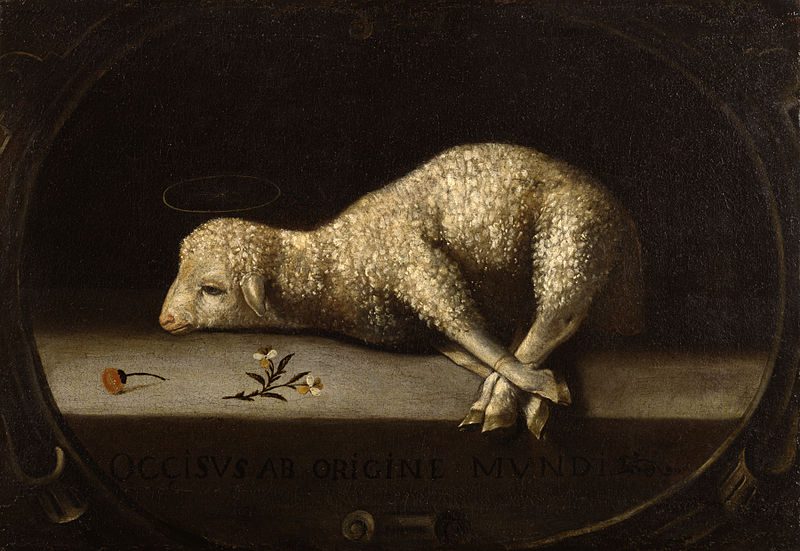
    lamb bound on the altar of sacrifice

    Yet we no longer sacrifice the blood of a lamb, for the Holy of Holies and the altar has been destroyed.

    Passover Meal

    Exodus 12: CSB/WLC שמות

    … then the whole assembly of the community of Israel will slaughter the animals at twilight.

    Exodus 12:6B

    7 They must take some of the blood and put it on the two doorposts and the lintel of the houses where they eat them. 8 They are to eat the meat that night; they should eat it, roasted over the fire along with unleavened bread and bitter herbs.

    Strict regulations also include: (9 Do not eat any of it raw or cooked in boiling water, but only roasted over fire—its head as well as its legs and inner organs. 10 You must not leave any of it until morning; any part of it left until morning you must burn.)

    What about now?

    Beloved follower of the Lord in this 21st century after the Messiah Jesus, I ask you:

    Even IF you strictly observance the Passover today, is your worship any more than symbolism?

    Can the blood of a lamb (no longer sacrificed) atone for your sin? כָּפַר

    11 וְכָכָה֮ תֹּאכְל֣וּ אֹתוֹ֒ מָתְנֵיכֶ֣ם חֲגֻרִ֔ים נַֽעֲלֵיכֶם֙ בְּרַגְלֵיכֶ֔ם וּמַקֶּלְכֶ֖ם בְּיֶדְכֶ֑ם וַאֲכַלְתֶּ֤ם אֹתוֹ֙ בְּחִפָּז֔וֹן פֶּ֥סַח ה֖וּא לַיהוָֽה׃

    Here is how you must eat it: You must be dressed for travel, your sandals on your feet, and your staff in your hand. You are to eat it in a hurry; it is the Lord’s Passover.

    Exodus 12:11

    Christian and Jew alike understand the significance of the events to follow the quickly eaten Passover meal and the account of Moses as redeemer from slavery in Egypt.

    Christians ought to understand this same symbolism of the body and blood of the Lamb, the risen Messiah King, as in an upper room in Jerusalem, Jesus shared a last Passover meal with His beloved Disciple family nearly two millennia ago.

    And as they were eating, Jesus took bread, and blessed it, and brake it, and gave it to the disciples, and said, Take, eat; this is my body.

    And he took the cup, and when he had given thanks, he gave it to them: and they all drank of it.

    And he said unto them, This is my blood of the new testament, which is shed for many.

    Mark 14:22-24 KJV

    Passover Celebration

    14 וְהָיָה֩ הַיּ֨וֹם הַזֶּ֤ה לָכֶם֙ לְזִכָּר֔וֹן וְחַגֹּתֶ֥ם אֹת֖וֹ חַ֣ג לַֽיהוָ֑ה לְדֹרֹ֣תֵיכֶ֔ם חֻקַּ֥ת עוֹלָ֖ם תְּחָגֻּֽהוּ׃

    “This day is to be a memorial for you, and you must celebrate it as a festival to the Lord. You are to celebrate it throughout your generations as a permanent statute.

    • 15 You must eat unleavened bread for seven days.
    • On the first day you must remove yeast from your houses.
    • Whoever eats what is leavened from the first day through the seventh day must be cut off from Israel.
    • 16 You are to hold a sacred assembly on the first day…
    • … and another sacred assembly on the seventh day.
    • No work may be done on those days except for preparing what people need to eat—you may do only that.

    Festival of Unleavened Bread

    … You must observe this day throughout your generations as a permanent statute.

    Thus, we remember how the Lord used Moses to bring Israel out of Egypt, where the Lord led and purified a people chosen to His for entry into a land promised to Abraham as his inheritance. Yet the Lord has used saviors besides Moses to redeem his faithful from the chains of this life.

    Other Saviors Redeeming God’s Faithful

    We know well the saving of the Jews from Pharaoh. Some would look to Moses or Joshua as their redeemer or savior. Certainly Joseph saved Israel in Egypt until in the generations he was forgotten.

    Others see David as Israel’s king triumphant. A few recognize Ezra for bringing back worship in Jerusalem. All of these would give the same glory instead to the Lord God.

    One more mention of the unleavened bread in the generation of Abraham may have missed your notice. You may not believe it, though Moses tells it. Once again, it was served quickly and judgment by the Lord followed.

    The Doom of Sodom

    If any family should have been celebrating a festival of unleavened bread it would be the families of Abraham, who faithful followed the Lord from place to place as the Lord commanded. The Lord’s covenant with Abraham preceded the Law of Moses.

    As you may know, Lot, son of Abram’s brother Haran, also followed the Lord to both Canaan and Egypt before settling in the city of Sodom. It was a walled city with a gate like other cities of its time.

    Genesis 19:

    The two angels entered Sodom in the evening as Lot was sitting in Sodom’s gateway. When Lot saw them, he got up to meet them. He bowed with his face to the ground…

    … He prepared a feast and baked unleavened bread for them, and they ate.

    Have you ever considered it? Lot prepared a feast of unleavened bread for the two angels who saved him from Sodom.

    Lot was unaware of their mission and events which had already taken place between the angels and Abraham.

    The Lord appeared to Abraham

    18 וַיֵּרָ֤א אֵלָיו֙ יְהוָ֔ה בְּאֵלֹנֵ֖י מַמְרֵ֑א וְה֛וּא יֹשֵׁ֥ב פֶּֽתַח־הָאֹ֖הֶל כְּחֹ֥ם הַיּֽוֹם׃

    Three angels had appeared to Abraham. Lot would only know that his uncle and aunt in their nineties were childless. He had been like a son to them.

    16 The men got up from there and looked out over Sodom, and Abraham was walking with them to see them off.

    17 Then the Lord said, “Should I hide what I am about to do from Abraham?

    Lot, of course knows nothing of the conversation to follow which has already taken place when two angels come to him at the gate of Sodom.

    The Lord had judged Sodom for the sin of all of its residents. Then Abraham intercedes, pleaing for the Lord to spare Lot and his family. Abraham saves them from the sentence of death, all except Lot’s wife who sinned even after the warning of angels.

    22 The men turned from there and went toward Sodom while Abraham remained standing before the Lord. 23 Abraham stepped forward and said, “Will you really sweep away the righteous with the wicked?

    Genesis 19:15 “Get up! … or you will be swept away in the punishment of the city.”

    29 וַיְהִ֗י בְּשַׁחֵ֤ת אֱלֹהִים֙ אֶת־עָרֵ֣י הַכִּכָּ֔ר וַיִּזְכֹּ֥ר אֱלֹהִ֖ים אֶת־אַבְרָהָ֑ם וַיְשַׁלַּ֤ח אֶת־לוֹט֙ מִתּ֣וֹךְ הַהֲפֵכָ֔ה בַּהֲפֹךְ֙ אֶת־הֶ֣עָרִ֔ים אֲשֶׁר־יָשַׁ֥ב בָּהֵ֖ן לֽוֹט׃

    So it was, when God destroyed the cities of the plain, he remembered Abraham and brought Lot out of the middle of the upheaval when he demolished the cities where Lot had lived.

    Genesis 19:29 WLC,CSB

    A Savior at the gate of Jerusalem

    As the LORD in Person

    Came to Abraham by the oaks of Mamre,

    As the LORD in Person

    Came to Moses at Sinai,

    The LORD in the Person of the Son With Us

    Came to Jerusalem’s gate.

    The Lord in Person sacrificed

    On a Cross beyond its walls,

    Jesus, Messiah and King

    Risen! in Person,

    Jesus, in flesh and blood shed

    Our King comes on the clouds again!

    Roger Harned

    The Lord will return

    Will you bow down to your Lord and King?

    Or will you yet crucify Him?

    The choice of judgment is yours, yet your redemption or just punishment will be His.

    Is Jesus your Lord? Or will you justify your sin without Him?

    To be continued... [eternally]