Tag: moses

  • The Curse of Disease and Death – 2

    The Curse of Disease and Death – 2

    Moses, Privilege of the Wilderness

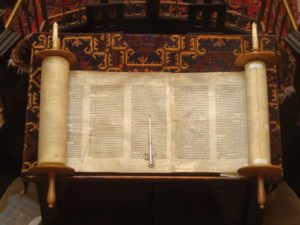
    In part one of this series about our attitude toward disease and death we briefly examined a story from the oldest book of the Bible, Job. Job was well-to-do, he had then lost nearly everything including his health, yet he blessed the Lord. תּוֹרָה‎Today we examine part of a too-familiar story from the Pentateuch [Torah ], written by Moses. The Book of the Law, or the first five books of the Bible, are written about the Lord and relationship to man (adam), but within this story we find a man not unlike Job, a man of privilege and wealth, Moses.
    Moses may have been the most learned man on earth in his day, raised as a prince of privilege in a palace of a most powerful man who accumulated wealth and knowledge from the many corners of the world he ruled, conquered or traded. The house of Pharaoh, a throne perhaps to which Moses could have ascended upon his death, was a Rome on the Nile to which the peoples of the land looked in worship.
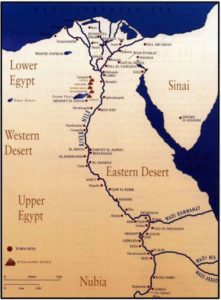
    Egypt of MosesMoses, Prince of Egypt, ruled over the important day-to-day projects in the extensive north-to-south agricultural empire whose glory was tied to management of the rich resources of the 4,160 mile [6670 km] long Nile River.

    Moses gave up much, first in fleeing for his life at age forty and later in returning at age eighty to challenge Pharaoh at the urging of the Lord, only to be led to live in the wilderness of Sinai for forty more years.

    The Torah breezes quickly over typically the most notable years of a man’s life to tell most about Moses’ life after age eighty.

    [ctt title=”The Torah is five Books about the LORD, not a book about Moses.” tweet=”תּוֹרָה‎” coverup=”U9Qna”]

    Exodus 2:

    Moses Flees to Midian

    11 One day, when Moses had grown up, he went out to his people and looked on their burdens…

    21 And Moses was content to dwell with the man [Jethro, Priest of Midian], and he gave Moses his daughter Zipporah. 22 She gave birth to a son, and he called his name Gershom, for he said, “I have been a sojourner in a foreign land.”

    God Hears Israel’s Groaning

    23 During those many days the king of Egypt died, and the people of Israel groaned because of their slavery and cried out for help. Their cry for rescue from slavery came up to God…

    Exodus 3 

    The Burning Bush

    Now Moses was keeping the flock of his father-in-law, Jethro, the priest of Midian, and he led his flock to the west side of the wilderness and came to Horeb, the mountain of God. And the angel of the Lord appeared to him in a flame of fire out of the midst of a bush. He looked, and behold, the bush was burning, yet it was not consumed…


    Most of us are fairly familiar with this part of Moses’ story, yet with minimal thought of his again comfortable life with a wife and children and a good job of shepherd. We fail to remember that much time has passed and Moses has survived his own flight from Pharaoh (father of his adoptive Egyptian mother) to establish a good life in the family of a Hebrew priest.

    Now there is a new Pharaoh, perhaps a son who came to the throne of Egypt who would have grown up with Moses, a son perhaps even jealous of the many talents of the former Prince of Egypt who had fled to Midian so many years before. “Exodus 2:23 During those many days the king of Egypt died…” Easy to have missed this. Time had passed in life as always it will.


    Exodus 3:

    10 “Come, I will send you to Pharaoh that you may bring my people, the children of Israel, out of Egypt.” 11 But Moses said to God, “Who am I that I should go to Pharaoh and bring the children of Israel out of Egypt?” 12 He said, “But I will be with you, and this shall be the sign for you, that I have sent you: when you have brought the people out of Egypt, you shall serve God on this mountain.”

    Moses is about to become (after a time) a man higher than the LORD’s High Priest, a mortal standing before the Lord as Adam had been in the very presence of the LORD! Yet first, much time would pass both in Egypt and in the wilderness.

    Exodus 4:19-20

    And the LORD said to Moses in Midian, “Go back to Egypt, for all the men who were seeking your life are dead.” So Moses took his wife and his sons and had them ride on a donkey, and went back to the land of Egypt. And Moses took the staff of God in his hand…

    27 The Lord said to Aaron, “Go into the wilderness to meet Moses.” So he went and met him at the mountain of God and kissed him. 28 And Moses told Aaron all the words of the Lord with which he had sent him to speak, and all the signs that he had commanded him to do.


    Exodus 7:

    Moses and Aaron Before Pharaoh

    And the Lord said to Moses, “See, I have made you like God to Pharaoh, and your brother Aaron shall be your prophet. You shall speak all that I command you, and your brother Aaron shall tell Pharaoh to let the people of Israel go out of his land. But I will harden Pharaoh’s heart, and though I multiply my signs and wonders in the land of Egypt,Pharaoh will not listen to you. Then I will lay my hand on Egypt and bring my hosts, my people the children of Israel, out of the land of Egypt by great acts of judgment.


    We know well the drama to follow: plagues and suffering of both Egyptian and Hebrew. What we may have missed in the big screen dramas is how the Lord used a now ordinary old man (Moses) to lead a suffering people to the promised land. We might not see the humble weakness of old Moses in light of the powerful work the Lord would do by his own hand.

    Now Moses was eighty years old, and Aaron eighty-three years old, when they spoke to Pharaoh.

    This, of course, was prior to the suffering of the plagues to follow or forty more years of a most difficult life dependant on the manna of God in the wilderness of the Sinai.


    Forty years of suffering

    You’ve lived a good life, one longer than most in those days, eighty years. Would you now choose to go out into the desert as leader of a difficult people? Would you now choose to suffer the severe hard life of a nomad refugee in desperate need of water and food, a people without home or shelter?

    Why would God allow this – yes, even command it?

    Like Job, Moses believed the covenant promise of the Lord. God does not always call us to receive double blessing at the end of our life. The Lord does not call us to always extend our years to one hundred and twenty, with sight of the land promised to your sons and daughters.

    If the Lord calls us to suffering, the loss of a child or loved one, the loss of city and home, the devastating loss of health; it is for His own righteous will and the redemption of His own worshipers.

    Are you a worshiper of the Lord God? Would you humble your flesh,  surrender your prideful ‘self?’

    Would you sacrifice your home, your wealth and everything you have ever known before Almighty God? For the LORD IS, He will judge of our souls and redeems the lives of His own. The Lord IS and He has suffered in the flesh for your sins and for mine.


    Jesus has been counted worthy of more glory than Moses—as much more glory as the builder of a house has more honor than the house itself. – Hebrews 3:3


    To be continued…


  • What do I do with this? – Law

    What do I do with this? – Law

    “You shall therefore love the LORD your God and keep his charge, his statutes, his rules, and his commandments always. Deuteronomy 11:1

    Think of our everyday life as a brief journey to a place of which we have only dreamed. How do I get there? (I don’t even truly know where I am now?) I know God wants me in a different place today than where I failed so miserably in sin yesterday.

    Adam failed to follow just one law in Eden. Abraham obeyed God to become a sojourner to a promised land, a sort of new Eden from where the chosen people of God would be fruitful and multiply from a place of a new righteousness.

    Moses, raised as an Egyptian prince, lived a comfortable life and at a comfortable time in life (80 years old) God commands, ‘Go back to Egypt. You will lead My people to the land I promised to Abraham.’

    Again, suppose you are Moses in that ‘comfortable’ place in life; or suppose you are no prince at all and slave away in that terrible workplace so out of your control. You struggle to find a way to lead your loved ones through this drudgery – you have just what you need, but your daily life is far distant from a dream of promise.

    God says, ‘Get ready to follow my chosen leader to the place of impossible dream.’ (Of course with God, all things are possible for those who believe. Mark 9:23) Moses returns and says, ‘The Lord says, ‘Follow me. I will make a way for you.’”

    Will you do it?

    Miracles in the land which convince even unbelievers, then the sea parts and you escape. The LORD IS all-powerful. It is the LORD, “I AM,” who leads.

    Exodus 3:13-16 KJV

    And Moses said unto God, Behold, when I come unto the children of Israel, and shall say unto them, The God of your fathers hath sent me unto you; and they shall say to me, What is his name? what shall I say unto them?

    And God said unto Moses, I AM THAT I AM: and he said, Thus shalt thou say unto the children of Israel, I AM hath sent me unto you.

    And God said moreover unto Moses, Thus shalt thou say unto the children of Israel, The LORD God of your fathers, the God of Abraham, the God of Isaac, and the God of Jacob, hath sent me unto you: this is my name for ever, and this is my memorial unto all generations.

    Now that we have GOD on our side – we have followed the LORD through the sea, of reeds and have HIS POWER – we will do great things for God.

    Let’s take the short cut. We will lead GOD to our promised land.

    Isn’t that how we would do it? Yet would the place of promise not then be polluted with that same sin of ours (never mind the evil of our enemies we will defeat)? Wouldn’t the promised land then be no different than when Israel (Jacob) led us to Egypt only to have the generations of promise enslaved?

    The LORD has a plan for the faithful: 

    God’s LAW and COMMANDMENT of righteousness.

    I AM,  ‘el yĕshuw`ah Yahh Yĕhovah

    Seven generations (of 60-year lifetimes, 430 years) the Hebrew people had lived in Egypt with scant knowledge of God and NO LAW of God to guide them.

    The righteousness expected by GOD of man made in His Image is forever etched in stone to be spoken into our heart. TEN WORDS – Ten Commandments.

    How can man live in righteousness? How can man live in community? How can we live as family in marriage?

    How can I be God-like without knowing the high standard of the Judge of all men, the Ruler of all creation? What is the will of God?

    “Oh that they had such a heart as this always, to fear me and to keep all my commandments, that it might go well with them and with their descendants forever! Deuteronomy 5:29

    Instruction in Righteousness

    Deuteronomy 5: HCSB sinai GOD speaks

    1. Do not have other gods besides Me.
    2. Do not make an idol for yourself…
    3. Do not misuse the name of the LORD your God…
    4. Be careful to remember the Sabbath day, to keep it holy as the LORD your God has commanded you. You are to labor six days and do all your work… (not 5; not 7)
    5. Honor your father and your mother, as the LORD your God has commanded you…
    6. Do not murder. (Includes babies created and conceived in the mother’s womb.)
    7. Do not commit adultery. (Includes women, though scripture points to the man.)
    8. Do not steal.
    9. Do not give dishonest testimony against your neighbor. (Against anyone. Do not lie: as a witness in your words or by the witness of your life.)
    10. Do not covet your neighbor’s wife or desire your neighbor’s house, his field, his male or female slave, his ox or donkey, or anything that belongs to your neighbor.

    Ten Commands – Laws of the Land – God’s righteousness by which to judge.

    Are these not applicable in your household, your state, our nation?

    “If in this time of evil and place of slavery to sin, Supreme Justices of a land of promise add immorality to the covenant of Sinai, will we not perish in a wilderness of our disobedience?

    In our homes and our personal lives we fail to keep the Commandments, especially those which put the LORD GOD first and above all other things.

    You shall love the LORD your God with all your heart, all your mind, all your strength and all your soul. – Deuteronomy 6:5 (and other instructions in the books of Scripture)

    “Be careful to do as the LORD your God has commanded you; you are not to turn aside to the right or the left. – Deuteronomy 5:32

    To be continued…

  • What do I do with this? – LORD

    What do I do with this? – LORD

    All scripture is given by inspiration of God, and is profitable for doctrine, for reproof, for correction, for instruction in righteousness: 2 Timothy 3:16 KJV

    Don’t we ever-so-briefly ask of our Bible verses and stories: “What do I do with this?” Of course we do. And if it is true of Jesus’ parables and illustrations of teaching God’s doctrine, reproof of His Disciples and correction of Pharisees, we certainly ask ourselves about righteousness – instruction on HOW to apply the LAW and the Ten Commandments. (Of course Christ Jesus also shed great light on the Law for us with perfect instruction recorded in the Gospels.)

    Once again let’s put the giving of the Law into the context of when and how God gave the Law to Moses.

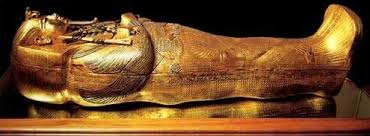
    King TutFor a brief moment imagine in the 20th century that some brilliant archaeologist exploring the pyramids of ancient Egypt had made the discovery of a lifetime: instead of finding the royal sarcophagus of King Tut from just three centuries before King David of Israel, he unearthed an even older tomb of a Pharaoh God-King of the ancient Egypt which dominated their world like a later Rome. hieroglyphsAnd the hieroglyphs read: Pharaoh Moses!
    Even though the fantastic scenario above is pure fiction; in fact, Moses was born into a royal household, raised as a prince of Egypt and could have realistically become the new Pharaoh of Egypt upon the death of the Pharaoh familiar to us in the book of Exodus.

    Had Moses (at age forty) not chosen to identify himself with his Hebrew blood of the line of Egypt’s great savior Joseph, who ruled under an earlier Pharaoh, Moses could just as well have ruled the Egyptian Empire from which he was forced to flee.

    Once comfortable in the household of a King, Moses flees to Midian; he marries, works and has a family. Things are going pretty good again for a middle class Moses in Midian. [Exodus 2]

    Moses names their first son, Gershom, which means, “I have been a sojourner in a foreign land.” Moses has lived a good life for eighty years.

    If we think of our everyday life as a brief journey to a place of which we have only dreamed, then Moses had left the palace of dreams and settled for an ordinary life in a new place. (Even Abraham’s journey did not end in Eden.) Eighty years, a wife and kids, a job, a home… a good life for Moses – and then God finally shows up and says something like, “Go back to Egypt. You, Moses, are headed on an unexpected journey.” (Just like Abraham.)

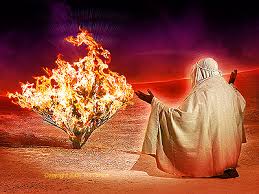
    Moses burning bush “I AM the LORD your God. I have something in mind here for you and your descendants.” (Sound familiar?) [Exodus 3]

    I am the God of thy father, the God of Abraham, the God of Isaac, and the God of Jacob.

    3:6  וַיֹּאמֶר אָנֹכִי אֱלֹהֵי אָבִיךָ אֱלֹהֵי אַבְרָהָם אֱלֹהֵי יִצְחָק וֵאלֹהֵי יַעֲקֹב וַיַּסְתֵּר מֹשֶׁה פָּנָיו כִּי יָרֵא מֵהַבִּיט אֶל־הָאֱלֹהִֽים׃

    ‘elohiym ‘ab ‘elohiym  ‘Abraham ‘elohiym Yitschaq ‘elohiym Ya`aqob

    Before the fire of the LORD in the bush, where elohiym instructs Moses that he is on holy ground, GOD comes to an eighty year old shepherd with instructions.

    How many times has the LORD asked you to do something after you were in the comfortable place?

    Or again, how many times have your own misguided plans brought you to your knees before the LORD asking, ‘Where did I go wrong? What do I do now… Lord? Where do I go with this? Show me the way… please… Lord?’

    And ALL is silent… No answer (even for eighty years). And again we cry out to the LORD.

    And the Lord is faithful in His answer. Yet we do not like it. It is not the ‘comfort’ we expected. In fact, it makes us even more uncomfortable and will require even more faith than we believe possible – faith to ‘believe God’ and have it counted as righteousness.

    +

    Exodus 3: 13 Then Moses said to God, “If I come to the people of Israel and say to them, ‘The God of your fathers has sent me to you,’ and they ask me, ‘What is his name?’ what shall I say to them?”

    14 God said to Moses, “I am who I am.” And he said, “Say this to the people of Israel, ‘I am has sent me to you.’” 15 God also said to Moses, “Say this to the people of Israel, ‘The Lord, the God of your fathers, the God of Abraham, the God of Isaac, and the God of Jacob, has sent me to you.’ This is my name forever, and thus I am to be remembered throughout all generations.

    +

    What next? (Isn’t that always the question from the comfortable place or the house of desperation?) What next, Lord?

    How can the LORD instruct you in His Law of Righteousness unless you are obedient to allow the LORD to lead you to next place of the LORD’s choosing?

    To be continued…