
Introduction to God in a Manger
We glanced at the introduction of Jesus in the Gospels of Mark and John in part 1 of this series. Yesterday in part 2 we examined issues of the virgin birth from the Gospel of Matthew. Today, Christmas, we conclude with scripture from Luke, our most familiar source of the Christmas story.
Immanuel (Hebrew: עִמָּנוּאֵל meaning, “God with us”; also romanized Emmanuel) – Wikipedia
Every biography requires an introduction and the all-important announcement of “God With Us,” the Son of Man born in a manger requires not only an introduction, but a cultural context we can only mention today.
Introduction to the Nativity
The Nativity of Matthew, beginning with the genealogy of Jesus through Joseph and David, examines the Messiah of Israel from a Jewish perspective. Of course, Matthew, John and all of the Disciples were Jewish, as was Jesus.
Mark and Luke were first century gentiles, Greeks, men who recorded the impact of Christ born to save not only Jews from sin, but all who believe.
Luke 1:
1 … a narrative about the events that have been fulfilled among us, just as the original eyewitnesses and servants of the word handed them down to us.
Luke begins his two-part writing, Luke-Acts, with an introduction and overview in Chapter one. Many believe John the Baptist to be the Messiah; therefore Luke introduces John and Jesus as teachers prior to the well-know nativity of chapter 2. Note the same angelic witness.
Gabriel
5 In the days of King Herod of Judea, there was a priest of Abijah’s division named Zechariah… 11 An angel of the Lord appeared to him…
13 But the angel said to him: “Do not be afraid, Zechariah, because your prayer has been heard. Your wife Elizabeth will bear you a son, and you will name him John.
… He will be filled with the Holy Spirit while still in his mother’s womb. … to make ready for the Lord a prepared people.”
19 The angel answered him, “I am Gabriel, who stands in the presence of God, and I was sent to speak to you and tell you this good news.
26 In the sixth month, the angel Gabriel was sent by God to a town in Galilee called Nazareth, 27 to a virgin engaged to a man named Joseph, of the house of David. The virgin’s name was Mary. 28 And the angel came to her and said, “Greetings, favored woman! The Lord is with you.”
1:28 καὶ εἰσελθὼν ὁ ἄγγελος πρὸς αὐτὴν εἶπεν Χαῖρε κεχαριτωμένη ὁ κύριος μετὰ σοῦ εὐλογημένη σὺ ἐν γυναιξίν
Luke 1:28
Name Him Jesus
31 Now listen: You will conceive and give birth to a son, and you will name him Jesus. 32 He will be great and will be called the Son of the Most High, and the Lord God will give him the throne of his father David. 33 He will reign over the house of Jacob forever, and his kingdom will have no end.”
Please do not miss here that Gabriel, an angel of the Lord, comes to a woman, Mary. In most instances of angelic encounters, as was the case with Zechariah, father of John the Baptist, the angel brings the Lord’s message to a man with authority over his wife, family and others.
Translations
Much to consider here, even before the all-too-familiar narrative of the nativity which follows. Much disagreement among Christians based on translations which reinforce various cultural (denominational) beliefs. Consider just one brief passage.
- KJV (English) And the angel came in unto her, and said, Hail, thou that art highly favoured, the Lord is with thee: blessed art thou among women.
- HNV (from Hebrew) Having come in, the angel said to her, “Rejoice, you highly favored one! The Lord is with you. Blessed are you among women!”
- VUL (Latin) et ingressus angelus ad eam dixit have gratia plena Dominus tecum benedicta tu in mulieribus
- Greek listed above for Luke 1:28. Some translations in Latin and the Hebrew Bible come from the Septuagint, with origins in Alexandria, Egypt.
Some versions of the Bible use less-controversial synonyms in some passages and prejudicial word imagery in certain key passages.
Mary – favored woman
And the angel came to her and said, “Greetings, favored woman! The Lord is with you.” [Other mss add Blessed are you among women.]
Luke 1:28 CSB
The angel Gabriel does not say, “Hail Mary,” such as one might say, “Hail Caesar.” The Greek word χαίρω chairō could also be translated: rejoice, be glad, joy, greetings, even God speed or farewell when appropriate. Much like שָׁלוֹם shalom in Hebrew, chairō is simply a greeting of encounter.
Mary’s enduring witness
Luke records Mary’s reaction in verse twenty-nine. How would he know this or details of the rest of this portion of her encounter with angels?
Recall that unlike Joseph, Mary lived into Jesus’ complete life as the Son of Man and along with His brothers became part of the early church after Jesus’ death and resurrection. Therefore Luke would have interviewed Mary and/or those who had known her consistent witness for many years.
30 Then the angel told her: “Do not be afraid, Mary, for you have found favor with God.
- φοβοῦ Μαριάμ – Fear not Mary.
- Do most all who personally encounter God’s angelic messenger not need this comforting assurance?
- Yet what does it mean to have found favor with God?
- εὑρίσκω heuriskō –
- ‘You have found,’ clearly indicates that Mary has been seeking the LORD.
- ‘To come upon after searching:
- to find by enquiry, thought, examination;
- to find out for one’s self.
- ‘To come upon after searching:
- ‘You have found,’ clearly indicates that Mary has been seeking the LORD.
Mary, a young Hebrew virgin betrothed to Joseph, is a worshiper of the LORD and she is a young woman with great faith.
Mary asked the angel, “How can this be, since I have not had sexual relations with a man?” [Lit. since I do not know a man]
Luke 1:34 CSB
Gabriel then told Mary of Jesus’ conception and birth, the birth to be detailed more by Luke in the most familiar nativity of chapter 2 and reveals the distant miracle of her relative Elizabeth, to whom Mary will go as she is with child.
35 The angel replied to her: “The Holy Spirit will come upon you, and the power of the Most High will overshadow you. Therefore, the holy one to be born will be called the Son of God.
The Magnificat – a Hymn of Praise
Mary magnifies or lifts up the Lord for His faithfulness to His faithful ones, much in the same way as Hannah, mother of Samuel, who anointed David.
46 And Mary said:
My soul praises the greatness of the Lord,
and my spirit rejoices in God my Savior,
because he has looked with favor
 on the humble condition of his servant.
 Surely, from now on all generations
 will call me blessed,
because the Mighty One
 has done great things for me,
 and his name is holy.
Luke 1:49 NASB
“For the Mighty One has done great things for me;
And holy is His name.
The Nativity
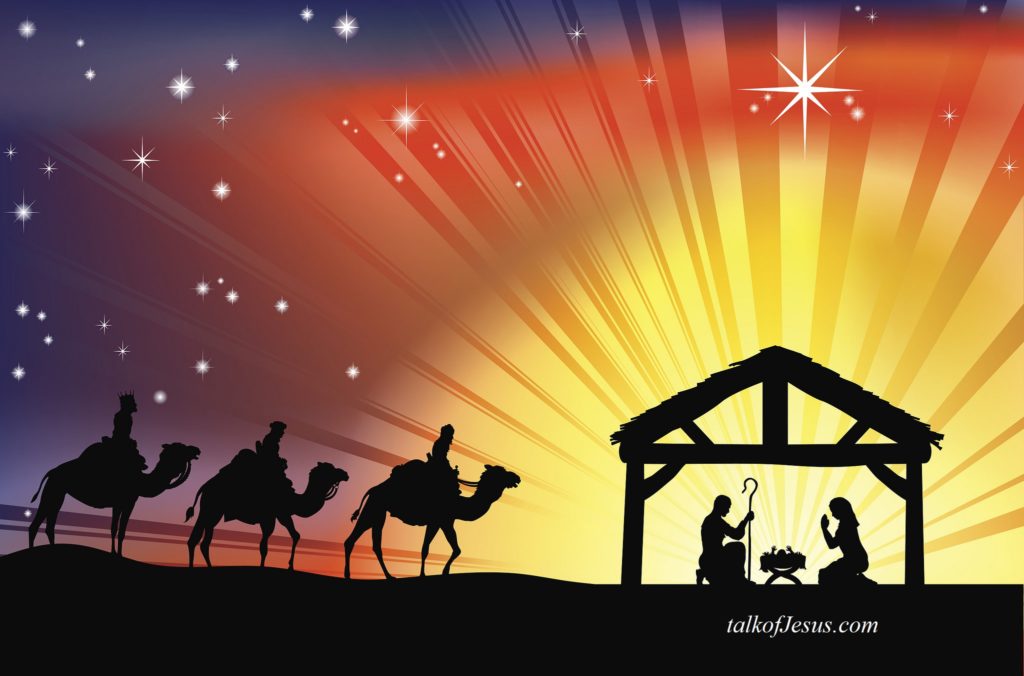
Nativity, Latin nātīvitāt, refers to birth, the place and circumstances of birth, the place of the stars at a time of birth, and most specifically, but not exclusively, refers to the birth of Christ, the Messiah, Jesus.
Luke 2:
And Joseph also went up from Galilee, from the town of Nazareth, to Judea, to the city of David, which is called Bethlehem, because he was of the house and lineage of David, to be registered with Mary, his betrothed, who was with child.
Luke 2:4-5 ESV
A census by order of Rome. Joseph travels to his hometown to register.
While they were there, the time came for her to give birth. Then she gave birth to her firstborn son, and she wrapped him tightly in cloth and laid him in a manger, because there was no guest room available for them.
Luke 2:6-7 CSB
Birth happens (ready or not, irregardless of place) and this lowly humble couple had no place for the Son of God to be born into this world. No reservation and no place fit for a Son of Man, only an animal-filled barn with mangers of hay to feed the donkeys and camels.
We have already heard of other singular events of the Nativity unique to Jesus’ birth. Kings had followed a star to Bethlehem and then brought gifts just for this time and this King of Kings, so humbly born in a manger.
Luke then documents a similar event from the hills just beyond Bethlehem.
Angels and Shepherds
Of course, these very hills had been the place where Samuel had sought out David, the shepherd and youngest of his clan, when the Lord had anointed him King.

And the angel said unto them, Fear not: for, behold, I bring you good tidings of great joy, which shall be to all people.
Luke 2:10-11 KJV
For unto you is born this day in the city of David a Saviour, which is Christ the Lord.
And the angels told these lowly shepherds where and how to find and recognize Jesus in Bethlehem, the baby Son of God in a manger made for lowly animals. Surely some among these Jewish shepherds would have known the prophesy of Micah.
But as for you, Bethlehem Ephrathah,
 Too little to be among the clans of Judah,
 From you One will go forth for Me to be ruler in Israel.
His goings forth are from long ago,
 From the days of eternity.”

Therefore He will give them up until the time
 When she who is in labor has borne a child.
 Then the remainder of His brethren
 Will return to the sons of Israel.

And He will arise and shepherd His flock
 In the strength of the LORD,
 In the majesty of the name of the LORD His God.
 And they will remain,
 Because at that time He will be great
 To the ends of the earth.
Then these faithful keepers of the flocks received yet more confirmation.
A multitude of angels sang
Imagine angels from the sky joining voices with you as their audience!

Glory to God in the highest, and on earth peace, good will toward men.
Luke 2:14 KJV
Amen! Glory to God in the highest, who has sent His Own Son to a manger as a Son of Man, one like a lowly shepherd.
And the shepherds departed their fields to witness and worship the Christ child, their Messiah in a manger. Then they will tell others, perhaps later one will even confirm their witness to Luke.
Recalling the Nativity to others
We do not have here or anywhere in scripture angels worshiping Mary, shepherds worshiping Mary or Kings worshiping Mary. And we do not have Joseph, Mary, shepherds or kings worshiping angels, even Gabriel. These are later idolatries suggested by false shepherds of the church and false prophets.
The LORD IS and the Nativity of Jesus is not His beginning.
Let us witness the redeeming love of God, who came to us in His Own Image in the Person and humility of Christ Jesus. He IS the One we worship, for Jesus IS the Messiah who will save all who believe.
But Mary kept all these things in her mind, pondering them in her heart.
And the shepherds returned, glorifying and praising God for all things which they had heard and seen, as it had been said to them.
Luke 2:19-20 DBY
Keep these things in mind, pondering them in your heart, glorifying God for all things.
Christ is born. The Messiah died for your sins. Christ Jesus will come again.
Incarnate in a manger in Bethlehem; crucified on a Cross at Calvary, risen from a tomb in Judea; witnessed by thousands, risen into the clouds to return again…
Jesus IS, with God the Father and the Holy Spirit, the beginning and end.
Amen,
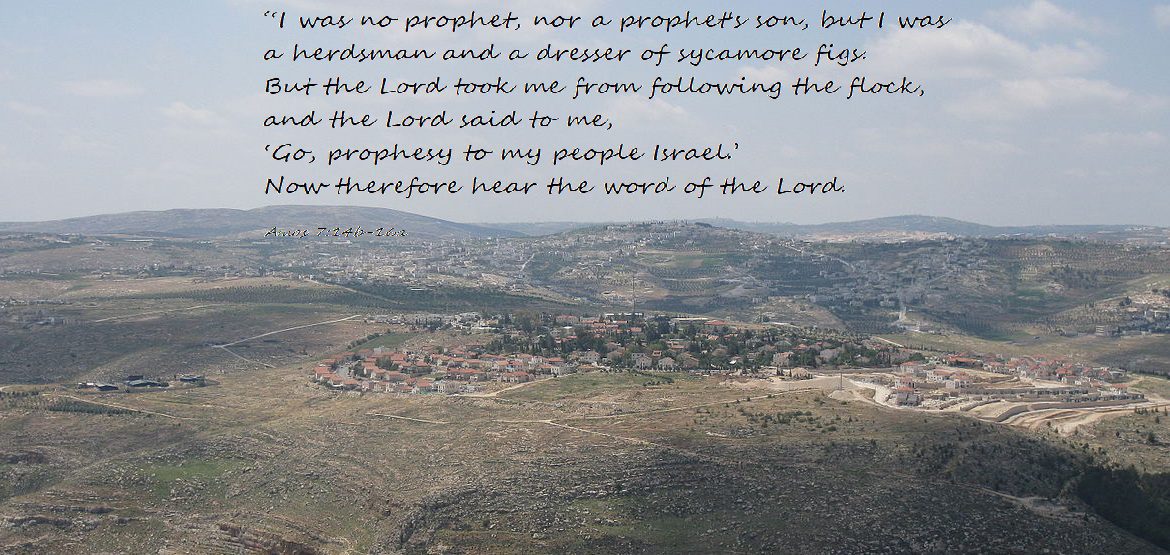
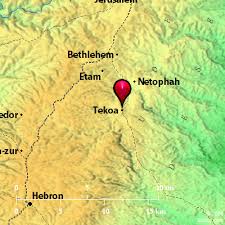 Only Amos, a keeper of sheep in these same hills lived not only prior to the nativity of Christ, but even before the fall of Israel and Judah.