Tag: news

  • JOHN 2020 Good News for A.D. 2020

    JOHN 2020 Good News for A.D. 2020

    Intro to the Gospel of John

    IN THE BEGINNING: λόγος logos

    Intro to talk of Jesus .com

    in A. D. 2020

    talk of Jesus .com shared the Gospel of John

    in the context of A.D. 90, with application to A.D. 2020,

    rather than chronologically, culturally or by chapter & verse..

    ..while during recent months:
    • some sought to stream the stage of worship
    • some sent seeker-friendly scripture into our homes
    • some church communities disintegrated while others diminished & distanced (like our 2020 remote office meetings complete with slides).

    To review the Gospel of John, simply click on any link in the outline below & it will open in a new window.

    Roger – author of A.D. 2020 series on the Gospel of John

    I hope you were blessed by the secure links to reliable sites for further study of Scripture, as well as insight into the 1st century church of John’s Gospel (written ~A.D.- 90).

    Scripture encourages us to a more mature faith.


    John’s Prologue – Good News!

    IN THE BEGINNING was the Word, and the Word was with God, and the Word was God. He was in the beginning with God.

    ALL THINGS came into being through Him, and apart from Him not even one thing came into being that has come into being. In Him was life, and the life was the Light of

    MANKIND.

    And the Light shines in the darkness, and the darkness did not grasp it.

    14 And the Word became flesh, and dwelt among us; and we saw His glory, glory as of the only Son from the Father, full of grace and truth.

    talkofJesus.com Again Jesus said, "Follow Me."

    No one has seen God at any time; the only begotten God [Son] who is in the bosom of the Father, He has explained Him.

    John 1:18 NASB

    The Book of the Prologue

    John’s Prologue [1:1-18], from which the Apostle next proceeds to the testimony of John the Baptist and the Messiah’s calling of the Twelve, states many important theological themes & along with his Epilogue [21:1-25 {linked below}] provides additional depth of purpose of John’s Gospel.

    John’s Prologue & Epilogue

    “Follow Me

    In A.D. 2020, this is where we began our deep dive into the Good News of John.

    Signs – Jesus IS the Messiah
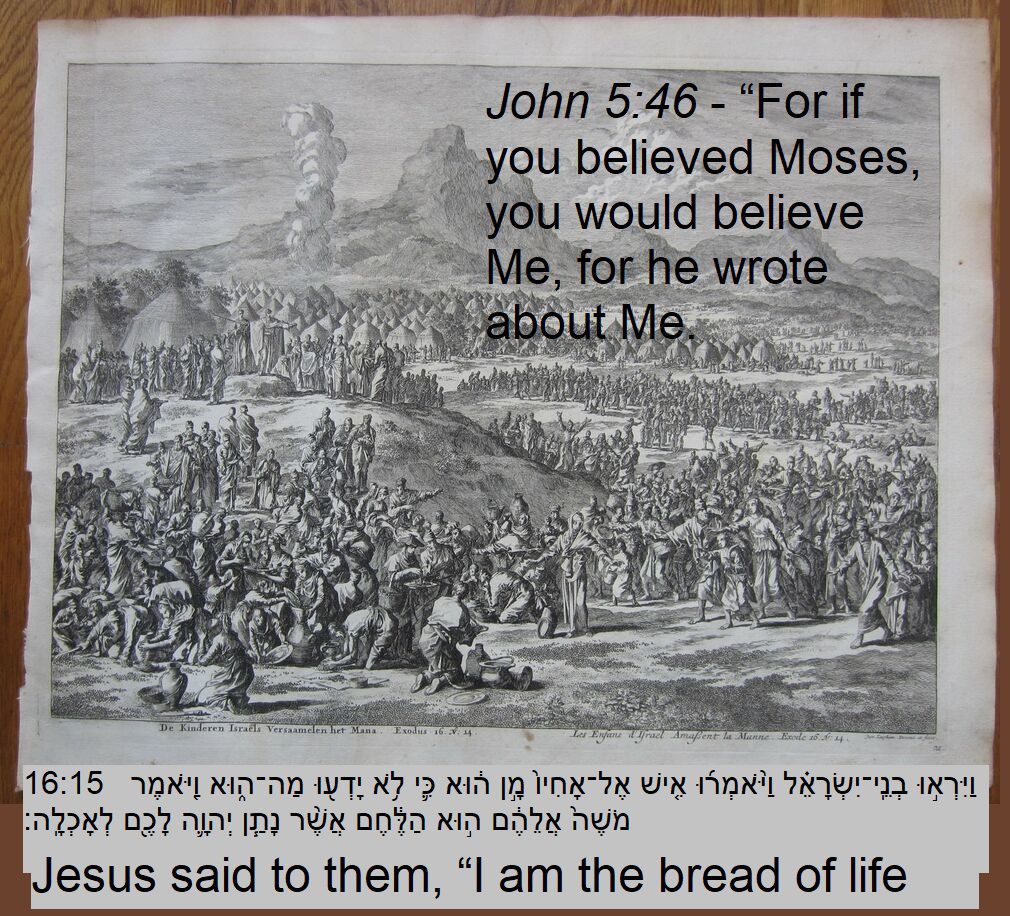
    painting of Hebrews in the wi

    Unless the Father draws you – Signs

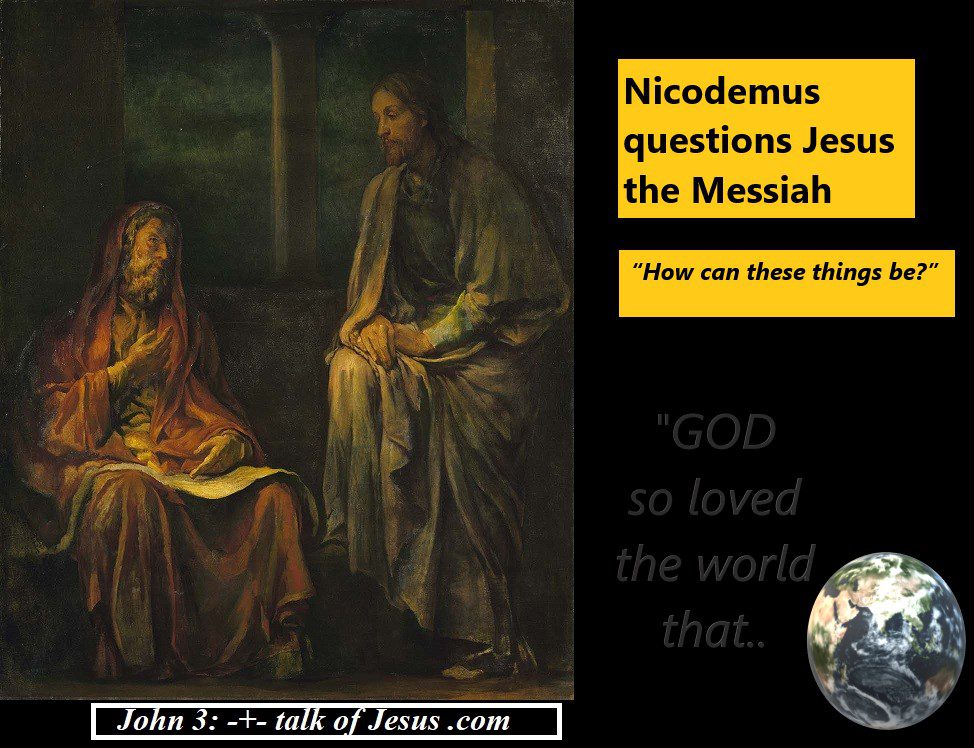
    John 3: “Rabbi, we know that You have come from God as a teacher; for no one can do these signs that You do unless God is with him.” …

    Teachings of the Lord Jesus Christ

    Gospel of John

    “Behold! The Lamb of God who takes away the sin of the world! – John 1:29b

    As Jesus passed by, He saw a man who had been blind from birth. – John 9:1

    Are you greater than our father Abraham who died? And the prophets died. Who do you claim to be?” – John 8:53

    “But you do not believe because you are not of My sheep. My sheep hear My voice, and I know them, and they follow Me; and I give eternal life to them, and they will never perish; and no one will snatch them out of My hand. – John 10:26-28

    Jesus said to her, “Your brother will rise from the dead.” .. “I am the resurrection and the life; the one who believes in Me will live, even if he dies, and everyone who lives and believes in Me will never die. Do you believe this?” – John 11:23,25

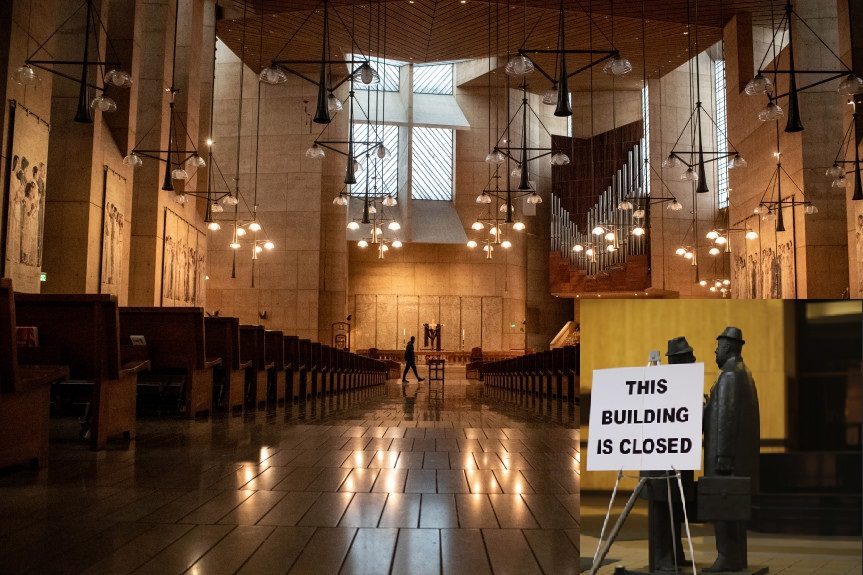
    two men in discussion behind this building is closes sign in a large church

    The Hour Is Come

    “Indeed, an hour is coming, and has come, when each of you will be scattered to his own home..

    .. You will have suffering in this world. Be courageous! I have conquered the world.”

    • John 16:32-34 excerpt CSB
    • “Take heart,” the Lord Jesus encourages disciples, I have overcome the world.”

    And many other signs truly did Jesus in the presence of his disciples, which are not written in this book:

    John 20:20 KJV

    Unrelenting Bad NEWS of A.D. 2020

    What must I do with the GOOD NEWS

    of Jesus Christ?

    Good News for A.D. 2020 – A.D. ∞

    Hear all the unrelenting bad news of yesterday or today.

    For followers of Jesus, His death diminished life’s hope in eternal life; that is until the Gospel of the Lord’s resurrection reached the eyes and ears and touch of His dearly beloved friends.

    John and the Disciples witnessed the Lord Jesus in His Risen Flesh many times after His resurrection.
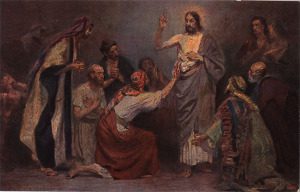
    “Peace be with you.”

    And when He had said this, He showed them both His hands and His side. The disciples then rejoiced when they saw the Lord.

    John 20:20

    Their sorrow had turned into joy and so must ours; for in Christ Jesus his disciples of every generation have eternal life through His sacrifice for our sins. This is our Gospel, His Good News to those who would believe.

    NEWS of A.D. 2021

    SEE what follows JOHN 2020 in JOHN 2021.

    “Peace to you,” yet also a command of the risen Christ Jesus.

    & without Him:

    EXPECT MORE BAD NEWS
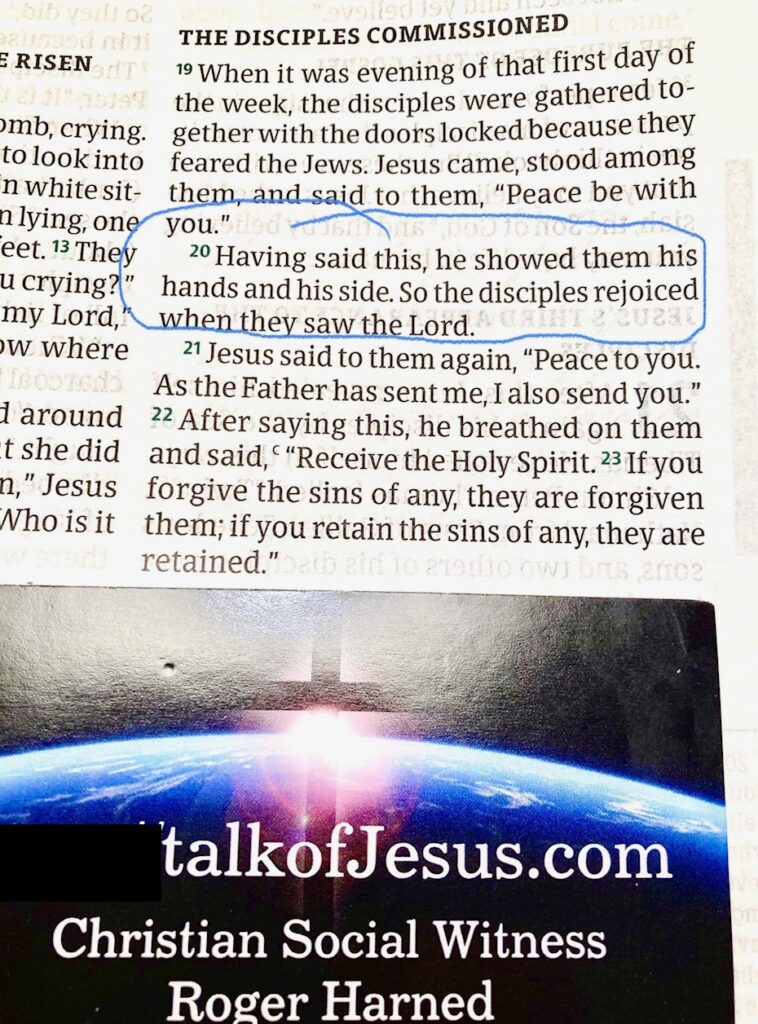
    John 20:20

    John’s Epilogue

    John 20:30 Jesus performed many other signs in the presence of his disciples that are not written in this book.

    But these are written so that you may believe that Jesus is the Messiah, the Son of God, and that by believing you may have life in his name.

    John 20:21 CSB

    I pray that the Lord has blessed you through the Gospel of John in A.D. 2020

    Roger – Roger@talkofJesus.com
    May our Lord Jesus Christ 
    draw you into His grace, 
    giving you new hope of Eternal Life
    in the YEAR OF OUR LORD 2021,
    in the Name of the Father and the Son and the Holy Spirit,
    AMEN.

  • Rumors of Life & Death

    Rumors of Life & Death

    Reporters of News

    And this rumour of him went forth throughout all Judaea, and throughout all the region round about.

    Gospel of Luke 7:17 – KJV

    Sojourners become clarions of news to uninformed ears in new places from the places where they have witnessed life.

    The ‘rumour‘ to which the Gospel-writer Luke refers (above) is Jesus’ raising a young man from his coffin along his own funeral procession in Nain in remote Galilee. Other English translations of the same Greek word [λόγος] use “report.”

    When we return to John’s Gospel (Good News) we will encounter such reports again, some stories which veer from the truth.

    Good News/Bad News: True or False?

    The Disciples who traveled with Jesus from town to town reported the Good News of Jesus the Messiah of Israel to many who had not heard in places distant from the events they had witnessed. Reliable reports from other witnesses also reached the ears of thousands who had not yet seen Jesus in Person.

    The four written NEWS accounts of JESUS CHRIST are not the only news of the Savior. Many reports are oral, even many first-hand stories from witnesses to Jesus’ many miraculous events recorded by the Apostles.

    Picture the Apostles after Jesus’ death and resurrection as reporters and add to their number every saint of the Church who consequently believed their report of the Lord Jesus Christ, then you may realize why John and others had to address false reports of their time.

    While reading the Gospels we discover many who reject the “Good News” of Jesus which challenges one or more of their earthly embraces of sin. Many reject God and refuse to acknowledge or let go of their sins.

    Some will believe in anything in order to deny the Truth.

    Roger Harned – talk of Jesus .com

    All the REPORTERS of Jesus had to be taken at face value for their rumors (stories) of the Messiah. Those who did not witness an event had to ask themselves the same questions we would ask today.

    • Is this even possible?
    • Is their report TRUE or FALSE in some way?
    • If it is true, is this GOOD NEWS or BAD NEWS for me?
    • How should I react? (What must I do?)
    • What is my response to this NEWS to others who have not heard?

    Brief Vitae of the Good News Reporters

    As mentioned previously in Witnesses to Jesus Risen! John and the Apostles continue to report their GOSPEL to others until the end of their lives and John writes to some who have witnessed even more miracles than he reports in his Gospel.

    Briefly from our Gospel archives take a look at these dates of the reports.

    • Jesus was crucified around the year AD 30
    • John Mark’s Gospel – before AD 49; martyred AD 68
    • Matthew’s Gospel – as early as AD 50, before martyrdom ~AD 60
    • the physician Luke’s Gospel/Acts – AD 60-61, prior to the great persecution that began under Nero in A.D. 64; Luke likely martyred in AD 84
    • John writes his Gospel to the churches after AD 85 [~AD 90-100]
    • 2nd c. AD – many Church fathers, disciples of John, Peter & others, testify to the truth of their Gospels and oppose false reports by false teachers.

    Countering False Reports

    So this rumor spread to the brothers and sisters that this disciple would not die. Yet Jesus did not tell him that he would not die, but, “If I want him to remain until I come, what is that to you? ”

    John 21:23 CSB

    John 21:

    Recall from John’s previous report [Witnesses to Jesus Risen! – Peter] of a third time they encountered Jesus after His resurrection:

    5 So Jesus said to them, “Children, you do not have any fish to eat, do you?” .. 7 Therefore that disciple whom Jesus loved said to Peter, “It is the Lord!”

    • Peter enthusiastically dove into the water and swam to meet Jesus on shore before the other Disciples came onshore in a boat filled with fish.
    • Simon Peter and Jesus have a conversation about feeding His sheep and Simon hesitates in his answers to the Lord (our Shepherd).
    • Jesus asks:
      • “Simon, son of John, do you agapaō Me more than these?” then, “Simon, son of John, do you agapaō Me? and finally,
      • “Simon, son of John, do you phileō Me?”
    • Peter’s hesitates in answering Jesus call to agapaō and each time confirming that he loves Him (phileō differing slightly in meaning).
    • The Lord commands him with some subtlety after each response:
      1. Tend My lambs.
      2. Shepherd My sheep.
      3. Tend My sheep.

    And to the reader knowing that Peter has already died for his Lord, (Peter’s dearly departed friend) John offers an explanation.

    17 .. Peter was hurt because He said to him the third time, “Do you love Me?” And he said to Him, “Lord, You know all things; You know that I love You..

    Good News, Bad News

    John gives the reader some ‘bad news,’ which is no longer NEWS to most and the ‘good news,’ which the other Apostles also witnessed. (Most of them had also died for their witness of the risen Christ Jesus!)

    So the rumor spread among the community of believer that this disciple wouldn’t die.

    Rumor vs. TRUTH

    • Who said it?
    • What is the RUMOR?
    • Where were they when it happened?
    • When might this have taken place?
    • Why would your NEWS source tell you?
    • How does this impact you?

    WHO DO YOU BELIEVE?

    As the last surviving Apostle, John witnesses the Good News of Jesus Christ and His resurrection for decades!

    What happens when a rumor creates a myth short of truth?

    This would happen later when the Church tells stories not supported by Scripture.

    When the saying (or story or myth) multiplies, then eventually encounters truth what most certainly will happen? The rumor is crushed and faith along with it (when the aging Apostle dies).

    And remember, regardless of when or how the saying had started, it has already been around for a time since the original witness is some fifty years before John writes his Gospel truth.

    Many disciples of The Way and saints of the church might easily elevate John (or for that matter, Simon Peter, other Apostles or even family of Jesus) to glory and worship due only the LORD.

    John’s simple approach to false witness

    The always esteemed and ever truthful Disciple does two things:

    1. John states the false witness (translated: saying, rumor, story)
    2. He refutes it by his own authoritative true witness.

    WHO DO YOU BELIEVE? It’s as simple as that.

    The incident in question involves what JESUS said to Simon Peter. Only six other Disciples including John witness it first hand. So John states:

    • 21:23 Then went this saying abroad among the brethren, that that disciple should not die:
    • yet Jesus said not unto him, He shall not die;
      • (FALSE rumor – John categorically states: – Jesus said NOT)
    • but,
      • (here is the truth I witnessed, says John)
    • [Jesus said ..],
      • If I will that he tarry till I come, what is that to thee? [KJV] or
    • “If I want him to remain until I come, what is that to you?” – NASB

    The Disciple by quoting Jesus refutes the rumor of John’s alleged immortality told in this story circulating among early Christians.

    John squashes this rumor before it can multiply into false teaching which will cause us to doubt the ‘Gospel Truth.’

    His own witness, true to facts unknown through rumor, states what happened (decades ago):

    • 20 Peter turned around and saw the disciple whom Jesus loved following them—the one who also had leaned back on His chest at the supper and said, “Lord, who is the one who is betraying You?”
    • So Peter, upon seeing him, said to Jesus, “Lord, and what about this man?”
    • Jesus said to him, “If I want him to remain until I come, what is that to you? You follow Me!”
      • Peter turned around, John was following him and Jesus.
      • Peter asked the Lord about John, because Jesus had just told Peter:

    18b “.. when you grow old, you will stretch out your hands and someone else will put your belt on you, and bring you where you do not want to go.”

    • John tells the reader, who likely knows of Peter’s crucifixion, why Jesus said this.
    • After having refuted the rumor with the truth, John puts his seal on the whole truth of restating the ‘story.’

    This is the disciple who is testifying about these things and wrote these things, and we know that his testimony is true.

    John 21:24 NASB
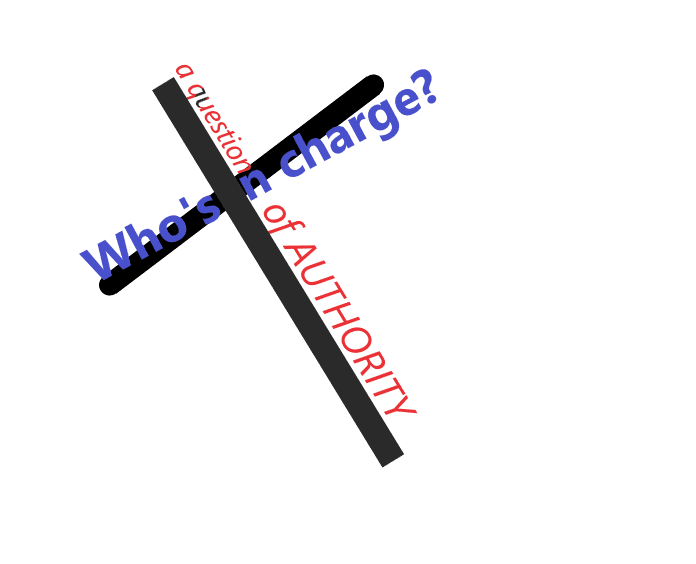
    cross words Who's in charge? and a question of Authority

    John’s closing is comparable to Paul writing, “I sign this in my own hand.” At stake is the Authority & Truth of the Lord Jesus

    Rather than adding questions on this section of John,
    I leave you to question Truth vs. fiction.
    Please click PG 2 

    Pages: 1 2

  • The Tongue is a Fire! – Politics

    The Tongue is a Fire! – Politics

    In politics bitter tongues spew hatred from each side over the airwaves and into our devices. Broadcasters claim a ‘balanced,’ supposedly unbiased approach, while we ask: ‘What now? Will this never end?’

    Oh, the hateful words of a tongue on fire! Media broadcasts them every day, sometimes even minute by minute.

    Breaking News over BBC background logo

    BREAKING NEWS! (Politics, again)

    Media and now #socialmedia broadcast fiery furious tongue-lashings available on demand from any public figure. Winning politicians hope to burn their opponent with their own words and rally opposition. Who might join their cause of shouted hatred?

    Our present political battlefield seems hopeless to those beaten by the constant plummeting of hellacious accusation and diffident denial. The politics of the day of course is nothing new under the sun, as a once-great leader long ago lamented.

    Never discuss religion or politics

    In fact history of the ages will confirm assassinations to ascension, misleading public proclamations and attempts of cleansing lands of religious and political opponents.

    I don't make jokes, just watch government - Will Rogers quote

    We can make light of it all (and sometimes should), but government always gets out of control.

    Presidents, senators, representatives, prime ministers, premiers, governors, kings, queens, princes, dictators and despots – ALL will always have critics (and often they should). But careful what your tongue speaks against those in power and watch each touch of your inciting visual indictment pointing a finger directly into the eyes of the victimized masses.

    Many have given up hope for any sane solution to this country’s current problems. Our current lack of civility in the media marketplace stems not from disagreement, but from frustration.

    Yet I ask, which country do I speak of and which troublesome time now or in our past?

    great thieves in public office quote of Aesop
    Aesop – 5th c. B.C. Classic quote about politics

    One of the penalties for refusing to participate in politics is that you end up being governed by your inferiors.

    Plato – Greece 4th c. B.C.
    1984 MINISTRY OF TRUTH

    In our age there is no such thing as ‘keeping out of politics.’ All issues are political issues, and politics itself is a mass of lies, evasions, folly, hatred and schizophrenia.

    George Orwell – U.S.A. A.D. 1946
    Washington DC mall

    Preparation for HATE WEEK

    The Ministry of Truth — Minitrue, in Newspeak — was startlingly different from any other object in sight. It was an enormous pyramidal structure of glittering white concrete, soaring up, terrace after terrace, 300 metres into the air. – 1984 ch. 1 – George Orwell

    & let’s not ignore the politics of religion

    Has the tongue been condemned for truth or held mute for silence?

    Yes, of course; again and again. Controversy is no stranger to politics of power or conflicts of religious belief.

    Occasionally a man or woman of principle will prevail; but more often than not, the sharp tongues of adamant belief will ignite shouts of suspicion from crowds bent on justice.

    Ignorance ignores mercy and truth in deference to hell-bent justice shouted from the masses.

    Greece: 4th c. B.C.

    Socrates – Philosopher opposed to our gods

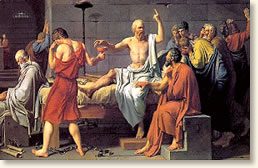
    Scene of Socrates taking the cup of Hemlock after being sentenced to death by the court in Athens
    399 B.C. Socrates sentenced to death

    399 B.C.

    Socrates’ accusers cited two ‘impious’ acts: ‘failing to acknowledge the gods that the city acknowledges’ and ‘introducing new deities.’

    A majority of the 501 dikasts (Athenian citizens chosen by lot to serve as jurors) voted to convict him. Consistent with common practice, the dikasts determined Socrates’ punishment with another vote. Socrates was ultimately sentenced to death by drinking a hemlock-based liquid.

    It’s the very kind of accusation which takes place to this day.

    Authoritative secular leaders or tyrannical religious leaders decide justice for those who oppose their iron-fisted rule. So one man or a few in power determine justice and death of men of popular opposition.

    Classic Greek Democracy & Culture of Religion

    Life in Athens’ 4th c. B.C “Golden Age.”

    • Greek influence northern rim of the Mediterranean Asia Minor to the Italian peninsula
    • only men could be citizens
    • only upper-class males (aristocracy) enjoyed a formal education
    • 25% population made up of slaves, usually prisoners captured during the many clashes that extended Greek influence overseas.
    • Slaves provided much of the manpower of a burgeoning economy
    • 12 Olympian gods & goddesses + a whole society of lesser gods, demigods, mythic creatures, immortals, plus godly entities that existed before the Olympians such as the Titans.

    Politics behind the scenes of Socrates’ trial.

    Another commentator investigating the motives behind Socrates’ “suicide” (which was far from voluntary) states:

    • Socrates was 70 years old and familiar to most Athenians.
    • His anti-democratic views had turned many in the city against him. [politics]
    • accused of “refusing to recognize the gods recognized by the state” [religion] and of “corrupting the youth.” [politics]
    • Two of his students had twice briefly overthrown the democratic government of the city,
      • instituting a reign of terror in which thousands of citizens [aristocracy] were deprived of their property
      • and either banished from the city or executed.
    • Socrates was found guilty by a vote of 280 to 220.

    It’s a house divided or a city-state, if you prefer, divided by politics with religion and corruption of culture as an excuse.

    Socrates: GUILTY by a poll of the leading citizens

    56% voting Guilty & 44% (4 of every 10 men) voting Not Guilty.

    Justice by majority meant death to the philosopher so the accusers could blame Socrates for their problems. Who shall we blame for our?

    Jerusalem, A.D. 1st. century Politics

    If we took time to dig into the archeology of the time between Socrates in ancient Athens and Jesus in first century Jerusalem we would discover politics, not justice. Many similarities between the complex politics of their times four centuries apart point to true injustice of the ambitions of man.

    You would discover more than just rebellion, but war between east and west. Babylon and Persia to the east, Egypt to the south and Rome to the west all had roles in the philosophies, culture and religions imported into the place still known for controversy. The city and state strategically buffering these powers in the centuries before Jesus: Jerusalem in Judea of Palestine (named variously by capturing powers.

    How often we overlook context of the past while judging the present. Think back four centuries from this present trouble to the 1600’s and world power and politics would look very different, having undergone many violent political upheavals.

    Is 1st c. Jerusalem so different?

    Hate Week in Jerusalem is about to become a week of hypocritical religion meeting with the brokers of political power to preserve a captive land. Israel is no more; but captive spoil, vassal states under the rule of their Roman rulers. Their local political king must negotiate with political religious parties to maintain a delicate peace of Rome in a city ripe for rebellion of crowds in the name of God.

    The holiest time of pilgrimage brings thousands into a Jerusalem guarded by Roman troops. The only political card Jews held what that of helping Rome keep the peace for the sake of their considerable trade and commerce. Money flowed into the city each year at Passover and on into Roman coffers which paid their oppressing legions and built the ports and roads of Roman ambition.

    Into this very visible public square of the Temple courtyard and markets, enters Jesus.

    statue of Roman god mars at Louvre in Paris
    Mars – Roman god of war

    Greece had idols and gods for everything. A Roman peace offered to its captives promoted the ancient greek culture. And like the greeks, Rome worshiped many gods, idols of culture.

    • 67 different gods and goddesses in the Roman pantheon, and plenty more demigods, each ruling over a particular dominion and watching over particular professions and classes of people.

    Like Plato four centuries earlier, Jesus’ reputation precedes Him.

    Unlike Plato, Jesus is only thirty years old. Yet He acts more like a king than a boisterous rebel. This Jesus, with both reputation and crowds following Him to the gate of Jerusalem is a man to be watched.

    a Lamb of Sacrifice for Justice

    The Gospel (Good News) of John, chapter 11:

    47 Then the chief priests and the Pharisees gathered a council and said, “What shall we do? For this Man works many signs. If we let Him alone like this, everyone will believe in Him, and the Romans will come and take away both our place and nation.”

    And one of them, Caiaphas, being high priest that year, said to them,

    “You know nothing at all, nor do you consider that it is expedient for us that one man should die for the people, and not that the whole nation should perish.”

    John 11:49b-50 NKJV

    53 Then, from that day on, they plotted to put Him to death.

    To be continued...