Tag: paul

  • Christ’s Contractor in Corinth

    Christ’s Contractor in Corinth

    You are God’s building

    According to the grace of God which was given to me, like a wise master builder I laid a foundation,

    and another is building on it.

    But each man must be careful how he builds on it.

    1 Corinthians 3:10 LSB

    The Architect of the Corinthian Church

    ἀρχιτέκτων – architektōn

    a master builder, an architect, the superintendent in the erection of buildings

    APOSTLES, all ministers of the Lord Jesus, Paul points out to the Corinthians, each have different roles at various times in the process of growing the church and your faith.

    So why do you have divisions claiming that you belong to that powerful preacher Apollos OR Cephas of the Twelve OR Paul?

    The apostle’s approach to these Hellenists of Corinth:

    I am just an architect with the blueprint for you to use as you grow in your faith and as a church. Give all attention to the Foundation.

    Who is building on it?

    Apollos. AND other ministers to the Corinthians.

    Paul laid a foundation. It is a picture familiar to Greeks not only of buildings and walls, but a great metaphor for first principles establishing truth.

    I have laid the foundation, and another builds on it.

    1 Corinthians 1:10b NKJV

    The Master Builder OR Architect is no more important than those laborers who continue to build on the foundation. The Architect or MASTER builder here issues instructions to the laborers similar to what any superintendent of an important project of work might do:

    But let each one take heed how he builds on it.

    1 Corinthians 1:10c NKJV

    But whoever is building on this foundation must be very careful.

    1 Corinthians 1:10c NLT

    The ARCHITECT (Paul) writes a caution using yet another metaphor for the first principles of building a CHURCH.

    In fact, Paul points out, the foundation has already been built!

    For no other foundation can anyone lay than that which is laid, which is Jesus Christ.

    Paul’s first letter to the Corinthians 3:11 NKJV
    Such imagery once familiar through worship Hymns with a Scriptural foundation, i.e. "The Church's One Foundation" [is Jesus Christ our Lord].
    Corinthian Greek columns with Jesus Christ inscribed at the foundation and wise architect (in Greek) imprinted above.

    the Day shall declare it

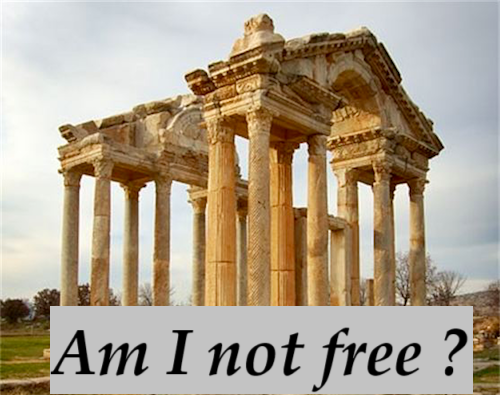
    The Corinthians and others of the Hellenist Aegean walked in ruins of great temples erected to many gods — glorious buildings of the Macedonian Alexander conquered, destroyed and being rebuilt by a distant Rome.

    from temples of ancient Corinth Corinthian-style columns

    Paul puts our current work on the building (be it a temple, church building or the Church itself) into the context were WE are its assigned builders.

    Now if anyone builds on this foundation with gold, silver, precious stones, wood, hay, straw, each one’s work will become clear..

    Do you see that every LABORER'S work matters here when building on the Great foundation before the work is finished (by many others)?

    If anyone’s work which he has built on it endures, he will receive a reward.

    1 Corinthians 1:14 NKJV

    The Wages of Work for Christ

    REWARD! (Perhaps you think of it as a ‘BONUS!’)

    YOU do not receive a bonus reward until completion of the work. What if the building is not finished before your death?

    • What good is any reward for a lowly minister of the Corinthians building a church which will only be completed AFTER our death and then destroyed by others?

    Reward – μισθός – misthos

    dues paid for work, wages, hire

    Okay, I get that; maybe a bigger wage for some work.

    reward: used of the fruit naturally resulting from toils and endeavours

    MORE: Pay attention here, and then we will get back to Paul's text.
    1. in both senses, rewards and punishments
    2. of the rewards which God bestows, or will bestow, upon good deeds and endeavours
    3. of punishments

    Paul has already reminded us of this two-sided coin of God’s reward for our labor.

    It is the SAME REWARD to which the apostle points for laborers in the field.

    each man’s work will be revealed.

    For the Day will declare it, because it is revealed in fire;

    and the fire itself will test what sort of work each man’s work is.

    1 Corinthians 3:13 HNV
    and the flip-side of the coin of REWARD:

    If any man’s work is burned, he will suffer loss, but he himself will be saved, but as through fire.

    Picture of the Completed Church

    If anyone’s work which he has built on it endures, he will receive a reward..

    Do you not know that you are the temple of God and that the Spirit of God dwells in you?

    1 Corinthians 3:14,16 NKJV
    Corinthian Greek columns with Jesus Christ inscribed at the foundation and wise architect (in Greek) imprinted above.

    If anyone defiles the temple of God, God will destroy him. For the temple of God is holy, which temple you are.

    Let no man glory in men

    Do you recall the divisions of the Corinthians caused by their loyalty to a preacher?

    18 Let no one deceive himself.

    If anyone among you seems to be wise in this age, let him become a fool that he may become wise.

    19 For the wisdom of this world is foolishness with God.


    Is he writing to me?

    Paul suggests that “anyone among you” Corinthians may seem like the wisdom-worshiping Hellenist philosophers of ancient Greece (330-63 B.C.). Of course the present age belongs to Rome governing Corinth for more than a century now.

    And counter to Greek culture Paul advises, “let him become a fool.”

    What we of this Common Era age may not understand is that the wise [sophos] in this world are not entirely exact opposites of fools [μωρός] which suggests a root word [mystērion] which means:

    • a hidden thing, secret, mystery
      • generally mysteries, religious secrets, confided only to the initiated and not to ordinary mortals

    Have an open mind to the wisdom of GOD.

    Let no man deceive himself. KJV


    Paul has already written:

    But we speak the wisdom of God in a mystery, the hidden wisdom which God ordained before the ages for our glory..

    1 Corinthians 2:7 NKJV

    Avoid Worldly Wisdom

    Now the Paul writes, as the Apostle often does, quoting Scripture:

    For it is written,

    “He catches the wise in their own craftiness”; quoting Job:

    He catches the wise in their craftiness,

    and sweeps away the plans of the cunning.

    Job 5:13 BSB

    20 and again, “The Lord knows the thoughts of the wise, that they are futile,” recalling Psalm 94:11.

    Psalm 94:
    1 O Lord God, to whom vengeance belongs—
    O God, to whom vengeance belongs, shine forth!
    2 Rise up, O Judge of the earth;
    Render punishment to the proud.
    3 Lord, how long will the wicked,
    How long will the wicked triumph?

    8 Understand, you senseless among the people;
    And you fools, when will you be wise?
    9 He who planted the ear, shall He not hear?
    He who formed the eye, shall He not see?
    10 He who instructs the nations, shall He not correct,
    He who teaches man knowledge?
    11 The Lord knows the thoughts of man,
    That they are futile.

    Had Paul possibly previously taught the hymn of PSALM 94 to the Corinthians?

    NO Boasting in anthrōpos

    So then, no more boasting about human leaders! All things are yours..

    1 Corinthians 3:21 NIV
    • So let no one boast..
    • Therefore let no man glory in men.

    It’s all the same word: καυχάομαι – kauchaomai

     glory (23x), boast (8x), rejoice (4x), make boast (2x), joy (1x).

    Again, Paul has already introduced the all-important dichotomy between giving GOD glory (boasting in God) and giving various mortal men, even church leaders such glory.

    • that no flesh should glory in His presence. – 1 Corinthians 1:29 KJV
    • therefore, as it is written, “Let him who boasts, boast of the Lord.” – 1 Corinthians 1:31 NIV

    Human Leaders

    ἄνθρωποςanthrōpos

    DIVISIONS, Paul asks?

    Do you GLORY over mere men like your PREACHER or some APOSTLE?

    31X Paul speaks of men [anthrōpos] in 1 Corinthians, the most in any Epistle.

    And what does the Apostle say?

    For the foolishness of God is wiser than human wisdom, and the weakness of God is stronger than human strength.

    “What no eye has seen, what no ear has heard, and what no human mind has conceived”— the things God has prepared for those who love him—

    1 Corinthians 1:25 NIV, 2:9b NIV

    3:22 whether Paul or Apollos or Cephas, or the world or life or death, or things present or things to come—all are yours. 23 And you are Christ’s, and Christ is God’s.

    Let a man so consider us, as servants of Christ and stewards of the mysteries of God.

    1 Corinthians 4:1 NKJV

    This, then, is how you ought to regard us: as servants of Christ and as those entrusted with the mysteries God has revealed.

    1 Cor 4:1 NIV


    Comment on Scripture – Share the Gospel


  • A First Letter to the Corinthians Intro

    A First Letter to the Corinthians Intro

    in the year of our Lord ano Domini 55 [A.D. 55]

    & in the context of the culture of Corinth


    Intro

    PREVIOUSLY in this Talk of Jesus series from CHURCH LETTERS - IS HE WRITING TO ME? we have glanced at a few of Paul's LETTERS (Epistles) to the Church written during his just completed missionary journeys. 

    TODAY we continue with a brief look back at more letters already sent to the churches.
    And God wrought special miracles by the hands of Paul: Acts 19:11 ASV graphic map of Third Missionary Journey of Paul

    WHAT THE CHURCH HAS READ SO FAR:

    Just a reminder that all dates from reliable sources may vary but are used for chronological context only.
    • A.D. 49 – JAMES, the half-brother of Jesus and leader of the church in Jerusalem writes his LETTER
      • James also sends out a letter to the churches concerning gentiles from the Council in Jerusalem.
    • A.D. 49 – Paul writes his letter to the Galatians (actually, several new churches in Galatia)
    • A.D. 50 – 1 THESSALONIANS
    • A.D. 51 – 2 THESSALONIANS

    • during the A.D. 50’s or A.D. 60’s (actual date unknown) – The GOSPEL OF MARK

    1:1 Ἀρχὴ τοῦ εὐαγγελίου Ἰησοῦ Χριστοῦ υἱοῦ τοῦ θεοῦ

    The beginning of the gospel of Jesus Christ, the Son of God – Mark 1:1

    Consider the possibility that parts of the Gospel of John Mark, who had accompanied his uncle Barnabas and the Apostle Paul to Cypress, MAY HAVE been known even in Corinth where Paul has already travelled and whose FIRST LETTER we are about to examine.

    The GREAT COMMISSION of JESUS CHRIST to the CHURCH is recorded in the Gospel of Mark 16:15

    view of earth from moon

    1 Corinthians:

    This epistle was most likely written in the first half of A.D. 55 from Ephesus (16:8, 9, 19) while Paul was on his third missionary journey. The apostle intended to remain on at Ephesus to complete his 3 year stay (Acts 20:31) until Pentecost (May/June) A.D. 55 (16:8). Then he hoped to winter (A.D. 55–56) at Corinth (16:6; Acts 20:2). His departure for Corinth was anticipated even as he wrote (4:19; 11:34; 16:8).

    John MacArthur :: Bible Introductions – 1 Corinthians

    Paulus vocatus apostolus Christi Iesu per voluntatem Dei et Sosthenes frater

    1 Corinthios (1 Corinthians) 1 :: Latin Vulgate (VUL)

    in the context of the culture of Corinth

    CORINTH, ACHAIA is ROMAN; not Macedonian (as in the former Empire of Alexander the Great).

    Neither is the large city of Corinth simply Greek, as in ‘ancient Greece’ with ancient Athens whose glory had long ago been reduced to ruins.

    In 146 BC, the battle of Corinth signified a defining moment in the history of ancient Greece. Situated on the narrow strip of land connecting the Peloponnese to the mainland of Greece, Corinth was a city-state with a significant strategic and economic position.

    source:

    The language of Greek (thanks to the Great Macedonian Alexander) has become the international language of the Roman Empire.

    So in Corinth, Philippi, Ephesus, Antioch and even in Jerusalem the GOOD NEWS and Epistles [Letters] typically were written and read in GREEK.

    Παῦλος κλητὸς ἀπόστολος Ἰησοῦ Χριστοῦ διὰ θελήματος θεοῦ καὶ Σωσθένης ὁ ἀδελφός

    Α΄ Κορινθίους (1 Corinthians) 1 :: Textus Receptus (TR)

    Paulos klētos apostolos Jēsous Christos dia thelēma theos kai Sōsthenēs ho adelphos;

    To the church of God which is at Corinth,

    to those who are sanctified in Christ Jesus, called to be saints,

    with all who in every place call on the name of Jesus Christ our Lord, both theirs and ours:

    1 Corinthians 1:2 NKJV

    Here in CORINTH we immediately read the opening of Paul’s Epistle written in Greek to the CHURCH, beginning with the Apostle’s universal greeting to ALL and specifically to the saints separated to the calling of Christ Jesus our Lord.

    Paul had been there and wrote back to encourage these Christians in Corinth.

    See if this A.D. first century city of CORINTH sounds vaguely familiar to any city of destruction in our 21st century the Common Era.


    Once again, the commentary of John Macarthur on the culture of Corinth.

    Even by the pagan standards of its own culture, Corinth became so morally corrupt that its very name became synonymous with debauchery and moral depravity.

    To “corinthianize” came to represent gross immorality and drunken debauchery. In 6:9, 10, Paul lists some of the specific sins for which the city was noted and which formerly had characterized many believers in the church there.

    Tragically, some of the worst sins were still found among some church members.

    John Macarthur Commentary – the Background and Setting of Corinth

    Here the Apostle writes to a chosen few SAVED from the surrounding sinful culture of CORINTH (and most every other city in their culturally correct Roman Empire) in a CHURCH separated in worship yet living and working with all of those destined to the wrath of God’s punishment.

    These Corinthian Christians were taught and sought to live in complete contrast to sinful lifestyles hopefully left behind. 

    Later in his letter Paul will describe their love [ ἀγάπη ] more fully.

    1 Corinthians 13:4-8a on LOVE of the Christian who follows Jesus Christ

    Although some contemporary Christians include parts of Paul’s list of LOVE in ceremonies of Christian marriage, the love of which Paul writes is not romantic or specifically marital in any way.

    These CORINTHIANS were recognized in the city for their uniquely personal LOVE –

    ἀγάπη – agapē love,

    sometimes translated as CHARITY for each other and for others.


    Their agapē LOVE stood against a CULTURE OF SIN characterized in acorinthianizedcity, fallen nation or evil empire.


    Paul later writes what he knows of their Corinthian challenges warning:

    Or do you not know that the unrighteous will not inherit the kingdom of God?

    Do not be deceived; 

    .. neither the sexually immoral, nor idolaters, nor adulterers, nor effeminate, nor homosexuals, nor thieves, nor the greedy, nor drunkards, nor revilers, nor swindlers, will inherit the kingdom of God.

    And such were some of you…

    1 Corinthians 6:9-11 excerpt LSB

    Starting with Encouragement

    Paul begins his Epistle with an agape-rooted encouragement.

    Grace to you and peace from God our Father and the Lord Jesus Christ.

    Grace, for which Christians should be so well recognized, written χάρις in Greek charis is:

    • that which affords joy, pleasure, delight, sweetness, charm, loveliness: grace of speech
    • good will, loving-kindness, favour
    • of the merciful kindness by which God, exerting his holy influence upon souls, turns them to Christ, keeps, strengthens, increases them in Christian faith, knowledge, affection, and kindles them to the exercise of the Christian virtues
    CAN YOU THINK OF ANY GREETING WHICH ENCOURAGES MORE THAN 'GRACE?'

    I thank my God always concerning you for the grace of God which was given you in Christ Jesus, that in everything you were enriched in Him, in all word and all knowledge,
    even as the witness about Christ was confirmed in you, so that you are not lacking in any gift, eagerly awaiting the revelation of our Lord Jesus Christ, who will also confirm you to the end, beyond reproach in the day of our Lord Jesus Christ.

    Paul practically embraces these Corinthian believers in a personal prayer written for them.

    Could any introduction of LOVE and Grace be more encouraging?

    God is faithful, through whom you were called into fellowship with His Son, Jesus Christ our Lord.

    Paul’s first letter to the Corinthians 1:9 LSB [in context of 1:3-9]
    Theos is faithful, through Whom you were kaleō into koinōnia with His Son Ἰησοῦς Χριστός [iēsous christos] our kyrios.

    *Linked definitions of GREEK words from 1 Corinthians 1:9 from BlueLetterBible.org

    Reintroducing our Lord

    Paul begins his letter to a beloved church in a city caught-up in the sins of SELF and worshipping multiple gods of ME with encouragement in the Lord Jesus Christ.

    In the Apostle Paul’s two Epistles to the Corinthians he uses:

    • iēsous – 45x
    • christos – 111x
    • kyrios – 95x
    • θεόςtheos – an amazing 185x
    - king - only once in his second letter & not referring to Jesus
    - prophet - prophētēs - only once but referring to gifts of the saints
    - priest not at all in writing to the Corinthians

    TO:

    THOSE WHO HAVE BEEN SANCTIFIED ἁγιάζω – hagiazō – Paul uses this four times in this letter.

    Are YOU sanctified?

    ἅγιοςagios – sacred (physically, pure, morally blameless or religious, ceremonially, consecrated):—(most) holy (one, thing), saint.

    That’s what the apostle of Jesus Christ by the will of God asks the church of God which is at Corinth.

    (It's a good question for those claiming Jesus Christ facing a refining and sanctification of our sinful mortal flesh.)

    The Apostle Paul refers to the church as SAINTS, a most holy thing, TWENTY TIMES in his epistles to the Corinthians including his encouragement of the church in this introduction.

    To the church of God in Corinth, to those sanctified in Christ Jesus and called to be his holy people, together with all those everywhere who call on the name of our Lord Jesus Christ—their Lord and ours:

    τῇ ἐκκλησίᾳ τοῦ θεοῦ τῇ οὔσῃ ἐν Κορίνθῳ ἡγιασμένοις ἐν Χριστῷ Ἰησοῦ κλητοῖς ἁγίοις σὺν πᾶσιν τοῖς ἐπικαλουμένοις τὸ ὄνομα τοῦ κυρίου ἡμῶν Ἰησοῦ Χριστοῦ ἐν παντὶ τόπῳ αὐτῶν τε καὶ ἡμῶν·
    1 Corinthians 1:2 NIV, TR –

    The Apostle Paul has many more things to write to the Corinthians (and to you, God-willing).

    To be continued…

    Talk of JESUS . com

    Comment on Scripture – Share the Gospel

  • Roman Oversight of Jerusalem’s god

    Roman Oversight of Jerusalem’s god

    There’s been some trouble in town.

    Now controversary and crowds are nothing out of the ordinary here (or in Roman oversight of Jerusalem), but I have been trying to determine how best to present an equitable view of recent events.

    Oh, I might mention that today’s look back at history incites reaction in some no different than the acts concerning religion that caused mobs of angry men to fabricate their own stories on what actually took place.

    Can you imagine such a riot in a Common Era familiar to US?

    Jerusalem ~A.D. 56

    Previously we witnessed the arrival of the Jewish Christ-follower Paul, or Saul as the Jews knew this Apostle of Jesus as he worshipped in the Temple along with thousands of others.

    Today we will skip over some of Paul’s “Jewish” speeches, with which most Christians and Jews are most familiar from the Apostle’s THREE MISSIONARY JOURNEYS that go back several years to A.D. 47.

    Acts of the Apostles Missions trips of Paul, Barnabas, Silas and several others
    ACTS on Mission

    Acts of the Apostles 21:

    • Then the whole city was provoked…
    • .. and the people ran together, seized Paul, and dragged him out of the temple; and immediately the doors were shut.

     31 And as they were seeking to kill him, word came to the tribune of the cohort that all Jerusalem was in confusion. 32 He at once took soldiers and centurions and ran down to them. And when they saw the tribune and the soldiers, they stopped beating Paul. 

    • Then the tribune came up and arrested him and ordered him to be bound with two chains.
    • Some in the crowd were shouting one thing, some another.
    • he could not learn the facts because of the uproar
    • he ordered him to be brought into the barracks.

    Let’s STOP here for a moment to view some conflicting reports.

    The Antonia Fortress Barracks

    Note the several differences in archeological conjectures about the Temple and Antonia Fortress.

    A picture may be worth a thousand words, but sometimes a thousand words will not paint the true picture.

    Even a simple scene from Luke's account enters into the controversies of the Jerusalem, Rome and religion to this day.

    And when he came to the steps, he was actually carried by the soldiers because of the violence of the crowd, for the mob of the people followed, crying out, “Away with him!”

    Acts of the Apostles 21:35-36 ESV

    A Greek View of Things

    As Paul was about to be brought into the barracks, he said to the tribune, “May I say something to you?”

    And he said, “Do you know Greek?

    Acts21:37  μέλλων τε εἰσάγεσθαι εἰς τὴν παρεμβολὴν ὁ Παῦλος λέγει τῷ χιλιάρχῳ εἰ ἔξεστίν μοι εἰπεῖν τι πρὸς σέ ὁ δὲ ἔφη Ἑλληνιστὶ γινώσκεις

    WHY does a ROMAN military ruler even care that this Paulos knows Greek?

    Are you not the Egyptian, then, who recently stirred up a * revolt and led the four thousand men of the Assassins out into the wilderness?”

    * to excite tumults and seditions in the State: Acts 17:6; Acts 21:38.

    ROMANS, like the GREEKS, worship a pan-Theon of gods and show tolerance for the religions of all.

    AS for the politics of war and assassins, ROME had conquered a crumbling democracy of the Athens with many gods and overran a Senate of its own Republic with daggers and legions to establish this Roman peace unconditionally ruled by those who served Caesars.


    Paul replied,

    “I am a Jew, from Tarsus in Cilicia, a citizen of no obscure city. I beg you, permit me to speak to the people.”

    So the ROMAN COMMANDER here learns that in addition to Paul NOT being an Egyptian opponent of Caesar that he is an out-of-towner from CILICIA (probably here for the festival). 

    40 And when he had given him permission, Paul, standing on the steps, motioned with his hand to the people.

    And when there was a great hush, he addressed them in the Hebrew language [dialect, probably Aramaic]..

    This accused man speaks Greek, the universal language of his Roman Empire AND also the local Judean language.

    A Jewish View of Things

    Let’s just highlight a few of Paul’s points to this mob of Hebrews who were just going to stone him.

    .. he even brought Greeks into the temple and has defiled this holy place.” For they had previously seen Trophimus the Ephesian with him in the city, and they supposed that Paul had brought him into the temple.

    Acts of the Apostles 21:28b-29 ESV
    • Remember the controversy of the Jew Paul in Ephesus?
    • But when they recognized that he was a Jew, for about two hours they all cried out with one voice, “Great is Artemis of the Ephesians!”
      • Acts 19:34
    • The Ephesians are pagans!

    Acts of the Apostles 22:

    Rav Sha’ul said, “Anashim, Achim, Avot, listen now to my hitstaddekut (defense).”

    And when they heard that Rav Sha’ul was addressing them in the language of the Hebrews, they were even more quiet. 

    Acts of the Apostles 22:1-2a Orthodox Jewish Bible
    A few of Paul's points:
    • brought up in this city,
    • educated at the feet of Gamaliel
    • strict manner of the law of our fathers,
    • zealous for God as all of you are this day.

    I persecuted this Way to the death..

    .. near to Damascus [nearly 20 years ago  in ~ A.D. 37]

    .. ‘Who are you, Lord?’ And he said to me,

    I am Jesus of Nazareth, whom you are persecuting.’

    Acts of the Apostles 22:8b ESV

    .. ‘The God of our fathers appointed you to know his will, to see the Righteous One and to hear a voice from his mouth..

    Acts 22:14b

    22 Up to this word they listened to him. Then they raised their voices and said, “Away with such a fellow from the earth! For he should not be allowed to live.”

    A Roman Reaction

    23 And as they were shouting and throwing off their cloaks and flinging dust into the air..


    And remember, just like two-score years [14] before when they stoned Stephen and two years before that when they murdered their Messiah Jesus, THE ROMAN SOLDIERS AND GOVERNMENT IS IN CHARGE!

    the tribune ordered him to be brought into the barracks, saying that he should be examined by flogging, to find out why they were shouting against him like this.

    Acts of the Apostles 22:24 ESV
    Did these Roman soldiers under orders of their Tribune NOT believe this strange man the Jewish crowds insisted on killing?

    But when they had stretched him out with the leather straps [in preparation for the whip], Paul said to the centurion who was standing by, “Is it legal for you to whip a man who is a Roman citizen and uncondemned [without a trial]?”

    Acts of the Apostles 22:25 Amplified Version
    Paul, of course, knew the answer. For Romans promoted their culture under Law enforced by Centurions loyal to Rome's Caesar.

    Once more, skipping ahead in Paul's arrival in Jerusalem:

    So those who were about to examine him withdrew from him immediately, and the tribune also was afraid, for he realized that Paul was a Roman citizen and that he had bound him.

    Acts of the Apostles 22:29 ESV

    a glance back toward Rome’s Empire

    Herod the Great, half-Arab and half-Jew, was a politically adept client King of ROME, more Roman some believed than Judean.

    Mostly, this King of the Jews (an official designation of the Roman Senate), is best known Biblically for his efforts to kill the Christ child while he tested the political winds of his time.

    Herod, more famous for rebuilding and expanding the Second Temple ALSO built Jerusalem’s ROMAN fortress, naming it after Marc Antony.

    Marcus Antonius had helped Caesar drive Pompey from Italy..

    After Caesar’s assassination, Octavian (later Caesar Augustus) initially opposed Antony but later formed the Second Triumvirate with Antony and Lepidus. Antony helped defeat republican forces at Philippi and took control of Rome’s eastern provinces. On a mission to Egypt to question Cleopatra about her loyalty, he became her lover.. Octavian declared war on Cleopatra. Antony lost the Battle of Actium, and he and Cleopatra fled to Egypt, pursued by Octavian. When resistance became futile, they committed suicide.

    Source: Britannica

    Antonia Fortress

    steps from Antonia Fortress to roofs of Temple porticos
    Antonia Fortress had 3 towers 50 cubits (86 ft) high and a fourth tower 70 cubits (120 ft./36.75 m) high. 
    The view from this highest tower, that, according to Josephus “commanded a view of the whole area of the Temple”

    At the place where the northern and western porticoes met, there was a staircase leading up to the roof of the porticoes. At this place there was an entrance to the Antonia Fortress.
    Here we can imagine the scene portrayed in Acts 21 and 22, when the Roman captain, Lysias, allowed Paul to address his fellow countrymen from the safety of the Antonia.

    Source:
    Antonia Fortress and Solomons Portico

    All Roads Lead To ROME

    Several missionary stops of the apostle Paul before going to Rome
    Paul’s three Missionary Journeys have proclaimed Christ in many places. Next: Rome

    By now, in the year of our Lord 56, the Apostle Paul will continue to balance his evangelism of all the world as a Roman citizen defending his faith in Jerusalem, but also in a race to the finish in Rome.

    ACTS of the Apostle Paul

    To Be Continued…

    Talk of JESUS . com