Tag: paul

  • Lectures about God in Athens’ University of Idols

    Lectures about God in Athens’ University of Idols

    The inscription begins "whether god or goddess" (si deus si dea), a phrase indicating that the deity is unknown. Often there would be a request that followed ("Whether you are a god or goddess that rules over Rome, grant us...").

    TO THE UNKNOWN GOD

    TODAY’S LECTURE

    At the Areopagus –

    Visiting Professor of Philosophy & Religion

    Παῦλος – paulos

    πολίτης Ταρσεύς Κιλικία

    Citizen of Tarseus in Cilicia


    The Hill of Ares or Mars’ Hill, depending on language reference of Greek or Roman for the god of war.

    The Apostle Paul is about to make an important speech to the Romans and Hellenists studying in Athens in ~A.D. 50 at the university lecture hall of the day which sits atop a hill facing the crumbling 5th c. B.C. temples of Athena and many idols.

    Areopagus (Mars) Hill view of Acropolis from where Paul preached of the unknown God

    (Now all the Athenians and the strangers visiting there used to spend their time in nothing other than telling or hearing something newer.)

    Acts 17:21 LSB
    To best understand the 1st century Roman-Hellenist culture of Athens read our two previous posts.
    Now while Paul was waiting for them at Athens, his spirit was being provoked within him as he was observing the city full of idols. – Acts of the Apostles 17:16
    Brief summary of Greek mythology

    Acts 17:

    Visiting Professor Paulus teaches on the topic of an unknown God addressing stoics, epicureans and other religious professors of idolatrous worship graciously.

    “Men of Athens, I perceive that in every way you are very religious.

    Acts 17:22b ESV

    Those claiming Christ in this 21st century A.D. would do well to address unbelievers and idolaters with the same grace as Paul employed in the first century A.D. in the beginning of his apostleship into all the world of the gentiles.

    What is Paul’s outline of a logical approach to the proclamation of the GOOD NEWS of JESUS CHRIST?

    The Apostle to the Gentiles points toward the incarnation of Christ as a pivotal recent event in the timeline of human history as part of GOD’S timeless plan for mankind.

    God who made the world

    Therefore,
    the One whom you worship without knowing,
    Him I proclaim to you:

    ACTS 17:23b NKJV – of the Apostle Paul in the Areopagus

    The religious men and other men of Athens, as well as religious Romans adding their own iconic monuments to the Athens’ landscape of religious festivals, admittedly could not possibly know every god.

    Therefore, Paul begins from their own documented conclusion. They need to hear what I have to proclaim about the TRUE GOD Romans and Greeks do not know.

    (And God is NOT just the God of the Hebrews worshiped in Jerusalem.)

    Who IS the GOD WHO MADE THE WORLD?

    (Certainly not Zeus who was not in the beginning, nor the goddess Athena — but Paul does not even need to state this accepted timeline from mythology which does not worship the very God of creation.)

    α – θεός (theos) does not live in temples made by man

    24 The God who made the world and everything in it, being Lord of heaven and earth, does not live in temples made by man, nor is he served by human hands, as though he needed anything, since he himself gives to all mankind life and breath and everything.

    β – ἀνθρώπινος (anthrōpinos) – mankind, timelines & nations

    26 And he made from one man every nation (ethnos) of mankind (anthrōpos) to live on all the face of the earth, having determined allotted periods and the boundaries of their dwelling place, that they should seek God, in the hope that they might feel their way towards him and find him.

    Although contemporary twisting of imagery limits such use of an archaic word, I like the more literal translation of this picture of man groping for God, as a blind person reaches near for that which can be touched.
    

     .. in the hope that they might grope for Him and find Him, though He is not far from each one of us

    Acts 17:26a NKJV & others

    γ – ἐγώ (egō) in Him we live and move and exist

    Now our Professor of Theology, Paul of Cilicia, quotes two poets likely studied by the university he addresses -- NOT Hebrew poets such as David or Solomon -- NOT Jesus, whose many teachings have become well-known these past twenty years -- but GREEK or Hellenist poets revered by the university of classical thought in Athens. 
    
    One is likely from Crete, where earlier along with Barnabas, Paul professed Christ to the gentiles. Paul also quotes a classical Greek poet from the forth century B.C. - source
    Paul's introduction of the One God (of the Hebrews) is non-confrontational, providing an outline of God's plan to have all people of all cultures and all nations seek and find the Living God at a time appointed by Him.

    Yet he is actually not far from each one of us, for

    “‘In him we live and move and have our being’;

    as even some of your own poets have said,

    “‘For we are indeed his offspring.’

    Paul could have quoted Jesus here, who quoted David, but instead the Apostle to the Gentiles quotes their own learned teachers. 

    δ – οὖν – therefore as God’s offspring

    The question never-the-less remains the same: WHAT IF GOD created YOU?

    (It’s not simply a question of ONLY the FIRST MAN {adam}, therefore the Apostle leaves no room for arguments of philosophers backing him into a creation corner.)

    • What if we are SONS (& DAUGHTERS) of the Living God?
    • WHAT IF GOD CONSIDERS ME FAMILY?

    29 Being then God’s offspring, we ought not to think that the divine being is like gold or silver or stone, an image formed by the art and imagination of man.

    Do you think of your own mother or your own father as one of these idolatrous worshiped things? Of course not!
    
    YET if you belong to GOD's own family with your LIVING human father and mother as progeny of the LIVING GOD and Creator of all life, how can you worship your loving God like a stone, a man-made myth or self-breathed thoughts?

    30 The times of ignorance God overlooked,


    ε – θεός νῦν παραγγέλλω – theos is now declaring

    but now he commands all people everywhere to repent,

    30 “Therefore, having overlooked the times of ignorance, God now commands all people everywhere to repent,

    Acts 17:30 CSB

    ζ – ἄνθρωπος πανταχοῦ μετανοέω – ALL men everywhere repent

    The apostle to the Hellenists and Romans proclaims a STRONG authoritative choice to listeners in the Areopagus: GOD 'winked' (says the King James Version) but now commandeth all men every where to repent!
    REPENT, therefore, sons and daughters of the Living God!
    For YOU are no longer ignorant.
    
    And WHY should you REPENT? 
    WHY turn back to the Living God?
    

    η – ἡμέρα κρίνω οἰκουμένη – a day he will judge righteousness

    because he has fixed a day on which he will judge the world in righteousness by a man whom he has appointed;

    Can WE SAVE the earth anymore than WE can save our own FLESH and BLOOD from DEATH and destruction?

    But by His word the present heavens and earth are being reserved for fire, being kept for the day of judgment and destruction of ungodly men.

    2 Peter 3:7 LSB
    SO is this professor of the unknown god proclaiming that his teaching must be given authority over all other schools of thought about our gods?
    
    WHO IS THIS MAN Paulus of Cilicia claims will JUDGE all of mankind?

    Α – πίστιςassurance

    and of this he has given assurance to all by raising him from the dead.”

    Therefore, just as sin came into the world through one man, and death through sin, and so death spread to all men because all sinned—

    For if, because of one man’s trespass, death reigned through that one man, much more will those who receive the abundance of grace and the free gift of righteousness reign in life through the one man Jesus Christ.

    Romans 5:12 διὰ τοῦτο ὥσπερ δι᾽ ἑνὸς ἀνθρώπου ἡ ἁμαρτία εἰς τὸν κόσμον εἰσῆλθεν καὶ διὰ τῆς ἁμαρτίας ὁ θάνατος καὶ οὕτως εἰς πάντας ἀνθρώπους ὁ θάνατος διῆλθεν ἐφ᾽ ᾧ πάντες ἥμαρτον & again, Paul’s letter to Roman believers 5:15 ESV

    Ω – ἀναστήσας αὐτὸν ἐκ νεκρῶν – by raising Him from the dead!

    He has provided proof of this to everyone by raising him from the dead.”

    Acts of the Apostles 17:31b CSB

    All things have been handed over to me by my Father, and no one knows who the Son is except the Father, or who the Father is except the Son and anyone to whom the Son chooses to reveal him.”

    Gospel of Luke 10:22 ESV

    I and the Father are one.”

    Gospel of John 10:30 ἐγὼ καὶ ὁ πατὴρ ἕν ἐσμεν

    παντοκράτωρ – THE ALMIGHTY

    “I am the Alpha and the Omega,” says the Lord God, “who is and who was and who is to come, the Almighty.”

    The Revelation of the risen Jesus Christ to John 1:8 ἐγώ εἰμι τὸ Ἄλφα καὶ τὸ Ὦ λέγει κύριος ὁ θεός ὁ ὢν καὶ ὁ ἦν καὶ ὁ ἐρχόμενος ὁ παντοκράτωρ
    CLICK HERE: For more information about Jesus Christ and Inerrant TRUTH: Our reasoned Biblical Faith.

    ACTS of the Apostles – To Be Continued…

    Comment on Scripture – Share the Gospel
  • The Keeper of the Philippian Prison

    The Keeper of the Philippian Prison

    What is your experience as the keeper of something important?

    Have you ever been the one of importance kept safe in some place?

    (Were YOU ever the prisoner OR a jailer guard charged as the keeper a prisoner for justice?)

    Prison and Prisoners

    IF the only light you ever see seeped filtered though a hole in the ceiling of your cell WOULD YOU SING?

    (Likely, neither would I.)

    Roman prisons were nothing to sing about, but that didn’t stop Paul and Silas.

    S.O.P. – Prisons of Roman Cities & Colonies

    Imprisonment was not a sentence under Roman statutory law.. Incarceration (publica custodia) .. was intended to be a temporary measure prior to trial or execution; abuses of this principle occurred but were officially censured. Located near the law courts, the [prison (carcer) with a dungeon (oubliette)] was used as a jail or holding cell for short periods before executions and as a site for executions.

    Source: Wikipedia Commons

    Of course this Philippian carcer of the Roman colony is bound by the same same rules for jailer and prisoner alike according to Roman Law and the SOP manual of its occupying Legions of this Greek-speaking European colony of Macedonia.

    φυλακή – Strong’s translates G5438 in the following manner: prison (36x), watch (6x), imprisonment (2x), hold (1x), cage (1x), ward (1x).

    Paul and Silas end up in the ‘temporary’ place near the agora and forum where they have already been punished severely by flogging under the jurisdiction of a Roman Magistrate for unspecified crimes against culture and misdemeanors for which they will most likely be run out of town rather than executed.

    Therefore, this evening they have been placed into the care of a prison keeper (jailer) in Philippi for final disposition of their case in the morning.


    Previously:

    ACTS 16: 22 The crowd joined in attacking them, and the magistrates tore the garments off them and gave orders to beat them with rods.

    .. they threw them into prison, ordering the jailer to keep them safely. Having received this order, he put them into the inner prison and fastened their feet in the stocks.

    Who is this Philippian keeper of prisoners for Magistrates of the Court?

    φυλάσσω –

    Strong’s G5442 – phylassō, Probably from φυλή (G5443) through the idea of isolation

    NOTE, however the same responsibility of the Roman 'keeper' of prisoners AND the jailer's two Roman prisoners, apostles sent out with the message of the Jerusalem Council to communicate interpretation of the LAW for these Gentiles as well as the few Jews of Philippi. 

    to guard

    • to watch, keep watch
    • to guard or watch, have an eye upon: lest he escape
    • to guard a person (or thing) that he may remain safe
    • to guard i.e. care for, take care not to violate
      • to observe
    • to observe for one’s self something to escape
      • to avoid, shun flee from
      • to guard for one’s self (i.e. for one’s safety’s sake) so as not to violate, i.e. to keep, observe (the precepts of the Mosaic law

    Source: BlueLetterBible.org

    And as they went through the cities, they delivered them the decrees for to keep, that were ordained of the apostles and elders which were at Jerusalem.

    ACTS of the Apostles 16:4 KJV – Mission of Paul, Silas and Timothy

    Scenario of a night in the Jail of Philippi

    A guard of the second watch [9 pm] comes on duty and shouts down to you in the hole and other prisoners in cells near you, “Lights out!” He then extinguishes the candle above expecting all to go to sleep.

    Unlike the other prisoners YOU and your brother have been locked in here with wooden stocks bound to your ankles and chained to the floor of your cell.

    What now?

    We prayed for a while. Out loud. In fact, we recited much scripture as we prayed. Other prisoners complained to us, but after no intervention from the keeper assigned to this second watch they had no choice but to sleep (or just ignore us).

    A little later we hear sounds through the darkness of the third watch [midnight-3 am] keeper coming on duty.

    Silas starts singing and Paul joins his voice to the familiar Psalm:

    Acts of Awesome Faith

    As we continue with the Acts of Paul, Silas and Timothy in Philippi put yourself in their place — an uncertain and unpleasant prison of the moment. Hear the cries of each soul cast into the trembling darkness — the fear of God resounding in each heart.

    What Psalm? (For they knew so many from faithful worship.) 
    
    YOU may find other PSALMS on TalkofJESUS.com which will encourage you in such dark circumstances: https://talkofjesus.com/shaken/ 
    
    Perhaps this: The LORD is My Salvation from Psalm 27:13 OR

    Psalm 142 – You Are My Refuge

    A Maskil of David, when he was in the cave. A Prayer.

    With my voice I cry out to the LORD;
    with my voice I plead for mercy to the LORD.
    I pour out my complaint before him;
    I tell my trouble before him.
    
    When my spirit faints within me,
    you know my way!
    In the path where I walk
    they have hidden a trap for me.
    Look to the right and see:
    there is none who takes notice of me;
    no refuge remains to me;
    no one cares for my soul.
    
    I cry to you, O LORD;
    I say, “You are my refuge,
    my portion in the land of the living.”
    Attend to my cry,
    for I am brought very low!
    Deliver me from my persecutors,
    for they are too strong for me!
    Bring me out of prison,
    that I may give thanks to your name!
    The righteous will surround me,
    for you will deal bountifully with me.
    

    Suppose that you are another prisoner listening to the apostles sing..

    And then, something happens!

    Acts of Paulos and Silas

    δικαίωμα Παῦλος δέ Σιλᾶς

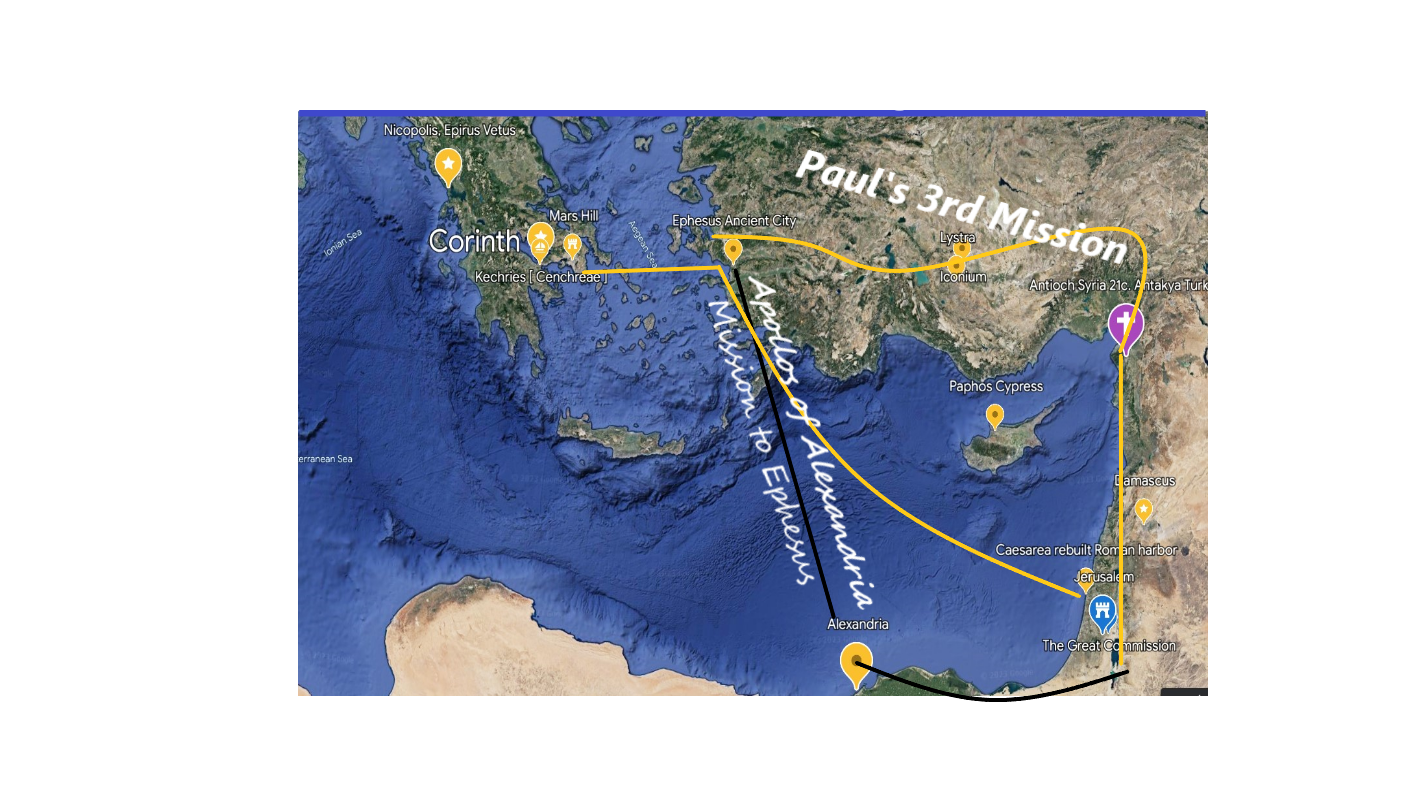
    Acts of the Apostles Missions trips of Paul, Barnabas, Silas and several others

    About midnight Paul and Silas were praying and singing hymns to God, and the prisoners were listening to them, and suddenly there was a great earthquake, so that the foundations of the prison were shaken.

    And immediately all the doors were opened, and everyone’s bonds were unfastened.

    When the jailer woke and saw that the prison doors were open, he drew his sword and was about to kill himself, supposing that the prisoners had escaped. But Paul cried with a loud voice,

    “Do not harm yourself, for we are all here.”

    29 And [he] called for lights and rushed in, and trembling with fear he fell down before Paul and Silas.


    “Even if I am to be poured out as a drink offering upon the sacrificial offering of your faith, I am glad and rejoice with you all,” Paul will write a decade later to the church in Philippi from a prison in Rome.

    Then he brought them out and said, “Sirs, what must I do to be saved?
    And they said, “Believe in the Lord Jesus, and you will be saved, you and your household.”

    ACTS of the apostles 16:30-31 ESV – Keeper of the Philippian jail to Paul & Silas, followed by the apostles’ answer.

    Acts of the Apostles 16 – To Be Continued in the light of a new day in Philippi


  • A cultural clash at the Agora in Roman Philippi

    A cultural clash at the Agora in Roman Philippi

    a Roman Government of Greek Culture

    The Roman-built forum in Philippi with its bustling traditional Greek agora resembled the forum in Rome (cover-photo remains of the Roman forum pillars shows some of the grandeur of these most-public areas of the Empires greatest cities.

    Archaeological Site of Philippi: General view of the forum with adjacent agora marketplace
    Archaeological Site of Philippi: General view of the forum

    Similar-sized pillars in the foreground of the Philippi Forum and agora (to the R) in this aerial view of the archaeological ruins at Philippi gives us a glimpse at the size and importance of this Macedonian City-State namesake of the father of Alexander the Great – a second Rome at the head of the Aegean.


    roman forum
    Roman Forum

    Agora

    Romans call it the public square, others the marketplace — Greeks called it the agora.

    From their own ancient traditions people worshiped there, bought and sold goods, conducted most public aspects of government over the governed and frequently gathered at the agora for general celebrations of social life preceding both religious and private parties.

    Everybody’s there for business seven days a week. The agora was where the paths of the powerful crossed publically with every-day classes of the city-state and also slaves employed to the gain of all.

    The Hellenist agora suited Rome as a place where Roman citizens could mingle with their colonists in Macedonia or any other defeated foe. Roman government was conducted formally from an adjacent forum and pavement for and gathering of citizens, people or slaves before the Prefect.

    You may not agree with my overview of the agora condensing some 500 years back to ancient Greece up to the era of Rome’s first century dominance of all of Europe, but as always check my sources for more details. More later.


    Philippi was ROME in western Macedonia.

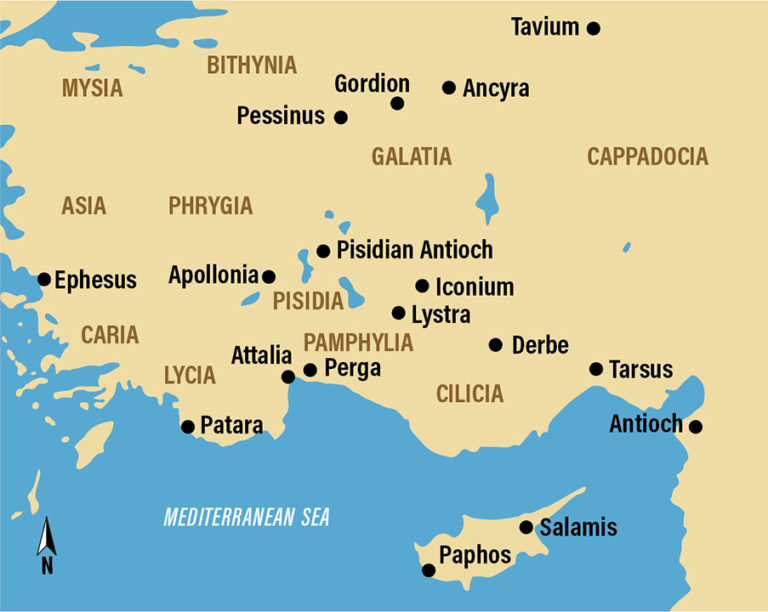
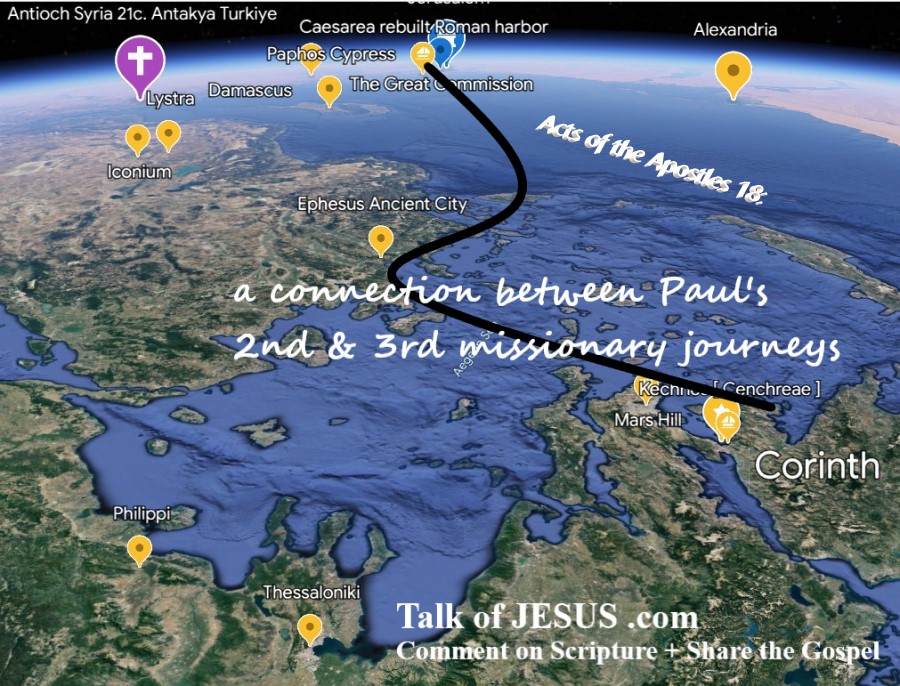
    Antioch - Crossroads of Christianity and map of 1sr c. AD Roman Empire
    .. and the disciples were first called Christians in Antioch. Acts of the Apostles 11:25b NASB

    We began an introduction to Philippi last time which partially answered what Alexander the Great has to do with a second missionary journey of the apostle Paulos and Luke’s account of the ACTS of this 1st c. A.D. Roman citizen in a city of Greece.

    a few additional thoughts that may change your mind about the significance of Philippi
    • Greece is NOT a country
    • City-States of ancient Macedon & Greece were separate from each other
    • Democracy gave way to Empire
    • Philippi was named for Emperor Alexander’s father
    • Alexander died in the same Susa of Persia and Babylon where the Jews had been taken previously
    • Augustus Caesar (mentioned in Luke’s Gospel) is the same Octavian who had defeated Brutus and Cassius in the Battle of Philippi
    • Roman roads connected the land all across Eurasia
    • Philippi as a port between Rome and Alexandria was strategically important SO..

    Rome had rebuilt Philippi as a ROMAN city.

    Think of Philippi as a 1st c. New YORK City to Roman colonies of a ‘new world’ similar to expansion seventeen centuries later when a current Roman conquest to the west Britannia would rule the seas.

    Enter Paul and Silas apostles sent into all the world from a gateway Roman city of Philippi.


    Acts of Paul and Silas

    “These men are servants of the Most High God, who proclaim to you the way of salvation.”

    v. 17b – a slave girl who had a spirit of divination

    “I command you in the name of Jesus Christ to come out of her.”

    v. 18b – Paul, to the spirit in her

    And it came out that very hour.


    We don’t know how many more days have passed in Philippi, but Luke records that the young slave girl no longer has any demonic power to profit her owners. And of course these influential men want justice against any men who have impeded their profit by evil means.

    19 But when her owners saw that their hope of gain was gone, they seized Paul and Silas and dragged them into the marketplace before the rulers.

    More about Philippi’s Forum & Agora

    We need to see the Philippi of A.D. 50 as Roman citizens and Hellenist merchants of this important city would have viewed this scene of commerce interrupted by these out-of-towners.

    forum adjacent to agora of Philippi ruins
    ruins of Forum in Philippi adjacent to agora

    agora, in ancient Greek cities, an open space that served as a meeting ground for various activities of the citizens.

    Agora – source Britannica, The Editors of Encyclopaedia. “agora”. Encyclopedia Britannica, 15 Dec. 2017, https://www.britannica.com/topic/agora. Accessed 13 March 2023.

    • surrounded by public buildings and by temples. Colonnades, sometimes containing shops, or stoae, often enclosed the space, and statues, altars, trees, and fountains adorned it.
    • the agora influenced the development of the Roman forum and was, in turn, influenced by it. The forum, however, was conceived in a more rigid manner than the agora and became a specific, regular, open area surrounded by planned architecture.
    • meetings devoted to ostracism were still held in the agora, where the main tribunal remained.
    • A distinction was maintained between commercial and ceremonial agoras
    • Men accused of murder and other crimes were forbidden to enter it before their trials. Free men went there not only to transact business and to act as jurors but also to talk and idle

    Democracy of the Marketplace

    20 And when they had brought them to the magistrates, they said,

    “These men are Jews, and they are disturbing our city. 21 They advocate customs that are not lawful for us as Romans to accept or practice.” 

    22 The crowd joined in attacking them,

    and the magistrates tore the garments off them and gave orders to beat them with rods.

    23 And when they had inflicted many blows upon them, they threw them into prison, ordering the jailer to keep them safely.

    24 Having received this order, he put them into the inner prison and fastened their feet in the stocks.


    ACTS of Paul and Silas — To Be Continued…