Tag: paul

  • A Parting of Mission in Perga

    A Parting of Mission in Perga

    Acts of the Apostles 13:

    Acts 9 Joseph of Cypress aka Barnabas 'son of encouragement' meets Saul of Tarsus

    The first missionary journey of Paul seemed to get off to an amazing start.

    Barnabas took him and brought him to the apostles and recounted to them how he had seen the Lord on the road, and that He had talked to him, and how at Damascus he had spoken out boldly in the name of Jesus. – Acts 9:27

    .. the brothers learned of [an assassination attempt and] brought him [from Jerusalem] down to Caesarea and sent him away to Tarsus. – Acts 9:30

    .. the church at Jerusalem.. sent Barnabas off to Antioch – Acts 11:22

    And he [Barnabas] left for Tarsus to search for Saul; and when he found him, he brought him to Antioch. And it happened that for an entire year they met with the church and taught a considerable crowd.

    Acts of the Apostles 11:25-26a LSB
    https://talkofjesus.com/an-antioch-blueprint-of-church-evangelism/

    The Christians of the Church in Antioch sent a contribution to the brothers of the Church in Judea for famine relief by the hand of Barnabas and Saul of Tarsus [Paul]. – Acts 11:28-30

    They return to Antioch.

    And Barnabas and Saul returned to Jerusalem, fulfilling their ministry, taking along with them John, who was also called Mark.

    Acts of the Apostles 12:25

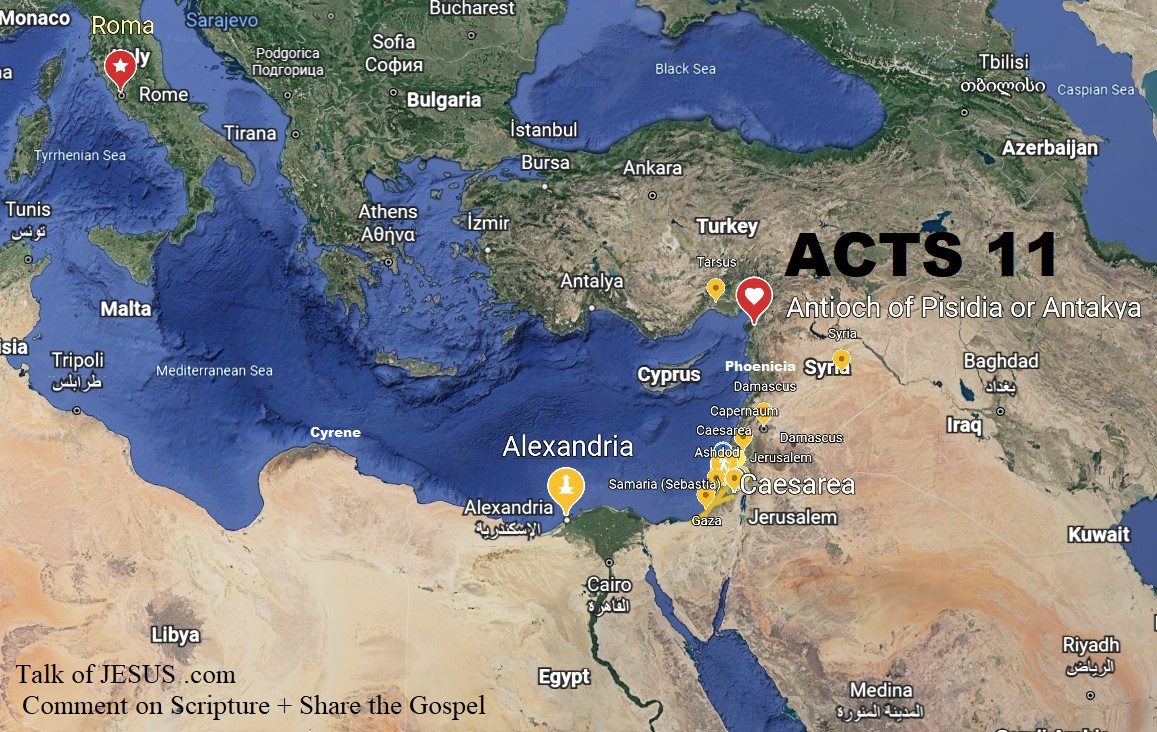
    In Antioch (of Syria):

    And while they were ministering to the Lord and fasting, the Holy Spirit said, “Set apart for Me Barnabas and Saul for the work to which I have called them.” Then, when they had fasted and prayed and laid their hands on them, they sent them away.

    https://talkofjesus.com/acts-13-4-sailing-salamis/

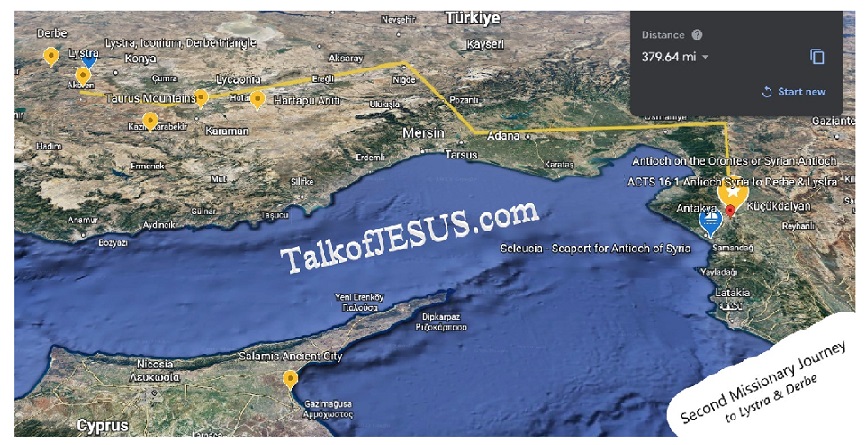
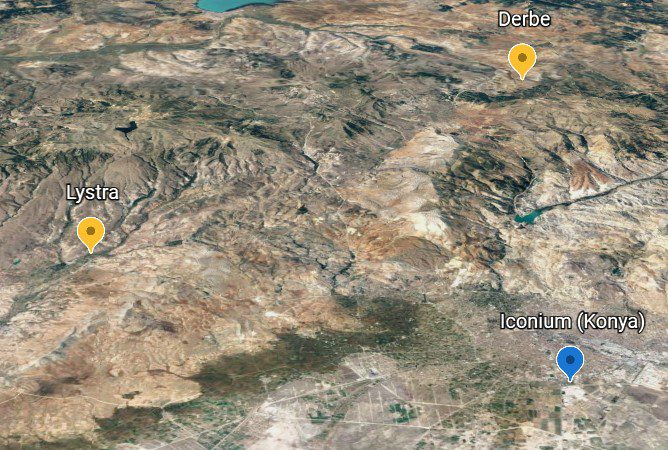
    What happened between Syrian Antioch and Pisidian Antioch?

    Cypress cities Acts 13

    Cypress – Mixed Results

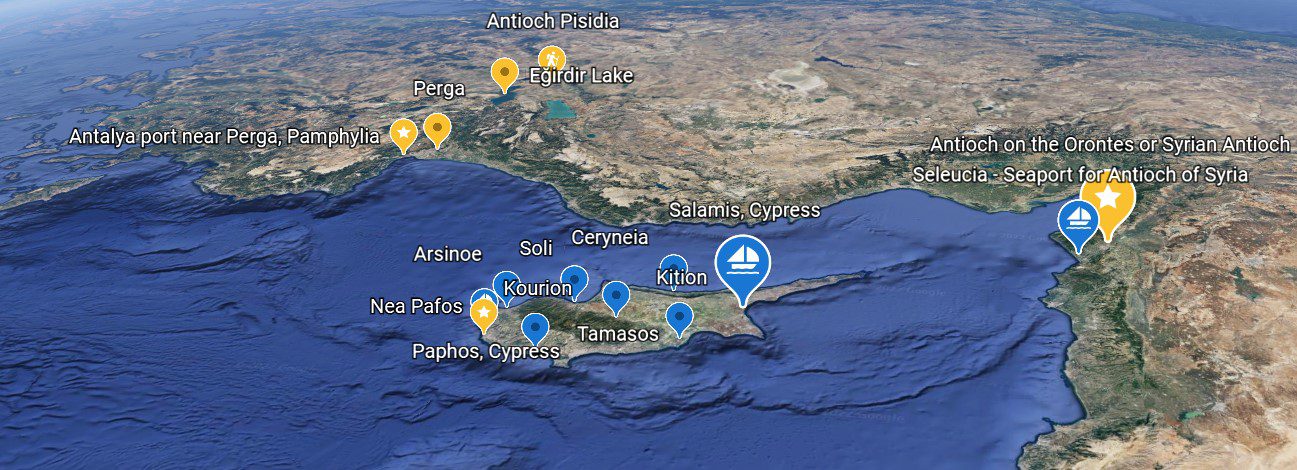
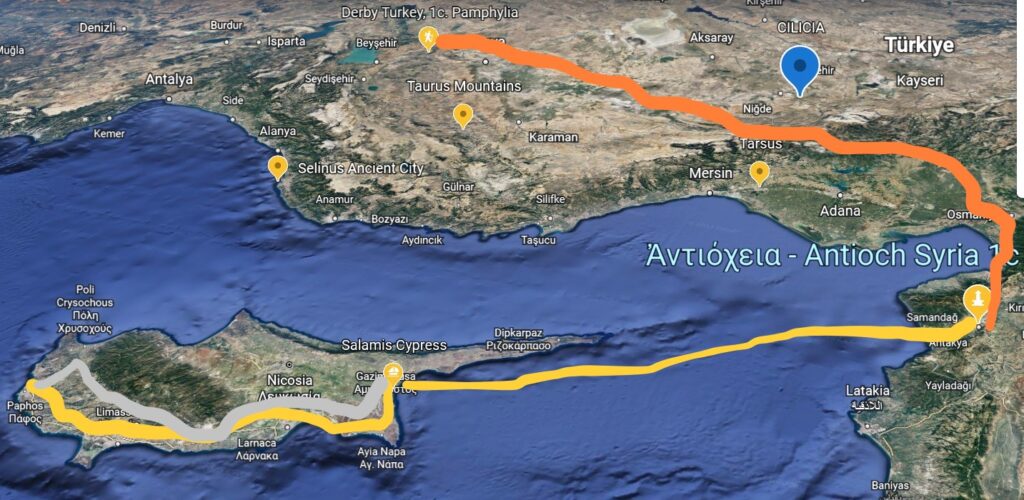
    So on a second sailing from Paphos Cypress to Perga, as on most journeys the missionaries must have talked about their most recent results from the towns on Cypress

    AND what these three will do next in Pisidia.

    I must share an astute observation of Tony Merida from his commentary: Exalting Jesus in Acts.

    He titles his chapter on missions covering Acts 13: The Holy Spirit, a Bible, a Passport, and a First-Aid Kit, Part 1.

    He points out about ‘Stop 1’ in Cypress:

    • Some people will be open to God’s Word
    • Some people will oppose God’s Word
    • Some people will embrace God’s Word

    We have already observed this in Luke’s introduction and the examples of Bar-Jesus and the proconsul, Sergius Paulus.

    Paul and Barnabas are the ‘commissioned‘ missionaries sent out by the Holy Spirit from the Church in Antioch. BUT they encounter a problem with ‘the help.’

    As you might guess Merida’s ‘Part 2’ description will also be applied to Acts 14 after the events which will take place NEXT in Perga and Pisidian Antioch–thus, our mission need for ‘a first-aid kit.’

    Not So Smooth Sailing – a Problem in Perga

    Now after Paul and his companions set sail from Paphos, they came to Perga in Pamphylia, but John left them and returned to Jerusalem.

    Acts of the Apostles 13:13 LSB

    John MARK

    As I pointed out earlier, this young man is the Gospel-writer Mark whose Gospel would have already been published and known to some of the church when Luke published this second volume, Acts of the Apostles.

    So why would they have told Mark to go back home to Jerusalem rather than continuing on mission in Pamphylia?

    Alexander MacLaren :: John Mark (Acts 13:13)

    • He was the son of a well-to-do Christian woman in Jerusalem
    • The Church in Jerusalem met in their large home
    • He is a younger cousin of Joseph (Barnabas)
    • so he was naturally selected to be the attendant and secular factotum of Paul and Barnabas
      • Mark was NOT the anointed missionary sent, but a helpful servant to them.
        • For more: follow the link above to the source to the commentary of Alexander MacLaren.

    Luke does not tell us why they sent him back home before they began their hike to the cities before them, but later he records that Barnabas sought to enlist John Mark once more for a second missionary journey.

    (More about that after a few years and many miles later.)

    .. John left them and returned to Jerusalem. But going on from Perga, they arrived at Pisidian Antioch.

    Acts of the Apostles Paul and Barnabas 13:13b-14a

    To Be Continued…

  • Opposed to the Gospel at the Gate: Bar-Jesus

    Opposed to the Gospel at the Gate: Bar-Jesus

    Bar-Jesus is another name for a Jewish influencer on Cypress: Elymas the magician.

    Acts 13:

    • Luke chronicles THIS history of the first mission of the Church at Antioch published sometime around A.D. 60-62.
    • Many Christians may already have read John Mark’s Gospel written during the A.D. 50’s just a few years after this first missionary journey of Paul and Barnabas.
    • Luke’s account records events of A.D. 47.

    When they arrived at Cypress

    Cypress is Greek, NOT Roman

    (And certainly not Jewish)

    What the tourist visiting Cypress should know:

    Cyprus was allowed a large amount of autonomy remaining mainly Greek in culture while adopting and adapting Roman customs. No Roman colonies were settled on the island. 

    • The island is prone to earthquakes, several in the centuries prior to this missionary journey
      • including one as recently as A.D. 16.
    • Cypress had been an Egyptian (King Ptolemy) part of Roman Cilicia
      • a gift of Julius Caesar to Cleopatra
    • After Caesar Augustus defeated Marc Antony and Cleopatra, Rome made it a senatorial province
      • separate from Cilicia with Nea Paphos as its capitol

    5. And when they reached Salamis, they began to proclaim the word of God in the synagogues of the Jews, and they also had John as their helper.

    NOTE TWO POINTS HERE:

    1. .. they began to proclaim the word of God in the synagogues of the Jews
    2. Luke introduces John Mark as a helper to Barnabas and Saul.

    As you can see from the map of cities on Cypress at the time, this mission team would have traveled on land several times to preach the Gospel in synagogues of these Greco-Roman cities on Cypress. Not only was distance a factor in their travel but also mountains which rose to steep heights above the island. This took some time and not just a few days.

    In addition to noting last time that Cypress was mostly Greek and Phoenician with a few Jews, previously I pointed out that their ‘additional passenger,’ John, is the same John with earlier connections to Peter’s preaching and miracles.

    Luke notes that his fellow Gospel writer [John Mark] also begins this mission trip in A.D. 47.

    Paphos consisted of the Roman cites of Nea Pafos and Palaipafos on the southwestern coast of the island of Cypress

    6 And when they had gone through the whole island as far as Paphos, they found a magician, a Jewish false prophet whose name was Bar-Jesus…

    We'll introduce ourselves to this new character Bar-Jesus who they encounter on this mission shortly, but first let's take a quick look at Paphos.
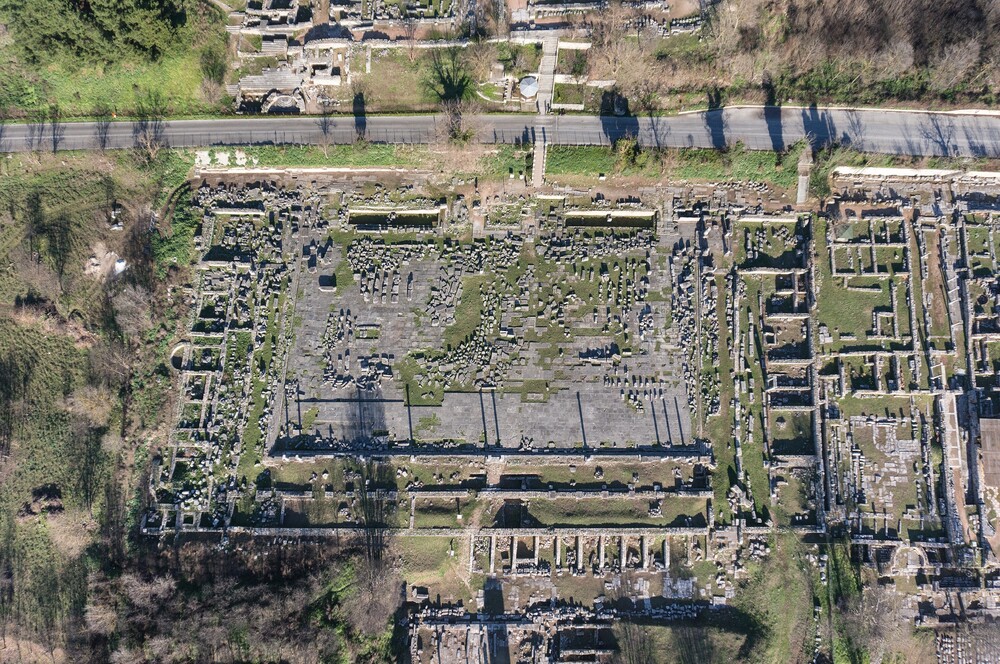
    Aerial view of Paphos Cypress

    Paphos

    • Traveling roads across the whole island would have been a journey of 110 miles along the coast OR perhaps further if they traveled additional routes familiar to Joseph [Barnabas] and others through the mountains to other cities.
    • New Paphos (Nea Paphos), NW of old Paphos by 7.5 miles has a natural harbor and was built by Augustus of Rome for commerce and governing its Provence of Cypress.
    • Old Paphos was a centre for Aphrodite’s cult. Aphrodite’s mythical birthplace was on the island.
    • .. the grove and altar of Aphrodite at Paphos are mentioned in the Odyssey (700 BC).
    • Archaeology established that Cypriots venerated a fertility goddess in a cult that combined Aegean and eastern mainland aspects before the arrival of the mainland Greeks.

    Aphrodite of Cyprus

    • Every spring a festival was held here in honor of the goddess Aphrodite source
    • Phoenician merchants from Kition [Cyprus] who gained permission to found at Athens [Greece] a shrine of Aphrodite, whom they presumably looked upon as their ancestral deity Astarte – Aphrodite. READ MORE BELOW:
    (more…)
  • Acts 13.4 Sailing to Salamis Cypress

    Acts 13.4 Sailing to Salamis Cypress

    Sailing from Antioch to Cypress

    Acts of the Apostles 13:

    4 So, being sent out by the Holy Spirit, they went down to Seleucia and from there they sailed to Cyprus.

    A.D. 47

    A Roman merchant ship sails from Seleucia

    Photo source

    Sailing Journeys in the Roman Empire

    I don’t know about you, but I didn’t really know very much about sailing around in the Mediterranean in the first century A.D. And when I read later in Acts about wintering in some ort or about ship wrecks I had no idea what that was all about.

    So here is a little I’ve learned about Paul’s journeys by ship in the first century Mediterranean Sea.


    How did the ancient Romans travel?

    [Like Paul and Barnabas]

    • There were no passenger ships per say in first century Rome. No luxury cruise lines or anything similar.
    • People willing to travel by ship had to board a merchant ship.
    • They would first have to find a ship, it could be almost any kind of ship and then they would have to get the captain’s approval. The price would also be negotiated with the captain.
    • Most of the times passengers would bring their own food supplies, covers, mattresses, even a tent and sleep on deck!
    • Sometimes there would be hundreds of people on the deck.
    • There were no restaurants or any of the luxuries of today’s ships but passengers could use the ship’s facilities to cook their meals. People would often play games, gamble, read or just drink wine.

    OR perhaps a fellow passenger might ask two men like Paul and Barnabas,

    “What brings you to Cypress?”

    VITA ROMAE

    .. Romans were not traditionally seafaring people. They were mostly land-based people who learned to build military and merchant ships from the people that they conquered. Sailing the seas was often considered un-Roman.

    Romans had very few warships [BUT]

    Rome managed to defeat the world’s most powerful navy to become the dominant naval power in the Mediterranean or as the Romans called it Mare Nostrum (“our sea”).

    Sailing the Roman Sea

    Another function of Roman military ships was to patrol the Mediterranean sea and to sometimes escort merchant ships.

    • Most ships had a cargo capacity of 100 to 150 tons
    • The largest ships, with a capacity of 600 tons, were 150 ft (46m) long.
    • Merchant ships mainly used mainly wind power. They had from one to three masts with large square sails and a small triangular sail called the supparum at the bow.
    • They also had oarsmen (usually slaves). [Roman military ships used free Roman soldiers on the oars.]

    The time of travel along the many shipping lanes could vary widely. Roman ships would usually ply the waters of the Mediterranean at average speeds of 4 or 5 knots.

    VITAE ROME

    Salamis, Cypress

    Seleucia Syria (1st c) to Salamis Cypress

    IF we do the math, allowing for the additional time in Seleucia while the cargo is loaded on their ship.. waiting in the boarding line where the captain’s representative makes certain all passengers have paid their fare.. boarding time… casting off WHEN the tide and winds seem right…

    once weighing anchor, navigating the ship with new weight in the hold carefully out of the harbor…

    AT 4-5 knots per hour (eventually) & depending on prevailing winds..

    for perhaps 20-25 hours.. at least overnight (for this short voyage_) and timing of the tides and navigating Salamis…

    [Don't you just love all that waiting before departure and docking even on a short journey?]
    

    IF you would like to catch up to the LATEST post from our SERIES from ACTS of the Apostles CLICK HERE


    So Joseph, you say you were born here?

    See Acts 4:36

    A Levite.

    And you brought Saul here from Tarsus? (I’ve been there.)

    What’s this ‘Good News’ you are bringing here?


    One additional passenger

    DO YOU RECALL:

    Five years earlier in Jerusalem [~AD 42}: Peter amazingly appears at the gate of John Mark’s home after being freed from Herod’s prison by an angel.

    Peter goes to the home of Mary mother of Mark

    AFTER Herod Agrippa died [A.D. 44]:

    Barnabas and Saul returned to Jerusalem, fulfilling their ministry, taking along with them John, who was also called Mark. – Acts of the Apostles 12:25

    NOW, nearly three years later [~A.D.47]:

    Seleucia Syria (1st c) to Salamis Cypress

    FIRST PORT of the FIRST Missionary Journey – Salamis

    • It possessed a good harbor and was the most populous and flourishing town of Cyprus
    • in the Hellenic and Roman periods, carrying on a vigorous trade with the ports of Cilicia and Syria.
    • Its population was mixed, consisting of Greek and Phoenician elements.
      • The former, however, gave its tone and color to the city, and the chief cult and temple were those of Salaminian Zeus.
    • There they preached the gospel in the “synagogues of the Jews” (Acts 13:5);
      • the phrase is worth noting as pointing to the existence of several synagogues and thus of a large Jewish community in Salamis.
      • Of work among the Gentiles we hear nothing,
      • nor is any indication given either of the duration of the apostles’ visit or of the success of their mission;
      • but it would seem that after a short stay they proceeded “through the whole island”

    And when they reached Salamis, they began to proclaim the word of God in the synagogues of the Jews, and they also had John as their helper.

    Acts of the Apostles Paul & Barnabas 13:5 on Cypress

    WE see here just a brief first stop of Apostles sent out by the Holy Spirit with the Gospel, which Paul and Joseph of Cypress proclaim in the synagogue of Salamis to fellow Jews who have not yet heard the Good News of Jesus, the Christ promised by the Lord God.

    With them, a servant helper, John Mark, who observingly will record his first Gospel published about ten years later [in the A.D. 50’s].


    ACTS of the Apostles 13 on Cypress
    
    TO BE CONTINUED...
    
    Seleucia Syria (1st c) to Salamis Cypress

    Talk of JESUS . com

    Comment on Scripture – Share the Gospel