Tag: peter

  • Ordinary Men -2

    Ordinary Men -2

    Acts 4:5-7

    On the next day their rulers and elders and scribes gathered together in Jerusalem, with Annas the high priest and Caiaphas and John and Alexander, and all who were of the high-priestly family. And when they had set them in the midst, they inquired, “By what power or by what name did you do this?”

    Synopsis

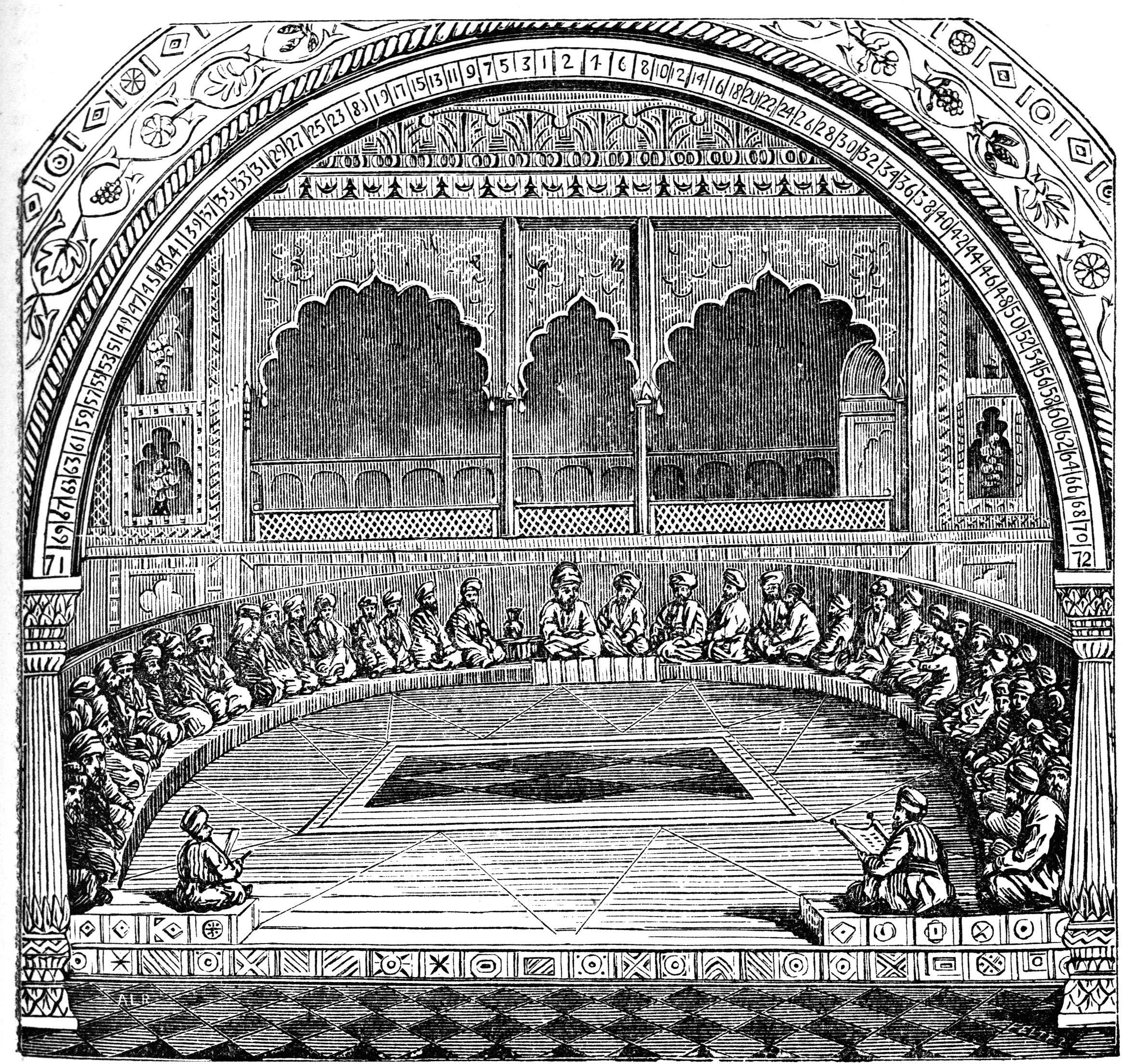
    Annas and Caiaphas and John and Alexander sit here esteemed high above ordinary men, even the highest of aristocrats sitting in the Sanhedrin.

    Annas and Caiaphas and John and Alexander sit here esteemed high above ordinary men, even the highest of aristocrats sitting in the Sanhedrin. We have examined an incident of healing a lame man [Acts 3] in the Temple the previous day. We have also examined the high calling of some of the Temple court officials mentioned above. These not-so-ordinary men mentioned here will examine Peter and John, But first let’s take a look at one additional more common official of the Sanhedrin.

    Jewish Stratification (continued from Ordinary Men – part 1)

    The chief sects among the Jews were the Pharisees, the Sadducees and the Essenes, who may be described respectively as the Formalists, the Freethinkers and the Puritans.

    Pharisees

    The fundamental principle all of the of the Pharisees, common to them with all orthodox modern Jews, is that by the side of the written law regarded as a summary of the principles and general laws of the Hebrew people there was on oral law to complete and to explain the written law, given to Moses on Mount Sinai and transmitted by him by word of mouth.

    The Pharisees at an early day secured the popular favor and thereby acquired considerable political influence. This influence was greatly increased by the extension of the Pharisees over the whole land and the majority which they obtained in the Sanhedrin. Their number reached more than six thousand under the Herods.

    Josephus compared the Pharisees to the sect of the Stoics. He says that they lived frugally, in no respect giving in to luxury. We are not to suppose that there were not many individuals among them who were upright and pure, for there were such men as Nicodemus, Gamaliel, Joseph of Arimathea and Paul.

    The Defense

    Acts 4:6-12

    Then Peter, filled with the Holy Spirit, said to them, “Rulers of the people and elders, if we are being examined today concerning a good deed done to a crippled man, by what means this man has been healed,  let it be known to all of you and to all the people of Israel that by the name of Jesus Christ of Nazareth, whom you crucified, whom God raised from the dead—by him this man is standing before you well. This Jesus is the stone that was rejected by you, the builders, which has become the cornerstone. And there is salvation in no one else, for there is no other name under heaven given among men by which we must be saved.”

    How should the high court respond?

    You might think by their defense in naming Jesus that Peter is claiming personal innocence in the manor of the man’s healing. After all, why were they arrested; what is their crime? No charge of the supreme court of the Temple (Sanhedrin) was made against them for preaching in the courtyard at church. “By what power or by what name did you do this?”  (referring to the miraculous healing witnessed by many) was their only question to Peter.

    No charges here and the evidence to be presented witnesses a miracle. These Levitical Priests, aristocratic scribes and sadducees, and politically powerful Pharisees sit in judgment of a miracle. ‘How did the Lord use men like these and not a Priest or Temple official to do this?’ they must have thought. The witness of their preaching the previous day had quoted scripture referring to the prophets, the Messiah, Moses, Samuel and Abraham. What could the court say of this a day after the miracle in the courtyard of the Temple?

    [ctt title=”But many of those who had heard the word believed, and the number of the men came to about five thousand. – Acts 4:4″ tweet=”Arrested because the Lord performed a miracle and their preaching is true.” coverup=”cTU1O”]

    Who can preach like this?

    Acts 4:13

    Now when they saw the boldness of Peter and John, and perceived that they were uneducated, common men, they were astonished. And they recognized that they had been with Jesus.

    14 But seeing the man who was healed standing beside them, they had nothing to say in opposition. 15 But when they had commanded them to leave the council, they conferred with one another, 16 saying, “What shall we do with these men? For that a notable sign has been performed through them is evident to all the inhabitants of Jerusalem, and we cannot deny it…

    21 And when they had further threatened them, they let them go, finding no way to punish them, because of the people, for all were praising God for what had happened.

    Witness, Our Only Choice

    [ctt title=”“I have no silver and gold, but what I do have I give to you. In the name of Jesus Christ of Nazareth, rise up and walk!”” tweet=”Acts 3:6 Peter’s witness before one of many arrests.” coverup=”V5egz”]

    But Peter and John answered them, “Whether it is right in the sight of God to listen to you rather than to God, you must judge, for we cannot but speak of what we have seen and heard.” Acts 4:19-20

    29 And now, Lord, look upon their threats and grant to your servants to continue to speak your word with all boldness, 30 while you stretch out your hand to heal, and signs and wonders are performed through the name of your holy servant Jesus.”

    31 And when they had prayed, the place in which they were gathered together was shaken, and they were all filled with the Holy Spirit and continued to speak the word of God with boldness.


  • Ordinary Men – 1

    Ordinary Men – 1

    … he was healed by the powerful name of Jesus Christ the Nazarene, the man you crucified but whom God raised from the dead.

    – Acts 4:10b

    Suppose you were arrested and brought before a court of leaders asking how you had healed a lame man. Would you witness Christ?

    The Apostle Peter in effect told the very court which convicted Christ, ‘you are the guilty ones.’ The resurrected Lord healed him.

    We have heard of this blindness before

    The man answered, “Why, this is an amazing thing! You do not know where he comes from, and yet he opened my eyes. We know that God does not listen to sinners, but if anyone is a worshiper of God and does his will, God listens to him. Never since the world began has it been heard that anyone opened the eyes of a man born blind. If this man were not from God, he could do nothing.”

    John 9:30-33

    Jesus said, “For judgment I came into this world, that those who do not see may see, and those who see may become blind.” – John 9:39

    Some of the Pharisees near him heard these things, and said to him, “Are we also blind?”

    Jesus said to them, “If you were blind, you would have no guilt [from sin]; but now that you say, ‘We see,’ your guilt remains.

    Blind Leadership

    Peter and John had just healed a crippled beggar known to the same authorities who once witnessed a similar powerful miracle, then expelled from the Temple a man blind from birth healed by Jesus. My previous post, the three o’clock prayer service, details this healing recorded in Acts 3. The Apostles face similar retribution as Jesus after healing a lame man in front of many witnesses.

    Acts 3:12 And when Peter saw it he addressed the people: “Men of Israel, why do you wonder at this, or why do you stare at us, as though by our own power or piety we have made him walk?

    … 17 “And now, brothers, I know that you acted in ignorance, as did also your rulers.

    Acts 4:

    And as they were speaking to the people, the priests and the captain of the temple and the Sadducees came upon them, 2 greatly annoyed because they were teaching the people and proclaiming in Jesus the resurrection from the dead. 3 And they arrested them and put them in custody until the next day, for it was already evening. 4 But many of those who had heard the word believed, and the number of the men came to about five thousand.

    Jewish Stratification

    During the times of Herod’s Temple, social center of religious life in Jerusalem at that time of Jesus and the Apostles, Temple leaders were esteemed above ordinary men. The political appointment of priests claimed status from traditional Jewish Biblical offices and responsibilities.

    • The social world of the priests during the Iron Age and Persian Period was one fraught with concerns about power and status. To be a priest was, at least in terms of public rhetoric, an ascribed, not an achieved status.

    Priests

    • Throughout the Hebrew Bible, the term priest (kōhēn) is commonly used to refer to an official who was set apart from the rest of the community in order to carry out certain duties associated with worship and sacrifice. As “ministers of the LORD” (Joel 1:9; 2:17), priests functioned as mediators of God’s presence and were responsible for the day-to-day operation of cultic sites, whether the tabernacle, local shrines, or the Temple in Jerusalem.
    • Deuteronomy employs the term “Levitical priests” (hakkōhănîm halwiyyim) most likely to underscore the fact that all Levites were qualified to be priests (Deut 17:9, 18; 18:1; 24:8; 27:9).
    • The most prominent and persistent controversy regarding the priesthood had to do with whether all Levities could serve as priests or, alternatively, if only certain branches of the Levitical line (the Aaronides or the Zadokites) were qualified for the priestly office.

    Scribes

    • Outside of their sacrificial duties, priests also oversaw many other aspects of ancient Israelite life… In this role, priests were responsible for communicating the law and adjudicating legal matters (Lev 10:10–11; Deut 17:8–13; 21:5; Ezek 44:24), though in the Second Temple period, such activity was eventually taken over by scribes.
    • Scribes of various degrees of competence were attached to all government and temple offices. Apparently there were also independent scribes who either served the public or were in the employ of men of means.
    • Later the scribe was a professional expert in the writing of Torah scrolls, *tefillin , *mezuzot , and bills of *divorce .

    Sadducees

    • (followers of Zadok), (Matthew 3:7; 16:1,6,11,12; 22:23,31; Mark 12:18; Luke 20:27; Acts 4:1; 5:17; 23:6,7,8) a religious party or school among the Jews at the time of Christ, who denied that the oral law was a revelation of God to the Israelites. and who deemed the written law alone to be obligatory on the nation, as of divine authority.
    • To these sons of Zadok were afterward attached all who for any reason reckoned themselves as belonging to the aristocrats; such, for example, as the families of the high priest, who had obtained consideration under the dynasty of Herod. These were for the most part judges, and individuals of the official and governing class.

    Sadducees held the majority of the seats in the ruling Jewish court of the Sanhedrin. They held political power and influence in Judah, even under Rome.

    As you can see from description of these several classes of ‘blind guides,’ these Jewish rulers are not in any way ordinary men.

    Though five thousand men came to believe Peter and John, these arresting authorities are in no way intimidated.  The Apostles face a trial, the first of many, for proclaiming Christ Jesus.

    Allow me to ask you, what is your response to opposition to Jesus Christ?

    To be continued…


  • as to a lamp shining in a dark place

    as to a lamp shining in a dark place

    Perhaps you look at Biblical prophesy as something of darkness from the past. Maybe in this 21st century we just don’t believe the lives and words of men like Jeremiah or Isaiah could shed any light on the struggles of our life.

    If God has spoken through certain men of old, why send Jesus to fulfill the many prophesies already given over the millennia? Why would God have to send a Messiah to the mortal men of the world?

    The Apostle Peter gives us an insight into what God has spoken through Jesus as a Prophet.

    2 Peter 1:

    • Prophets as light
      Prophets predicted the Messiah of God, Christ Jesus

      we made known to you the power and coming of our Lord Jesus Christ

    • we were eyewitnesses of his majesty.
    • he received honor and glory from God the Father, and the voice was borne to him by the Majestic Glory, “This is my beloved Son, with whom I am well pleased,”
    • we ourselves heard this very voice borne from heaven

    19 And we have the prophetic word more fully confirmed, to which you will do well to pay attention as to a lamp shining in a dark place, until the day dawns and the morning star rises in your hearts, 20 knowing this first of all, that no prophecy of Scripture comes from someone’s own interpretation.

    21 For no prophecy was ever produced by the will of man, but men spoke from God as they were carried along by the Holy Spirit.

    The Apostle Peter proclaims that God provided a first-hand witness, an intimate look at the Person of God Incarnate. Twelve Disciples witnessed the daily life and teaching of Christ Jesus. The rabbi, Jesus, spoke more than just a retelling of words of God.

    Though Jesus the Messiah prophesied, He IS more than a Prophet.

    • The most powerful predictions of Jesus Christ augmented even His highly acclaimed miracles.
    • Jesus not only explained the scriptures, He taught how He fulfilled them.
    • Christ foretold His own death on the Cross.
    • Jesus amazingly told of HIs resurrection from the dead in 3 days!
    • As a Prophet, the Messiah Jesus tells of His return.

    The Disciples continued to preach the Gospel, the Good News that God IS involved in our lives in the Person of Christ Jesus.

    The return of Christ Jesus in these last days will be a final fulfillment of all prophesy and perfection of God the Father’s plan of grace.

    After His resurrection and even now, He sends true followers into the world to tell the Good News (Gospel) until the number of the elect will fill the streets of a glorious New Jerusalem.

    Many are called; few are chosen.

    Believe in the Son of Man: born as a lowly babe in a manger. Believe in the Christ child who become a refugee to Egypt in Mary’s arms. Believe in the witness of His glory on earth by sinners like Peter, Levi, prostitutes and Pharisees. Believe in Jesus crucified on a Cross by gentile Roman soldiers, convicted by corrupt religious rulers manipulating mob-ruled injustice.

    Believe: Jesus IS risen from the dead! Believe scripture when we are told Jesus’ resurrection from the grave was witnessed by over five hundred mortals. He IS the Messiah of God, prophesied to return once more to rule in righteousness and love.

    In the year of our Lord, 2015, we see only though a mist these dark days of so many suffering souls.

    Let us be a light in Christ, a flicker of hope in the darkness of the sin so pervasive in the hearts and acts of mankind. Lord let your church and bride shed more than a flicker of hope on those lost souls who do not know the love of your great Light.

    To be continued…

    This is the fourth in a series of Christmas messages by Roger Harned. Please share the Gospel with others through your social media witness.